Once Upon a Time… in Hollywood (2019)

2019 #120
Quentin Tarantino | 161 mins | cinema | 2.39:1 | USA, UK & China / English | 18 / R

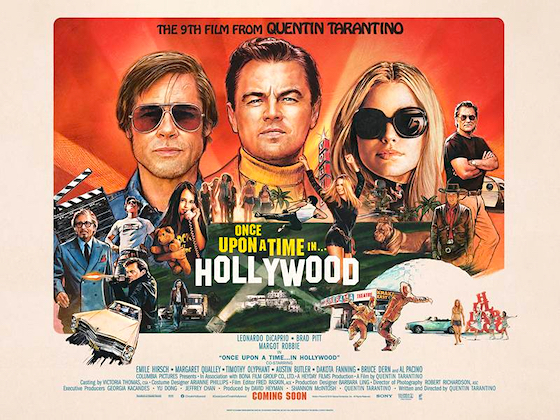
Once Upon a Time in Hollywood

The 9th film by Quentin Tarantino follows the fortunes of struggling actor Rick Dalton (Leonardo DiCaprio) and his stuntman and best mate Cliff Booth (an Oscar-winning Brad Pitt) over a couple of days in Los Angeles, 1969, when they were next-door neighbours to one Sharon Tate (Margot Robbie)…

I haven’t reviewed Once Upon a Time until now because I didn’t have much to say about it (even my Letterboxd ‘review’ was just a comment on its variable title presentation). Even after reflecting on it, and reading other’s critical reactions, then reflecting on it some more (for over eight months at this point), I didn’t have much to contribute. Why was that? And I’ve kind of realised it’s because the film didn’t make me feel very much.

Sure, there are moments where it did. There are plenty of scenes that are amusing, to varying degrees. The tension as Cliff explores the house of an old friend that’s been occupied by a bunch of hippies. The catharsis and humour of the ultra-violent climax, and the attendant cognitive dissonance of whether we should be revelling so in this historically-revisionist execution of real people — not to mention the factors that further complicate that (you know what they are by now).

And overall I didn’t dislike the film. I wasn’t bored, despite the length; if anything, that helps suck you into the world of 1969. You can certainly feel Tarantino’s love for the era, his desire to recreate — and, indeed, improve — it. (It’s also clear that he really wants to make another Western. The excerpted scenes from Rick’s TV pilot go on for ages, ultimately contributing nothing to the overall story, other than getting to hang out in a ’60s TV Western.) The three main performances are all very good, DiCaprio and Pitt great both as a double act and in their own storylines, and Robbie off in her own little world in a role that arguably offers little on the page but she breathes so much life into.

“Don’t cry, man. It’s only one blogger's opinion.”

It’s all these successes that mean I do consider Once Upon a Time to be a very good film. But at the same time, I didn’t leave the cinema feeling moved or wowed. I expected the history-changing ending ever since the film’s plot was announced, that expectation only cemented further as I learnt of Tarantino’s love for Tate, so I certainly didn’t leave feeling surprised. It ended, and that was that, and I went home.

Tarantino has talked in the past about how Jackie Brown is a “hangout movie”, where the point is not the story but spending time with the characters, and getting to re-spend that time when you watch the movie again, so that you enjoy it more and more with each viewing. I didn’t really get that feeling from Jackie Brown (I didn’t dislike it, but I was underwhelmed and in no rush to revisit it), but I wonder if that’s how Once Upon a Time will work best. The way it wanders through its loose narrative, before arriving at a climax that is, really, only tangentially related to everything else we’ve been watching, does suggest that’s the goal Tarantino had in mind. I can certainly believe he would like to just hang out in the world of Hollywood, 1969. I suspect that’s the driving factor behind why he even made this movie — getting to imagine an alternate history and career for his characters (I’ve seen interviews where he fills in way more backstory than is actually in the film), and using his clout to literally recreate that time and place in real-life rather than through CGI fill-ins.

So, it’s a movie I’ll surely revisit at some point, which is more than can be said for many a film. Perhaps then I’ll have something to say about it.

5 out of 5

Once Upon a Time in Hollywood is available on Sky Cinema and Now TV from this weekend.

The Lunchbox (2013)

2020 #94
Ritesh Batra | 99 mins | download (HD) | 2.35:1 | India, France, Germany & USA / Hindi & English | PG / PG

The Lunchbox

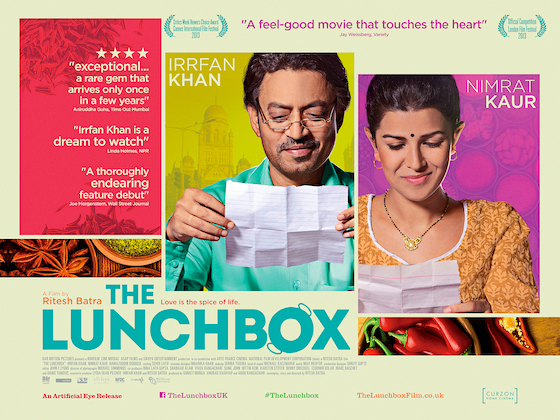
Yesterday the world heard the sad news that the actor Irrfan Khan had passed away aged just 53. An award-winning film star in India, Khan also had a noteworthy presence as a supporting actor in Western films — the police inspector in Slumdog Millionaire; the owner of the eponymous park in Jurassic World; the adult version of the main character in Life of Pi; not to mention The Darjeeling Limited, The Amazing Spider-Man, Inferno, and more. I’d seen all of those films and noted Khan’s presence — he’s the kind of actor who turns up and elevates the film almost just by being there, bringing a depth and interest to even the smallest roles. But I’d never seen any of the many films (he has 151 acting credits on IMDb) in which he played the lead, so it seemed appropriate to turn to one of the most internationally acclaimed of his films, The Lunchbox, in tribute.

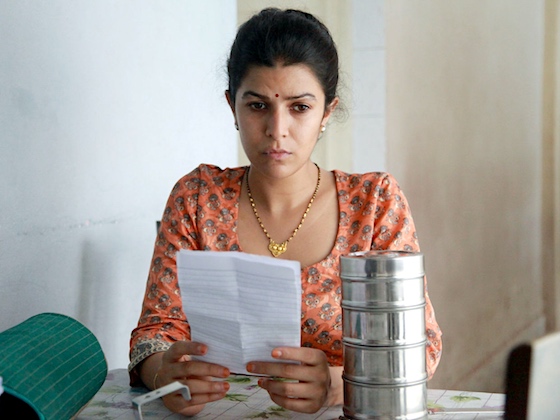
Khan plays Saajan, an office worker who receives his lunch every day via the dabbawala service. It’s a remarkable network that delivers 200,000 lunches daily across Mumbai with unerring accuracy. Indeed, their precision is so famed that one of the major criticisms of this film in some quarters was that its premise is too far-fetched — that being that, due to a continued mixup, Saajan begins to receive the lunches Ila (Nimrat Kaur) has prepared for her husband, rather than the ones he ordered from a local restaurant. He’s so impressed with the quality of the food, when the lunchbox is returned Ila observes that it looks to have been licked clean. This is good news, because she was trying to up the quality of her lunches as a way to reignite her stagnant marriage; but when her husband returns home still disinterested, with only thin praise for something she hadn’t even included in his lunch, she realises the delivery mistake immediately. But politeness compels her to send lunch again, this time with a note explaining the mixup. After a rocky start, soon Saajan and Ila are in daily communication through short letters passed back and forth in the lunchbox.

Saajan

Both are characters desperately in need of that connection. Ila’s loveless marriage, and young daughter who spends most of the day at school, means her primary human contact comes in shouted conversations with her upstairs neighbour. Saajan, meanwhile, is taking early retirement, but first must train Shaikh (Nawazuddin Siddiqui), the overeager new recruit appointed to replace him. He tries to duck even this level of interaction; at home, he tells off kids for playing in the road outside his house, refusing to return their ball. We could infer Saajan is a misanthrope, and the impression is given that his colleagues do (they share a story that he once kicked a cat in front of a bus then casually walked away), but the film affords us more insight than that, primarily through Khan’s performance. It’s the underlying sadness in his eyes that first give the clue to his true loneliness, and the way his demeanour begins to brighten as the relationship with Ila brings a spark back into his life.

Lest you think this is all somewhat dour, the way it plays is uplifting. Saajan and Ila may be miserable at the start, and continue to confront problems in their lives throughout the film, but their connection injects a measure of happiness into both their lives, the mutual support helping them through. Plus there’s a strong vein of humour, at first from the faltering beginnings of our leads’ relationship, then from the antics of Siddiqui’s junior employee. This isn’t the kind of broad comedy you might expect from a Bollywood movie, but something more grounded and closer to reality. At first Shaikh seems as irritating to us as he is to Saajan, but soon the latter’s growing empathy leads him to become a father figure to the younger man, and we too begin to see the truth underneath his cheery facade.

Ila

While that subplot is a bonus, the film really comes down to Saajan and Ila, and consequently the performances of Khan and Kaur. That’s particularly important because so much of the story occurs in the form of letters, and so the characters’ true reactions come across in doleful expressions, or changes in posture or behaviour; subtle, human indicators that leave us in no doubt what they’re feeling, and only strengthen our own connection to and investment in these characters. This pair of deeply-felt performances carefully steer The Lunchbox into being a heartfelt, quietly affecting film.

5 out of 5

The Elephant Man (1980)

2018 #187
David Lynch | 124 mins | Blu-ray | 2.35:1 | USA & UK / English | PG / PG

The Elephant Man

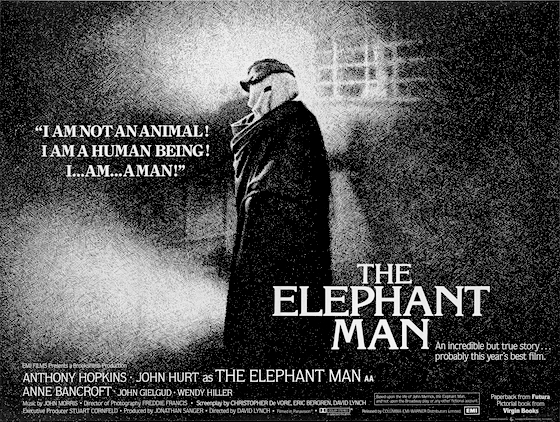
This biopic of Joseph Merrick — better known as ‘the Elephant Man’, a Victorian circus sideshow ‘freak’ who became a star of London society during his stay at the London Hospital — is noteworthy not only for its documentation of a key figure in Victorian life, who perhaps transformed people’s views of what it meant to be human, but also because it’s a film directed by David Lynch.

The Elephant Man is sometimes placed alongside Dune and The Straight Story as anomalies in Lynch’s filmography, which is more often characterised for its horror-inducing oddness and sometimes-incomprehensible plotting. Of course, upon proper examination, all three of these movies exhibit Lynchian touches, perhaps none more so than The Elephant Man. It’s there in the avant-garde opening; the dream sequence; the sound design, for which he’s co-credited; the focus on industrial machinery. The film can certainly be read as a Victorian melodrama, but in execution it’s far from a Merchant Ivory movie.

It’s also a very human and humane film, perhaps more so than you might expect from Lynch. But then again, look to The Straight Story, which in my review I described as “understatedly human and kind of heartwarming”; or Fire Walk with Me, which is about exposing the tragic injustices inflicted upon Laura Palmer. He may not come at it from the most obvious angles, but I think Lynch is consistently a compassionate filmmaker. Indeed, some critics even accused the film of “excessive sentiment”, probably due to being partly based on the memoirs of Merrick’s friend and physician, Frederick Treves. I disagree because, even if it is pretty sentimental, I think it hits the sweet spot — the point is that we should care.

Treves and Merrick

A significant boost to our emotional connection is the absolutely superb performances from Anthony Hopkins as Treves and John Hurt as Merrick. The latter earnt a BAFTA win and an Oscar nomination (losing to Robert De Niro in Raging Bull) in what became a truly iconic performance, but it’s a wonder Hopkins wasn’t similarly recognised. One of the themes the film tackles is the dichotomy of Treves being Merrick’s friend but also, to an extent, exploiting him to further his career, and finding the truth in that balance is down to Hopkins. They also both contribute enormously to the graceful beauty found throughout the film, not least in close-ups where a single tear can convey so much complex emotion, or the understated but moving final scene.

So too the gorgeous black-and-white photography by Freddie Francis. As Tom Huddleston writes in his essay accompanying the film’s StudioCanal Blu-ray releases, “imagine the film in colour, how fleshy and grotesque the makeup would have appeared, how gaudy and nauseating the carnival sequences.” It doesn’t bear thinking about. Instead, the monochrome visuals mix “gothic horror with documentary realism, lush drawing-room drama with mist-shrouded flights of fantasy”, to create a film that feels realist and historical, but also timeless and fantastical.

5 out of 5

The Elephant Man is on BBC One tonight at 10:30pm (11pm in Scotland).

It was viewed as part of my What Do You Mean You Haven’t Seen…? 2018 project.

The 100-Week Roundup II

I had a nice little introduction written for this post when T2 3D was going to be part of it, but then that got too long and I posted it separately. So, anyway, here are three other films I watched almost two years ago but haven’t reviewed yet…

Laura
(1944)

2018 #93
Otto Preminger | 85 mins | download (HD) | 4:3 | USA / English | U

Laura

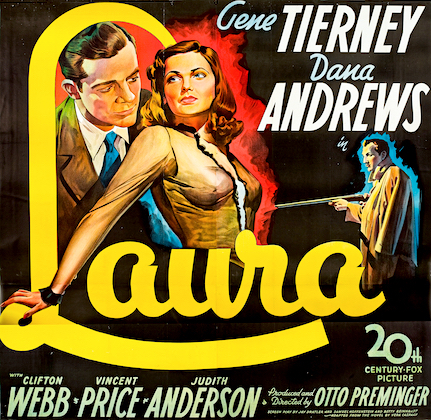
This classic film noir stars Dana Andrews as a New York detective investigating the murder of an advertising exec and society girl played by Gene Tierney, the eponymous Laura. And there’s a good twist halfway through that completely turns the film on its head, so I’ll keep this vague. (We can debate the merits or otherwise of openly discussing plot points from 75-year-old films another time. Heck, go on Twitter — I’m sure someone’ll be ranting about it from one side or the other right now.)

As a murder investigation, Laura is a decent little mystery — there aren’t a huge number of suspects, but enough to keep you guessing; though I did eventually wonder if it actually hangs together 100% as a case. But that doesn’t matter when everything else about the film plays out so well. For starters, it’s noticeably well directed by Otto Preminger, with some nice shot construction and editing. Then the screenplay (based on a novel by Vera Caspary, and penned by three credited writers and one uncredited, as per the interweb) boasts lots of great dialogue. It’s rarely show-off-ily snappy, but it is effective and sometimes witty. That’s only appropriate considering one of the characters (Clifton Webb’s Waldo Lydecker) has a rep as a wordsmith — that wouldn’t fly if he didn’t have plenty of bons mots to offer.

The rest of the cast are similarly noteworthy. Tierney is very plausible as the kind of gal everyone would fall in love with, and Andrews is equally so as the solid copper. A key supporting role is filled by a young-ish Vincent Price. (Can we call 33 “young”? As someone who was born in 1986, I’m going to go with “yes”.) It’s an accident of history how effective his casting is — not that his performance is bad in and of itself, but his later reputation brings certain expectations about how things might pan out. Is that warranted? Well, you’ll have to watch it to see…

5 out of 5

Jigsaw
(2017)

2018 #104
The Spierig Brothers | 92 mins | streaming (HD) | 2.35:1 | USA & Canada / English | 18 / R

Jigsaw

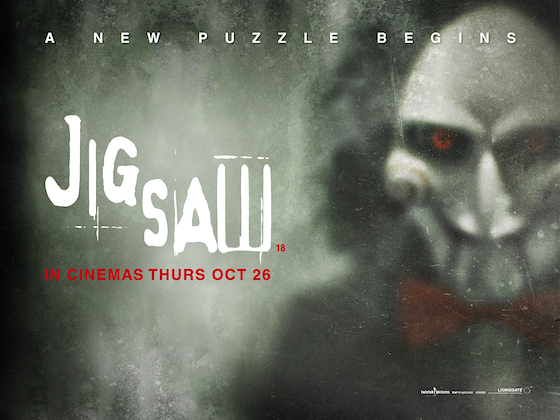
After seven films between 2004 and 2010, the Saw series seemed well and truly done. But nothing once-popular can stay dead for long in Hollywood, and so 2017 saw this revival (and this year will see another, pandemic permitting). It seemed to go down quite poorly, and I’m curious as to why. It’s a Saw film through and through — if you don’t like the series, there’s no reason you should like this — so, I mean, why would you want or expect a Saw film to not be a Saw film? Maybe it’s just people who don’t actually liking Saw films all that much but chose to watch an eighth one anyway? Well, it’s up to them how they choose to spend their time…

Anyhow, as a Saw film, I thought it was one of the better ones. Not the very best (that’s still the first), but definitely top end. I liked the final reveal, which is a big part of these films’ appeal — what twist they’re going to pull in the final moments. Sure, I’d guessed part of it well in advance, but it still had some neat aspects. (I do wonder how many people were fooled into thinking Jigsaw was still alive, somehow? He died many, many films ago; he’s not coming back.) In terms of the whole series, it does raise a load of questions — but digging into them is really getting navel-gazing about the series’ continuity. I’m not sure it’s worth worrying about.

3 out of 5

Inferno
(1953)

2018 #107
Roy Baker | 84 mins | Blu-ray (3D) | 1.37:1 | USA / English | PG

Inferno

3D and film noir aren’t things you readily associate with each other, but there are a couple of them — see here for a few. Some might count Hitchcock’s Dial M for Murder, too. Inferno here is another borderline case. The plot definitely has a whiff of noir — a husband left for dead by his wife and her lover, which cause her moral quandaries but him not so much — but the telling is more of an Adventure movie, some might even say a Western, with the husband struggling through an arid wilderness. Plus it’s all shot in brightly-lit Technicolor.

Whether you count it as noir or not, it’s most noteworthy for its 3D. It was one of the last films made in the format during the fleeting ’50s experiment, especially as its studio, Fox, were backing CinemaScope as a TV-beater instead (well, I guess they were right). It doesn’t make blatant use of its 3D — there’s no stuff poking at the camera (until the punch-up finale) — but it often brings a nice sense of depth often, including to the wide-open desert vistas. It was well received, too, with the New York Times saying it was where “3-D comes of age”, and others comparing it favourably to other movies of the era, which treated 3D as no more than a gimmick and squandered its potential. All of that said, a climactic fight does indulge in all the in-your-face aspects we associate with classic 3D movies — but it was a late addition forced on the film by studio head Darryl F. Zanuck, who wanted to see more overt 3D action. In summary up, director Roy Ward Baker commented, “the critics gave it unanimous applause, largely because it has a good story to which the process contributed greatly, as opposed to the usual stereo films which were simply exploitation stunts. However, we did include a few of the cliches, at the behest of DFZ. I guess he was right at that.”

It is a pretty good tale. Baker wanted to make a film in which “the leading character spends long periods alone on the screen, where the interest would be in what he does, rather than what he says.” Nonetheless, we’re given a voiceover narration from the hero, which gets a bit twee, albeit with an enjoyable dry wit now and then, and an interesting pragmatism about his situation. There’s some neat editing to juxtapose his situation with that of his condemners, too: when he’s starving it cuts to wifey enjoying a lavish meal; as he digs in the desperate hope of water it cuts to her lover casually fixing himself a drink. Said wifey is played by Rhonda Fleming, who apparently was known as “the Queen of Technicolor” because of her complexion and vibrant red hair. Everyone in the film is in love with her — even the cops who’ve just met her comment on it — and, yeah, I buy that. There’s an amusing bit where her lover is desperate to throw caution to the wind and visit her room that night simply because it’s “been four days”, wink wink nudge nudge. Men, eh?

4 out of 5

Terminator 2: Judgment Day 3D (1991/2017)

2018 #103
James Cameron | 137 mins | Blu-ray | 2.40:1 | USA & France / English | 15 / R

Terminator 2: Judgment Day 3D

When I’ve previously reviewed 3D versions of films I’d already seen in 2D, I haven’t given them a new number — so why did T2 3D merit one? Partly it’s a ‘feeling’ that comes from it not being the original version. Most of those other re-watches were films that had a 3D release concurrent with their 2D one, but T2’s is a years-later addition. Still, that’s a thin justification. More importantly, however, they chose to perform the 3D conversion on the film’s theatrical cut, which I’m 95% sure I’ve never seen. The extended Special Edition was first released in 1993, which is before I first saw the film, and some of the scenes that have most stuck in my memory are from the longer cut. Is it shorter enough, and therefore different enough, to warrant a new number? Not sure. But combine that with the new 3D and I thought, yeah, that’s pretty different all round.

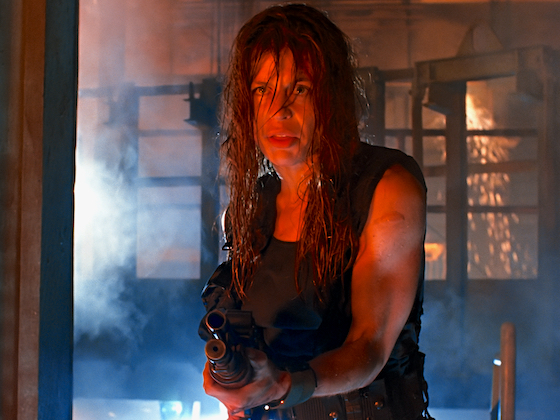
The film itself… well, it’s an action/sci-fi classic, isn’t it? But I needed to rewatch it to remember how good it is — I left it off my 100 Favourites a couple of years ago because I decided it was on the long-list just because you’d expect it to be there; but, rewatching it, I realise I do agree with the consensus on its greatness. The most interesting ideas in T2 aren’t what it contributes to the series’ sci-fi mythology (though a liquid metal robot is pretty neat), but how it chooses to develop its characters. The T-800 now being a good guy is the obvious one, but check out the humans: sweet innocent Sarah Connor is now a hardened military-vet-type locked up in a mental institution where she rails against the system; and her son, destined to become the great leader of humanity, isn’t a hero in waiting but instead an irritating juvenile delinquent brat. It’s these extra dimensions, not just the sci-fi and the action, that make T2 such a great film.

“Get away from him, you bitch!” ...no, wait, wrong Cameron movie

That said, I think there’s an argument to be made that T1 has withstood the test of time better than T2. The original film is a grounded sci-fi thriller, its low budget working in its favour to emphasise those qualities: it’s fuelled by both big SF ideas and the grittiness of its present-day setting. T2, on the other hand, is pitched as an action-and-effects blockbuster — it was the first movie to cost more than $100 million (according to some reports, anyway) — but in that respect it’s been continuously surpassed by numerous other summer spectacles in the intervening decades. As I said, there are other reasons it endures, but I think on balance I might prefer the first movie.

And talking of preferences, I definitely prefer T2’s extended cut to the theatrical one. There are numerous nice grace notes added to the longer cut, but it really comes down to one scene: the sequence where they take the chip out of the T-800’s head and Sarah considers destroying it, which includes the famous mirror shot. For me that’s one of the most memorable scenes from the entire film. It’s both a good scene in its own right and it’s neatly mirrored in the ending, when the Terminator makes Sarah lower him into the molten steel. I’ve always found it an odd idea that it wasn’t always there, and I continue to feel that way. The film seems incomplete without it.

Now, the 3D… As you might expect from a genuine 3D advocate like Cameron, a lot of the effect is quite subtle — it’s aiming for realistic spacing, not an in-your-face exaggeration of depth. That kind of subtlety is arguably a reason a lot of people feel 3D adds little, because its benefit isn’t obvious. Heck, sometimes you don’t even notice it’s there. Ironically, that’s sometimes amongst the best 3D, but you might need a direct comparison with 2D to notice it. Put a good subtle-3D shot against its 2D counterpart and suddenly you’re aware of the natural awareness of shape and depth the extra dimension is adding. Now, T2 3D is not a prime example of this — it’s a film that was originally shot and designed for 2D, after all — but it does have moments that I think demonstrate that kind of effect. And, at other times, the 3D is much more obvious; mostly during big action set pieces, as you’d expect.

Oh, if he only knew how many times he'd be back...

The big downside is that they felt they had to apply a hefty dose of DNR before doing the 3D conversion. I’m sure there are reasons why film grain would get in the way of a conversion, but sometimes the DNR is too heavy-handed. It’s never at the level of the infamous Predator Blu-ray, where everyone looked like a slightly-melted waxwork, but there are times here when people seem to have been formed from smooth plastic rather than the natural pore-covered texture of real skin. How much this matters is a case of personal preference, but there were one or two times I did find it distracting — the meeting between Sarah and Dr Silberman, for instance, where the DNR has smoothed his skin so much that it looks like he’s been de-aged. If this was just on the 3D version then, hey-ho, that’s a side effect of the process, but I believe the same scrubbed version has been put out as the film’s official 4K restoration. That’s very disappointing.

So, this is in no way my preferred version of the movie; but it’s such a great film anyway, and this re-watch has reminded me of that, that it can be nothing but full marks.

5 out of 5

Rocketman (2019)

2020 #3
Dexter Fletcher | 121 mins | streaming (HD) | 2.39:1 | UK, USA & Canada / English | 15 / R

Rocketman

The director and star of Eddie the Eagle reunite for another biopic of a bespectacled British icon… though I’m not sure how favourable global music megastar Elton John would consider that comparison.

Both films concern a regular lad from a working-class background who dreams of something bigger — in Eddie’s case, Olympic glory; in Elton’s, music stardom. But that’s more or less where the films diverge, because whereas Eddie’s ski jumping adventure was rendered as a family-friendly comedy, Elton’s seduction by sex and drugs and rock and roll is altogether more adult. But it’s also a world away from grim and gritty seriousness, because director Dexter Fletcher regularly injects flights of fancy and fantasy. Elton may end up in a very dark place (before inevitable salvation, natch), but it’s a helluva lot of fun getting there.

In my review of the year before’s big musical biopic, Bohemian Rhapsody — which Fletcher ended up guiding through a third of its shoot and post-production after credited helmsman Bryan Singer was fired — I wondered which director was responsible for that film’s “occasional bold directorial flourishes”. On the evidence of Rocketman, I’d guess they were Fletcher’s idea. His staging and camerawork are often highly imaginative here, really cutting loose during the musical numbers. (Fletcher’s next job is taking over the Sherlock Holmes films from Guy Ritchie, a task that certainly requires the kind of visual panache he’s demonstrated here.)

Piano man

Indeed, this isn’t just “a film about music”, but a proper musical. It isn’t just a simplistic jukebox musical either, nor a standard musician biopic where the character performs some of their hits. Well, it is both of those — it’s a jukebox musical because all the songs are from Elton’s back catalogue (plus one new one so it could vie for the Oscar, of course), and the character of Elton John does perform some of his hits in recording studios and on concert stages. But it’s also more than that in the way it’s executed. Other characters break into song from time to time too, and there are clever reimaginings of several recognisable tracks. This is a restlessly imaginative movie.

Egerton is superb in the lead role, crafting Elton as a much more nuanced figure than he’s sometimes regarded; a truly rounded individual with a considered interior life. One might argue the whole drugs storyline is somewhat predictable or even rote, with some surprising mirrors of the much-criticised Bo Rhap (“surprising” because where that film was roundly criticised for its clichés this has received a much more generous critical response)… but if that’s the true story, that’s the true story, right? Egerton certainly negotiates it with believability. Much praise for the film has focused on his performance, leading to significant awards nominations (like at BAFTA) and wins (a Golden Globe), but there are several great supporting players too, not least Jamie Bell as Elton’s lifelong songwriter and true friend, Bernie Taupin.

The cumulative effect is a movie that is highly enjoyable but not without depth; that offers toe-tapping entertainment and filmmaking thrills in its musical numbers, while also digging into its subject’s troubles and their causes. Like an eagle, or a rocket, it doesn’t just fly, it soars.

5 out of 5

Rocketman is on Sky Cinema from today. It placed 10th on my list of The Best Films I Saw in 2020.

Mission: Impossible – Fallout in 3D

Rewatchathon 2020 #14
Christopher McQuarrie | 147 mins | download | 2.39:1 + 1.90:1 | USA, China, France, Norway & UK / English & French | 12 / PG-13

Mission: Impossible - Fallout 3D

Despite Paramount’s best efforts to screw over 3D fans by not releasing it on Blu-ray anywhere in the world, there is a copy of Fallout in 3D out there if you know where to look (and you do have to hunt for it a bit, because it’s not on the best-known torrent sites).

Like so many modern blockbusters, Fallout was not shot in 3D but was converted during post-production, at the request of the filmmakers (including director Chris McQuarrie) to tap into the box office potential of that format in certain markets (I believe 3D remains very popular in Asia, primarily). Paramount agreed to that, but didn’t think there was enough market to bother releasing it on 3D Blu-ray (a view clearly not held by other studios, who continue to release 3D discs in some countries (although which countries varies by studio, strangely)). However, the 3D version was quietly released for streaming rentals in some places, which is the source of the copy I found.

Most streaming rental services don’t offer 3D, and those that do tend to be TV-based and stuck on older, lower quality standards. So the original source for this was probably 720p, which was then ripped, squashed (to what’s known as half side-by-side 3D), and recompressed. It’s wound up looking almost DVD-ish in resolution. But it’s better than literally nothing, which (given Paramount’s irritating refusal to release it on disc) is the only alternative. And it’s watchable, so long as your focus is on the 3D rather than the overall PQ. (The thing that really amazed me while watching this is that there are people who think such DVD-like levels of quality are perfectly acceptable on their 4K TVs, and they see no need to upgrade to Blu-ray / an HD Netflix subscription / etc. Those people really should’ve gone to Specsavers.)

It's even more vertiginous in three dimensions

As a 3D fan, it’s worth enduring the lower resolution, because the 3D itself is superb. It may be a post-conversion (and, at that, one the director not only didn’t supervise but has never even watched) but it’s really well done, in particular during the action sequences — which, in fairness, is most of the movie. The skydive; the Paris bike chase; the helicopter stuff; perhaps most of all the clifftop fight — they all gain something from the third dimension. In some it’s a sense of scale — Hunt and Walker suspended in space as they freefall; an almost similar sensation during their climactic fight on the cliff, which now feels so high up. Other times, it puts you right in the heart of the action — the low-angle shots and speeding camerawork during the car chases mean that surrounding traffic whooshes at and past you in 3D, like being on some sort of rollercoaster. There’s not much poking-out-of-the-screen action (though I rarely notice it in home 3D viewing even when others praise a film for it, so I won’t swear to there being none), but at appropriate times you can feel bullets or debris flying out of the screen at you. It’s a literally engrossing experience.

I’m thrilled I finally managed to find and watch it. Though that’s a mixed blessing, because while the 3D didn’t disappoint, the lack of disc release still does. If the 3D had been a bit rubbish, I could’ve written this viewing off to experience and been happy to never see the film in that format again. But as it’s great, I’m now even more disappointed by the lack of a 3D Blu-ray. I’m going to find it frustrating to go back to watching some of the action scenes in boring old 2D. Whenever I next watch Fallout it’ll be in 4K, and I’ll console myself with the fact that’s how it was actually shot, and I’m sure it’ll look great because it’s a very well-shot film… but the third dimension will be sorely missed.

5 out of 5

My full review of Mission: Impossible – Fallout is here.

The 100-Week Roundup

Regular readers may be aware that for a while now I’ve been struggling with what to do about my increasingly ludicrous review backlog. It continues to grow and grow — it’s now reached a whopping 215 unreviewed films! (And to think I started that page because I was 10 reviews behind…) Realistically, there’s no way I’m ever going to catch that up just by posting normal reviews, especially given the rate I get them out nowadays. But since this blog began I’ve reviewed every new film I watched — I don’t want to break that streak.

So, I’ve come up with something of a solution — and kept it broadly within the theming of the blog, to boot.

The 100-Week Roundup will cover films I still haven’t reviewed 100 weeks after watching them. Most of the time that’ll be in the form of quick thoughts, perhaps even copy-and-pasting the notes I made while viewing, rather than ‘proper’ reviews. Today’s are a bit more review-like, but relatively light on worthwhile analytical content, which I think is another reason films might end up here. Also, the posts won’t be slavishly precise in their 100-week-ness. Instead, I’ll ensure there are at least a couple of films covered in each roundup (it wouldn’t be a “roundup” otherwise). Mainly, the point is to give me a cutoff to get a review done — if I want to avoid a film being swept up into a roundup, I’ve got 100 weeks to review it. (Lest we forget, 100 weeks is almost two years. A more-than-generous allowance.)

I think it’s going to start slow (this first edition covers everything I haven’t reviewed from April 2018, which totals just two films), but in years to come I wouldn’t be surprised if these roundups become more frequent and/or busier. But, for now, those two from almost two years ago…


Das Boot
The Director’s Cut
(1981/1997)

2018 #69
Wolfgang Petersen | 208 mins | Blu-ray | 1.85:1 | Germany & USA / German & English | 15 / R

Das Boot: The Director's Cut

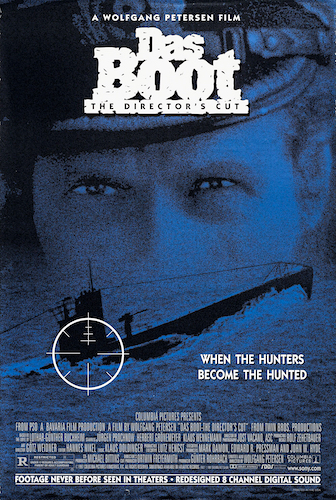
Writer-director Wolfgang Petersen’s story of a German submarine in World War 2 may have an intimate and confined setting, but in every other sense it is an epic — not least in length: The Director’s Cut version runs almost three-and-a-half hours. However, the pace is excellently managed. The length is mainly used for tension — quietly waiting to see if the enemy will get them this time. It’s also spent getting to know some of the crew, and the style of life aboard the sub. It means the film paints an all-round picture of both life and combat in that situation. The only time I felt it dragged was in an extended sequence towards the end. I guess the long, slow shots of nothing happening are meant to evoke time passing and an increasing sense of hopelessness, but I didn’t feel that, I just felt bored. Still, while I can conceive of cutting maybe 10 or 20 minutes and the film being just as effective, being a full hour shorter — as the theatrical cut is — must’ve lost a lot of great stuff.

It’s incredibly shot by DP Jost Vacano. The sets are tiny, which feels realistic and claustrophobic, but nonetheless they pull off long takes with complex camera moves. Remarkable. Even more striking is the sound design. It has one of the most powerful and convincing surround sound mixes I’ve experienced, really placing you in the boat as it creaks and drips all around you. The music by composer Klaus Doldinger is also often effective. It does sound kinda dated at times — ’80s electronica — but mostly I liked it.

Versions
Das Boot exists in quite a few different cuts, although The Director’s Cut is the only one currently available on Blu-ray in the UK. If you’re interested in all the different versions, it’s quite a minefield — there are two different TV miniseries versions (a three-part BBC one and a six-part German one), in addition to what’s been released as “The Original Uncut Version”, as well as both of the movie edits. There’s a lengthy comparison of The Director’s Cut and the German TV version here, which lists 75 minutes of major differences and a further 8 minutes of just tightening up. Plus, the TV version also has Lt. Werner’s thoughts in voiceover, which are entirely missing from The Director’s Cut. That means this version “has a lack of information and atmosphere”, according to the author of the comparison.

Das salute

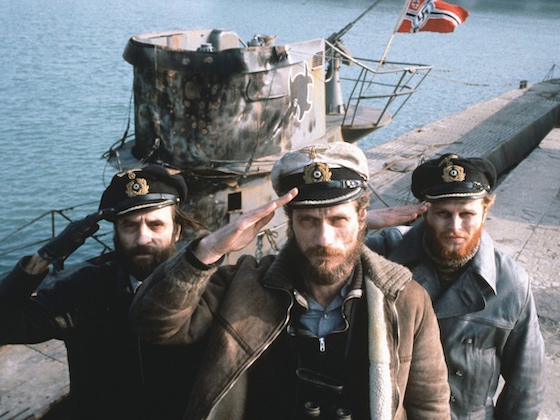
As to the creation of The Director’s Cut, the Blu-ray contains a whole featurette about it called The Perfect Boat. In it, Petersen explains that he thought the TV version was too long, but that there was a good version to be had between it and the theatrical cut. It was first mooted as early as 1990, but it was when DVD began to emerge that things got moving — Columbia (the studio, not the country) was aware of the format’s potential even from its earliest days, and so it was with an eye on that market that they agreed to fund the new cut. Not only was it all re-edited, but as for that soundtrack I was so praiseful of, the audio was basically entirely re-recorded to make it more effective as a modern movie. The only thing they kept was the original dialogue… which had all been dubbed anyway, because the on-set sound was unusable.

In the end, the new cut was such a thorough re-envisioning that it took three times as long as anticipated, and led to a glitzy premiere and theatrical re-release. Petersen thinks the main difference between the theatrical and director’s cuts is the latter is more rich and has more gravitas because we spend more time with the individual characters.

5 out of 5

Das Boot: The Director’s Cut was viewed as part of my What Do You Mean You Haven’t Seen…? 2018 project.

It placed 22nd on my list of The 26 Best Films I Saw For the First Time in 2018.

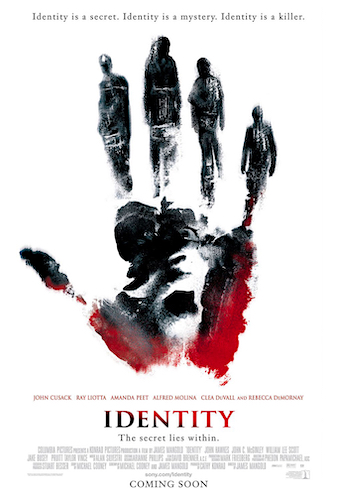
Identity
(2003)

2018 #78
James Mangold | 90 mins | streaming (HD) | 16:9 | USA / English | 15 / R

Identity

I bought Identity probably 15 or so years ago in one of those 3-for-£20 or 5-for-£30 sales that used to be all the rage at the height of DVD’s popularity, and no doubt contributed massively both to the format’s success and even regular folk having “DVD collections” (as opposed to just owning a handful of favourite films). As with dozens (ok, I’ll be honest: hundreds) of other titles that I purchased in a more-or-less similar fashion, it’s sat on a shelf gathering dust for all this time, its significance as a piece of art diminishing to the point I all but forgot I owned it.

But I did finally watch it, not spurred by anything other than the whim of thinking, “yeah, I ought to finally watch that,” which just happens for me with random old DVDs now and then. But, like so many other older films that I own on DVD, I found it was available to stream in HD, so I watched it that way instead. The number of DVDs I’ve ended up doing that with, or could if I wanted… all that wasted money… it doesn’t bear thinking about.

Whodunnit?

Anyway, the film itself. On a dark and stormy night, a series of chance encounters strand ten disparate strangers at an isolated motel, where they realise they’re being murdered one by one. So far, so slasher movie. And, indeed, that’s more or less how it progresses. But there’s a twist or two in the final act that attempts to make it more than that. Without spoiling anything, I felt like it was an interesting concept for a thriller, but at the same time that it didn’t really work. There’s an aspect to the twist that is a cliché so damnable it’s rarely actually used (unlike most other clichés, which pop up all the time), and so the film attempts a last-minute explanation of why it’s better than that, but, I dunno, I feel like a cliché is a cliché.

So maybe Identity is best considered as just a straight B-movie-ish slasher, and just overlook the final act’s attempts at being more interesting as just trying to be different. In fact, more interesting to me was the fact it was mostly shot on an enormous soundstage set, which is kinda cool given the scope of the location.

3 out of 5

Portrait of a Lady on Fire (2019)

aka Portrait de la jeune fille en feu

2019 #137
Céline Sciamma | 122 mins | cinema | 1.85:1 | France / French & Italian | 15 / R

Portrait of a Lady on Fire

Now, here’s a film I really need to see again. Not to affirm whether I liked it or not — in fact, I loved it; enough to rank it the #1 film I saw in 2019 — but to fully assess and analyse and process it. This admission is not the best way to begin a review — reviews are meant to be assessment and/or analysis, after all — but, nonetheless, it indicates the kind of effect I felt from the film.

What is that effect? In my best-of-year piece I said it was “the kind of film that casts a spell”, by which I’m referring to how it sweeps you in; how it engages you in such a way that you’re just experiencing it, almost with analytical functions switched off; or if not “switched off”, turned down low enough so as not to be a distraction. Maybe this is how ‘normal people’ see all films, but as someone who actively studied cinema for six years and has spent nearly a decade-and-a-half reviewing every new thing he sees, it’s rare to find something so engrossing that the mental deconstruction while viewing stops almost entirely. That — in its own, somewhat ephemeral way — is as good a testament to the film’s power and quality as any.

Of course, to say it turned off my analytical brain entirely is not completely truthful — this is a long way from a Michael Bay-esque “leave your brain at the door” kind of entertainment. What I mean, I suppose, is that I was engaged more purely by the characters and their story, rather than becoming distracted by pondering the filmmaking choices or structural decisions or acting ability or what have you. (The difference here is perhaps a fine line to quantify, I grant you. If you’ve ever studied film in an academic context, I hope you’ll know what I mean. If you haven’t, I’ve done my best to convey some of the difference.) In this instance, I’m thinking specifically of the film’s leanings towards a sense of Gothic. This element isn’t overt — as it is in, say, Crimson Peak — but it is there, and so my analytical brain was ‘on’ enough to spot that and think it through. while watching. I mean, I’m not claiming that I’m some genius for getting it — there’s a bloody great apparition that’s presented like a key to unlock this facet of the film — but, even with that pointer in hand, it’s not an out-and-out traditionally Gothic tale.

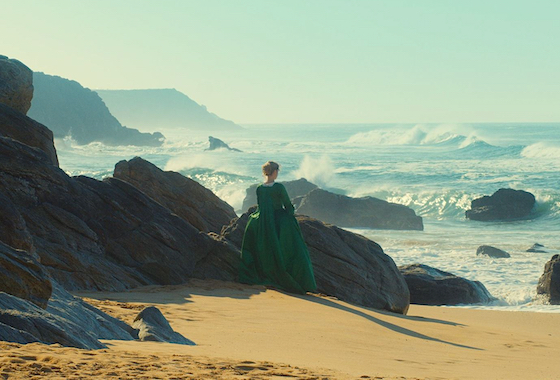
Oh I do like to be beside the seaside

Here I’m not talking about Hammer-like ‘Gothic horror’ but ‘Gothic Romance’ (see my Crimson Peak review if you need a refresher on the difference), and ‘romance’ is an even more operative word for Portrait of a Lady on Fire as it’s about two women who realise they’re in love. That realisation takes a while to manifest, so if you’re a total spoilerphobe then you might argue I’ve just ‘ruined’ the movie; but eh, it’s kind of the point (just look at all the publicity materials!) Much has been made of the fact that it’s a lesbian love story told with the female gaze, as writer-director Céline Sciamma is, indeed, a woman. This is not an insignificant factor, but also not one I feel massively qualified to discuss in depth. I do think the way the relationship is handled and depicted comes with a different perspective than you’d expect if there was a man in the director’s chair, though. It’s not so simplistic as the attitude to sex and nudity, though that is part of it (such scenes are not shot with the same lasciviousness you might expect from a male hand on the tiller) — it’s the overall attitude and focus. Plus subplots, including a significant one with a maid, the delve into Women’s Issues with a level of understanding that, again, might be different under a male director.

The notes I made for myself when I saw the film back in November are frustratingly brief. They include “the music!” and “the sound!”, so let’s take a moment to acknowledge that they are clearly striking elements, while also damning my memory for embarrassing me by not remembering many specifics. That said, the film’s use of music is deliberately sparse, for reasons connected to the story, and so when it is used it’s all the more effective. For some reason my notes don’t mention the cinematography, but maybe I thought that went without saying. It looks gorgeous, with cinematographer Claire Mathon enacting a painterly regard for composition and colour that is wholly appropriate. The rest of my notes conclude with a request: “all the awards for Adèle Haenel please”. Which is to do no disservice to her co-star Noémie Merlant — the film is about their relationship, and so its quality rests on both their shoulders — but in some respects Haenel has the more obvious journey and change.

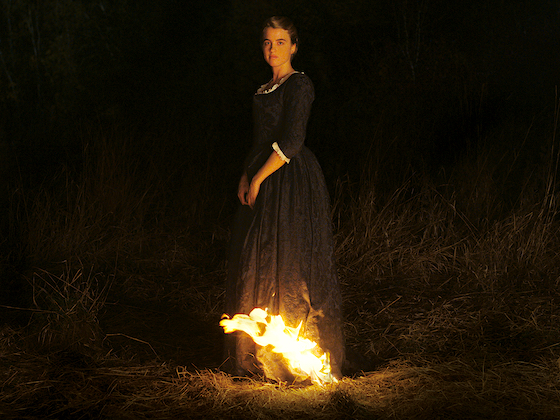
This girl is on fire

The story comes to a head in a moment near the end which made me well up inside. It’s a visual clue that I spotted just ahead of most of the audience I saw it with — I don’t wish to sound boastful here, because I certainly wasn’t the only one even just in that room to spot it ‘early’, but it meant I could also enjoy the audible gasps when the remainder saw it a moment later. My point being: it’s the kind of moment that can provoke an involuntary vocalisation of surprise and delight, and it’s not just me it worked for that way.

I appreciate that this is another vague kind of appraisal. I feel like I want to abandon a lot of this review and just scream “see it, then you’ll know everything I want to say and everything I feel!” But, of course, art and criticism don’t work like that. You won’t experience the film the exact same way I did, even if I could tell you exactly what I experienced and thereby influence your own experience. And there are even people who dislike this movie, which couldn’t be more opposite to my experience (one of the specific criticisms I’ve seen is that it’s slow, and while it’s true that it moves at a very particular pace, I thought it was just right). But, in the end, that is what this review is for: to urge you to see it, because it is a beautiful, absorbing, moving piece of art.

5 out of 5

Portrait of a Lady on Fire is in UK cinemas and on Curzon Home Cinema from today.

It placed 1st on my list of The 15 Best Films I Saw For the First Time in 2019.

1917 (2019)

2020 #6
Sam Mendes | 119 mins | cinema | 2.39:1 | UK & USA / English & French | 15 / R

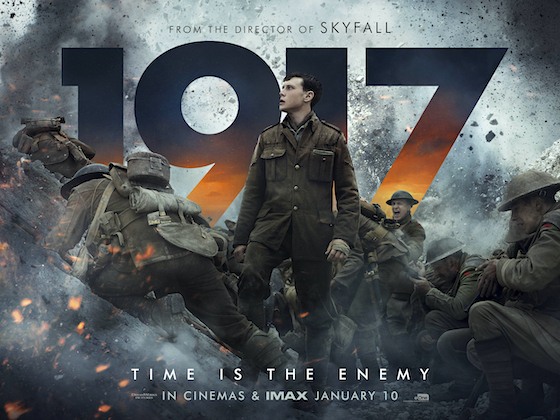
1917

BAFTABritish Academy Film Awards 2020
9 nominations

Nominated: Best Film; Outstanding British Film; Best Director; Best Cinematography; Original Music; Best Production Design; Best Make Up/Hair; Best Sound; Best Special Visual Effects.

I haven’t been following awards season too closely this year, but from the snippets I have picked up here and there it seems to be quite a variable race — every time a frontrunner emerges, something else wins some other award and suddenly the field is open again. 1917 was one of the early tips, and now has several wins under its belt to back that up. It may not be a lock at the Oscars, where the latest works by American auteurs like Martin Scorsese and Quentin Tarantino will give it a robust run for its money (plus the six other contenders, several in with a shot), but tonight it’s BAFTA’s turn. The British Academy may seem to be more focused on being counted among the major Oscar forerunners than anything else, but they do still have a penchant for rewarding British films — and 1917 isn’t just “a British film”, it’s a British film about a key event in British history with an all-star cast of cameos from great British actors. So, as it’s a season-wide contender anyhow, if 1917 doesn’t win the big prize this evening it’ll be a genuine surprise.

Does it deserve it? Take a sample of social media and you’ll get different answers. As with any big, much-discussed film nowadays the initial reception has been followed by waves of backlash — or maybe that’s too grand a term for it; maybe it’s just been different ‘sides’ expressing their opinion in turn. If it wins, there’ll be a vocal contingent about how it didn’t deserve it. As someone observed the other day, literally the only way to avoid such a negative reaction nowadays is to literally take the award out of the incorrectly-named winner’s hands. (If you think that’s facetious, think about it for a second: do you remember any significant backlash to Moonlight winning? I don’t. Every other winner in recent years? Yep. I’m not saying it should’ve had one — it’s a great film — but it is unique in avoiding it.)

Personally, having seen 60% of this year’s BAFTA Best Film nominees, 1917 would be my pick (the others I’ve seen are Once Upon a Time in Hollywood and The Irishman; the remainder are Joker and Parasite, which is only out in UK cinemas next week so probably doesn’t stand a chance). My view may very well change once I’ve ticked all the boxes (Parasite is supposedly the greatest film ever made, after all), but that doesn’t lessen 1917 as an achievement.

War, huh? What is it good for? Winning BAFTAs, probably.

Famously, the film is a single take… sort of. That caveat comes for two reasons. First, because it isn’t a single take, because there’s a fade-to-black in the middle. It’s an effective, well-timed event — basic filmmaking technique as narrative twist, because this is so famous as “a single-take film” and, by that point (it comes fairly late in), we’re so embedded in the technique that the sudden blackness comes as quite a surprise. Second, because it isn’t a pair of single takes, because there’s no way you could shoot a film of this scale and complexity in a genuine single shot. Rumours abound of how many hidden cuts are in the movie. One said there were as many as five. Editor Lee Smith refuses to confirm the exact number, but makes a very sensible point: the film was shot over 65 days — you can’t put together 65 days’ worth of footage with only five cuts. But that shows how well it was achieved: people thought that, gasp, there could be as many as five, when actually there are far more.

“Wait, this film had an editor? That must’ve been a quick job!” Yeah, there’s been a lot of that on social media. People have been quick to dismiss it — people who should know better, quite frankly. As with so many things in life, just because it looks easy doesn’t mean that it was. There’s more to editing than just “sticking shots together”, and planning a film as complicated as this involved Smith’s input throughout shooting, not just in post-production. Plus, they didn’t just do one take that worked for each setup and call it quits — the job still involves choosing which take has the best performances, the right lighting, making sure it matches exactly enough for the transition to the next shot, and so on. The least number of takes for any individual shot was “five or six”, the most 39, so there’s plenty for an editor to do with choosing. I’m getting this info from an interview with Smith by Catherine Springer at AwardsWatch, which is worth a read if you’re interested in getting some insight into why there is actually a lot of difficult, impressive editing work going on here. One further titbit: some of the cuts were ‘improvised’, in that there are some cuts where a cut hadn’t been planned. You can’t do that kind of thing without a skilled editor, surely.

Deakins!

And it makes it all the more impressive that the end result is so seamless — you can buy that you’re watching a single take (okay, two single takes) rather than dozens strung together in pretend. Well, I say it’s seamless — yeah, sure, any Tom, Dick, or Harry can spot places where there are surely cuts (they walk through a dark doorway; someone/thing passes in front of the camera, blocking the view for a split second; etc). But unlike other faked single cuts I’ve seen, where the action doesn’t flow perfectly across a hidden cut, it’s at least conceivable that some of 1917’s hidden-cut-opportunities don’t actually mask a cut at all. Plus, as that interview suggests, there are actually dozens of cuts in the movie, and there aren’t that many glaring opportunities (which is probably how whoever it was arrived at their total of five).

The fact I’ve spent most of this review so far talking about the film’s single-take-ness is some people’s problem with 1917 — that it’s a filmmaking stunt and nothing more; that it’s a technical achievement at the sacrifice of character or narrative or anything but “look what we can do”. I don’t agree with that assessment. I think the single take serves a purpose beyond showing off. At the most basic level, it puts us on this mission with the characters, attaching us to them and their fate in a very intimate way. The camera rarely strays far from their side, choosing to remain at eye level and near to them when it could float off to give us a godly overview. Some have taken to describing it as “like watching a video game” for that reason, but I bet those people also refer to CG effects as “graphics” and, basically, spend too much time watching/thinking about computer games and conflating them with films (I’ll move on before I get distracted into a wholly different argument…) There are plenty of other ways for filmmakers to attach you to characters, of course, but that doesn’t invalidate this method.

The other thing it brings is a tangible sense of time. Our heroes are on a time-sensitive mission, and we’re with them every step of the way — they don’t get to jump from one side of a field to the other with the magic of editing, we must walk across it with them. (The film is certainly not as boring as “watching characters walk across a field” makes it sound — there’s plenty of action and incident.) Again, you don’t need a single take to create real-time — 24 proved that over ten seasons and a movie (not that all of those seasons take their real-time conceit wholly seriously, in my opinion) — but it does emphasise and enhance it.

Walking (running) across a field (a battlefield)

Regular readers will know I love a bit of real-time, so that was right up my street. I have similar feelings about single takes (fake or not), so I loved that aspect too. Plus I’ve got a long-standing interest in World War One, which I don’t feel is represented well enough on film (at least, not as well as its sequel), so getting a big-budget high-profile movie about it is something else I welcome. And I love the work of cinematographer Roger Deakins, who is absolutely on fine form here (when isn’t he?) The long and the short of it is, 1917 was always a movie almost tailored to things that interest me. Fortunately, it lives up to them. Is it the very best picture of 2019? I dunno, I’ve not seen Parasite yet. Will it be a worthy winner nonetheless? I think so.

5 out of 5

1917 placed 6th on my list of The Best Films I Saw in 2020.

The British Academy Film Awards are on BBC One tonight at 9pm.