The 100-Week Roundup XII

In the interests of catching up, this roundup combines two separate weeks.

The first contains two of the most acclaimed films of all time (both feature on numerous “greatest ever” lists, including those from IMDb, Letterboxd, TSPDT, and Empire), which happen to be my final reviews from September 2018.

The second is a pair of movies I watched back-to-back in October 2018 that share an obvious pregnancy theme — but, oh, they could hardly handle it more differently.

This week’s films are…

  • Network (1976)
  • Ran (1985)
  • Prevenge (2016)
  • Bridget Jones’s Baby (2016)


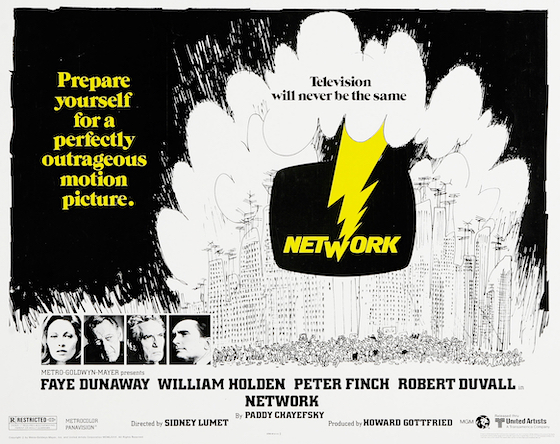
    Network
    (1976)

    2018 #201
    Sidney Lumet | 121 mins | digital (HD) | 1.85:1 | USA / English | 15 / R

    Network

    no predictor of the future — not even Orwell — has ever been as right as Chayefsky was when he wrote Network.

    So wrote Aaron Sorkin, who has cited Network’s screenwriter Paddy Chayefsky as a major inspiration on his own writing; he even cited the man when accepting his Oscar for The Social Network; and Sorkin’s TV series The Newsroom feels like it could’ve been called Network: The Series.

    Well, maybe not. The first half-hour or so of Network feels like The Newsroom (which was a series very much aimed at being realistic, to the extent that it was set in the recent past and mostly used real news stories for its plots), whereas Network spirals off into its own level of satirical craziness, far beyond what Sorkin’s series attempted.

    But whereas The Newsroom looked to the recent past and real events, Network is as indicative of the future as Sorkin said in that opening quote. The film may be 44 years old, but I’m pretty sure you could Chayefsky’s this screenplay, change only a couple of minor specific words, and film it as being set today. It forecasts the future of TV news as angry men ranting as if they were prophets (this was 20 years before Fox News launched), as well as commentating on the place of terrorism in driving TV ratings.

    It’s cynical and ultimately bleak, but, worst of all, it’s entirely accurate.

    5 out of 5

    Network placed 21st on my list of The 26 Best Films I Saw For the First Time in 2018.

    Ran
    (1985)

    2018 #203
    Akira Kurosawa | 161 mins | Blu-ray | 1.85:1 | Japan & France / Japanese | 12 / R

    Ran

    Akira Kurosawa returns to Shakespeare (after Throne of Blood quite closely adapted Macbeth and The Bad Sleep Well may or may not have been based on Hamlet) for an adaptation of King Lear, relocated to feudal Japan. At the time, it was speculated to be his final film. It wasn’t — he made three more — but this was his last large-scale work.

    The title translates roughly as “chaos”, “pandemonium”, or “turmoil” — I guess they didn’t bother retitling it for the West because the original is a nice, simple word we can understand. But the original meaning is clearly apt, because the film depicts the mayhem that ensues when a warlord abdicates and tries to divide his kingdom between his three sons.

    It’s testament to Kurosawa’s greatness that he can make a movie this magnificent and I wouldn’t even put it in his top five. That might be my failing, though — this is a longer and more complex work than, say, Throne of Blood or Sanjuro. I need to revisit all of Kurosawa’s movies, but none more so than this.

    5 out of 5

    Ran was viewed as part of What Do You Mean You Haven’t Seen…? 2018.

    Prevenge
    (2016)

    2018 #208
    Alice Lowe | 88 mins | TV (HD) | 2.35:1 | UK / English | 15

    Prevenge

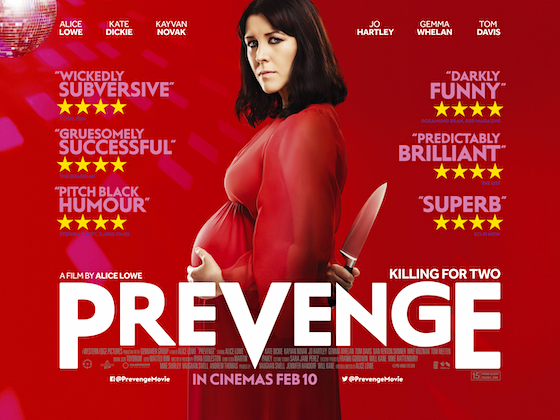
    Seven-months-pregnant Ruth (played by Alice Lowe, who also writes and directs) believes she can hear the voice of her unborn baby, and it’s telling her to kill people. Why is a mystery… unless you read the Wikipedia entry, which just tells you upfront. (Don’t read the Wikipedia entry.)

    The behind-the-scenes story of Prevenge is impressive: it was made while Lowe herself was pregnant; she wrote it in just four days, and shot it in just 11. Speed is no indicator of quality, either positively nor negatively, but Prevenge is very good. The premise is obviously absurd, but it leans into that by being darkly funny. As a horror movie, it’s not scary, more kind of creepy, although not even quite that — it’s not playing on those kind of thrills.

    Perhaps this means it fails to satisfy “horror fans”, thus explaining its fairly low score on IMDb, which I think is unwarranted. But it’s also not what people have started to call “elevated horror” (i.e. horror that is acceptable as a Quality Movie too), because it’s too transgressive for that. Perhaps it is best taken as an exceptionally black comedy.

    4 out of 5

    Bridget Jones’s Baby
    (2016)

    2018 #209
    Sharon Maguire | 123 mins | digital (HD) | 2.39:1 | UK, USA, France & China / English | 15 / R

    Bridget Jones's Baby

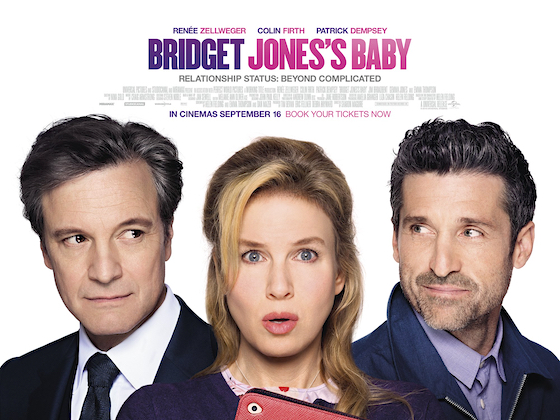
    I first and last watched the original Bridget Jones’s Diary and its sequel, The Edge of Reason, many years ago (probably close to when they were originally released, in 2001 and 2004 respectively; certainly well before this blog existed). I didn’t dislike them, but all I can really remember about them is broad-sweep stuff, including barely anything from the second one. So I didn’t come to this belated third movie as an all-read-up fan; but, just like the first two, I didn’t dislike it… and, 100 weeks later, can barely remember any details about it. (I read the detailed plot description on Wikipedia and some of it came back to me.)

    The storyline is mostly pretty obvious — it’s a recycle of the previous films’ love triangle thing, now with the added complexity of a pregnancy — which means the over-two-hours running time feels somewhat excessive (I continue to believe all comedies should be about 90 minutes). In spite of that, it’s often pretty funny. Some of the riffs on modern media and whatnot are a bit tired (“those young people, just posting photos of their food on Instagram!”), but other gags land well enough.

    In the earlier movies, Renée Zellweger attracted praise for her ability to inhabit a British lass. It feels like she’s forgotten how to do the accent in the 12 year gap; or maybe it’s just thanks to the work she’s obviously had done on her face… At least she’s helped by a supporting cast so stuffed with quality performers from UK comedies that some literally just appear in the back of shot (presumably there were deleted scenes).

    Reasonably successful at what it sets out to do, then; enough so that there’s been talk of a fourth one.

    3 out of 5

  • Memories of Murder (2003)

    aka Salinui chueok

    2019 #15
    Bong Joon Ho | 131 mins | download (HD) | 1.85:1 | South Korea / Korean | 15

    Memories of Murder

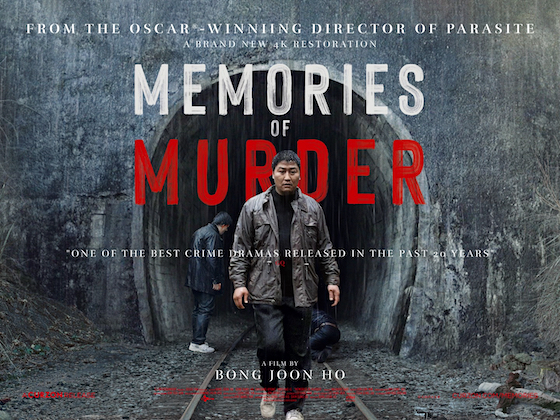
    South Korean director Bong Joon Ho has gradually risen in prominence over the past few years, culminating in Parasite’s history-making success at this year’s Oscars (yes, that was only earlier this year). Memories of Murder wasn’t his debut work, but it was what initially garnered him some attention outside Korea. It’s been surprisingly hard to come by for a while now, but a new 4K restoration is released in the UK via Curzon today (it’s coming to US cinemas for a limited run in October, and new Blu-ray releases (including one from Criterion) will follow).

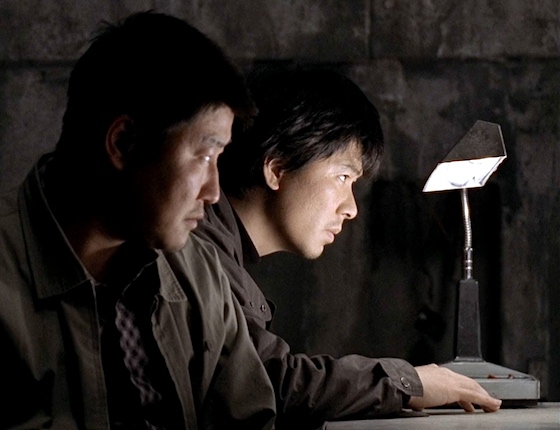
    In 1986, two women are raped and murdered in provincial South Korea. The local detective, Park Doo-man (Bong regular Song Kang-ho), has never dealt with a case of this magnitude and relies on old-fashioned methods — his main one being to have his partner, Cho (Kim Roi-ha), beat confessions out of suspects. After a modern-minded big-city ‘tec, Seo Tae-yoon (Kim Sang-kyung), volunteers to help, the old and the new clash. As more crimes are committed, more clues are gathered, and more suspects are apprehended, but then cleared. Can the police ever get close to their man?

    Loosely based on the true story of Korea’s first serial murders, and taking a procedural approach to the crime thriller genre, Memories of Murder invites comparison to David Fincher’s Zodiac for its methodical, realistic narrative style and plot that follows obsessed investigators chasing unsolved murders in the past. Zodiac is one of my favourite films (it placed 3rd in 100 Favourites II), so it’s a tall order to be pitched against it. Fortunately, Memories of Murder is strong enough to withstand the comparison.

    Investigators

    A lot of praise that applies to Zodiac could be copy-and-pasted here. In addition to the facets I’ve already mentioned, there are several fine performances (not least from Song, who’s clearly become a Bong regular for a reason); several striking set piece crimes and/or discoveries without indulging in glorification of real crimes; and a commentary on the methods and obsessions of investigators that goes beyond ‘doing the job’. It does none of this in the same way as Fincher would a couple of years later, but it’s a different perspective within the same genre headspace.

    Memories of Murder is already a well-regarded film (on top of a 91% Tomatometer score, it’s on the IMDb Top 250 and in the top 100 of Letterboxd’s version ) but, having been out of widespread circulation for a few years, and with renewed interest in Bong’s back catalogue, it’s ripe for wider (re)discovery.

    5 out of 5

    Memories of Murder is available to rent on Curzon Home Cinema from today.

    It placed 5th on my list of The Best Films I Saw in 2019, after being viewed as part of What Do You Mean You Haven’t Seen…? 2019.

    Before Midnight (2013)

    2018 #205
    Richard Linklater | 109 mins | Blu-ray | 1.85:1 | USA & Greece / English | 15 / R

    Before Midnight

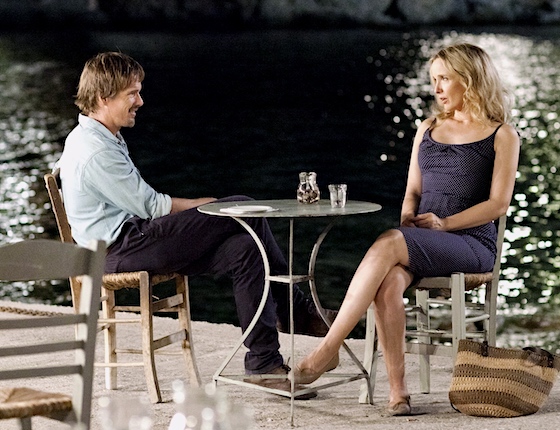
    The third film in co-writer/director Richard Linklater’s Before trilogy catches up with couple Celine (Julie Delpy, also a co-writer) and Jesse (Ethan Hawke, the third co-writer) in middle age, after years of being together, with two kids (plus his kid from a previous relationship) and a host of problems bubbling under the surface.

    Linklater got a lot of attention for shooting coming-of-age drama Boyhood in real-time over 12 years, but for my money he’s used a similar technique to much better effect in this trilogy. It’s a different way of handling it, of course: Boyhood was filmed across all 12 of those years, following the characters closely as they grow and change; whereas the Before films drop us in for a crucial few hours once every nine years, thereby offering a more concentrated experience of time on screen, but covering so much more in what’s discussed and implied about the time in between our visits.

    The first two films — 1995’s Before Sunrise and 2004’s Before Sunset — are marked by an unreserved romanticism. Midnight is notably different, abandoning that lovey-dovey-ness and replacing it with a powerful examination of the tension in a long-term relationship. In some respects, it’s all the better for it. That’s in no way a criticism of the previous films (I still think Sunrise is first among equals), but it’s realistic that, as time goes on, people change. They can’t be young-spirited and full of the joys of first love forever. Well, they could, but it wouldn’t be life and relationships as most of us know it.

    Jesse and Celine

    Their interpersonal turmoil is all the more affecting because we’ve connected with these characters on and off in real-time for a couple of decades. Consequently, I can’t remember the last time I went on such an emotional rollercoaster. It’s not just realistic, but brave, to choose to swing the film in such a quarrelsome direction, rather than just show them rekindle old passions (again). It leads to an entirely different effect: the first two leave you feeling warm and fuzzy; this is more like being punched in the gut. And yet I wouldn’t have it any other way. Rather than feeling out of place when put next to its forebears, Midnight feels like a necessary addition.

    My original reviews of Sunrise and Sunset from 2007 (linked earlier) are both marked as 4 out of 5, but I don’t stand by that. I watched them again before Midnight and would unequivocally give them each 5 stars. I wouldn’t want anyone to read all three reviews and think I’m rating Midnight as better than its predecessors. As a trilogy, they’re all almost equally good. I say “almost” because the hard-hitting emotional realism of this one is kinda depressing, while the unabashed romanticism of the first two is lovely. Maybe how you are as a person dictates which of those ends of the spectrum you prefer, because the dramatic shift in tone does not presage a shift in quality. Put another way, on a qualitative level I think they’re all 5s, but I love the first two that bit more because they’re nicer… but perhaps less real. Either way, together they are one of the greatest trilogies ever made.

    I really hope they do a fourth one, though. Maybe it’s just because I want to spend more time with these characters, but I also feel a little that the series might need balance. As I’ve said, the first two are so of a piece, the third isn’t, so perhaps there’s room for one more ‘act’ to even that up. Or, hey, why not just make another one every nine years until the inevitable? (Now I’m just getting greedy.) Ethan Hawke has observed that Sunrise begins with Celine and Jesse watching a couple in their 40s arguing and Midnight is about Celine and Jesse as a couple in their 40s arguing, so maybe it’s an apt place to stop. But he also says that all it takes is for one of them to have an idea that excites the other two and they’d do it again, so perhaps we can look forward to Before Midday in 2022 after all.

    5 out of 5

    Before Midnight placed 2nd on my list of The 26 Best Films I Saw in 2018.

    The 100-Week Roundup XI

    This week: an underrated crime thriller based on the same true-life story as a Hitchcock classic; an investigation of the trauma left by conflict in a film I’ve nicknamed “Gulf War Rashomon”; and a test of this “just post my notes already” roundup format with one of my favourite films I watched in 2018.

    They are…

  • Compulsion (1959)
  • Heathers (1988)
  • Courage Under Fire (1996)


    Compulsion
    (1959)

    2018 #194
    Richard Fleischer | 99 mins | TV | 2.35:1 | USA / English | 12

    Compulsion

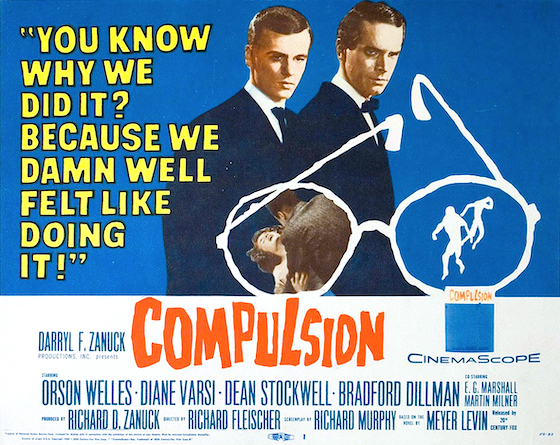
    Based on a novel that was based on the Leopold and Loeb case (which has also been the inspiration for various other films, most notably Alfred Hitchcock’s Rope), Compulsion is the story of two students who think their intellectual superiority will allow them to get away with the perfect murder.

    Playing the students, Dean Stockwell and Bradford Dillman are both fantastic. They’re two different types of well-to-do prodigies: Dillman charming and cocksure; Stockwell both awkward and supremely confident of his own exceptionalness. Their performances keep things compelling, even as the events unfolding are a foregone conclusion. You should and will hate them — even if they weren’t murderers, they’d be insufferable pricks (they sound like any number of modern-day politicians, don’t they?); that they’re cold-blooded killers just makes them worse. But even though you’ll never root for them, they’re still addictively watchable. Also, bearing in mind when the film was made, there’s a strong undercurrent of their homosexuality. It disappears as the film goes on, becoming more concerned with the case than the relationship between the two guys, but it’s discernibly there at the start.

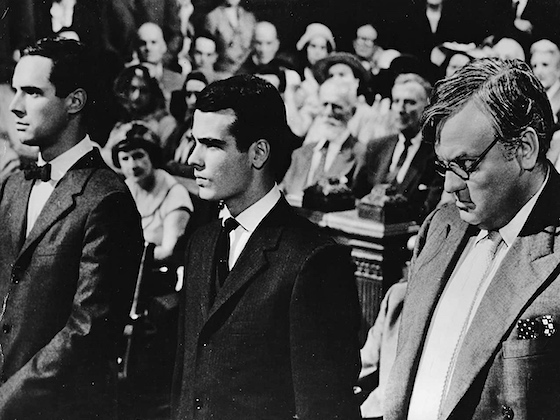
    And then Orson Welles turns up. Despite getting top billing, he has more of a third act cameo that turns into the film’s most grandstanding moment: his closing speech at the trial; a real tour de force against capital punishment. Apparently it was issued on vinyl, it’s that good. The three stars got and get all the recognition (they shared Best Actor at Cannes that year), but there are also fine supporting performances from Martin Milner and Diane Varsi as a couple of fellow students who get caught up in the case in different ways; and E.G. Marshall is very good as DA Horn, the man who eventually catches the guys and therefore becomes Welles’ courtroom nemesis. He’s particularly understated during Welles’ big speech, gradually shifting from annoyance and hatred to agreement, ultimately rising to his feet at the end as if in a silent standing ovation.

    Stillman, Stockwell and Welles

    Aside from that obvious Big Scene, there are several other memorable ones: Dillman calmly talking to his teddy bear while Stockwell frantically searches for misplaced glasses, for example; or the cat-and-mouse scenes where the DA interviews the lads separately. Much of it is fantastically shot, too. There’s an occasional showy bit (like focusing on glasses on a nightstand as it gets dark outside, then showing the culprit and investigator reflected one in each lens), but also a general level of quality that often helps emphasise the darkness in the lads’ souls.

    I don’t think Compulsion is widely discussed anymore (it has fewer ratings on IMDb than Love on a Leash!), but I thought it was a brilliant film; one that can withstand comparison to more-acclaimed versions of the same story. It’s definitely underrated today.

    5 out of 5

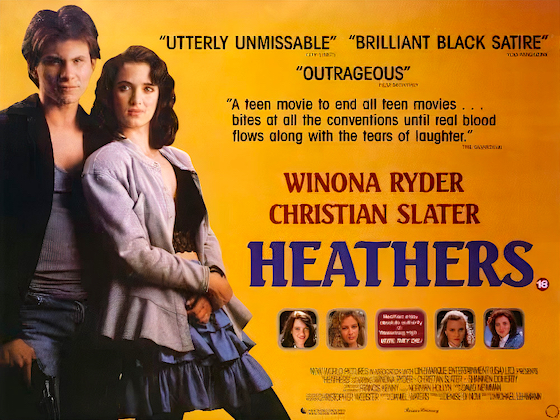
    Heathers
    (1988)

    2018 #196
    Michael Lehmann | 103 mins | Blu-ray | 1.85:1 | USA / English | 15 / R

    Heathers

    Heathers was one of my favourite films I watched in 2018 (it placed 5th on my list of The 26 Best Films I Saw For the First Time in 2018), but I didn’t make any notes on it at the time, and (obviously) it’s now two years since I watched it. Oh dear.

    So, in the spirit of the point of these roundups (to clear old unreviewed films, regardless of how much or little I have to say about them), we’ll have to make do with repeating my brief summary from the aforementioned “best of” list. Though I’ll also add that I watched this on Arrow’s then-new Blu-ray edition, which comes from a 4K restoration and looks absolutely fantastic.

    The darkness that’s barely concealed beneath the pleasant veneer of American high schools is exposed in this pitch-black comedy, which mixes violent teen wish fulfilment with a certain degree of societal satire to boundary-pushing effect. It’s not as transgressively shocking 30 years on as it might’ve been back in the ’80s, but it’s still so very.

    5 out of 5

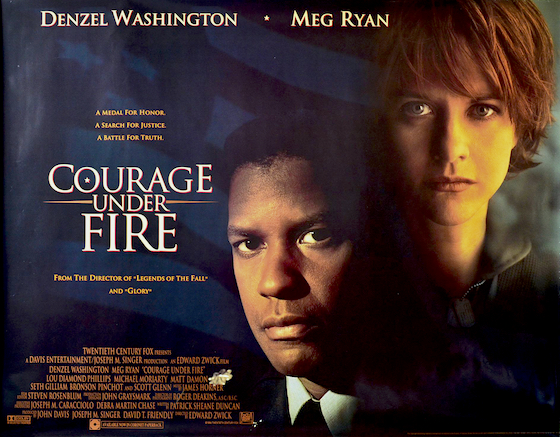
    Courage Under Fire
    (1996)

    2018 #197
    Edward Zwick | 108 mins | TV (HD) | 1.85:1 | USA / English | 15 / R

    Courage Under Fire

    It’s “Gulf War Rashomon” when a traumatised tank commander (Denzel Washington) encounters conflicting accounts of what happened while he investigates whether a helicopter pilot (Meg Ryan) deserves to be posthumously awarded the Medal of Honor, which would make her the first woman to receive it. As higher-ups put pressure on him to just push the honour through, he remains committed to uncovering the truth…

    The mystery of what really went on is not as clever or engrossing as the film thinks it is, but it still works as a meditation on how we acknowledge wartime heroism and the place of truth in doing so. It’s also a consideration of how many people are affected, in different ways, by the sacrifices of war.

    There are some decent performances along the way: Washington is always good value, and a before-he-was-famous Matt Damon demonstrates his commitment to the profession by losing a ton of weight between filming the flashback and “present day” scenes (endangering his health in the process) to portray a medical specialist indelibly affected by what went on ‘over there’. Apparently Mark Kermode said the casting of Meg Ryan as a chopper pilot was “the benchmark for a casting decision so ludicrous that it takes the viewer out of the film,” but I suspect that says more about how she was regarded at the time (best known for romcoms) than her actual performance (she’s no standout, but she’s fine).

    3 out of 5

  • Love on a Leash (2011)

    2020 #173
    Fen Tian | 86 mins | digital (SD) | 16:9 | USA / English

    Love on a Leash

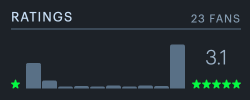
    Love on a Leash first gained a degree of notoriety when some YouTuber happened upon it on Amazon Prime and made a video about it, in which he instructed his followers to rate it 10-out-of-10 on IMDb. Enough of them did that it apparently resulted in his account being banned. (At time of writing, it has a score of 9.2 from almost 6,500 ratings.) I came across it more recently on Letterboxd, where it was featured on a list of divisive films. You only have to look at its ratings spread to see why:

    Love on a Leash Letterboxd ratings

    Are the 1,504 people who’ve rated it 5 stars in on the same joke as those YouTuber’s fans who rated it 10 on IMDb? Or is there in fact something to this movie that makes some people think “this is worth full marks”? You might be surprised to learn that, actually, I think it’s the latter.

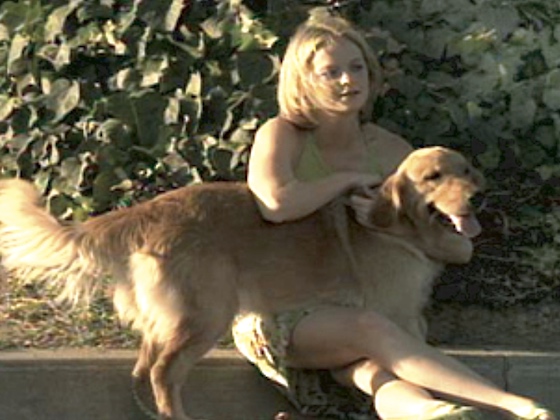
    The film tells the story of Prince, a golden retriever who is actually a man turned into a dog (and whose human name may have been Alvin Flang. Or maybe not — I feel like the dog is an unreliable narrator). How has this happened? Why? Who knows? Who cares? (The film has a lot of random shots of ducks for no obvious reason (it’s almost Lynchian), so my guess is they did it to him. Still don’t know why, though.) Prince learns (from a magic rock-pool) that he can only return to human form by finding the true love of a woman. Enter unlucky-in-love shopgirl Lisa (Jana Camp), who meets Prince in a park and eventually takes him home. What unfolds is not as straightforward as the Beauty and the Beast narrative you might imagine, but to describe any more of the craziness would be to ruin half the fun. The plot’s constant twists and developments beggar belief — it’s genuinely imaginative, in its own way. By which I mean I don’t think you’ll have ever seen anything else quite like this.

    Pizza-faced cinder block and Alvin Flang

    I give full credit to Love on a Leash for just going for it. It’s hard to pigeonhole what genre it was even aiming for. The poster and basic concept suggest a cheesy kids’ film or Hallmark movie; the way it initially plays, you kinda assume it wants to be a romcom; but then it gets so fucking dark (suicide attempt! abusive coworkers! dead dog!), and there’s so much fantastical strange stuff… it’s so much weirder, wilder, and more unique than you can imagine. That’s without even mentioning the bizarre production quirks, like the fact Lisa only wears green clothes and lives in a green house with a green phone and green mugs and green plates… Or that it’s shot with a kind of documentary realism… um, maybe; or maybe it was just done quickly on digital video. There’s definitely no music, though. Like, at all. Even though there’s a composer credited.

    Well, except for a couple of songs the dog sings. Prince is constantly chatting away to himself in voiceover, and sometimes sings little childish ditties too (I suspect they weren’t actually composed by anyone). He can be a right snarky little bugger (he describes the love of his life as a “pizza-faced cinder block”), to the point that I suspect it may all have been improvised by the voice actor in post-production — he seems to be taking the piss out of what’s going on as often as we are.

    Love on a Leash was written and directed by Fen Tian, a 64-year-old Chinese woman who came to America in her 40s “with fifty dollars in her pocket, and not one word of English in her possession,” according to her production bio. It asserts that the screenplay won an award and funding from the Taiwan government, and at one point she took an American cast and crew to China to shoot it but funding fell through. After decades of trying, the film was eventually produced “with barely enough money to cover craft services”, and during post-production she “slept on the couches of her editors, dragging around her blanket, toothbrush, pillow and thirty-nine DV cam reels” and “spoiled” her team by “cooking up huge feasts of homemade Chinese food, and fixing her crew’s love lives with a motherly heart and some Chinese wisdom.” I feel like this deserves a Disaster Artist-type biopic…

    What people get up to in the privacy of their own homes...

    So, we come to the issue I touched on at the start: how do you rate a film like this? As an exercise in moviemaking, it’s a 1. The storyline is borderline nonsensical; it’s shot like an amateur using a camcorder for the first time; the sound mix is so unfinished I’m not sure it was ever started… And yet it’s constantly enjoyable, partly through a “so bad it’s good” hilarity (see the aforementioned terrible filmmaking), but also for the barminess with which it conducts itself, the relentless forward momentum of the storyline leading us in unpredictable narrative directions. Like famous cult favourite The Room, it transcends its amateur awfulness to be an artistic experience all of its own. In fact, it achieves a higher level of genuine artistry than The Room for me, because Wisseau’s film sometimes mires itself in wannabe-seriousness and runs out of stuff to laugh at, whereas Love on a Leash is restless in its creativity and consequently almost non-stop entertaining. It transcends its obvious awfulness through a kind of perverse innovation; a commitment to not hewing to any recognisable conventions. And it’s really funny — sometimes deliberately, often not.

    With reservations duly noted, then, I honestly and unequivocally give Love on a Leash full marks.

    5 out of 5

    Searching (2018)

    2019 #51
    Aneesh Chaganty | 102 mins | digital (HD) | 16:9 | USA & Russia / English |
    12 / PG-13

    Searching

    When his 16-year-old daughter Margot goes missing, David Kim (John Cho) does the most logical thing in this day and age: he turns to her computer and social media to try to work out where she’s gone. What Searching does to really sell this concept is place us inside the tech: everything we see takes place on the screen of computers, be it searching the internet, chasing leads via video chat, or compiling evidence in spreadsheets.

    It’s a conceit that is clearly innovative, but also feels like it has the potential to grow old fast. After all, it’s inherently limiting, and if the filmmakers tried to coast on the novelty factor, you’d probably grow bored within the first half-hour. Fortunately, Searching has more to offer. Indeed, long before you’ve had a chance to become fed up with the unique storytelling method, you’re absorbed in the narrative.

    It works on two fronts. There’s a degree of commentary on modern society and parent/child relationships, as David begins to discover all the things Margot has been hiding from him, realising he didn’t know his daughter as well as he thought he did. In some respects this is nothing new — we’ve had decades of films and TV dramas where parents discover their perfect little darling isn’t who they thought — but here it’s cannily updated for the social media era.

    Searching the web

    Secondly, it’s an engrossing mystery. Director Aneesh Chaganty uses the visual concept perfectly to help craft a storyline with compelling characters that keeps us thoroughly engaged. Pleasingly, the film never breaks its own rules, instead finding new ways to use the limitations to tell the story. The only possible misstep comes in the final act, when some developments begin to succumb to Movie Logic and get a bit grandiose for the previously-grounded film. But the array of twists here actually had me on the edge of my seat, and, really, what more do you want from a thriller than that?

    Searching is the kind of film you come to thanks to its USP, your interest piqued by seeing how they can tell a story under such limitations; but what makes you stay, and want to come back, is how well it tells that story. It’s not unconventional for the sake of it, but a new and very timely way of viewing a narrative.

    5 out of 5

    Searching is available on Netflix in the UK from today.

    It placed 6th on my list of The 15 Best Films I Saw For the First Time in 2019.

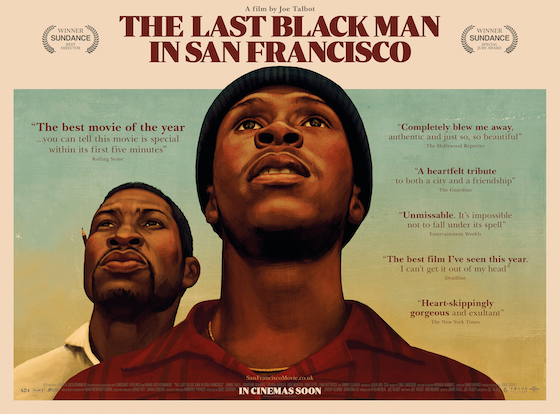
    The Last Black Man in San Francisco (2019)

    2020 #133
    Joe Talbot | 121 mins | digital (HD) | 1.66:1 | USA / English | 15 / R

    The Last Black Man in San Francisco

    The opening few minutes of The Last Black Man in San Francisco are some of the most visually extraordinary I remember seeing from a film in a while. Well, it begins with two men waiting at a bus stop, but when the bus doesn’t arrive… cinema happens. If the rest of the film had been terrible, I’d have been ok with watching it just to have seen that.

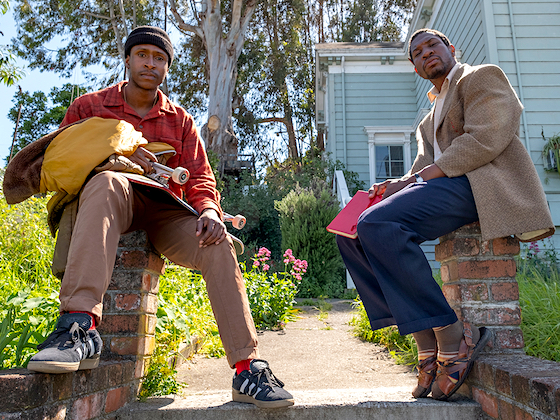
    Those two men at the bus stop are Jimmie Fails (played by Jimmie Fails, also co-writer, in a role I assume can’t be entirely autobiographical, but who knows) and his best friend Montgomery Allen (Jonathan Majors), an artist and writer who always has a pencil behind his ear, who’s always sketching or jotting. Every day, Jimmie and Mont visit the same old house in a gentrified neighbourhood of San Francisco, which Jimmie is obsessed with maintaining and restoring because he doesn’t think the current owners do a good enough job.

    Of course, the reason for Jimmie’s monomania is more complicated than “it’s a nice house”, but oh my, is it a nice house. In terms of “significant houses in 2019 movies”, a fair few people seemed to be in love with the one from Parasite, but give me this beautiful old mansion-like home any day. It even has a built-in organ! I mean, a built-in organ isn’t exactly high on my list of ‘wants’ in a house, but it’s kinda cool. (To be fair, based on the amount of upkeep Jimmie feels the house needs and that its owners shirk, I doubt I’d be up to the task of looking after such a place. But I’m not going to be buying one anyway, so it’s a nice little fantasy.)

    On the outside looking in

    But this isn’t property porn, and deep down Jimmie’s really looking for more than just this particular building. Other characters seem similarly at a loss. It’s likely important to note that writer-director Joe Talbot and Fails, who came up with the story together, are native San Franciscans who grew up together and discussed making the movie since they were teenagers. The film is not just about the changing face of San Francisco, but that’s definitely part of the mix. Indeed, I’m sure there are several readings of what Last Black Man is ‘about’. Another, related part of it is the black experience (I mean, there’s a clue in the title), including a street preacher bemoaning a hazardous cleanup operation; an acquaintance who lives in his car; Jimmie’s absentee father (played by the reliably excellent Rob Morgan, who you may recognise from all of Netflix’s Marvel series, and who has another small but key role in the just-released Greyhound); and a group of men who hang around outside Mont’s house, apparently with nothing better to do than argue with each other. The latter, in particular, have a key role to play in where the story ultimately goes.

    Another aspect is to do with the stories we tell ourselves about ourselves. Our past isn’t just a series of indisputable facts, but a mix of memories — which themselves are self-selected narratives — and stories we’ve been told by others and assumed into our identities, possibly giving them more significance than was intended. It’s this kind of mythologising that drives Jimmie, and it clashing with reality is part of the catalyst for the film’s resolution. As I said, events involving that group of guys outside Mont’s place (no spoilers!) also have a major part to play, but it again come round to the way our lives, and others’, are dictated by how we choose to tell our and their stories.

    Who tells your story?

    How this story is told is one of its strongest aspects. The cinematography by Adam Newport-Berra is extraordinary; not in a glaringly obvious “pretty colours” way, but exhibiting superb depth of field, framing, composition, movement… My knowledge is inadequate to convey the rich quality and wonder of the imagery he creates. It, literally, has to be seen. Several distinctive sequences are carved by his work combined with David Marks’ editing and Emile Mosseri’s score, which includes some well-aimed needle drops and remixes (it’s always great to hear Jefferson Airplane’s Somebody to Love, which is here rendered in a strikingly stripped-back form remixed by Mosseri).

    If I have one criticism it’s that it felt a little long, with some scenes seemingly superfluous, but I’m fully prepared to accept I may have just missed their point. And even with that, the total effect is enough to overcome any perceived longueurs. My score rounds up, then, because even if it’s not perfect (what is?), it’s very good overall, and several parts are truly exceptional.

    5 out of 5

    The Last Black Man in San Francisco is on Sky Cinema and Now TV from today. It placed 22nd on my list of The Best Films I Saw in 2020.

    Hamilton (2020)

    2020 #157
    Thomas Kail | 160 mins | streaming (UHD) | 1.85:1 | USA / English | 12 / PG-13

    Hamilton on Disney+

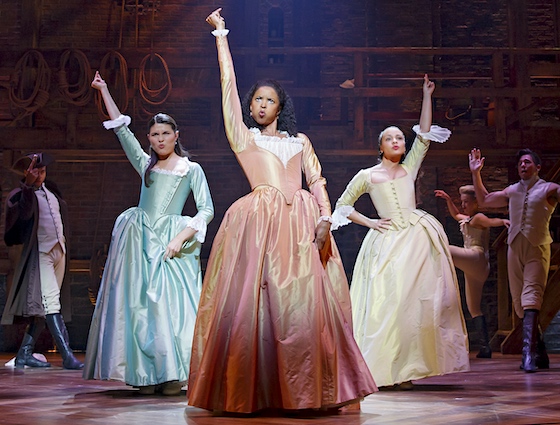
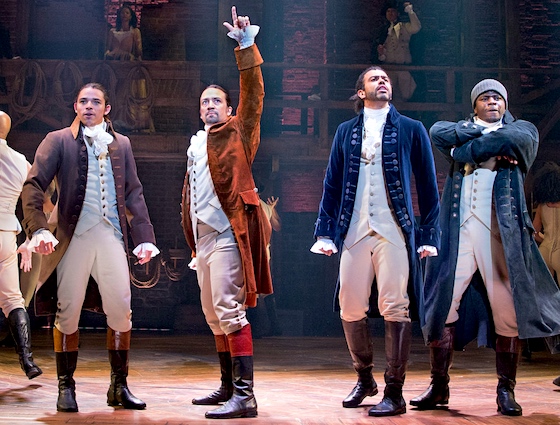
    Hamilton, the original musical, is one of the great works of art of the 21st century so far, and now we all get a chance to be in the room where it happened (provided you’re prepared to pony up some dough to Disney+) thanks to the makers having had the foresight to film a full production with the original Broadway cast back in 2016 (and then flogging that recording to Disney for $75 million).

    The show is a genuine phenomenon, but if you’ve let it pass you by, allow me to explain the basics. This is the life story of Alexander Hamilton, one of the Founding Fathers of the USA; an immigrant who fought in the War of Independence, became the first Secretary of the Treasury, and in between and around all that most assuredly lived a life — there’s friendship and rivalry; romance and infidelity; genuine triumph and heartbreaking tragedy. Here that story is told via music, written and composed by Lin-Manuel Miranda (who also portrays the title role), a fusion of hip-hop, R&B, and more traditional Broadway stylings, performed by a cast mostly made up of people of colour. It’s a tale of outsiders and immigrants and forward-thinkers who battled for the right to be recognised and respected — it’s a history lesson, but oh yeah, it’s timely.

    It premiered back in 2015, so over the past five years the praises of the original show and its successful soundtrack album (the primary medium through which most people have been able to experience the work, given the scarcity and cost of tickets) have been thoroughly sung. To briefly offer my perspective, I came to it ‘late’ — sure, I heard about it (initially thanks to references to its ticket prices), but I overlooked it as just another bit of mass-popular culture that likely didn’t have any weight or staying power. My mistake. Long story short, I finally listened to it in full in 2019 and was blown away.

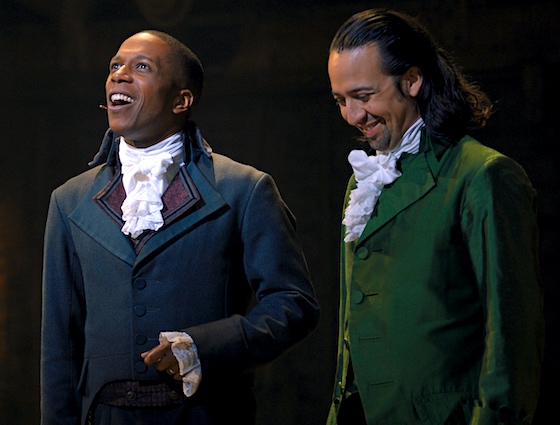
    Aaron Burr, sir

    Adjectives to describe its quality are endless. It’s densely and intelligently written, packed with historical information at every turn, abundant with sly references to other media. Its structure is sublime, laced with callbacks and nods forward from the very opening number; musical motifs repeat, as do lines and ideas, some cropping up before their real significance has been reached, like flash-forwards; elements of plot and character are echoed and mirrored. Many of these are observable first time through; others only reveal themselves with repeat visits. The characters are sharply and smartly drawn, revealing layers and nuances and different perspectives as the piece goes on — it may ostensibly be about Alexander Hamilton, but multiple other characters are at least as richly painted, if not more so. It engrosses like a thriller and packs the serious emotional punch of a finely-wrought drama, but it’s also very funny at times, with numbers as toe-tappingly addictive as a great pop song. It’s hard to think of a more complete all-round experience.

    Well, complete but for visuals if (like me) you’d never seen it performed, only listened to the soundtrack. And, you know, the soundtrack’s not a bad way to experience it — it doesn’t feel notably incomplete. Normally when you listen to a musical’s album, you just get some nice songs from the production. With Hamilton, you get (very nearly almost) the entire soundtrack, and therefore the entire story — you can follow it and not feel like you’ve missed anything. (I do wonder if that’s part of why it’s been such a success.) The lyrics and music conjure up their own imagery in your mind — certainly for me, ever since I first listened to it I’ve pictured whole chunks of it as I’d realise them in a movie version. I’m sure they’ll do a ‘proper’ film of it someday (you really think they’re going to leave all that money on the table?), but I think it’s for the best that’s not the first way I’m seeing it, because I worry it won’t live up to what I’ve concocted in my version.

    As I mentioned at the start, this isn’t a film reimagining like a normal movie musical, but rather a filmed record of the original production. It was shot over three days back in June 2016 (shortly before the original cast moved on), during a mix of live performances and in an audience-less auditorium for the sake of closeups, crane shots, etc. That’s one of the things that elevates this particular film above other recorded-theatre productions I’ve been watching recently (like One Man Two Guvnors, Danny Boyle’s Frankenstein, or the RSC’s Macbeth): whereas they have clearly been filmed live during a single performance, with all the restrictions that implies (limited camera angles; making editing choices in real-time), Hamilton has some extra remove, which has allowed director Thomas Kail to be a bit more creative.

    Looking for a film at work, work

    The camerawork endeavours to add something no theatre performance could, allowing us to see details that would be missed from even the best seats in the house. Closeups let us appreciate the full spit-flecked contempt from Jonathan Groff’s George III in You’ll Be Back; the restrained emotional sacrifice injected into Angelica by Renée Elise Goldsberry during Satisfied; Eliza’s heartbroken defiance from Phillipa Soo in Burn; or the rare occasions Leslie Odom Jr. allows Aaron Burr’s true emotions to break through in the likes of Wait For It and The World Was Wide Enough. That’s not to mention the countless other moments and performers that benefit from us being able to see how much they’re giving their performances; all the subtleties they’re adding.

    At other times the camera angles show off the choreography, for example with punch-ins to highlight specific elements during stage-wide ensemble showpieces, like the rewind at the start of Satisfied, or a bird’s eye view as paper flutters in the air during The Reynolds Pamphlet. Still other scenes are reframed for our convenience, such as an exchange between Burr and Hamilton during Non-Stop that takes place upstage off to one side, but is now centred through medium shots and closeups. If all that sounds like it might serve to undermine the staging, it most certainly does not. When called for, Kail and editor Jonah Moran frequently fall back on wide angles to ensure we see the scope of what’s occurring. Only once or twice during the whole two-and-a-half hours do you feel maybe they chose a less-than-ideal angle or over-edited a sequence.

    Having said that listening to the soundtrack feels like a complete experience, watching it certainly shows what you were missing. There’s so much more to add, from little nuances of performance, to visual-only gags and callbacks, to impressive dance and staging — and if we’re already comparing this to the presumed ‘proper film’ version that will exist someday, I also presume some of that staging will be lost in the visual translation. But while there’s an undoubted “designed for the stage” aspect to the blocking or the way some things are realised, it still works on film.

    Not throwing away their shot

    You can’t ignore that this is a film of a Broadway production — even if you wanted to, an opening subtitle reminds us it’s June 2016 in the Richard Rodgers Theatre, and the audience is frequently to be heard clapping, cheering, and laughing (mixed onto the rear speakers if you’re watching in surround sound, as you’d expect, along with a few other moments and effects that add to the experience if you can benefit from such a setup). But it’s so well staged and filmed that you can buy this as the intended experience. With those other filmed-theatre productions I mentioned, you’re often aware that what you’re watching has primarily been staged for those in the room, and that you getting to observe it from a few fixed camera positions is a nice bonus if you couldn’t be there. With Hamilton, it feels like nothing is missed; not only that, but that this is the way the story was meant to be told, complete with elements of theatrical artifice, like the stripped-back staging and actors playing multiple roles (which roles are shared by the same actors is not without significance). Whenever and whatever they do for that theoretical ‘proper film’, I feel like it won’t negate this version, not just as a record of the original show, but as a film in its own right.

    That’s perhaps the most striking aspect of this particular version: it doesn’t feel like a mere stopgap until they film it ‘properly’, nor a “that’ll do” stand-in for a real theatrical performance, but instead like a legitimate experience in its own right. Hamilton is a masterpiece, and getting to see it performed by the original cast in its original staging via a film so carefully and lovingly crafted is an absolute thrill.

    5 out of 5

    Hamilton is available on Disney+ now. It placed 3rd on my list of The Best Films I Saw in 2020.

    The 100-Week Roundup VI

    Here’s another quartet of reviews from my July 2018 viewing, with an all-star cast both behind the camera (Stanley Kubrick, Ridley Scott) and in front of it (Keanu Reeves, Leonardo DiCaprio, Russell Crowe, etc).

    In this week’s roundup…

  • The Day the Earth Stood Still (2008)
  • Full Metal Jacket (1987)
  • Wind River (2017)
  • Body of Lies (2008)


    The Day the Earth Stood Still
    (2008)

    2018 #163
    Scott Derrickson | 104 mins | Blu-ray | 2.35:1 | USA & Canada / English & Mandarin | 12 / PG-13

    The Day the Earth Stood Still

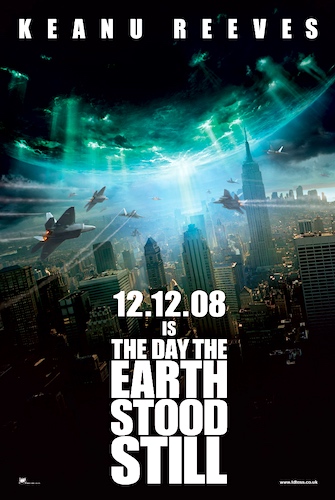
    Blockbuster remake of the 1951 sci-fi classic, starring Keanu Reeves as an alien who has come to “save the Earth”.

    The original might be best remembered for its message about mankind. The do-over doesn’t so much attempt serious “humanity are the problem” moralising as just nod in that general direction. Instead, it conforms to the Hollywood-remake stereotype of simplification, using the plot as an excuse for a CGI destructathon. Even as that it’s a bit of a damp squib, with no genuinely impressive sequences; some of the CGI is pretty crap, even, like the first appearance of the giant robot GORT.

    I know we all love him now because he seems like a genuinely wonderful guy in real life and the John Wick movies are cool, but, still, the role of an emotionally cold alien pretending to be human but struggling to understand what truly makes us ‘us’ is a perfect fit for Keanu Reeves and his usual acting style. Jaden Smith is equally perfect casting as an irritating brat of a kid. Jennifer Connelly struggles gamely to be the heart of the film, and there are small or cameo roles for the likes of Kathy Bates, Jon Hamm, and John Cleese, none of whom can really elevate the basic material they’re given.

    All in all, it’s inoffensively bland, with some light sci-fi ideas, a bit of loose moralising, and a bunch of pixels whooshing about. Perhaps with a better creative team — or without the demands of a studio blockbuster budget — it could’ve been more; something genuinely thought-provoking about the value (or otherwise) of humanity. But it isn’t.

    3 out of 5

    Full Metal Jacket
    (1987)

    2018 #165
    Stanley Kubrick | 117 mins | Blu-ray | 16:9 | UK & USA / English | 15 / R

    Full Metal Jacket

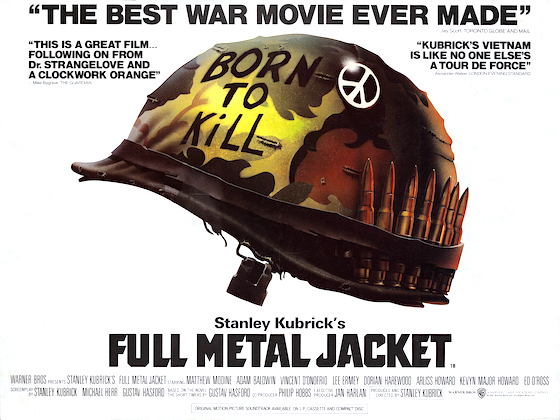
    Kubrick’s anti-war war movie, about the dehumanisation of abusive army training, the virtue and success of kindness, and how combat can erode and destroy the soul. It’s “a Vietnam movie”, but Kubrick wasn’t interested in Nam per se, rather “the phenomenon of war” and what happens to young men when you turn them into killing machines.

    It’s a film of two halves: first, the training; then, the war. The first half is the better known one, and some people will tell you it goes downhill when they leave training. That first part is indeed horrid but effective and meaningful, but I thought the second half lived up to its impact too.

    A film about war’s effect on people requires strong performances, and fortunately it has those. Most famous is R. Lee Ermey’s nasty drill instructor — an unquestionably accurate portrayal of the real thing, because Ermey used to be one. He was originally hired as a consultant, but decided he wanted the role and convinced Kubrick to cast him, then rewrote his dialogue — the obscenity-strewn insults are all Ermey’s own. But for my money the best performance in the movie comes from Vincent D’Onofrio. Apparently he got the part just because he was a friend of Matthew Modine — it was his first film role — but he’s fantastic. And nowadays best known as a gun-happy right-wing nut-job on Twitter, Adam Baldwin is very convincing as, er, a gun-happy right-wing nut-job.

    Naturally, Kubrick’s work is as on-point as ever. A climactic action scene pits the entire troop against just one sniper, which is both thrilling and horrifyingly brutal. The film’s final death is excruciatingly drawn out, to really convey its emotional toll. Douglas Milsome’s photography frequently looks stunning as well. The fire-lit final act is as visually gorgeous as it is suspenseful and gruelling.

    To paraphrase a commentator in the Between Good and Evil documentary, Kubrick “takes the sympathetic characters and breaks them down so that, by the end, there’s no one left to root for, and the sympathy you feel is not for the character, but for what they’d lost.” And another notes how much you can see Iraq in the film, as if Kubrick was predicting the future of urban warfare too. Or, another way of looking at it: how little changes; how few lessons we learn.

    5 out of 5

    Full Metal Jacket was viewed as part of What Do You Mean You Haven’t Seen…? 2018.

    It placed 8th on my list of The Best Films I Saw in 2018.

    Wind River
    (2017)

    2018 #166
    Taylor Sheridan | 107 mins | streaming (HD) | 2.35:1 | USA, UK & Canada / English | 15 / R

    Wind River

    A veteran hunter helps an FBI agent investigate the murder of a young woman on a Wyoming Native American reservation.IMDb

    What follows is a neo-Western crime thriller, written and directed by Taylor Sheridan. As a genre piece, it’s most noteworthy for how well it handles the reveal of whodunnit. Just as you think the film’s getting to the point where they find who did it, but it’s only a suspicion and they’re going to have to go off and prove it, the film takes a hard left in a different direction that’s perfectly handled. To quote from a comment on iCheckMovies, the way it goes about this “seemed truly unique to this genre. The closest comparison I can think of is from Se7en, when [Se7en spoilers!] Kevin Spacey just turns up and hands himself in, completely out of the blue. It unexpectedly shattered the cat and mouse formula that people expected it to follow.” By dispensing with narrative oneupmanship (i.e. trying really, really hard to pull a twist out of thin air, as most mystery/thrillers do), it lets “the story unfold into more of a tragedy than the standard mystery or thriller you might expect it to be.”

    Talking of other reviews, some people are heavily critical of the film having a white male lead when it’s supposed to be about the plight of Native Americans, and especially Native American women. Well, yes, to an extent that’s true, but this is where fantasy rubs up against reality: do you really think a movie with a Native American lead would find it easy to get funding, distribution, and gain attention? Sometimes these things are a necessary ‘evil’ if your goal is to reach a wider audience and thereby spread the message. Besides, the film makes a point of treating the white characters as outsiders, in various ways. It’s not pretending this is how it should be, nor that they’re welcomed like, “hooray, the white people are here to save us!” If anything it’s used to emphasise the point: the Native American cops can’t solve the case themselves because they’re underfunded and understaffed; they have no choice but to rely on white people being prepared to help. That’s an indictment in itself.

    Altogether, this is a powerful movie — arguably Taylor Sheridan’s best, most mature screenplay (which is saying something for the man who wrote Sicario and Hell or High Water), and features a superb performance from Jeremy Renner, reminding you why he was Oscar-nominated for The Hurt Locker before his attempts to be a blockbuster action star.

    4 out of 5

    Body of Lies
    (2008)

    2018 #168
    Ridley Scott | 128 mins | download (HD) | 2.40:1 | USA & UK / English & Arabic | 15 / R

    Body of Lies

    A CIA agent on the ground in Jordan hunts down a powerful terrorist leader while being caught between the unclear intentions of his American supervisors and Jordan Intelligence.IMDb

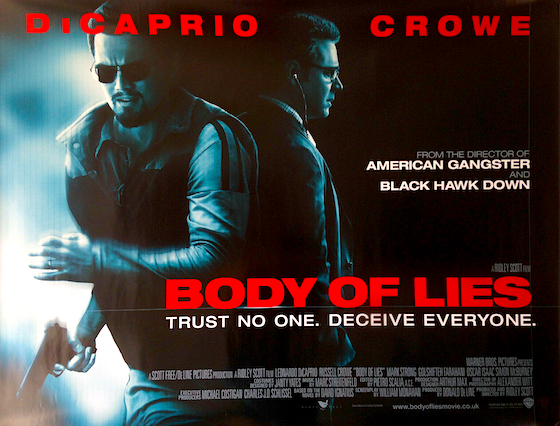
    That’s the simple version, anyhow, because I thought the film itself got a bit long-winded and complicated; but if you enjoy spy movies, it’s smattered with some good bits of tradecraft stuff. That said, I’m not sure I buy Leonardo DiCaprio as the CIA’s man in the Middle East — he stands out like a sore thumb there; not good for a spy.

    Meanwhile, Russell Crowe commands complex world-changing missions over the phone while taking his kids to school or watching a football match — a nice touch, I thought, contrasting mundanity with these high-stakes actions. (Quite why he “had” to gain 50lbs for the role is beyond me, though. Sounds like he just fancied being lazy about his diet and exercise regime.) Still, the standout from the cast is the ever-excellent Mark Strong as the head of Jordanian intelligence, a man who is urbane and always immaculately dressed, but does not suffer those who disrespect him, exhibiting a kind of calm fury-cum-disappointment when they offend him.

    For all the confusion I felt about the plot, what I presume is the intended theme (that America can’t win because it refuses to respect or understand the culture of both its enemies and allies in the Middle East; and that the supposed good guys aren’t any better than the bad guys) comes across quite effectively. It’s also about the ineffectiveness of advanced technology. The CIA, so focused on their shiny new bells and whistles, lose out in the end to old fashioned personal interaction and patient preparation.

    Body of Lies seems somewhat torn between making these points and being an entertaining action-thriller. Ultimately it straddles the two stools, not quite satisfying as either — it has its moments, for sure, but it’s less than the sum of its parts. Maybe Ridley should’ve left the spy thrillers to his brother…

    3 out of 5

  • The 100-Week Roundup III

    In this selection of films I watched back at the end of May / start of June 2018…

  • The Wild Bunch (1969)
  • The Wild Bunch: An Album in Montage (1996)
  • The Warriors (1979)
  • Power Rangers (2017)
  • Three Billboards Outside Ebbing, Missouri (2017)


    The Wild Bunch
    (1969)

    2018 #115
    Sam Peckinpah | 139 mins | streaming (HD) | 2.40:1 | USA / English | 18 / R

    The Wild Bunch

    After a gang of ageing crooks’ “one last job” goes sideways, they agree to rob a munitions train for a Mexican general, even as they’re hunted by a militia reluctantly headed by their leader’s former partner.

    The Wild Bunch is, of course, a Western, but it’s set in 1913 — not a time we particularly associate with “the Old West”. Well, change doesn’t happen overnight. And it certainly takes that “end of an era” thing to heart as a tale of old men, whose way of life is fading away. It’s also a ‘late Western’ in terms of when it was produced: this isn’t an old-fashioned “white hats vs black hats” kinda adventure, but one full of ultra-violence with a downbeat ending. The opening sequence gets pretty bloody, and then the climax is an absolute orgy of violence. It’s still almost shocking today, so you can see how it was controversial back in 1969.

    It’s not just the presence of violence and blood that’s remarkable, though, but how it’s presented, both in terms of filmmaking and morals. To the former, the speed of the cutting was groundbreaking at the time: reportedly it contains more cuts than any other Technicolor film, with 3,643 cuts in the original print. If that’s true, it gives it an average shot length of about 2.4 seconds. For comparison, the average in the ’60s was around 6 or 7 seconds, while even Moulin Rouge, a movie made decades later that was still notorious for its fast cutting, has an average shot length of 2.01 seconds. It’s not just speed that makes the editing so noteworthy, but its effectiveness, making juxtapositions and using shots to both tell the story and create the impression of being in the thick of it.

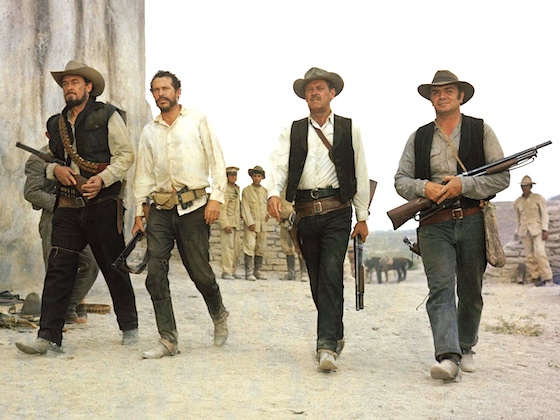
    Bad boys

    As for the morals, the film was all about showing these violent men as unheroic and unglamorous, setting out to “demystify the Western and the genre’s heroic and cavalier characters” (to quote IMDb). That piece goes on to say that screenwriters Sam Peckinpah and Walon Green “felt that this project required a realistic look at the characters of the Old West, whose actions on screen had rarely matched the violent and dastardly reality of the men on which they were based… Both Green and Peckinpah felt it was important to not only show that the film’s protagonists were violent men, but that they achieved their violence in unheroic and horrific ways, such as using people as human shields and killing unarmed bystanders during robberies.”

    Of course, antiheroes are ten-a-penny nowadays, so the idea that “men who commit violence are bad” doesn’t play as revolutionary anymore. Indeed, The Wild Bunch can be enjoyed as an action movie — there’s the opening and closing set pieces I’ve already mentioned, plus an excellent train robbery and ensuing chase in the middle too, and a couple of other bits. That said, the film has more on its mind than just adrenaline-generating thrills, and so (based on comments I’ve read elsewhere online) if you are watching just for action it can feel like a bit of a slog. While I wouldn’t be that critical, I did find it a bit slow at times. The original distributors must’ve felt the same, as the film was cut by ten minutes for its US release. (The version widely available today is the original 145-minute director’s cut. I watched a PAL copy, hence the 4% shorter running time.)

    4 out of 5

    The Wild Bunch was viewed as part of my Blindspot 2018 project.

    The Wild Bunch:
    An Album in Montage

    (1996)

    2018 #115a
    Paul Seydor | 33 mins | DVD | 4:3 | USA / English | 15

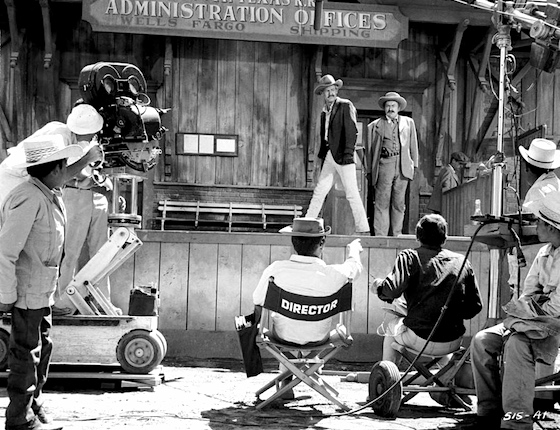
    Behind the scenes of The Wild Bunch

    This film came to exist because someone found 72 minutes of silent black-and-white behind-the-scenes footage shot during the filming of The Wild Bunch. No one knows why it was filmed — this was a long time before the era of EPKs and DVD special features. And, indeed, if it had been discovered just a couple of years later then a DVD special feature is exactly what it would’ve become; but, being just ahead of that, it ended up as a short film — an Oscar-nominated one at that, going up for the Best Documentary Short prize in 1997. Naturally, it has since found its rightful home as a special feature on DVD and Blu-ray releases of its subject matter.

    The silent film footage is accompanied by voice over of first-hand accounts from the people involved, either taken from recorded interviews (people like screenwriter Walon Green and actors Edmond O’Brien and Ernest Borgnine represent themselves) or actors reading out comments (Ed Harris is the voice of Sam Peckinpah, for example). From this we get not only making-of trivia and tales, but also discussion of the filmmakers’ intent and the film’s meaning. More material along the lines of the latter would’ve interested me.

    As it is, An Album in Montage feels very much at home in its current situation as a DVD extra. Fans of the film will certainly get something out of it, but I don’t think it’s insightful enough to stand independently. It’s by no means a bad little featurette, but it’s not worth seeking out outside of the context of the film itself.

    3 out of 5

    The Warriors
    (1979)

    2018 #123
    Walter Hill | 89 mins | streaming (HD) | 16:9 | USA / English | 18 / R

    The Warriors

    In the near future, a charismatic leader summons the street gangs of New York City in a bid to take it over. When he is killed, The Warriors are falsely blamed and now must fight their way home while every other gang is hunting them down.IMDb

    And that’s all you need to know, because The Warriors’ plot is really simple and straightforward, but that’s part of why it works. It doesn’t need dressing up; it’s got an almost an elegant directness, and it thrives off that. The action sequences feel unchoreographed, with a bruising realism in spite of their sometimes elaborate setups (duelling baseball bats!), and yet they carry an energy and impact that is wholly in keeping with something carefully designed and constructed. The characters are simply drawn, revealed through their actions rather than telegraphed Character Moments or heartfelt speeches. Similarly, the kind-of-romance between the Warriors’ leader and the girl they run into on the streets is so well handled — okay, there are some scenes where they almost talk about it directly, but mostly it’s just moments or lines that indicate a world of feeling. The way this character stuff is sketched in — subtly, sometimes in the background — is quite masterful, actually.

    Such skill extends throughout the film’s technical side. For all the film’s ’70s grit, there’s some beautiful stuff in the editing and shot choices, especially at the end on the beach. It’s not just beauty in an attractive sense, but meaningful, effective imagery, in a way that impresses without being slick or pretty. The music choices are bang-on too. The film intercuts to a radio station that functions like some kind of Greek chorus, linking the action and helping to create a heightened atmosphere — one that’s there in the whole film, incidentally, with its colourful gangs and detached police presence — without ever shattering the down-to-earth, gritty, almost-real feel the whole thing has.

    Gang wars

    I loved The Warriors, and I think that last point is a big part of why: it sits at an almost inexplicable point where it feels incredibly grounded, gritty and realistic, but at the same time a heightened fantasy kind of world. Here I’m trying to describe why I adored the film bu breaking it down into these constituent parts, but there’s something more to it than that — a kind of magic where it just… works.

    All of that said, it seems I was lucky to catch the original version (via Now TV / Sky Cinema), rather than the so-called Director’s Cut that seems to be the only version available on Blu-ray. Looking at the changes, they don’t seem particularly in keeping with the tone of the movie, smacking of decades-later revisionism. Apparently there’s also a TV version that includes 12 minutes of additional scenes, none of which are included on the film’s disc releases. I wish Paramount would license this out to someone like Arrow to do it properly…

    5 out of 5

    The Warriors placed 11th on my list of The 26 Best Films I Saw For the First Time in 2018.

    Power Rangers
    (2017)

    2018 #126
    Dean Israelite | 124 mins | streaming (HD) | 2.35:1 | USA, Hong Kong, Japan, Mexico, Canada & New Zealand / English & Mandarin | 12 / PG-13

    Power Rangers

    High school outcasts stumble upon an old alien ship, where they acquire superpowers and are dubbed the Power Rangers. Learning that an old enemy of the previous generation has returned to exact vengeance, the group must harness their powers and use them to work together and save the world.IMDb
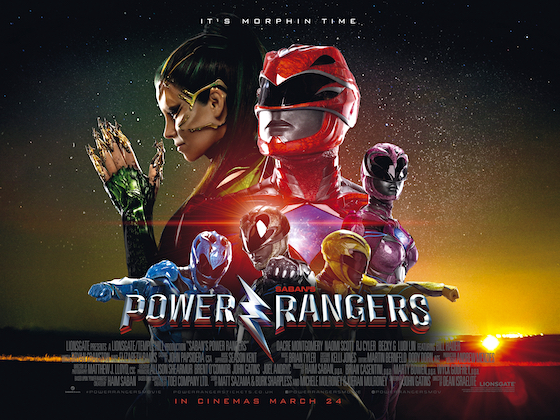
    Far from the cheesy TV series of old, this Power Rangers reboot clearly wants to be a somewhat gritty, largely realistic, socially conscious take on the concept. But it’s like it was written by people behind the original, because it’s still full of clunky dialogue, earnest characters (with a thin veneer of outsider ‘cool’), and nods to serious issues without having the time or interest to actually engage with them. Like, one of the kids is the sole carer for his sick mother, or another is on the autistic spectrum, but, beyond spending a line or two to tell us these things, those issues have no bearing on the plot or the characterisation. Plus, it can’t overcome some of the fundamental cheesiness of the original. And when it tries to give in to it, like by playing the Power Rangers theme the first time the giant “dinocars” run into action, it’s too late for such shenanigans and the tones clash horrendously. It wants to escape the tackiness of the original series, but simple can’t.

    And somehow it gets worse as it goes on. The early character stuff is derivative but alright. Then you begin to realise how shallow it is. You’re waiting for the super-suits to show up and the action to start. Then you have to wait some more while it works through plot beats so stale it can’t even be bothered to play them out fully. Then, when the suits finally arrive and the action starts, turns out it’s the worst part of the movie. Almost entirely CGI, under-choreographed, a mess of nothingness with little correlation from shot to shot, no sense of rhythm or construction. When their dinocars all merge into one giant dinocar, the villain screams “how?!”, and you will feel the same.

    Bryan Cranston (yes, Bryan Cranston is in this) tries to inject some character into his role, but it’s too underwritten and his screen time too slight to let him do much with his supposed arc. Elizabeth Banks, meanwhile, is barely in it and has no arc whatsoever, but she chews scenery like a pro. She seems to be aware it’s all stupid and over the top and plays it appropriately.

    2 out of 5

    Three Billboards Outside Ebbing, Missouri
    (2017)

    2018 #127
    Martin McDonagh | 115 mins | Blu-ray | 2.39:1 | UK & USA / English | 15 / R

    Three Billboards Outside Ebbing, Missouri

    a darkly comic drama from Academy Award nominee Martin McDonagh. After months have passed without a culprit in her daughter’s murder case, Mildred Hayes (Frances McDormand) makes a bold move, painting three signs leading into her town with a controversial message directed at William Willoughby (Woody Harrelson), the town’s revered chief of police. When his second-in-command, Officer Dixon (Sam Rockwell), an immature mother’s boy with a penchant for violence, gets involved, the battle between Mildred and Ebbing’s law enforcement is only exacerbated.IMDb

    As well as being as deathly serious and sometimes horrifying as the subject matter deserves, Three Billboards is also as funny as you’d expect from the writer-director of In Bruges. Not to the extent — the subject matter is far too serious for it to be an outright comedy like that — but in subplots and interludes it’s hilarious.

    It’s got a helluva cast, and all of the performances are excellent. Frances McDormand is so fucking good that she even manages to make talking to a badly CGI’d deer incredibly emotional. Apparently some people had a massive problem with the film’s treatment of Sam Rockwell’s character, I think because he was a bad guy who got redeemed. But, really, imagine thinking people who once did bad things can never turn themselves around and be better people. What a pessimistic way to view the world. And yet I guess that’s what today’s “cancel culture” is all about.

    Two outta three ain't bad

    It’s nicely shot by DP Ben Davis (except for that deer), while Carter Burwell’s Western-esque score has some really cool bits. It really emphasises the film’s formal overtures at being a revenge Western, even if the way it goes down in the end doesn’t necessarily support such a reading.

    There was a huge backlash to the film at some point; bring it up online and you’re likely to come across people who assume everyone hates it… but it’s got 90% on Rotten Tomatoes and is still ranked the 150th best film of all time on IMDb, so I think we know where the majority stand. I’m happy to stand with them.

    5 out of 5

    Three Billboards Outside Ebbing, Missouri placed 14th on my list of The 26 Best Films I Saw For the First Time in 2018.