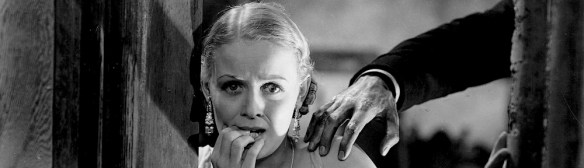
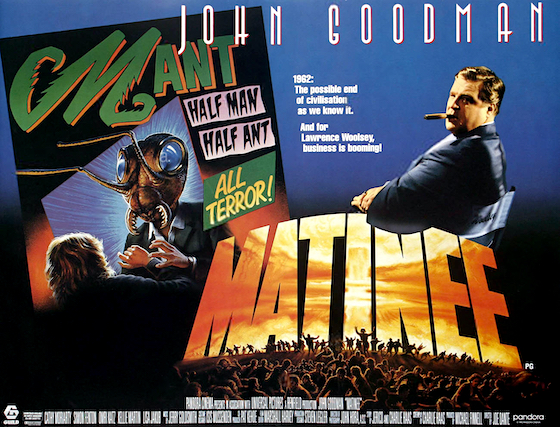
The Best of 2020

And so, we reach the end of 2020.

I don’t know about you, but this feels like a, “what, already?!” moment to me. Putting my year-in-review posts together used to seem to take ages, but this year it feels like I’ve barely begun and now it’s over. But that’s enough about my subjective perception of time — let’s talk about movies in 2020, like Tenet, which is partly about… um, never mind.

This final year-in-review post does what it says on the tin: it’s a list of my favourite films that I saw in 2020 (normally my least-favourites would be here too, but I did those already). A note for newcomers and/or reminder to the forgetful: rather than just 2020 releases, I select my list from all 264 movies I saw for the first time during 2020. That’s partly because there are tonnes of new releases that I never see in time — which is also why this post contains a list of 50 significant films I missed.

Compiling this year’s lists has taken a lot of thinking, rearranging, cutting, reflecting, re-adding, re-rearranging, and a certain amount of “oh, that’ll do, what does it matter anyway” to actually get them out the door. Here’s what I ended up with…



The 26 Best Films I Saw For the First Time in 2020

Since 2016, I’ve replaced the usual “top ten” with a “top 10%”. As I watched 264 films in 2020, that means this year’s list has 26 films. (If you think that’s too many, feel free to scroll down and start from wherever you like.)

Although all the movies I watched for the first time in 2020 are eligible, I did watch 57 films that had their UK release in 2020, so I’ve noted the ‘2020 rank’ of the eight that made it in. (I also saw a couple of 2020-UK-release films at FilmBath Festival in 2019. As they were already ranked as 2019, I’ve not factored them in here.)

26 Klaus
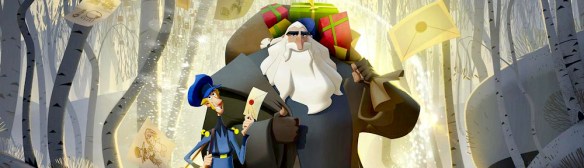
The animation is absolutely gorgeous in this Oscar-nominated BAFTA-winning Netflix original about a disaffected postman who helps originate the legend of Santa.

25 The Looking Glass War
The mundanity of real-life espionage; conflicted morals; the futility of the whole thing — this John le Carré adaptation is full of all the things that made his work so great.

24 Dial M for Murder
As intelligent and tense a thriller as you’d expect from Hitchcock; so good it even manages to make you overlook its obvious stage-bound roots. Superb in 3D, too.

23 The Invisible Man
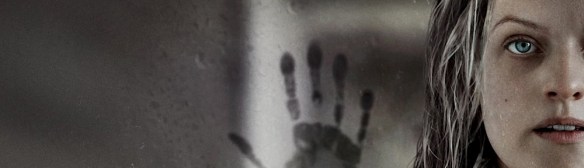
2020 #8 This #MeToo-era reimagining of the HG Wells / Universal Horror classic could hardly be more timely. But even leaving that aside, it’s a chilling exercise in ratcheting tension.

From its astounding opening to its hard-hitting final act, Last Black Man is an astonishing cinematic experience about the stories we tell ourselves about ourselves. [Full review.]

A space ship full of colonists is sent irretrievably off course in this Scandi sci-fi that’s driven by big ideas about human behaviour in extremis. [Full review.]

William Holden and Audrey Hepburn are clearly having a whale of a time in this marvellously cine-literate ’60s romp about a struggling screenwriter. [Full review.]

19 Philomena
Judi Dench is extraordinary and Steve Coogan is a revelation in this intensely affecting drama about a wronged woman searching for her son who was taken decades earlier.

18 Fanny and Alexander

Ingmar Bergman described this as “the sum total of [his] life as a filmmaker”. Blending familial drama with a dash of magical realism and the supernatural, it’s a masterful work.

17 Belladonna of Sadness
Delicate watercolour artwork and medieval folklore smash against a storyline fuelled by rape and a penis-shaped devil in this astonishing animation full of psychedelic imagery and experimental music. I’ve never seen anything quite like it.

2020 #7 It’s “Agatha Christie meets the Coen brothers in a nudist camp” as the eponymous handyman searches for his missing hammer in a world full of wobbly bits, where anyone might’ve taken it. [Full review.]

15 Tenet
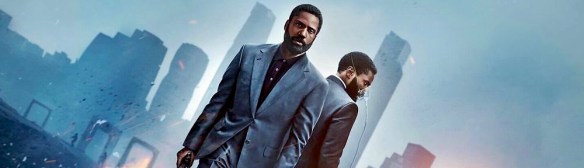
2020 #6 If you let go of the need to fully understand the mechanics of the film’s time-reversal conceit, Christopher Nolan’s latest is an audacious and exciting spy thriller. It’s a shame real-world arguments have come to overshadow what is actually a suitably thrilling spectacle.

14 Soul
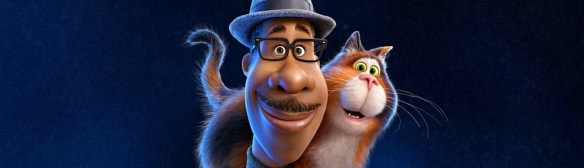
2020 #5 Pixar have often been praised for making films for grown-ups. That’s not something I’d wholly agree with, until now. Not as cutesy as the rest of their output (largely), Soul asks big questions about what makes us who we are. All wrapped up in a buddy-quest storyline, of course.

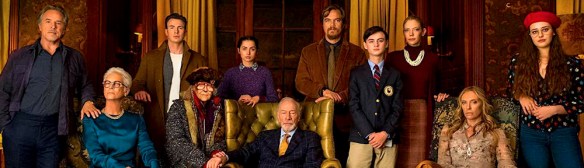
Rian Johnson’s tribute to whodunnits a la Agatha Christie pulls off something that genre can’t always manage: rewatchability. It barely matters who actually dunnit when it’s this much fun spending time with the outrageous suspects and Daniel Craig’s implausibly-accented detective. [Full review.]

12 The Old Dark House

As amusing as a droll comedy and as atmospheric as a creepy old-school horror, James “director of Frankenstein” Whale’s genre classic is just a lot of fun.

If this anime were live-action, it would be an action-adventure blockbuster. It’s got it all: thrills, humour, emotion, wonder… That makes it so accessible, it would be a perfect starting point for any Westerner new to anime. [Full review.]

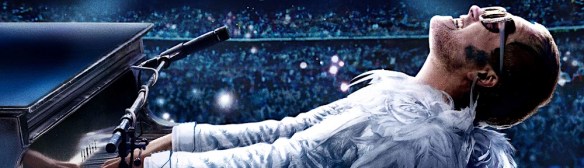
Taron Egerton stars as Elton John for this unusual biopic of the singer. Part traditional musician biopic, part jukebox musical, director Dexter Fletcher remixes John’s music into some imaginatively staged sequences, while Egerton and his supporting cast (in particular Jamie Bell) give thoughtful, nuanced performances. The cumulative effect is a movie that is highly enjoyable but not without depth. [Full review.]

9
The Lady Vanishes
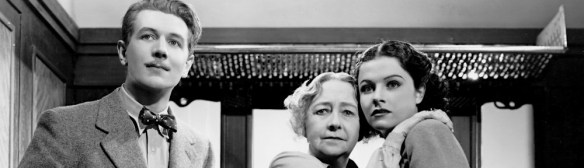
Alfred Hitchcock is probably most renowned for his Hollywood movies (Pyscho, Vertigo, Rear Window, etc), but we shouldn’t forget his British output — these are the films that got him Hollywood’s attention, after all. The director’s second appearance on this year’s list is one of the last films he made before that jump across the pond. It’s a mystery thriller about an old lady who somehow disappears from a moving train, and a couple of youngsters who try to find out how and why. It’s witty, it’s clever, and it’s exciting — all the things for which Hitch is best known.

8
Judgment at Nuremberg
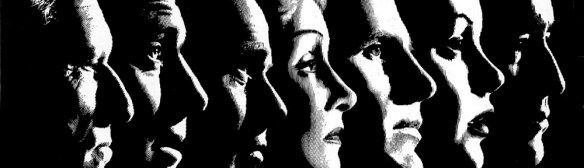
This fictionalised account of the military tribunals that took place following the Second World War sets its sights not on the trials of major Nazi leaders, but on the subsequent trials that assessed the guilt of people further down the chain — here, four judges and prosecutors who helped facilitate the Nazi’s crimes. For such weighty material, this is an appropriately weighty film — a long, complex, methodical, harrowing account. Boldly directed by Stanley Kramer, and with an incredible cast all giving first-rate performances, this remains a powerful, brilliant film.

7
Tim’s Vermeer

Computer graphics pioneer and inventor Tim Jenison is an art enthusiast, fascinated by the work of Dutch master Johannes Vermeer, in whose work his engineer’s brain sees a near-impossible photographic accuracy. So, he sets out to prove and expound upon existing theories that Vermeer painted with the aid of some kind of optical device. What unfolds is an astonishing story of obsession, dedication, and art historiography, which challenges your idea of where the line lies between art and technology.

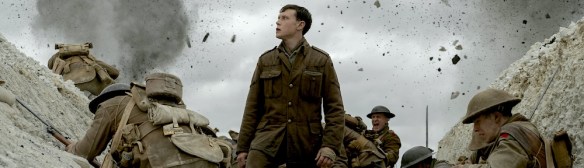
2020 #4 Sam Mendes’s single-take(-kinda) World War One adventure ended up losing many of the big prizes to Parasite last awards season (FYI, they both count as 2020 films here due to UK release dates in January and February, respectively). But that doesn’t mean it’s any less of an extraordinary experience. I love a long single take (fake or not), and I love stories that unfold in real-time, and I feel World War One has been under-represented on screen — so when Mendes takes all of those things and executes them brilliantly (having Roger Deakins on cinematography helps), you get a film that’s right up my street. [Full review.]

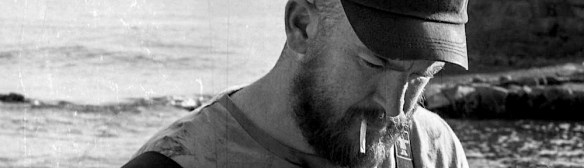
If 1917 uses all the skills of modern tech to craft an almost old-fashioned epic, Bait is practically the polar opposite: old-school techniques (a wind-up camera; hand-developed 16mm film; post-sync sound) to tell a very modern story (broadly, about the economic plight of Cornish fishermen). It could be pretentiously arthouse or an insufferable polemic, but it’s neither. Instead, the story is told with genuine heart, drama, and humour, and the handmade aesthetic adds an appreciable, beautiful texture. [Full review.]

4
Parasite

2020 #3 If you use Letterboxd, the latest film from acclaimed South Korean director Bong Joon Ho comes with a heavy millstone round its neck: according to that site’s users, it’s the greatest film ever made. Like Citizen Kane before it, such a label can be a distraction, and makes some people want to push back against it (is that why I’ve only ranked it at #4? You decide). “Best film ever” or not, the first non-English-language film to win the Best Picture Oscar is a timely deconstruction of class systems — just who are the eponymous parasites, actually? Even aside from big societal questions, it’s a thrilling piece of filmmaking; tense, exciting, and surprising.

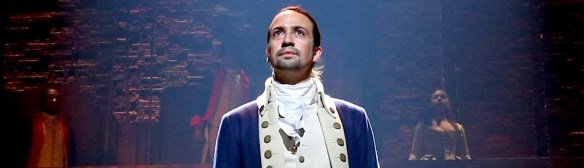
2020 #2 Can a filmed stage production be the year’s best film? Um… Well, that’s a major reason why Hamilton is in 3rd place for my 2020 viewing and 2nd place for 2020 releases: it’s not really a film, right? Well, it’s definitely some kind of historical record — not of the life of Alexander Hamilton, but of a theatre production that took the world by storm. Here we get to witness the original Broadway cast in the show’s original staging, allowing us all the chance to witness a genuine cultural phenomenon first-hand. But this is not merely a couple of cameras plonked into the audience for the sake of posterity: director Thomas Kail users multiple cinematic techniques to make a film that truly feels like a film. Yes, it’s still theatrical, but it feels like this is how this story is meant to be (cf. something like Dogville: also very theatrical; also definitely a film). Theatres will reopen and we’ll be able to see Hamilton in the flesh again; and someday they’ll inevitably make a ‘real’ movie adaptation; and even still, this film will stand as a legitimate, magnificent experience in its own right. [Full review.]

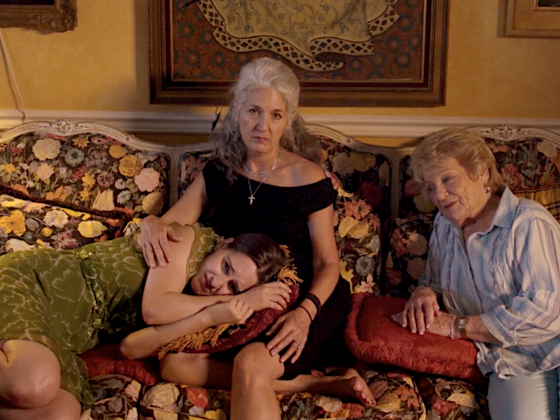
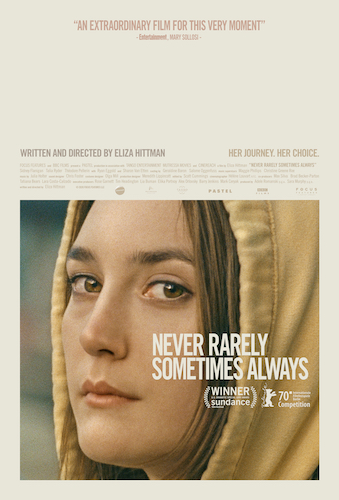
2020 #1 Writer-director Eliza Hittman’s story of a Pennsylvanian teenager forced to travel to New York for an abortion is told with documentary-like subtlety and understatement, but the result is incredibly moving and powerful. Without ever explicitly stating it, the film is an eloquent condemnation of US systems that force poor and struggling individuals to jump through hoops to access care that those of us in the rest of the developed world might consider basic rights. It’s a potent reminder that, for all its claims of being a highly-developed world-leader, for many of its citizens the US is as regressive, prejudiced, and unequal as the ‘Third World’ countries it so often seeks to demonise. [Full review.]

1
Do the Right Thing

If there’s one feature that links many films on this year’s list, it’s timeliness: films that connect with some of the big sociopolitical issues of our day. Do the Right Thing was made over 30 years ago, but in its subject matter — a stiflingly hot day in a Brooklyn neighbourhood causes tensions to boil over into white-on-black violence — it could scarcely be more 2020. But this is not about “which film best encapsulates the year”, and so Spike Lee’s film tops my list because of all its other qualities, too. It’s a portrait of a place; a day-in-the-life hangout movie, where we follow myriad characters as they go about their business; 90-or-so minutes in which we get to understand the neighbourhood, to know its inhabitants… before the powder keg explodes and everything changes. Except, as we now know, nothing’s really changed at all.


As usual, I’d just like to highlight a few other films.

First, the cinematic masterpiece that is Love on a Leash. If you’re unfamiliar with this feat of cinematic excellence, may I recommend my review. It’s not exactly #27, because at various points while curating my list I had it in the top ten, the top twenty, in 26th place… but, eventually, not in the list at all. As I discussed in my review, it’s a film that’s hard to categorise: it’s simultaneously a one-star disaster and a five-star artistic experience. It’s an object lesson in why criticism of art can never be objective, because it’s unquestionable that it’s terribly made in every respect, and yet it’s nonstop entertaining, even thought-provoking, and certainly unique. (Of course, some people would say it’s objectively bad. Those people are wrong.)

I’m someone who believes “best” and “favourite” can be different things: in 2020, I saw some movies I would acknowledge as great but that didn’t make the Top 26 because they didn’t really entertain me; equally, some films got in that are indeed great but I may never rewatch, whereas I left out simpler fare that I’m sure I’ll revisit. In a ranking of the “best” films I saw this year, no way does Love on a Leash get close; but in terms of my “favourite” films, it might’ve been pretty damn high. My final Top 26 falls somewhere between those two stools, but does carry the “best of” name, and so it felt insulting to any other film in the list (or, indeed, to those that tried but failed to squeeze in) to rank Love on a Leash above them. So here it is instead: first among my “honourable mentions”, with two solid paragraphs dedicated to it — more than any film in the actual list. So who’s the real winner, eh?

Next, let’s recap the 12 films that won Favourite Film of the Month at the Arbies, some of which have already been mentioned and some of which haven’t. In chronological order, with links to the relevant awards, they were Laputa: Castle in the Sky, All Quiet on the Western Front, The Lady Vanishes, Aniara, Belladonna of Sadness, Paris When It Sizzles, Hamilton, Bad Boys for Life, Fanny and Alexander, Tim’s Vermeer, An American Werewolf in London, and Klaus.

Finally, I always list every film that earned a 5-star rating this year. It’s especially pertinent this year, given how few reviews I’ve actually posted; although, as I noted in my stats post, it’s possible some of these ratings will be revised when I come to write a full review. But, for now, the 39 films with full marks are 1917, All About Eve, All Quiet on the Western Front, An American Werewolf in London, Anand, Aniara, Bait, Belladonna of Sadness, Dial M for Murder, Do the Right Thing, E.T. the Extra-Terrestrial, Fanny and Alexander, The French Connection, Hamilton, Harakiri, I Am a Fugitive from a Chain Gang, In the Mood for Love, The Invisible Guest, Judgment at Nuremberg, Knives Out, Lady Bird, The Lady Vanishes, Laputa: Castle in the Sky, The Last Black Man in San Francisco, Little Women, The Looking Glass War, Love on a Leash, The Lunchbox, A Man for All Seasons, Man on Wire, Marriage Story, Never Rarely Sometimes Always, Parasite, Paris When It Sizzles, Philomena, Rocketman, Safety Last!, Soul, and Tim’s Vermeer. Plus, this year I also gave five stars to Mission: Impossible – Fallout in 3D, and (earmarked for the ‘Guide To’ treatment at some point) Tim Burton’s Batman and Monty Python’s Life of Brian. There were also several short films that merited the accolade, namely Flush Lou, The Last Video Store, The Monkeys on Our Backs, and The Starey Bampire.


It may have felt like 2020 was a year bereft of movies, as blockbuster after blockbuster got kicked into 2021, but plenty of stuff still came out — both major releases that took the streaming plunge, and smaller titles that probably wouldn’t’ve seen huge theatrical box office anyway; not to mention stuff that’s going to count as 2020 due to festival screenings but won’t really be released anywhere until 2021; and, of course, all the streamers’ own original movies.

Even though I did watch 57 movies that had a UK release in 2020, there were a considerable number I missed. So, as always, here’s an alphabetical list of 50 films from 2020 that I’ve not yet seen. (I normally use IMDb’s dating to decide what’s eligible for inclusion, but I’ve allowed a handful that are listed as 2019 only because of festival screenings.) These have been chosen for a variety of reasons, from box office success to critical acclaim via simple notoriety. There are many more I want to see that I could have included, but I always attempt to feature a spread of styles and genres, successes and failures.

Another Round
Da 5 Bloods
The Hunt
The New Mutants
Promising Young Woman
WolfWalkers
Bill & Ted Face the Music
The Eight Hundred
I'm Thinking of Ending Things
Nomadland
Rebecca
Wonder Woman 1984
An American Pickle
Ammonite
Another Round
Artemis Fowl
Bill & Ted Face the Music
The Call of the Wild
Da 5 Bloods
David Byrne’s American Utopia
The Devil All the Time
Dolittle
The Eight Hundred
The Father
The Gentlemen
The Half of It
Happiest Season
Hillbilly Elegy
Host
The Hunt
I’m Thinking of Ending Things
Kajillionaire
The King of Staten Island
Ma Rainey’s Black Bottom
Mank
The Midnight Sky
Military Wives
Minari
Miss Juneteenth
Mulan
My Spy
The New Mutants
News of the World
Nomadland
One Night in Miami…
Onward
Peninsula
Possessor
Promising Young Woman
Rebecca
Saint Maud
Scoob!
The Secret Garden
Shirley
The Social Dilemma
Sonic the Hedgehog
Supernova
The Trial of the Chicago 7
True History of the Kelly Gang
The Witches
WolfWalkers
Wonder Woman 1984


And that is 2020 over and done with — hurrah!

Ignoring for a moment all the news that’s currently telling us how 2021 will be just as bad, if not worse, one thing to look forward to is that it’s my 15th year writing this blog. 15 years! I feel old… The actual date of the blog’s 15th birthday is at the end of February 2022, so I’ve got a little time yet to prepare some kind of celebration.

In the meantime, let’s watch some more films…

The 100-Week Roundup XV

I’ve fallen terribly behind with these 100-Week Roundups — I should be on to films from 2019 by now (because 100 weeks is c.23 months), but I still have 17 reviews from 2018 to go. I considered trying to cram more into each roundup, but that just takes longer to compile, so my aim is to post a more-than-average number of roundups in the next fortnight with the goal of at least completing 2018 before 2020 ends. We’ll see how that goes.

For now, we’re in November 2018 and looking at…

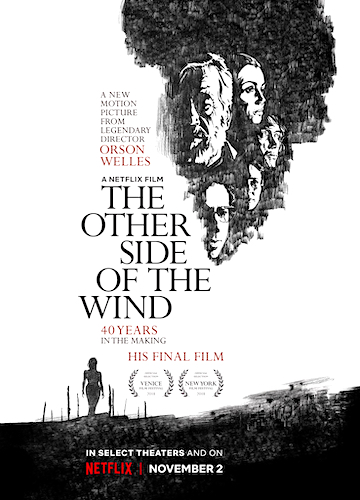
  • The Other Side of the Wind (2018)
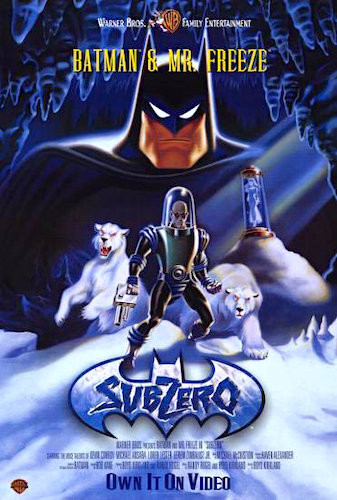
  • Batman & Mr. Freeze: SubZero (1998)
  • Paper Moon (1973)
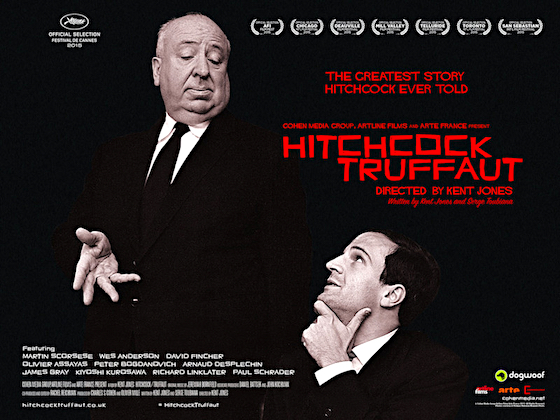
  • Hitchcock/Truffaut (2015)


    The Other Side of the Wind
    (2018)

    2018 #226
    Orson Welles | 122 mins | digital (UHD) | 1.37:1 + 1.85:1 | France, Iran & USA / English | 15 / R

    The Other Side of the Wind

    One of my draft intros for The Other Side of the Wind was to talk about how it feels like “a 2018 film” because it’s different; innovative; unique — modern. But then to note that, of course, it was all shot in the 1970s, but never completed for financial and legal reasons. That’s only partially true, though, because while it does feel modern in some ways, it still looks and feels very ’70s; and while it’s no doubt experimental and avant-garde, it’s in a very ’70s way. And the look of the film stock is very ’70s. It’s a strange, undoubtedly compromised movie — but so are many of the films Orson Welles managed to complete while he was alive, thanks to studio interference, so it’s hardly a sore thumb in that regard.

    The film tells the story of the final days of Jake Hannaford (John Huston), a film director working on his comeback movie (you’ve gotta think there’s some autobiography in here, then, right?) It’s a portrait of the man’s final hours, supposedly assembled from dozens of sources that were shooting him at the time — Welles prefiguring the ‘found footage’ genre by a decade or two. But this isn’t a horror movie… well, not in the traditional sense: in my notes I described it as “a frantically-cut display of pompous self-declared intellectuals pontificating about something and nothing in a battle of pretentiousness. That perhaps explains why, at a time when Netflix movies routinely ‘break out’, the flash of interest the film’s release provoked has not resulted in any kind of sustained wide admiration.

    Whatever your thoughts on the final film (and it’s clearly one for cineastes and completists rather than general audiences), it seems remarkable that it took so long for anyone to be willing to fund the completion of a film by The Great Orson Welles. But that’s actually a story unto itself, told in the accompanying documentary A Final Cut for Orson: 40 Years in the Making (which is hidden in the film’s “Trailers & More” section, but is definitely worth seeking out if you’re interested). Among the revelations there are that Welles shot almost 100 hours of footage, spread across 1,083 film elements, all of which had to be fully inventoried. Matching it up was a problem that would have been insurmountable even ten years ago; it’s only possible now thanks to digital techniques and algorithms — and, of course, a big chunk of change from Netflix. Welles had only cut together about 45 minutes, with the rest completed based on the style of those parts, his notes and letters, and recordings of some of his direction that was retained on the sound reels.

    Was the effort worth it? It’s certainly a fascinating project to see brought to some kind of fruition. In the end, I’m not sure what it all signified. The story is pretty straightforward, but it’s jumbled in amongst a lot of hyperactive editing, as well as a bizarre film-within-a-film. There are things here which still feel ahead of their time even now, and things that were certainly ahead of their time when shot in the early ’70s (even if other people have done them since), which is always exciting. Combine that with Welles’s status and this is unquestionably a fascinating, must-see movie for cinephiles.

    3 out of 5

    Batman & Mr. Freeze: SubZero
    (1998)

    2018 #227
    Boyd Kirkland | 67 mins | Blu-ray | 1.33:1 | USA / English | PG

    Batman & Mr. Freeze: SubZero

    It’s now so ingrained in Bat-canon that it’s easy to forget, but Batman: The Animated Series actually invented Mr Freeze’s backstory about his dead wife, etc. It was so successful that the episode (Heart of Ice) won an Emmy, the character was brought back to life in the comics (complete with this new backstory), and just a few years later it was used in Batman & Robin (which, considering how much that film was happy to ignore about other characters, e.g. Bane, just goes to show… something).

    So, with The Animated Series responsible for such a major revival of the character, it kinda makes sense they’d choose him to star in their second animated feature — although another version of events is he was chosen to tie-in with Batman & Robin, but then SubZero was pushed back after the live-action film was a critical flop. That makes sense, because while Heart of Ice is fantastic and influential, none of Freeze’s other Animated Series appearances have a great deal to offer. TV episode Deep Freeze is sci-fi B-movie gubbins featuring Freeze as a cog in the plot rather than its driving force; and, after all the effort to humanise him, in Cold Comfort he’s just a villain doing villainous things with incredibly thin motivation.

    SubZero is, at least, a step above those. It doesn’t withstand comparison to its predecessor movie, the genuine classic Mask of the Phantasm — that had entertainment value for kids, but was also a thoughtful, mature story about what drives Bruce Wayne to be Batman. SubZero, on the other hand, is just an action-adventure ride. It’s not bad for what it is (there’s a pretty great car chase halfway through, and the explosive climax aboard an abandoned oil derrick going up in flames is rather good), but no more than that. At least it finally provides a neat end to Freeze’s story… even if it is kinda hurried in a last-minute news report.

    3 out of 5

    Paper Moon
    (1973)

    2018 #235
    Peter Bogdanovich | 98 mins | TV (HD) | 1.85:1 | USA / English | PG / PG

    Paper Moon

    I do try to avoid this situation arising in a ‘review’, but I watched Paper Moon over two years ago and didn’t make any significant notes on it, so I’m afraid I can’t say much of my own opinion. What I can tell you is that I happened to spot it in the TV schedule and decided to watch it primarily to tick it off the IMDb Top 250, thinking it was a bit of an also-ran on that list (based on iCheckMovies, it’s not very widely regarded outside of IMDb; indeed, it’s not even on the Top 250 anymore). But that was serendipitous, because I wound up really enjoying it.

    Sticking with IMDb, here are some interesting points of trivia:

    “At 1 hour, 6 minutes, 58 seconds, Tatum O’Neal’s performance is the longest to ever win an Academy Award in a supporting acting category.” I guess category fraud isn’t a recent phenomena: O’Neal’s a lead — the lead, even — but I bet that supporting award was an easier win, especially as she was a child. Which also ties to this item: “some Hollywood insiders suspected that O’Neal’s performance was ‘manufactured’ by director Peter Bogdanovich. It was revealed that the director had gone to great lengths, sometimes requiring as many as 50 takes, to capture the ‘effortless’ natural quality for which Tatum was critically praised.” But I’ll add a big “hmm” to that point, because I think it’s very much a point of view thing. Every performance in a movie is “manufactured”, in the sense that multiple takes are done and the director and editor later make selections — is requiring 50 takes for a child actor to nail it any different than Kubrick or Fincher putting adult actors through 100 or more takes until they get what they want?

    On a more positive note, “Orson Welles, a close friend of Bogdanovich, did some uncredited consulting on the cinematography. It was Welles who suggested shooting black and white photography through a red filter, adding higher contrast to the images.” Good idea, Orson, because the film does look rather gorgeous.

    5 out of 5

    Hitchcock/Truffaut
    (2015)

    2018 #236
    Kent Jones | 77 mins | TV | 16:9 | France & USA / English, French & Japanese | 12 / PG-13

    Hitchcock/Truffaut

    In 1962, film directors Alfred Hitchcock and François Truffaut locked themselves away in Hollywood for a week to excavate the secrets behind the mise-en-scène in cinema. Based on the original recordings of this meeting — used to produce the mythical book Hitchcock/Truffaut — this film illustrates the greatest cinema lesson of all time… Hitchcock’s incredibly modern art is elucidated and explained by today’s leading filmmakers, who discuss how Truffaut’s book influenced their work. — adapted from IMDb

    This film version of Hitchcock/Truffaut is about so much at once. On balance, it’s mostly about analysing Hitchcock’s films; but it’s also about the interview itself; and the importance and impact of the book, both on the general critical perception of Hitchcock and how it influenced specific directors; but it’s also about how Hitchcock’s actual films have influenced those directors; and there’s also insights into directing from those directors; and also some bits on Truffaut’s films, and the differences between him and Hitchcock as filmmakers. Whew!

    It’s a funny film, really: it acknowledges the book’s influence, but doesn’t really dig into it; it analyses some of Hitch’s obsessions and films (most especially Vertigo and Psycho), but not comprehensively. Some have said it feels like a companion piece to the book; I’ve not read the book, but I can believe that — if the book were a movie, this would be a special feature on the DVD. Less kindly, you could call it a feature-length advert — certainly, I really want to get the book now. (I got it as a Christmas present not long after. I’ve not read it yet.)

    That said, here’s an iInteresting counterpoint from a Letterboxd review: “One of the things (just one) that makes the book so essential is that it’s a discussion of the craft of filmmaking from two (very different) filmmakers. In adding commentary from a wide variety of other directors, Jones highlights that element of the book while widening and updating its focus: it isn’t just a conversation between Hitchcock and Truffaut, but between those two men and David Fincher, and James Gray and Kyoshi Kurosawa and Arnaud Desplechin, etc. Rather than a mere supplement to the book, a video essay adding moving pictures to the book’s conversations, Jones’s film builds something new and on-going upon it.”

    I didn’t think Hitchcock/Truffaut (the film) was all it could be; and yet, thanks to the topics discussed and people interviewed, it’s still a must-see for any fan of Hitchcock, or just movies in general.

    4 out of 5

  • The IMDb New Filmmaker Award 2020

    Last night on AMPLIFY!, FilmBath presented the 9th annual IMDb New Filmmaker Award, in which a trio of industry judges choose the best short film by a new filmmaker (clue’s in the name). The winner gets £1,000 cash, £1,000 in gear hire for their next project, a natty trophy, and an IMDb pin badge (normally only given to IMDb employees). If you missed the evening, never fear: the whole 90-minute event is available to rewatch for free, worldwide, here.

    Why would you watch an awards show after it’s happened? Well, in this case, you get to hear the judges’ musings on what makes a good film — and when those judges are BAFTA-nominated director Coky Giedroyc (The Virgin Queen, How to Build a Girl), Oscar-nominated and BAFTA-winning producer Amanda Posey (An Education, Brooklyn), and the CEO of IMDb, Col Needham, those are opinions worth listening to. Even better, you get to watch the five nominated shorts in full, and they’re good a bunch.

    But don’t just take my word for it: take my, er, word for it, in the form of these reviews…
    If you do intend to watch the awards, fair warning: I’m going to ‘spoil’ who won.

    Under the Full Moon

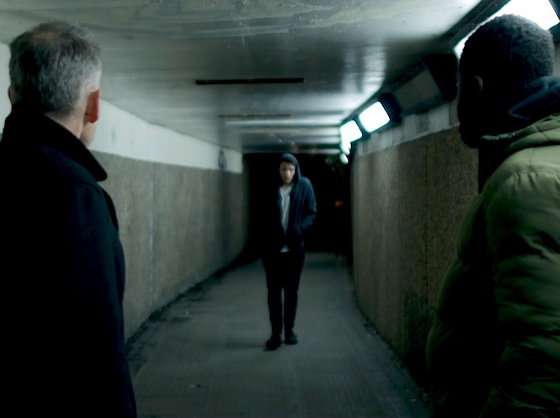
    Taking the films in the order they were shown, first up is Under the Full Moon (2020, Ziyang Liu, UK, English, 9 mins, ★★★★☆), about a guy who has his phone pickpocketed and decides to confront the mugger. The most noteworthy aspect here is the whole short is achieved in a single unbroken eight-minute take. I love stuff done in single long takes; at this point it’s a bit of a cliché to enjoy such things — a real film nerd kind of obsession — but, sod it, it’s still cool. To do a thriller storyline like that — something which requires management of tension and suspense, and of information being revealed at the right time in the right way — is even more impressive. You might say, “well, that’s what theatre is — a drama performed in ‘one take’”, but theatre doesn’t have to factor in camerawork; making sure we’re seeing the right stuff at the right time, framed in the right ways. Under the Full Moon manages every different element almost perfectly, the only real flaw coming right near the end, when the camera fails to clearly capture a phone screen with an incoming call, so the director resorts to a subtitle to make sure we get this final ironic twist. And that’s the other thing: this isn’t just a technical stunt, or an exercise in escalating suspense, but a dramatic work with some neatly-drawn character parts and a sense of dramatic irony. Really strong work.

    The winner (told you I’d spoil it) was Flush Lou (2020, Madison Leonard, USA, English, 9 mins, ★★★★★), and I entirely agree. It’s a black comedy about the reaction of three women to the death of a man: his daughter (who narrates), his wife, and his mother. It’s got a quirkiness that could be inappropriate, but the tone is juggled just right that it remains hilarious rather than at all distasteful. It’s there in the performances, the shot choices, the editing — the piece really works as a whole to hit precisely the right note. It might call to mind the work of someone like Wes Anderson, but it’s far from a rip-off; it also reminded me of certain just-off-reality American-suburbia-skewering TV shows, like The Riches or Suburgatory (I’m sure there are some more mainstream examples that are eluding my reach right now). Also, it manages to pack eight chapters into its eight minutes, without ever feeling like that’s an unnecessary affectation; if anything, it helps clarify the structure, which is exactly the kind of thing chapters are good for. A huge success all round.

    Flush Lou

    At the other end of the seriousness spectrum was the winner of the audience vote, The Monkeys on Our Backs (2020, Hunter Williams, New Zealand, English, 8 mins, ★★★★★), a documentary about the mental health of farmers in New Zealand. I think we often have a very positive view of New Zealand — they seem like nice people; their government is doing awesomely well; they make great movies; they’re good at rugby; and so on. But the country has one of the highest suicide rates in the developed world, and mental health problems disproportionately affect those living and working in isolated rural communities. This is not only a succinct explanation of the problems, with real-life examples as well as expert opinions, but also talks about the solutions, what help is out there and how it’s working. Plus it’s a beautifully shot film (some outtakes in black & white at the beginning show the fundamental quality underlying the colour photography in the rest of the film), with lovely views of countryside life, as if to help remind you that the world is a wonderful place. A wholly different film to Flush Lou, but an equally deserving winner.

    The shortest of this year’s five is Players (2020, Ava Bounds, UK, English, 3 mins, ★★★★☆), but that’s not the most noteworthy thing about it. This is: it was made by a 14-year-old. But you’d never guess, because it has a competency and, more strikingly, a surrealism that belies someone much more experienced. Heck, the sound design most reminded me of David Lynch! And the comparison goes beyond the sound work, with an ending that calls to mind some of Lynch’s work where nature and technology clash. Subtitled “a clearly confused film”, I think that was somewhat how the judges felt about its mix of retro costumes and music, computer-generated vocals, and a sci-fi sting in the tail. It’s the kind of film that clearly doesn’t work for everyone — just another way it’s a natural successor to Lynch, then. A 14-year-old making a competition-worthy short film is incredible in itself, but that it also merits so many comparisons to David fucking Lynch? Remarkable.

    The Monkeys on Our Backs

    The final film was Home (2020, Hsieh Meng Han, UK, English, 10 mins, ★★★☆☆), in which a girl living with her mother in a single room in a dingy apartment block finds the communal toilet locked, but then hears music coming from a nearby ventilation grill. Climbing through, she finds herself in a brightly-lit world of opulence, with people in elegant clothes dancing to genteel music, and an array of luscious food on offer. She even makes a friend. But then uptight officiousness arrives in the form of a stuffy manager, who refuses to let her use the toilet. It’s like a modern socially-conscious take on Alice in Wonderland, though I’m not sure what point it was ultimately making — kindness is nice and everyone deserves to be allowed to use the toilet?

    If any of that tickles your fancy, don’t forget you can still watch the whole event, free, here.

    Disclosure: I’m working for AMPLIFY! as part of FilmBath. However, all opinions are my own, and I benefit in no way (financial or otherwise) from you following the links in this post or making purchases.

    Never Rarely Sometimes Always (2020)

    2020 #193
    Eliza Hittman | 101 mins | digital (HD) | 1.85:1 | UK & USA / English | 15 / PG-13

    Never Rarely Sometimes Always

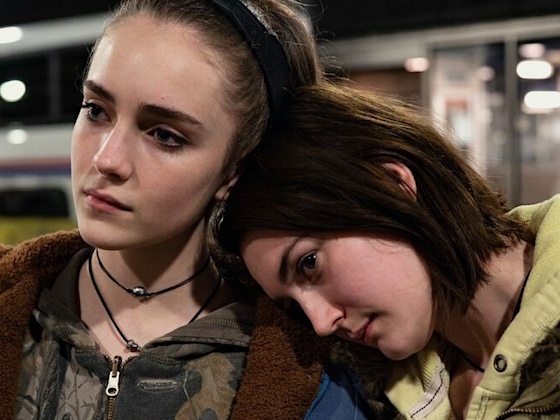
    Autumn (Sidney Flanigan) is a teenage girl from rural Pennsylvania, and she’s pregnant. She’s young, her family clearly aren’t well off, she’s not in a relationship with the father — the film explains none of this to us explicitly, but it’s all clear. So is it any wonder that Autumn decides she wants an abortion? Her local sex health clinic’s attitude is to show her a video about why it’s evil. Her conservative parents obviously wouldn’t understand; especially, you think, her dad, who is at least verbally abusive. And so with the help of her cousin, Skylar (Talia Ryder), they scrape together what little money they have, throw a simple lie in the parents’ direction, and set off for New York City, where Autumn can get the procedure without parental consent.

    Clearly, Never Rarely Sometimes Always is not impressed by the state of things in the US of A. It’s an indictment of what women have to endure to have control over their own bodies. The so-called “Land of the Free” isn’t so free for some people. All this is stuff many of us know, thanks to recent political movements and counter-campaigns to change women’s rights. But by showing us a ‘case study’, as it were, of one girl’s experience, writer-director Eliza Hittman makes the real-world effect of these political decisions so very tangible. (It’s interesting that the film is quite prominently a UK coproduction. One suspects that non-US influence and/or cash injection may’ve been necessary.)

    Lest you think the film is some kind of feminist polemic, it comments on all of this without ever saying much of it explicitly. It is, if anything, a witness statement; a factually-stated case from which we infer the unjustness of the system because we are capable of empathy. (The natural counterpoint being that, of course, if you showed it to certain groups they’d not feel the same level of care or compassion, but that’s their failing as human beings.) Despite the big issues at play, and these unavoidable conclusions, it’s a subtle and quiet film, with much left unsaid. The scene which gives the film its title is a series of questions posed to Autumn before she can have the abortion. Some are just yes/no answers; some she can’t even bring herself to respond. They’re not specific enough to tell us what exactly has happened in her life, but they indicate and hint at so much. And that’s ok — we don’t need to know the totality of her personal experience to empathise with what she’s going through now; just that she’s not coming from a loving, supportive place that might make it all a bit easier.

    Skylar and Autumn

    As Autumn, Flanigan is incredible; doubly so as it’s a debut performance (apparently she beat over 100 actresses for the role. Well done, casting director!) Like the film, she conveys so much with so little; so much bottled up emotion. Skylar is a great character, too: so supportive, but not incapable of feeling her own emotions. At one point, as the trip unexpectedly drags on over several days, it all gets a bit much and she has to go off by herself for a bit. That kind of behaviour helps accentuate the realness of events — even when you want to be supportive, sometimes you need a little break. No one’s perfect. Ryder has a couple of minor credits to her name, but both girls deserve to go on to much more on the strength of their work here.

    Some viewers will find the film’s style too slow, too wandering, aimless; but, for me, that further underlined the reality. All that time spent just getting from place to place, or just waiting around until it’s time — that’s life. Indeed, for me, it only heightened the film’s tension, which crushes in all the time, throughout. Or perhaps not tension, exactly, but worry; uncertainty; anxiety. What’s going to happen? What’s going to go wrong? How are they going to deal with this, that, and the other? Horribly, this is probably what it’s like to be a young woman a lot of the time, especially in America. That’s the film’s power: it takes a real-life experience lived by so many, and it doesn’t just show it to us, it makes us feel it.

    At one point, a professional tells Autumn that “whatever your decision is, is totally fine, as long as it’s yours.” It’s a moment of much-needed kindness, because, in Autumn’s experience, that is not how things are — but it is how they should be.

    5 out of 5

    Never Rarely Sometimes Always is available on Sky Cinema and Now TV from today. It placed 2nd on my list of The Best Films I Saw in 2020.

    Jojo Rabbit (2019)

    2019 #145
    Taika Waititi | 108 mins | cinema | 1.85:1 | USA, New Zealand & Czech Republic / English | 12A / PG-13

    Jojo Rabbit

    So much was said about Jojo Rabbit on its release (last October in the US; at the start of this year here in the UK) — and, indeed, before its release, thanks to it debuting on the festival circuit — that, coming to it now, it feels like there’s nothing fresh to add. Doubly so as it’s been through the usual cycle of backlash and backlash-to-the-backlash (rinsed and repeated several times over). That said, it does seem to have dropped out of the conversation and consciousness somewhat, which perhaps hints at its longer-term reception — in short, it’s no Parasite. (Maybe that’s an unfair comparison anyway, given Parasite is the kind of movie that’s already attracted “greatest of all time” status some places.)

    And so, faced with nothing fresh to say, I will instead just explain and/or justify my own full-marks star rating. “Justify” feels like the right word, because some people (some critics, in particular) really took against the film. Others, less vitriolic, thought it didn’t measure up to writer-director Taika Waititi’s high standard. I don’t think it’s as good as Hunt for the Wilderpeople or What We Do in the Shadows (both modern classics, more or less), but I did like it a lot. When it hit the mark with its humour, it was very, very funny; but it balances this with emotional and hard-hitting bits. The balance it strikes between the two is uncommon but well managed. On a micro level, some parts are outstanding (like the title sequence cut to the Beatles), but I also felt it was a little long in places.

    My friend Hitler

    Before it came out, some were worried about the wider reaction to a comedy where the ‘heroes’ were Nazis. But, of course, Nazis aren’t the heroes, and it’s not difficult to understand that. Indeed, I can see why some critics were saying that, despite expectations, it’s not actually a particularly hard-hitting movie, because it’s not really shocking (unless you’re easily shocked by an imaginary-friend Hitler being a comedic character; and considering that humorous screen depictions of Hitler date back to at least The Great Dictator, so it’s hardly a revolutionary idea).

    Despite some doubts, in the end I rounded my score up to a full 5 because, while it’s not perfect, it contains an awful lot that I enjoyed an awful lot. One to rewatch and reconsider, perhaps.

    5 out of 5

    Jojo Rabbit is available on Sky Cinema and Now TV from today.

    The 100-Week Roundup XIV

    I love deadlines. I like the whooshing sound they make as they fly by.

    While I’ve been busy with FilmBath and AMPLIFY!, a lot of review dates I intended to hit have flown by, which naturally brought to mind the Douglas Adams quote above. All those reviews that would’ve tied in to something now won’t, but they’ll find a home here someday.

    In the meantime, I’m far behind on my 100-week roundups, which is why I’ve put some energy into this little lot. They finish up my reviews from October 2018, as well as dipping a toe into the waters of November 2018. It’s a mixed bag in every sense: very different genres; very different styles; very different ratings…
    The films in question are…

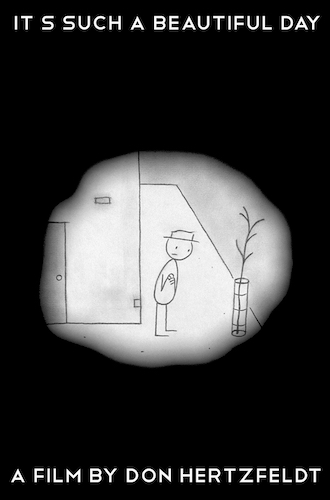
  • It’s Such a Beautiful Day (2012)
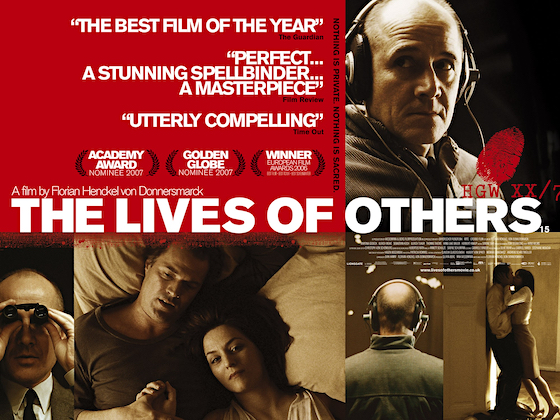
  • The Lives of Others (2006)
  • Jennifer’s Body (2009)
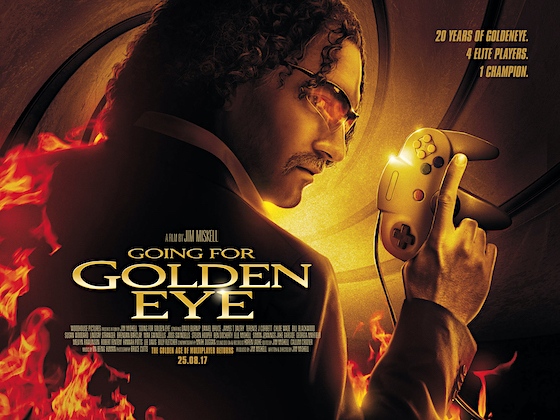
  • Going for Golden Eye (2017)


    It’s Such a Beautiful Day
    (2012)

    2018 #218
    Don Hertzfeldt | 62 mins | Blu-ray | 1.33:1 | USA / English

    It's Such a Beautiful Day

    In 2014, when Time Out New York ranked It’s Such a Beautiful Day 16th on their list of the 100 Best Animated Movies Ever Made, critic Tom Huddleston described it as “one of the great outsider artworks of the modern era, at once sympathetic and shocking, beautiful and horrifying, angry and hilarious, uplifting and almost unbearably sad.” That’s a description I’m about to singularly fail to better.

    Animator Don Hertzfeldt enjoys a cult following — you might never have heard of him (though chances you heard about his Simpsons couch gag, if nothing else), but if you have, well, you have. After releasing numerous shorts, It’s Such a Beautiful Day was his first feature — and, indeed, it was first released as a trilogy of short films between 2006 and 2011. Hence my notes break down into three parts, which I shall now share unedited…

    Part 1, Everything Will Be OK. Okay, so, this is weird. Interesting depiction of some kind of mental collapse (I guess we’re meant to infer it’s a brain tumour). Odd everyday events — what does it mean? Maybe that’s the point — Bill [the central character] is pondering what it all means too, after all.

    Part 2, I Am So Proud of You, is like, “you thought that was weird? Get a load of this!” A lot of it seems to be weird — what some people would describe as “disturbed — just for the sake of it. But at other times, it’s almost casually profound. There’s something interesting about its relationship to time and the order of events, or at least the presentation of the order of events.

    Part 3, It’s Such a Beautiful Day. See above. It’s interesting that it was three short films, made over a period of six years, because it really does feel of a piece. Maybe it was just easier to fund/produce shorts rather than a feature, and this was always the end goal.

    Well, there you go. This is not an animated movie for everyone (if you think “animated movie” means “Disney musical”… hahaha), but it’s certainly something unique and special.

    4 out of 5

    The Lives of Others
    (2006)

    aka Das Leben der Anderen

    2018 #220
    Florian Henckel von Donnersmarck | 137 mins | digital (HD) | 2.35:1 | Germany / German | 15 / R

    The Lives of Others

    In 1984 East Berlin, an agent of the secret police, conducting surveillance on a writer and his lover, finds himself becoming increasingly absorbed by their lives.IMDb

    This German movie won the Best Foreign Language Film Oscar and BAFTA (as well as a host of other similar awards), and is currently ranked as the 59th best film of all time on IMDb. It lives up to its accolades. It’s tense and thrilling like a spy movie; emotionally and politically loaded like an art house drama.

    Of particular note is Ulrich Mühe, superb as the increasingly-conflicted Stasi agent. He conveys so much with so little — the character’s massive ideological change is all portrayed as inner conflict. I was wondering why we hadn’t seen a lot more of him since, but sadly he passed away the year after the film came out, aged just 54.

    As the film focuses so much on him, it might be easy to underrate the technical merits, especially because they’re unobtrusive; but it’s perfectly shot by Hagen Bogdanski, with crisp, cold, precise photography. As for writer-director Florian Henckel von Donnersmarck, his followup was infamous Johnny Depp / Angelina Jolie vehicle The Tourst, a film so maligned it seems to have derailed his career. Shame.

    5 out of 5

    The Lives of Others placed 24th on my list of The Best Films I Saw in 2018. It was viewed as part of What Do You Mean You Haven’t Seen…? 2018.

    Jennifer’s Body
    (2009)

    2018 #222
    Karyn Kusama | 102 mins | digital (HD) | 1.85:1 | USA / English | 15 / R

    Jennifer's Body

    Jennifer’s Body didn’t go down well on its original release, but the past few years have seen it develop a cult following, with people regularly recommending it on social media as an under-appreciated horror flick. I didn’t dislike it, but I’m not ready to join their ranks.

    You can see what they were going for, in some respects — it’s trying to be a very feminist horror movie, with the female friendship at the core and so on. And yet, despite the female writer and female director and female stars, chunks of it feel so very male fantasy. I mean, Megan Fox goes skinny dipping for no reason. We don’t see anything explicit, but I’d wager that has more to do with Fox’s contract than authorial intent. Later, there’s a lingering kiss between the two girls that looks like it’s trying its hardest to best the famous one from Cruel Intentions. And talking of references, the whole film sounds like it’s trying really, really hard to be Heathers, with an overload of slang ‘n’ shit. It’s a bit, well, try-hard.

    Megan Fox is surprisingly good though, and there are some neat bits of direction, like the intercut murder/virginity-losing scene. It’s just a shame the whole film doesn’t show that kind of consistency. It did grow on me as it went on (I’m not sure if it took me time to settle into its rhythm or if it just had a clunky start), though exactly how much is debatable: it ends up being a moderately entertaining comedy-horror, but one that’s never really scary and rarely that funny.

    3 out of 5

    Going for Golden Eye
    (2017)

    2018 #224
    Jim Miskell | 60 mins | digital (HD) | 16:9 | UK / English

    Going for Golden Eye

    According to IMDb trivia, this is “the first video game mockumentary”. Well, you’re not going to mistake it for a real documentary — the acting is uniformly amateurish, which is one of the film’s biggest hindrances (it certainly gets in the way of selling the documentary conceit).

    Making allowances for such amateur roots, the film does manage some decently amusing bits, although just as many that don’t land. Very little about it will surprise or delight, but more forgiving or nostalgic viewers may be tickled at times. Plus, you have to have a certain amount of admiration for zero-budget filmmakers who managed to produce and get distribution for their film. Even if there’s an occasional for-friends-and-family feel to parts of it, they’ve still completed something many wannabes only dream of.

    Outside of aforementioned relatives, this is only really going to appeal to people with nostalgia for playing GoldenEye on N64 back in the day. In a way, the best part of the whole film is the opening montage about how GoldenEye was unexpectedly great, bucking expectations of both movie tie-in games and first-person shooters. A genuine well-made documentary about the game — why it was so important; what made it so popular — would be interesting…

    2 out of 5

  • The 100-Week Roundup XIII

    Horror, comedy, romance, and singing Nazis in this week’s roundup…

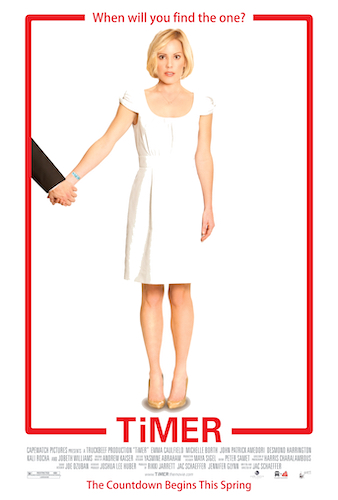
  • TiMER (2009)
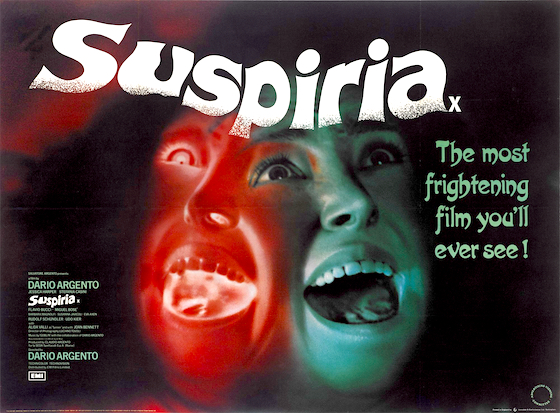
  • Suspiria (1977)
  • Matinee (1993)
  • The Producers (1967)


    TiMER
    (2009)

    2018 #210
    Jac Schaeffer | 100 mins | streaming (HD) | 1.85:1 | USA / English & Spanish | 15 / R

    TiMER

    The debut feature of writer-director Jac Schaeffer (who hasn’t helmed a feature since, but is now the showrunner of Marvel’s WandaVision) is a sci-fi romcom that doesn’t sell out its high concept to make its romance work. Said concept is that you can buy an implant that will count down to the day when you meet your soulmate. So, there’s the usual romcom “will they/won’t they” shenanigans, but with this added SF complication.

    As a sci-fi fan, I thought the concept was very well done indeed. At it’s core it’s quite a simple idea — I mean, such a device is hardly something that would change the entire world, but it would certainly affect our attitude to relationships and dating. The writing has thought through those effects, the way it would modify people’s reactions and behaviour and so on, and applied all of that to its story in a natural way; that is to say, it influences what happens, rather than the plot being little more than an exercise in exploring the permutations of the concept. Couple that with a solid romcom element, and you have a likeable little film.

    4 out of 5

    Suspiria
    (1977)

    2018 #211
    Dario Argento | 98 mins | Blu-ray | 2.35:1 | Italy / English | 18

    Suspiria

    Perhaps horror maestro Dario Argento’s best-known movie, Suspiria is the story of American ballet dancer Suzy Bannion (Jessica Harper), who travels to Germany to train at a prestigious dance academy, where she instead uncovers many creepy goings-on.

    There’s a bit more to the story than that, but, really, Suspiria is more about its unnerving atmosphere, creepy scares, and strikingly brutal murders than emphasising a traditional narrative. According to the film’s Wikipedia page, “film scholar L. Andrew Cooper notes ‘aesthetic experience is arguably the ultimate source of ‘meaning’ in all of Argento’s films’,” and that was certainly my main takeaway here — as I wrote in my year-end summary, it’s a masterpiece of uneasy atmosphere, with striking colours and music.

    There’s a lot more that could be written about Suspiria (and, of course, has been written in the 43 since its release), but if you were expecting deep-dive insight in a roundup column, you’re in the wrong place.

    5 out of 5

    Suspiria placed 16th on my list of The Best Films I Saw in 2018. It was viewed as part of Blindspot 2018.

    Matinee
    (1993)

    2018 #213
    Joe Dante | 99 mins | TV | 1.85:1 | USA / English | PG / PG

    Matinee

    I confess I’d not even heard of Matinee before Arrow put out a Blu-ray a few years back, but it seems to be something of a cult favourite — it’s laden with high-scoring reviews on Letterboxd nowadays. It’s about a producer of horror B-movies (modelled on William Castle) who attempts to promote his latest piece of monstrous schlock, Mant, to a military-base town during the Cuban Missile Crisis. Thematically, it’s a tribute to and evocation of the magic of the movies, which probably explains its popularity on a movie-logging website. That’s definitely its strongest aspect, with John Goodman getting to deliver some nice speeches about the wonder of going to the pictures. Shame today’s cinema managers and employees don’t seem to share his romanticism for the experience…

    Other than that, I thought it was a bit something and nothing. The movie-within-a-movie is a lot of fun, and setting a good chunk of the film during its premiere screening is a neat bit of structure, but overall the antics get a bit daft.

    There’s a bit of unintended mirroring in the inclusion of a school drill for the atomic bomb about to drop, with safety precautions that would be fundamentally useless were it to actually happen — it calls to mind how today US schools do drills for school shooting situations, again with virtually useless advice (or so I’ve heard). You could possibly draw out some commentary on the changing nature of threats to US citizens (it used to be from without, now it’s from within), but Matinee was made in 1993, so the chances of it being intentional are nil.

    3 out of 5

    The Producers
    (1967)

    2018 #216
    Mel Brooks | 86 mins | DVD | 1.85:1 | USA / English | PG / PG

    The Producers

    Writer-director Mel Brooks is best known for his fourth-wall-breaking movie parodies like Young Frankenstein, Spaceballs, and Robin Hood: Men in Tights, but his debut feature is a different kettle of fish. It takes place in (broadly speaking) the real world, where failing Broadway producer Max Bialystock (Zero Mostel) and accountant Leopold Bloom (Gene Wilder) come up with a moneymaking scam that involves putting on a show so terrible that it closes on opening night.

    Cue a mix of black humour (the play they settle upon is called Springtime for Hitler: A Gay Romp with Adolf and Eva at Berchtesgaden) and slapstick, with scenes and moments indicating the direction Brooks’ style would later take (like an aside about another character being delivered direct to camera, or someone answering a comforting “there, there” with “where, where?”).

    Although originally opening to mixed reviews, the film was a box office hit, earnt Oscar nominations (Best Supporting Actor for Wilder) and wins (Best Screenplay for Brooks), and was eventually adapted into an actual Broadway musical (you couldn’t make this up) which was then (re)made as another film (you really couldn’t make this up) and as recently as 2016 was used as the basis for a spoof of Trump (sadly, he’s not made up either). That, I think, speaks to the enduring hilarity of the original.

    4 out of 5

  • Bait (2019)

    2020 #9
    Mark Jenkin | 89 mins | Blu-ray | 1.33:1 | UK / English | 15

    Bait

    The past and the present — the old ways and the new — clash head-on in Mark Jenkin’s Bait, both in its storyline and its production.

    The former is the tale of a fisherman without a fishing boat: Martin (Edward Rowe) is a Cornishman through-and-through, a lover of his community and resistant to change; but his brother, Steve (Giles King) has turned their boat into a tourist vehicle, and they’ve had to sell their childhood home to well-to-do city-dwellers (played by Simon Shepherd and Mary Woodvine, as the very embodiment of upper-middle-class London-types with the money for a rural second home). As the summer season arrives, and upcountry tourists descend on the small town, flashing their cash, Martin struggles to get by; and the clash between two different worlds comes to a head.

    As to the latter (the production method), Jenkin has steeped his film in both older filmmaking methods and the place it was made. It was shot on 16mm black-and-white stock with a wind-up camera, with all the sound post-synced because the camera was too noisy to record on set. All 130 rolls of film were hand-developed by Jenkin in his Cornish studio, with a deliberate degree of what some might call “carelessness” to add authenticity: scratches come from washing the film under a running tap; exposure varies because the film was wound manually, therefore at an inconsistent speed; a “strange sparkle” on one bit of film was caused by leaving the studio door open and pollen blowing onto the drying film (there’s more about tall that in an interview with Jenkin by British Cinematographer). It’s a defiantly hand-crafted and old-fashioned method for making a movie; a way that’s becoming ever rarer thanks to the appealing ease of digital, both to blockbuster and low-budget productions. It’s funny that the only people ‘allowed’ to use film are either your Christopher Nolans — big-name auteurs who make tonnes of money for the studios, so they can do what they want — or your Mark Jenkins — tiny independent artists producing films for a pittance, so they can do it how they want.

    Beautiful black and white

    Some might consider Jenkin’s method to be unnecessarily pretentious — self-consciously Arty — but it’s actually a wonderful marriage of form and content; the earthy, hand-hewn visuals reflect the film’s themes. It’s not just an exercise in style, either. This would be a worthwhile narrative if told in a more conventional manner, but it would feel less striking and authentic with a glossy digital sheen. Of course, all filmmaking is “technology”, but there’s something about using such old cameras and film stock, developing the footage by hand, post-dubbing the sound, that all feels like The Old Ways, like it’s traditional and handmade, in a way that matches up with Martin’s desires and goals.

    Some reviews have compared the end result to silent film, which doesn’t wash for me. The damaged visual quality might initially call to mind a poorly-preserved and unrestored print, which, if one has encountered such a thing at all, is likely to be from a silent film. But the actual feel is more 1950s location-shot social realism, with the themes of everyday rural working life, naturalistic acting and lighting, and post-dubbed dialogue (there’s none of that on your average silent movie, is there?)

    Lest you think Jenkin is a one-note polemical storyteller, different points of view are allowed to exist: the upcountry folk aren’t all ‘evil’ (Martin may feel they’re a thorn in his side, but sometimes they’re actually on his side), and not all the locals long for the past (some are happy, or at least resigned, to fitting in and making their way with how things are). These are issues Cornwall has been dealing with for decades — it’s one of the poorest regions of the UK, thanks in part to so much property being bought as holiday homes and only occupied for a few weeks a year. But now is the right time to tell a story like that, because those problems are coming to a head: Brexit is set to be a disaster for Cornwall, because they’re going to lose a lot of EU funding. Will the British government replace it? The Cornish people, who did vote for Brexit, presumably assume so. I think they’ll be lucky.

    This is a local pub for local people

    Not that Jenkin is directly engaging in the Brexit debate here. In one scene we can overhear it being discussed on the radio, leaving us in no doubt when we are, but this isn’t a commentary on political upheaval. This is a story of normal people and how their lives have been altered by changing times. It may be unquestionably set now, but, as the filmmaking style underlines, the story is fairly timeless; it’s grounded and everyday.

    Well, until a shocking event near the end, anyhow. No spoilers, but I have mixed feelings about that plot development. In one sense, it takes away from the feeling that this is an everyday situation that plays out across modern Cornwall; but, in another way, it’s a realisation of all the tensions that have been brewing throughout the film, like it’s almost inevitable that some tragedy would occur. Fortunately, how the film then deals with the aftermath is typically coolheaded and understated. We don’t get to see the immediate fallout (there are some characters we don’t even see again), just what ultimately happens later. In some ways that’s almost too little (for example, we’re not shown how it affects the locals’ relationship with the upcountry folk), but it also lands its overall point.

    Bait has mostly been a regional success; regional not just to the UK, but to specific parts of the UK: according to figures published in Sight & Sound (and repeated in the BFI’s booklet accompanying the film’s Blu-ray), a typical movie makes 4.9% of its UK box office in the southwest, but for Bait that’s up at 35%. Hopefully time will see it break out further, because it’s a compelling story, both timely and timeless, uniquely told.

    5 out of 5

    The UK TV premiere of Bait is on Film4 tonight at 11:20pm.

    Bait placed 5th on my list of The Best Films I Saw in 2020.

    Safety Last! (1923)

    2020 #172
    Fred Newmeyer & Sam Taylor | 74 mins | Blu-ray | 1.37:1 | USA / silent | U

    Safety Last!

    I’ve seen films by Charlie Chaplin and Buster Keaton, so it’s overdue that I acquaint myself with the so-called “Third Genius” of silent comedy, Harold Lloyd. I would say that, of those three, Lloyd is considered a distant third place today: Chaplin is a name that transcends cinema to be known in the general consciousness; Keaton has accrued fame down the years for his still-impressive stunts; but Lloyd, I feel, has faded from consciousness a bit. If everyone’s heard of Chaplin, and a lot of people have heard of Keaton, I feel like only those in the know even consider Lloyd. But that wasn’t always the case. In fact, some would assert that, in their day, Lloyd was the most successful of them all — per Wikipedia, he made $15.7 million to Chaplin’s $10.5 million. (Nothing is ever as straightforward as all that, of course. Here’s a good article at Silentology all about the history of popularity of the silent comedians, which ultimately makes it quite clear that (a) Chaplin was the biggest; (b) Lloyd and Keaton were the runners-up; and (c) the pack of other comedians was far behind that trio.)

    The dwindling of his reputation seems to be at least partly his own fault: according to revered film historian Kevin Brownlow (paraphrased in this article), “Lloyd was so nervous about how audiences would react to his later movies that he withheld the films from distribution, so that only some very early pictures (made before his talent blossomed around 1920) were widely available for viewing. An effort to reintroduce his work after his death in the early ’70s was also botched, adding narrations and showy music scores to movies that don’t need extra gimmicks.” Nowadays, silents are re-released with more respect to their original presentations, but, for whatever reason, I think Lloyd still awaits the reappraisal that the other two have enjoyed and/or never even needed. Indeed, if we look at their current availability on disc in the UK, Chaplin has several extensive Blu-ray sets to his name; Masters of Cinema have made a fine fist of getting Keaton onto Blu-ray, with four box sets so far; and Lloyd… has a total of two films. And one of those (this one) is only out today. (I’ve focused on the UK because that’s where I am, but it’s not a whole lot better in his native US, where a total of four of his films are on Blu-ray.)

    What a way to make a living

    My opinion on the three is still forming — as I said, this is the first Lloyd film I’ve seen, so it wouldn’t be fair to base an entire comparison off it. But I have now seen the majority of Chaplin’s most-acclaimed features, and a couple of Keaton’s too, so a view is beginning to coalesce. And that is that, either I’m always in the wrong mood when I watch a Chaplin film, or I just completely prefer Keaton, and now Lloyd too. Aside from The Great Dictator, I’ve found every Chaplin I’ve seen to be a bit of a slog. That’s not to say I dislike them — I can see admirable stuff aplenty, and greatly enjoyed some of the exceptionally amusing sequences — but they always feel very long to me. That’s not a sensation I’ve yet experienced during a Keaton film, nor with Safety Last. But who knows, maybe Safety Last is Harold Lloyd’s Great Dictator in terms of how my opinion pans out. Only time, and more films, can tell.

    But, for now, Safety Last is why we’re here. It’s the story of a small-town boy (Lloyd) who travels to the city to find employment, planning to have his girl (Mildred Davis) follow him out just as soon as he makes his fortune. His letters home inform her of his increasing success, but in reality he works a lowly job at a department store, rushed off his feet to serve the baying mass of consumers. The ensuing century has conferred on that a degree of timelessness: working hard to appease others but getting nowhere yourself. It’s not the American Dream, but, for many low-level workers, it’s the American Reality. Replace working on the fabric counter of a department store with filling packages at an Amazon warehouse and, really, how much has changed?

    This is the milieu the film plays in for the first 50-or-so minutes, more or less. There are digressions outside the workplace, the best being a fateful morning commute that sees Lloyd accidentally bundled into a van heading further and further in the wrong direction, leading to an array of tricks and stunts to head back to work on time. Keaton may be the more famed daredevil, but here Lloyd appears every bit his equal.

    Climbing a building? Sounds like an impossible mission...

    And never more so than in the film’s final act. A series of events leads us to the point where Lloyd has to climb the sky-scraping outside of the department store building in order to earn the big payday he’s been needing. What follows is a 20-minute climb; a phenomenal extended sequence that is both funny and tense. It was shot on location, on fake buildings built atop real buildings — not as dangerous as fully doing it for real, but not exactly health-and-safety conscious (if Lloyd had fallen, he would’ve dropped only a storey or so onto a mattress; but if he bounced off that…) It has the same kind of thrill that Tom Cruise employs today when he climbs skyscrapers or dangles off the side of planes, only with more humour. You might think that would undercut the tension, but, if anything, it exacerbates it. You can push things closer to the edge when being funny, and, boy, does Lloyd get close to the edge…

    The first two-thirds of the film are a very solid 4-out-of-5 farce, but the final act mixes laughs with thrills in a perfectly executed, constantly escalating sequence that is a 6-out-of-5-level climax.

    5 out of 5

    The Criterion Collection edition of Safety Last! is released in the UK today.

    The 100-Week Roundup XII

    In the interests of catching up, this roundup combines two separate weeks.

    The first contains two of the most acclaimed films of all time (both feature on numerous “greatest ever” lists, including those from IMDb, Letterboxd, TSPDT, and Empire), which happen to be my final reviews from September 2018.

    The second is a pair of movies I watched back-to-back in October 2018 that share an obvious pregnancy theme — but, oh, they could hardly handle it more differently.

    This week’s films are…

  • Network (1976)
  • Ran (1985)
  • Prevenge (2016)
  • Bridget Jones’s Baby (2016)


    Network
    (1976)

    2018 #201
    Sidney Lumet | 121 mins | digital (HD) | 1.85:1 | USA / English | 15 / R

    Network

    no predictor of the future — not even Orwell — has ever been as right as Chayefsky was when he wrote Network.

    So wrote Aaron Sorkin, who has cited Network’s screenwriter Paddy Chayefsky as a major inspiration on his own writing; he even cited the man when accepting his Oscar for The Social Network; and Sorkin’s TV series The Newsroom feels like it could’ve been called Network: The Series.

    Well, maybe not. The first half-hour or so of Network feels like The Newsroom (which was a series very much aimed at being realistic, to the extent that it was set in the recent past and mostly used real news stories for its plots), whereas Network spirals off into its own level of satirical craziness, far beyond what Sorkin’s series attempted.

    But whereas The Newsroom looked to the recent past and real events, Network is as indicative of the future as Sorkin said in that opening quote. The film may be 44 years old, but I’m pretty sure you could Chayefsky’s this screenplay, change only a couple of minor specific words, and film it as being set today. It forecasts the future of TV news as angry men ranting as if they were prophets (this was 20 years before Fox News launched), as well as commentating on the place of terrorism in driving TV ratings.

    It’s cynical and ultimately bleak, but, worst of all, it’s entirely accurate.

    5 out of 5

    Network placed 21st on my list of The 26 Best Films I Saw For the First Time in 2018.

    Ran
    (1985)

    2018 #203
    Akira Kurosawa | 161 mins | Blu-ray | 1.85:1 | Japan & France / Japanese | 12 / R

    Ran

    Akira Kurosawa returns to Shakespeare (after Throne of Blood quite closely adapted Macbeth and The Bad Sleep Well may or may not have been based on Hamlet) for an adaptation of King Lear, relocated to feudal Japan. At the time, it was speculated to be his final film. It wasn’t — he made three more — but this was his last large-scale work.

    The title translates roughly as “chaos”, “pandemonium”, or “turmoil” — I guess they didn’t bother retitling it for the West because the original is a nice, simple word we can understand. But the original meaning is clearly apt, because the film depicts the mayhem that ensues when a warlord abdicates and tries to divide his kingdom between his three sons.

    It’s testament to Kurosawa’s greatness that he can make a movie this magnificent and I wouldn’t even put it in his top five. That might be my failing, though — this is a longer and more complex work than, say, Throne of Blood or Sanjuro. I need to revisit all of Kurosawa’s movies, but none more so than this.

    5 out of 5

    Ran was viewed as part of What Do You Mean You Haven’t Seen…? 2018.

    Prevenge
    (2016)

    2018 #208
    Alice Lowe | 88 mins | TV (HD) | 2.35:1 | UK / English | 15

    Prevenge

    Seven-months-pregnant Ruth (played by Alice Lowe, who also writes and directs) believes she can hear the voice of her unborn baby, and it’s telling her to kill people. Why is a mystery… unless you read the Wikipedia entry, which just tells you upfront. (Don’t read the Wikipedia entry.)

    The behind-the-scenes story of Prevenge is impressive: it was made while Lowe herself was pregnant; she wrote it in just four days, and shot it in just 11. Speed is no indicator of quality, either positively nor negatively, but Prevenge is very good. The premise is obviously absurd, but it leans into that by being darkly funny. As a horror movie, it’s not scary, more kind of creepy, although not even quite that — it’s not playing on those kind of thrills.

    Perhaps this means it fails to satisfy “horror fans”, thus explaining its fairly low score on IMDb, which I think is unwarranted. But it’s also not what people have started to call “elevated horror” (i.e. horror that is acceptable as a Quality Movie too), because it’s too transgressive for that. Perhaps it is best taken as an exceptionally black comedy.

    4 out of 5

    Bridget Jones’s Baby
    (2016)

    2018 #209
    Sharon Maguire | 123 mins | digital (HD) | 2.39:1 | UK, USA, France & China / English | 15 / R

    Bridget Jones's Baby

    I first and last watched the original Bridget Jones’s Diary and its sequel, The Edge of Reason, many years ago (probably close to when they were originally released, in 2001 and 2004 respectively; certainly well before this blog existed). I didn’t dislike them, but all I can really remember about them is broad-sweep stuff, including barely anything from the second one. So I didn’t come to this belated third movie as an all-read-up fan; but, just like the first two, I didn’t dislike it… and, 100 weeks later, can barely remember any details about it. (I read the detailed plot description on Wikipedia and some of it came back to me.)

    The storyline is mostly pretty obvious — it’s a recycle of the previous films’ love triangle thing, now with the added complexity of a pregnancy — which means the over-two-hours running time feels somewhat excessive (I continue to believe all comedies should be about 90 minutes). In spite of that, it’s often pretty funny. Some of the riffs on modern media and whatnot are a bit tired (“those young people, just posting photos of their food on Instagram!”), but other gags land well enough.

    In the earlier movies, Renée Zellweger attracted praise for her ability to inhabit a British lass. It feels like she’s forgotten how to do the accent in the 12 year gap; or maybe it’s just thanks to the work she’s obviously had done on her face… At least she’s helped by a supporting cast so stuffed with quality performers from UK comedies that some literally just appear in the back of shot (presumably there were deleted scenes).

    Reasonably successful at what it sets out to do, then; enough so that there’s been talk of a fourth one.

    3 out of 5