aka La Passion de Jeanne d’Arc / Jeanne d’Arc’s lidelse og død
2015 #69
Carl Th. Dreyer | 96 mins | Blu-ray | 1.37:1 | France / silent (Danish) | PG
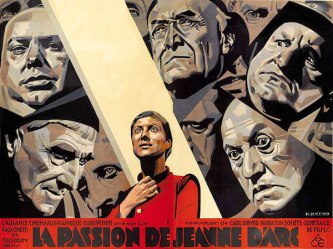 Widely regarded as one of the greatest movies of all time (look at the lists!), Danish director Carl Theodor Dreyer’s French-produced silent movie depicts the last hours in the life of Joan of Arc (Falconetti), a nineteen-year-old who is on trial by the Church for claiming God instructed her to fight to free France from British rule. You probably know it doesn’t turn out well for her.
Such a summary, while not inaccurate, is almost disingenuous. “This is by all odds the least religious and least political Joan ever made,” write Jean and Dale D. Drum (in a piece included in the booklet accompanying Masters of Cinema’s Blu-ray release), because Dreyer was explicitly not interested in the political or theological issues of the trial, which he felt were no longer relevant by the 20th Century. As he wrote in 1950, “I have tried to show that people in the medieval tragedy were, behind their historical costumes, people just as you and I are, caught up in the web of political and religious opinions and prejudices of the time.” With those religious and political issues set aside, Dreyer was instead focused on the universality of Joan’s experience as a human being. He was attempting to relate the tale — and, more importantly, the emotions — of a young woman sure of her convictions but persecuted for them.
 Dreyer based his telling on the written records of Joan’s trial. Although that’s grand for claims of historical accuracy, it’s hard to deny that silent cinema is ill-suited to thoroughly portraying something dialogue-heavy. There are many things silent film can — and, in this case, does — do very well indeed, but representing extensive verbal debate isn’t one of them. Bits where the judges argue amongst themselves — in silence, as far as the viewer is concerned — leave you longing to know what it is they’re so het up about. Sometimes it becomes clear from how events transpire; other times, not so much.
Dreyer’s faithfulness was not in aid of precisely representing what happened, however. For instance, the film takes place over a day or two, at most, while in reality Joan’s imprisonment, trial and execution took most of a year. Events were condensed so as to provide “a kind of bird’s-eye view, where all the unnecessary elements disappear” (Dreyer, quoted by Drum & Drum). This was partly in aid of what Dreyer described as “psychological realism”: rather than slavish fidelity to the facts of the era, it was about accurately and universally conveying the human experience.
According to Chris Marker (also in Masters of Cinema’s booklet), the aesthetic element of achieving this goal is one reason the film has endured so. Dreyer’s efforts to make the events seem ‘present’, as opposed to historical, works to make the film eternally present; they help it to transcend not only the 15th Century, but also the more recognisable trappings of “a silent-era movie”. The actors wear no make-up, perform in  neutral costumes on sparsely-decorated sets, and are almost entirely shot in close-ups — all elements that avoid the usual grandiosity of historical movies, both in the silent era and since. What we perceive as being ‘grand’ changes over time (things that were once “epic” can become small scale in the face of increasing budgets, for instance); pure simplicity, however, does not age much.
The near-constant use of close-ups, in particular, is one of the film’s most renowned elements. Dreyer was inspired by D.W. Griffith’s Intolerance, feeling this was an area film could excel in a way theatre obviously couldn’t. For Dreyer’s goal of giving us access to Joan’s very soul, it’s arguably the perfect medium — eyes are the window, and all that. This hinges on Falconetti’s acting. In her only major screen appearance, she delivers a performance that is still considered one of the greatest ever. It’s hard to pinpoint what she’s doing, but her wide eyes and almost crazed expression convey more subtlety than that sketched summary might imply. She is Joan, you feel, which again was Dreyer’s goal: he wanted his cast to inhabit their characters; to be them. He insisted the words from the trial record were spoken accurately (even though they obviously couldn’t be heard by the audience) and he built a whole 15th Century city set so that the actors might feel they were really there. As the film is shot largely in close-ups, that feels like a stupendous waste of money; and it led to the crew having to drill holes in walls and dig pits in the floor in order to get the shots Dreyer desired. But hey, whatever works.
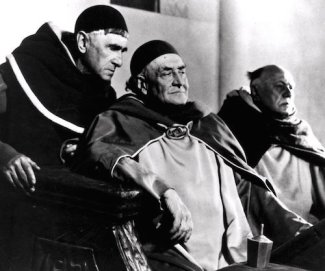 The actors playing the judges may be less individually memorable than Joan, but it’s their conflict — the personal battle between Joan and these men, as Dreyer saw it — that drives the film. Dreyer believed the judges felt genuine sympathy for Joan; that they did what they did not because of politics (they represented England, and she had led several successful campaigns against the Brits) but because of their devout belief in religious dogma. Dreyer says he tried to show this in the film, though it strikes me the judges still aren’t portrayed too kindly: they regularly seem contemptuous of Joan, and are outright duplicitous at times. Maybe that’s just religion for you.
Despite being one of the film’s most famed elements, Joan isn’t entirely constructed of close-ups. When Dreyer breaks free of such constraints, the dynamic camerawork on display transcends many people’s view of silent cinema. A swinging pan as maces are dropped from a window was a personal highlight, but there are some great, dramatic push-ins during the trial. That’s just the tip of the iceberg. There’s the editing as well: it’s surprisingly fast-cut at times, and the use of montage for some sequences (particularly in the torture chamber and the epic climax) makes for stunning visual cinema.
Reportedly Dreyer’s preferred soundtrack was complete silence, which makes sense given his other aims and views on depicting realism rather than interpretation. That sounds a little like an endurance test, however, and so of course the film is usually presented with a score. In the US, it’s now routinely accompanied by Richard Einhorn’s Voices of Light. Clearly it’s a noteworthy soundtrack because it feels like the vast majority of reviews and comments online make reference to it. Masters of Cinema’s Blu-ray doesn’t include it, 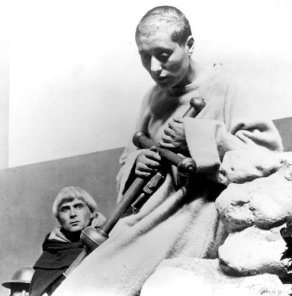 however, so I have no opinion. Instead, they offer two alternatives. On the correct-speed 20fps version, there’s a piano score by silent film composer Mie Yanashita. Apparently this is the only existing score set to 20fps, and Masters of Cinema spent so much restoring the picture that there was no money left to commission an original score. Personally, I don’t think they needed to. Yanashita’s is classically styled, which works best for the style of the film, and it heightens the mood of some sequences without being overly intrusive, by and large. Compared to Dreyer’s preferred viewing method, of course it affects the viewing experience — how could it not, when it marks out scenes (with pauses or a change of tone) and emphasises the feel of sequences (with changes in tempo, for instance). That’s what film music is for, really, so obviously that’s what it does. Would the film be purer in silence? Maybe. Better? That’s a matter of taste. This particular score is very good, though.
The Masters of Cinema disc also includes the film in a 24fps version, which is how it used to be presented most of the time (what with that being the standard speed for so long; it’s also the version Einhorn’s score was written for). I watched just the climax at that speed, and I’d agree with the scholarly consensus that it’s clearly running too fast. If it was the only version you knew, you might not notice; but in direct comparison, people are clearly moving unnaturally fast and the pacing of camera moves and edits feels off, like there’s not quite long enough to appreciate what you’re being shown. At 24fps the Blu-ray includes an avant-garde score by Loren Connors. It feels apocalyptic and so, in its own way, is somewhat appropriate, but it’s far too dissonant for my taste. I can’t imagine enduring it for the entire film, even at the commensurately shorter running time. Silent London’s review describes it as “tedious and barbaric… insensitive and intrusive”, and advises first-time viewers to “steer well clear.” I concur.
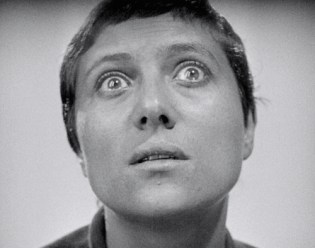 Some viewers describe how they’ve found The Passion of Joan of Arc to be moving, affecting, or life-changing on a par with a religious experience. I wouldn’t go that far, but then I’m not religious so perhaps not so easily swayed. As a dramatic, emotional, film-viewing experience, however, it is highly effective. As Dreyer wrote in 1950, “my film on Joan of Arc has incorrectly been called an avant-garde film, and it absolutely is not. It is not a film just for theoreticians of film, but a film of general interest for everyone and with a message for every open-minded human being.” A feat of visual storytelling unique to cinema, it struck me as an incredible movie, surprisingly accessible, and, nearly 90 years after it was made, timeless.
The Passion of Joan of Arc was viewed as part of my What Do You Mean You Haven’t Seen…? 2015 project, which you can read more about here.
It placed 14th on my list of The 20 Best Films I Saw For the First Time in 2015, which can be read in full here.
Also of note: this is the 1,000th feature film review I’ve published. (For what it’s worth, 2015 #112 will be 100 Films #1000. I’ll probably reach that in August.)

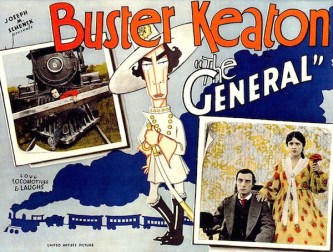 Poorly reviewed and a box office flop on its release, Buster Keaton’s The General has undergone a stark re-evaluation since: the United States National Film Registry deemed it so “culturally, historically, or aesthetically significant” that it was added to the registry in its first year, alongside the likes of Citizen Kane, The Wizard of Oz and Star Wars; these days, it rates on both public-voted popular lists (the IMDb Top 250 at #133) and critics’ polls (34th on Sight & Sound’s 2012 poll). Does it live up to such a reputation?
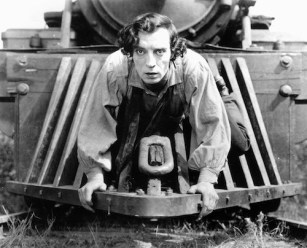 It was reportedly a very expensive film, and it looks it: there are tonnes of extras, not to mention elaborate choreography… of trains! Who knew old steam trains were so agile? There’s impressive physicality on display from Keaton, but the well-timed movements of those big old locomotives are quite extraordinary, especially for the era (I mean, for the past couple of decades you’ve been able to do pretty much anything thanks to a spot of computer-controlled what-have-you. Not much of that going on in the 1920s.)
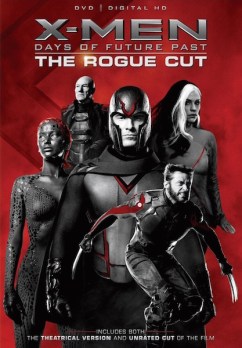 One of the big stories in the run-up to this fifth X-Men film’s release last year (my previous review is
 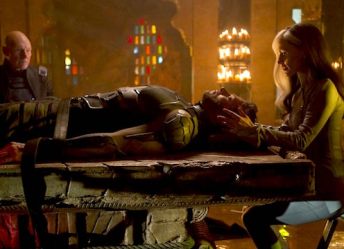 (though the theatrical cut only has 40 chapters, so I’m not entirely sure how that pans out). Most must be teeny extensions, however, and I look forward to
  The Rogue Cut is worth seeing for anyone who enjoyed the theatrical version — and, in terms of a copy to own, the Blu-ray comes with both cuts and more special features (though it loses all the extras from the first release, including a few more deleted scenes) — but, unless you’re a huge fan of Rogue or Iceman, it’s not essential.
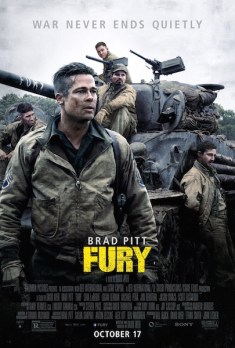 I don’t believe there are very many movies about tanks — there’s
 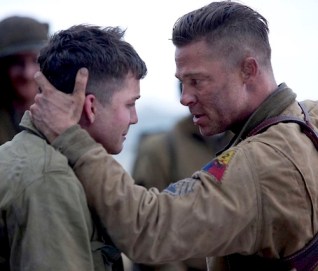 Most of the characters exist in a moral grey area, something which some reviewers seem to struggle with. From the off, our ostensible heroes are not shown in a particularly pleasant light, committing or encouraging acts we would view as unconscionable. As the film goes on, it seems like we’re being invited to bond with them, to respect or admire them. I’m not sure that’s a wholly accurate reading of it, though. I think we’re being shown different sides to them — much as Norman is, in fact. At first you see the depths they have reached; then, as you get to know them, you see a little more of their true (or at least their pre-corrupted-by-war) characters. Does this redeem them or excuse their actions? Well, that’s your decision. I don’t think the film is predicated on you coming round to their way of thinking. Without meaning to spoil anything, it’s not as if the meta/karmic world of plot construction lets them off scot-free by the end. Of course, whether we need our focus characters to be clean-cut heroes or whether complex morally-grey/black characters are preferable is another debate.
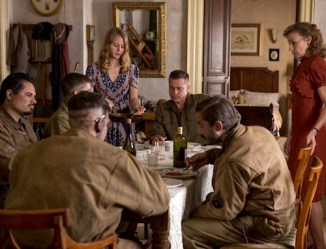 This is a scene most reviews seem to single out, I’ve since realised, but that’s for good reason: even watching it cold, the powerful writing, direction and performances mark it out as a sequence that transcends the movie it’s in. Again, it’s the unpredictability of what these men might do; the grey area of the guys we’re meant to think are the heroes not always being heroic.
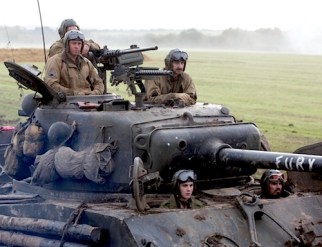 I think Fury is a rather rewarding movie for those that can, though. The fact it provokes debate is no bad thing — I think it’s a misinterpretation to read the film, as some online commenters clearly have, as “these guys do horrible things, but they’re the main characters and the not-Nazis, so I must be meant to like them, so the film is bad”. Well, I suppose it’s not news that some people struggle with cognitive dissonance. On the flipside, I don’t think you’re meant to outright hate them — there’s an element of “the Allies did bad things too, y’know” about the film, but that’s not its sole aim. I think it’s more complicated than that, and, naturally, all the better for it. Even on a more surface level, though, there’s adrenaline-pumping excitement to be had from the well-realised action scenes. It’s a combination that worked very well indeed for me, and if my score errs on the side of generosity then, well, consider it redressing the balance.
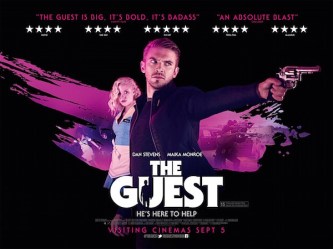 The writing-directing team behind
 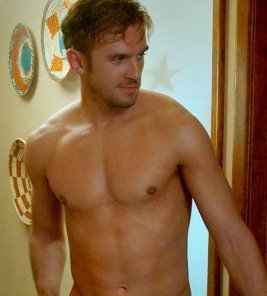 The days of chubby Matthew Crawley long since banished, a buff Dan Stevens (there’s a reason his topless scene was also all over the marketing) is entirely convincing as the seemingly-nice-but-possibly-creepy army man who inveigles his way into the Petersons’ lives with pure charm before gradually revealing, both to them and (especially) us, that there’s a lot more to him than a nice guy who happened to kill people in the Middle East. For my money, he’s the best anti-hero in a long time. Occasional flashes of dry humour — a line here, a look there — make him likeable to the audience, more than the charm that persuades the other characters does, so that by the final act we’re still pretty much on his side, whatever else happens.
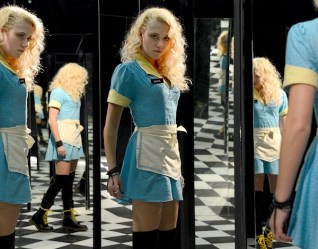 but I know I’m not the only reviewer to feel it. Wingard evokes that era and the feel of those movies, without slipping into parody and without merely ripping-off familiar flicks. I think this especially comes to the fore in the final act — it’s arguably even most distilled in the very final scene — but, again, it’s a feeling, a sensation, a familiarity, not a blatant, I dunno, “look, now we’re in the ’80s!”-ness.
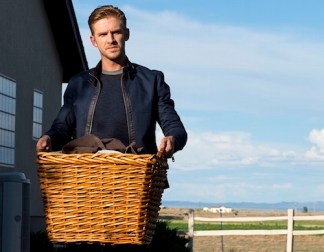 Not everyone loves it — some people outright hate it, even. I suppose it’s a little bit idiosyncratic, in a similar way to something like
 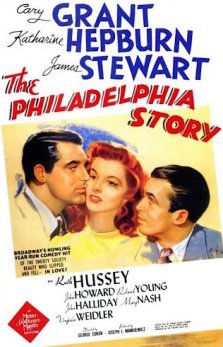 Katharine Hepburn is the
 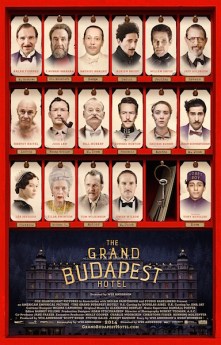 The latest from cult auteur Wes Anderson, which managed that rare feat of enduring from a March release to being an awards season contender, sees the peerless concierge of a magnificent mid-European hotel (Ralph Fiennes) accused of murdering a rich elderly guest (Tilda Swinton, caked in Oscar-winning prosthetics) and attempting to flee across the country to clear his name. More or less, anyway, because this is a Wes Anderson film and so it takes in all kinds of amusing asides, tangents, and recognisable cameos.
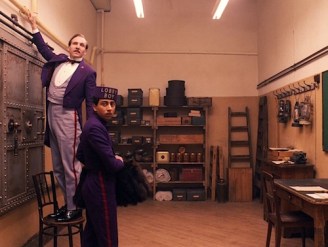 I suppose the kooky idiosyncrasies of Anderson’s brand of storytelling and filmmaking will rub some viewers up the wrong way, looking on it all as vacuous affectations signifying nothing. To each their own, but, whatever the merits (or not) of Anderson’s style as a kind of one-man genre played out across his oeuvre, The Grand Budapest Hotel displays a synthesis of contributing elements that creates a movie that’s ceaselessly inventive, surprising, amusing, and entirely entertaining.
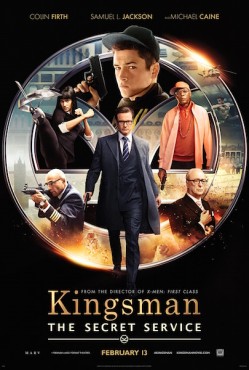 The team behind
  An even bigger part of the film’s triumph, and what likely led it to over $400 million worldwide in spite of its higher-than-PG-13 classifications (it’s Vaughn’s highest-grossing film to date, incidentally; even more so than
 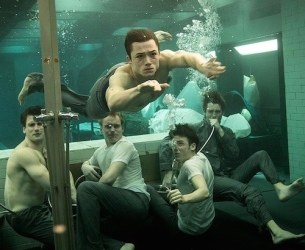 rather than the supposed real-world universe of spy movies. What the worldwide success of Kingsman proves is that audiences don’t need the set-dressing of superpowers to accept an action movie that’s less than deadly serious. It’s a place I don’t think the Bond movies could go anymore — not without accusations of returning to the disliked Moore or late-Brosnan films — but it’s one many people clearly like, and Kingsman fulfils it.
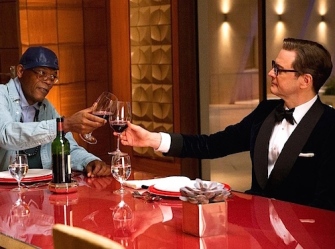
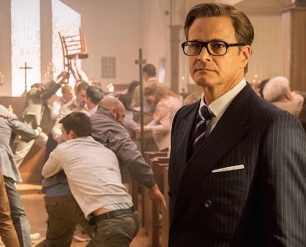 Criticisms of the film tend to pan out to nought, in my opinion. Is there too much violence? There’s a lot, certainly, but part of the point of that church sequence (for instance) is just how long it goes on. Other excellent action sequences (the pub fight you might’ve seen in clips; the car chase in reverse gear; the skydiving) aren’t predicated on killing. Similarly, Samuel L. Jackson’s baseball-capped lisping billionaire is a perfect modern riff on the traditional Bond villain, not some kind of attack on Americans or people with speech impediments. Some have even attempted a political reading of the film, arguing it’s fundamentally conservative and right-wing because the villain is an environmentalist. Again, I don’t think the film really supports such an interpretation. In fact, I think it’s completely apolitical — just like its titular organisation, in fact — and such perspectives are being entirely read into it by the kind of people who read too much of this kind of thing into everything.
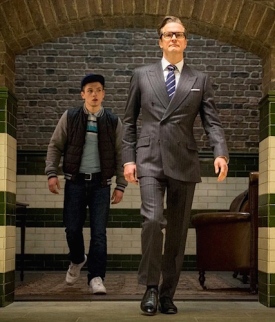 Not everything hinges on being wall-to-wall groundbreaking, though, and Kingsman has so much to recommend it. It ticks all the requisite boxes of being exciting and funny, and some of its sequences are executed breathtakingly. The plot may move along familiar tracks — deliberately so — but it pulls out a few mysteries and surprises along the way. There’s an array of likeable performances, particularly from Firth, Egerton (sure to get a lot of work off the back of this), Jackson and Strong, and Sofia Boutella’s blade-legged henchwoman is yet another why-has-no-one-done-that great idea.
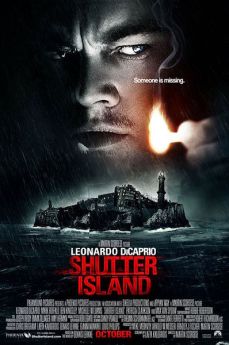 Adapted from a novel by Dennis Lehane (whose work also inspired
 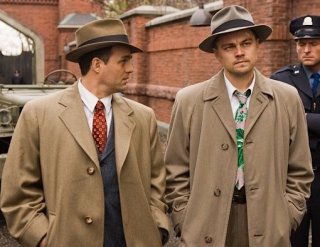 Besides, the film has other delights beyond being an elaborate guessing game. One of the things Lehane set out to do in his novel was write “a gothic”, and Scorsese and co have taken that ball and run with it. It’s overflowing with a fantastic atmosphere: unsettling, creepy, chilling, horror-movie scary when needed (some sequences are properly hair-raising); truly gothic-feeling. Every aspect of filmmaking — the direction, the photography, the editing, the sets and locations, the music — work in harmony to create a coherent mood.
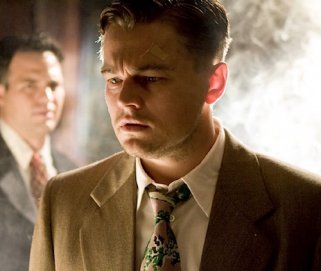 And then, after Scorsese and co have done their best to shred your nerves, in the final half-hour the pathos is immense. Quite without realising it had brought me to that point, I had a tear in my eye. This is in part thanks to some great performances, though you do need to reach the twist to fully appreciate them. Everyone reveals more levels once you know it, and indeed it’s clear a great amount of effort went into ensuring re-watchability — that if you view it again knowing the answers, you can spot things; not clues, per se, but elements in the performance, the design, the staging, that tie in to the reveal.
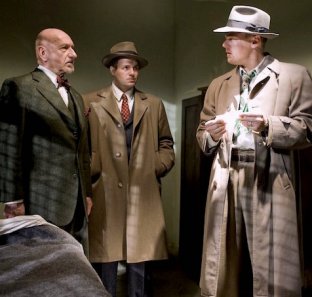 I think the more you let Shutter Island percolate after it’s over, the better it becomes. Solving the mystery and guessing at the twists occupies so much of your time on a first viewing that you almost miss the details in the characters and the world, but they build up nonetheless. There’s layers and depth here, and a plausibly realistic depiction (even according to an expert) of something that’s incredibly hard to depict in fiction. You can view Shutter Island as just an atmospheric gothic mystery chiller, and as that it’s a quality piece of work, but it’s the extra depth that mark it out as, actually, a great movie.
 This year’s Best Animated Short Oscar winner is a charming little tale of a dog and his owner. I absolutely adored it, though there’s little doubt that it was helped to victory by being produced by Disney and released theatrically alongside Best Animated Film winner
  but nonetheless packs an emotional punch. Viewers have been known to shed a little tear (though fear not, dear reader: it doesn’t come via a
  100Films.co.uk