Starwoids (2001)

2008 #17
Dennis Przywara | 79 mins | DVD | PG

StarwoidsAnother fan documentary (following yesterday’s review of Done the Impossible), Starwoids tells the tale of two groups of Star Wars fans who queued for six weeks to be the first to see The Phantom Menace. Alongside this, the film takes a couple of diversions into general Star Wars fandom.

The main story here is the more interesting element. You might think an hour of people standing in line is pretty dull, but, surprisingly, enough happens to hold the attention. The two groups make a structurally pleasing contrast: one is just a group of fans, who have a great time playing games and hanging out in line. Their biggest worries are the police moving them off the pavement, and where to go to the toilet. The other group was organised by fansite CountingDown.com, and turns from a bunch of people having fun into a 24-hour television studio and media event on a sidewalk, provoking arguments, governments and revolutions. Przywara uses no narration for the majority of the film, so these contrasts are left for the viewer and participants to draw out on their own. Generally it works, though leaps in time and the skipping of certain events occasionally make it hard to follow what’s going on, especially at the more argumentative camp.

The asides into broader fandom work fairly well. They break up the occasional monotony of people queuing, but are neither entirely related to the release of Episode I nor delve far into painting a picture of Star Wars fandom as whole. This dilutes the focus of the film a little: it’s neither a comprehensive overview of fans nor entirely centred on the anticipation of one film. It would be a lesser film if they were missing, however, as Star Wars: The Musical, the life of a toy collector, and the woman whose car is painted like an X-Wing are among the highlights. A trip to find filming locations in Death Valley is a misguided inclusion though, as the lack of comparative clips or stills from the film itself renders it fairly pointless.

Eventually the hundreds of queuing fans get to see Episode I. First reaction: they love it. Przywara returns four days later, and then a year later — amusingly, no one is asked for a retrospective opinion on the (generally reviled) film. Personally, I’d much rather watch Starwoids again: while the fans’ aggressive nature makes it a somewhat more depressing experience than Done the Impossible, the insight into what it’s like to be completely obsessed (and to queue for a month and a half) are both interesting and entertaining.

4 out of 5

Done the Impossible: The Fans’ Tale of Firefly and Serenity (2006)

2008 #16
Jeremy Neish, Brian Wiser, Jared Nelson, Tony Hadlock and Jason Heppler | 79 mins | DVD

Done the ImpossibleOne of the more recent entries in the “fan documentary” sub-genre (which also includes the likes of Starwoids and Ringers: Lord of the Fans), Done the Impossible investigates the cult sparked by the prematurely-cancelled TV series Firefly and its continuation movie, Serenity — a movie that only exists thanks to the fans’ dedication.

The activism, and success, of Firefly’s fans (known as Browncoats) makes for a key difference from other fan docs: these aren’t just people who queue for obscene amounts of time to see something they like; these are people who helped turn a cancelled TV show into a DVD hit, and then a successful movie too. As such, as well as touching on the basics of fandom (forums, conventions, fanfic, and so on), this documentary is the tale of the rise and fall of the TV show and the making of the movie, but from the perspective of the fans rather than the filmmakers. That said, a noteworthy number of those involved in the film are interviewed, discussing their love for both the show and its fans, and often confessing to be fans themselves. These include six of the lead cast (one of whom hosts the documentary, and another narrates the DVD’s extras), writers and directors, and creator/writer/director (and God to fans) Joss Whedon.

As a film, Done the Impossible has a nicely loose structure, on the whole following the thread of the production story through to around the time of Serenity’s premiere, but taking time for diversions into personal recollections and general areas of Browncoatism. Actually having a story to tell gives the film an advantage over other fan docs (Ringers rather lacked one, for example) — even though there are diversions, there’s always a narrative to keep things moving forward. It certainly stops things from seeming too slow or repetitive.

Whatever you may think of them, Firefly and Serenity broke the rules, and in the process helped pave the way for other cancelled properties being revived by fan support. With its emphasis on personal recollections alongside the minutiae of fandom, Done the Impossible is undoubtedly of primary interest to fellow Browncoats, and perhaps anthropologists. But there should be broader interest in the story of a dedicated and unfailingly hopeful mass of people who came together, refused to give up, and, against all the odds, actually won.

4 out of 5

Best in Show (2000)

2008 #15
Christopher Guest | 87 mins | DVD | 12 / PG-13

Best in ShowMockumentary from some of the team behind the perennially popular This is Spinal Tap. The target this time is the Competition Documentary, a genre of which the best comparable example I can recall is the excellent Spellbound (not the 1945 Hitchcock one). In this case, the film follows five sets of dog owners as they enter a prestigious dog show — an American Crufts, if you will.

The script, acting and direction always err just this side of believability, meaning if you came to this cold (and managed to not recognise any actors) you might be fooled into believing it was genuine. That doesn’t mean it’s short on laughs however — quite the opposite — and much of the comedy comes from the various recognisable character types. Not all of it mind, as many of the best moments are courtesy of a pair of commentators, who are always a good source for laughs (the first example that springs to mind is Dodgeball). Fred Willard does an excellent job as the poorly chosen sports commentator, and even his British straight man (in the ‘comedy double act’ sense), Jim Piddock, manages to grab a few laughs.

I reviewed This is Spinal Tap back at the start of last year, and while I enjoyed it (enough to award four stars) I found it often underwhelming and perhaps a victim of its own hype. No such issues with Best in Show. While it may not manage laugh-a-minute, its hit rate is above average, and what passes in between the gags is a surprisingly decent comedy-drama.

4 out of 5

A Room with a View (1985)

2008 #14
James Ivory | 112 mins | download | PG

A Room with a ViewI can’t help but wonder if, back in 1985, there was any audience confusion between A Room with a View and A View to a Kill. One can imagine legions of Bond fans accidentally finding themselves with a witty heritage drama, and legions of old dears accidentally finding themselves with a man twice their age trying to be an action hero. (In actuality the films were released about a year apart — that being just one reason this is a particularly silly notion.)

Putting aside such nonexistent confusion, what of that witty heritage drama? Once again, thanks to the adaptations module of my degree, I’m stuck watching a film straight after reading the novel it’s based on. So far these viewings have supported my long-held theory that reading any novel before watching the film version (especially immediately before) is a Very Bad Idea. However good A Room with a View may be — and it certainly has its share of positives — it still pales slightly in direct comparison to the novel.

The film’s faithfulness is admirable at least, combining events effectively at times and at others leaving well alone. Unfortunately this “copying out” style of adaptation means that the dialogue is exactly as written but sometimes loses important elements through its abbreviation. In the novel, characters frequently mean something entirely different to what they say, but you wouldn’t guess so in the film. Similarly, a lot of the novel’s wittiness is lost — unsurprising, as much is carried in Forster’s narration, which here is largely left unadapted. “Largely”, because chapter names occasionally intrude as intertitles or subtitles. These usually merely skip what would be a few lines of expositional dialogue, but occasionally they’re entirely pointless, and frequently are rendered meaningless by what would otherwise be minor tweaks to the plot. As I suggested at the start, however, a lot of these flaws are only blatant when placed in stark contrast with the novel.

Others aren’t. Julian Sands is disappointingly flat as love interest George Emerson, and he frequently drags Helena Bonham Carter down with him (and not in the “written by Andrew Davies” sense). In my opinion, Bonham Carter is the weak line in an otherwise flawless cast, neither acting nor looking much like my image of Lucy (Sands might not give much of a performance, but at least he looks the part, and Emerson is meant to be quite awkward). This could well be just my personal vision clashing with that of the filmmakers, of course, but there you have it. Those two aside, the rest of the cast are excellent: Maggie Smith and Judi Dench are note-perfect, especially in the handful of scenes they share (it’s a real shame Dench’s character disappears before the halfway mark); Daniel Day-Lewis is the right mix of comical, annoying and unfortunate truth as Cecil; and Simon Callow, Denholm Elliott and a young Rupert Graves are also perfect fits for their roles.

Finally, no Room with a review (ho ho) can be complete without praising how gorgeous Italy looks here. The camera lingers on the art and architecture more like a documentary than a fiction film, taking the viewer on a sightseeing tour just as much as the characters. There are essays to be written (indeed, they have been) on why such spectacle is a bad thing, but if you don’t want to be so pretentious then it’s wonderful to look at. Which, in many ways, sums up the entire film.

4 out of 5

Ratatouille (2007)

2008 #13
Brad Bird | 106 mins | DVD | U / G

RatatouilleMy 2007 catch-up continues with Pixar’s highly-praised and award-winning latest, which currently sits as that animation studio’s highest entry in the IMDb Top 250 (their only films not to feature are A Bug’s Life, Monsters, Inc. and Cars). It seems a bit unfair to begin this review on such a downbeat note, but I personally don’t find such a position deserved. As is all too frequently the case, Ratatouille has become another victim of hype.
It’s been pretty impossible to avoid the praise that’s been heaped upon Ratatouille, be it unanimously positive reviews in papers, magazines and online, or overheard conversations in public, or the numerous high-profile awards it’s garnered (most recently, the best animation Oscar, plus a nomination for original screenplay). I was left expecting to be blown away by the best Pixar film made thus far. Sadly, this was not to be. It’s not as funny as Finding Nemo, or Toy Story, or Toy Story 2, or probably The Incredibles. Nor is it as cute as many of them. Or quite as heartwarming, to be honest. And the characters aren’t really as lovable.

OK, this is getting too depressing. The thing is, Ratatouille is a good film, but it is also a flawed one. It’s not nearly funny enough for a kid’s movie — laughs are almost non-existent in the first half and hard to come by in the second — and it’s too long, needing a good chunk taken out of that duller first half. It’s a bit confused as to who the villain is, meaning there’s a lack of real menace from either of the candidates. Despite a professed aim to make rats lovable, they’re not really. Even the potential love story is lacklustre because they wind up together far too quickly.

There I go again with the negatives. I think it’s far too easy to spot the faults in Ratatouille because everyone else has done such a thorough job on the positives, so I’m stuck analysing why I was so disappointed. There’s no denying how gorgeous it looks though — I can’t think of another CG film that even comes close. The level of detail is stunning, not just in set design (which includes whole intricately designed locations just for seconds-long sequences) but also in terms of what’s going on in the background. Check out Remy’s first conversation with his dad at the rats’ new home in Paris, for example: a simple shot-reverse-shot dialogue scene with two characters, but there’s continuously other rats talking, moving past, and so on in the background — all out of focus, not trying to be showy, like natural background detail in a live action film. No other CG film with such attention to ‘pointless’ detail comes to mind. But it also allows itself to be what it is — for want of a better word, a cartoon. Linguini waves his arms about like rope when he’s out of control, the chase sequences are madness, the design of the humans, cars, and almost everything else are suitably stylised. And it all comes with a soft warm glow that is, frankly, beautiful.

Despite my criticisms, Ratatouille is nonetheless a four-star film as far as I’m concerned. I also think that, with its shortage of laughs and cute characters, and with the main areas of appreciation in facets such as cinematography, it’s more a movie for adult animation fans than children. It’s not Pixar’s best, but true to form it’s head and shoulders above most other CG animated fare. Approach it with lower expectations than most reviews would give you and perhaps you’ll enjoy it even more than I did.

4 out of 5

Calendar Girls (2003)

2008 #6
Nigel Cole | 103 mins | DVD | 12 / PG-13

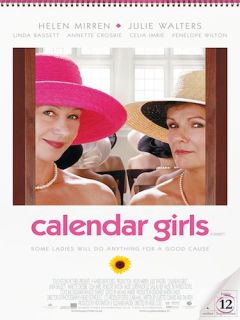
Calendar GirlsHelen Mirren and Julie Walters lead a cast of recognisable British actresses in this popular comedy drama about the true story of a group of Women’s Institute members who posed nude for a charity calendar. The film could so easily have been quite a lowly, cheap TV movie effort, what with its apparently farcical premise, worthy cause and older characters. But instead the filmmakers have crafted a movie that is both utterly hilarious and deeply moving — even for this younger male viewer.

Balancing comedy and drama, and making both work, is quite a feat — as someone once said, most comedy-dramas are so called because they’re neither very funny nor very dramatic — so it’s always impressive to see it pulled off so well. It’s surprisingly fast-paced, the central story supported by a number of well-chosen subplots that help shed light on the motivations of the women, making them more than just some older ladies who decided to strip off. Penelope Wilton is especially worthy of mention, as the downtrodden housewife who uncovers her husband’s affair. Of all the supporting cast she gets probably the largest role, even if it would seem to be the least heralded, and does an excellent job with it.

When I sat down to watch Calendar Girls I was expecting a pleasant bit of fluff that would make a lazy afternoon pass by amiably enough, even if it made an hour-and-three-quarters feel like two-and-a-quarter. I was surprised on most fronts: funnier, pacier, more dramatic, and more affecting than I had any reason to expect. Recommended, especially if you didn’t think it was for you.

4 out of 5

The Simpsons Movie (2007)

2008 #1
David Silverman | 83 mins | DVD | PG / PG-13

The Simpsons MovieAnd so 2008 begins with one of last summer’s biggest hits: the long-awaited big screen debut of America’s most well-known family. I’m not a big Simpsons fan, unlike many film critics it would seem — I like the show, undoubtedly, but I’ve never watched it regularly and haven’t sat through a whole episode for years (not even the recent-ish Ricky Gervais or Kiefer Sutherland ones).

This might explain why the movie didn’t feel tired to me, as some have described it. It might not be laugh-a-minute, and there are some sections where the plot has taken precedence (not always with good reason), but the gag count is nonetheless high and some are genuinely excellent. The plot is suitably epic, mostly justifying the need to be on a big screen at feature length. Some of the subplots feel like episodes of the show, but that’s fairly inevitable when converting a format such as this. Everything looks bigger; the quality of the animation is high; and while I’m sure the events will have no lasting impact on the characters, it does feel like a simple TV episode or two wouldn’t do it justice.

It may be that The Simpsons Movie wasn’t the ground-breaking best-comedy-ever that it needed to be to impress some. But it made me laugh, and often; at least as much as any other recent comedy, if not more so. That makes it a success in my book.

4 out of 5

While You Were Sleeping (1995)

2007 #128
Jon Turteltaub | 99 mins | TV | PG / PG

While You Were SleepingI wound up accidentally watching this on TV, and was ultimately glad I did.
If you’ve ever seen a ’90s romcom then the general shape of everything here will be familiar, though it does have a neat coma-related twist at its core. In spite of this predictability, and Sandra Bullock, I found it to be very enjoyable. It’s not a laugh-out-loud comedy and it is (of course) heavy on the sentiment, but it does have a lovely Christmasiness that is perfect for this time of year. It made me all nostalgic for the ’90s — they don’t make ’em like this any more. I don’t think. I don’t really watch rom-coms…

I can easily see myself tracking this down in time for next Christmas, and probably Christmasses after too.

4 out of 5

Telling Lies (2001)

2007 #127a
Simon Ellis | 4 mins | DVD

A simple idea, very well executed: as we listen to a series of phone conversations, the speakers’ dialogue appears on screen… except instead of transcribing their exact words, it reveals their true thoughts. At only a few minutes long this doesn’t outstay its welcome, instead maintaining the basic idea well and crafting a neat and amusing little story with it. Worth checking out if you have a chance.

4 out of 5

Telling Lies is available on the DVD Cinema16: British Short Films or can be watched on Vimeo for free.

The Bourne Ultimatum (2007)

2007 #127
Paul Greengrass | 110 mins | DVD | 12 / PG-13

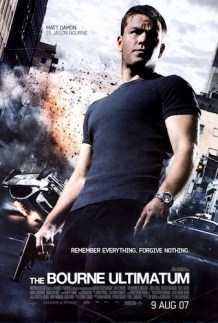
The Bourne UltimatumThis final instalment in the action-thriller trilogy was recently announced as Empire magazine’s film of the year, following wide praise on release that dubbed it the best action movie in a long time. Unfortunately, I fear it may’ve become a victim of its own hype.

It’s certainly a good film for many reasons: its appropriately unrelenting momentum, even in dialogue scenes; several stunning action sequences; a mostly decent plot. But it’s also flawed: despite the globe-hopping, complex plot, it feels somehow slight; several villains and plot devices seem tacked on to create an over-arching plan for the trilogy, when Bourne had really dealt with all these matters in the first two.

Ultimately, it simply didn’t feel as entertaining as the first two instalments, though I had an odd sense that I should be liking it more. Perhaps future re-viewings will aid my appreciation.

4 out of 5