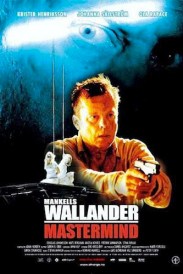
Wallander: Mastermind (2005)

aka Mankell’s Wallander: Mastermind

2009 #88
Peter Flinth | 96 mins* | TV | 15

Sixth in the series of Wallander films starring Krister Henriksson as the titular Swedish detective, though only the second to be released theatrically.

Mastermind works to earn its status as a theatrical release, everyone upping their game to provide something more filmic than the other direct-to-DVD entries in the series. That’s not to say the other films in the series are bad — they’re certainly as well-produced as any other detective series on TV — but this episode seems to have been constructed from the outset with an eye on a standalone cinema release, rather than just randomly plucking an episode from the thirteen produced to receive such an honour.

From the start (literally) there are slicker opening titles, and longer end credits to bookend that. The direction is flashier too — still grounded in reality, unlike the heavily-stylised British Wallander, but with more filmic shot choices and editing. Take, for example, the Rear Window-inspired scene where Wallander looks out over the adjacent block of flats while listening to classical music that completely fills the soundtrack — not the kind of sequence you tend to find in TV drama. On-going subplots from the series go unreferenced — there’s no need to have seen a single other episode to follow the story without a hitch.

The main plot’s on a bigger scale — a serial murderer who has eyes and ears inside the police department — and This Time It’s Personal for good measure, with the villain targeting friends and family and (spoiler) a past connection to several characters. It’s not a realistic-scale case-of-the-week, but a once-in-a-career unusual case, the kind of plot that graces serial killer films (Se7en comes to mind, obviously) in a way those case-of-the-week plots rarely do. It stretches credibility a little, as these types of tale often do, which does at times leave it feeling a tad out of place in Wallander’s grounded world, which is usually about more realistic murders rather than megalomaniac super-powerful serial killers. Still, it ups the ante appropriately, making the events more action-packed and conforming to the theory that films should never have a “just another day at the office”-style plot.

With the extra effort afforded to make this series instalment appropriately cinematic, the Wallander team achieve their aim and produce one of the stand-out of all thirteen films. That said, some viewers of the whole series may find it a bit OTT when compared to the series’ regular style.

4 out of 5

* The running time is listed as 102 minutes on IMDb, but 96 is taken directly from the BBC’s iPlayer.

(Originally posted on 14th February 2010.)

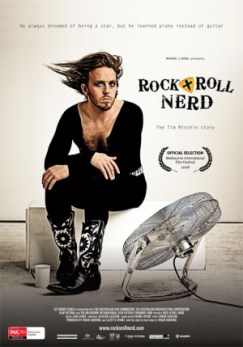
Rock n Roll Nerd (2008)

2009 #92
Rhian Skirving | 89 mins | DVD

I don’t usually bother with plot summaries at the start of my reviews, working on the assumption most readers will know (or know of) the film and so don’t really need one. My assumption here is that most won’t have even heard of this film, though.

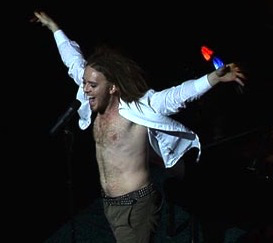
You may’ve heard of Tim Minchin, however, the Australian musician/stand-up who’s done a couple of tours, released a DVD or two, and popped up for guest spots on things like Never Mind the Buzzcocks and The Secret Policeman’s Ball. Back in 2005, no one knew who Minchin was — a struggling musician at the time, on the verge of quitting and finding himself a Real Job. He happened to live next door to aspiring filmmaker Rhian Skirving who, in more or less the same predicament, decided to film Minchin’s last ditch attempt at making it: trying his hand at comedy. They expected to film, at best, a small-scale suburban documentary about a wannabe failing to become a somebody, but what they wound up with was something rather different.

Almost as soon as filming began, Minchin was a hit at the Melbourne International Comedy Festival, where he was spotted by an Edinburgh producer and whisked off to the famous Fringe where (as the film’s own blurb describes it) he had “the most successful first season of any performer in the history of Edinburgh… walking away with the prestigious Perrier Newcomer Award, TV appearances, offers from Hollywood and the West End, the best management in the business and a gig at Albert Hall.” Not what either Minchin or Skirving had expected, that’s for certain!

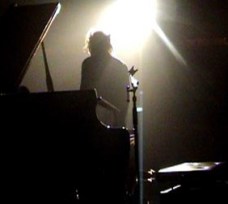
What this tale creates is an unusual rockumentary. It’s obviously not a concert film, nor a tour film, nor a retrospective on someone’s career; instead, it’s the chronicle of someone’s relatively meteoric rise to fame, from two unique perspectives: the camera is there as it happens, not belatedly once Minchin’s become more widely known; and the writer/director/cameraperson is a close friend, not just any old filmmaker hoping to cash in. One almost has to wonder if Skirving has psychic powers, so perfectly timed was her idea.

Minchin is pretty honest with the camera in tow. When he’s a success, we see him struggle with things like management: does he owe it to the person who discovered him to make sure she’s cut in on the deal? Is it right to just abandon her and move on? Does she just see him as a potential cash cow rather than genuinely wanting to support him? And so on. His honesty extends to the awards — his show is so hyped he winds up half-expecting the near-impossible, to win the biggest award in his first year. He’s not even nominated, having to ‘settle’ for a win as Best Newcomer. His confounded expectations aren’t boastful or immodest, the viewer privy to how his hopes were unrealistically raised in spite of himself.

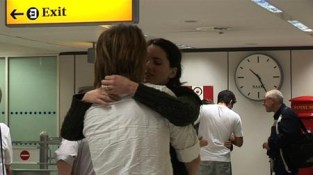
Alongside this, Skirving and Minchin allow us to see the toll his professional breakthrough takes on Minchin’s personal life. His wife — newly pregnant — is left behind in Australia while he’s becoming the toast of Edinburgh. The timing of some events in his personal life also couldn’t be worse, and Skirving documents them without ever becoming ghoulish or intrusive. It is, in a way, brave of both Minchin and his wife to allow their inclusion, but good filmmaking on the part of Skirving to know where to draw the line.

Documentaries such as this often rely on the viewer having a pre-existing affection for either the performer or their work. Though it seems impossible to believe, I’m sure there must be some who dislike Minchin (his show did get one bad review, after all) and it may be they wouldn’t engage with this film because of it. However, some stories are capable of transcending one’s feelings about the subject covered, and Rock n Roll Nerd may just be one of those: even if you don’t enjoy Minchin’s songs, or indeed comedy music in general, the tale of his success — and what it’s like for an ordinary person to live through such a thing — is a story whose unique interest extends beyond fans-only territory.

4 out of 5

Rock n Roll Nerd: The Tim Minchin Story is currently only available on an Australian Region 0 DVD, available from the distributor, your favourite Australian DVD retailer (y’know, like EzyDVD), or importers on Amazon. The film’s official website can be found here — sadly no trailer, but there are comments from Minchin and Skirving.

Rock n Roll Nerd placed 6th on my list of The Ten Best Films I Saw For the First Time in 2009, which can be read in full here.

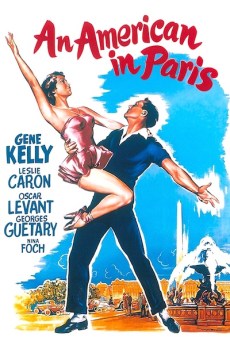
An American in Paris (1951)

2009 #93
Vincente Minnelli | 109 mins | DVD | U

An American in ParisIf anyone is interested in An American in Paris and has found this alleged-review in search of something interesting to read, I’m afraid you’re going to be sorely disappointed. Not because I didn’t like the film, but because I’ve not got anything to say about it.

The main reason for such an oversight is that, getting round to this review a month or so since I watched it, I can’t remember enough of it well enough to provide anything close to meaningful criticism. This could sound like a criticism in itself — designating the film unmemorable — but the sad truth is it’s not all that uncommon for me. This is why I usually write notes (like this (just in case you don’t know what notes might look like)), so that when I do get to a review (inevitably late) I can translate said notes into something passably resembling a review. Viewing An American in Paris over the Christmas/New Year period, however, there was no time for note-taking.

But enough on my lackadaisical reviewing habits, what can I say about the film? Well, it’s got a Gershwin score, and I always like that; particularly memorable is I Got Rhythm being performed by Gene Kelly and a group of young kids who can’t speak English. It’s a different take on a familiar number that’s thoroughly entertaining. The dancing is all great, of course, and Leslie Caron — last-minute replacement for a pregnant Cyd Charisse — shines in her debut role. The film ends with a lengthy ballet which, to be frank, isn’t really to my taste; dance fans of a certain type will undoubtedly love it though.

And that’s your lot, I’m afraid. I can only apologise to you, dear reader, and to all involved with this perfectly lovely film for not being able to offer a more appropriate set of thoughts.

4 out of 5

Hamlet (2009)

aka The Royal Shakespeare Company’s Hamlet

2009 #90
Gregory Doran | 183 mins | TV | 12

Hamlet (2009)It doesn’t seem like 18 months since the RSC brought Hamlet to the stage with British TV’s biggest star actor (probably) as the titular Dane, but it is (more or less). Thanks to sold-out performances and largely positive reviews (theatre critics seem even less keen to agree on anything than film ones), we’re now treated to this film adaptation, shown on BBC Two on Boxing Day and released on DVD (but not Blu-ray, boo*) earlier this week.

Hamlet hangs primarily on its central performance — so we’re constantly told, anyway; this being only the second production I’ve seen I can’t confidently assert so for myself, but I can certainly see where the consensus comes from. Equally, I can’t accurately compare David Tennant’s performance to any other, which often seems to be a central consideration in any review of the play. In near-isolation, however, it’s a thoroughly convincing performance. He glides seamlessly from withdrawn and grief-stricken in his first appearance, to intrigued and excited by the ghost of his father, to clever and wily as he plots, and finally to an alternation between assumed madness and serious introspection as he enacts his plans.

Any number of scenes show off Tennant’s abilities, particularly the way he treats other characters. He resolutely takes the piss out of both Polonius and Rosencrantz & Guildenstern, but plays each in subtly different ways: the former is like someone intelligent teasing with someone who doesn’t get it, which sounds distasteful but is enjoyable because of Polonius’ plotting and influence; while the latter is like a cat toying with a pair of treacherous mice, who are aware they’ve been caught out but struggle on regardless. Hamlet’s pair of ‘friends’ can be seen as insignificant characters by some — it’s part of what led Tom Stoppard to pen Rosencrantz and Guildenstern Are Dead, after all — but with a few silent additions around Shakespeare’s dialogue and the way Tennant, Sam Alexander and Tom Davey choose to play the original lines, their roles seem to have increased importance.

The other notable facet of Tennant’s interpretation of the character is humour. Hamlet’s madness here is almost unrelentingly funny — even in deadly serious situations, like capture following a murder, Tennant’s Hamlet can’t resist taunting the other characters, keeping the viewer onside by keeping his apparent insanity entertaining rather than scary or darkly intense. If anything, however, this screen version fails to capture just how funny Tennant was on stage. Perhaps it’s the loss of a bigger audience, or the energy of performing on stage, or perhaps Tennant has reined in, switching from Stage Acting to Screen Acting. He’s still funny, certainly, but its not as striking as it was live. In fact, more laughs are earnt by Oliver Ford Davies as Polonius. As his lines dither on like many a real forgetful old man, it’s difficult to imagine the part played any other way.

The other stand-out is an award-winning Patrick Stewart in the dual role of Claudius and the Ghost, though the fact he plays both feels relatively insignificant. His cool politician of a King makes a perfect contrast to the crazed energy of the Prince, the latter constantly bounding around while the former remains still and collected. In my view it’s a shame Stewart has a beard in the filmed version (a necessity forced by his concurrent appearance in Waiting for Godot, I believe) — on stage he was clean-shaven and therefore somehow more reminiscent of numerous other political villains, both real and fictional, whereas his bearded visage is more reminiscent of a traditional Kingly role. Still, it’s a minor aesthetic point that doesn’t hamper his wonderful performance.

Director of the original stage production, Greg Doran, also helms this version. It’s a convincing adaptation too, making good use of sets, locations and, vitally, camerawork, rather than employing static shots of the original theatrical blocking. A quick shoot (18 days for an over-three-hours film) and single location combine to reduce the number of on-screen locations, unfortunately, though the main set is fairly well rearranged to stand in for a number of rooms. It does branch out occasionally, but it’s a shame this couldn’t have been done more often, as consecutive scenes on the same slightly-redressed main set occasionally confuse whether we’ve changed location or not.

Doran’s main screen gimmick, however, is security cameras. Every so often our viewpoint switches to a grainy black & white high angle as we survey the scene via CCTV. It’s a neat idea to convey the concept of Elsinore as a place where everyone is under constant scrutiny, and it’s occasionally used very well indeed — during the Ghost’s appearance to Hamlet, for example, or when he rips a camera down to declare “now I am alone”. Unfortunately, it’s not as consistently thought-out as one might like. When Claudius and Polonius spy on Hamlet and Ophelia, for example, they do so from behind a two-way mirror (as in Branagh’s film, incidentally) rather than, say, from a control room with a bank of security monitors, an idea which seems to naturally flow from the presence of CCTV. Following this, when Polonius talks to Hamlet he delivers several asides to camera — not the security camera, mind, just to the audience. It would have been more effective to have him offer them to a security camera, knowing Claudius to be viewing in another room. It’s moments like these that turn the omnipresent video surveillance from a clever idea to little more than a gimmick. And by the time it’s cut to during the climactic sword fight, you just want it to go away.

It’s almost certain that this production will be remembered as “The Doctor Who Hamlet” thanks to its leading man. Whether that’s unfair or not is another debate, though it shouldn’t mean this version goes ignored. Tennant’s excellent performance reminds us that he was an accomplished performer with the RSC long before he gained televisual fame, and a strong supporting cast ensure this can’t just be dismissed as a popularity-seeking vanity venture by the RSC. Indeed, if there’s one good thing about the “Doctor Who Hamlet” label, it’s that the potential viewership is increased massively, bringing some to Shakespeare who never would have bothered otherwise. Surely no true theatre aficionado could argue with that.

4 out of 5

* A Blu-ray was eventually released in April 2010. ^

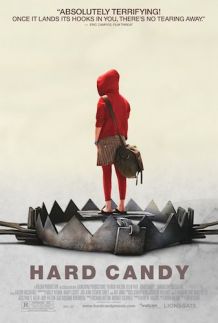
Hard Candy (2005)

2009 #72
David Slade | 100 mins | TV | 18 / R

Hard CandyHard Candy’s director David Slade has followed this up with vampire horror with 30 Days of Night and will shortly unleash an altogether different kind of horror by joining the ranks of evil that are bringing us The Twilight ‘Saga’. His feature debut may be a two-hander between a teenage girl and middle-aged man, but in its own way it’s just as much a horror movie.

Actually, that’s mainly a review-opening conceit: one tense torture-ish sequence aside, Hard Candy is a consistently surprising thriller about real-world horrific things rather than depicting them itself. To reveal too much of the plot would spoil it, though I imagine most viewers will already be aware of the first big turn: the real intentions of Ellen Page’s 14-year-old protagonist. It follows this wannabe-surprise (“wannabe” because it occurs too early to escape description in most plot overviews) with a series of equally playful reversals. The viewer’s never quite sure of any fact about either of the two characters; never quite sure if they’re being genuine or at any moment will undermine their present emotion with the revelation it’s just an act, an attempt to fool the other. Arguably it’s played this card too often come the end, and perhaps it could have stood being a more efficient 80 minutes rather than pushing on to 100.

The other assertion in my introduction is also disingenuous, because there are more than two characters. It’s basically a two-hander though, reliant for great stretches on two people in a room conversing and attempting to outwit each other. It’s more exciting than that might sound — the action is far from limited to chatter. Such a production rests entirely on the skills of its two leads, and fortunately both provide excellent performances. Watchmen’s Patrick Wilson is perfectly cast to alternate charming and sleazy, though Ellen Page — pre Oscar nomination for Juno — is the stand-out. Actually 18 at the time, she’s more than convincing as an older-than-her-years 14-year-old, selling the character’s confidence but also revealing an occasional vulnerability and uncertainness that just about keep proceedings the right side of believable. Still, plausibility isn’t exactly the film’s strongest point. There’s enough that one follows it, with the more implausible sections wisely saved for later on, by which time we’re drawn in and accept that Page’s character is clever, cunning and above all prepared.

Other characters do intrude however, and it’s almost a shame when they turn up: it breaks the perfect technical accomplishment of a locationally-limited two-hander for little more than another few minutes of screen time. That said, it’s the arrival of the constantly-referenced former love that finally provokes the ending, a worthwhile climax to a film so caught up in its to-and-fros that anything less than the influence an external factor providing a conclusion would’ve been a disappointment. The neighbour character, on the other hand, feels a little too inevitable; an obvious attempt to ratchet up the tension that arrives too late. It seems Slade thinks it’s as compulsory as the audience might, and dispatches with it quickly… just not quickly enough.

Story aside, Slade’s direction makes for an interestingly shot film. There are many close-ups, in which characters and action are often calm, but then there are occasional explosions of flashy camerawork, usually during acts of violence or other sudden bursts of plot-driving action. The grading is similarly fiddled with during these sections, emphasising the primary-coloured walls of the house that make for an interesting backdrop. Indeed, the walls are used to particularly good — if, arguably, obvious — effect throughout, such as slowly panning across a red wall so that it fills the screen during the lengthy castration sequence.

Hard Candy is sort of a morality play, though it’s hardly a moral that requires increased awareness. Primarily it’s a revenge thriller though, and with limited settings and characters it makes for an admirably intense — if occasionally credibility-stretching — and pleasantly unusual entry in the genre.

4 out of 5

(Originally posted on 7th February 2010.)

Children of Heaven (1997)

aka Bacheha-Ye aseman

2009 #83
Majid Majidi | 82 mins* | TV | PG

Children of HeavenChildren of Heaven is an Iranian film, which means it’s in a Foreign Language and it’s Subtitled. And yet, it was on ITV. Sometimes the mind boggles. Still, it was relegated to a post-midnight showing, so some things never change. Indeed, the one thing that inspired me to watch it is that it’s referred to by Roger Ebert in his wonderfully evangelical (about film, not Christianity (thank God!)) article to commemorate reaching 100 entries in his Great Movies series. I recommend it, incidentally; Children of Heaven comes up for good reason about halfway through.

The film itself is a charming little number, with a simple story about a brother and sister that nonetheless runs itself on inventive incident — the amount of (pleasingly light-hearted) drama it can ring from one missing pair of shoes is, in many ways, quite extraordinary. It also contains moments of simple beauty and pleasure, like blowing bubbles while cleaning or sunlight glittering on the goldfish pool. This is more what I had in mind when someone described Slumdog Millionaire as “feel-good”.

Speaking of which, Children of Heaven adds depth with an amiable commentary on poverty: this poor family live in close proximity to such rich ones, but they can all get along. When Zahra sees another girl wearing her shoes, she doesn’t confront her or demand them back, even when the other girl’s dad buys her a brand new pair and the all-important pair are thrown away again. Halfway through, Ali and their father go up to town and we see how the other half live — enough glass-fronted skyscrapers, dozen-laned roads, tree-lined avenues and blindingly-white mansions to rival any metropolis. And yet they don’t get angry at their lot, and the film doesn’t shove the obvious comparison down your throat. It doesn’t go for the simplistic and oft-tried “poor have little, but have each other so are ultimately happy; rich have lots, but are lonely and so ultimately sad” conclusion (though it does, briefly, err along that path), and nor does it end with the family getting rich and managing to move up in the world.

In fact, the finale deals solely with the issue of the shoes (pun not intended). It’s a long-distance running competition in which Ali must come third in order to win a new pair of sneakers. It’s nail-biting and a beautifully conceived idea — he doesn’t need to win, he needs to come third. If only mainstream films were so simply innovative more often.

Unfortunately, several plot threads feel underdeveloped or unresolved, ultimately coming across as a pleasant but unnecessary aside — the elderly neighbours, for example, who Ali delivers soup to in one scene, or the persistent landlord. The viewer can read more into these if they wish — the neighbours representing the generosity of those with nothing, for example, while we can assume the landlord is eventually paid off now Ali’s father apparently has better employment — but the film itself does nothing with them. There’s a difference between not spelling things out and just abandoning them, and perhaps Children of Heaven falls on the wrong side of this divide. It’s most galling at the very end (after the race), when the film seems to just stop abruptly. IMDb notes that originally there was an epilogue explaining Ali’s future which is for some reason absent from the American-released version, and the presence of something like that is indeed missed. However, the interweb can also provide theories on how the foreshortened ending does have significance, with the goldfish being symbolic, if one chooses to look for them.

But no matter — it seems churlish to complain about such diversions. Children of Heaven is a beautifully simple and good-hearted film and, apparently, a great way to introduce children to the notion of having to read while watching a film.

4 out of 5

* This is timed from ITV’s broadcast. The listed running time is 89 minutes; with PAL speed-up this would be c.85; hopefully the remaining three are accounted for by snipping the closing credits.

(Originally posted on 6th February 2010.)

Murder on the Orient Express (1974)

2009 #94
Sidney Lumet | 122 mins | TV | PG / PG

Murder on the Orient ExpressMurder on the Orient Express is arguably Agatha Christie’s most famous novel, perhaps because of its widely-known twist ending, or perhaps because it’s inspired in part by a high-profile true story, or perhaps because of this multi-Oscar-nominated all-star adaptation.

The plot is the stereotypical Christie set up: a group of fairly well-off people find themselves in a confined setting, one is killed, a sleuth works out who. This time it’s a train rather than a luxurious mansion, but the basics are there. This isn’t a criticism — I enjoy a good Christie adaptation as much as everyone else who’s kept the current TV incarnation on air for 21 years (and counting) — and here at least Christie has a number of twists to her usual style. As mentioned its launching point is a true story, the Armstrong kidnapping and murder being based on the Lindbergh kidnap of 1932 (just a couple of years before the book was written); the snow-bound train’s location (very apt after our recent weather) is certainly different to a stereotypical country estate setting; and then there’s the infamous ending.

I won’t spoil it here, just in case anyone doesn’t know it. Some are very critical of this particular denouement, labeling it an unsatisfactory cop-out that doesn’t make sense. Neither of these things are true. It is not reliant on an extraordinary coincidence — it might look that way at first, but the full explanation reveals it to be anything but — and there are numerous clues along the way as to what it might be, even if some are more thematic than the actual red herrings that almost lead Poirot astray. It’s a shame that knowledge of the ending is quite widespread these days, though that’s perhaps inevitable for a 76-year-old story. Still, I’ve done my bit.

In the lead role, Albert Finney’s Poirot may have received an Oscar nomination and, more importantly, been approved by Christie herself (according to some; according to others, she wasn’t impressed), but he now pales in the inevitable comparison with David Suchet’s definitive portrayal of the Belgian detective. Suchet has defined Poirot in a way few other major franchisable characters have been (Connery may be widely accepted as the best Bond, but there are plenty who’d choose Moore, Craig, Dalton and Brosnan, and you may even find someone who likes Lazenby; equally, Sherlockians may divide themselves between Rathbone and Brett, not to mention Cushing and hundreds of others). He has the advantage of being able to perfect the role across hundreds of hours of television, but nonetheless stands proud as the high-watermark that others can only try to reach (even those who played the role 15 years earlier).

Finney’s version is more obviously comical than Suchet’s. Where humour in the latter is derived from his serious fastidiousness, Finney plays it more for laughs; where Suchet seems almost solemn in his investigations Finney frequently bursts into laughter. It’s a broader interpretation of the character, one that ultimately lacks subtlety. At least Finney is thoroughly subsumed in the role, which means that after a while one does become accustomed to it.

The rest of the cast are well suited to their roles. Ingrid Bergman won the Best Supporting Actress Oscar for her role, though one wonders if it was a weak year for the category as her part is miniscule and not particularly memorable. Elsewhere, famous names such as Lauren Bacall, Sean Connery, John Gielgud, Michael York, and many more, round out a truly star-studded ensemble where each has but a small part to play. It must be relatively easy to attract big names to Christie adaptations — as the TV series still do — when the author is so beloved and the amount of time required to shoot is (for a guest star) so small. Best here, perhaps, is Martin Balsam as Poirot’s friend Bianchi, who’s treated to several good scenes, not least the series of interviews where after each he confidently declares “it was them!”

As a standalone film, Murder on the Orient Express is a skilled effort (I can’t comment on its quality as an adaptation because I’ve never read the book). For a viewer so familiar with Suchet’s interpretation of the character, however, even an all-star cast can’t quite remove the feeling that it’s not quite right. The Suchet-starring adaptation of this particular case has been filming recently, hopefully for broadcast later in 2010 (though knowing ITV we could have to wait as long as 2012), but even though it’ll have the definitive Poirot leading its cast, this film leaves a lot to live up to.

4 out of 5

(Originally posted on 15th January 2010.)

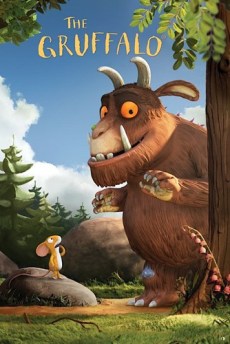
The Gruffalo (2009)

2009 #89a
Max Lang & Jakob Schuh | 27 mins | TV

The GruffaloJulia Donaldson and Axel Scheffler children’s book The Gruffalo was a bit after my time but, I’m told, is incredibly popular with The Youth Of Today (not the ones that hang out on street corners earning ASBOs, obviously). It’s certainly a pleasant read, with rhythmic poetry and the kind of repetition that allows children to join in with ease, but it’s also quite short — fine for a children’s book, but not so good for attempting a screen adaptation of any length.

Having turned down numerous offers for feature-length versions, Donaldson accepted the half-hour short film treatment. Thank God she did, because even at under 30 minutes there’s some padding in evidence. There’s a brief bookend narrative featuring some squirrels, plus a leisurely pace throughout that takes in the scenery and wildlife of the forest world these character inhabit. Seeing a segment in isolation the film can look far too slow, with uncomfortably long pauses between each line of the original verse. As a whole, however, the viewer settles into its style and it rarely if ever feels forced.

The CG animation is well pitched. The textures and style at times left me wondering if the film was actually stop-motion animation, and consequently it carries the warm, cosy, intimate feel that such productions achieve and CGI almost universally fails at (even from Pixar). Whether it was the intention to emulate claymation or just a side effect, it’s certainly more effective than the work on Flushed Away, Aardman’s first CG outing that deliberately set out to look like their traditional stop-motion.

The voicework is equally spot on. John Hurt sounds fabulous in anything, Rob Brydon’s vocal changeability lends appropriate sibilance to the snake, it’s difficult to imagine anyone other than Robbie Coltrane providing the monsterly tones of the titular beast, and even James Corden fits as the mouse. Tom Wilkinson and Helena Bonham Carter also do fine work, meaning there’s not a weak link among them.

Despite being primarily aimed at kids — who hopefully won’t struggle too much with the languid pace — the very listenable poetry of the text and hand-made look of the visuals provide much for older children and adults to enjoy as well. Super.

4 out of 5

The Gruffalo can still be seen on the BBC iPlayer until 7:29pm today. It is also available in HD.

(Originally posted on 2nd January 2010.)

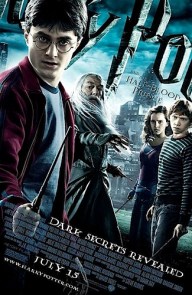
Harry Potter and the Half-Blood Prince (2009)

2009 #84
David Yates | 153 mins | Blu-ray | 12 / PG

Harry Potter and the Half-Blood PrinceBy this point I imagine everyone has a pretty clear idea what they think of Harry Potter, and this latest film certainly isn’t going to change that. That’s not to say it’s bad — in fact, it’s rather good — but Harry Potter is what it is, and nothing’s going to change that, least of all these thoroughly faithful adaptations.

This particular entry is well adapted from its huge source. I remember the novel as being somewhat turgid, a 600-page slab of flashbacks and exposition provided so one could understand the events of Deathly Hallows (for the uninitiated, that’s the final book, arriving as two films in 2010 and 2011). Thankfully, returning screenwriter Steve Kloves (who has adapted every Potter bar the previous one) and director David Yates liven it up considerably.

Adapting a 600-plus-page book is always a gargantuan task, something the Potter series has struggled with before (at times, Order of the Phoenix felt like an hour-long highlights montage), but Kloves manages to keep the thrust of the dark primary plot while peppering it with humour- and romance-based asides. (Calling it ‘romance’ may be a little generous — ‘teenage snogfest’ seems to be the preferred term by critics. And it is that, really. But ‘snog’ is such an ugly word, so I shall stick to ‘romance’.) The film could have been all Dark and Grim — and people doubtless expected, and probably would have accepted, that — but the sizable amounts of humour and romance keep the tone more appropriate to the series’ kid-centred roots, as well as adding light to the shade in a way that should please everyone. The titular Prince, however, is barely a subplot, but that’s a flaw of the novel rather than Kloves’ work.

Yates pitches the humour right, though the romance is occasionally overbearing for my taste, but the action sequences are well handled. Unfortunately, while entertaining in their own right, the majority are an aside to the main plot, which is perhaps where the two-and-a-half-hour running time comes from. The return of Quidditch is welcome to some fans, but would surely have been dropped without the fan pressure. That said, it feeds into both the Luck potion and romantic subplots, as well as providing its own doses of humour and action. Still, it’s a missed opportunity to further establish the character of Katie Bell, who has a moderately significant part to play a bit later on.

Worse is the opening bridge attack, which feels fairly pointless. Again, in itself it’s a dramatic event, expanded from a passing reference in the novel, but it bears little relation to the rest of the plot. In the novel it has a point — the wizarding world is finally impacting on the normal one — but that thread remains unexplored by the rest of the film, rendering the opening a visually exciting but empty sequence.

The still-young cast are intermittently believable. Rupert Grint still has a talent for comedy — enough to fulfill his role here, anyway — while Tom Felton is finally treated to a decent part as Draco. Formerly just an irritating bully, here he has a larger and more complex part to play, allowing Felton room to become one of the few child actors who can still live up to their part now. The adults are excellent as ever, particularly Jim Broadbent in a guest-star-level part and, naturally, Alan Rickman, who remains underused but may yet be treated to some material worthy of his talents in the final films. Additionally, Julie Walters conveys more with one expression in her brief cameo than some actresses can manage with half a dozen scenes.

With numerous plot elements left brazenly gaping ready for the next instalment (just as in the novel, of course) — including at least one thrown into the mix in the closing seconds — and Yates’ promise of an ‘urban thriller’ style for at least Part I (a genre he mastered in the outstanding State of Play), the two-part Deathly Hallows is a relatively tantalising prospect. Just eleven months to go…

4 out of 5

Avatar [3D] (2009)

2009 #89
James Cameron | 162 mins | cinema | 12A / PG-13

AvatarAvatar is The Film That Changed Cinema. The past tense can safely be used, despite the film only having been out a couple of days — it doesn’t matter if we like it, filmmakers and Hollywood executives have decided it’s the artistic and commercial way forward, and so it shall be. It barely even matters if people actually go to see it; not that it’s in much danger of flopping, coming in the wake of years of extreme hype and numerous sycophantic reviews.

What’s almost more irritating than that, however, is that it’s actually quite good. Flawed, unquestionably, and probably undeserving of the volume of advance praise heaped upon it, but far from a disaster.

It’s too long, for one thing. The end of Act Two feels like the end of the film… until it insists on going on for goodness-knows how long (my watch stopped working, I couldn’t check). It might not be so bad if it didn’t take its time getting to this point. Swathes of it feel like a dramatised nature documentary, only this time it’s about a fictional alien world. Talk of Cameron having created a fully-realised, living, breathing ecosystem are over-egged: there’s a half dozen creatures, at most, and their only relation is that they have these weird tentacle things in their hair that allow them to connect up to one another, like nature’s own biological USB. Maybe he knows who eats what and when and how and mating rituals and all that jazz, and if he does we should be thankful it’s not plastered all over the screen, but the creature creation/world realisation here isn’t anything beyond Jurassic Park.

The story itself isn’t bad. It certainly has an epic quality, which at least justifies the running time, though it’s a collation of elements from elsewhere. Of course, such things can be said of most stories these days, but with Avatar it seems even more obvious — a bit of Aliens here, a bit of The Matrix Revolutions there, a bit of An Inconvenient Truth for good measure, and so on with countless other recognisable tropes. The sin Cameron commits is that he mostly does it in quite a clichéd manner — it’s not just that you have seen it before, but it feels like you have too. Even the learning-to-fly bit, much praised in some quarters, reminded me of something else: slightly-rubbish TV miniseries Dinotopia, of all things. And don’t get started on the dialogue — “Try not to think of anything. That shouldn’t be too hard for you.” Dear God, how many times have we heard that line?

Towards the end Cameron does pull a few things out of the bag, mainly involving who gets killed and who doesn’t. Mostly, the story is a framework to allow the visual spectacle and an ecological/anti-war message. It’s as subtle as a nine-foot-tall blue alien. From crystal clear uses of familiar phrases like “shock and awe” and “hearts and minds”, to unconcealed references to our dying planet, Cameron attempts to criticise both American military tactics (invade, crush the locals…) and the destruction of the planet (…take all the natural resources for ourselves, no matter what the cost). It’s not that the message is wrong, it’s just that Al Gore did it with greater subtlety in a 90-minute lecture on that specific subject. From the outset, the military — specifically marines, of course — are quite clearly The Bad Guys Here, which is a refreshing change from the man who brought us Aliens. Quite what the American public are/will make of this outright criticism of both its military and energy consumption remains to be seen.

All this is realised through unrelenting CGI. It’s very good, but here Avatar falls victim to its own hype once again, because it’s still not 100% perfect. Perhaps it’s the closest yet seen — it certainly remains consistent throughout — but nothing had me wondering if they’d perhaps used prosthetics in addition to the CGI, as Davy Jones did at several points during Dead Man’s Chest, and I remain convinced that wonderful modelwork, as seen in the likes of Lord of the Rings, is still an unbeatable tool for creating convincing environments. Some will argue that we remain unconvinced of the alien creatures’ authenticity because we know they can’t be real, but some occasionally exhibit the plasticky shine of CGI or the jerky movement of motion capture. The Na’vi are certainly a step up from Robert Zemeckis’ dead-eyed humans in The Polar Express or Beowulf, but are they that much better than Gollum? Or even Jar Jar Binks? (In terms of the competency of the effects, I hasten to add.)

It’s hard to resist flaw-spotting with Avatar after reading so many praise-filled reviews. At the risk of sounding like one of those irritating people who sits at their keyboard declaring “ah-ha, I’ve realised something all you professional reviewers weren’t clever enough to see!”, I think this is in part due to the final act. Avatar has a stonking finale, from a huge Apocalypse Now-styled 9/11-echoing moment of destruction, to a thrilling and epic final battle (albeit interrupted by a mass of unwelcome pace-challenging plot). These sequences excel on almost every level, from visual wonder to the odd spot of emotion. And this is what your final impression of the film is, which can banish memories of the crawl through the middle, replete with those niggling flaws. I won’t be surprised if DVD/Blu-ray reviews commonly lose a star, robbed as it will be of the huge screen spectacle and reviewers forced to remember what they had to sit through to reach the big climax.

Oh yes, and Avatar’s meant to be convincing us that 3D is the future, isn’t it? And actually, 3D is quite nice. This is the first time I’ve seen a film in RealD, so I was pleased to discover how perfectly it works. No ghosting that I noticed and minimal discomfort even after such a long film, so from a viewing point of view I was happy with it. It adds depth to the image as well, rather than throwing things in your face — this too was pleasant. As I’ve noted on previous 3D reviews, this depth can bring a scene to life… not in the sense that you believe it’s genuinely happening behind that screen in front of you, but it does liven the images up.

What it doesn’t do is improve the storytelling — but then, what does? Some actors in a black box can convey a story wonderfully — look at Dogville, or any number of theatre productions — you don’t need sets, or costumes, or CGI, or even music or any number of other things we associate with the film experience. You could lump 3D in with these, or you could say it’s even less necessary — sets, costumes, and all evoke a time and place and create a realistic world in a way a black box doesn’t, but what does 3D bring to the table? It’s purely about spectacle, in the same way CGI or helicopter shots or using IMAX usually are. And that’s fine. But directors who’ve expressed an interest in shooting a ‘normal’ domestic drama in the format may be overestimating its import.

But for all the derivative plot, blunt message, cheesy dialogue, thrilling action, spectacular imagery, pretty good CGI and debatable 3D, Avatar may have a greater problem in gaining anything like widespread acceptance. It’s set 145 years in the future, on an alien world with floating mountains and other such fantastical elements, where a significant chunk of the story centres on a group of nine-foot-tall aliens (who fall in love and kiss, much to the loud derision of a group of 13-year-old boys in my screening) in a weird alien jungle with prehistoric-like alien creatures, and semi-scientific religious imagery and plot points that I haven’t even touched on… It’s pretty hard science-fiction, to put it simply. It’s not the accessible historical romance/disaster of Titanic, it’s not the real-world-styled action-based superheroics of The Dark Knight, it’s not an accessible adaptation of a widely-loved book like Lord of the Rings or Harry Potter… One could go on in this vein through all the highest-grossing movies of all time.

Instead, it’s the cover art from a pulp science-fiction/fantasy novel or short story magazine writ large with the budget required to pull it off, and it’s that for almost three hours. For every SF/F-loving sycophant there’ll be a member of the general public who thinks it’s a load of old tosh. The truth is somewhere in between, as ever, but I won’t be surprised if the style of Avatar’s business is closer to Watchmen than Titanic. (I don’t think this is too delusional, incidentally. It will perform more strongly than Watchmen, obviously, because it has that all-important PG-13 certificate in the US and a helluva lot more hype in the mass media. But I remain convinced it won’t manage to be a phenomenon to rival Titanic or The Dark Knight, or The Lord of the Rings, or Harry Potter or Pirates of the Caribbean or Star Wars.)

Avatar is a significant film. Thanks to the hype and importance attached to it, by both Cameron and the industry at large, this can never be taken away from it — even if we’ve heard its story before, seen 3D before, seen effects as good before. I don’t believe The Future Of Film is riding on it as much as some would claim — after all, so convinced are They of its status as a hit that an endless stream of 3D movies heavy on CGI have arrived ahead of it and will continue for years after. In itself, it’s quite entertaining and probably deserves to be seen on the big screen. But, as expected, it’s not the revolution that was promised.

4 out of 5