
John Schlesinger | 137 mins | TV | 18 / R
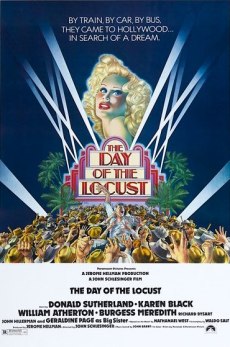 Adapted from the novel by Nathanael West, The Day of the Locust is a slightly scrappy film about the seedy underside of Hollywood’s golden age. The plot is neither here nor there in many respects — the film is about the grotesques who are attracted to Hollywood, and that being exactly what it feeds on. The bizarre, surreal ending definitely makes more sense if you’re already thinking about the film in this way.
The magnificent riot at the end is a tour de force of cinema that single-handedly almost justifies that whole theme — it’s what happens when their frustrations at dreams not being realised overflows. It could be argued it makes an easy juxtaposition — of fans baying for stars at a premiere with a revenge-fuelled mob baying for blood — but it’s still a just one. It’s capped off by the way one turns into the other, and how that turns into a kind of apocalypse. I don’t know how it’s meant to be read, but I choose to take it that way
(Spoilers in this paragraph.) If the riot is a literal apocalypse, then the next scene becomes an afterlife-set coda. It’s very brightly lit and white, like a Heaven, and Faye is still there — still in Hollywood, exactly where she’d dream of being — while Tod is gone. She’s looking for him, back at the Bernadoo where she was kinda happy, and she wants him after all — but he’s not there; he doesn’t want her. It’s a tenuous reading for a film that seems to be a real-world drama, maybe… but not a wholly unsupported one — it’s a flat-out unusual scene.
 Also brilliantly staged is the collapse of a Waterloo battle set. Appropriate as it’s one of the novel’s most memorable moments.
Despite having top billing, Donald Sutherland’s part is a beefed-up supporting role. Except he’s so good in it that he fairly steals the film. And despite fourth billing, William Atherton is ostensibly the main character. I don’t know if the film takes lengthy asides from him because they cast a fourth-billed-level actor, or if they cast a fourth-billed-level actor because the film takes lengthy asides from him, but either way these long-feeling stretches away from the only character we’re really encouraged to identify with dilute the film’s drive. Primarily for this reason, it could do with being shorter. Interestingly, the novel is a mere 163 pages (in my edition), meaning the film is close to translating it at a rate of a page per minute, which is rather extraordinary — very few adaptations do so little condensing.
(You probably recognise William Atherton from slimy supporting roles in Ghostbusters and the first two Die Hards. Believe it or not, his Ghostbusters character is available as an action figure. That is madness.)
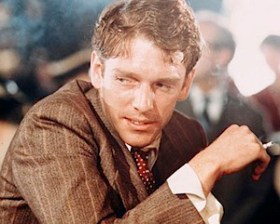 The Day of the Locust may be a mess, or it may be a flawed masterpiece. It may very well be both. For much of it’s running time it pootled along at 3 stars, pushing down toward 2 the more diluted it began to feel. But seeing the completion of Donald Sutherland’s performance in the final scenes, plus the way those scenes seem to draw together the whole film, revealing and fulfilling themes I hadn’t even noticed developing until that point, in a spectacular orgy of apocalyptic violence… well, the stars suddenly ratchet back up.

The Day of the Locust is on Sky Movies Indie tonight at 9:30pm, and at various other times throughout the week.
 The Radio Times film section may be steadily going down the drain, but when anyone
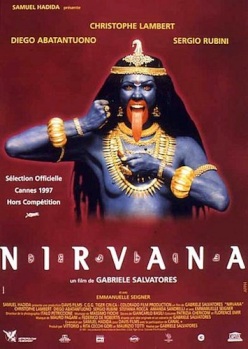
  The most obvious point of reference for Nirvana is
  interacting with Solo merely though a series of screens on his journeys (and, one presumes, a series of microphones too). Cronenberg’s film was made a couple of years after this, so commending it for not doing the same thing would obviously be a bit rich. It is to be commended for not descending into a needlessly twist-strewn third act though, which I had thought was coming — there’s plenty of bits along the way that could be used to build a ‘surprise’ or two. There’s some ambiguity in the ending, but not too blatantly (unlike later versions of Blade Runner, for instance), and Emmanuelle Seigner’s ex-girlfriend character is never quite used in the way I expected.
 and I imagine subtitles could be easier to follow than this dubbed version, in which everyone’s covered by either the original actors straining with English (based on the accents) or the typically bad voice actors employed for such dubs. The
  The second directorial outing from BAFTA-winning Brit Duncan Jones (after
  because Source Code is hardly groundbreaking. It’s certainly a solid, dual-pronged, science-fiction mystery — dual-pronged because not only is Stevens working to find the bomber, but also fighting amnesia to discover what the source code is and how he wound up there — but not an especially deep or complex work. There’s nothing wrong with something being little more than an exciting, engrossing thriller, it’s just not revelatory.
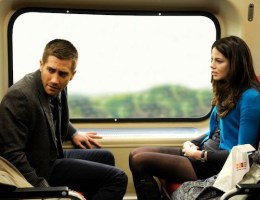 The other side of the plot is not only where the heart is, but also where the real twists and mysteries lie — I guessed the bomber the first time I saw the character; even if you don’t, it ultimately matters little. Vital to the finale are the subplots like Stevens’ relationship with his father and his growing affection for the passenger his alter ego was travelling with — but who he can’t save, of course, because the source code isn’t time travel.
 Did he create a new parallel world every time he entered the source code, or only the last time? I’m not sure that’s relevant. This is, though: at the end, he seems to remain in Sean’s body. So if he’s in a parallel world, he’s just stolen another man’s life? And Stevens — at least, the Stevens of that reality — is still lying, mutilated, half dead, in some government research facility? Hardly a cheery resolution.
 Still, problems aside, Source Code remains an exciting, taut, puzzling sci-fi thriller. On a train — there’s a whole long line of movies and connections to be explored there. Many reviews have noted the Hitchcock connection and I’m sure that’s an interesting route to look down, so maybe there is a bit more to Source Code after all… but even if there isn’t, it’s a fun ride.
 Catfish is a documentary (probably — we’ll come to that) in which 20-something Nev falls in love with a girl somewhere else in America over the internet. He and his friends become suspicious that she’s not who she claims and set off to find out The Truth.
 Before I get spoilersome, then, let me say this: you will probably guess where it’s going. Even if you’ve not had it in some way revealed (however little of it) before you watch, early scenes will lead to the obvious conclusion: why am I being shown this if it doesn’t go somewhere? And what’s the obvious place it’s going to go? I think most viewers must guess. But I think many — probably even most — will not guess precisely where it ends up; the exact nature of the truth it finds. So this is not as much of a Thriller as it’s been sold in some quarters. It has suspense, certainly, and it has mysteries that have answers… but there’s not some dark secret at the heart of it all; instead, there’s a painful emotional situation. Already I’m saying too much.
 and/or satire, I still think most people fundamentally believe what they see in a documentary (or they read in a newspaper) to be the truth.
 The allegation that it can’t be real because they happened to film everything that happened is nonsense.
 (it’s still on track as the best film I’ve seen in 2011), Catfish probably has more to say about the actual impact of Facebook on our lives than Fincher/Sorkin’s biopic does.
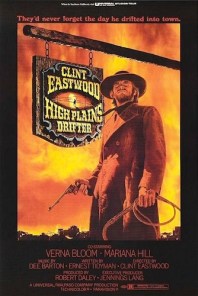 That this is the first Western directed by perennial Western star Clint Eastwood is enough to make it worthy of note. To be honest, I’m far from immersed enough in the history of Westerns to know if anything else makes it worthy of note either; but I did like it.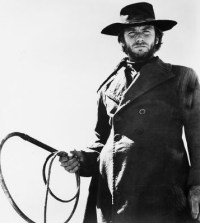
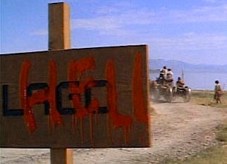 Eastwood’s first Western in the director’s chair is obviously influenced by those he’s worked with when on the other side of the camera, but by making sure the mix is a bit dark, somewhat ambiguous, but also gratifying in turns, he crafted a supernaturally-tinged revenge tale that packs a few satisfying punches.
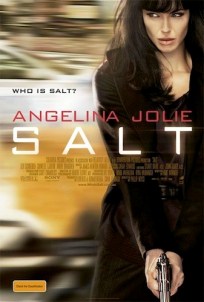 Angelina Jolie takes on a role originally earmarked for Tom Cruise in this Bourne-ish spy thriller from screenwriter Kurt Wimmer (
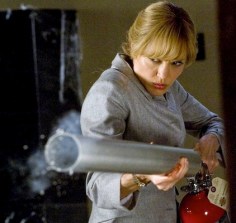 This is Salt’s mystery, and this is one of its strong points. The plot developments are well-paced throughout, developing and shifting our expectations rather than stretching it all for a glut of final act reveals. In this regard it goes places you might not expect from a mainstream Hollywood thriller. For starters, you expect the funeral-set assassination to eventually be the film’s climax, no doubt revealing our heroine isn’t a Russian spy as she unmasks the real killer. But that occurs at the halfway point, spinning the film off in new directions. To say more would spoil one of the film’s strongest elements: that, as I said, it has twists and follows storylines you wouldn’t expect in a Hollywood summer blockbuster.
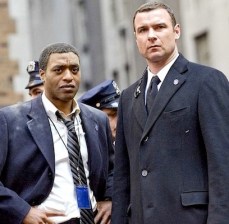 The three cuts, then, are: Theatrical (100 minutes — this was trimmed for the UK to make 12A, but is apparently uncut on disc); Director’s Cut (the one I viewed, this is 4 minutes 5 seconds longer); and an Extended Cut (1 minute 5 seconds longer than the Theatrical). The latter is based on the Director’s Cut and I’ll come to it in a minute. The differences between the Theatrical and Director’s cuts are numerous, but mainly amount to some extra character beats (including more flashbacks to Salt’s childhood) and violence — more blood; seeing people get hit rather than just seeing Salt firing; the President is killed rather than just knocked out; plus a very different death for Salt’s husband (again, more on this in a moment). Plus there’s a voiceover ending too, which in my opinion sets up the sequel even more than the Theatrical version does, with a blatant cliffhanger and suggested plot direction. My regular comparison site
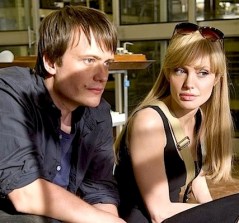 She has to control her emotions so as not to give herself away. In the other versions, however, she’s presented with him in a chamber and given a choice to save him — except trying to save him would give her away, so she’s forced to watch, blank-faced, as he slowly drowns. Salt sacrifices him for the greater good; he dies seeing her cold emotionless face. Ouch. By comparison, the theatrical cut’s blunt gunshot is much softer.
 if the filmmakers considered another option, now we can see it, and in cases like this choose our preference. Though it seems clear, by its inclusion in both the theatrical and director’s cuts, that Noyce preferred the instant-revenge option.
 is a decently dramatic way of drawing out and considering these issues. In my opinion, it works; at least, works well enough.
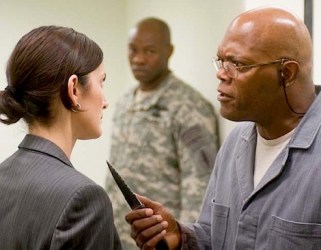 which I don’t think Unthinkable is — I think it argues both for and against torture. Perhaps if the viewer is firmly entrenched in one viewpoint then the film will seem to support it to a polemical level; or perhaps they’d read it the other way, and see it as a polemic against their viewpoint. I don’t know which, though, because I don’t think it comes down hard on either side.
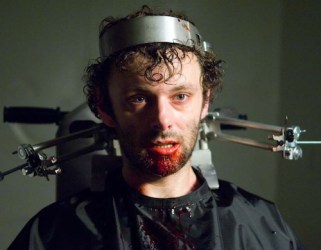 but Unthinkable is not a torture porn film. Yes, it contains torture, and some of it is shown in some degree of detail, but it does not depict it as brutally as it could, and it does not revel in it. This isn’t torture for the audience’s enjoyment, this is torture as a point for debate — “is it allowable to do this to another human being to get results?”, etc. Which brings us to:
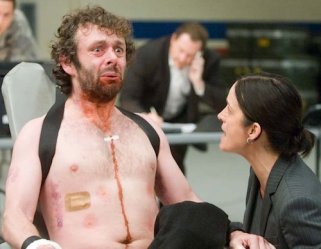 It’s much more important than simply answering a lingering question — it unequivocally presents the ultimate outcome of the characters’ actions. Like the rest of the film, it doesn’t seek to tell you whether this is right or wrong, but shows you where such decisions lead. Moralising is left up to the viewer. (Apologies if this is vague, but I don’t want to spoil it.)
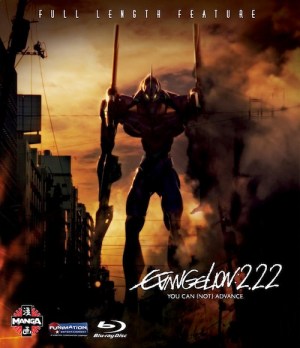 Just over a year since the
  For my money, the first 40 minutes or so of the film are (by and large) the best bits. It opens with a barnstorming action sequence, a great scene for newbies and fans alike as we’re introduced to Eva pilot Mari, who didn’t appear in the TV series. That she then disappears for most of the film, only to make a thoroughly mysterious return later, is one of those explanation-lacking flaws. I’m sure it won’t look so bad once the next two films provide us with answers. Well, I hope not.
 Then the gang take a trip to a scientific installation which is trying to preserve the oceans and their wildlife. It feels like animation shouldn’t be as effective for such a sequence as, say, the footage in a David Attenborough documentary, but nonetheless it feels extraordinary, in its own way. It also marks itself out with the interaction of the characters on a fun day out rather than their usual high-pressure monster-fighting world. And then it’s back to that world for another impressive three-on-one Angel attack.
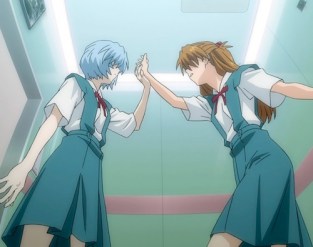 But it’s all building somewhere. For one, there’s another of the film’s best sequences — certainly, its most shocking, which readily earns the 15 certificate. I don’t want to spoil it for anyone yet to see the film, because it’s one of the plot points that differs from the TV series, but it involves the death of a main character in a brutal, deranged way. I say “death” — they pop up in the third film trailer that runs after the end credits, so there’s more to this yet…
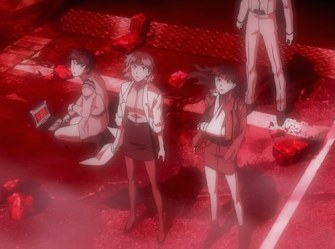 And then, after the end credits, there’s a brief scene that throws another spanner in the works! Double-cliffhanger-tastic… one might say…
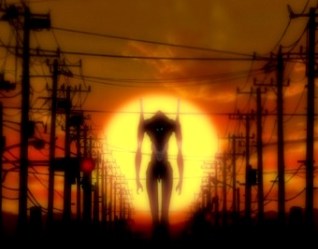 In short, if you’ve always liked Evangelion then you won’t be waiting for me to tell you this is a must-see reimagining; if
 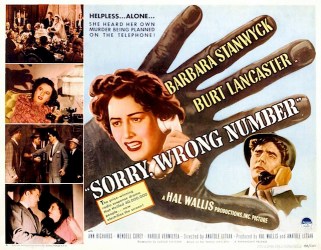 A film noir screenwritten by Lucille Fletcher, “based on her famous radio play” — I love how old movies have credits like that. It sounds like pure hyperbole, but in this case seems to be justified: the original play was broadcast in May 1943 but was so popular they chose to re-stage it with the same lead, Agnes Moorehead, a total of seven times up to 1960. Seven!
 As if keeping us guessing wasn’t enough, our feelings are shifting in this respect too. Arguably it unravels a little late on — when Evans is explaining his part to her, it’s getting a bit implausible — but it’s all redeemed by the finale.
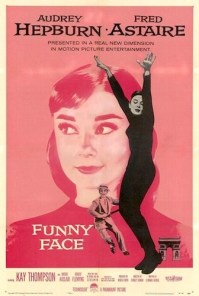 Like
Like 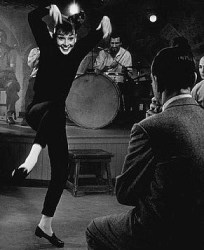 or dismissed the dullness of philosophy for the glamour of couture, but it takes fair jibes at both equally — it’s not mean-spirited or cynical or dismissive, just… quite true.
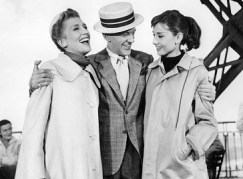 Funny Face seems to have plenty of critics — mainly on the notion that Hepburn could be said to have a funny face. Pretty shallow reason to dismiss a whole film, if you ask me. While there are couple of bits that don’t wash with my appreciation — the age gap; I could take or leave the two scenes at the church — there’s far more to love about the film.
 100Films.co.uk