
Irvin Kershner | 116 mins | streaming | 1.85:1 | USA / English | 18 / R
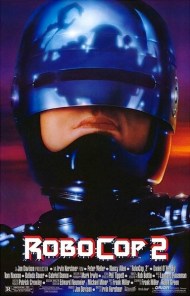 The consensus opinion seems to be that the RoboCop films exist on a steep downward trajectory of quality, starting with the pretty-good first film and ending with the nadir-of-humanity third. In this equation the second lands, naturally, somewhere in the middle — not that good, but not so bad. Personally, I enjoyed it more than the first.
As future-Detroit’s police strike over something to do with evil megacorporation OCP, ever-popular officer RoboCop fights a war on drugs, while OCP plot his replacement… Such is the barebones of a plot on which hang some solid stabs at satire and some nice boundary-pushing plot points, which at times left the film feeling still relevant today — something I felt the first RoboCop no longer was. Take the gun-toting pre-teen wannabe-drugs-baron, for instance, one of the film’s best characters who (spoiler alert!) they’re not afraid to deal a bloody death to. I’m not revelling in the death of children here, and I don’t think the film does either; instead, it demonstrates a kind of ballsiness and not backing down from the story and world they’ve created.
The satire is one of the most praised elements of the original film, but with new writers and a new director on board it would’ve been easy to ignore that in favour of a film in which a robot cop shoots lots of criminals. That is, obviously, not the case, and while at times some of the sequel’s jabs at society may be more on-the-nose even than the first film’s efforts, they’re not unwelcome or inaccurate. The screenplay was in part written by objectionably-right-wing comic book author Frank Miller, 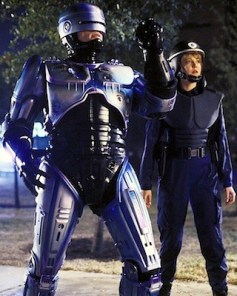 and though it was reportedly massively re-written after his work was done (to the extent that, decades later, there was a comic book miniseries that adapted his original version) I think his touch can still be felt at times.
I also criticised the franchise opener for poor special effects, and I think RoboCop 2 improves in that regard too. There’s still moderately obvious modelwork on display, but it doesn’t seem as cartoonish or juddery as the previous film’s. The climactic villain is a more genuine threat (it’s responsible for at least one massacre at any rate) and the battle with RoboCop, a mix of life-size props and stop-motion, makes for an exciting, well-matched finale, something the first film’s falling-down-the-stairs moment didn’t quite achieve.
I can’t say I’m overly enamoured with either of the RoboCop films I’ve watched to date. As a character and franchise it seems to have slipped from the consciousness a bit in the last decade or so, and I can’t say I find huge fault with that status. Plus, it’ll be interesting to see if the forthcoming remake can do anything to boost the franchise’s fortunes. Nonetheless, this sequel is a solid example of R-rated late-’80s action entertainment that, as noted on more than one occasion, I certainly liked better than its predecessor.

This review is part of the 100 Films Advent Calendar 2012. Read more here.
 Despite winning a bunch of Canadian film awards, this First World War drama seems to have been really poorly received by critics — the
 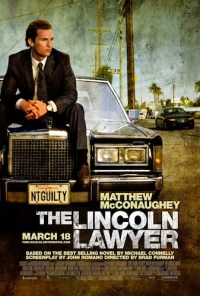 Adapted from a novel by best-selling author Michael Connelly, The Lincoln Lawyer seemed to appear out of nowhere and garner an uncommonly high amount of praise. I’m glad that intrigued me, because, while not a revelatory experience, it’s certainly worth your time.
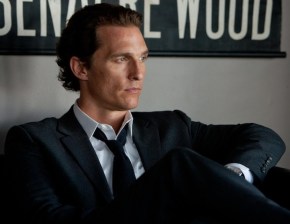 I’m not sure I’ve ever seen McConaughey in anything (nothing I remember, anyway), but my impression has been he’s not all that. Here, though, he nails the slightly-smarmy-but-kinda-likeable street-wise defence attorney Mick Haller. He’s buoyed by a quality cast: Ryan Phillippe is eminently plausible as a rich kid used to getting his own way, while the likes of William H. Macy, Marisa Tomei, John Leguizamo and Bob Gunton offer typically consummate support.
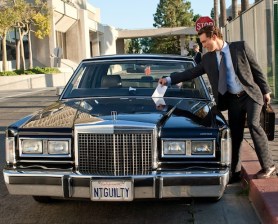 after languishing in development hell for 20 years, he recently paid Paramount $3 million for the rights to his most prolific character. With said character being the half-brother of Haller, and that Lincoln Laywer sequel in development, maybe Connelly’s work is destined to become the Marvel Cinematic Universe of crime/legal film adaptations. This could be the time to get in on the ground floor.
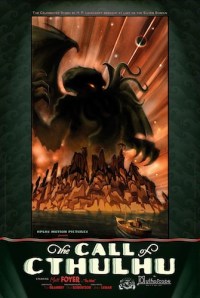 I must admit to not being at all familiar with the work of H.P. Lovecraft. I know the name, of course, and the titles of some of his stories, not to mention being aware of the array of well-known fans. Aside from that, I’ve only encountered his work through its influence — there’s some stuff in the
 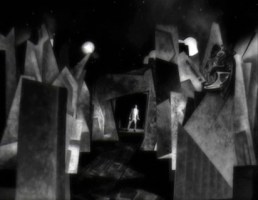 The marriage of low-budget and silent film style is one made in heaven, particularly when you add in the dedication of the makers. They built impressive props, ingenious sets, and employed model work in various inventive ways, all to execute a story that includes a cultist swamp orgy, a mysterious island, a sea battle, and a skyscraper-sized monster. Some online reviews have criticised the effects, but those people are quite frankly idiots. This isn’t meant to be slick CGI — it’s re-creating lo-fi early film techniques, and (aside from one or two rough-round-the-edges spots of greenscreen) it all looks fabulous.
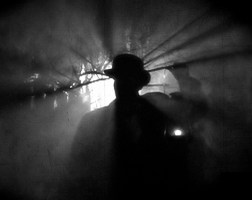 I have no idea how closely it hews to Lovecraft’s original, but there’s a layered stories-within-stories approach (I think it gets four deep at one point) that is difficult to pull off with clarity, but never falters here. Christopher Nolan would be proud. It also effectively builds a sense of uncanny mystery; not outright scares, but a kind of disquieting unease. It’s my impression that was absolutely Lovecraft’s aim too, so another job well done.
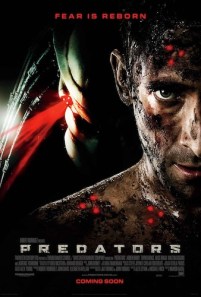 It’s two-and-a-half years since this was released? Never! If it didn’t say so on multiple websites, I’d never believe it. Where does the time go?!
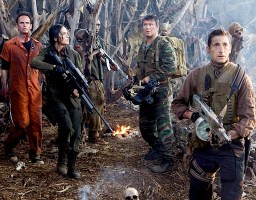 It’s a similar story elsewhere in the film. If you haven’t already accurately guessed what the ‘twist’ is with the doctor just from me even mentioning him, then I’ll be surprised. You may also be aware that Laurence Fishburne is in the film — he’s in the trailer and, naturally, one of the top-billed names. If you weren’t aware, sorry; but if you are (as, indeed, you now are), then his lack of appearance early on will likely clue you in to the circumstance under which he’ll be found. But if you’re not expecting him, that’s all fine and dandy. But now you are. Sorry.
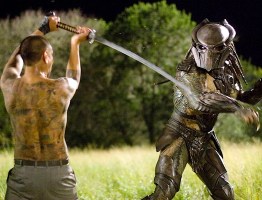 The main draw is still the action, which is suitably exciting on the whole. Best of all is a sword fight between a Yakuza and a Predator. Who’d’ve thought of engaging a Predator in a sword fight, eh? I love a sword fight, and while this is of course an atypical example, it shows the film’s level of creativeness with its inherited elements. It’s also a beautifully shot segment, making it one of the stand-out parts of the film.
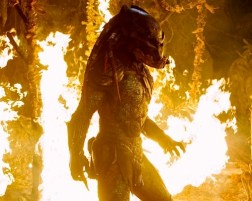 And the ending itself… is it sequel bait? It’s not as bad as
 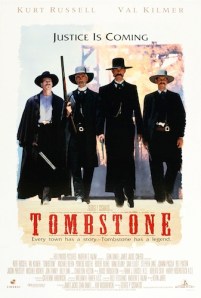 The story of the OK Corral is one I know by name only; I haven’t even seen the
  That may be down to historical accuracy. There’s a distinct feeling of veracity to proceedings, and as I understand it a concerted effort was made in that regard. The Movies perhaps shouldn’t worry about sticking too closely to fact (if you want an accurate lesson, read a textbook), but when they can manage to be both factually accurate and entertaining, it’s all the better. Cosmatos & co appear to balance this well.
 Mainstream US superhero comics underwent something of a revolution — or an evolution, if you prefer — in the ’80s, moving from simplistic good vs evil tales-of-the-week to deeper, thematic- and character-driven stories that in some cases took months or even years to relate in full. It’s a change that’s still felt today (some would contend that they’ve been stuck for decades in a rut these developments ultimately led to). It’s generally considered that there were three works at the forefront of this wave of more adult-orientated comics, all of which still rotationally top Best Graphic Novel Ever polls today: Alan Moore and Dave Gibson’s
  Like Year One before it, the team behind these direct-to-DVD DC animated movies have taken a reverent route to bringing DKR to the screen. It’s in two parts because the original story is too long to faithfully adapt in their limited-length movies (it’ll work out at about two-and-a-half hours all told, which isn’t commercially viable for a direct-to-disc animation), but that also works out OK from a storytelling point of view: this first half ends with a major threat wrapped up and a great cliffhanger to kick off the second half. Those with less appreciation for the economics of film production have slated DC/Warner for splitting the film in two like this, but in some ways it works to its benefit artistically as well as commercially.
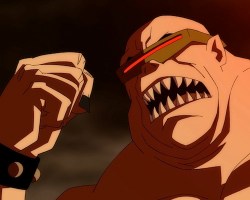 Stylistically, the film retains Miller’s designs, albeit a bit smartened up to work consistently as animation. Some will bemoan that homogenising but others may delight in it — Miller’s art is generally a bit on the scruffy side, I think. Is it an appropriate mark of respect that they’ve translated it so literally from page to screen, or would it have been more interesting for the filmmakers to have taken Miller’s plot and situated it in a world drawn from their own designs? I’m not going to argue that they could have improved on Miller’s work, but it might have been interesting to see the story given a spin in a different artistic style.
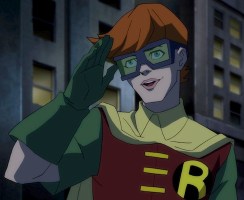 Voice work — the other major addition of an animated re-telling, of course — ranges from solid to very good. I wasn’t convinced by the casting of former RoboCop Peter Weller as Bruce Wayne/Batman, but he’s pretty darn good, carrying exactly the right kind of aged gruffness. It’s unique, I think, to see an active Batman this old on screen — sure, Nolan forwarded things eight years for Rises, but he’s still played by a relatively young and fit Christian Bale, whereas this Batman is grey, in his mid 50s and looking even older. I don’t recall a significant weak link in the rest of the cast, with
 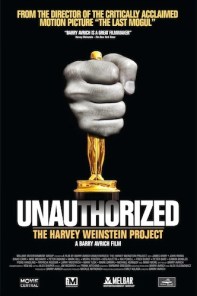 The documentary that Weinstein reportedly tried to stop existing, including discouraging people from participating in interviews. Either he needn’t have worried or really is a complete megalomaniac, because while there is a certain warts-and-all aspect to Avrich’s cinematic biography, it can’t help but admire all that Weinstein has achieved.
 Even for those who were following film culture through this era, and in spite of Harvey’s apparent efforts, there are numerous interviewees who were there — former Miramax employees, for instance — to offer insight. Thanks to archive footage we get even more opinions, including a fair few comments from Harvey himself. How much of this was available at the time, I obviously don’t know. Even if it is mostly recap, it’s a concise and well-constructed one.
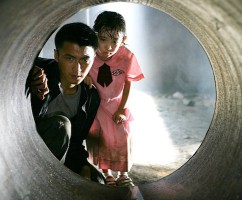
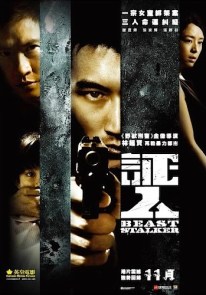 While in pursuit of an accused murderer, a cop (Nicholas Tse) accidentally kills the daughter of said murderer’s prosecutor (Jingchu Zhang). Three months later, just days before his trial, the accused has the prosecutor’s other daughter kidnapped, to persuade her to destroy the evidence proving his guilt. Despite having spent the intervening time in reclusive self doubt, the cop sets out to rescue the kidnapped little girl.
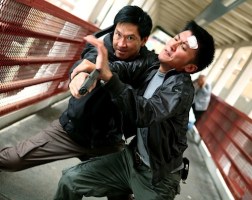 making them a little perfunctory — the real meat actually lies in the plot’s twists and turns. This is more one for fans of thrillers than beat-’em-ups.
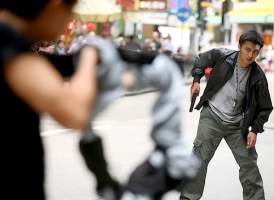 The top performance comes from Nick Cheung as a for-hire kidnapper with the Bondian trait of being blinded in one eye while the other only has black-and-white vision. He gets added complexity thanks to an invalided wife he tenderly cares for — he’s only in this life of crime to pay off his debts and medical bills, y’know. Cheung’s largely silent turn manages a fine balance of menace and sympathy. He won a couple of HK awards for it,
  A brief couple of scenes with a bullied colleague play out nicely, though unfortunately they contrast with a painfully written bit in which another colleague tells Tse’s character what people think of him. “They said you were horrible, but I like working for you,” she tells him (I paraphrase), for no discernible reason. It doesn’t even matter that we’re told that, because we’ve already seen it. I just don’t get it.
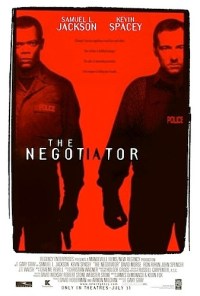 As premises go, “hostage negotiator turns hostage taker” is a doozy. You can immediately imagine all the drama to be had from pitting The Best Negotiator In The World (because it’s a movie — it’s going to be the best one that goes rogue, isn’t it) against The Second Best Negotiator In The World — he’ll know all the techniques! He’ll… well, mainly the techniques one. But also his colleagues will be working against him — will they be on his side? Or against him? It practically writes itself.
 but before that it sets up the characters and gets them on the bus, and the third act goes off-bus for a climax. Similarly, The Negotiator‘s first act gives us a day-in-the-life case for maverick negotiator Jackson, before putting him in his predicament; it toddles along, extending the hostage situation part with some tense and/or exciting sequences; and then the third act sees our hero set off to find the proof he needs.
 100Films.co.uk