
Danny Boyle | 101 mins | Blu-ray | 2.35:1 | UK & France / English | 15 / R
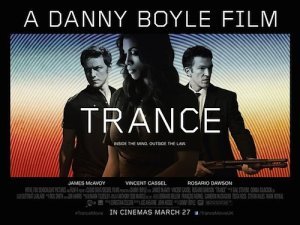 Ambiguous endings used to be anathema to film audiences. They wanted things tied up in a pretty little bow, thank you very much; all the conflicts resolved and all their questions answered. Then the likes of Mulholland Drive and Donnie Darko came along and made vague join-the-dots-yourself endings fashionable — to the point where I’ve read several reviews of Trance that criticise it for having a final act that answers too many questions and clears things up too thoroughly. There’s no pleasing the masses, is there.
In fairness, people perhaps had a right to expect a head-scratcher. The plot description sounds like one: following an art heist, the guy who took and hid the painting (James McAvoy) has amnesia, so his gang’s leader (Vincent Cassel) takes him to a hypnotherapist (Rosario Dawson) to try to dig its location out of his subconscious. Cue a mindbending blend of what’s real and what’s hypnotically induced, right? Kinda like an art house Inception. Mix that with the fact this is an indie-scaled production (though it’s released by 20th Century Fox and Pathe), from a director known to push boundaries, with a choppily-edited self-consciously-confusing trailer, and the bizarre “this isn’t for you, multiplex-goer” poster, and you can see why people expected something that was left-field to the bitter end.
 In the Blu-ray’s special features, Boyle comments that “it’s more classical than you might expect.” He’s talking specifically about the cinematography (and he’s right, but more on that later), but he could equally be talking about the entire movie. Though it has a storyline that blurs the line between what’s actually happening and what’s happening inside a character’s head (or is that characters’ heads?), the overall tone and style — particularly of the climax — is actually quite Hollywood. It’s Hollywood jazzed up with storytelling trickery, a quirky score, dashes of extreme gore and surprising nudity (that it’s not an 18 is somewhat surprising); but underneath all that it’s not a million miles away from your run-of-the-mill thriller.
That said, there’s nothing wrong with taking something standard and dressing it up all fancy-like. The film I often cite as my favourite ever, Se7en, is actually a bog standard police thriller when stripped to its storyline’s base elements, but the skill applied to it by filmmakers like David Fincher, Andrew Kevin Walker and Darius Khondji — not to mention the cast! — puts it on another level.
Trance is a tricksier film than that, though. Perhaps it doesn’t need to be, but that’s assuming you only want a film to be about its story. Here, it’s also about the games that are played in telling the story. As Dawson tries to access McAvoy’s memories through a kind of guided meditation, the film switches between the real world, the ‘dream’ world, and the character’s memories at will. Boyle and cinematographer Anthony Dod Mantle made a conscious decision not to denote these different states in any way —  there’s no switching to black and white for dreams, for instance; nothing to definitively tell you which state you’re in. And this is a good thing, because when you need to know you can tell, and the rest of the time… well, the film’s playing with you. That’s the point. What is real and what is a scenario McAvoy’s being talked through? Are these memories what happened or the product of an addled mind?
It’s a complex experience that demands your brain power to navigate it successfully. Even when answers come, there are bits you might need to retrospectively piece together for yourself. There’s nothing wrong with a mystery film that answers its own mysteries, and I don’t think Trance disappoints in what those revelations are. Are they predictable? Everything’s predictable, if you predicted the right thing. Do you have to re-watch it to make sense of everything, or confirm it all for yourself? Not especially — it’s not The Sixth Sense, but I imagine there’d be value in watching it again knowing what every character is really up to.
That’s a credit to the actors as well as the filmmakers, incidentally. McAvoy and Dawson in particular give strong performances. The screenplay plays with our affections and opinions of them (and the other characters — no disrespect to third lead Cassel, who is also very good), but there’s a consistency to their portrayals, and an array of subtleties that are only properly revealed once we know everything, that is testament to a well-considered approach to the entire performance, as opposed to simply playing scenes in the way they seem to the first-time viewer.
 Dod Mantle’s cinematography is also strikingly handsome. As noted, the film’s buzz had me expecting something akin to late-career Tony Scott, all jumpy and weirdly saturated and fragmented. Instead, as Boyle said, it’s actually very classical, but with a great eye. There are a number of shots which would look fabulous framed and hung on the wall, not least of the street outside Dawson’s flat at night, a restaurant next to intersecting train lines, and aerial photography of red-lit nighttime motorway junctions, looking like some kind of Rorschach test-esque psychiatrist’s tool.
By asking you to keep up through a plot and storytelling style that is deliberately twisty and confusing, but then giving you some pretty clear answers at the end, Trance seems to have pissed off a lot of people. Not so me. It’s an entertaining thrill ride and an intriguing psychological mystery wrapped up in one, provided you take it on its own terms.

Trance comes to Sky Movies Premiere from today at 9:35am and 9pm, and is also freshly available on demand through Sky Movies and Now TV.
 Like a
  The plot is essentially “
 with both this and last year’s sequel proving huge hits, and a
 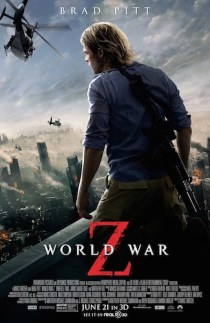 In the weeks leading up to its theatrical release, it was already known that World War Z was going to be an almighty flop. An unscrupulous movie studio had taken a cult novel and thrown away everything but the title, alienating its existing fanbase. They’d spent a fortune making a movie in a traditionally R-rated genre that, if released at R, could never make its money back, and if released at PG-13 would never attract an audience. Then they reshot the entire third act, pushing the budget through the roof and ensuring the resultant film would get critically mauled. A fanbase snubbed, an impossibly huge budget, a genre/rating disconnect, and unavoidably poor reviews to come — World War Z was going to flop, and it was going to flop hard.
 That, at least, is something different. The first half-hour races through stuff we’ve seen time and again: zombie attacks, humans turning on humans as they loot supermarkets, etc. Here the zombies are of the
  It’s a Wales populated by a Londoner, a Scotsman and a Spaniard, but still. I say “more tense” because this is far from the most nail-biting zombie film you could see. The finale is a nice change of pace, and does work as a climax in spite of the bombast that precedes it, but these are zombies as teen-friendly action movie menace, not adult scare-inducers, so don’t except to feel much fear or surprise.
 but I don’t think it was the filmmakers’ aim to make us feel the characters’ plight, but instead to show the scope of a worldwide disaster. It does that pretty well, even if the occasionally-CGI zombies prove to be an
 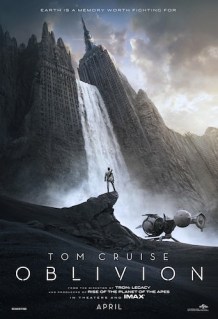 As Oblivion informs us in a hefty chunk of voiceover exposition at the start, the year is 2077, several decades on from a war with aliens that we won but left the Earth in ruins. Humanity fled to a colony on Titan, but the last party to depart remain in orbit aboard a giant space station. Waiting to join them are Tom Cruise and Andrea Riseborough, the last humans on Earth, serving the final few weeks of their mission to watch over the drones that guard giant water-collecting machines, sucking up the oceans for the benefit of the new colony.
 Also, as with many a tale desperate to surprise its audience thus, there are holes in the story and its logic (for a good summary of some of the major sticking points, check out
  I like a good action sequence, and some of the ones Kosinski presents have their moments, but I also found I could have done without most of them. To a degree they seemed to have been slotted in so it could look like an Action Movie in the trailers, the aim (as ever) being to pull in the punters, thereby justifying the budget needed to create such a slick SF world.
 With the aforementioned plot issues, not to mention an ending that some will find too twee (I saw the broad strokes of the epilogue coming from quite a way out, so can’t say I was surprised), Oblivion is not quite all it could have been. But it gets considerably closer than I expected — it’s undoubtedly an A for effort — and that, bolstered by faultless technical aspects, makes for an all-round enjoyable experience.
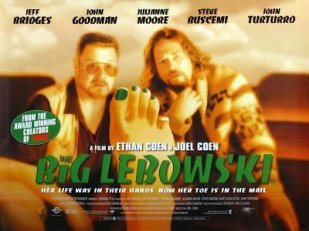 I confess, I’ve never really got on with the Coen brothers. I liked
 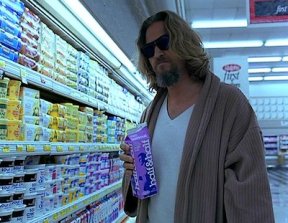 I don’t wholly agree, though I didn’t unabashedly love the film as some do. It’s perhaps a bit “of its time” now, and getting a little “you had to be there”; coming to it almost two decades later, it exemplifies a ’90s American mainstream/independent-borderline filmmaking sensibility; the kind of bracket the early works of Tarantino might also fall into, for instance.
 If one did want to look into Lebowski more deeply, the most interesting facet is that noir one. It’s quite lightly of that genre — very much an updating and re-appropriation of certain tropes, rather than a straight-up example of where the modern version(s) of the genre is (are… or were). It feels like the Coens were consciously putting a present-day(-then) character through the paces of a traditional noir plot. Whether that was the deliberate structural conceit or just a side effect of making a noir pastiche, I couldn’t say.
 Joseph Gordon-Levitt stars as a Manhattan bicycle courier in this near-real-time action-thriller from co-writer/director David Koepp. Charged with getting a letter from one end of Manhattan to the other through rush hour traffic ASAP, Gordon-Levitt finds himself coming up against a loony cop (Michael Shannon) who for some reason is desperate to get his hands on said envelope…
 Gordon-Levitt makes for as appealing a lead as ever, not that his charm is called on much, while Shannon is a memorably crazed villain. He’s a better fit here than he was as
 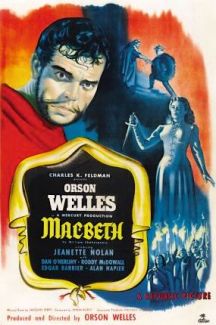 Twelve years on from his innovative, acclaimed, career-bolstering ‘
 The low budget and quick schedule affect the film across the board, for good and ill. There’s much dramatic staging, with grand sets and doom-laden lighting. The shadow-drenched cinematography may well be a result of the cheap production, but the resulting effect is marvellous. Indeed, all the camerawork is great. There are some striking long takes, including the majority of the night of the murder occurring in one long unbroken shot. The costumes, on the other hand, look like a ragtag bunch of Past Clothing from the studio’s store… which is because they essentially were.
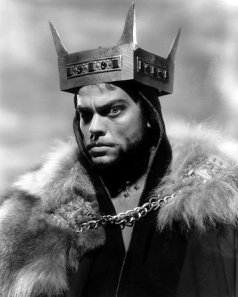 Macbeth himself is hardly in possession of all his faculties at that point, acting like a drunkard; but rather than make the sequence appropriately sinister (it’s in this state that he orders the execution of Banquo and Fleance, for example), it plays up the silliness, which is a shame.
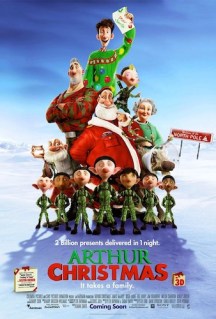 Aardman’s second CG feature attracts a starry cast (not just the leads — check out who’s credited as “Lead Elf”!) to the story of how Santa really delivers all those presents in one night: a giant spaceship-like craft and thousands of SAS-esque elves. But when one child is missed, Santa’s clumsy son Arthur resolves to fix it.
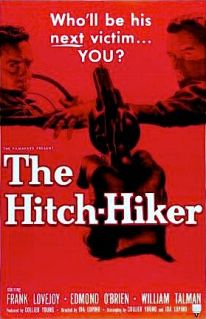 Based on a true story, this film noir sees two chums on the way home from a fishing trip pick up a hitchhiker. As you can tell from the title, he turns out to be rather significant: he’s a murderer on the run, and pulls a gun on the men so they’ll do his bidding, which is take him to Mexico so he can escape justice. Oh dear.
 But does her gender add any different perspective? I think perhaps it does. If you read
  A black and white Swedish movie in which a knight ponders the existence of God while playing chess with Death? Yep, here we have the stereotype of arthouse cinema. Let’s be honest, it lives up to most of those expectations.
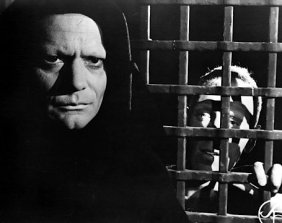 On the more easily-appreciable side, it’s beautifully shot by Gunnar Fischer. It had to be made quickly, on a tight budget, and for that reason Bergman found it imperfect and rough in places. This may be true, but regardless, there are numerous striking compositions, and even more occasions where the rich black-and-white photography looks stick-it-on-your-wall gorgeous. I only watched it on Tartan’s old DVD and, even with mixed feelings about the film itself, I’m sorely tempted to pick up one of the Blu-rays.
 100Films.co.uk