
John Cassavetes | 108 mins | Blu-ray | 1.85:1 | USA / English | 15 / R
 Ever since I read the blurb for Masters of Cinema’s DVD of Maurice Pialat’s Police, I’ve been casually enticed by The Killing of a Chinese Bookie. Said blurb asserts that “Police is a genre-defying excursion rivaled only by John Cassavetes’ The Killing of a Chinese Bookie in the pantheon of cinema’s most idiosyncratic thrillers”, which is both a nice turn of phrase and an intriguing one. The thriller is very much a Genre — that is to say, it’s a label loaded with rules and expectations, and to be idiosyncratic within such a form is an interesting notion. Both “thriller” and “idiosyncratic” are pretty accurate labels for Chinese Bookie, though, even in its re-cut (by the director) ‘short version’.
The plot sees strip club owner Cosmo Vittelli (Ben Gazzara) lured in to killing the titular bookie as payment for his gambling debts to some gangsters. The title kind of gives away whether he does it or not (though an ever-doubtful Cassavetes reportedly considered having him not go through with it), but nonetheless the film doesn’t lack the genre’s requisite tension and suspense. However, it’s more of a character study. How aware is Cosmo of the mess he’s getting himself in to, and how far is he prepared to go? What drives the man? There are no easy answers, unsurprisingly, but that doesn’t make the questions unworthy of consideration.
According to the notes accompanying the BFI’s Blu-ray release, the ‘short version’ — which Cassavetes created after his original cut was “almost universally panned [and] yanked from the theatres within days” — not only makes the film shorter, but also more focused, clarifying various plot points. The style of much independent ’70s cinema —  naturalistic to the point of being almost documentarian, with half-caught snatches of dialogue and sequences that seem trimmed to (almost) the relevant moments from much longer filming — still begs that you pay attention, but it seems this cut gives you more of a hand: it gets to the killing quicker (“63 vs 82 minutes”), a meeting with gangsters is “longer, more coherent and explicit”, and so on.
Perhaps the biggest change is early on: the short version implies Cosmo takes his girls out to celebrate (then gets into debt); the original cut implies he’s been invited to the gambling den so he can be set up. That’s quite a shift in emphasis, turning the lead character from a picked-on ‘mark’ in the long version to a sort-of-coincidental brought-about-his-own-downfall type in the re-edit. In his 1980 review (included in the BFI booklet), John Pym asserts that Cosmo is “clearly” a patsy, a fact obscured in the short cut by the removal of that scene where he’s invited to gamble. Is he an easily-lulled patsy, then, as the gangsters think? Or is it more as I interpreted: here’s a man who acts the fool, who pretends to be easily tricked, in order to keep people happy; but who is actually much more competent and aware of what’s going on? Look at his speech near the end about being what others want. This is a man determined to keep others happy and thinking well of him; not in a superficial way, but as some fundamental character trait. Is that how he gets lured into the killing, then — purely because they asked nicely? But then later, when he escapes and gets some kind of revenge or freedom… well, that’s not so friendly. Is he finally doing something for himself? Or was he selfish all along — not much of a leap, especially considering the world he operates in.
 The Killing of a Chinese Bookie is not a neat little thriller in any respect. As Tom Charity puts it (in the BFI booklet again), “if the scenario sounds generic, the film is something else”. It reminded me of Martin Scorsese’s Mean Streets, a film I didn’t particularly like (but which did inspire Cassavetes), but I had more time for this. Perhaps that’s just me ageing (it’s the best part of seven years since I saw Mean Streets) and becoming more attuned to this kind of movie; the kind that uses “hesitations, repetitions, and longueurs as tools of disruption and misdirection”, by a director so “mistrustful of anything that smacked of tidy resolution, he regularly turned his movies around in the editing to more ambiguous and purposefully aggravating effect.”
That’s the kind of movie Chinese Bookie is: ambiguous, purposefully aggravating, without a tidy resolution. It requires the audience to work a bit. Is it worth the effort? You know, I’m never quite sure (see Bicycle Thieves for another example), and whether I appreciate it or not probably depends as much on the mood a particular film catches me in as much as its inherent quality (see also Rage). This one, while as awkward as any, engaged me just enough.

 Krister Henriksson returns as the Swedish detective for a third and final series of mysteries, starting with this final theatrically-released episode, based on the final Wallander novel. Yes, there is a sense of finality here — albeit one not reached just yet.
 It’s here that Henriksson gets to show off his acting chops the most. At a dinner party with his family, Wallander largely sits quietly with a drink rather than interact with others, occasionally staring aimlessly into the distance, or only remotely engaging with what the others are doing. He witters about a painting of a goat. Later, he has a disproportionately angry response when his friend brings news that he’s been suspended. He dotes on his granddaughter, but one day loses her and her buggy when he pops into a shop — but finds her quickly enough that no one will be any the wiser. Little signs like this are scattered around, clueing us in to where Wallander will presumably end up: retired from the force, and possibly retired from his life. Whether Mankell brought the issues to a head in his novel or not, I don’t know, but here I can only imagine it will build throughout the series.
 The one thing that really cuts through Kurt’s newfound confusedness is when he gets a nose for a case. Quietly, by himself, he sets about digging in to what’s going on, unearthing evidence that’s been missed by others, piecing it together to complete a picture of long-kept secrets and new crimes committed in the name of keeping them. It resolves into a complex conspiracy, one that touches the lives of altogether innocent people. Is there justice at the end of it? Of a sort, but how satisfying that justice is… well…
 Part of Leone’s intended trilogy about the history of violence in the USA, Once Upon a Time in America is the life story of four friends and gangsters in Noo Yoik during a large chunk of the 20th Century. So it’s a gangster film focusing on violence, then? Well, no… not at all, really. Indeed, saying Once Upon a Time in America is a film about gangsters is a bit like saying
  Leaving aside the less savoury aspects (as, it seems,
  Once Upon a Time in America falls somewhere between these two stools. It’s a film that is, I think, easy to instantly admire — if not wholly, then for its majority; but also one I found difficult to process a full personal reaction to. With the recently-extended version set to arrive on DVD/Blu-ray/download later this year (in the US, at any rate), an ultra-convenient chance for a second evaluation looms.
 The year is 2154 (the same year as
  Unfortunately, it seems writer-director Neill Blomkamp (of the acclaimed
  It sounds and looks like she’s struggling with a bizarre accent, while always being American. A similar problem seems to afflict William Fichtner to a lesser extent, so perhaps it’s some incomprehensible deliberate decision to differentiate the wealthy from the normal folk? I’ve read one report that Foster’s entire performance had to be dubbed, which might be a better explanation.
 There’s also something viscerally pleasurable about seeing a decently-budgeted R-rated effects movie these days. You’d think that classification would keep the budget down, but it reportedly cost over $100 million — and it looks it, with epic must-be-CGI situations that are faultlessly rendered. I suppose when the biggest PG-13 blockbusters are seeing their costs spiral towards triple that, a budget that only nudges into nine figures doesn’t look so bad. Hopefully that’s good news for those of us who would like to see more grown-up (whether that be intellectually or violently) effects-requiring movies.
 Blomkamp is a writer-director clearly committed to doing bold work in a film genre that is increasingly about spectacle over story, action over allegory, popcorn-selling over point. Elysium may not be the fully-realised vision he was likely hoping for, and more work on the screenplay would clearly have been a benefit, but top marks to the man for trying to do something worthwhile. Surely he remains one to watch.
 The man who would go on to helm
 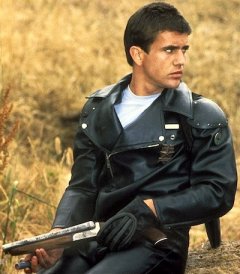 In reading up on the film, a few pieces analyse the ending as Max going to the dark side — becoming as bad as those he was fighting against; or, at the very least, becoming an anti-hero. I didn’t see it that way at first, which I think is the difference between 1979 and what’s happened in movies since. Now we routinely have heroes who do bad things: look at Jack Bauer’s love of torture in
 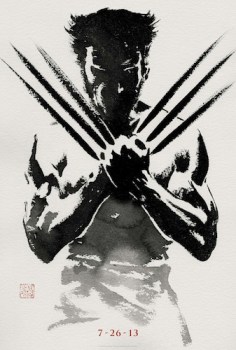 Rather than a sequel to the poorly-received
 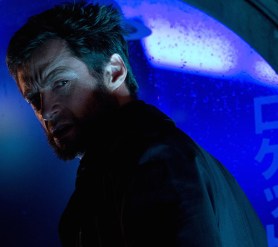 and the end result is a moderately unique movie. OK, it doesn’t ooze originality, but nor does it feel quite like your run-of-the-mill powered-people-punch-each-other comic book yarn.
 Talking of women, you can’t overlook Logan’s lost love, Famke Janssen’s Jean Grey. Considering the build-up pitched The Wolverine as a standalone film, with perhaps the occasional nod to the wider X-universe, including rumours of a Jean cameo, the final film is surprisingly tied-in to previous events: there’s actually loads of Jean (how? Well…), and Wolverine’s personal journey is very much grounded in the events of The Last Stand. I’m sure you could watch this without having seen or remembered a previous X-movie, because the bulk of the plot is indeed standalone, but the emotional journey is invested in what came before.
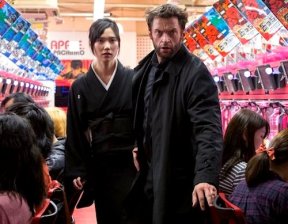 Without seeing all the behind-the-scenes goings-on it’s difficult to know whose fault this was, but it’s equally difficult to imagine the screenplay that Darren Aronofsky (far from your regular blockbuster director) described as “a terrific script” could have concluded this way; and knowing that his replacement, James Mangold, fiddled with the script before shooting commenced… well, draw your own conclusions.
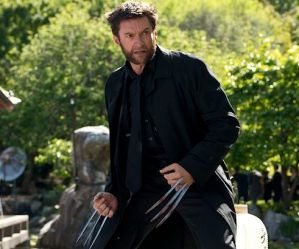 The Wolverine isn’t quite the movie it could have been; nor, I think, quite the one the makers hoped they were producing. Jackman has intimated since that it’s studio interference that pushes for silly-big action sequences and the like, but that fan feedback might slowly be winning them around to the things viewers actually care about. Whether that’s true or not, I guess we’ll see in the next instalment…
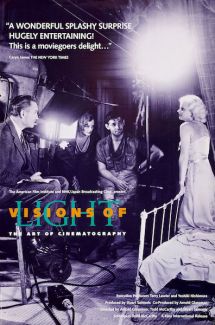 Cinematographers discuss cinematography in this AFI-produced documentary. Initially a whistlestop history of film photography, it segues into analysis of movies the interviewed DPs had shot. Unfortunately, casual film fans may judge it monotopical, while hardened cineastes may find it a haphazard, Hollywood-centric overview.
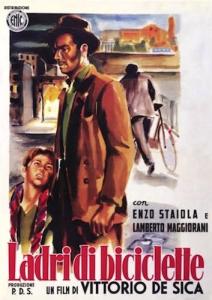 The victor of Sight & Sound’s inaugural “greatest film” poll (though it’s slipped down the rankings ever since), this is the simple story of a man hunting for his stolen bicycle, which is vital for his job, hard-won in a time of unemployment and poverty.
 The year 1600: British ship’s captain Solomon Kane is not a nice man, a mite too fond of pillagin’ and killin’ and quite possibly other not-nice things ending in —in’. That is until he has a run in with the Devil’s Reaper. Hell has claimed his soul, and its time to collect. Solomon does not plan on being collected, renouncing his former life and trying to hide at a monastery in England. But as a gang of possessed men lay waste to the countryside, burning its towns and enslaving its people, will Solomon be able to stick to his newfound pacifism? Yeah, we all know the answer to that…
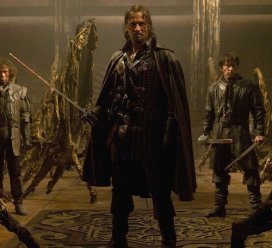 but also a more-than-requisite amount of swordfighting and the like — all told, Kane is more period action-adventure (with demons) than period horror.
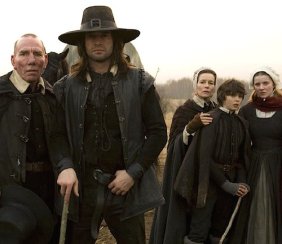 In support there’s the likes of Pete Postlethwaite, Alice Krige and Max von Sydow, all of whom bring instant heft to roles that need it. I don’t mean to say the screenplay doesn’t contain it, but the shorthand the actors bring with them certainly does favours. Cameo-sized appearances by Mackenzie Crook and Jason Flemyng are also effective, and watch out for a pre-
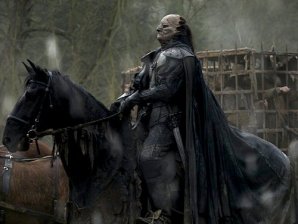 My praise also extends to those responsible for the film’s location shooting. Shot in the Czech Republic, for once that genuinely looks like Britain. OK, the style of some buildings give the game away occasionally (in particular the monastery), but until I read different, I just assumed the fields, forest and coastline had been found in our real South West, on the moors or what have you.
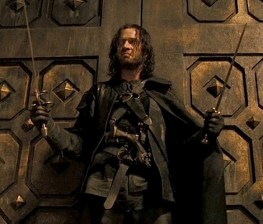 At the end of the day, Solomon Kane is a period fantasy action-adventure, something which doesn’t seem to be everyone’s taste — it has relatively weak scores on the likes of IMDb and Rotten Tomatoes (though, in the context of how this kind of movie often performs in those arenas, they’re far from awful). For my money, however, it’s a great little film. It looks beautiful, it renders the tone of pulp fantasy brilliantly, its action sequences are exciting (so many swordfights! Heaven!) and its creepy bits unnerving. It may not be ‘trash’ elevated to art — it’s not a Tarantino movie — but it is pulp fiction treated with due reverence.
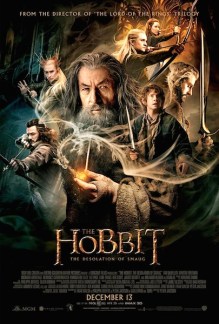 The Desolation of Smowg-not-Smorg begins in the same way
 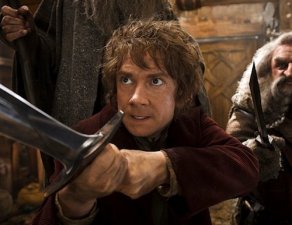 It’s my understanding that the originally-planned (and shot) two-part version of Jackson’s Hobbit adaptation was transformed into a trilogy by, essentially, taking what was to be film #2 and splitting it in half. That might explain why individual sections are allowed to go on so long here: to bulk up the running time to the kind of epic proportions audiences expect from a Middle-earth movie. Anything less than two-and-a-half hours isn’t going to cut it. But when your climax is a battle between a giant dragon (cool!) and a small army of dwarves (kick ass!) around a deserted underground city (hell yeah!), but my main thought afterwards is, “God that went on a bit”, then you’ve failed at something.
 Meanwhile, Luke Evans’ Bard is as Welsh as the actor’s name suggests, which is a little bit of a surprise. But then the dwarves’ accents have all the rest of the UK covered, so why not. Benedict Cumberbatch sounds like Benedict Cumberbatch playing ‘big’ as Smowg-not-Smorg. It feels like this should be an iconic villain performance but, while good, I found it somehow lacking. Expectation may be scuppering him; maybe I’ll warm to it on future viewings.
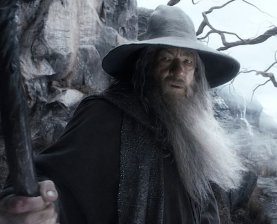 I haven’t picked apart everything that’s wrong with the film (what purpose is there switching from one made-up-for-the-film orc general to another?!), but then nor have I praised everything that works (there are some quality actors in amongst all that crashing and banging). It seems a fair few people liked this Hobbit instalment more than the first; the best explanation I can find is, “because it’s got more action”. Far be it from me to accuse other film viewers of being shallow, but… really? I genuinely enjoyed An Unexpected Journey as a return to the beloved realms and peoples of Middle-earth. The Desolation of Smowg-not-Smaug has some of that, and the charm of introducing us to new parts of the world too, but it’s drowned out by so much aimless noise. Here’s hoping it improves with repeat viewings and/or the inevitable extended edition, because this time I nearly slipped down to a lowly 3 stars.
 100Films.co.uk