2022 | Weeks 1–3

Here we go — finally, and somewhat later than anticipated (it’s been a slow start to the year, viewing-wise) — the new review format for 2022!

…which you’ll have already seen in Archive 5, of course; and is fundamentally similar to what I was doing before in roundups and what-have-you; and which I’ve already ‘broken’, because my review of Flight of the Navigator came out so long that I posted it alone.

But still, the intention is this is now my regular review format, popping up every week or two (or three) to review everything in a more timely fashion than I have for many, many years. We’ll see how it goes — I feel like I need to relearn how to write short pieces, because longer reviews feel like they should get their own posts, and that’s happened to pieces intended for every one of these roundups so far this year.


Anyway — to kick things off for 2022, a film with a broadly appropriate title. Because, despite (deliberately misleading) hints to the contrary, I’m carrying on. Get it? Carrying on watching. And “spying” is a synonym of “watching”, right? (Look, there aren’t any Carry On films with more apposite titles, okay?)

These weeks’ films are…

  • Carry On Spying (1964)
  • Penny Serenade (1941)
  • The Navigator (1924)
  • In the Line of Fire (1993)
  • Barbie as The Princess and the Pauper (2004)
  • Free Guy (2021)


    Carry On Spying

    (1964)

    Gerald Thomas | 84 mins | digital (SD) | 16:9 | UK / English | U
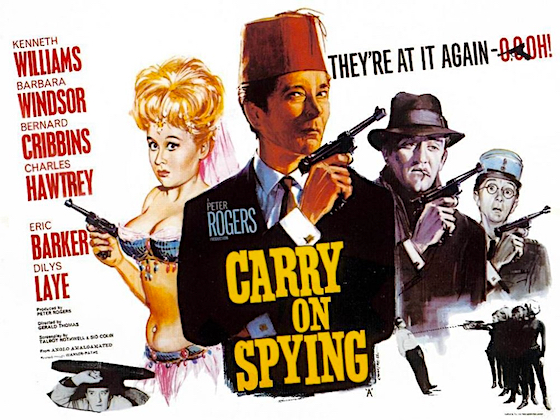
    Carry On Spying

    Believe it or not, I’ve never actually seen a Carry On film before. Maybe that’s not so surprising these days. They were once such a part of British culture that they produced 30 of the things, but I think they were seen as “a bit old fashioned” even before I was born, and by 2022’s standards… oof. But, lest you get the wrong end of the stick (oo-er, etc), this isn’t me intending to finally dive into all of them. Rather, as well as its timely title, I chose to watch Carry On Spying primarily because it’s a James Bond spoof — the first, I believe, seeing as it was released in July 1964, when the Bond series only encompassed Dr. No and From Russia with Love (Goldfinger would follow a couple of months later).

    With Bond not yet even properly into its initial phenomenon phase (the first two films were hits, but it was the next two that skyrocketed its popularity), you might think Spying came too soon, and would be disadvantaged by being produced before the famous Bond formula was fully in place. Instead, it sets its spoofing sights a little wider, including an extended riff on The Third Man. I couldn’t tell you everything it’s drawing on, but its third-act villain’s lair — all sleek metal corridors and little road-train thingies and jump-suited identikit henchpeople — appears to be a take-off of You Only Live Twice, some three years before that film even came out. So I can only presume Spying’s point of reference there is something else, which I can’t quite remember; some other spy fiction that was already doing stuff the Bond franchise would still be pulling off years later. That doesn’t reflect too positively on YOLT, when you think of it, although Bond’s cultural dominance and longevity has come to ensure it’s the one that’s remembered for pioneering all this stuff.

    I don’t know how many Carry On films were genre spoofs, but the series’ reputation is more for smut and innuendo. There’s pleasantly little of that here — some, for sure, mostly based around Barbara Windsor (of course) as a trainee agent; but while it’s all fundamentally juvenile, it’s not as ceaselessly ribald as I was expecting. Satisfyingly, it remains primarily focused on its chosen genre. In that respect, I’ve definitely seen worse spoofs.

    3 out of 5

    Carry On Spying is the 1st film in my 100 Films in a Year Challenge 2022.


    Penny Serenade

    (1941)

    George Stevens | 120 mins | digital (HD) | 4:3 | USA / English | U
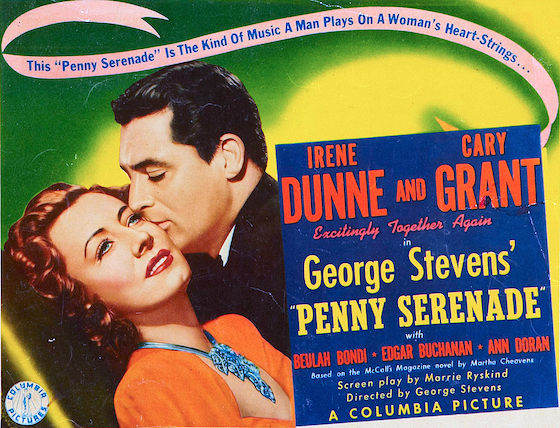
    Penny Serenade

    This is the third and final film to pair up stars Irene Dunne and Cary Grant as a married couple (I’ve watched all their collaborations within the past couple of years, but not posted reviews of the first two yet. I thought it was within the last year, but turns out I watched my first in May 2020. These strange days have really messed with my sense of the passage of time!) But where their first two films were screwball romcoms, this is undoubtedly a melodrama, following a couple as they meet, marry, and attempt to start a family.

    Dunne and Grant both make a fair fist of the serious stuff — Grant, in particular, gives an uncommonly sensitive performance at times — although they can’t resist slipping back into a spot of almost-slapstick given half a chance, with various individual sequences playing more like one of their comedies. Those scenes stand at odds with the film’s overall narrative and tone, which goes for full-on weepy. Indeed, if anything, I thought it was overdone, in particular an ending that throws in sudden tragedy followed so quickly by a pat happy ending that it feels almost distasteful.

    The film’s hook is that it begins with Dunne planning to leave, before she discovers a book of records that, as she plays them, take her back through their relationship. Different songs provoking specific memories is a neat narrative device on paper, but doesn’t really come across on screen. Aside from the first track, and maybe a later burst of Happy Birthday (although that could be almost any birthday, surely), the songs don’t seem to have any special relevance to the memories they supposedly call forth. It doesn’t help that, to modern ears, they all sound kinda samey. Plus, that the songs lead everything to unfurl in chronological order, with every major beat of their life story accounted for, is certainly convenient.

    If you can look past such artifice, and just want to revel in an old-fashioned bit of heart-tugging, Penny Serenade is fit to make you shed a tear. Personally, I’d rather the headline duo had given us another bout of screwball tomfoolery.

    3 out of 5

    Penny Serenade is the 3rd film in my 100 Films in a Year Challenge 2022.


    The Navigator

    (1924)

    Donald Crisp & Buster Keaton | 66 mins | Blu-ray | 1.33:1 | USA / silent | U
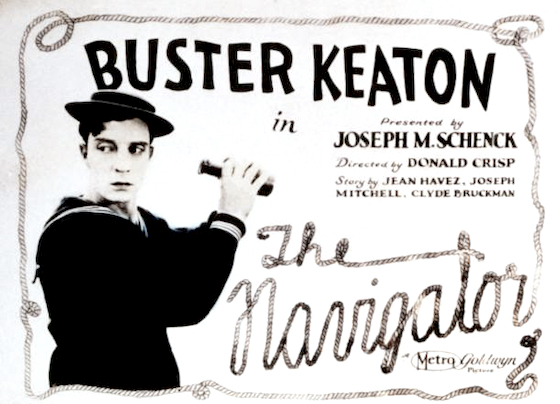
    The Navigator

    This is my fourth Buster Keaton feature now (I’ve only previously reviewed The General, but Sherlock Jr made it into my 2019 top 3), and he’s established himself as my favourite of the major silent comedians (I rarely enjoy Chaplin’s films as much as I feel I should; and, in fairness to Harold Lloyd, I’ve only seen one of his so far, which I liked a lot). The Navigator was the biggest hit of his career, though is probably my least favourite of his I’ve seen so far — though I don’t want to damn it with false criticism, because it’s still a brisk and entertaining comedy.

    Keaton stars as a spoiled rich kid whose marriage proposal is rejected. He’d already booked the honeymoon tickets, so sets off by himself; but, due to several points of confusion, he ends up adrift at sea on a decommissioned ship, empty but for one other passenger: his would-be fiancée (Kathryn McGuire). It’s up to this pair of brats to get along and survive while they hope for rescue. (Rescue does not come quickly. Considering McGuire’s father is a successful shipping magnate who’s aware of what’s happened, you’d think he’d send a vessel after them; but then, he might have his own problems, owing to a bunch of foreign spies who… look, it’s best not to overthink the logistics and plausibility of the plot.)

    Although Keaton gets the lion’s share of the gags, as well he might, for a stretch in the middle he and McGuire form an effective double act. The two rich kids being hilariously useless at household basics, like making coffee or opening a tin of food, is well observed; a flash-forward to their automated solutions is also fun. While Keaton still gets to show off by himself — particularly in an elaborate underwater diving sequence, naturally saved for the final act — McGuire makes the most of the material she’s given.

    The only outright demerit to the film is that the finale hasn’t aged particularly well: the ship finally drifts near land, but it’s an island with a village-full of black natives, at which McGuire immediately exclaims “cannibals!” That she’s sort of proven right when they start attacking the ship is… well, maybe not even worse, but at least just as bad. Still, by 1920s standards, maybe we can take comfort in the fact that it’s only casual racism…

    More than that, the reason I say it’s my least favourite Keaton so far is simply that it doesn’t have as many comedic highs as his very best work. Nonetheless, his genius regularly shines through in moments and even whole sequences, and there are a couple of individual gags that are all-timers.

    4 out of 5

    The Navigator is the 4th film in my 100 Films in a Year Challenge 2022.


    In the Line of Fire

    (1993)

    Wolfgang Petersen | 129 mins | digital (HD) | 2.39:1 | USA / English | 15 / R

    In the Line of Fire

    Clint Eastwood is a Secret Service agent who failed to stop the JFK assassination, now taunted by John Malkovich’s mysterious wannabe-assassin and his threats to kill the current President. It’s a fundamentally strong idea for a thriller, and works especially well by having the villain constantly phoning the hero for little chats. Malkovich’s always makes for a first-rate antagonist, and his slightly loony personality clashes well with Eastwood’s stoic, dry-witted, old-fashioned tough guy. There are a couple of chase scenes and shoot-outs here and there, but, rather than any elaborate physical action, it’s the verbal sparring that represents the film’s highlights.

    On the downside, the pace is a little on the slow side (perhaps matched to the “too old for this shit” age of Eastwood’s hero — in real life, he’d be a whole decade past the mandatory retirement age) and there are one too many clichés as important plot points (don’t get too attached to the partner who’s always talking about his wife and kids). Plus, there’s a wholly unnecessary romance between 62-year-old Clint and 39-year-old Rene Russo — the film doesn’t need it, even if there wasn’t that age gap. It leads to an (almost) sex scene that’s worthy of the Naked Gun films, which is amusing but tonally misplaced.

    They used to make this kind of political thriller on the regular back in the ’90s, one of those bread-and-butter genres for grownups that have fallen by the wayside in favour of hyper-budgeted kids’-movie spectacle that men of allegedly adult age flock to nowadays. In the Line of Fire may not truly stand out among its brethren of the era, but I do wish they still made ’em like this.

    4 out of 5

    In the Line of Fire is the 6th film in my 100 Films in a Year Challenge 2022.


    Barbie as
    The Princess and the Pauper

    (2004)

    William Lau | 85 mins | digital (SD) | 16:9 | USA & Canada / English | U
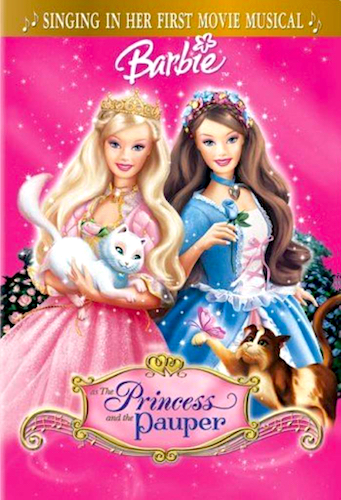
    Barbie as The Princess and the Pauper

    One of the many film lists I have my eye on completing is Letterboxd 100: Animation, which lists the highest-rated animated feature films on the site (with a few caveats). There are over 40 titles left that I’ve not seen, and I could’ve chosen to watch almost any of them… but I chose the Barbie one. Well, not the Barbie one, because there are actually two Barbie titles on the list. And that’s not some temporary fluke: they’ve been on there for quite a while now. This merited investigation.

    As you’ve no doubt gathered from the title, this particular Barbie film is a reimagining of Mark Twain’s The Prince and the Pauper. A fairytale-esque story, about a princess, done as a musical? Yep, this is very much a wannabe Disney, but without the production values of that major studio: the computer animation here looks more like a PS2 cutscene. But hiding beneath the cheap animation is a halfway decent musical fairytale. Take the second musical number, How Can I Refuse, for example: it’s every inch in the mould of a “Disney villain’s song”, but is better than some genuine examples, and comes complete with a dance routine by the antagonist and his two henchman. This film has ambition, I’ll give it that.

    Other songs vary in quality. When the eponymous duo first meet, there’s an unintentionally hilarious number in which they sing about how similar they are, the indentured servant and the pampered royal. If you say so, girls. A later track is a typical “you be you” song, but sung to a pet cat who behaves like a dog. That’s a level of barminess I can get on board with.

    I would never have dreamed of watching this if it weren’t on the Letterboxd animation list. Now, I wouldn’t exactly say I’m glad I watched it, but I enjoyed it more than I thought I would — even if sometimes that was due to laughing at it rather than with it.

    3 out of 5

    Barbie as The Princess and the Pauper is the 7th film in my 100 Films Challenge 2022.


    Free Guy

    (2021)

    Shawn Levy | 115 mins | digital (HD) | 2.39:1 | USA / English | 12 / PG-13
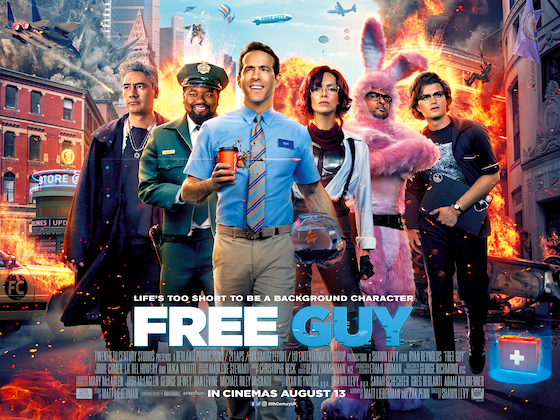
    Free Guy

    Ryan Reynolds plays his role again as Guy, a bank worker in city riddled with crime and superheroics. But, it turns out, Guy isn’t real — he’s an NPC in a computer game, programmed to do the same thing over and over and basically be ignored by the real-world players. Until, that is, he spots the woman of his dreams (Jodie Comer) and his programming breaks as Guy becomes self-aware.

    The basic concept sounds like a fun, fresh, and timely idea, right? Video games have never been more popular, AI is ever-improving, and there’s room for both gags and action in the core idea — that’s the winning Marvel formula, right there. Unfortunately, the execution is as if someone found a way to make a new movie by collaging others. Free Guy is just The LEGO Movie + The Truman Show + Wreck-It Ralph + Ready Player One + the PG-13 version of Deadpool 2 — not put in a blender, but cut up and stuck back together side-by-side, with snippets of Groundhog Day, Fortnite, and multiple Disney-owned properties scattered in for good measure.

    That last aspect, the Disney references, has been singled out for particular derision on social media. The film was initially produced by 20th Century Fox, but ended up a Disney title after the buyout, which allows a bunch of stuff they own to pop up in the movie. I know we’re supposed to find this infinitely depressing — a sad reminder that Disney are on course to own all culture, and that’s a bad thing — and it is bad, of course… but the bit with Captain America’s shield still made me laugh. Sorry, not sorry. Yeah, you can be miserable about this stuff, because obviously the total homogenisation of all American media under The Walt Disney Company is not worth that a couple of meta gags; but the homogenisation of all American media under The Walt Disney Company is happening anyway, so we may as well enjoy the gags we get along the way.

    Whether you have that kind of attitude or not will probably dictate how much you enjoy Free Guy. Its originality is surface deep, at best, and at every second it will call to mind some other film that already did the same thing. But, allowing for that, it’s still a fairly entertaining couple of hours of action-comedy.

    3 out of 5

    Free Guy is the 8th film in my 100 Films in a Year Challenge 2022.
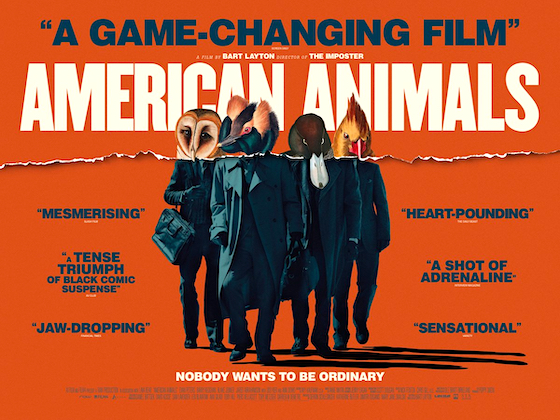

  • American Animals (2018)

    Bart Layton | 117 mins | digital (HD) | 2.39:1 | UK & USA / English | 15 / R

    American Animals

    I don’t want this to turn into a rant about IMDb — there’s a time and a place for those, certainly, but what’s meant to be a short review of one film is not one of them — but the way they’ve devalued the documentary in recent years is not also depressing but also inaccurate. Because anything that has the genre Documentary is now marked as “(documentary)” on someone’s filmography, and therefore IMDb, and/or its contributors, are reluctant to use it about anything that isn’t 100% a documentary. Something like, say, American Animals.

    To be clear: American Animals is unquestionably a documentary. It tells a true story, about some students who plan to rob a library of its rare books. It features interviews with the real people involved, both the students and others. But it’s mostly told via reenactments starring actors, several of them fairly recognisable faces. The real people appear as talking heads scattered throughout, particularly at key moments. So, it’s also unquestionably a hybrid of documentary and fiction. On the surface, it can look a lot like any fictionalised adaptation of a true story; but it’s hidebound to be more accurate than those often are, because it’s also got all these interviews. IMDb isn’t built for nuance such as this.

    Prior planning prevents piss-poor performance... possibly

    The film’s director, Bart Layton, previously made widely-praised definitely-a-documentary The Imposter. In my review of that, I described his style as “flashy” and “over-eager”, wondering if “perhaps he better belongs in fiction filmmaking? Perhaps that’s where he wants to go in future”. Here, I guess he’s moving to bridge that divide; but the blurred line means that, when the film says “here’s the real [person X]”, you kind of question it. Especially as, if a crime was committed, how come they’re interviewing the criminals?

    That latter thought contributes to a genuine tension and suspense throughout the film. How far will this plot go? Do they even actually attempt it? One of the guys keeps saying, “I expected there to be something to stop us”, and you think maybe something will stop them… but the fact this film exists, and there’s all the chat about how the boys let their parents down and whatever, shows something happened. (No spoilers!) Yet it’s also surprisingly funny, like a bit where we’re shown the “Ocean’s Eleven version” of the robbery, complete with Elvis song on the soundtrack.

    Some have criticised these kinds of flights of fancy, or the whole hybrid form, for inviting us to sympathise with these guys rather than condemn their actions. I think there’s room for both. The film seeks to explore what led these pretty normal guys to do such a thing, and (to an extent) how it has affected them since. I think you can both disapprove of what they did and seek to sympathise with them — to understand how it happened is not to condone it.

    4 out of 5

    American Animals was #107 in my 100 Films in a Year Challenge 2020.
    It is streaming on All 4 until 10th February.

    The Fear of God: 25 Years of “The Exorcist” (1998)

    2019 #134
    Nick Freand Jones | 81 mins | digital (SD) | 16:9 | UK / English | 15

    The Fear of God: 25 Years of The Exorcist

    There have been some great made-for-TV documentaries down the years, but that status as “TV programmes” means it’s kind potluck if they’re still readily available to us years later. Mark Cousins’s The Story of Film: An Odyssey? So acclaimed it got a DVD release and, recently, a Blu-ray upgrade. Mark Gatiss’s horror series? Too full of clips to be licensable. The Complete Citizen Kane? I don’t think this was available anywhere besides bootlegs, but will soon be included on Criterion’s 4K release of the film.

    I could go on, but let’s stick to the one at hand. This feature-length Mark Kermode-fronted doc was screened at festivals in 1998 before being shown on the BBC in an edited form. Down the years it’s been available on some of the film’s DVD and Blu-ray releases, but only in that shortened version. Finally, 20 years after its first release, the unedited original cut popped onto the BBC iPlayer for Halloween 2019, and tonight it will be broadcast for the first time ever, on BBC Four at 11:55pm.

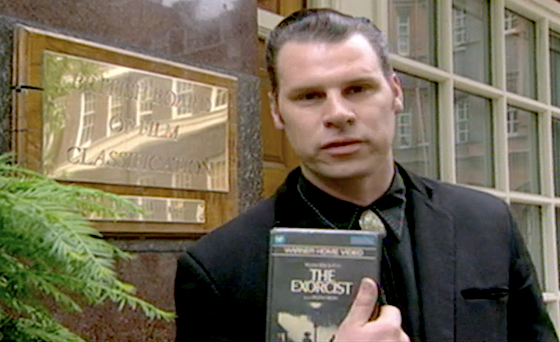
    For those unfamiliar with him, Kermode is sort of the UK’s answer to Roger Ebert: a long-standing, widely-respected film critic across print, TV, and radio. The Exorcist is his favourite film, and (as he explains in a recently-shot introduction to this documentary) he’d written a book on it that its makers had liked, which led to him making The Fear of God.

    Mark Kermode and The Exorcist

    As with almost any documentary about a specific film, your interest in it is likely to depend on your interest in the original film. So, assuming you care to know the behind-the-scenes story of The Exorcist, this is definitely a good film. I get the impression it’s the original source for a lot of interviews and stories that have been repeated around the place; ones that I’ve personally picked up through osmosis down the years. Despite that, I still learnt new stuff, and there are some nice moments to witness, like when novelist and screenwriter William Peter Blatty suddenly realises, on camera, how he should’ve written a scene all along.

    If you’ve seen The Fear of God before (say, on one of The Exorcist’s physical media releases), how much this so-called “festival cut” is worth your time is a matter for your personal level of interest. Some DVD releases cut as much as 25 minutes out of the documentary, so if you’ve only seen that version then obviously there’s a lot of new material here. If you’re watching this version, you can be assured you’re seeing everything Kermode wanted to include as well as everything producer Nick Freand Jones wanted in. For example, there’s an interview with the woman who voiced the demon, who insisted her contribution was only in the BBC broadcast. Well, I guess this still conforms to that wish.

    4 out of 5

    The Fear of God: 25 Years of “The Exorcist” is on BBC Four tonight at 11:55pm, or on iPlayer now.

    No Time to Die (2021)

    2021 #170
    Cary Joji Fukunaga | 163 mins | cinema | 2.39:1 | UK & USA / English, French, Italian & Russian | 12A / PG-13

    No Time to Die

    Britain’s most famous secret agent is Craig, Daniel Craig for the final time in the 25th James Bond film. It’s also the fifth and (presumably) final instalment in an ongoing narrative within the series; the kind of internal continuity never before attempted in the franchise’s 59-year history. Sure, there have been some hints at continuity in the past — Connery’s Bond was almost always up against some agent of SPECTRE, and Diamonds Are Forever is technically a sequel to On Her Majesty’s Secret Service — but never to this degree, and never with such keenly-felt emotional effects on our hero.

    Much fuss has been made in some quarters of Quantum of Solace being the first true sequel in the Bond canon, because it very much continues storylines from Casino Royale. If that’s the case, No Time to Die may be classed as the second such sequel, because it picks up on various hints and threads left dangling in Spectre and weaves them into its narrative. (You could also argue Spectre is a “true sequel” for the way it tries to tie together the entire Daniel Craig era, but I think No Time to Die is even more directly connected to its immediate predecessor.) All of this is primarily of note to fans of the series, mind, because it marks a change of form for this particular series. In the wider world of film franchises, that kind of continuity is nothing new. For all that it’s been a massively-popular trailblazer over the past six decades, the Bond films can be surprisingly reactive, often seeking to incorporate things that are successful in the wider filmmaking space — witness Moonraker coming on the heels of Star Wars, or Casino Royale and (especially) Quantum incorporating styles and techniques from the Jason Bourne films. All of which is really just to say that Bond is not some monolithic island unto himself — these films exist in context, just like any other.

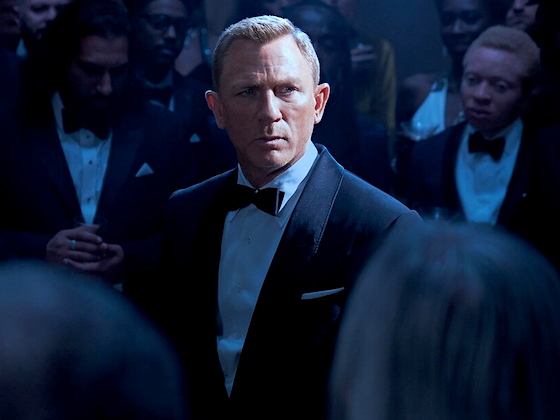
    Bond's in the spotlight

    Perhaps the single most influential trend on No Time to Die is one for closure. Once upon a time, heroes carried on having adventures forever — whatever challenges they faced in one tale, they overcame and ‘rode off into the sunset’ ready to go again. Not nowadays. When Christopher Nolan decided to give Batman an ending to complete his trilogy in The Dark Knight Rises, it was seen as a radical move; an exception to the rule, just for this special case. Now, it’s de rigueur — look at Marvel bothering to wrap-up the stories of Tony Stark and Steve Rogers in Avengers: Endgame, for example. They could have had these guys toddle off only to come back with an unexplained new face, just as has happened throughout movie franchise history, but instead they pay off the audience’s investment by giving them an ending. Spectre sort of did this, giving Craig’s Bond an ambiguous conclusion where he sort of seemed to retire and drive off with the girl. But that kind of ambiguity doesn’t cut it nowadays, and so No Time to Die finds that, yes, Bond did retire, but now he’s pressed back into service so we can get a more definitive fullstop on his story.

    To discuss the specifics of that ending would be to get into spoiler territory, of course, which I’m not going to do here (the film is out in most regions now, but won’t hit some markets until much later in the year; and I can understand if some people are still reticent to return to cinemas and so will wait for a home release. It’s fine — there’ll be plenty of time to talk about the ending in month and years to come, because it is, again, no spoiler to say this is an ending that will be discussed for a long time, one way or another). What I will say is that I, personally, wasn’t wholly convinced by it. I don’t know if it was the right move. I’m not entirely sure how it makes me feel. Others may have a more definitive reaction — I haven’t sought out other people’s specific thoughts, and they’re hard to stumble upon because everyone is (rightly) avoiding spoilers. That said, the mostly positive reception, from both critics and regular viewers, suggests that it’s not an outright problem — maybe people mostly love the finale, but even if they don’t, they’re like me in thinking it doesn’t undermine the quality of the rest of the film.

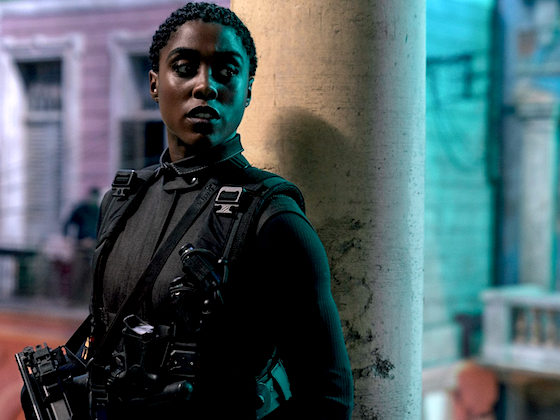
    The new 007

    And quality is in abundance throughout No Time to Die. When it emerged that it ran nearly two-and-three-quarter hours, some were concerned that was far too long for a Bond film, especially after Spectre’s two-and-a-half hours was deemed a slog by many. Such concerns prove unfounded, because No Time to Die moves at a solid lick throughout, never feeling its length — like all the best movies, whether they be 80 minutes or four hours, it’s just as long as it needs to be. In many ways it’s your standard Bond fare: there’s a nefarious villain out there planning to do something evil on a massive scale, and Bond is roped in to stop them. If it ain’t broke, don’t fix it. And yet, the Craig era has tried to ‘fix it’. Casino Royale consciously dismantled the Bond formula, riffing on some of its famous tropes rather than including them properly (cf. his response to “shaken or stirred?”), but the subsequent films have sought to rebuild the style we knew and loved. It’s arguable whether they truly have returned Bond to his previous ways — every one of these movies subverts ‘the Bond formula’ in some way, large or small — but I think No Time to Die might be the closest. That’s not a criticism.

    Certainly, it has enough new going on to not feel like a throwback. Some of that is surface level, like the new 00 being a Black woman, played perfectly by Lashana Lynch. It’s an important bit of progressiveness, for sure, but in plot terms, replace her with a white man and everything still functions the same. Again, I don’t feel like that’s a criticism — sometimes the devil is in the details, and details matter. “Making that character a Black woman instead of a white man doesn’t affect the plot” is a reason to make such a change, not an argument against it. Conversely, Léa Seydoux’s Madeleine Swann somewhat upends the traditional Bond girl role by having a secret past that has significant bearing on both the plot and Bond’s emotional state. The former may not be so new (there have been Bond girls with secrets in the past), but allowing Bond to actually have emotions, and be challenged by them, is very much a Craig-era phenomenon. Again, you can find specific examples of this throughout the series — OHMSS is the biggest example, but you could argue Brosnan’s Bond is affected by Elektra in The World Is Not Enough — but it’s never been done with such consistency, such centrality, as in the Craig era.

    Can anybody find him somebody to love?

    Aside from all this borderline-groundbreaking stuff, No Time to Die serves up a load of traditional Bond thrills. There are exotic locales, beautifully lensed by Linus Sandgren — he may not be as big a name as Roger Deakins, but his work makes this rival Skyfall for prettiest Bond film. There are epic action sequences — the series may have lost its rep for outrageous done-for-real stunts to Tom Cruise’s Mission: Impossible-funded death wish, but it can still pull together an outstanding car chase or shoot-out. The pre-titles in Italy; a party in Cuba; a chase through Norwegian woods — all could be franchise highs in the set piece department. And the production design, by series newcomer Mark Tildesley, harks back to Bond of old too, not least in the villain’s island lair. Oh yes, the villain has his own island — proper old-school Bond.

    Said villain is Safin, played by Oscar-winner Rami Malek. He’s not bad by any means, but he’s weirdly miscast (it’s not obvious until you think about it, but the character is meant to be 20+ years older than the actor) and he has little to do: Bond’s on his trail for most of the film, only confronting him in the final act. Maybe that’s not so different to many older Bond films either, but it’s out of place in the Craig era, where most of the villains have directly challenged Bond throughout the movie. Still, while he may not hit the highs of Mads Mikkelsen’s Le Chiffre or Javier Bardem’s Silva, he’s slightly less “villain by numbers” than Christoph Waltz’s disappointingly underwhelming turn as Blofeld, and more memorable than Mathieu Amalric’s Dominic Greene (not the actor’s fault, I don’t think — Quantum tried so hard to keep Bond grounded and he suffers for that). In fact, he’s such a Macguffin of a villain that I’m not even sure of his motivation — I get how he intends to do A Very Bad Thing (the mechanics of it are very important, for several reasons), but I don’t recall the film ever bothering to tell me why.

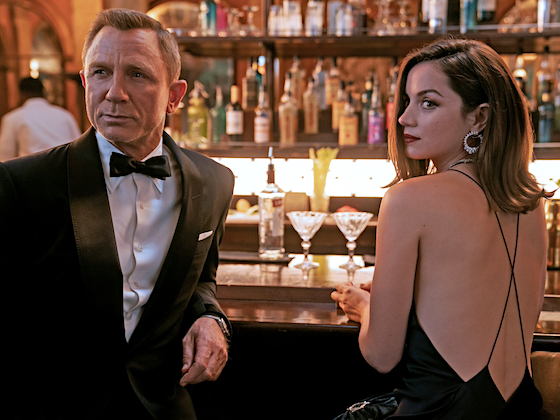
    Old school Bond

    It’s this kind of little niggle that loses No Time to Die its edge. Make no mistake: this is an immensely entertaining Bond film. I haven’t even mentioned some of its other highs, like all-too-brief supporting turns from Jeffrey Wright, returning as Bond’s CIA chum Felix Leiter, or Ana de Armas as a rookie agent who, it turns out, is as skilled as she is gorgeous, but is most memorable for being the most amusing part of the film — you’ll wish she was in it more. For all that, I foresee the film settling in as a well-liked entry in the series, and I’m sure it will cement a reputation as the greatest last-Bond-film for any actor (its only real rival in those stakes being Licence to Kill, which barely counts as it was only Dalton’s second). But, on the flipside, it doesn’t quite hit the dizzying heights of Casino Royale or Skyfall. Is that a problem? Nah. Not everything has to be “the greatest ever” to have merit.

    4 out of 5

    No Time to Die is in cinemas everywhere (except Australia and China) now.

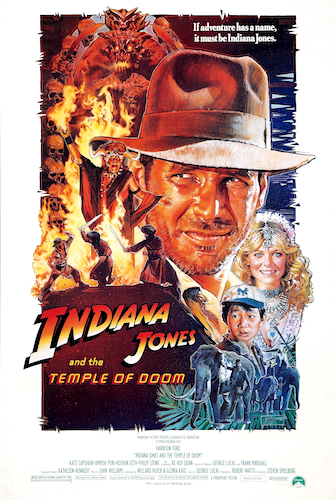
    Indiana Jones and the Temple of Doom (1984)

    The 100 Films Guide to…

    Indiana Jones and the Temple of Doom

    If adventure has a name,
    it must be Indiana Jones.

    Country: USA
    Language: English
    Runtime: 118 minutes
    BBFC: PG (cut, 1984) | 12 (uncut, 2012)
    MPAA: PG

    Original Release: 23rd May 1984 (USA)
    UK Release: 15th June 1984
    Budget: $28 million
    Worldwide Gross: $333.1 million

    Stars
    Harrison Ford (The Conversation, Cowboys & Aliens)
    Kate Capshaw (A Little Sex, Black Rain)
    Ke Huy Quan (The Goonies, Finding ‘Ohana)

    Director
    Steven Spielberg (1941, Hook)

    Screenwriters
    Willard Huyck (American Graffiti, Radioland Murders)
    Gloria Katz (Messiah of Evil, Howard the Duck)

    Story by
    George Lucas (American Graffiti, Willow)


    The Story
    Escaping the evil machinations of a Chinese gangster, Indiana Jones, his child sidekick Short Round, and nightclub singer Willie Scott crash-land in India, where the fate of a blighted village points them towards an ancient palace, wherein hides a secret cult practising ritual human sacrifice…

    Our Hero
    Boldly billed as the definitive article ‘Hero’ in some of the film’s advertising, the man in question is archaeologist and adventurer — and, indeed, archetypical movie hero — Indiana Jones.

    Our Villains
    The Thuggees, an ancient Indian cult still active at the remote Pankot Palace, where they’ve kidnapped and enslaved children to work in mines, and execute elaborate ceremonies of human sacrifice.

    Best Supporting Character
    Indy’s pint-sized Chinese sidekick, Short Round. A child sidekick sounds like a recipe for disaster, but Short Round is actually pretty fun. Spielberg liked actor Ke Huy Quan’s personality so much that he had the boy and Harrison Ford improves scenes, such as the one when Short Round accuse Indy of cheating at cards.

    Memorable Quote
    “We are going to die!” — Indiana Jones
    (This isn’t a particularly memorable line in isolation, but it’s all in the delivery — and the sad face Ford pulls at the end.)

    Memorable Scene
    The film’s opening 20 minutes are an extended action sequence — more of a mini-adventure, really (there’s an entire musical number!) — that kick off the movie perfectly. Indeed, some fans even say it’s the greatest action scene in the entire series (I say it’s a contender, but the competition is stiff). I suspect Spielberg was using it to get a few things out of his system: as well as the song-and-dance, there’s a distinct James Bond vibe to the whole thing (Spielberg had put himself forward to direct a Bond film but was rebuffed).

    Memorable Music
    Oh, John Williams’ main theme… Okay, it’s not new — it’s from Raiders, obviously — but by God it’s good. Did you know: Williams was Oscar nominated for each of the first three Indiana Jones films, but lost every time. Raiders was beaten by Vangelis’ music for Chariots of Fire, Temple of Doom by Maurice Jarre’s score for A Passage to India, and Last Crusade by Alan Menken’s work on Disney’s The Little Mermaid. Mad, really.

    Technical Wizardry
    The mine cart chase is not just another fantastic action scene, but it’s also a real showcase of filmmaking tricks. It was created with a mix of footage of the star actors, stunt people, miniatures, and stop-motion animation, but it never shows off about it — it’s cut together so well and so fast that you almost don’t notice all the different techniques that have been employed to create a wholly thrilling sequence.

    Letting the Side Down
    Willie Scott, the nightclub singer who’s forced to tag along on Indy’s adventure, but would rather be anywhere else. She’s not a wholly terrible character, but the only time the movie really threatens to slow down is when it indulges in her screechy, squeamish side. That said, at her best, her hot-and-cold relationship with Indy generates some classic screwball-esque scenes that really help to underscore the 1935 setting.

    Making of
    The dinner scene, infamous for its array of disgusting food like chilled monkey brains, came about because Spielberg, Lucas, and screenwriters Gloria Katz and Willard Huyck were concerned about keeping the audience’s attention during the expository dialogue about the Thuggee cult. Ideas such as a tiger hunt were rejected before they settled on the dinner sequence. Said Katz, “Steve and George both still react like children, so their idea was to make it as gross as possible.”

    Previously on…
    Indy made his debut in Raiders of the Lost Ark, although Temple of Doom is actually a prequel, set a year earlier.

    Next time…
    The Indiana Jones trilogy was completed in 1989 with Indiana Jones and the Last Crusade, but that was far from the end for the character. On screen, The Young Indiana Jones Chronicles traced the character’s adventures in childhood across three seasons and 32 episodes, originally released between 1992 and 1996. Over a decade later, in 2008, an older Indy returned to the big screen in Indiana Jones and the Kingdom of the Crystal Skull, and production has just begun for an adventure starring an even older Indy, with the currently-untitled fifth film due for release next year. Away from TV and cinema screens, Indy has featured in dozens of novels, comic books, computer games, and so on, including a live stunt show at Disney World that’s now been running for over 30 years.

    Awards
    1 Oscar (Visual Effects)
    1 Oscar nomination (Original Score)
    1 BAFTA (Special Visual Effects)
    3 BAFTA nominations (Cinematography, Editing, Sound)
    7 Saturn Award nominations (Fantasy Film, Actor (Harrison Ford), Younger Actor (Ke Huy Quan), Director, Writing, Costumes, Make-Up)

    Verdict

    Whereas Raiders was balanced to perfection, Temple of Doom pushes everything that worked up to maximum: it’s more playful and it’s sillier, but it’s also more gruesome and more overtly an action movie. When it’s firing on all cylinders, it’s as good as anything else in the franchise, including scenes that stylistically evoke many a genre from classic Hollywood (there’s a hefty dash of screwball comedy in some of the relationship between Indy and Willie). Even at its worst, it’s not bad — it moves like the clappers and is committed to being almost relentlessly entertaining. Perhaps it’s a little hardcore for younger fans (and even that aspect has lessened with age, with the chest-ripping special effects looking a little ropey nowadays), but otherwise, what’s there to complain about?

    Psycho Goreman (2020)

    2021 #26
    Steven Kostanski | 95 mins | digital (HD) | 2.40:1 | Canada / English | *

    Psycho Goreman

    In the recent episode of his Secrets of Cinema devoted to cult movies (which I covered here), Mark Kermode asserted that filmmakers can’t choose to make a cult movie — it’s up to the audience whether a film becomes a cult favourite or not. While this may be true in a sense, it’s also the case that, after several decades of the phenomenon being observed, any filmmaker who is interested in making a cult movie can consciously include the kinds of ingredients that provoke such devotion, thus giving themselves a head start. Psycho Goreman is one of the most recent films that seems custom-made to be a cult hit, and while only time will tell if it’s truly a “cult classic” or just a passing flavour of the month, it’s already attracted plenty of word-of-mouth attention — indeed, that’s precisely what led me to seek it out back in January, long before it had a confirmed UK release date (which, FYI, is today).

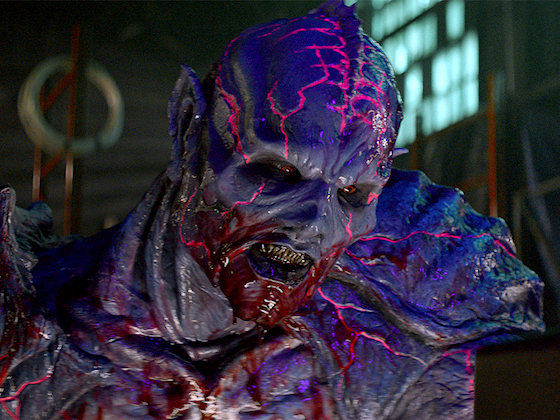
    While digging up their back garden for a game, a pair of siblings — obnoxious Mimi (Nita-Josee Hanna) and her pushover older brother Luke (Owen Myre) — unearth a strange gem, which turns out to be a key imprisoning an intergalactic alien mass murderer. The monster now freed, he sets off to dominate and destroy Earth… except whoever possesses the gem can control him, and that’s Mimi. She christens her new pet/toy Psycho Goreman — PG for short — and the cruel, twisted, depraved mastermind sets about using the alien criminal for her own playful ends.

    There’s a distinctly ’80s vibe to this whole setup and how it’s presented on screen, both in storytelling terms and in the use of practical suits, models, gore, and special effects. Once he’s free, PG’s old friends and enemies are all out to find him, which puts a wide array of fantastical creatures on screen. None of them are a slouch. The fact such extensive effects work must’ve been achieved on a tight budget, but by clearly enthusiastic and talented craftspeople, only furthers the throwback feel. Indeed, the creature outfits are so impressively designed and realised that, although I haven’t bought an action figure in many years, it made me really want ones of PG and, in particular, his robotic-ish police-lady nemesis, Pandora. (Funnily enough, they’re making some; but they’re retro-style, which I know is a popular thing nowadays, but I don’t think is as cool as a properly-detailed figure. Of course, those kind tend to be rather pricey; but the ones they’re making are far from cheap, especially with international postage. Oh well.)

    Mimi and friends

    Everything about the filmmaking here has been leveraged to tickle the nostalgia glands of genre fans who grew up with trashy but ambitious sci-fi, fantasy, and horror fare on video, probably when they were officially too young to be watching it. Added to the mix is overt and knowing comedy, because now we’re all in on the joke. I found this aspect a bit hit or miss. When writer-director Steven Kostanski’s work is really on form, it’s frigging hilarious — although do note it can be quite dark comedy at times (which works for me) — but the film doesn’t nail the schtick as consistently as I hoped it would. For every few gags that land or subplots that pay off, there’s something that misses an opportunity or seems to get forgotten. On the other hand, this roughness round the edges is part of the genuine cult movie charm. With geek culture having become mainstream, the high-value neatly-polished version of what used to be direct-to-video schlock is more-or-less what Hollywood serves up at the multiplex every couple of weeks (under normal circumstances). Arguably, a true cult movie has faults that its fans either overlook or embrace because of how much they love the overall result. Psycho Goreman certainly does enough right to inspire that kind of affection.

    One complaint I’ve read fairly often, even from those who fall within the film’s target audience, is that Mimi is an annoying brat. Well, it’s pretty clear that’s intentional (as opposed to, say, the result of poor casting). I wouldn’t say the film celebrates her for it, but it doesn’t really punish or develop her either, so perhaps there’s some kind of tacit acceptance there. But then, she’s a preteen girl, so I don’t know how harsh you’d expect it to be on her. Anyway, your mileage will vary as to whether she’s annoying but still amusing, or just plain irritating. I err towards the former.

    Gory man

    Having outlined the film’s supposed intended audience earlier, I must say it doesn’t technically include me. I was much too mainstream in my childhood viewing, so it’s only in later years that I’ve come to appreciate more of the bizarre deviances in cinematic history. Those who grew up on that stuff may get the biggest kick out of the film, but that doesn’t mean the rest of us can’t delight in its gonzo joys. I won’t be surprised if Psycho Goreman has a bright future ahead as a new cult staple.

    4 out of 5

    Psycho Goreman is available on Shudder from today.

    * To the best of my knowledge, it hasn’t been rated by either the BBFC or the MPAA, the two classifications I normally cite. If you’re interested, for reference, classifications in the rest of the world are all in the 15–18 range. It is very gory, but it’s obviously fake and often comical. ^

    The 100-Week Roundup XXXII

    The 100-Week Roundup covers films I still haven’t reviewed 100 weeks after watching them. Sometimes these are short ‘proper’ reviews; sometimes they’re only quick thoughts, or even just the notes I made while viewing.

    This week’s pair are the final films from May 2019

  • The Saint (2017)
  • Hairspray (1988)


    The Saint
    (2017)

    2019 #92
    Ernie Barbarash | 91 mins | digital (HD) | 16:9 | USA / English | 12

    The Saint

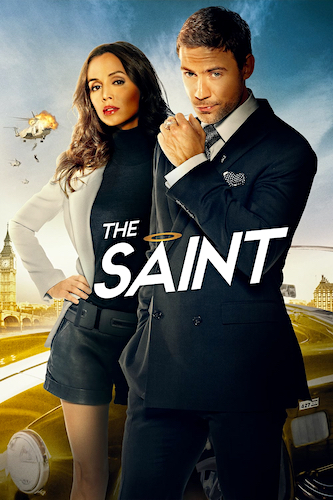
    Leslie Charteris’s “modern-day Robin Hood” Simon Templar, aka the Saint, was adapted into a successful film series in the ’30s and ’40s, and an enduringly popular TV series in the ’60s, so it makes sense that, every now and then, someone tries to revive the property. This latest effort began life as a TV pilot in 2013, which was rejected. Reshoots to extend it into a feature were shot in 2015, but it was only released in 2017, as a ‘tribute’ to Roger Moore (star of the ’60s series, of course, and who makes a cameo here) shortly after his death. I guess that was the only way it could find distribution. You might think the fact it failed on its own merits, twice over, before having to rely on a beloved star’s death to get any kind of release, augurs badly for the film’s quality… and you’d be right.

    Adam Rayner plays the newest incarnation of the eponymous antihero, here tasked with recovering both stolen Nigerian aid money and the thief’s teenage daughter, who was kidnapped as leverage by a mysterious crime organisation. Cue lots of tech-based heist hijinks (gotta make sure we know this is a modern adaptation) and made-on-a-budget action sequences. The overall impression is of something that would’ve been a minor success as a syndicated TV series in about 1995, which obviously means it seem badly dated by today’s standards. The content of the reshoots is a little too obvious: a tacked-on prologue and epilogue, which come in the form of long scenes in limited locations with a small cast. That said, the whole production is so cheap that these additions don’t stick out too much. That’s not a compliment.

    It’s been a very long time now since we’ve had a decent version of The Saint (I rewatched the ’90s Val Kilmer film recently and it’s not some forgotten gem). As such a storied franchise, I’m sure someone will try again — indeed, we might not have to wait long at all, as it’s been reported that Dexter Fletcher is working on a new film that will star Chris Pine. I live in hope.

    2 out of 5

    The Saint featured on my list of The Five Worst Films I Saw For the First Time in 2019.

    Hairspray
    (1988)

    2019 #94
    John Waters | 88 mins | DVD | 1.85:1 | USA / English | PG / PG

    Hairspray

    John Waters is not the kind of filmmaker whose movies you’d expect to see being adapted as a big Broadway musical. But then, Hairspray is not your typical John Waters movie, leaving behind the transgressive, gross-out elements that make films such as Pink Flamingos infamous and unpalatable to this day, replacing them with the sweet story of an overweight high-schooler who wants to be a dancer on her local TV dance show, with a self helping of racial equality — it’s set in 1962 and the show’s black dancers are still segregated.

    Although the end result is resolutely PG material, the film still feels a world away from the slick big-budget studio production values of the stage-musical-based remake — a bit of the grungy, independent, low-budget roots of Waters’s other films has survived into the vibe of this film. In a way, the nice thing about that is that the two screen versions cater to different demographics. So many remakes are aimed at fundamentally the same audience, but in shiny new packaging to attract the imbeciles who refuse to watch any films made before whatever year they’ve arbitrarily selected. Conversely, the two Hairsprays are distinctly different interpretations of the same base material, with a shared socially-conscious vision, but different aesthetic and artistic goals. Both are valid; both are good. My personal preference errs towards the remake, but I appreciate the qualities of the original, too.

    4 out of 5

  • The 100-Week Roundup XXXI

    The 100-Week Roundup covers films I still haven’t reviewed 100 weeks after watching them. Sometimes these are short ‘proper’ reviews; sometimes they’re only quick thoughts, or even just the notes I made while viewing.

    This week’s selection includes a trio of films I watched back in May 2019

  • Widows (2018)
  • Cosmopolis (2012)
  • The Kennel Murder Case (1933)


    Widows
    (2018)

    2019 #88
    Steve McQueen | 130 mins | digital (HD) | 2.39:1 | UK & USA / English & Spanish | 15 / R

    Widows

    The story of four women with nothing in common, except a debt left behind by their dead husbands’ criminal activities. Set in contemporary Chicago, amid a time of turmoil, tensions build when Veronica (Viola Davis), Alice (Elizabeth Debicki), Linda (Michelle Rodriguez) and Belle (Cynthia Erivo) take their fate into their own hands and conspire to forge a future on their own terms.IMDb

    Best known for powerful socially/politically-conscious work like Hunger, 12 Years a Slave, and the Small Axe series, director Steve McQueen here delivers something closer to a genre movie — although, with its storyline of gangsters’ women empowering themselves, and a racially diverse cast, it still feels at least somewhat radical. As a thriller, it’s not exactly taught with tension, but it’s not too slack either — the pace is considered but not slow, allowing enough room for everything (and there’s a lot) without feeling rushed.

    4 out of 5

    Cosmopolis
    (2012)

    2019 #89
    David Cronenberg | 101 mins | digital (HD) | 16:9 | Canada & France / English | 15 / R

    Cosmopolis

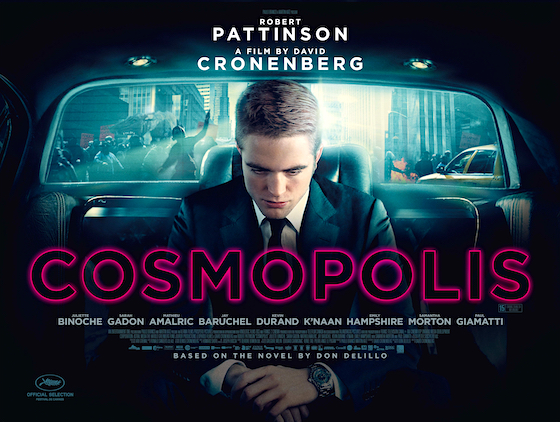
    Riding across Manhattan in a stretch limo in order to get a haircut, a 28-year-old billionaire asset manager’s day devolves into an odyssey with a cast of characters that start to tear his world apart.IMDb

    David Cronenberg may be most famous as a horror director, but the only thing horrific about Cosmopolis is having to sit through it. It has the visual, aural, writing, and performance quality of an overambitious semi-pro early-’00s webseries, from the distractingly ugly green-screened limo windows to the “undergrad philosopher”-sounding screenplay and stiff performances. I presume this literally monotonous lack of realism must have been intentional, but doing something deliberately doesn’t inherently make it good. Cronenberg reportedly wrote the screenplay in just six days, apparently by copy-pasting the book into screenplay format and separating the dialogue from narration. That would go some way to explaining why it’s all so unnatural and impenetrable.

    1 out of 5

    Cosmopolis featured on my list of The Five Worst Films I Saw in 2019.

    The Kennel Murder Case
    (1933)

    2019 #91
    Michael Curtiz | 73 mins | digital (SD) | 4:3 | USA / English

    The Kennel Murder Case

    Before he starred in The Thin Man, one of the definitive detective movies, William Powell played private eye Philo Vance in a series of movies — three at Paramount across 1929 and 1930, later returning for this one at Warners. Here, Vance investigates a locked-room mystery: wealthy collector Archer Coe is dead and all signs point to suicide, but Vance had run into him the day before at the Kennel Club, where Coe was looking forward to his dog winning the next day’s competition.

    While the ensuing story unfolds a solid mystery, it lacks the charm and wit of the Thin Man films. Powell’s character is a facilitator of the plot rather than an entertaining main character; a blank slate who wanders around solving things. That lack of verve or individuality (which you do find in, say, the Falcon and Saint films, which this is on a par with in most other respects) is what really holds it back. Mind you, it has its moments: for example, much of Michael Curtiz’s direction is perfunctory studio-programmer stuff, but there’s the occasional striking shot (the discovery of a body though a keyhole) or sequence (the recap of how the murders went down, with a roving first-person view to hide the killer’s identity).

    3 out of 5

  • The 100-Week Roundup XXX

    Bow-chicka-wow-wow!

    Oh, er, no, sorry — it’s not that kind of XXX. It’s Roman numerals: this is the 30th 100-Week Roundup. (But if it is the other kind of XXX that you’re looking for, check out Roundup XX.)

    Still here? Lovely. So, for the uninitiated, the 100-Week Roundup covers films I still haven’t reviewed 100 weeks after watching them. Sometimes these are short ‘proper’ reviews; sometimes they’re only quick thoughts, or even just the notes I made while viewing.

    That said, as with Roundup XXIX, this week has run into some reviews that I feel would be better suited placed elsewhere; mainly, franchise entries that it would be neater to pair with their sequels. Consequently, sitting out this first roundup of May 2019 viewing are The Secret Life of Pets, Jaws 2, Ice Age: The Meltdown, and Zombieland. I’m going to have to get a wriggle on with these series roundups, though, otherwise that subsection of my backlog will get out of control…

    So, actually being reviewed here are…

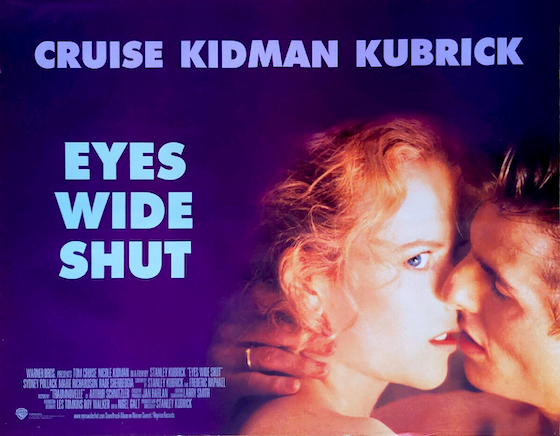
  • Eyes Wide Shut (199)
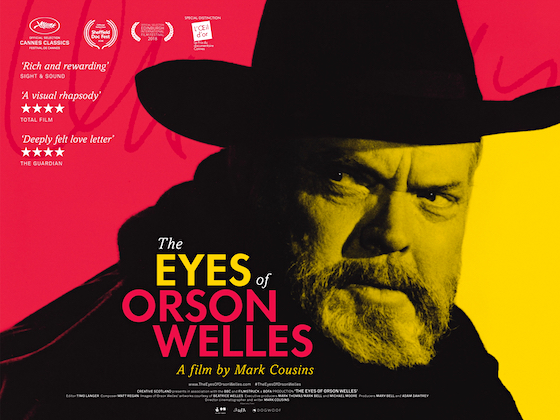
  • The Eyes of Orson Welles (2018)
  • Everybody Wants Some!! (2016)


    Eyes Wide Shut
    (1999)

    2019 #72
    Stanley Kubrick | 159 mins | Blu-ray | 16:9 | UK & USA / English | 18 / R

    Eyes Wide Shut

    I seem to remember Eyes Wide Shut being received poorly on its release back in 1999, but then I would’ve only been 13 at the time so perhaps I missed something. Either way, it seems to have been accepted as a great movie in the two decades since (as is the case with almost every Kubrick movie — read something into that if you like).

    Numerous lengthy, analytical pieces have been written about its brilliance. This will not be one of them — my notes only include basic, ‘witty’ observations like: one minute you’re watching a “men are from Mars, woman are from Venus” kinda relationship drama, the next Tom Cruise has taken a $74.50 cab ride from Greenwich Village to an estate in the English countryside and you’re in a Hammer horror by way of David Lynch. “A Hammer horror by way of David Lynch” is a nice description, though. That sounds like my kind of film.

    And Eyes Wide Shut almost is. It’s certainly a striking, intriguing, even intoxicating film, but I didn’t find the resolution to the mystery that satisfying — I wanted something more. Perhaps I should have invested more time reading those lengthy analyses — maybe then I would be giving it a full five stars. Definitely one to revisit.

    4 out of 5

    Eyes Wide Shut was viewed as part of What Do You Mean You Haven’t Seen…? 2019.

    The Eyes of Orson Welles
    (2018)

    2019 #74
    Mark Cousins | 100 mins | TV (HD) | 16:9 | UK / English | 12

    The Eyes of Orson Welles

    Mark Cousins, the film writer and documentarian behind the magnificent Story of Film: An Odyssey, here turns his attention to the career of one revered filmmaker: Orson Welles (obv.)

    Narrated by Cousins himself, the voiceover takes the form of a letter written to Welles, which then proceeds to tell him (so it can tell us, of course) about where he went and when; about what he saw and how he interpreted it. A lot of the time it feels like it’s patronising Welles with rhetorical questions; as if Cousins is speaking to a dementia suffer who needs help to recall their own life — “Do you remember this, Orson? This is what you thought of it, isn’t it, Orson?” It makes the film quite an uneasy experience, to me; a mix of awkward and laughable.

    Cousins also regularly makes pronouncements like, “you know where this is going, I’m sure,” which makes it seem like he’s constantly second-guessing himself. Perhaps it’s intended as an acknowledgement of his subject’s — his idol’s — cleverness. But it’s also presumptive: that this analysis is so obvious — so correct — that of course Welles would know where it’s going. His imagined response might be, “of course I knew where you were going, because you clearly have figured me out; you know me at least as well as I know myself.” It leaves little or no room for Welles to respond, “I disagree with that reading,” or, “I have no idea what you’re on about.” Of course, Welles can’t actually respond… but that doesn’t stop the film: near the end, Cousins has the gall to end to imagine a response from Welles, literally putting his own ideas into the man’s mouth in an act of presumptive self-validation.

    I can’t deny that I learnt stuff about Orson Welles and his life from this film, but then I’ve never seen or read another comprehensive biography of the man, so that was somewhat inevitable. It’s why I give this film a passing grade, even though I found almost all of quite uncomfortable to watch.

    3 out of 5

    Everybody Wants Some!!
    (2016)

    2019 #79
    Richard Linklater | 112 mins | TV (HD) | 1.85:1 | USA / English | 15 / R

    Everybody Wants Some!!

    Everybody Wants Some Exclamation Mark Exclamation Mark (that’s how we should pronounce it, right?) is writer-director Richard Linklater’s “spiritual sequel” to his 1993 breakthrough movie, Dazed and Confused. That film has many fans (it’s even in the Criterion Collection), but I didn’t particularly care for it — I once referred to it as High Schoolers Are Dicks: The Movie. So while a lot of people were enthused for this followup’s existence, the comparison led me to put off watching it. A literal sequel might’ve shown some development with the characters ageing, but a “spiritual sequel”? That just sounds like code for “more of the same”.

    And yes, in a way, this is High Schoolers Are Dicks 2: College Guys Are Also Dicks. It’s funny to me when people say movies like this are nostalgic and whatnot, because usually they just make me glad not to have to bother with all that college-age shit anymore. That said, in some respects the worst parts of the film are actually when it tries to get smart — when the characters start trying to psychoanalyse the behaviour of the group. Do I really believe college-age jocks ruminate on their own need for competitiveness, or the underlying motivations for their constant teasing and joking? No, I do not.

    Still, while most of the characters are no less unlikeable than those in Dazed and Confused, I found the film itself marginally more enjoyable. These aren’t people I’d actually want to hang out with, and that’s a problem when the movie is just about hanging out with them; but, in spite of that, they are occasionally amusing, and we do occasionally get to laugh at (rather than with) them, so it’s not a total washout.

    3 out of 5

  • The 100-Week Roundup XXIX

    The 100-Week Roundup covers films I still haven’t reviewed 100 weeks after watching them. Sometimes these are short ‘proper’ reviews; sometimes they’re only quick thoughts, or even just the notes I made while viewing.

    I’m cheating slightly in this roundup, because these are the final reviews from April 2019, a period that means I should also be reviewing Captain Marvel and Resident Evil: Apocalypse. The former I don’t have many notes on, so I’d like to make time for a rewatch and do it properly. The latter, well, as I’m in the middle of watching the whole RE series, I’ll either round it up with some of the other sequels or give it a standalone post. It wouldn’t have been the first time I included a mid-franchise instalment in a roundup, but it always feels a bit ‘ugly’ to do that.

    Anyway, enough about what isn’t here — here’s what is…

  • Scott Pilgrim vs. the World (2010)
  • Click (2006)
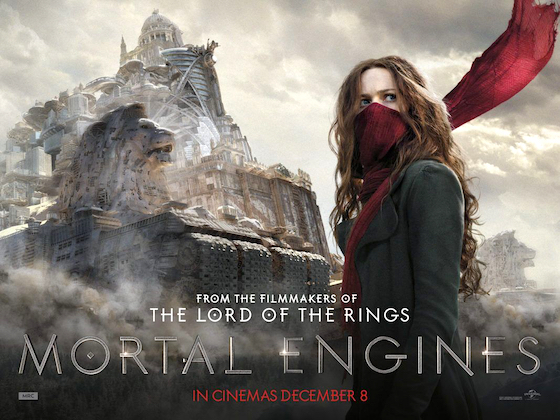
  • Mortal Engines (2018)
  • The Help (2011)


    Scott Pilgrim vs. the World
    (2010)

    2019 #63
    Edgar Wright | 112 mins | Blu-ray | 1.85:1 | USA, UK, Canada & Japan / English | 12 / PG-13

    Scott Pilgrim vs. the World

    Well, this is embarrassing: a film I ranked in my top five of the year, but I don’t have any notes to write up a full review — just like Heathers back in Roundup XI. Oh dear, again.

    In Scott Pilgrim’s case, it’s just about to be re-released in a restored/jazzed-up version (first in Dolby Cinemas, then on 4K disc), so I’ll surely rewatch it that way and hopefully try this again properly, maybe later this year. For now, in the spirit of these roundups (i.e. to clear old unreviewed films), here’s the paragraph I wrote when it ranked 4th on my list of The 15 Best Films I Saw For the First Time in 2019

    If I’m honest, I was prepared to dislike Scott Pilgrim — I mean, there’s a reason it took me almost a decade to get round to it. It always looked Too Cool; kind of too hipster-ish, though I guess in a geeky way. (Well, “hipster” and “geek” have been more closely linked than ever this decade, haven’t they?) I remember distinctly when it went down a storm at Comic-Con and so everyone believed it was The Next Big Thing, only for it to flop hard at the box office (providing a much-needed course correction on everyone’s view of the power of Comic-Con).

    But here’s the thing: it’s directed by Edgar Wright, and I should have trusted that. And so the film is everything you’d expect from the director of Shaun of the Dead and Hot Fuzz and Baby Driver — deep-cut references (this time to video games), piles of humour, but also a dose of genuine emotion. Best of all is how it’s ceaselessly, fearlessly, creatively inventive with its cinematic tricks. No other film on this list is so overtly Directed, but in a good way.

    5 out of 5

    Scott Pilgrim vs. the World was viewed as part of Blindspot 2019.

    Click
    (2006)

    2019 #64
    Frank Coraci | 107 mins | digital (HD) | 16:9 | USA / English | 12 / PG-13

    Click

    I am not, by an stretch of the imagination, an Adam Sandler aficionado. Besides this, the only films of his I’ve seen are Murder Mystery (which I watched in spite of him because I like murder mysteries), and Punch-Drunk Love and Uncut Gems, neither of which are “Adam Sandler films” in the widely-understood sense (and I didn’t much like either of them anyway). Indeed, the only reason I watched Click is because it’s on “most-watched movies ever”-type lists and I wanted to check it off.

    Sandler plays a workaholic family man, who’s missing out on time with his wife (Kate Beckinsale) and two kids while he strives for a promotion at work. But then he comes across a magic remote control that works on the world: he can mute arguments, rewind to the good bits, fast-forward to when he gets his promotion… He thinks it’s great — until, of course, it isn’t.

    From the very start, it’s clear Click isn’t running high on originality, with “gags” about having lots of remote controls and about a dog humping a soft toy. The former was surely already old-hat observational comedy by 2006, while the latter has always been on about the same level as fart gags. As Sandler watches the dog’s actions, he comments that it’s something his young kids shouldn’t “know about” for 10 years for the boy and 30 years for the girl. Within the first few minutes, Click has managed to be overfamiliar, underdeveloped, crude, and socially regressive, all at the same time. And then it throws some racism in for good measure, with a foreign prince whose name the characters mispronounce as things like “Ha-booby” and “Hubba-bubba”. This is all before the ten-minute mark. Never mind a magic remote control — you might be contented reaching for the real one.

    The film’s a Fantasy because it’s about a magic remote control, but the wish fulfilment definitely extends beyond that. I mean, Kate Beckinsale as Adam Sandler’s wife? Pull the other one. Plus, all the young attractive women in his office seem to fancy him, too. Someone’s ego was getting stroked here.

    The comedy continues in its thoroughly predictable vein until things inevitably start to go wrong, at which point they really pile on the tortuous misery. It’s such a sharp and drastic change in the second half that it’s liable to give you tonal whiplash. Plus, the film already felt like it was running too long, and this new avenue just piles on the minutes. They should’ve cut at least quarter-of-an-hour out of the whole thing. When it eventually drags itself to the end, that’s a terrible cliché too.

    Click does have its moments, although not too many of them, and they’re of the “this is adequate to lounge in front of” variety rather than anything fresh or invigorating. Fortunately, you don’t need a magic life-control to skip it.

    2 out of 5

    Mortal Engines
    (2018)

    2019 #69
    Christian Rivers | 128 mins | Blu-ray (3D) | 2.39:1 | USA & New Zealand / English | 12 / PG-13

    Mortal Engines

    Based on the first book in a series of beloved young adult novels by Philip Reeve, Mortal Engines is set in a post-apocalyptic future where towns and cities have been transformed into gigantic vehicles that roam the world consuming each other for scarce resources. On London, a young fugitive out for revenge, Hester (Hera Hilmar), ends up thrown in with an outcast (Robert Sheehan) as they uncover a world-changing conspiracy.

    Billed as being “from the filmmakers of The Lord of the Rings”, Mortal Engines is one of many would-be PG-13 fantasy franchises that have sprung up in the couple of decades since Rings and Harry Potter’s dual-pronged success at the end of 2001. And, like so many of them, it failed to find a theatrical audience and so stalled out after just one film. Fortunately, when Reeve wrote the original novel it wasn’t intended as a series, so while there was clearly opportunity for sequels, this nonetheless tells a contained story.

    In practice, “from the makers of Lord of the Rings” means it was adapted by that trilogy’s screenwriting team (Fran Walsh, Philippa Boyens & Peter Jackson), was filmed in New Zealand with Weta on design and effects work, and is the feature directorial debut of Christian Rivers, who previously served various art, effects, and second-unit roles on Jackson’s films as far back as Braindead. All of which means you can be assured the film looks fantastic — the production design, and the epic visuals that show it off, are consistently magnificent. Equally, the story has some bold and original ideas that are equally as exciting. So it’s a massive shame about the sometimes awkward dialogue and narrative choices, as well as the variable quality of the acting, and at least one subplot that was obviously butchered in post (what we see on screen is jumpy and clearly incomplete). By falling short in such fundamentals, it lets down the imagination on display elsewhere.

    Nonetheless, there’s enough to appreciate it in Mortal Engines that I enjoyed it a lot. Perhaps it’s a shame we won’t get to see the other books adapted, but at least the fact it works as a standalone movie means that, unlike some other failed franchises, it can still be watched and enjoyed as is. Maybe it’ll find an audience belatedly and, like other aborted film adaptations before it (A Series of Unfortunate Events; His Dark Materials), we’ll be treated to a TV do-over later this decade.

    4 out of 5

    The Help
    (2011)

    2019 #70
    Tate Taylor | 137 mins | TV (HD) | 16:9 | USA, India & UAE / English | 12 / PG-13

    The Help

    Jackson, Mississippi, the 1960s: society girl Skeeter (Emma Stone) returns from college determined to become a writer, so she decides to interview the black women who have spent their lives taking care of southern white families, to capture their view of the hardships they go through on a daily basis, starting with her best friend’s housekeeper (Viola Davis). Initially controversial in both white and black communities, as more maids come forward to tell their stories, everyone in town finds themselves unwittingly and unwillingly caught up in the changing times. — adapted from IMDb

    For some reason I thought The Help was based on a true story, but it’s actually just adapted from a novel. That makes accusations of it being a “white saviour” narrative worse, because it loses any defence of “well, this is what really happened” — it’s a creative choice. Instead, what if the maids had decided they needed to tell their own story, but had to use a sympathetic white woman as a front to get it published? Same general point, but it gives more agency to the black women in controlling their own story.

    Anyway, while there is plenty wrong here (too much focus on the white characters; aimless subplots, like a romantic one; the overt air of Worthiness), it’s still watchable and engaging, there are some very good performances, and it’s not as if the message isn’t an important one — and, sadly, still relevant.

    4 out of 5