
Chad Stahelski (& David Leitch)* | 101 mins | Blu-ray | 2.40:1 | USA / English & Russian | 15 / R
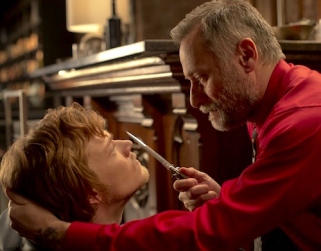
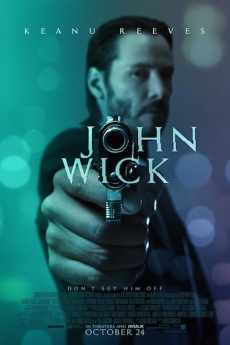 Keanu Reeves is John Wick, a nice guy whose wife sadly died. Now he lives alone with a puppy. Then he accidentally annoys a thug (Game of Thrones’ Alfie Allen) at a gas station, so he and his mates break into Wick’s house to teach him a lesson. The thug is the son of a big-time gangster (the Millennium trilogy’s Michael Nyqvist), so he does that kind of thing. They kill the puppy, but leave Wick alive. However, turns out Wick used to be an awesome assassin, renowned throughout the underworld — to everyone except this kid, it seems — and so he quite rightly sets out to execute their dog-murdering asses, consequences be damned.
John Wick is an action movie. I know you know that, but what I mean is, that’s kind of all it is. There’s no transcendent deeper meaning here; no attempt to explore the real life of a hired killer. If anything, this is an ultra-heightened universe, where the criminal underworld has an entire society and set of rules unto itself, including a raft of familiar faces in cameo-sized roles. It feels like it’s adapted from a comic book — they usually put that level of extra detail in more than films do — but it isn’t. There’s a rich world hinted at here; one that teases at more, but also supports the film. That is to say, there’s fan-driven talk of sequels and spin-offs set in this ‘universe’, but in and of itself it functions within the film, rather than simply being setup for more. It’s a better way to potentially start a “shared universe” franchise than the forceful way other studios are going about it with DC heroes / King Arthur / Robin Hood / et al, anyway.
 A decade and a half on from The Matrix, Reeves (and presumably an army of stuntmen) remains as capable an action hero as ever. Co-directors Stahelski and Leitch have an extensive background in that field (they first worked with Reeves on The Matrix and its sequels) and so they know what they’re doing when it comes to the shoot-outs, fist-fights and car duels. Unfortunately for John Wick I watched it soon after The Guest, whose singular style ultimately made more of an impression on me, but there’s no denying the virtuoso fight work on display here. This is a film for action movie fans to revel in — it has little to offer anyone else.
That said, this isn’t a straight-up Statham-style blockhead fight-fest. That unique, unusual world it sets itself up in sees to that. It has an almost mystical, fairytale quality to it. There’s no sci-fi or fantasy element, but it does feel like Wick descends into an alternate world, one hidden alongside our own. Tonally, at times it reminded me of Neil Gaiman’s Neverwhere (or the TV series it comes from, as I’ve never read the book). I suppose it’s because this criminal underworld has its own special rules, its own special locales, and an occasionally mannered way of talking and behaving. As I said, there’s no fantasy element, but it has a left-of-centre alternate-reality feel.
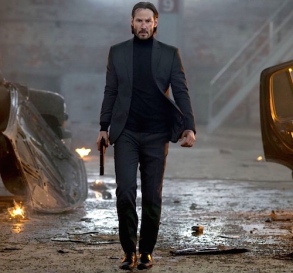 Combine that with the exciting, innovative, technically faultless action sequences and you have a distinctive, memorable movie. It seems to have gone down a storm with action movie fans, anyhow, and so those hoped-for sequels and/or spin-offs are most definitely in development. It’ll be interesting to see if it does what-I-call “a Bourne”, spiralling from a well-liked almost-sleeper-hit first film into an everyone-knows-it major franchise, or, well, not.

John Wick is released on DVD and Blu-ray in the UK on Monday.
* Leitch is uncredited as a director due to those DGA rules that meant Robert Rodriguez had to resign his membership to give Frank Miller his due on Sin City; that meant the Coen Brothers used to just be credited as “Joel Coen”. It’s pretty clear (especially if you watch the special features) that Stahelski and Leitch worked as a team, so for once I’ve ignored my rule of only crediting the credited director. ^
 If you’re not au fait with the
  as both sides attempt to rally ordinary people to their cause through the power of the media. It’s a tale that’s as timely as ever, surely.
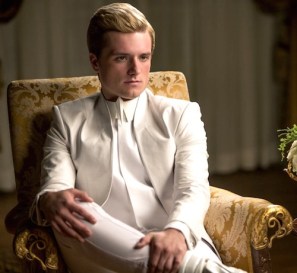 I must say that (as someone who hasn’t read the book) it didn’t feel overly like the first half of something longer to me. Of course there’s a cliffhanger and stuff, but there was at the end of the last film as well. This is no worse than that. If anything, I felt Mockingjay Part 1 built to its ending more successfully — I was quite surprised when
 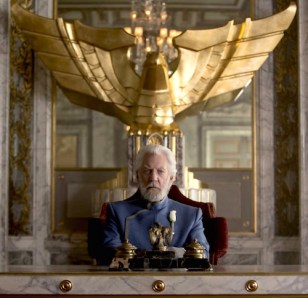 it may be your favourite instalment so far (and you wouldn’t be alone in that view). For me, Catching Fire is the best of the three because it crystallises both of those constituent elements; and if the first film was purely the action side (with a bit of the politics), then here we find its mirror image: purely politics (with a bit of action). Either way, perhaps the ultimate fate of all these films rests on how well
  Four years ago, DreamWorks’
  Tonally, DeBlois has been productively inspired by
  If there’s a flaw, it’s in some of the new characters. The primary villain is underused, introduced too late in the game to become a palpable threat. More time spent building him up, seeing his evil on screen rather than just being told about it, would’ve been appreciated. So too for the mysterious vigilante dragon-rider, who turns out to have a very significant role. The deleted scenes include a prologue that would have introduced the character at the start, which would have better established the mystery and import of their role. It’s clear why it was deleted (to focus on Berk and keep the initial tone light), but I still think it would’ve worked better in the film. In the final cut, the vigilante is mentioned all of once, then turns up and is unmasked about two minutes later. Really, though, these are niggles — even for them, the cumulative consistency is certainly better than, say, its Oscar conquerer
  Director Steven Soderbergh takes the methodology he used to depict the drug trade in
 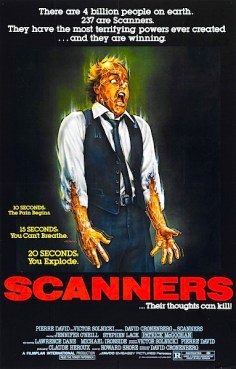 If you’re versed in sci-fi/fantasy cinema, you’ve heard of Scanners even if you haven’t seen it: it’s the one with the (in)famous exploding head. That moment is distinctly less shocking for those of us coming to the film as a new viewer at this point: gore perpetuates genre cinema nowadays, so it’s less striking,
 emotional journey or something is the core of the film. As if to make up for it, McGoohan is of course excellent, acting everyone else off the screen, while Ironside makes for an excellent villain, naturally. Some say that the final psychic battle, between Lack and Ironside, is underwhelming, but I thought it was excellently realised, a tense and effective struggle. Such brilliant effects and sequences are scattered throughout the film.
 Jon Schnepp’s widely-reviewed documentary about the batshit-crazy Nic Cage-starring Tim Burton-directed Superman movie that almost happened in 1999. If all you’ve seen are the photos of a stoned-looking Cage in a light-up abomination of a Superman costume that leaked onto the internet a few years ago, prepare to be amazed. Indeed, those infamous photos and footage are an aberration that this documentary explains.
 There seem to be an increasing number of “making-of documentaries about films that didn’t get made”, to the extent where it’s almost turning into a sub-genre. The highly-praised
 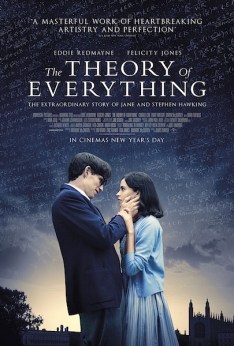 Biopic of genius cosmologist Stephen Hawking and his wife/caregiver Jane, on whose memoir the film is based.
 Louis Leterrier, helmer of the
  Their criticisms aren’t wholly unfounded: the characters are thin; at times it’s unclear which side we’re meant to be following or most invested in; the use of CGI in the magic somewhat undermines it; a good deal of the plot stretches credibility. Conversely, the credibility is questionable from very early on, so the counterargument goes that it’s the whole MO of the film — you don’t complain about Iron Man not being possible in real life, do you?
 Such a style certainly fits the magic world. I guess it’s just not to everyone’s taste.
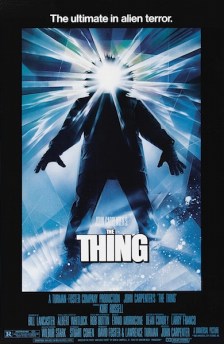 It’s just an ordinary day at the US Antarctic research base staffed by helicopter pilot MacReady (Kurt Russell) and his compatriots, until a helicopter buzzes overhead dropping grenades on a dog it’s pursued across the ice fields. The dog finds sanctuary in the US base; the helicopter and its crew are less fortunate. Realising it’s from a Norwegian facility an hour’s flight away, MacReady and the doctor brave inclement conditions to investigate. They find numerous corpses and the base burnt to ruins. What horrors befell the Norwegian base? And have they inadvertently brought them into their own…?
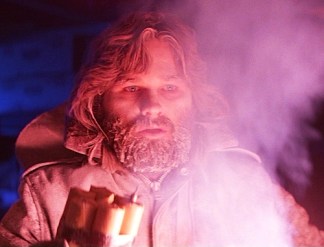 Even if you don’t want to get deep about it, The Thing has the “who’s human?” thrills to keep you engaged on that level. Accusations of boredom no doubt stem from the fact it’s a bit of a slow burn, the early acts building suspicion and unease as MacReady and co investigate. Even after the true nature of the threat is revealed, Carpenter paces himself, though the frequency of incidents begins to mount inexorably as we head towards the climax. Well, that’s just good structure.
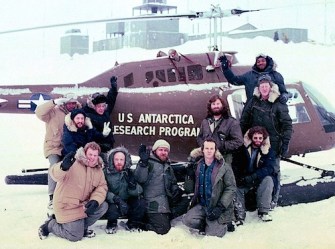 For me, it’s the psychological quandaries that are gripping and exciting, rather than any enjoyed disgust at the emetic special effects. However, knowing the characters a little better — thus caring if they’d been replaced or not, and also perhaps allowing us a chance to try to guess for ourselves — would have just made it that bit superior.
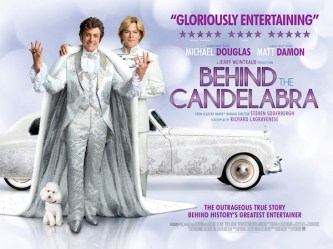 Steven Soderbergh’s supposed last-ever film (or, if you’re American, Steven Soderbergh’s first project after he supposedly quit film) is the story of Scott Thorson (Matt Damon), a young bisexual man in the ’70s who encounters famed flamboyant pianist Liberace (Michael Douglas) and ends up becoming his lover, which is just the start of a strange, tempestuous relationship.
 It looks great, too. The film, that is, not Rob Lowe’s face. The design teams have realised an excellent recreation of the period, which is then lensed with spot-on glossy cinematography by DP
  100Films.co.uk