

Country: USA
Language: English
Runtime: 103 minutes | 133 minutes (director’s cut)
BBFC: 15
MPAA: PG-13 (theatrical cut) | R (director’s cut)

Original Release: 14th February 2003 (USA, UK & others)
First Seen: cinema, February 2003
Stars
Ben Affleck (Pearl Harbor, Batman v Superman: Dawn of Justice)
Jennifer Garner (13 Going on 30, The Invention of Lying)
Michael Clarke Duncan (The Green Mile, Sin City)
Colin Farrell (Minority Report, Alexander)
Director
Mark Steven Johnson (Ghost Rider, When in Rome)
Screenwriter
Mark Steven Johnson (Grumpy Old Men, Ghost Rider)
Based on
Daredevil, a Marvel Comics superhero created by Stan Lee and Bill Everett.
The Story
Blind New York lawyer Matt Murdock defends the innocent by day, and by night uses his special abilities to bring the guilty to justice as costumed vigilante Daredevil. When crime boss Wilson Fisk, aka Kingpin, hires Bullseye to take out a business associate, the assassin frames Daredevil for the crime, which brings him into conflict with the businessman’s combat-trained daughter, Elektra.
Our Hero
Blinded as a child, Matt Murdock found his other senses heightened. Following the murder of his father, he trained in the law. Now by day he’s a defender of the innocent, and by night hunts the guilty as superhero Daredevil. Even though the film mixes in his origin story, it doesn’t take a “Year One” approach to his crimefighting, which makes a change of pace even now. (In recent years a lot of the blame for the film’s failure has been laid at Ben Affleck’s door, because it’s popular to bash ’00s-era Affleck. Rotten Tomatoes’ short summary of contemporary reviews tells a different story, stating “Ben Affleck fits the role” as one of the film’s key qualities.)
Our Villains
Coming off the back of The Green Mile, Michael Clarke Duncan was the obvious chap to step into the giant shoes of Hell’s Kitchen’s crime lord, Wilson Fisk, aka Kingpin. The real fun comes courtesy of Colin Farrell’s crazy, campy killer, Bullseye, who enlivens the film any time he’s on screen.
Best Supporting Character
Jennifer Garner is terribly miscast as Elektra, really, but she makes a fair fist of it nonetheless, and the film doesn’t shy away from the outcome of that storyline.
Memorable Quote
“Hey, that light, at the end of the tunnel? Guess what? That’s not heaven… that’s the C train.” — Daredevil
Memorable Scene
Matt and Elektra spar in a children’s playground. It’s a scene some people despise, probably because of what it thinks passes for dialogue, but you can’t say it doesn’t stick in the mind.
Memorable Music
If you were of the right age and disposition back in the early ’00s, the Daredevil soundtrack was more influential than the film itself. It was partly responsible for launching gothy rock group Evanescence, who you may remember for Bring Me to Life, which was on the film’s soundtrack and was their biggest hit (it was #1 here for four weeks). I think they’re still going, despite numerous changes of line-up, though they release albums once in a blue moon.
Letting the Side Down
“All of it!” Oh, hush, you.
Making of
Originally greenlit as a relatively low-budget film, at roughly $50 million, during shooting Sam Raimi’s Spider-Man was released and became a huge hit (it was the first film to gross over $100 million in one weekend). Consequently, Fox upped Daredevil’s budget to $80 million, specifically to “enhance the film’s visuals”. I guess that’s where all the Spider-Man-esque CGI tumbling came from, then.
Previously on…
Although this is the first full-blown adaptation of Daredevil to actually make it to the screen, he’s turned up in other characters’ series down the years, including both live-acton (1989 TV movie The Trial of the Incredible Hulk, which starred John Rhys-Davies as Kingpin) and animation (episodes of the ’90s Spider-Man and Fantastic Four series).
Next time…
Although no sequel was forthcoming, Jennifer Garner starred in spin-off Elektra. Whatever you think of the 2003 Daredevil, Elektra is much, much worse. Numerous attempts at a reboot movie faltered, until the rights reverted to Marvel Studios, who used the property to kick off the Netflix arm of the MCU. As much as I like the movie, the TV series is much better. Season two is released this Friday, so if you’ve not seen any then you’ll soon have 26 episodes to catch up on, you lucky thing you.
Awards
1 Razzie (Worst Actor (Ben Affleck, also for Gigli and Paycheck))
1 Razzie nomination (Worst Actor of the Decade (Ben Affleck, also for everything else he did in the ’00s))
1 Kids’ Choice Award nomination (Best Female Butt Kicker)
2 MTV Movie Awards Mexico nominations (including Best Colin Farrell in a Movie (it lost to S.W.A.T.))
What the Critics Said
“This is the Unforgiven of superhero films. Conventions are turned on their head, twisted, questioned. […] In almost every superhero film, there’s another conventional scene where the villain has the hero cornered and helpless. Yet the villain never unmasks the hero. That scene drove me nuts in Spider-Man. […] In Daredevil, no one ever hesitates to unmask DD. That’s what I mean by this being a film grounded in reality. People act real, do real things. Even if they are wearing silly costumes.” — “Dr. Michael Hfuhruhurr”, Ain’t It Cool News
 Score:
 44%
44%What the Public Say
“Colin Farrell is deliciously hammy and steals every scene he’s in, showing he’s having a total blast (and to be honest, the hamminess suits Bullseye). Michael Clarke Duncan is PERFECT casting for Kingpin, for his size, stature, overall menacing feel. And honestly, I like Ben Affleck in this, too. He makes me believe he’s blind. He makes me believe that he’s a broken, tortured character who tries to put on a brave face in front of his friends.” — Nick Piers

The runt of the litter when it comes to the (first) modern explosion of superhero movies, Daredevil has, believe it or not, always had its fans. The darker tone than contemporary X-Men or Spider-Man films works in its favour in that respect, though I know not everyone feels that way. Ben Affleck actually does a solid job as the titular hero, while Michael Clarke Duncan was perfectly cast as hulking villain Kingpin. Most enjoyable, though, is Colin Farrell’s finely-judged camp craziness as henchman Bullseye. Okay, the Netflix series has now easily surpassed it, but the Daredevil movie is still a moderately underrated film for its era. (The Director’s Cut is apparently much better, too, though I’ve still not made the time for it.)

Season two of Marvel’s Daredevil is available on Netflix from Friday.
#20 will be next… with character actors planning genocide.
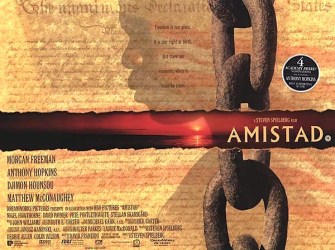 Feeling in need of more intellectual fare after helming
  Though Spielberg is certainly not immune to the Africans’ plight — the depiction of life on a slave ship is appropriately harrowing — it’s clear from early on which side he expects us to identify with, in terms of cultural background if not shared morality: as survivors of the mutiny talk the next day, the slavers’ Spanish dialogue is subtitled but the slaves’ African dialect is not. It’s a simple but effective technique to align us with one side — as I say, not morally (in no regard is Spielberg trying to apologise for the slavers), but socially. Unfortunately, it’s not sustainable: later, when we need to understand the Africans to follow a scene’s point, their dialogue is suddenly subtitled, and from then it’s sporadically translated as needed. I can see why that choice was made, but it makes the unsubtitled bits feel like a cheat.
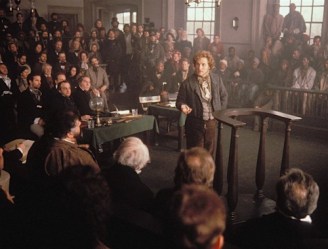 This can be said of Spielberg’s approach to the drama, too. Some of the courtroom stuff is suitably mired in legal technicalities and argument, but by film’s end it gets a little bit too… what’s the word? Not “preachy”. Not “sentimental”, exactly, though it’s born of that old criticism of Spielberg. “Melodramatic” may be on the money, though. It doesn’t help that everything reaches a climax — not only narratively, but also in the way it’s written, shot, acted, and scored — only for it to be revealed that it’s just the end of act two. Okay, that’s the truth of what happened (or near enough, for the purposes of this dramatisation), and by adapting it in that way it emulates the emotions the characters experienced; but from the audience’s perspective, you feel like you’ve reached the end… only to be served up another half-hour of movie. And it’s a long film too, so you feel that. It gets by because it’s fundamentally a good film, with strong performances and technical merits, but it’s a little bumpy for a bit.
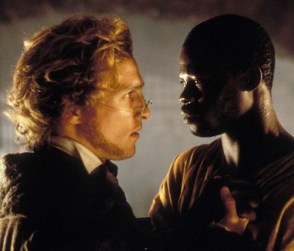 It’s easy to criticise Amistad, because Spielberg makes the production of very good movies look effortless, so the missteps stand out all the more. The story of La Amistad and its ‘cargo’ is a powerful one, and Spielberg has — naturally — turned it into a good film; but by remixing history to over-egg the message, it loses a little something. A valiant effort, but a film like
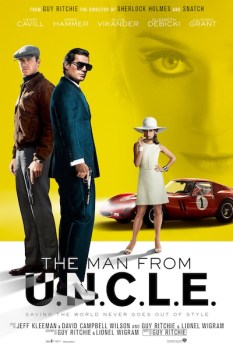 Guy Ritchie is a self-confessed non-fan of the classic ’60s spy-fi series
  I appear to be coming at director Ben Wheatley’s films in reverse order (having covered
 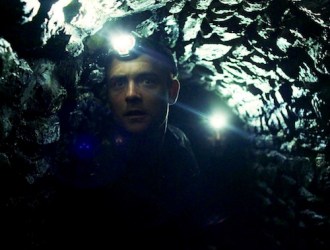 Kill List mixes in its genre elements — and they’re elements from a couple of different genres at that — so gradually that, as I said, it’s hard to discuss them without spoiling the film. (Much like the film itself, this review is getting progressively more revealing, so jump off when you’ve had enough.) It’s kind of a compilation of traditional British movie genres: we begin with kitchen sink, then discover we’re actually watching a crime film, before the final act swerves (though not without foreshadowing) into folk horror. The skill of Wheatley, and his co-writer Amy Jump, is in not making these transitions too implausible. That’s not to say they’re not surprising, but the doom-laden music, inexplicable proclamations by some characters, and a couple of very strange events should all clue the viewer in to the film not being a common-or-garden hitman flick.
 The final act is naturally where the film reveals its overarching purpose… or rather doesn’t reveal, because there are a shortage of answers here. It’s a lot more straightforward than A Field in England, but it still offers few (or, some would say, no) explanations for what’s occurred. According to Wheatley, the screenplay was more explicit about what was happening and why, and so was some of what they shot, but he cut back on the exposition to leave it up to audience interpretation. This isn’t a film to passively watch and have everything explained, but even viewers prepared to do a little work for themselves may find it frustrating.
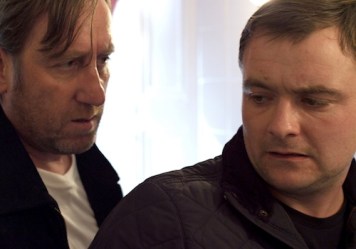 Memorable sequences keep it ticking over throughout — and so they should: taking inspiration from the likes of Kubrick and Stephen King, Wheatley started from specific images and worked backwards to a plot. Here, I think that method has been effective. The abstruse ending won’t be to everyone’s taste, but the journey there is worth experiencing.
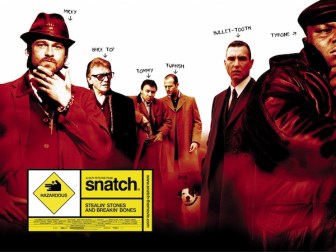 Guy Ritchie’s second feature met with relative indifference 16 years ago, consensus deeming it
  Well now, hasn’t this been a long time coming? Just over two years since its western disc release was first announced, just over three years since it debuted in Japanese cinemas, and just over four-and-a-half years since
  Change, and the embracing or rejection of it, is surely one of the major themes of Evangelion. This is more explicitly debated as 3.33 moves into its middle section, where we get an extended dose of Shinji’s traditional insecurities. Hey, it wouldn’t be Evangelion without Shinji having a self-pitying whinge, right? Fortunately there’s more going on than that, but this is a section light on action and heavy on the series’ more thoughtful elements. There are answers to some of the mysteries, but it again wouldn’t be Evangelion if it all made easy sense. At the same time, Shinji bonds with new Eva pilot Kaworu. A controversial character, apparently, and not just because of the homosexual overtones (which some reviewers claim to miss, presumably because they’re blind), but the scenes where they harmonise by playing piano together are quite fantastically animated.
 3.33 divides quite neatly into three half-hour sections. I guess that should be expected, as the whole tetralogy has been based in traditional Japanese ideas of narrative/musical structure, hence the films’ Japanese titles incorporating the names for the three movements: jo, ha, and kyū (序破急), which roughly equate to “beginning”, “middle”, and “end”. As discussed, the first is fantastic, some of the best material in the entire series, in my estimation. Also as discussed, the second is a lot slower, but has its plus points too. The third… ah, the third. Here we get some more action, which will please anyone who thrills to Eva combat, but it is also utterly mind-boggling. I’ve been reading up on a few fan sites since watching, and I’m still not absolutely sure what was going on or what it signified. You won’t find any enlightenment in the disc’s special features, which present a long list of extras at first glance, but turn out to be 19 repetitive trailers, TV spots, and promo reels. Yes, nineteen.
 So when will that conclusion come? Well, a few years ago Anno ‘joked’ that the finale might be released “four to six years” after 3.33. As we’re already almost at four years with no sign of a release date, I guess it wasn’t so much of a ‘joke’ after all. An English-friendly DVD/Blu-ray will inevitably take an additional couple of years, too. So an indefinite, but undoubtedly lengthy, wait begins…
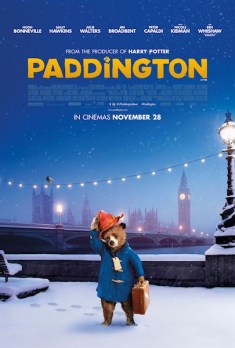 The signs weren’t good for Paddington as it geared up for release: its star voice actor, Colin Firth, pulled out late in production; on posters, the CGI lead character looked like the personification of the uncanny valley; and the BBFC rating that cited “sex references” made it sound like it had entirely the wrong tone for an adaptation of a beloved classic children’s book. But these portents were quickly consigned to history when the film received an adulatory response from critics and audiences alike.
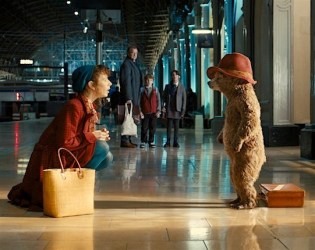 The rest of the cast are all very safe pairs of hands, meaning viewers can rest easy that, if there is a weak link, it won’t come from the performances. This is further cemented by supporting turns from the likes of (in order of appearance) Geoffrey Palmer, Imelda Staunton, Michael Gambon, Matt Lucas, Peter Capaldi, and Jim Broadbent, plus a host of faces viewers may recognise from British TV comedy.
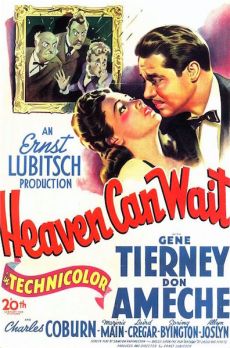 My first experience of Lubitsch’s US output concerns a man who arrives on Hell’s doorstep and reflects on his life to explain why he’s there.
 The 24th official James Bond movie had a funny old ride on its cinema release a few months ago. It started well, with near-universal praise from UK critics; audience reaction was more mixed but erred towards the positive; then US critics tore into it, and US audiences (as usual) followed suit. The latter seems to have become the more accepted view, with the consensus seemingly that it’s decent enough, but a definite step down from the high of
 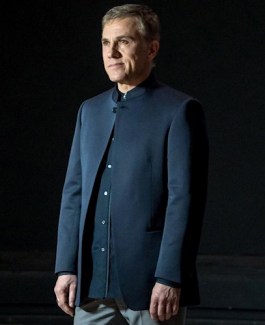 Spectre, to put it bluntly, pulls a
 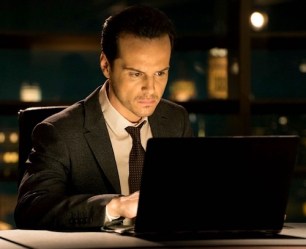 retaining the same general thrust. I still don’t think it works. There’s too much of M, Q and Moneypenny sat in an office trying to stop a man typing something into a computer (more on this in a minute), while Bond is busy running around a building and shooting at a helicopter. Personally, I’d’ve thrown it out and started again, but I guess they’d run out of time, and maybe it was better than the alternative.
 No, of course it isn’t, and it never was; but the point of Bond has never been realism. And besides, the reason you cast quality actors in minor roles is so they can pop in for a day or two and make their one scene exceptionally good. Bulk their part up if you’ve got a story to tell, by all means, but don’t shoehorn them in just because you’ve got them. For my money, Spectre is too much doing the latter.
 Or perhaps they’re just planning to go

 100Films.co.uk