Another Earth (2011)

2017 #15
Mike Cahill | 92 mins | streaming (HD) | 16:9 | USA / English | 12 / PG-13

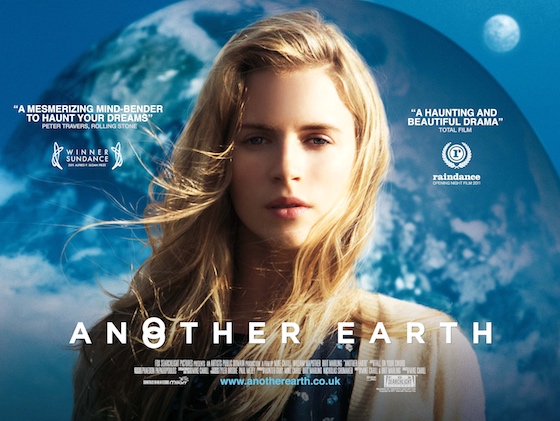
Another Earth

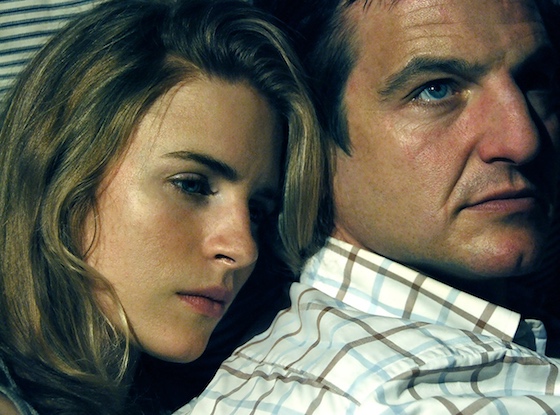
Driving home drunk, 17-year-old Rhoda (Brit Marling) hits another car, leaving its driver, John (William Mapother), in a coma and killing his pregnant wife and their young son. Released from prison four years later, her grand life plans abandoned, Rhoda seeks out John to apologise, but when he doesn’t recognise her she pretends to be from a cleaning service and becomes his maid. Meanwhile, a planet that seems to be a mirror image of Earth has appeared in the sky and one member of the public can win a place on an exploration mission.

Bit of a curveball, that, isn’t it? The main thrust of the film is a very grounded character drama about two emotionally damaged people and how they connect with each other, but there’s this big old sci-fi plot ticking away in the background — one which is referenced in the title of the film and all its marketing too, which immediately elevates its importance in the film: it’s not just a funny little background quirk, it’s central to what’s happening or will happen.

By combining these two disparate genres Another Earth moves outside the accepted norms of either, which seems to discombobulate some viewers. I’ve seen it decried for not ditching the sci-fi stuff to focus on the characters’ emotional situation and relationship, and the same for not ditching the emotional stuff to focus on the sci-fi concepts. Personally, I think the film is doing exactly what it sets out to do: using aspects of each genre to comment on, reflect, and influence the other. That’s not to say it’s in some way a deconstruction of genre — it’s not working with tropes or clichés, at least not deliberately — but I mean it’s using a sci-fi idea to influence what could just be a straight-up dramatic story, and using a realistic human drama to explore a sci-fi concept from a different angle. Truth be told, I think some people can’t quite handle that. Of course, some people just think it doesn’t do it very well, which is fine. I thought it was at least interesting.

Emotionally damaged

Perhaps it doesn’t help that some of it looks like shit, as if it was shot by some inexperienced amateurs using their home movie camera… which it was. After having the idea for the film, co-writer/director Mike Cahill and co-writer/star Marling began shooting it using just an HD camcorder, even before they’d secured any funding. Well, haven’t they done well for themselves? Still, there are worse-looking movies.

Another Earth may not please those looking for a straight science-fiction movie, nor those after a grounded character drama, but for anyone open to a combination of the two — a plausible, human-scale take on a high SF concept — it’s certainly worth a look.

4 out of 5

Justice League (2017)

2017 #157
Zack Snyder | 120 mins | cinema | 1.85:1 | USA / English, Russian & Icelandic | 12A / PG-13

Justice League

This review contains spoilers, but only for stuff everybody knows.

DC’s answer to Avengers Assemble begins with a doom-laden cover of Leonard Cohen’s Everybody Knows (a Zack Snyder music choice if ever there was one), and there’s a lot that “everybody knows” about the troubled production of this long-awaited superhero team-up. Everybody knows that the so-called DCEU was deemed to be in need of a course-correction after Batman v Superman. Everybody knows that this was to take the form of making this film tonally lighter, something Snyder and co said was always the plan. Everybody knows Snyder eventually had to leave the project for personal reasons. Everybody knows Joss Whedon was brought in as his replacement. Everybody knows that meant reshoots and an attempt to lighten the tone further. Everybody knows that was a recipe for a conflicted movie…

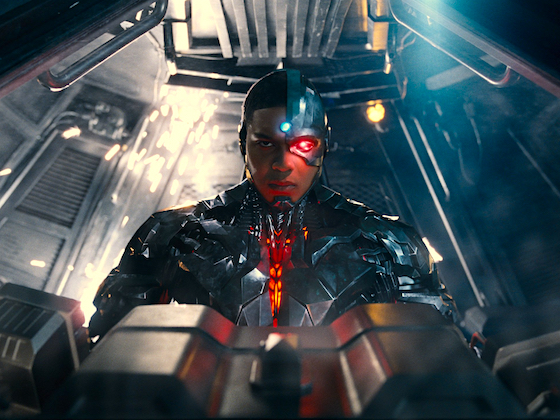
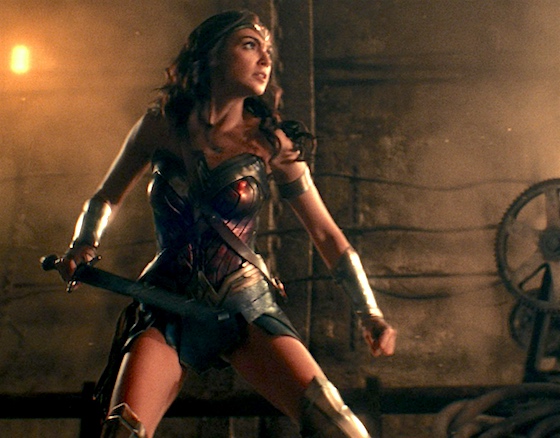
For those who are thinking “I didn’t know any of that” and aren’t so familiar with superhero things on the whole anyhow, Justice League is set in the aftermath of Superman’s self-sacrifice at the end of Batman v Superman, which has given Bruce Wayne aka Batman (Ben Affleck) a change of heart: he wants to make the world a better place. When he discovers than an alien invasion is imminent, he teams up with Diana Prince aka Wonder Woman (Gal Gadot) to put together a team of metahumans (read: people with superpowers) to fight it. That team includes Barry Allen aka the Flash (Ezra Miller), Arthur Curry aka Aquaman (Jason Momoa), and Victor Stone aka Cyborg (Ray Fisher) — and, following an opportunity to revive his cold dead corpse, Clark Kent aka Superman (Henry Cavill).

The new trinity?

Justice League has certainly provoked a mixed reaction from critics and opening weekend audiences. It was always going to: Batman v Superman has been very divisive, with critics largely hating it but a dedicated fanbase to be found without too much digging. Justice League compounds that issue by trying to appease critics, risking alienating fans in the process. The end result inevitably falls somewhere between the two stools, which means there’s no predicting what any one person will make of it — following social media the past couple of days, I’ve seen every possible combination of people who loved, liked, hated, or were indifferent to previous DCEU films and now love, like, hate, or are indifferent to Justice League.

So, my personal reaction is that I enjoyed it. On the whole it’s not as thought-provoking as BvS, but is instead a fun time with some good character bits thrown in. From early reviews I feared the whole story would be choppily edited, and the opening act is indeed a bit disjointed and jumpy, but the closer it gets to the team being assembled the more it settles down. Once they’re together, it’s a fairly straightforward action-adventure movie, with the heroes in pursuit of the villain to stop his world-ending plan. Unlike BvS it’s not full of portentous (or, depending on your predilections, pretentious) themes to ponder, but it’s still a reasonably entertaining action movie.

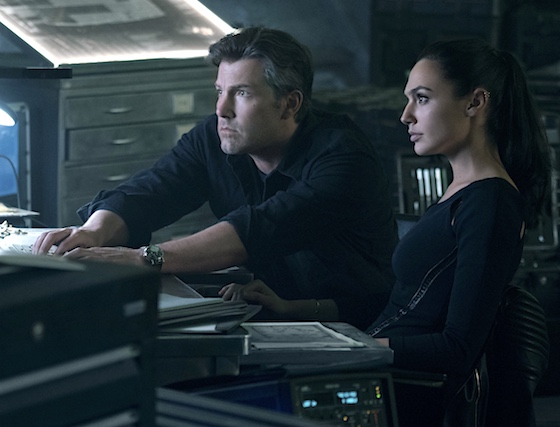
Bruce and Diana

As for those character bits, it completes arcs for Bruce and Diana that have played out over their past couple of movies, both of them opening up to the world and their place in it. Moments that emphasise Bruce being old and tired and Diana stepping into the role of leader seem to have been added during reshoots, no doubt indicating the future direction the DCEU is now reported to go in — Affleck stepping away in the not-too-distant future; the popular Wonder Woman becoming central to the universe. (As a Batman fan, I hope this doesn’t kill off the raft of Bat-family films they’ve been planning. We’ll see.)

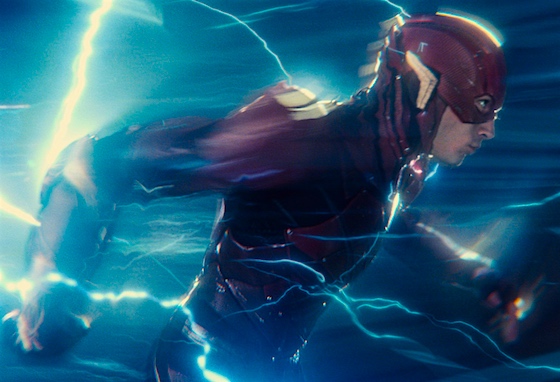
For the new team members, it does a solid job of introducing the Flash and making him likeable — he’s under-confident but good-hearted and funny. Fans of the currently-running TV show may find he’s “not their Flash”, and his costume is one of the worst ever designed, but I’ve never been that big a fan of the series and I can live with the costume. Cyborg gets a mini-arc that works well enough, considering he’s mainly there to be a walking talking plot resolution. Aquaman’s also OK, but a good chunk of his part feels like a tease for his solo film — which, by total coincidence, is the next DCEU movie. This all might’ve been more effective if DC had gone the Marvel route of introducing everyone in solo films first, but the film makes a fair fist of the hand it was dealt.

Flash! Ah-ah!

And as for Superman… well, that’s a whole kettle of fish. Firstly, it’s the worst-kept open secret in the history of movies. The final shot of BvS was a clear hint he’d return, so there’s that for starters. Then early promotional materials included him; behind-the-scenes photos referenced him; when reshoots rolled around, the fact they’d have to deal with Henry Cavill’s Mission: Impossible 6 moustache was big news. Despite all that, they left him off all the posters and out of every trailer. Would it have made a difference if they’d publicly acknowledged he was back? Who knows. Let’s judge what we were given.

In short, he’s not in it enough. The story of his resurrection is a decent idea, but the film has to rush and condense the arc of his return, presumably because Warner were pushing for a lighter tone and brisk running time. How his return affects him does complete the overall story that started in Man of Steel and continued through BvS — the story of how an ordinary young man with extraordinary abilities develops into the paragon of virtue that Superman is to many people. Honestly, I believe this was (more or less) Snyder and co’s plan all along, and those haters of Man of Steel and BvS who now say that “Justice League finally got Superman right” have perhaps misunderstood how something like character development works. (Should that entire character arc have been contained in the first movie? I think that’s a different argument — in our current franchise- and shared-universe-driven blockbuster era, character arcs are routinely designed to play out across a trilogy.)
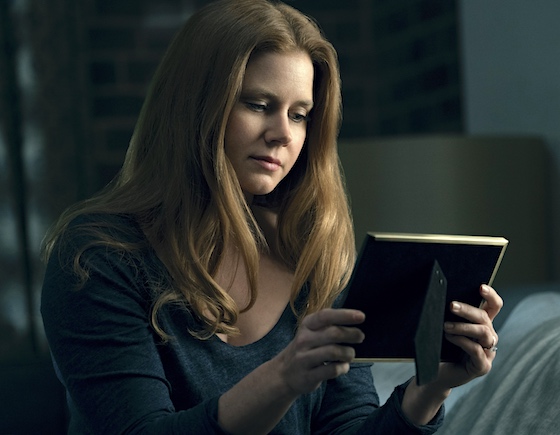
There are no official photos of Superman from this movie, so here's a photo of Lois Lane looking at a photo of Superman
There are no official photos of Superman from this movie,
so here’s a photo of Lois Lane looking at a photo of Superman.

Much attention has also been focussed on the ridiculousness of the moustache removal — both how funny it always was, and how poor the end result is. Honestly, I don’t think it’s as bad as you may’ve heard. I’d wager most people won’t even notice, especially if they’re not looking for it. It’s the kind of thing film buffs see because they’re looking and, yeah, sometimes it’s not great. Personally, I didn’t even think it was the worst computer-generated effect in the movie. Main villain Steppenwolf looks like a character from a mid-range video game, and has about as much personality as one too. There’s terribly obvious green screen all over the place, which is undoubtedly the result of reshoots — sometimes it crops up mid-scene for no obvious reason, other than because they’ve dropped in a new line. Other effects — stuff they’ve probably been working on since principal photography — look fine.

Naturally the effects drive all of the action, for good or ill. Some have said these sequences are entirely forgettable, which I think is unfair. There’s nothing truly exceptional, but how many movies do manage that nowadays? I’d say what Snyder offers up is at least as memorable as your typical MCU movie, which is presumably what critics are negatively comparing this to. The everyone-on-Superman punch-up is probably the high-point, with an effective callback to “do you bleed?” and a striking moment when Superman looks at the Flash (that sounds completely underwhelming out of context…) I also thought the desperate escape with the Mother Box on Secret Lady Island was a strong sequence. The big tunnel fight has its moments, but needed more room to breathe and a clearer sense of geography. The climax is a great big CGI tumult, which clearly aims for epic but is mostly just noise — again, with one or two flourishes.

AQUAman

Another late-in-the-day replacement was Danny Elfman on music duties. It’s proven controversial — turns out there are a lot of fans of Hans Zimmer and Junkie XL’s work on the previous Snyder DCEU films. Personally, I think Elfman’s score largely works — its numerous callbacks to classic themes are better than Zimmer’s musicless thrumming. There’s a massive thrill in hearing Elfman’s iconic Batman theme again, and John Williams’ even-more-iconic Superman theme. In his work on Man of Steel and BvS, Zimmer never produced anything even close to that memorable. Elfman’s style works other places too: an early scene where a bunch of criminals take a museum hostage immediately brought to mind the feel of Tim Burton’s Batman for me, mainly thanks to Elfman’s score. That’s no bad thing in my book.

The biggest point of discussion swirling around the film this weekend, in many circles at least, has been “which bits were Snyder and which were Whedon?” According to one of the producers, the final movie is 80-85% what Snyder shot during principal photography, making 15-20% what Whedon added during reshoots. Not a huge amount, but also not inconsiderable. Personally, while I felt some Whedon additions were glaringly obvious, it also felt to me like a shot or line here and there rather than whole chunks of the movie. I think they’ve done a better job of integrating it than some have given them credit for. I put this down to some people thinking any humourous line must be a Whedon addition, but we know that isn’t the case — they were showing off lighter stuff during press set visits and in the initial footage previewed at conventions, both of which were long before Whedon became involved in re-writes, never mind reshoots. The lighter tone was intended from the off, Whedon just added even more of it.

Born 'borg

For those interested, someone who worked on the film has posted a very long list of changes, attributing various bits to Snyder and others to Whedon. There’s also this tweet, which says Snyder’s original cut went down badly with WB execs (hence why Whedon was sought out) and that the vast majority of Superman’s role was reshot to change it entirely — supposedly all that remains of Snyder’s Superman are his action beats (though Whedon added some more), the final scene with Bruce (“I bought the bank”), and maybe one or two other individual shots. This, then, would be Whedon’s biggest contribution to the film. Some love him for it, others not so much. There seems little doubt this is a lighter, more fun Superman. I liked him, though it can’t hurt that I have a bit of a soft spot for Henry Cavill.

Generally speaking I’m a fan of Whedon — I grew up with Buffy; I’m certainly a Browncoat — but I think his additions (assuming those accounts are accurate) are a mixed blessing. Most vital is all the character stuff he’s slotted in, some of which really adds to the movie — Batman’s pep talk to the Flash about “save just one person” was a highlight, I think. The jokey dialogue sometimes lands, sometimes feels forced — the obvious insert of Batman complaining “something’s definitely bleeding” feels incongruous. I’ve seen some complain that he added too many pervy shots of Diana’s ass in that short skirt or those tight trousers, but then whenever I noticed such shots they were in footage that’s been attributed to Snyder, so who knows.

Well if you wear a skirt that short what do you expect to happen?

Everything to do with the Russian family was certainly Whedon, which I’d rather suspected. I mean, there are civilians there to add stakes to the final battle, so that it’s not just the villain being villainous in the middle of nowhere, but why is it that just one family lives there? Because they were added during reshoots and there was probably neither time nor money for crowds of people, that’s why. Their subplot could’ve been integrated better (it felt like they kept just popping up for no reason), but I liked the eventual pay-off with the Flash and Superman saving them — the Flash saving one carload while Supes flies past with an entire building is the kind of humour I think works in this film.

Justice League is a different movie for Whedon’s involvement, that seems unquestionable. Is it better or worse? That’s partly a matter of personal taste. As my taste stretches to include both directors’ works, I can see positives and negatives every which way. My ideal cut of the movie would likely keep some of Whedon’s additions but lose others, as well as reinsert some Snyder stuff they cut. There’s no pleasing everyone, eh? (If you want to see some of what was definitely cut, there are various shots in the trailers, and someone’s leaked eight short clips from Snyder’s version — mostly of unfinished CGI, but one reveals what Iris West’s role was. (If those clips are even still there by the time you read this, of course…))

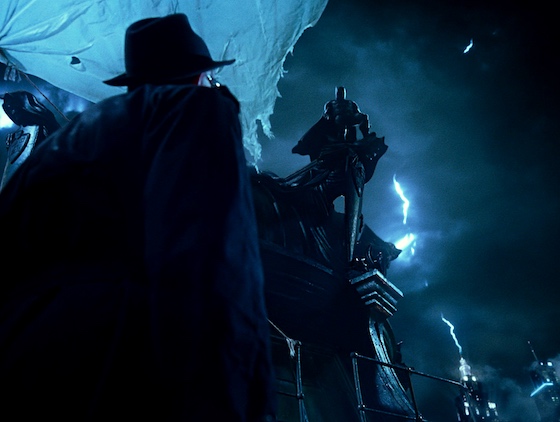
The Batman

Finally, the post credits scenes. It’s obvious that the first is a Whedon addition (confirmed by the above breakdown) — it’s just a little coda that doesn’t add anything other than some fun. The second scene, however, is an odd one, because it feels like it’s teasing a movie that’s been uncertain for a long time. If it’s setting up The Batman (because Deathstroke was meant to be that film’s villain), well, we know director Matt Reeves is massively reshaping whatever Affleck had planned, quite possibly ditching Deathstroke altogether. If it’s setting up Justice League 2 (because Lex Luthor’s back with a team-building plan of his own), well, who knows if that’s even happening anymore? It was originally planned this movie would be Justice League Part 1 and be closely followed by Justice League Part 2 — presumably that’s why Steppenwolf is the villain, because he was meant to lead into Darkseid (it’s long been reported that a cliffhanger ending to set up just that was cut by Whedon) — but I believe Part 2 has gone MIA from the schedule, and with Affleck now making definitive noises about wanting out of the franchise… Well, who knows what’ll happen.

Back in the present day, Justice League is set to underperform at the box office this weekend: predictions have been revised ever downwards over the past few days, to the point where it’s now at under $100 million — which is kinda funny because it feels like everyone’s talking about it. I guess that’s the difference between “film Twitter” and movie blogs compared to regular folks. Movie Nerds v Regular People: Box Office of Justice, or something. Funny thing is, for all the hatred these DC movies have attracted, they don’t half get people talking. As I saw someone point out on Twitter the other day, you may not’ve liked Batman v Superman, but it’s more than 18 months later and you’re still talking about it. I can’t even remember which Marvel movie was out 18 months ago without looking it up. This is no doubt a simplification — not everyone’s still arguing about BvS, and one of the reasons Marvel movies don’t stick so long is that they produce so darn many of them — but I do think Marvel films give you fun for a couple of hours, and you can call them to mind again if prompted, while DC films stick around, turning over in your mind, love it or hate it. At least for some of us, anyway.

All in

With Justice League, there’s the added complications of its multiple directors and fraught production. Should we judge a film for what it could have been or for what it is? The latter, surely. The former is definitely an intriguing proposition, but not what’s in front of us (and, as the likes of Blade Runner, Alien³, and Superman II have shown, maybe one day we’ll get a chance to judge that movie anyway). Nonetheless, how much should we take into account the behind-the-scenes issues? Should we just pretend they don’t exist? I guess for a lot of regular moviegoers this isn’t even an issue, but for many of us film-fan types it’s hard to put aside the knowledge that this movie was the product of two directors with very different styles and very different production timeframes.

I don’t have any easy answers, I’m afraid. All I know is that Justice League is far from perfect, but I enjoyed it nonetheless.

4 out of 5

Justice League is in cinemas everywhere now.

Wonder Woman (2017)

2017 #81
Patty Jenkins | 141 mins | cinema | 2.35:1 | USA, China & Hong Kong / English | 12A / PG-13

Wonder Woman

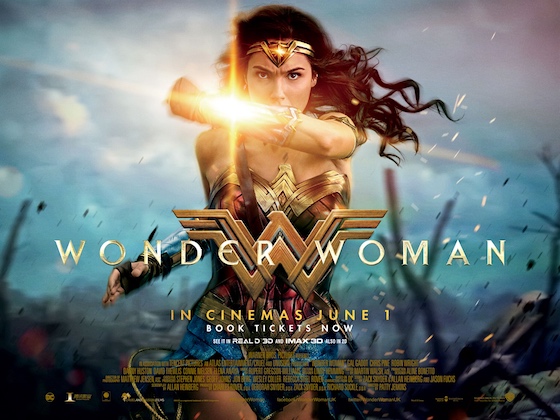
Following Wonder Woman’s introduction in Batman v Superman: Dawn of Justice (her central role in that film’s final act surely being the inspiration for its terrible subtitle), here we flash back in time to learn her origin — of her childhood on a hidden island of warrior women; of the events that brought her into our world; and of what made her keep quietly to the sidelines for almost a century.

The fourth film in DC’s shared cinematic universe, commonly dubbed the DCEU, is by far its best reviewed to date. It’s also the first superhero movie of the modern era (i.e. post Iron Man) to be based around a female character. I can’t help but think one has a lot to do with the other, because, in my estimation, Wonder Woman is not massively better than or different to the action-adventure blockbusters we get several of every year — the only exception being, of course, that it stars a woman. While that is undoubtedly important, and its meaningfulness can apparently not be understated, it doesn’t automatically elevate the quality of the rest of the movie. Or maybe it does for some people — maybe “the same, but with a woman” is enough to make it a genre classic.

The film’s strongest feature (gender politics aside) is its cast. Gal Gadot is fantastic — it’s no wonder this role seems to have made her an instant star. Chris Pine also gives a likeable performance, while Lucy Davis nails the comedic support. Also of note are the strong Amazonian ladies who shape Diana’s childhood, Connie Nielsen and Robin Wright. On the other side of the fence, Danny Huston is pretty much wasted, while David Thewlis ultimately feels a little miscast.

If anyone can take a sword to a gun fight...

The action is very much from the Zack Snyder school — an inexplicable mix of slow-mo and almost-sped-up (or speed-ramped, as it is either known or people have become fond of calling it). Fortunately it doesn’t degenerate into this all the time — while it was a neat effect when it was new, now it feels derivative and overdone. The rest of the action is of mixed quality: some of it is exciting and well-staged, but at other times succumbs to the modern foibles of shooting it too close and cutting it too fast. The climax is a disappointingly bland CGI-athon, which goes on and on as if someone is stalling for time while they try to think how to end it.

The third act as a whole is probably the film’s biggest problem. The opening stuff on Secret Lady Island is all great; the middle stuff in London is often fun; and there’s some dramatic stuff when Diana & co first arrive on the front lines. It does drag a little in places, mainly when we get the umpteenth go-round of Diana and Steve debating their relative morals; but it’s as the film tries to bring itself towards a conclusion that it really begins to flounder, forcibly manoeuvring our heroes into a position to actually face the villains (who we’ve been seeing on-and-off in scenes where the only purpose is to remind us those characters exist). For instance, there’s a party scene which serves very little purpose. It’s not a bad idea for a sequence (even if it is a well-worn one), but it doesn’t contribute much to justify its existence. You could cut it entirely and nothing would be lost.

Undercover woman

Even after the climactic battle, some things just aren’t rounded off. Like, how Secret Lady Island sort of just disappears from the story (does Diana want to get back there? Does she try? What’s happened to it now Ares is dead?) There’s no closure given to the supporting cast either; and, as the inevitable sequel is reportedly to be set in the present day, I doubt there ever will be. They may not be the greatest or deepest characters, but Davis at least feels like she needs a final moment (there’s one included on the Blu-ray, at least, though it feels like it was intended as a post-credits tease that someone thought better of).

I don’t want to try to ‘mansplain’ (*shudder*) away the significance of either Wonder Woman as a character or this Wonder Woman movie to female audiences both young and old. It’s fantastic that there’s a strong, capable, independent, successful role model being presented in the blockbuster arena. It’s brilliant that it was also directed by a woman, something all too rare in movies as a whole, never mind big-budget ones (though note that none of the three credited screenwriters are female). It’s marvellous that it’s been such a big box office success, proving that these issues are important, and that Hollywood’s received wisdom that “female superhero movies don’t sell” is exactly as bullshit as it always has been. And, actually, all of that is good for men and boys too — to be exposed to such high-profile representations of women that are more than just objects of desire or support for their own endeavours. That’s part of how you begin to change thinking and status in the wider world.

Climbing the ladder of progess, or something

But, if you set societal significance aside, I don’t think this particular film is any better, nor any worse, than your averagely good male-led blockbuster. And that’s okay. I like those films. It’s important to have female leads in movies at the same level as their male counterparts. But I think some people have got carried away, hailing a film that’s averagely-good as being incredibly-great just because it has a female protagonist. In some respects, maybe they’re right, just to make the point (I won’t be surprised if the same thing happens next year with Black Panther and heroes of colour). But there’s been talk of Wonder Woman launching a Best Picture campaign, and I feel that’s just a little bit daft.

Still, let’s not end on a down note. I enjoyed Wonder Woman a lot, even as it exhibited many of the flaws — and, equally, many of the successes — found in most blockbusters nowadays. It’s a good blockbuster, and its significance in terms of little girls (and boys) seeing a strong, capable female hero is immense.

4 out of 5

The latest DCEU movie, Justice League, is in cinemas now.

Fandango (1985)

2017 #22
Kevin Reynolds | 91 mins | streaming (HD) | 16:9 | USA / English | 15 / PG

Fandango

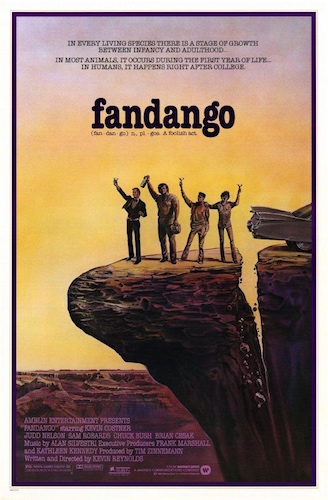
In this coming-of-age comedy drama, pitched as “celebrating the privilege of youth”, a group of college buddies — two of whom are about to be drafted into Vietnam — go on a final road trip to celebrate their graduation and defer the impending seriousness of adulthood.

Fandango began life as a student short made by writer-director Kevin Reynolds that just featured the skydiving sequence. That was seen by, of all people, Steven Spielberg, who liked it enough that he gave Reynolds the money to develop a feature film around the idea. But when he saw the finished result, Spielberg distanced himself from it — he even had his name taken off the credits. No idea why — it’s a super movie. If we’re being picky then its structure is a little episodic, but the scrapes the gang get into are linked by arcs that chart their characters’ development, which is where the film has its heart. It’s also resplendent with nice little touches, like well-composed shots (for a first timer, Reynolds clearly knew what he was doing), poignant character moments, and some occasionally profound dialogue, too. A sequence that sees the guys fighting with fireworks in a graveyard, foreshadowing the war several of them are about to head off to, is a particular standout.

Boys will be boys

Kevin Costner, tearing through Texas as a free-spirited college flunk-out wearing one-armed sunglasses, an increasingly grubby tailcoat, and a shit-eating grin, has never seemed cooler. That almost masks the fact that it’s also a very good performance, actually. It might’ve been forgotten under some of the blockbusters he did, and some of the crap in more recent years, but the guy can act. The lead cast surrounding him is equally as likeable — it genuinely feels like hanging out with a ragtag gang of college mates on their last hurrah. The final act stretches credibility pretty darn thin with what those guys are able to pull off, but it’s nonetheless a suitably emotive finale.

I’d never even heard of Fandango until the ghost of 82 recommended it to me last year, which is possibly the end result of Spielberg having disowned it. The history of cinema is no doubt littered with these little gems that, for whatever reason, only resonated with some people at the time. One of the real benefits of the blogging era is that we can recommend them on.

4 out of 5

Eye in the Sky (2015)

2017 #8
Gavin Hood | 102 mins | streaming (HD) | 2.35:1 | UK & South Africa / English & Somali | 15 / R

Eye in the Sky

Drone warfare is a fairly hot and contentious issue of our times, though as it seems to have “just kinda happened” I’m not sure how much significant public debate there’s been around it. It’s certainly provided fodder for moviemakers, however, with multiple productions seeking to be “the one about drones”. I’ve heard the best of these is Good Kill (though IMDb ratings disagree), but that’ll have to wait for another day (I’ve been sitting on this review since frickin’ January because I’ve still not got round to Good Kill!) Even if Eye in the Sky is the inferior film, it’s no slouch.

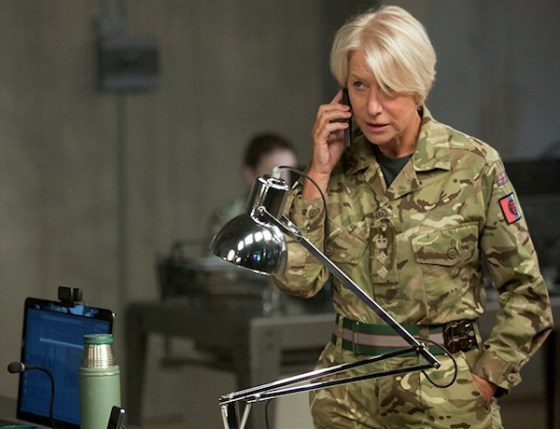
After a multinational mission is launched to capture wanted terrorists in Kenya, surveillance observes them prepping suicide bombers. The mission objective is changed to “kill”, but commanders watching from afar via drone are forced to reconsider their options due to a civilian presence near the target. It’s a tense thriller driven by a compelling moral dilemma — in fact, the dilemma is an old one: would you sacrifice one innocent life to potentially save dozens more? It’s just that it’s now framed in the super-modern context of using drones to dispatch death from the other side of the world.

Someone's got to make the call

Getting ahead of myself a little now, but events build to a very tense climax. That’s how you want your thrillers to end, isn’t it? It also pays off the sometimes slow, borderline stagey “people talking in rooms” film that precedes it. Maybe that’s unfair — yes, it’s people talking in rooms, but there’s dynamism in what they’re debating and, er, the number of different rooms it takes place in… It also has a very plausible line in the passing of the decision-making buck, up the chain through the military, then through politicians. I guess for this to work the operation depicted had to be British-led because, as the film reveals, the American military machine would’ve had no such compunction about possibly killing a little girl.

Much of the film lets you make up your own mind about its ethical conundrums, which is a strong point; but then, after all the actual debating is done and decisions have been made, it uses its final scene to show an outcome it could’ve left open-ended. This makes it seem to come down quite heavily in one direction. There’s not necessarily anything wrong with having a position and advocating it in art, but for a film which seems designed to tackle a contentious issue and put it up for genuine debate, it ends up feeling a tad one-sided. That said, there’s a long and well-liked screed on Letterboxd about how “it’s a film with an agenda that pretends to have none”, that agenda being to “have you rooting for the bombing of a little girl” — which is funny because I felt that, if anything, it came down a little too heavily the other way.

Emote control

One thing that distracted me to an inordinate degree was the agents on the ground using cameras disguised as birds and bugs — not just models with cameras in them, but imitation creatures that have the ability to fly around, reposition, etc. Even if such tech is possible nowadays, would Kenyan forces have access to it? And even if it’d been provided to them by their US/UK allies, would the equipment produce results of such good quality, or be capable of sending the images across such distances? Surely real-life drones are the size and shape they are (i.e. pretty big) for a reason? I guess the applicable point about this is: if you’re trying to make a serious modern-day moral thriller, don’t throw James Bond tech in there.

Nonetheless, Eye in the Sky manages to put a very-present moral issue up for debate, framing it as a kind of case study so that it also serves as a tense thriller. Thought-provoking and nail-biting.

4 out of 5

Anomalisa (2015)

2017 #2
Charlie Kaufman & Duke Johnson | 90 mins | streaming (HD) | 2.35:1 | USA / English | 15 / R

Anomalisa

Written and co-directed by Charlie Kaufman (of Being John Malkovich, Eternal Sunshine of the Spotless Mind, and so on), Anomalisa tells the story of Michael (David Thewlis), a depressed customer service expert who perceives everyone else as looking and sounding the same — until he meets Lisa (Jennifer Jason Leigh), whose uniqueness to him immediately attracts Michael.

If you hadn’t noticed, Anomalisa (a portmanteau of “anomaly” and “Lisa”, not “anonymous” and “Lisa” as I’d assumed) is an animated movie. Although an everyday kind of drama that would be largely achievable in live-action, it uses the form to its advantage when depicting the central conceit, giving every character who isn’t Michael and Lisa the same face and having them all voiced by the same actor (Tom Noonan). For me, this was the most effective part of the movie. It’s a really neat way of executing the concept of not being able to tell people apart. Noonan is the film’s real star, too, voicing “everyone else” in a way that makes them sound plausibly unique but also all the same, a tricky balancing act that he nails.

The one thing that did disappoint me about it was this: the inability to distinguish people is a genuine medical condition, but the film tackles it only as a signifier of Michael’s depression rather than as an issue some people live with. Conversely, I presume that’s a pretty rare condition, whereas depression and isolated feelings are increasingly widespread, so the film perhaps has more to say in that regard. Ultimately, I shouldn’t be criticising a film for not being about something it’s not trying to be about (even when I thought that was what it was going to be about).

Even puppets get the blues

As for the rest of the movie… hm. It takes an age to get going, but once it does there are a few funny scenes (the “toy” shop; the hotel shower; Michael struggling with his room key), and who’d’ve thought a puppet movie would have one of the more realistic sex scenes in the movies? Especially as it pulls that off without becoming laughable thanks to Team America. More pertinently, it gradually unfurls a sometimes touching story about isolation and love. However, by the time it reaches the happy-sad ending (one person’s life seems to have been transformed; the other continues to be miserable), I wasn’t sure what it all signified. Maybe the line that “sometimes the lesson is there is no lesson” is very relevant.

So, some good stuff, but that long slow open takes getting over, and I’m not sure what it all meant.

4 out of 5

Awakenings (1990)

2017 #154
Penny Marshall | 116 mins | TV | 16:9 | USA / English | 12 / PG-13

Awakenings

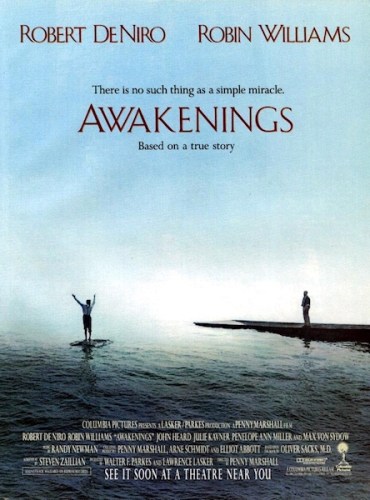
Based on a true story, Awakenings tells of Dr Malcolm Sayer (Robin Williams), who stumbles across an element of responsiveness in previously catatonic patients on his hospital ward. Finding a condition that links them buried in their medical histories, he supposes that a newly-invented drug might help their condition, subsequently testing it on Leonard (Robert De Niro), who ‘wakes up’ for the first time in 30 years. As Sayer continues his work, the new treatment reinvigorates the lives of more people than just the patients.

I hadn’t even heard of Awakenings until the untimely passing of Robin Williams, when it was brought to my attention by Mike of Films on the Box (er, I think — I can’t find where this occurred. Either it’s on someone else’s blog or I’ve entirely misremembered the circumstances). Frankly, I’m not sure why it isn’t better remembered. Okay, it’s a little schmaltzy towards the end, but there are plenty of films that are worse for that which are held in higher esteem by some. Perhaps it’s not schmaltzy enough for those people, but still too much for people who hate that kind of thing? Or maybe it’s something else — but I don’t know what, because the rest of the film is packed with quality and subtlety.

Such qualities are to be found in its writing — a screenplay by Steven Zaillian that conveys not only the usual story, character, and emotion, but also relates medical facts and processes in a way that is expedient to the narrative but still seems genuine. Whether it is or not I couldn’t say, but I didn’t feel conned by movieland brevity. Such qualities are to be found in the directing — unshowy work by Penny Marshall which matches the screenplay for its attention to detail in a way that never makes it feel as if we’re being fed a lot of information (although we are); that finds moments of beauty and life in the humanity of the characters, their plights, their successes, and their connections.

You waking up me? Well I'm the only one here...

Such qualities are to be found in the acting — De Niro’s immersive performance as a teenager trapped in a 50-year-old’s body, bookended by a medical condition so extreme that in lesser hands it could easily have become a caricature. Also Williams, giving quite possibly the most restrained performance of his career, but fully relatable as the socially inept doctor who is slowly, almost imperceptibly, brought out of his shell. And also an array of supporting performers, who each get their moment to shine in one way or another — although “shine” feels like the wrong word because, again, it’s understated. One or two moments aside (the schmaltziness I mentioned), there’s no grandstanding here.

Combine those successes with the knowledge that this is a true story (heck, you wouldn’t believe it if it weren’t) only makes the film’s events — and its messages about being attentive of others and embracing the life we’re given — all the more powerful.

4 out of 5

Thor: Ragnarok (2017)

2017 #148
Taika Waititi | 130 mins | cinema | 2.35:1 | USA / English | 12A / PG-13

Thor: Ragnarok

It’s been a busy year for the MCU. Long gone are the days of Marvel Studios putting out one or two movies a year — this is their third theatrical release in 2017, alongside three full seasons of Netflix shows and two network TV series currently running. Whew! Nonetheless, according to Rotten Tomatoes this Thor threequel is the best-reviewed thing they’ve released this year (so far). Some critics have even said it’s the best Marvel Studios movie ever made. Well, let’s not get too hasty.

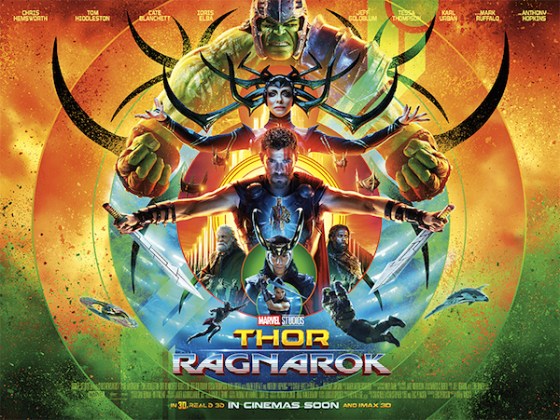
Two years on from Age of Ultron, Thor (Chris Hemsworth) has been scouring the universe in search of Infinity Stones, to no success. After the Goddess of Death (Cate Blanchett) emerges from her prison intent on conquering Asgard, the God of Thunder is cast out to a remote world ruled over by the Grandmaster (Jeff Goldblum). There he must compete in gladiatorial championships in order to escape and prevent Ragnarok, the long-prophesied destruction of Asgard.

Having previously attempted to make the Thor movies Shakespearean (by hiring Kenneth Branagh to direct the first one) and Game of Thrones-esque (by hiring Alan Taylor to direct the second), to diminishing returns as far as critical reception and audience responsiveness went, Marvel have tried a different tack for this third instalment. Essentially, they’ve done what they’ve done to most of their movies of late: made it funny. Tonally, you could be forgiven for thinking this was a Guardians of the Galaxy sequel (apart from it not starring any Guardians characters, that is).

Not a buddy movie

To this end, they hired director Taika Waititi, who’s been gaining attention with this comedies What We Do in the Shadows and Hunt for the Wilderpeople. Waititi’s influence is definitely felt in the film’s splashes of irreverent humour, but everything else about Ragnarok is a typical Marvel Studios blockbuster. Critics who’ve said it’s more a Waititi movie than a Marvel movie were overselling it. The plot, the locations, the characters — they’re all your standard Marvel stuff. It’s colourful, it’s fun, it’s exciting — all standard Marvel operating procedure.

Therefore, just as with almost every Marvel movie, the devil is in the details. Ragnarok is a good one because of Waititi — because of the extra humour he injects, a consistent presence throughout the film, but also because he clearly has a good eye for imagery. If you want a taster, a lot of the most striking stuff is, unsurprisingly, included in the trailers. (Though, interestingly, there are several shots in the trailer that have been modified for the sake of spoilers. But to say more would be, y’know, a spoiler.) Action and more dramatic material are handled as well as ever. That’s the way the cookie crumbles with Marvel Studios movies: a bad or unremarkable director will make a bad or unremarkable Marvel movie, but a good or unique director can seemingly only make their presence felt so far as making “a good Marvel movie”, perhaps with a few of their own flourishes.

They're not buddies either

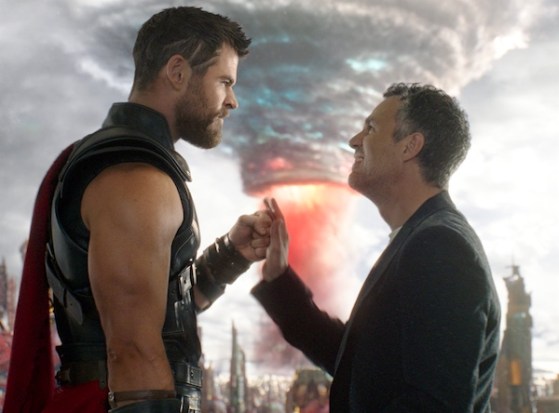
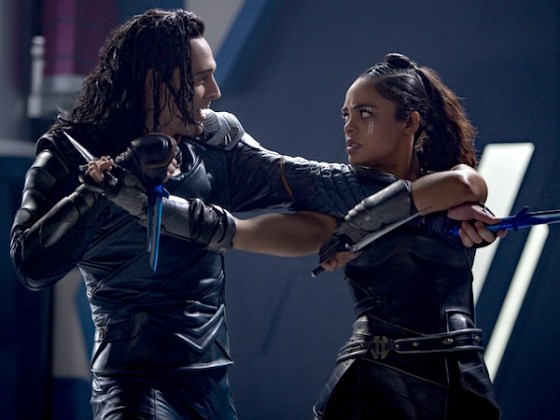
You may have heard some reports claim Ragnarok is an intergalactic buddy movie. It isn’t. Or, if it is, it’s a buddy movie where one of them’s Thor and the other one’s constantly changing. As the eponymous hero, Hemsworth gets to flex the comedic chops he revealed in movies like Ghostbusters. Everyone’s favourite Marvel movie villain, Loki (Tom Hiddleston), is back as well. While Ragnarok may ignore its predecessors tonally, it does a good job of continuing to build on Loki’s character arc. Blanchett is, if anything, under-hammy as the villain, pitching it too low when she’s sharing space with the likes of Goldblum. The expansive cast list means that both returning characters (such as Heimdall (Idris Elba) and Bruce Banner (Mark Ruffalo)) and newcomers (such as Skurge (Karl Urban) and Valkyrie (Tessa Thompson)) can only snag so much screen time each, but several of them are given efficiently-told arcs nonetheless (as usual, Heimdall mostly misses out).

Arguably the film’s standout character is Korg, voiced by Waititi and spewing lines that feel very much from the director’s wheelhouse, even though he’s not credited as a writer. Most of the biggest laughs come from him, especially as bits like “friend from work” are now very familiar from the trailers. There’s also a cameo from Dr Strange (Benedict Cumberbatch), which feels like it’s there just because they included that credits scene in his movie and so were committed to paying it off. I suppose it may have future benefits, as I believe Thor is now the only Avenger to have met Strange, but we shouldn’t be thinking about that — what have we all said before about the MCU being needlessly over-connected?

She's definitely not got any buddies

Talking of credits scenes, you may wish to know that there are two here, Marvel’s default number nowadays. Without spoiling anything, one is the vaguest of vague teases, the other a funny button on one of the film’s subplots. Neither are going to be remembered among the studio’s best credits additions.

If Thor: Ragnarok has a problem it’s the hype that’s been attached to it since the likeable trailers and glowing reviews started coming out. For those with appropriately managed expectations, make no mistake, it is a highly entertaining couple of hours. But it doesn’t break the Marvel mould, instead just filling it with more colourful materials. The best Marvel movie ever? No. The best thing they’ve released this year? Maybe.

4 out of 5

Thor: Ragnarok is in cinemas in the UK and various other countries now. It rolls out across the world in the coming weeks, ending with the US on November 3rd.

Twilight Zone: The Movie (1983)

2017 #129
Joe Dante, John Landis, George Miller & Steven Spielberg | 97 mins | streaming (HD) | 16:9 | USA / English | 12 / PG

Twilight Zone: The Movie

I can’t remember when I first heard of Twilight Zone: The Movie — certainly not until sometime this millennium — but I do remember being surprised I hadn’t heard of it before. Why wasn’t it more often talked about? After all, here’s a film based on a classic TV series, directed by some of the hottest genre filmmakers of the time: John Landis just after An American Werewolf in London; Joe Dante just before Gremlins; George Miller fresh from Mad Max 2; and, most of all, Steven Spielberg, coming off a run that encompassed Jaws, Close Encounters, Raiders of the Lost Ark, and E.T. I mean, Jesus, even if the movie wasn’t great then surely it should be well-known! It was only later still that I learnt about the infamous helicopter crash. Couple that with a mediocre critical reception and relatively poor box office results, and suddenly it’s no wonder no one ever talked about the film. My viewing of it was primarily motivated by attempting to complete the filmographies of Spielberg and Miller, but I’m glad I did because, on the whole, I rather enjoyed it.

As the original Twilight Zone was an anthology series, so is the movie — hence having four directors. Although the original plan was to have some characters crop up in each segment, thereby linking them all together, that idea didn’t come off. The end result, then, is really just five sci-fi/fantasy/horror short films stuck together — composer Jerry Goldsmith is the only key crew member to work across more than two segments. The advantage of that as a viewer is, if you don’t like one story, there’ll be another along before you know it. Because of that, I’ll take each part in turn.

The Trump Zone

The film begins with a prologue, directed by John Landis, featuring Albert Brooks and Dan Aykroyd as a driver and a hitchhiker chatting about classic TV and scary stories. Although obviously the shortest segment, it’s good fun and sets a kind of comic tone — not one the rest of the film follows, to be fair, but it’s kind of effective in that it has a knowing wink to the audience: “we all know The Twilight Zone is a TV show. Now, here are four stories from it.”

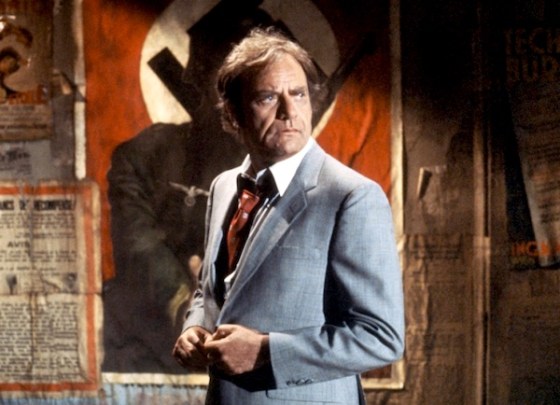
Landis also directs the first full segment, Time Out, the only one of the four not adapted from an original TV episode. Basically, it’s about a Trump supporter. You might not have noticed that if watching before last year, for obvious reasons, but viewed now it’s kind of hard to miss. What’s depressing it that the point of the film is this guy’s views are outdated in 1983, and yet you have Trumpers spouting the same shit in 2017, three-and-a-half decades later. That aside, as a short moral parable it’s effective. It doesn’t have the ending that was scripted (thanks to the aforementioned tragedy), but I think the conclusion it does have is actually more appropriate. It feels kind of wrong to take that view, because the only reason it was changed was that terrible accident. Obviously it wasn’t worth it just for this segment to have a better ending, but there it is.

Scary kid? Check.

Segment two, Kick the Can, is Spielberg’s, and anyone familiar with his oeuvre — and the criticism of it — will see that right away: it’s shot in nostalgic golden hues and contains positive, sentimental moral lessons. In fact, it’s so cloyingly sweet, it’s like a parody of Spielberg’s worst excesses. It was originally intended to be the last film in the movie, and you can see why: it would’ve formed a positive, upbeat finale to the picture. I’m not sure why they moved it — possibly because they felt it was the least-good. That’s what a fair few critics believe, anyway.

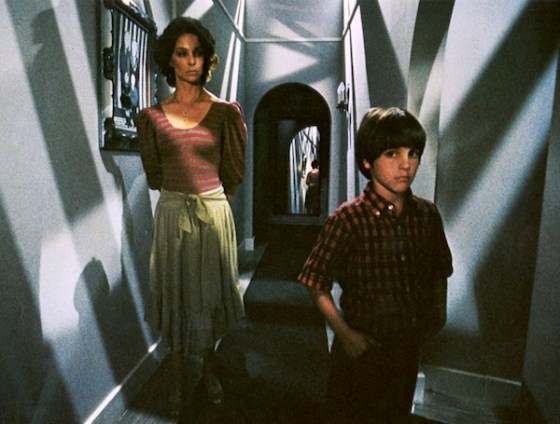
Personally, segment three was my least favourite. This is Joe Dante’s short, titled It’s a Good Life, and is about a woman who accidentally knocks a boy off his bike, gives him a lift home, and finds a pretty strange situation therein. I found it to be kind of aimless; weird for the sake of weird. It’s prettily designed and shot, with bold cartoon colours, but if I watched the film again I’d give serious thought to just skipping it.

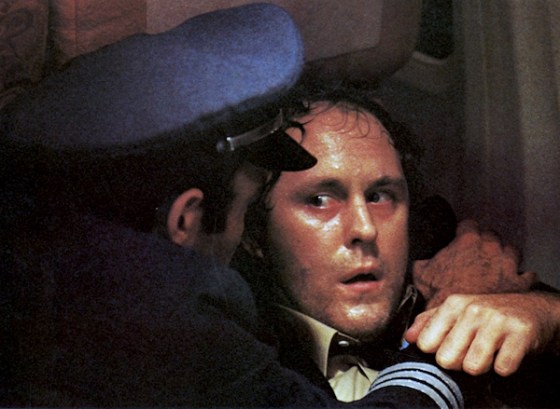
The final segment remakes arguably the most famous Twilight Zone episode: Nightmare at 20,000 Feet. It’s about a paranoid airplane passenger on a turbulent flight, who thinks he sees a monster on the wing. Naturally, no one believes him. I’ve not seen the original version so can’t compare, but director George Miller and star John Lithgow do a fantastic job of realising Richard Matheson’s story, loading it with tension and uncertainty — is it actually all in the passenger’s head? And if it isn’t, can they survive?

Fear of flying

On the whole, I liked Twilight Zone: The Movie more than I’d expected I would. Nonetheless, as a series of shorts, it’s destined to be a footnote in the career of all involved (even Landis has done a fair job of moving on from the controversy — as I said, I hadn’t even heard about it until relatively recently). The only truly great segment is Miller’s finale, but the others all have elements that make them worth a look.

4 out of 5

Blade Runner 2022-2048

You’ve probably heard that three short films have been released as part of the promotion for forthcoming sci-fi sequel Blade Runner 2049. More than just trailers, these shorts go some way to bridging the 30-year gap between 2049 and the original Blade Runner. They were released out of sequence over the past couple of months, but here they’re reviewed in chronological order.

Blade Runner: Black Out 2022
(2017)

2017 #130a
Shinichirô Watanabe | 16 mins | streaming (HD) | 1.78:1 | USA / English

Black Out 2022

The first short is an anime directed by Shinichirô Watanabe, best known for Cowboy Bebop and, I guess, helming two of the Animatrix shorts. Set a couple of years after Blade Runner, it tells the story of some Replicant rights activists and their successful attack on LA, which will lead to a ban on Replicant production.

As a story it is, of course, background detail — presumably not essential enough to be included in 2049 proper, but filling in the backstory for fans. It’s the kind of thing you could read about in just a line but is more exciting dramatised. That said, with such a short running time there’s no space to grow attached to characters, so the ultimate effect on the viewer isn’t so different to just reading about the events depicted.

As a short animation, however, it’s a quality production. Animation allows it to do things a live-action short couldn’t — you’d need a blockbuster CGI budget to pull this off for real. It’s a good marriage of form and intent: in the context of a prequel short, it’d be pointless to do an anime of people sat in a room talking. It has a bit of needlessly fiddly story structure at the start (including one of my pet peeves: “two weeks earlier”), but mostly it puts its short running time to decent use. There are a couple of striking, effective images, alongside various nods to the original film — visually, a lot of tributes are paid. Plus, look for cameos by Edward James Olmos’ Gaff and Dave Bautista’s character from 2049.

It may be worth noting that it’s nothing like Cowboy Bebop, either. No surprise — Bebop‘s tone hardly fits the grim world of Blade Runner. If you wanted an anime comparison, it’s more like a Ghost in the Shell short — again, not so surprising given the source similarities.

Despite my complaints about its structure and ultimate purpose, this is probably the best of the three shorts.

4 out of 5

Watch Blade Runner: Black Out 2022 on YouTube here.

2036: Nexus Dawn
(2017)

2017 #130a
Luke Scott | 7 mins | streaming (HD) | 2.40:1 | USA / English

2036: Nexus Dawn

2049 director Denis Villeneuve introduces each of the three shorts, explaining how he tapped filmmakers he respected to create these little tales. This one is by, to use Villeneuve’s word, his friend Luke Scott — director of Morgan and (most pertinently of all, I suspect) Ridley Scott’s son. We’re in live-action now, as entrepreneur Niander Wallace (Jared Leto) meets with some committee to convince them to re-legalise Replicant production.

It might seem odd, given their very different production styles, but this works well as a pair with 2022. It’s all in the story: the anime is about the final straw that banned Replicants; Nexus Dawn is about how they were brought back. Despite their short form, these films aren’t telling side stories, but revealing major points in Blade Runner‘s future history. There are also several direct references to the black out which further ties the shorts together. It might not be wholly clear in the anime itself, but that event was clearly world-changing. Perhaps that’s why 2022 was initially released last, to pay off the teasing references which feature in both live-action shorts.

For those seeking a tease for 2049, we get an indication of what Jared Leto’s performance will be like. I imagine those who find him inherently annoying will see nothing to challenge their preconception. For the rest of us, he’s okay. He suits the possibly-mad genius role, and thankfully keeps it understated. There’s also a supporting cast of names bigger you’d expect from just a prequel short (Doctor Strange‘s Benedict Wong, Peaky Blinders‘ Ned Dennehy), which I’m not sure adds a huge amount but perhaps indicates the esteem of the Blade Runner name.

Technically, the short itself is well shot — in both content and form, it could conceivably be a deleted scene from the main film. That’s both a blessing and a curse, I guess.

3 out of 5

Watch 2036: Nexus Dawn on YouTube here.

2048: Nowhere to Run
(2017)

2017 #130a
Luke Scott | 6 mins | streaming (HD) | 2.40:1 | USA / English

2048: Nowhere to Run

The final short, again helmed by Scott the Younger, is set just the year before the new film. It introduces us to Dave Bautista’s character, a kindly but down-on-his-luck kinda guy who one day finds himself in a violent altercation that will clearly change his life.

Even more than Nexus Dawn, this feels like a deleted scene — I won’t be at all surprised if this leads directly into the events of 2049. As it’s not dramatising a turning point in history, it feels the most trailer-like of the three shorts. It’s still a little background narrative that’s (presumably) not to he found in the film proper, but it seems to be teasing where 2049 will begin rather than filling in important backstory blanks. Plus, an opening montage of clips from 2049 includes another reference to the black out, again suggesting that the anime is actually the most significant and worthwhile of the three shorts.

Bautista continues to be a surprisingly charismatic actor — even with very little to do here, and keeping it low-key, you warm to him. Perhaps that’s the point of this short: for us to like Sapper, and understand what he’s capable of and why, before his appearance in 2049. Perhaps it’ll even be deserving of a higher rating after seeing Villeneuve’s film. As a film, the side-street setting is probably not that much more logistically complex than Nexus Dawn‘s single room (aside from all the extras involved), but Scott makes it feel more expansive.

At first blush Nowhere to Run feels like the least essential of the three prequels, but we’ll see if that changes with hindsight after viewing 2049.

3 out of 5

Watch 2048: Nowhere to Run on YouTube here.

As a final thought, I’ll note that on Letterboxd I rated all three shorts 3.5 out of 5, and on IMDb gave them the equivalent 7 out of 10. Obviously I’ve separated them slightly here, with the anime getting 4 and the other two getting 3s, which would suggest an even finer gradation of marking (that I then rounded up/down). I don’t know if that’s really the case, but I think the reason why I settled on these differing scores is that the two live-action shorts feel like deleted scenes, while the anime feels like it’s expanding on something that would otherwise just be backstory. In other words, it depicts the most significant event in its own right.

Anyway, perhaps these scores will change after seeing 2049. Whether they do or don’t, all three shorts are essential viewing for fans, but probably inessential for the casual viewer — after all, if they really mattered, they’d be in the film.

Blade Runner 2049 is in cinemas tomorrow.