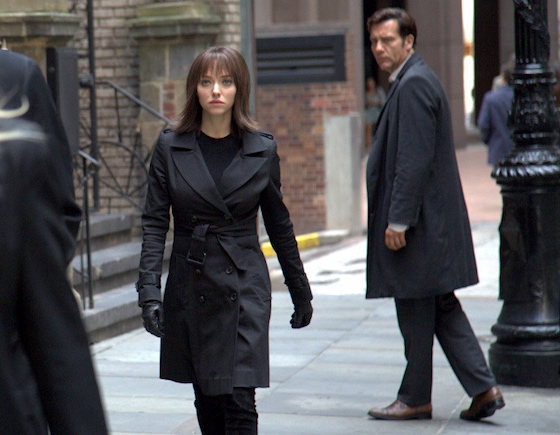
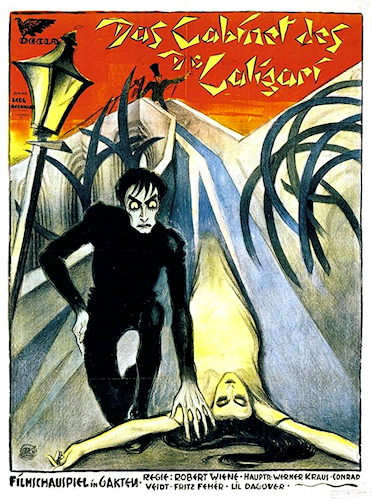
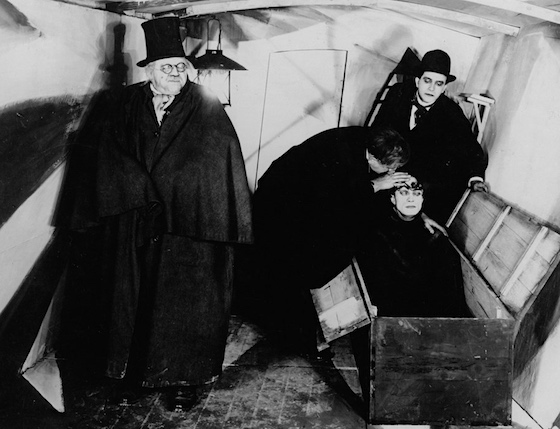
Vehicular Review Roundup

Get in Vehicle 19 to go for a Drive with The Driver in today’s roundup, featuring:

  • The Driver (1978)
  • Drive (2011)
  • Vehicle 19 (2013)


    The Driver
    (1978)

    2017 #101
    Walter Hill | 92 mins | Blu-ray | 1.85:1 | USA & UK / English | 15 / PG
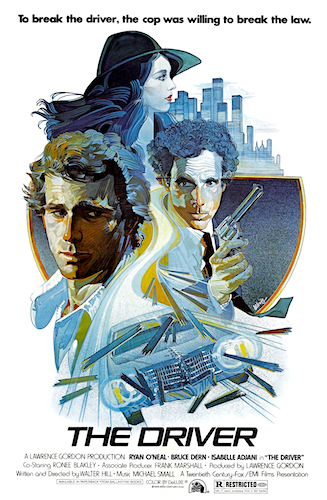
    The Driver

    Walter Hill’s stripped-back neo-noir car chase thriller stars Ryan O’Neal as The Driver, a getaway man for hire and the best at what he does. Out to get him is Bruce Dern as The Detective, who’ll go to any lengths to catch him — including illegal ones. Almost cornered, the Driver enlists the help of The Player (Isabelle Adjani) to thwart the Detective.

    The film’s influence on the likes of Baby Driver and Drive is clear (Nicolas Winding Refn claims not to have seen it before making his film, but it must’ve been seen by someone somewhere down the line, whether that’s original novelist James Sallis or screenwriter Hossein Amini, because the DNA is right there). Both those later efforts burnished and perfected the formula in different ways, but the original has a gritty, low-rent charm of its own. The archetypal characters and straightforward noir plot are delightful almost because of their simplicity, while the few action scenes are handled with the panache, not of a slick blockbuster, but of a filmmaker who knows how to create something effective even within his limitations.

    The Driver maybe doesn’t transcend those to the level of being a classic, but, for fans of the genres it crosses, it’s deservingly a cult favourite.

    4 out of 5

    Drive
    (2011)

    2017 #106
    Nicolas Winding Refn | 101 mins | Blu-ray | 2.35:1 | USA / English | 18 / R
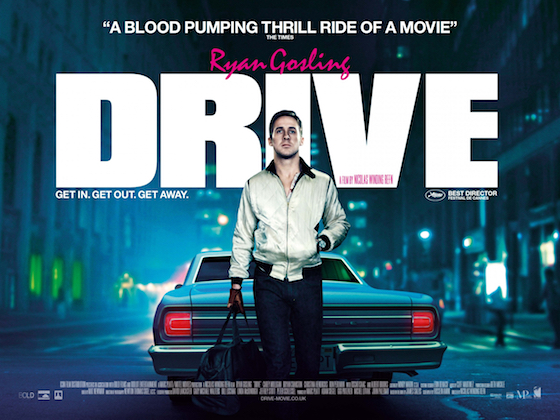
    Drive

    Iconoclastic Danish director Nicolas Winding Refn had made noteworthy films before Drive, but it felt like this was where he really hit home. It stars Ryan Gosling as a mechanic and part-time movie stunt driver who also moonlights as a getaway man, but when he tries to help out his attractive neighbour (Carey Mulligan) and her husband (Oscar Isaac) he gets embroiled in a crime with deadly consequences.

    It’s a noir storyline with a familiar shape, but as with many of the best examples of that not-quite-a-genre it’s the stylish filmmaking that elevates the material. Refn was influenced by the likes of Jean-Pierre Melville and Sergio Leone to take a very American genre and give it a European influence, and the result is a movie that’s as much about its mood and feel as it is the intricacies of plot or character. Despite the title and theme it’s not even a car chase movie, really, though the handful of well-created driving sequences do pack a greater punch thanks to their scarcity.

    5 out of 5

    Drive was viewed as part of my What Do You Mean You Haven’t Seen…? 2017 project.

    Vehicle 19
    (2013)

    2017 #151
    Mukunda Michael Dewil | 82 mins | TV | 2.35:1 | USA / English | 12 / R
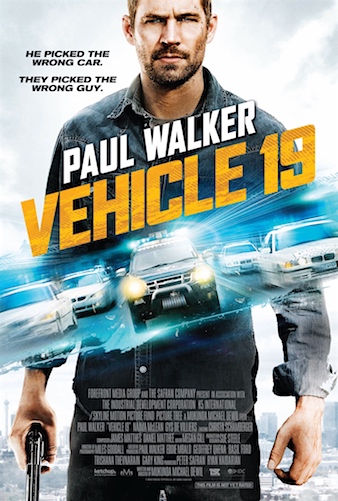
    Vehicle 19

    One of the last films Paul Walker completed before his untimely death, Vehicle 19 sees the Fast & Furious star doing what he will always be remembered for: driving a car, sometimes fast. Here he’s Michael Woods, a recent parolee who arrives in Johannesburg intending to reunite with his partner. Unfortunately he picks up the wrong rental car and finds himself the subject of a manhunt, because in the car is evidence relating to a political conspiracy. Unfortunately for the bad guys who want said evidence, Michael is, like, an honourable chap — and also a criminal, so he totally knows how to drive a car like he’s escaping a crime. The main conceit is: the whole film’s shot from within the car.

    Yep, that’s why I watched it. I wish I hadn’t. Vehicle 19 is a deeply stupid movie. Like, Michael’s phone is all-important — it’s the only way he can contact other people; later, it contains vital evidence — but when he notices the battery is low he does nothing about it, despite having a charger in his bag, until the battery literally runs out mid-call. And that’s just one of innumerable nonsensical contrivances throughout the film.

    It lacks pace, and therefore lacks tension. Michael just pootles around the city from the very start. Apparently everywhere is reachable within 20 minutes, or Michael — who’s never been to this city before — thinks it is. Whenever he asks for directions, everywhere he’s going is either just a block away or down the road, third right. At one point the police say they just received a call to 911. From what I can tell, the emergency number in South Africa is not 911. And I could probably go on — the film is absolutely littered with things that just don’t quite hang together.
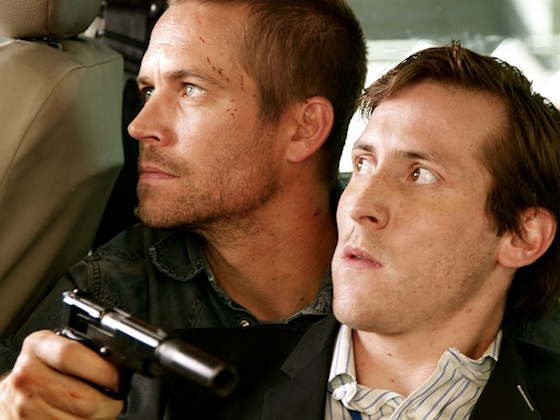
    Fast and/or furious

    It can’t satisfy as a dumb action flick either. I presume it was a low-budget production with ambitions beyond its scale in the chase scenes. Understandably, the trailer foregrounds these to help sell the movie. Unfortunately for the film, it’s a bit of a bait-and-switch: the clips in the trailer are near-as-dammit the entirety of the film’s action. These sequences are few, far between, short, and, even then, poorly staged. The problem isn’t that they’re all limited to only being seen from within the car (the opening sequence of The Driver does exactly that to marvellous effect, for example), it’s that they lack both adrenaline and plausibility. For example, at one point Michael manages to make the chasing car flip over, but I watched that bit three times to try to decipher it and I still have absolutely no idea how he’s supposed to have done it. Oh, and then the car explodes. And Michael and his passenger seem to react like “oh, that’s that then” and just drive on.

    They’ve got the right idea, though: if you’re thinking of watching Vehicle 19, no, just drive on. Or just put Drive on — it’s a totally different movie, but at least it’s a good one.

    1 out of 5

    Vehicle 19 featured on my list of The Five Worst Films I Saw For the First Time in 2017, which can be read in full here.

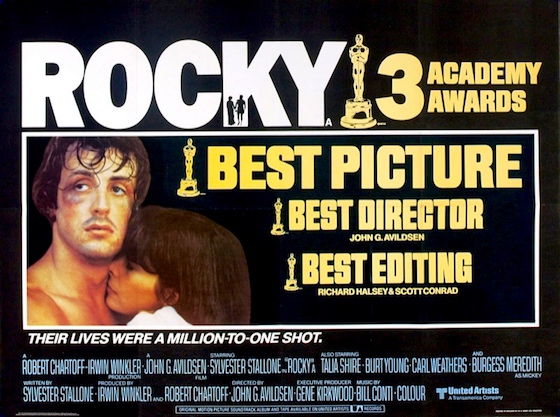
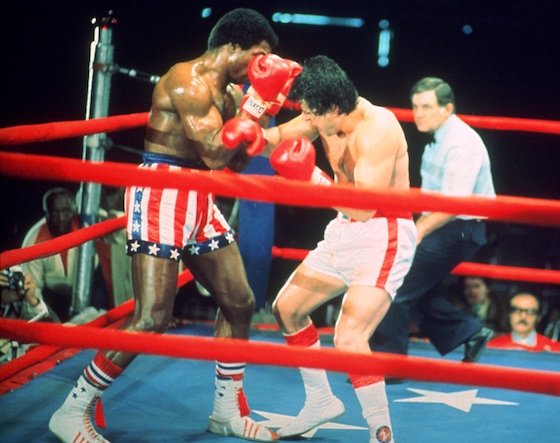
  • Rocky (1976)

    2018 #57
    John G. Avildsen | 120 mins | Blu-ray | 1.85:1 | USA / English | PG / PG

    Rocky

    His name is Sylvester Stallone. He’s the star of a new film called Rocky. He has been described as handsome, tough, talented, sexy, sensitive, dynamic, and brilliant. He’s been compared to Brando, Newman, Pacino, and De Niro. He’s been called “a top contender for an Academy Award”.

    His name is Sylvester Stallone, but you will always remember him as… Rocky.

    So goes the narration to Rocky’s original trailers and TV spots. We don’t get trailers like that anymore, do we? Now we just get Bryce Dallas Howard pretending to roar like a T-Rex while encouraging us to join Odeon Première Club. (I’ve been forced to sit through that far too often, and I’ve only been to the cinema four times this year.) But I digress. The narration also indicates the road Stallone could’ve gone down — imagine if he’d made a career writing and starring in movies like this, following through on all those comparisons the trailer made, rather than going down the action meathead route. A weird thought now, isn’t it?

    If you’ve never seen Rocky, you might assume it’s broadly similar to the films Stallone would mostly go on to star in, but it isn’t, really. It’s the story of a smalltime coulda-been boxer left slumming it, when, through sheer luck, he gets a shot at the big leagues. Yes, it’s an underdog sports film — the movie that “inspired a nation” (as a friend once said to me, “inspired them to do what, I don’t know. Get up and turn it off, probably”) — but it’s staged with a level of realism that such fantasies don’t normally reach for. And it’s certainly nothing like the indestructible super-action-hero of sundry later Stallone vehicles.

    Meat, standing in for a head

    Indeed, Rocky manages to both embody what we now think of as ’70s-style filmmaking — gritty and cynical and kinda miserable — with the other side of ’70s filmmaking — the decade that, between the likes of Jaws and Star Wars, gave us the populist blockbuster as we know it. So, on the one hand, Rocky lives in a dingy little bedsit, spending his days enforcing for a loan shark and plodding the derelict streets of a decrepit city; on the other, he still has hopes and ambitions, and these come to pass when he’s selected to fight world champion Apollo Creed — a real underdog sports story. This duality carries through right to the end (spoilers!): our hero loses the fight, your typical “’70s” downbeat finale; but he also goes the distance, an achievement no one else has managed, and he gets the girl. Considering the movie we’ve just watched, it’s a perfect climax: it maintains the film’s two apparently-irreconcilable (but demonstrably reconcilable) tonal halves right to the very end.

    Another major part of the film is Rocky’s faltering attempts to woo a shy pet shop worker, Adrian (Talia Shire). Most of their relationship is beautifully portrayed — tentative, cautious, sweet, and quite touching — a complete 180 from how you’d expect a character defined as “a boxer” to behave. Unfortunately, one key moment hasn’t aged so well. There’s a scene at the end of Rocky and Adrian’s first date where he badgers her into going into his apartment, which she clearly doesn’t want to do; then, despite her obvious discomfort, he tries to get her to sit with him; when she won’t, he walks towards her and, hanging off an overhead pipe, looms over her, demanding to know what’s wrong; then, as she heads for the door, he stops her, one hand over the locks and the other against the wall, trapping her in the corner; and then he informs her he’s going to kiss her, but she doesn’t have to kiss him back, and then he does. And she kisses him back, of course.

    Adriaaan!

    This scene plays very, very differently in a post-#MeToo world than I imagine it has at any other point in the past 42 years. I mean, I’m sure some people realised its awkwardness quite some time ago — women before men, no doubt — but there’s no avoiding it now. And it’s an odd scene, because clearly the filmmakers know Adrian would be uncomfortable — as I say, her whole attitude portrays that; and I presume they know why she’d be uncomfortable too; and yet it still ends with her giving in to Rocky’s persistent advances. Well, I guess the best we can say is it’s of its era, but its content, and how it makes us feel about Rocky as a character, risks becoming a barrier nowadays. His behaviour doesn’t continue in that vein, thankfully… or is that actually worse, making such behaviour normal rather than a warning sign? Are such conversations relevant about a 42-year-old movie?

    Conversely, the film’s depiction of race feels kind of progressive. Most of the white guys we meet are bums eking out an existence, legally or otherwise, while the black guy (surrounded by a mostly black entourage, too) is successful, respected, dressed in finery, and in a position to offer the white guy a one-in-a-million shot at success. Maybe this contrast was just a coincidence, but it feels like it’s making some kind of point. Of course, once they get in the ring for the climax, the black guy is the “bad guy” and our hero is a white guy, so…

    Black vs white

    I don’t think Rocky was consciously built to sustain such readings, mind — these are just things that struck me while watching it in 2018. At heart it’s a straightforward, inspirational tale — “a charming, grimy and beautiful fairytale”, as John Simon described it in New York Magazine — about someone with unrealised potential getting a final shot. Arguably it gains more power from being semi-autobiographical: Stallone penned the screenplay (and later insisted on starring) as a similar last-shot attempt at his chosen career. It ultimately netted him two Oscar nominations, one for writing and one for acting, though he won neither — but then, what could be a more fitting mirror of the film itself?

    4 out of 5

    Rocky is on ITV tonight at 11:15pm.

    It was viewed as part of my What Do You Mean You Haven’t Seen…? 2018 project, which you can read more about here.

    Deadpool 2 (2018)

    2018 #120
    David Leitch | 119 mins | cinema | 2.39:1 | USA / English | 15 / R

    Deadpool 2

    The quickest way to review Deadpool 2 is simply to say it’s like the first one, but more — in a good way.

    A slightly longer (and possibly confusing unless you read it slowly) way to review it would be to say that I enjoyed it less than I enjoyed the first one the first time I saw it, but I enjoyed it more than I enjoyed the first one the second time I saw it. To clarify: when I first watched Deadpool, I loved it, and gave it five stars (just about). When I rewatched it two years later in preparation for the sequel, I was less bowled over. I think a lot of its initial effectiveness was due to the freshness of its whole schtick, which has naturally gone away on a rewatch (not helped by the saturation of it in DP2’s marketing campaign). In particular, I was surprised how sparse I found the humour to be on that rewatch. Maybe that prepared me for this one: the gags aren’t literally non-stop — it sometimes pauses to attempt emotion or to convey plot — but when they do come they’re thick and fast, so much that I’m sure some will get missed (there are too many to remember specific examples, but there was stuff I thought was very funny that didn’t get much of a reaction in my screening. Or it could just be only me that liked those gags, of course.)

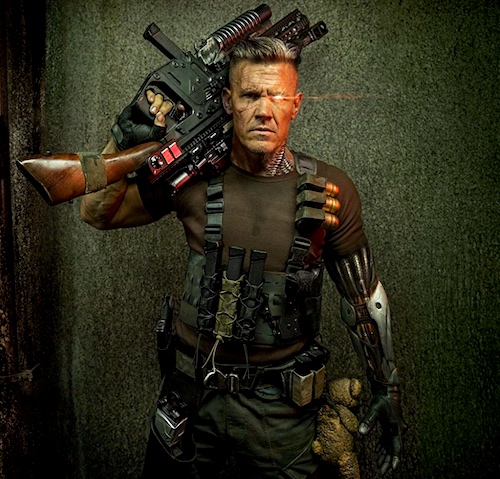
    So, although DP2 couldn’t equal the sheer newness of watching DP1 for the first time, it’s refined the formula in such a way that I do think it’s a more enjoyable film. Maybe “refined” isn’t always the right word — in some cases it’s just chucked in even more stuff — but I think other elements have been honed. For example, the first film’s plot was a no-great-shakes origin story on which to hang gags and action. The sequel’s plot is still only scrappily adhered to, with the point once again being to deliver humour, but it does have a stronger throughline overall. Partly that comes from the villain, Josh Brolin’s Cable, who has a clear goal that conflicts with what Deadpool’s up to. Partly it comes from some thematic stuff about fatherhood and family. I’m not saying DP2’s overburdened in this department — it’s still an action-comedy — but I couldn’t tell you what the first film was about, thematically, and this one it’s made very evident.

    That Deadpool, he'll say anything

    That said, sometimes it’s bit heavy-handed. I can see what they were going for by giving the film a heart and some emotion — it builds off the first film, for one thing, where Vanessa was such a motivator for Wade; and they’re trying to add depth and texture to the film — but… it doesn’t work when it’s given too much focus. Everything else in the film is a pisstake turned up to eleven, and the fourth-wall breaking means Deadpool can make a gag about clichés or crappy writing even as the film ploughs ahead and does it anyway. So why isn’t he making gags whenever the film pauses for an emotional heart-to-heart type scene? Why does that sappiness flow on (and on) untouched? Okay, maybe the character cares too much to be wisecracking at those moments… but do we? Does the soppiness fit with the foul-mouthed, gore-splattered irreverence that characterises the rest of the movie? I’m not sure it does.

    Other things they’ve oomphed up, but to appropriate effect, included references to the X-Men and the action scenes. In the case of the former, I was surprised how many X-references there were in the first film, but DP2 has even more, including a superb one-shot cameo and a surprise appearance by a character who’s been in a ‘real’ X-Men film but here is done more faithfully. As to the latter, the first film had some fun action beats, but here you can feel the benefit of hiring John Wick/Atomic Blonde director (and former stunt coordinator) David Leitch — everything is slicker, quicker, and bigger. Again, it’s more, but in a good way. Humour aside, if you just wanted a straightforward action flick, I think it would satisfy on that level too.

    Cable, ready for action

    As for its level as a satire of superhero movies, some people have criticised the way it calls out genre tropes but then does them anyway, like Deadpool exclaiming “CGI fight!” right before there’s a CGI fight. But I think that’s almost the point. It’s not trying to deconstruct the genre, just poke fun at it with self-awareness while still being very much a part of it. Would it be cleverer if it went a step further and actually subverted stuff more often? Maybe. Probably. But there is humour in the self-awareness, even if it’s an easier kind for the filmmakers to fall back on — they don’t have to avoid clichés, so long as they humorously point out they’re indulging in them.

    Ironically, there are two or three occasions where Deadpool specifically makes a joke along the lines of “well that’s just lazy writing”, which were particularly amusing to me because (as I recall) they were at moments where the writing didn’t need to do more than it did. By which I mean, the writers could’ve been “not lazy” and dressed those moments up, but, functionally, they didn’t need to; so it’s not really lazy writing, just not needlessly tarted up writing… if that makes sense. It’s like movies with MacGuffins: usually they invest time explaining what the MacGuffin is and why it matters, but functionally it could be anything, all that matters is everyone wants it. Deadpool 2 doesn’t have a MacGuffin, but if it did it would be called “MacGuffin” and it would be explained simply as “a thing everyone wants” and Deadpool would say “well that’s just lazy writing”. (Flip side to all this: I can’t recall the exact circumstances of all the “lazy writing” jokes, so I’m prepared to accept they might not actually fit this theory.)

    X gon' give it to ya

    All of that said, Deadpool 2’s primary goal is plain, clear, and simple: it wants to entertain you by almost any means necessary, be that elaborate action sequences, almost non-stop gags, cultural references, deep-cut comic book Easter eggs, or even changing history (er, kinda). Mostly, it works — it wants to be fun and, if you’re on its wavelength, it is. Sometimes, more is more.

    4 out of 5

    Deadpool 2 is in cinemas everywhere, still. My review of the extended Super Duper $@%!#& Cut is here.

    Vintage Tomorrows (2015)

    2017 #120
    Byrd McDonald | 67 mins | streaming (HD) | 16:9 | USA, Canada, Czech Republic & UK / English

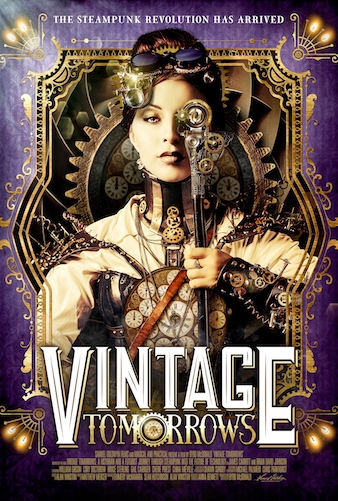
    Vintage Tomorrows

    Heard the term “steampunk” but don’t really know what it is? Or have an idea, but you’d like a fuller picture of the whole subculture? Then this is the film for you, my friend, because Vintage Tomorrows is basically Steampunk 101.

    For those that don’t know, steampunk is a kind of alternate history, where Victorian-esque technology and fashion rub against advanced technology — think steam-powered cars; clockwork machinery; and cogs. Lots of cogs. Although little more than an hour long, Vintage Tomorrows does a good job of providing an overview of the movement, encompassing the cool literature, fun costumes, impressive self-built gizmos, and so on. It also doesn’t ignore the political dimension: how steampunk does — or, frequently, doesn’t — deal with the dark side of the Victorian era: the poverty, oppression, racism, colonialism, misogyny, and so forth. Mainly, the subculture still needs to “grow up” and tackle that stuff. With plenty of featured interviewees, it’s also interesting to hear the different ideas that different people have about what exactly steampunk is and should be — there are clearly dissenting voices, rather than a homogenous whole. I guess that’s probably true of any subculture, but I imagine particularly one that’s quite counter-cultural.

    That said, when some people start placing steampunk in the context of widespread movements like the Beat Generation, hippies, punk, hip-hop — asserting that it’s following in their footsteps — I think they’re possibly going a bit far. It may be inspired by the same mentality (the rejection of the mainstream, the desire to create something different, the search for your own identity and people who share it), but to imply steampunk is having the same influence on wider culture that those earlier movements did… I don’t think so. Not yet, anyway. In the future? Who knows.

    Fire!

    Indeed, some pretentious assumptions come to the fore when the interviewees get on to the subject of modern technology. They don’t like sleek, minimalist, Apple-esque design — it’s not complicated or tactile enough for them. Fine, if that’s your taste — but it is just your taste. A lot of people love that stuff. And, actually, it’s not a different subculture that loves it, it’s the mainstream. If the mainstream didn’t like it, something else would’ve swept it aside by now. But a level of self-absorption seems to go hand-in-hand with those at the forefront of niche movements, so I guess we should expect such attitudes.

    Set aside those occasionally presumptive attitudes, and there’s a lot to like about steampunk. Well, if it meshes with your sensibilities, anyway. It’s not something I’d want to partake in myself, but it looks like a fun alternate reality to be a part of. And if Hollywood saw fit to give us a few more movies that fit into the genre (because there haven’t been many, I believe), I certainly wouldn’t complain.

    4 out of 5

    Trekkies & Trekkies 2

    In today’s roundup:

  • Trekkies (1997)
  • Trekkies 2 (2004)


    Trekkies
    (1997)

    2018 #97
    Roger Nygard | 83 mins | streaming | 4:3 | USA / English & Klingon | PG / PG

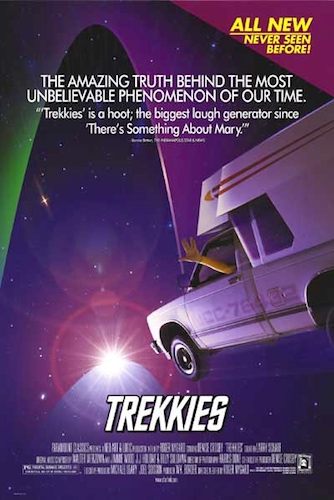
    Trekkies

    There are quite a few fan documentaries out there nowadays (a few years ago… wait, ten years ago? Bloody hell. Anyway, back then I reviewed the likes of Starwoids, Ringers: Lord of the Fans, and Done the Impossible: The Fans’ Tale of Firefly and Serenity). But before all of those, and I think the first of its subgenre, was Trekkies, which examined the phenomenon of Star Trek fandom — or, rather, the wild, weird extremities of it.

    Trekkies begins with the proclamation that “Trekkies are the only fans listed by name in the Oxford English Dictionary.” That’s not true anymore (“Whovian”, at least, is in there), and that speaks to an interesting truth about this entire documentary. When it was released 21 years ago, Trekkies was exposing a niche thing to wider awareness, and these fans were seen as weirdos, fundamentally. Watching it today, though, you see that it’s mostly just cons and cosplay — stuff that’s been virtually mainstream for a few years at this point. It may’ve once seemed odd for these people to define their lives as “Star Trek fan”, but now, for many people (especially younger people), it’s perfectly routine to be defined by which fandom you’re in.

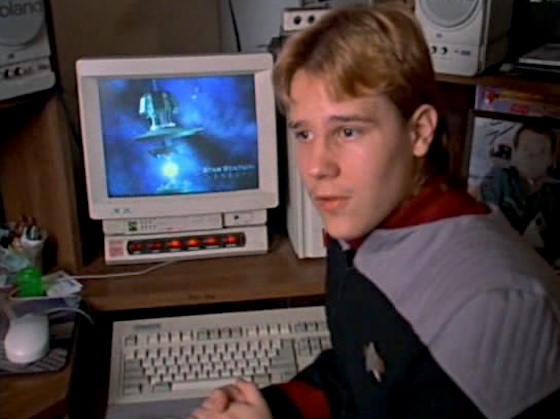
    Gabriel Koerner in 1997

    That said, Trekkies still managed to find some people who are pretty weird by any standard. At the time the filmmakers received some criticism for this — for creating a film that got laughs out of “look at the weirdos!” while ignoring the more normal side of fandom. That’s not a wholly baseless critique, but I didn’t think the film was cruel. As well as going “aren’t these people nuts!”, I think it does try to dig into why they do it, what they get out of it. I’m not sure how well it reveals the former (I mean, how did any of them go from liking a TV show to… this? It must be some personality thing), but it does a decent job of showing what benefits it brings them. And there are some incredible stories (mainly from interviewed cast members) about how Trek has changed, or even saved, people’s lives.

    Trekkies may’ve lost the uniqueness it once had, with elements of the lifestyle it depicts coming to increasing prominence, but it still remains an interesting look at that kind of world, with some very memorable characters. And if you think it might’ve aged into irrelevance after all this time, there’s a bit about the importance of Captain Janeway as a role model for female leadership and what women can do — we’re still having debates and arguments about that sort of thing over twenty years later, which is, frankly, depressing.

    4 out of 5

    Trekkies 2
    (2004)

    2018 #98
    Roger Nygard | 93 mins | download | 4:3 | USA / English, German, Italian, Portuguese, French & Serbian | PG / PG

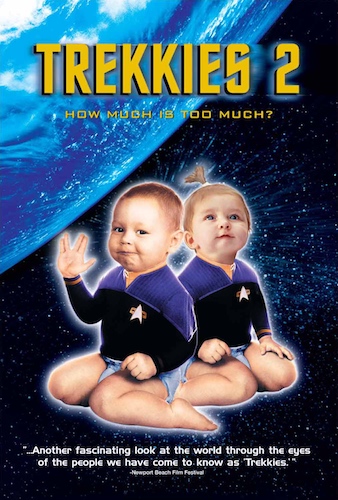
    Trekkies 2

    Such is the strangeness of Time that, just 24 hours after I watched Trekkies, I jumped forward seven years to catch up with some of that film’s featured fans in this lesser-seen follow-up. It’s not just repeat visits to old friends, though — if you thought America had a monopoly on crazies, well, Trekkies 2’s got news for you!

    This time out director Roger Nygard and host Denise Crosby take us to Germany (visiting the set of a fan film); the UK (with a guy who turned his flat into a starship, which he’s listed on eBay for $2 million (a couple of years later it sold for c.$840,000, which was still 16 times what he paid for it)); Italy (where fandom is apparently centred around food); Brazil (where a collector has a rare playset from the ’60s… which Crosby accidentally knocks over); Australia (where the fans mainly seem to be female and obsessed with the sexy male cast members); France (which is really just “more international fans”, to be honest); and Serbia (where the series and its values has brought a lot of hope to people in a tumultuous region).

    We also meet more US fans, as the sequel tries to rectify some of the first film’s shortcomings. For example, there’s a much greater section on filk music (which is, basically, music tied to sci-fi/fantasy fandom), as well as some crazy-funny Star Trek punk tribute bands — there’s a whole scene of that kind of thing in Sacramento, randomly. Plus we’re shown the lighter side of fandom, like the theatre company staging a satirical Trek-ified version of Romeo & Juliet.

    German fan film

    And, as I mentioned, we catch up with some old friends, including Barbara Adams, the lady who wore her Trek uniform while on jury duty (and who has a hilarious Trek vs Wars debate with a coworker that’s like something out of The Office), and the film’s break-out star, Gabriel Koerner. A super-geeky teen in the first movie, seven years later he has a wife and has turned his hobby into a career in visual effects. It just goes to show, there’s someone and something for everyone.

    Indeed, overall it’s not quite as “look at the freaks!” as the first film. It takes time to explicitly discuss what’s going too far and what’s normal, and it also highlights how Trek fandom has been a force for good, like raising money for charity, or giving hope in war-torn regions. Consequently it’s not as funny as last time, but probably in a good way — this one’s a bit more thoughtful, a bit fairer to its subjects as people. Ultimately, I think the two films work quite well as a pair. There’s also been talk of a Trekkies 3, which I hope happens — as I mentioned about the first film, attitudes to this kind of fandom have changed massively in the past decade or so (for example, the rise of Comic-Con and its influence), so it would be very interesting to explore that.

    For my money, the most insightful moment in either film comes from Pierluigi Piazzi, a Brazilian publisher of Star Trek books, when he says that “this is a wonderful way to be crazy. Everybody’s crazy, but it’s wonderful this way.”

    4 out of 5

  • The Pixar Story (2007)

    2018 #110
    Leslie Iwerks | 88 mins | Blu-ray | 16:9 | USA / English | U / G

    The Pixar Story

    Made to celebrate the first 20 years of Pixar, Leslie Iwerks’ documentary charts not only the genesis, founding, and rise to industry-changing prominence of the beloved computer animation company, but also the birth of computer animation itself.

    It starts at the very beginning, with John Lasseter’s education and time as a traditional animator at Disney, and, separately, explaining how computer graphics and animation even came to be. I won’t recap the full story here, but it recounts how Pixar come to be formed, how they pushed at boundaries, and, eventually, how the massive success of their feature films came to transform the American animation industry. While the documentary is primarily narrative, then, it also exposes a little of why all this happened — the processes and philosophies behind-the-scenes at Pixar that helped make their early films so good, and consequently so loved. It doesn’t explicitly dig into this, but their mindset and attitudes seep through in the stories of what happened.

    For example, there’s the case of Toy Story 2: Lasseter had just come off the gruelling production and promotion schedule of A Bug’s Life when Disney decided to upgrade Toy Story 2, which was being made by another team, from direct-to-video to a theatrical release. Pixar reviewed the project and were unhappy, but Disney thought it was fine and refused to move the release date. So Lasseter abandoned plans for a much-needed break to spend time with his family and set about retooling the sequel from scratch — but while the original Toy Story and Bug’s Life had each taken years to make, for Toy Story 2 they had just nine months. The rest is history: not only did they get the film out on time, it’s arguably even better than the first one. Quite rightly, that whole palaver is named as their proudest achievement — the way everyone came together to make it happen helped define the company.

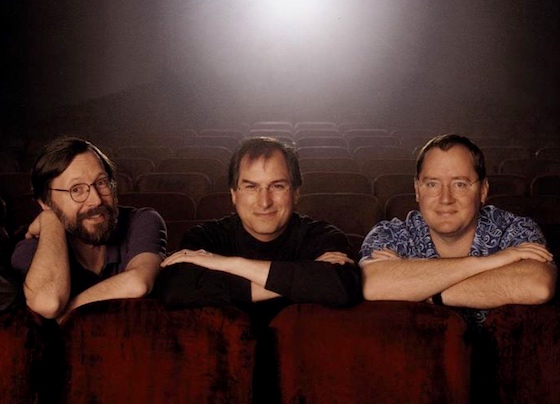
    Ed Catmull, Steve Jobs and John Lasseter

    It also exposes another major contributing factor to the company’s success: Steve Jobs’ patience. Toy Story is when the wider world noticed Pixar, but they’d been going for years, pushing boundaries and breaking ground with short films and advertising, but not making a profit. But Jobs stuck with it, giving them more money, because he took a long-term view. Of course, it paid off, and when they did hit it big, it was his business acumen that secured the future of the company: taking them public (which brought in massive funds) and striking a new, better deal with Disney. It’s easy for us to look at the quality of their films and go “that’s what changed things”, but the business side is a vital component too.

    Change things they certainly did, as the documentary shows towards the end, with 2D animation dying off and the Disney buyout-cum-merger with Pixar that would lead to 2D being saved — hurrah! Of course, this film is now 11 years old, and we know things didn’t end so happily: despite Lasseter & co’s commitment to helping 2D stay alive, Disney have released jus two traditionally-animated feature films since then, and the last of those was in 2011, apparently with no more planned.

    Luxo, pre-logo

    It’s at this point the film is also forced to acknowledge Cars, which I think most would regard as Pixar’s first real critical flop. They talk about how it was “beautiful” and a “hit”, but then move past it speedily, presumably to gloss over the fact it didn’t go down nearly as well as their other movies. This highlights two things: firstly, that this is certainly no “warts and all” telling — if there were internal conflicts or difficulties, they’re glossed over. Secondly, that the film could do with an update. As I said, it’s 11 years old now, and much has changed in that time. Pixar had only released seven movies at that point and were on top of the world, but since then they’ve released many more (they’re up to 19 now, with #20 imminent) and faced challenges of less-well-received films, a resurgence in the quality and popularity of Disney’s main output, and the likes of DreamWorks and Illumination gaining ground. It would be very interesting to see an update on how that time has been for the company.

    Despite those drawbacks, The Pixar Story feels like a very good overview of one of the most significant forces in 21st Century movies. Without being too sycophantic, it definitely feels like a celebration, but one that they’d earned.

    4 out of 5

    Coco (2017)

    2018 #109
    Lee Unkrich | 105 mins | Blu-ray (3D) | 2.39:1 | USA / English | PG / PG

    Coco

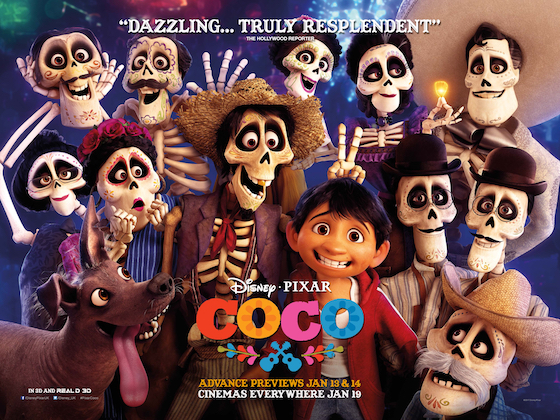
    Pixar’s 19th feature is an American-produced animated fantasy movie that co-opts a foreign culture to tell a story about a guitar-playing kid remembering his dead family — wait, doesn’t that sound familiar? Yes, in broad strokes, Coco is Kubo and the Two Strings Pixar-style. But, instead of Japan, this is Mexico, based around the famed Day of the Dead festival — which has also already been the subject of an American animated movie, The Book of Life. But that didn’t get the best notices, and Kubo didn’t get the respect it deserves, and this is Pixar in non-sequel mode, and so Coco has been praised to the high heavens. And it is good. But I didn’t think it was that good.

    So, to start again: Coco is the story of Miguel (Anthony Gonzalez), a kid who desperately wants to be a musician like his idol, Ernesto de la Cruz (Benjamin Bratt). Unfortunately for Miguel, all music is banned in his family, due to his great-great-grandfather abandoning his wife and young daughter to pursue it as a career. On the Day of the Dead, a convoluted and overlong first act eventually gets us to a point where Miguel finds himself actually in the Land of the Dead, surrounded by the skeletal form of everyone who’s passed away. To get back to the land of the living he must go on a quest, accompanied by downtrodden Héctor (Gael García Bernal), who’s being forgotten by the living and needs Miguel to reestablish his memory in the real world. More or less. I mean, the rules get more fiddly and complicated than that.

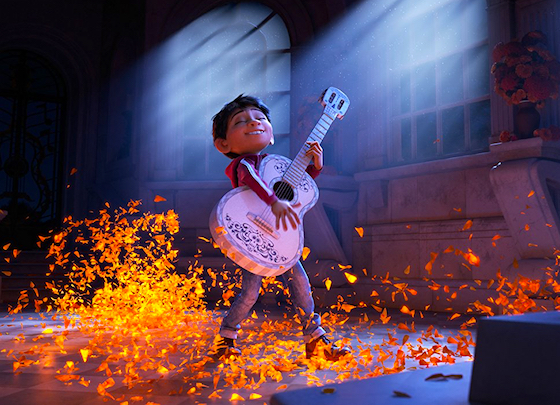
    The magic of music

    Frankly, the rambling length was my biggest problem with Coco. It’s not badly flabby, but it’s not as taut as I’d’ve liked it to be either, especially during stretches where you’re waiting for it to get to an inevitable plot twist or development. That’s not to say it’s without surprises — it pulls quite a dark plot twist about an hour in — and surprise isn’t the only virtue a story can have, of course, but it did reach a point where I was virtually shouting at the screen for them to finally get on with what was inevitably going to happen. Surely that’s a sign of something not working.

    Maybe that was the music — quite a central part of the storyline, as you may’ve inferred, but I can’t say I was a fan. Mostly it’s fine, but there’s the occasional musical number that just slowed things down. It’s not a musical in the strictest sense either, so the film does stop a bit in order to get each song underway (at least it usually then tries to progress the narrative while the song continues). The big number is the Oscar-winning Remember Me, which has grown on me slightly since I first heard it but, again, I’m not particularly a fan. I don’t know what it is, really, because when I’ve come across mariachi-style music in movies before I’ve often quite liked it. I guess it’s this particular set of tunes, then.

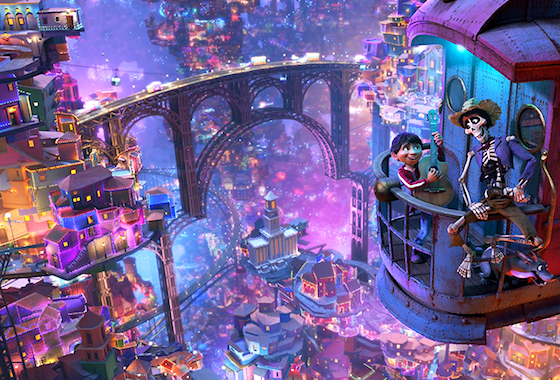
    Naturally it looks great — it’s Pixar, would you expect anything less? The colourful Land of the Dead stuff is the best visually, wide shots creating epic vistas, with stunning architecture that suggests quite a world… not that we get to explore it very thoroughly, even though the quest narrative takes us to a few different locations. We certainly don’t get any indication how it functions for the other 364 days of the year. Zootropolis showed us a glimpse of a well-imagined full-scale world, teasing enough that I wanted to explore it comprehensively in further stories. Coco’s just looks pretty.

    Colourful vistas

    Maybe I’m being too picky? Maybe I’m just trying to work out what it was everyone else loved so much, when I saw a pretty standard Pixar buddy quest story with new surface flourishes. Or perhaps I’m right, and other people were blinded by the emotional ending? The final few minutes are certainly effective at tugging at the heartstrings — even though I hadn’t fully invested in the rest of the film, even I felt a pang… albeit slightly undercut by once again having to yell at the characters to get on with what they were inevitably going to do. Not everything should move at a mile a minute, but c’mon, sometimes you’re just being languorous.

    Reportedly Coco had the longest active production of any Pixar movie, with work beginning in 2011 and (obviously) being completed in 2017. There are quite a few deleted scenes included on the Blu-ray which (from a brief flick through) seem to suggest the story once went in quite a different direction. I saw one person say those scenes suggest a much worse movie, too. I guess they kept tweaking the plot, then, maybe until it eventually resembled that familiar broad Pixar shape that dates right back to the original Toy Story.

    Coco is good, but I certainly wouldn’t say it’s perfect. And I think I might go watch Kubo again now, actually.

    4 out of 5

    The UK becomes probably the last major market to get Coco on disc with its release on DVD, Blu-ray, and 3D Blu-ray today.

    Batman: Gotham by Gaslight (2018)

    2018 #105
    Sam Liu | 77 mins | Blu-ray | 1.78:1 | USA / English | 15 / R

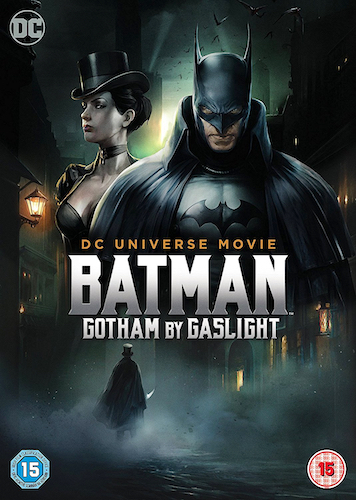
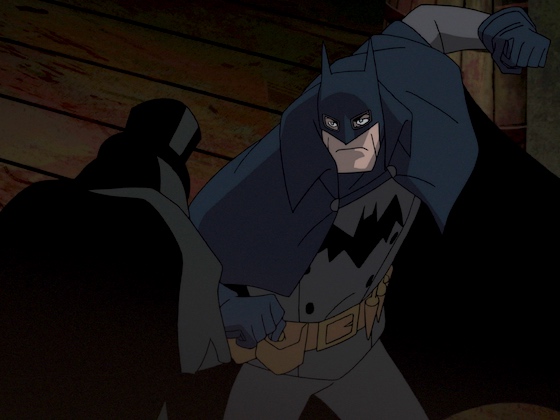
    Batman: Gotham by Gaslight

    I was all up for this adaptation of Gotham by Gaslight when it was first announced — I’m a fan of the original book, as well as the sequel (which they’ve also used parts of); and, I thought, even if they chose to deviate from it then I like the basic concept of “Batman meets steampunk”. But then the last few DC animations I’ve seen have been subpar, and the trailer for this one looked rather bland, so I decided to opt for a rental instead of purchase. Well, I never got round to doing that, and then Amazon slashed the price of the Blu-ray, so I ended up buying it — it still cost more than a rental, but if I liked it I’d save money in the long run. Fortunately, that turned out to be the case.

    If you’re not familiar with Brian Augustyn and Mike Mignola’s original tale, it involves Batman battling Jack the Ripper in late 19th Century Gotham City. It’s regarded as the first Elseworlds story, which is DC’s branding for stories that take place in different times, places, or “what if” scenarios — “what if Superman had landed in Russia?”, for example. This animation is a rather loose adaptation, which takes the basic concept from Augustyn and Mignola’s work but otherwise almost completely rebuilds it, mixing in a lot of ‘Easter egg’ stuff (like appearances from many more well-known Bat-characters) and some elements of the sequel comic, Master of the Future.

    Fisticuffs!

    So anyone expecting a straight-up adaptation may be disappointed, but taken as a film in its own right, for the most part it works. Having all the different familiar characters pop up makes it feel like a proper Batman tale, rather than a Ripper story that happens to have a costumed vigilante in it. Most prominent is Selina Kyle, aka Catwoman, although she isn’t really the latter here — Batman gets fully suited up, but the most Miss Kyle gets is a whip. The relationship between Bruce Wayne and Selina is one of the film’s best aspects, in fact, with the Elseworld setting seeming to allow a different focus than the usual antagonism that pairing has in screen adaptations — as one of the filmmakers says in the audio commentary, “it’s not a movie about Batman and Catwoman, it’s about Bruce and Selina.” Jim Krieg’s screenplay is good across the board, with several nice passages and scenes, even if at times it rests too heavily on exposition and speachifying.

    The one change that didn’t work for me is that it glosses over the bit about Bruce have recently returned from Europe, his return to Gotham coinciding with the Ripper’s arrival, thus making Bruce Wayne a suspect. Perhaps this isn’t a major point, but it’s a grace note that helps sell the whole concept for me. This wasn’t an oversight, however: they consciously decided to make Jack the Ripper a Gotham serial killer in this universe, so his London crimes never happened. But surely the point of using Jack the Ripper is the crimes he’s famous for? I think everyone knows he was a London serial killer, but the film does nothing to dispel this prior knowledge, nothing to establish that this version emerged for the first time in Gotham.

    The idea behind the change was to widen the suspect pool for the “whodunnit” element — if the Ripper had just come from London, his identity has to be someone who’s just arrived in Gotham. I can see where they’re coming from, but there are other ways round the problem — for example, the Gotham Ripper could’ve turned out to be a copycat, which would’ve added to the twist. As it stands, the identity of the Ripper (which has been changed from the book) is a huge twist, and, fair play to them, they pull it off. I’ll say no more because of spoilers, but I’m surprised it didn’t seem to cause outcry online. Maybe after the furore around The Killing Joke people just stopped paying attention.

    Miss Selina Kyle

    As with most of these DC animations, the quality of the visual is more TV than feature film, but they make the most of what they’ve got. There’s a squareness to the character designs, using few and simple lines, that is almost appealing. Perhaps it was inspired by Mignola’s artwork, though it does still feel sanitised compared to his exaggerated style. Also, a lot of effort is put into establishing this version of Gotham, with plenty of wide shots and scenes set in many different locations. Those were both deliberate choices to help make the city a major part of the film, and to give it life and texture as a Victorian metropolis. It’s an admirable effort considering the new era was a bit of a production headache: on their other movies, things like generic background characters and props can be recycled from film to film, but here every single element had to be designed and created from scratch.

    Voice casting is mostly spot on. Again, effort was put into evoking the period without wanting to go overboard — they didn’t want the voices to sound modern, but they didn’t want everyone doing English accents or something either. Bruce Greenwood makes for a dependable Batman and Anthony Head is perfectly dry as Alfred, but the foremost performance is perhaps Jennifer Carpenter as Selina. She’s most famous for Dexter, where she’s such a tomboy, but here she conveys a kind of Victorian elegance, with a hefty dash of feminism, very well. Inspired casting. Just as good is Scott Patterson as Commissioner Gordon. Best known for his modern, working-class character in Gilmore Girls, I didn’t even realise it was him until the credits rolled. Well, partly this is a problem with billing — only Greenwood and Carpenter get it. They’re the leads, so of course they’d get top billing, but Head and Patterson have sizeable roles and are surely just as famous? I guess it doesn’t matter, but it was a bit of a surprise to hear a recognisable voice crop up when they hadn’t been announced (as it were) by the opening credits.

    The Ripper approaches...

    In other merits, there are some surprisingly decent action sequences — a mid-way one atop an airship is the highlight — plus a nice music score by Frederik Wiedmann, which was partly influenced by Hans Zimmer’s work on the Guy Ritchie Sherlock Holmes films, but I swear I heard some overtones of Danny Elfman’s Batman in there also. In all the film is only an hour-and-a-quarter long, but it doesn’t feel like too much of a quickie — there’s enough incident here to fuel a ‘proper’ movie. I mean that in a positive way.

    As I said at the start, I expected very little of Gotham by Gaslight, for various reasons. I came away pleasantly surprised. In the commentary they talk about how much they enjoyed making it — how everyone involved, from the executives down to the storyboarders, all thought it was a particularly special project — and how they’d like to make a sequel, and they’ve got an idea for one involving the Joker. I’ve no idea how this has performed commercially, but I hope they get the chance.

    4 out of 5

    Another Elseworlds-y Batman animation, Batman Ninja, is released on DVD and Blu-ray in the UK this week, and will be reviewed in due course.

    Anon (2018)

    2018 #95
    Andrew Niccol | 100 mins | download (HD) | 2.39:1 + 1.78:1 | Germany / English | 15

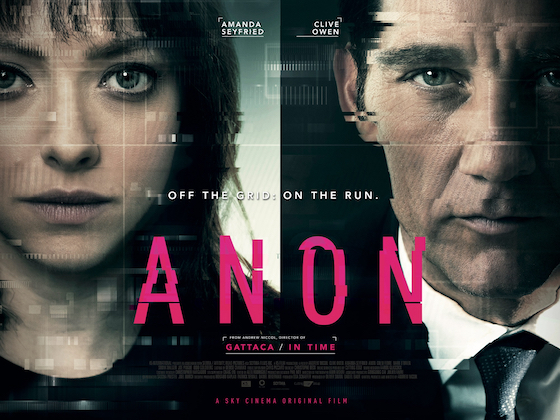
    Anon

    Sky Cinema’s latest acquisition in their attempt to establish a “Netflix original”-style brand is, ironically, also a Netflix ‘original’… just not in the UK (in the US, it was released on Netflix last week). It’s also probably their most promising grab yet… although when its forerunners are Monster Family and The Hurricane Heist, that’s not saying much. But this is a new sci-fi/thriller from the writer-director of Gattaca, so that’s gotta be worth a look… even if he has spent most of the intervening two decades making some, shall we say, less-well-regarded movies.

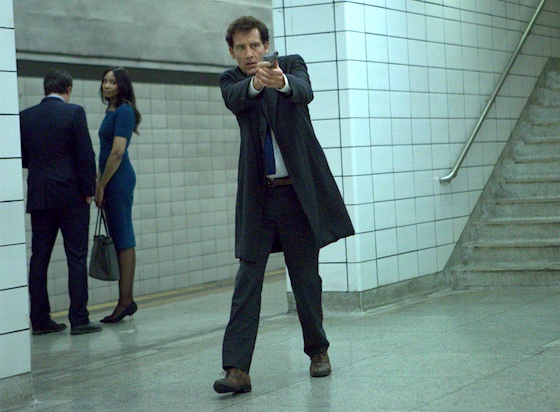
    It’s set in a near future where everyone has ocular implants that feed a constant stream of data, like non-stop augmented reality, identifying people and places, putting digital adverts on the side of buildings, and so on. These devices are connected up to a central network that allows what everyone sees to be monitored and played back when needed — for example, if a crime is committed. It’s the ultimate eyewitness, literally. When someone’s murdered, the police can just play back the last few moments of the victim’s life to see the killer. But when bodies start turning up whose final moments have been tampered with, detective Sal Frieland (Clive Owen) finds himself on the trail of an off-the-grid hacker (Amanda Seyfried) with the ability to alter records — and when the entire system is based on the notion that what’s recorded is unequivocal truth, her skills are a massive potential threat.

    Mad skillz

    Many a lazy review has described Anon as “like a Black Mirror episode”, which is not wholly inaccurate but is getting to be a stale descriptor — Charlie Brooker didn’t invent high-concept dystopian sci-fi about the dangers of future technology, so why wheel out the comparison every time anyone else dares venture into the same ballpark nowadays? Nonetheless, that is the ballpark Anon is playing in, but mixing speculative sci-fi with an equal dose of hardboiled noir to keep things spicy.

    That’s not my only problem with other reviews, though, many of which have put forth low scores and negative reactions. I saw some of them in advance of my viewing, so while watching I kept thinking, “it must go badly wrong later, because so far it’s great.” Well, that moment never came. I wouldn’t say the film is perfect — some parts, especially later on, are a tad hurried, meaning more clarity of motive would be nice — but, for me, the whole worked. There are some interesting sci-fi ideas (all the stuff about being able to trust what you see, including a standout extended sequence where the hacker messes with Sal’s head), plus it feeds some ever-relevant commentary on privacy and surveillance, with the added texture of a noir-shaped plot and atmosphere for good measure.

    In fairness, there’s clichéd stuff too, though I’m not sure how much it should bother us. For one example, it’s not much of a spoiler to say that Sal has a “dead kid” backstory, something which is a bit overdone at this point, but your mileage will vary on how much that stuff bothers you — while some of us just think it’s a tired trope, for others it seems to completely ruin the film. Conversely, I read someone criticise it for using “noir clichés” and just thought “that’s called genre, kid”. I also saw a review which decided the film was worth 1-out-of-10 just because there was a scene where they were smoking indoors, so there’s no accounting for what different people will consider important in their assessment of artistic quality.

    Gunning for other reviewers

    In my opinion, Niccol and co have offered up a well-realised near-future world — not necessarily fully imagined (it’s never explained how we got to a point where everyone has these implants, seemingly enforced by law, but that doesn’t really matter), but the way the tech is depicted and how it affects everyday life is very believable. We’re thrown into the deep-end of this environment, with just enough exposition to keep up, before the film quickly moves onto the intriguing mystery that challenges the rules of this world — and considering we’ve only just learnt the rules, being able to get straight to how they’re being circumvented is impressively economical storytelling. It’s also a neat setup for having to go back to old-fashioned cloak-and-dagger-type detective work in a modern setting — this future is so high-tech, the only way to stop the criminal from detecting the operation against her is to put Sal undercover using no-tech communication.

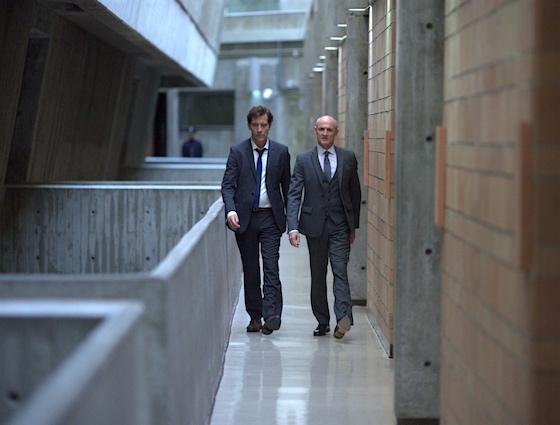
    It’s a really well made film, too. The locations are suitably evocative — the police buildings are defined by huge brutalist concrete slabs — which have been attentively framed and shot, without show-off-y camerawork. Then there’s the on-screen graphics during the point-of-view shots, which are detailed and thorough in their content, design, and execution. Their plausibility lends an automatic verisimilitude to the whole situation. And the POV shots had another nice surprise in store…

    Brutal

    Regular readers may recall that I’m a fan of a good variable aspect ratio, so it was a pleasant surprise to find that Anon features that technique — it’s unusual to see it outside of huge-budget films that have been shot/formatted for IMAX, and even then there’s no guarantee the multi-ratio version will be widely available (cf. Marvel only including them on 3D Blu-rays; Brad Bird not allowing Ghost Protocol to be released with it at all). In Anon, the ‘drama’ scenes are presented in your movie-standard 2.35:1, but it expands to a screen-filling 16:9 every time we see through someone’s eyes. These changes are very effective. The film employs the technique early and then often, so it doesn’t have the “wow” factor that some IMAX films achieve even when viewed at home, but it’s suitably immersive. Indeed, this would probably play really well on a vision-filling IMAX screen. The fact I wouldn’t have a chance to see it even if it did get IMAX showings means I’m not too sad it’s a direct-to-streaming release.

    That said, it’s kind of a shame Sky snapped it up over here. This is anecdotal evidence I know, but I know far more people with Netflix (like, pretty much everyone nowadays) than with Sky Cinema (I’m not sure I know anyone but me, actually, and I only subscribe occasionally), and I’d like to be able to recommend this to people, especially so as to go against the grain of the criticisms that I feel have been unwarrantedly negative. Well, obviously I can still recommend it, but how useful is that if people aren’t going to get the chance to see it on the basis of that recommendation?

    Who's that girl?

    Nonetheless, recommend it I shall. Perhaps Anon can’t equal other works at the top-tier of its genre, but I feel some have been unfair in writing it off. Any familiarities in the shape of its plot are in aid of creating that noir atmosphere, while the sci-fi concepts are reasonably considered and executed. For fans of the genres involved, it’s definitely worth a look.

    4 out of 5

    Anon is available on Sky Cinema from today.

    The Cabinet of Dr. Caligari (1920)

    aka Das Cabinet des Dr. Caligari

    2017 #163
    Robert Wiene | 77 mins | Blu-ray | 1.33:1 | Germany / silent (German) | U

    The Cabinet of Dr. Caligari

    The poster child for German Expressionist cinema, as well as featuring “cinema’s first true mad doctor” and “cinema’s first unreliable narrator” (at least according to David Cairns on the Masters of Cinema Blu-ray — I haven’t verified those statements for myself), The Cabinet of Dr. Caligari certainly has a lot to unpack for a film that’s barely an hour-and-a-quarter long. Or does it? Because one has to wonder if there’s an element of style over substance here.

    “A mystery story told in the Poe manner,” according to the original Variety review, the titular Dr Caligari (Werner Krauss) is the host of a fairground attraction, and his eponymous cabinet contains Cesare (Conrad Veidt), a somnambulist who Caligari controls — at the fair, to answer questions from the audience; and at night, to do his evil bidding, including murder. Caligari’s activities come to the attention of young Franzis (Friedrich Feher), who attempts to uncover the truth about the doctor and expose him.

    But the most famous thing about Caligari by far is not the storyline or the characters, but the visual style. Painted backdrops evoke a landscape straight out of a nightmare: jagged lines and stark monochromatic shapes (this isn’t just a film that happens to be filmed without colour, it feels black and white), they give the impression of the winding streets of a town and its locales without actually being one. The implied structures tower over the characters, leaning in above, creating an oppressive and unnerving atmosphere, while their total lack of reality evoke theatre more than the literalism we’re now used to from film. The make-up and performances are the same: heightened; dreamlike — or nightmarish.

    Impractical architecture

    Which may be entirely appropriate given the film’s framing narrative, which (spoilers!) introduce an ending that’s a little bit “and it was all a dream”. Or was it? Well, that depends how you interpret what happens. The bookends were apparently added to help sell the film to the public, framing its fantastical narrative in something more grounded. The screenwriters weren’t happy — as Lotte H. Eisner writes (in the MoC booklet), “the result of these modifications was to falsify the action and ultimately to reduce it to the ravings of a madman. The film’s [screenwriters], Carl Mayer and Hans Janowitz, had had the very different intention of unmasking the absurdity of asocial authority, represented by Dr. Caligari.” Well, the tacked-on ending doesn’t necessarily negate such an interpretation, you just need to fill in the blanks to get there yourself.

    For example, there’s what Cairns calls his “Mulholland Drive theory”: that what we witness is all true, until the point that Franzis sees the asylum director is Caligari; from there until the reveal that Franzis is an asylum patient is a fantasy. Evidence in favour of this: everything goes implausibly swimmingly for our hero in that section, from easily recruiting the asylum staff to finding (as Cairns puts it) “Caligari’s second cabinet, in which he keeps his entire backstory.” It’s a fun reading, even though it’s clearly a case of projecting an interpretation onto the film that wasn’t intended by the makers.

    One that fits better, perhaps, is that Franzis’ flashbacks aren’t merely “the ravings of a madman”, but he’s telling the truth, and that somehow between the end of his flashbacks (which see Caligari locked up in his own asylum) and where we join the framing narrative (with Franzis locked in the asylum and Caligari in charge), the evil doctor has reasserted his authority and captured his accuser. Of course, that requires a leap — how does Caligari regain control? Why don’t we see it happen? Well, we don’t see it happen because that wasn’t what the makers intended.

    Suspicious activity

    And so we come back to “it was all a dream”. Maybe that’s the best explanation — the writers may’ve hated it, but in some respects it saves them from themselves: Cairns’ visual essay highlights a bunch of plot holes, inconsistencies, and confusions, not to mention issues of character motivations and actions (“in a way it makes no sense to speak of character motivation in a mad man’s fantasy”), all of which you can hand-wave away if “it was all a dream”. This is why I wondered if it was style over substance. The sets, the make-up, the performances — all fantastically atmospheric. The story, the characters, their actions — not such great shakes.

    But maybe that’s okay. After all, why not? Director Robert Wiene and his crew did a fantastic job of bringing a surreal nightmare to life, and nightmares seldom feature plausible storylines.

    4 out of 5

    The Cabinet of Dr. Caligari was viewed as part of my Blindspot 2017 project, which you can read more about here.