aka Flickan som lekte med elden
2011 #39
Daniel Alfredson | 130 mins | Blu-ray | 15 / R
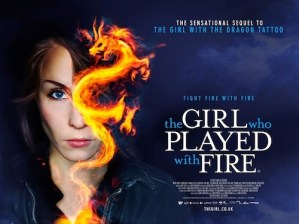 Creating any kind of sequel is hard — the endless array of failed attempts is testament to that — but I think creating a direct sequel to a successful crime thriller may be the hardest.
With action movies or superheroes or what have you, the same formula can be rehashed; it’s better if the concept or story is pushed forward, of course, but as most movies in those genres have the same plot regardless of the hero, it stands to reason the sequels can survive it too. With a straight drama you can continue the lives of the characters, throw some new, plausible (preferably), dramatic hurdle in their path and show how it affects their lives. But with a crime thriller…
Almost by definition a good portion of your cast are wiped out: if you didn’t kill them for the sake of a twist, they’re gone because they were tied to the first case. Drag every survivor back at your peril: their mystery’s been solved, and the chance of them all being involved in a new one is too improbable to consider. So you’re left with only the one or two or three investigators, 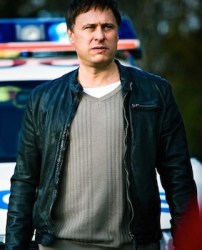 and they need a brand new case to become embroiled in. And it’s got to be as good as the last one, but it can’t be the same because we’ve had that mystery solved. You could have a different solution, of course; you could change some of the details, naturally; but police dramas on TV vary their types of murders every week for a reason. So in your new tale, the new characters have to be just as interesting as the first batch, the new mystery has to be just as intriguing too, and it really ought to be a notably different crime being investigated.
Stieg Larsson’s Millennium trilogy has an advantage here: with Lisbeth Salander as a break-out character, you can take a certain degree of the drama tactic and just throw something new in her path. Plus there’s the only story thread left hanging from The Girl with the Dragon Tattoo, the handful of hints at Lisbeth’s past, to feed off as well. On the other hand, there’s the problem of having sent Salander off to a new rich life at the end of the first book/film. Not only do you have to get her back, you have to re-team her with the investigative driving force of the first tale, journalist Mikael Blomkvist. Unlike a cop and his partner, say, these two have no shorthand way they would have to be reunited. There are other ways — the fact they had developed some kind of sex-based intimacy for starters — though for goodness knows what reason that’s ignored here in favour of some plot-engineered improbabilities of fate.
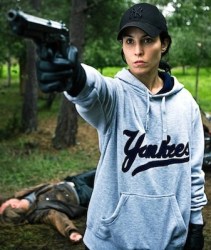 One solution to the sequel problem is to “make it personal”, and that’s exactly what we get in The Girl Who Played with Fire. A journalist and his girlfriend working for Mikael are murdered and Lisbeth is suspected of the crime. It’s somewhere around here that the coincidences begin to pile up. It makes perfect sense as a plot in itself, but in bringing Mikael and Lisbeth back together it doesn’t work — it’s not related to their previous encounter, so it’s entirely coincidental. Coincidence is a dangerous thing in fiction; it asks your audience to accept something that doesn’t fit our logic of how stories work. It happens all the time in real life of course, but in real life a flipped coin with a 50/50 chance of being heads or tails could turn up heads twenty times in a row, but a person asked to estimate twenty results of a flipped coin will never put more than two or three of one side in a row (unless they know to subvert it… look, this isn’t the point).
That said, if you want to be kind (and why not?), time has passed since they last met — it’s not as if Mikael ran into Lisbeth while pursuing his very next article. (We’ll overlook that the time passed is the nice round period of a year.)
What about the case itself, then? Sadly it’s not as engrossing or unique as the one in Dragon Tattoo. It seems based in sex trafficking, but that’s just window dressing: 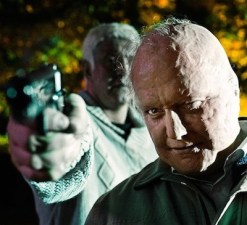 it’s never seriously looked into and, consequently, other dramas have tackled the issue with greater depth, sensitivity and insight. What Mikael and Lisbeth are actually looking into is a conspiracy of sorts around some murders. The way the trail is followed isn’t as clever as it was in Dragon Tattoo and, consequently, isn’t as interesting. The two protagonists go about their investigations independently. This is a long-held technique in novel writing — multiple strands allows the author to alternate which is followed from chapter to chapter, almost by itself providing momentum and the must-keep-reading factor as the reader has to race through the next chapter to rejoin the thread of the previous one (it’s not that simple or we’d all be churning them out… but look, I’m getting off the point again). The problem here is that Dragon Tattoo was largely at its best when the two were together, so keeping them apart is less satisfying. To top that off, they’re each finding out different things, which means as the audience we can feel a few steps ahead of the characters as we have the benefit of both sides of the case. That’s not always a bad thing, but it can be slightly disconcerting when you know the answers your hero is still searching for.
 Despite Lisbeth being the focus of much of the attention laden on these books/films/remakes, she’s a less engaging character when by herself. Here she shuffles around silently, digging up files that she and we stare at to reveal information. There are only a few moments for her (and, consequently, Noomi Rapace) to show off what endeared her to viewers before — her confrontation with a pair of arson-bent bikers, for instance.
Revelations at the end of the second act give things a kick up the rear, both for the characters and the plot, but it still has an undue reliance on coincidence, varying degrees of improbability, and the middling conspiracy plotting. This felt underscored by a henchman who’s essentially a Bond villain. In fact, as a white-blond (half-)German who feels no pain, he’s a specific Bond henchman (see: Tomorrow Never Dies).
The ending isn’t close to being conclusive. The mysteries where this particular tale began are solved, but numerous questions thrown up along the way are only just beginning to be answered. Whereas Dragon Tattoo works perfectly as a standalone thriller, even though it hinted at elements of Lisbeth’s backstory, this builds on them and leaves plenty hanging. In this respect it seems to be very much Part Two of a series (I’d say “trilogy”, but considering Larsson had (depending on which report you believe) five to ten books planned, that seems inherently inaccurate).
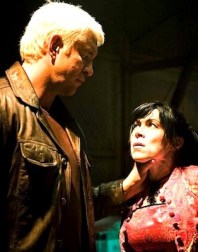 It also feels less filmic than the first film. Is it poor direction? Is it just the opened-up 1.78:1 ratio? I’ve read that all three films were shot like this, as they were intended for Swedish TV, meaning Dragon Tattoo’s Blu-ray is cropped to 2.35:1. You hardly ever see 2.35:1 on TV (Red Riding is the only made-for-TV example I can think of; most channels even crop films) so it automatically lends a filmic aspect, and therefore might explain the discrepancy. Conversely, I’ve also read that Dragon Tattoo was produced as a cinema film then later the two sequels were shot to serve as episodes three to six of a TV miniseries (with Tattoo extended using deleted scenes to make the first two episodes). Perhaps that explains it.
That’s besides the point anyway, because it’s not the direction or cinematography that lets The Girl Who Played with Fire down in comparison to its predecessor. In summary: the case isn’t as unique or enthralling, and by splitting up the protagonists we don’t get the full benefit of either. It’s not a bad tale, it’s just not a patch on the first.
This time next week, The Girl Who Kicked the Hornets’ Nest. Hopefully.

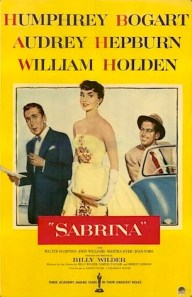 Audrey Hepburn’s next leading role after her star-making turn in Roman Holiday sees her playing a role that seems almost the opposite: going from European princess to servant girl for a rich American family. She’s still the romantic lead wanted by all the men, though.
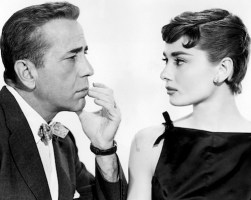 But it actually feels very mean-spirited — Sabrina is likeable enough that we dislike his machinations. Which means that, for me anyway, there’s no truly supportable lead character. And then at the end he genuinely falls for her, which I found an equally implausible development — as well as seeming totally out of character, it did nothing to redeem what had come before. And he’s old enough to be her dad.
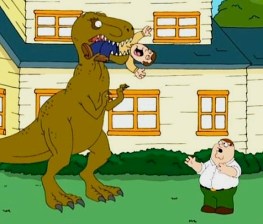
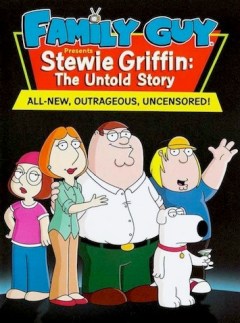 Following Family Guy’s cancellation after three seasons, it somehow found a new lease of life on DVD, posting surprising sales in what was, I suppose, the early years of the format’s mass take-off. This led to a rethink by Fox and a belated (as in, several years later) renewal for the animated sitcom. This story was originally intended to form a three-part opener to the first season back, but Fox wanted a direct-to-DVD movie too — presumably to capitalise financially on that previous success — and so those three episodes were retooled into a feature.
 and the need for it ultimately to be split back up (it was broadcast, censored, as a three-parter at the end of the comeback season). With subplots that begin and end within each half-hour(-ish) segment, it plays about as well as watching a three-parter back to back… which is more than can be said for that Star Wars film. Consequently, it also feels just like regular Family Guy — the same level of humour, basically — though it seemed to me like there were more scatological jokes than normal, some of them going on too long as well. If you’re not a regular viewer of the series, references to running jokes will pass you by; equally, the nature of its humour, often based in cultural references, means that some bits that are obviously jokes will elicit no more than bafflement from a non-versed viewer. Still, there’s plenty of more universal humour too. It relies on the usual style of numerous non sequitur flashbacks and asides. Which, again, is fine — that’s their style; it would be wrong to be anything else.
 the same as the series normally is, shows how arbitrary US regulations are. It feels like there are a few more jokes that are slightly dirtier than normal and there are a few extra swear words, but they consciously didn’t go OTT with them and, thankfully, it shows. But actually, most of the stuff that’s cut (as detailed on the commentary or in full
  And if you’ve always been curious but never given it a go, don’t start here — I don’t think it would be incomprehensible to first-time viewers, but I don’t think it’s the best introduction to the series either, and it probably makes more sense if you know the characters a bit.
 John Carpenter’s rough-and-ready ’70s exploitation B-movie is remade as a slick ’00s action B-movie dressed up as an A-movie by director Jean-François Richet (who would go on to find far greater critical acclaim with his two-part French crime epic
 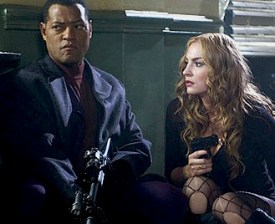 I don’t have hard timings to back this up, but I think the siege starts earlier and lasts longer here. It certainly felt that way, in part because the character of the father (whose act of revenge leads the gang to the precinct in the original) is gone. Of course, the film is about the titular assault on the titular station, so I think this refocussing is more than fair enough. It, naturally, emphasises the siege element of a film about a siege, something the original almost reneged on with its lengthy setup.
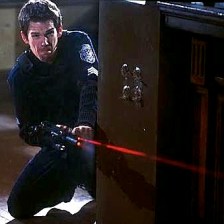 The only reason the prologue is necessary is if you want to begin your movie with an action sequence… so that’s why it there then. It’s also set in a sun-drenched summery atmosphere, totally at odds with the well-evoked wintery New Year that pervades post-titlecard. Consequently, looking back on the prologue, it feels even more out of place. I think it’s also designed to set a Gritty tone, with its rundown apartment and drugs deal and all that palaver; probably because the rest of the film is too far-fetched, if you were hoping viewers were going to be in mind of
  criminals inside the precinct are black or (in one case) hispanic. Ouch. You could try to argue we’ve developed past the need to force anti-stereotyping in casting; or you could argue this is a mainstream studio remake that felt the need to fall back on the familiar. It might not be a noticeable point were it not for it being so markedly different to the original.
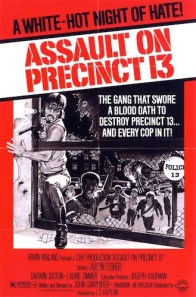 Assault on Precinct 13, it has always seemed to me, is an acclaimed cult classic of the action genre. I could probably find some references to support this — I know it’s on Tarantino’s list of the top seven exploitation movies, for starters — but for speed let’s just assume I’m right. Thing is, on initial impressions at least, I didn’t quite get that. It felt like an unexceptional low-budget ’70s exploitation B-picture to me.
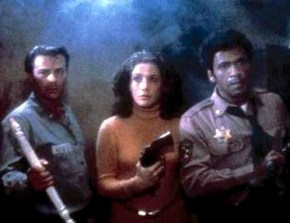
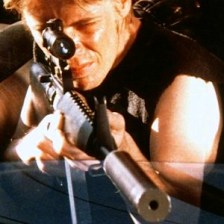 a huge gang who lay siege to the cut-off station. So the cops and the prisoners must work together to fend them off.
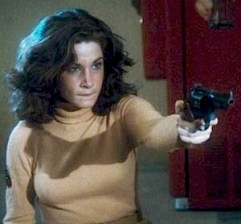 performing voodoo-esque rituals, coming and going as if by magic, doing things our heroes can’t necessarily explain, attacking in almost random waves… They feel almost supernatural; one might go so far as to say they play more like zombies than an organised criminal force. It’s no surprise that Carpenter would next helm
  And another says that, “like
  Sometimes, I wonder what I’m playing at. The list of films I haven’t seen but really should is quite extraordinary, from enduring classics like
 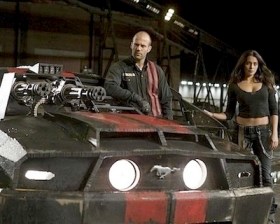 And I expect it says something about that intended audience that the end credits begin with a “do not attempt this at home” notice.
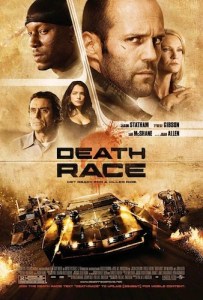
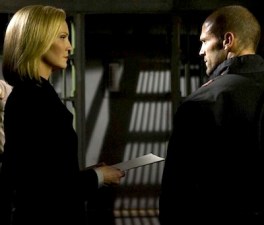 Even if it’s all about the action, it could be worse: I’ve seen plenty of films featuring weaker dialogue, weaker acting and an even less relevant story. Death Race does everything it sets out to do competently, delivering a couple of decent action sequences and even a couple of laughs along the way. Not exceptional enough to be particularly memorable, but it is fun — if you like this kind of thing — while it lasts.
 A World War II espionage thriller about the OSS — spies, basically, and the forerunner to the CIA. Despite all the thrills this should elicit, especially when directed by Fritz Lang, I wasn’t particularly impressed.
 This is probably the benefit of being based on a non-fiction book.
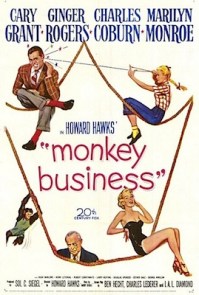 Monkey Business came
 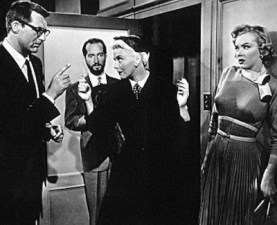 followed by “Cary Grant and Ginger Rogers behave like 6-year-olds”.
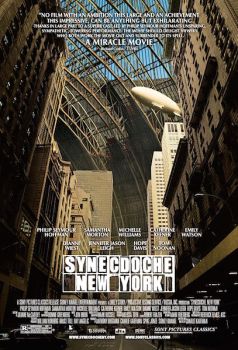 Despite its unpronounceable title, Synecdoche, New York starts out like a relatively normal comedy/drama… but then weird touches begin to creep in. A house that’s on fire when a character buys it and continues to be on fire for the next several decades, for instance. No one in the film bats an eyelid. Then the really weird bit arrives; the bit you all probably know; what the film’s about (except, of course, not what it’s About), as Philip Seymour Hoffman’s theatre director begins to construct a life-size New York within a warehouse.
 and I haven’t begun to care in the months since I watched it. It’s the kind of film where, as it gets on, you feel it’s a rich experience that you’ll have to ponder for a bit once it’s done, even if there’s something you quite fancy watching on the same channel immediately afterwards. But by the end it became the kind of film I was fed up with pondering, and I bloody well watched what was on the same channel immediately afterwards. Kaufman’s weirdness can wear you down to the point where characters who were interesting and ideas (both plausible and of Kaufman-logic) that had potential cease to be worth caring about; where you go from the point of “I’ll look up an explanation on the internet once it’s finished” to “…meh”.
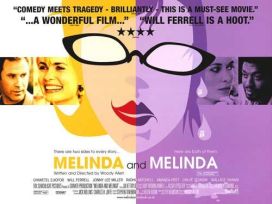 Despite the city being as associated with him as jam is with donuts, Melinda and Melinda was Woody Allen’s last New York-set film before he began his current European phase with London-set thriller
  If it wasn’t for the framing device that clearly tells us not only the thematic point of the film but also which bit is the comedy and which the tragedy, I don’t think it would be immediately possible to tell which was which. Indeed, one might think that was Allen’s point: life is neither tragedy nor comedy, but both at the same time, so of course you can’t tell the difference. But as it goes on the comedy does introduce a couple more laughs, but even more so a general niceness that leads to the predictable rom-com ending. Concurrently, the tragedy introduces darker elements and refuses to provide a neat, conclusive or satisfying ending, which is both thematically sound (I suppose) and also dramatically frustrating.
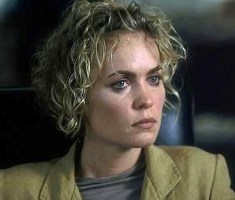 and then they’ve crafted them completely independently. So that is to say, for instance, that the same restaurant may appear in both tellings, but at different points and with a different scene taking place; or in one storyline the director-character is an outsider who holds the husband’s future in his hands, while in the other the director-character is the wife and a different outsider holds her future in his hands. If that makes sense.
 100Films.co.uk