2013 #103
Zack Snyder | 143 mins | Blu-ray | 2.40:1 | USA, Canada & UK / English | 12 / PG-13
 When Doctor Who returned in 2005, eager to find a new mainstream audience, can you imagine how well it would have gone down if it spent the first six or seven minutes on an alien world where old men with silly names wearing strange costumes argued about politics? Fastforward the best part of a decade and, buoyed no doubt by the various scales of success enjoyed by the likes of Avatar (strange alien world, silly names) and Game of Thrones (arguing about politics, silly names), that’s exactly how Superman reboot Man of Steel chooses to spend its opening 20 minutes. (In percentage terms, “6 or 7” is to Doctor Who’s brisk 45 minutes as “20” is to Man of Steel’s indulgent 143.)
Produced by Christopher Nolan and other creatives behind the uber-successful Batman reboot The Dark Knight Trilogy, this is intended to do a similar thing for Superman: a present-day, real-world relaunch. Which begins with a huge sequence on a crazy alien world. Well done, chaps. And that’s before we get into the merits of grounding clean-cut Boy’s Own all-American hero Superman in our ideologically complex modern world. Is that what Superman is? Based on critical and fan reaction to Man of Steel, your mileage may vary — some seem to find it fresh and invigorating, others a betrayal of what this archetypal superhero is meant to be.
 Personally, I find it a valid thing to attempt. Rather than take the Superman mythology as read, here Nolan and co — including screenwriter David Goyer and director Zack Snyder — have tried to imagine what would really happen if an alien baby with incredible powers arrived in our world. So Clark Kent hides his abilities, goes on a trek around the world to ‘find himself’, and when he’s uncovered there’s mass media and military interest. Which is pretty accurate, I think. If some guy started stopping oil rigs collapsing single-handed, or flying around the place, the military’s hardly going to sit back and go, “oh OK then”.
Snyder emphasises this “it’s real!” tone with grainy handheld cinematography, which I’m sure is consciously designed to look like a ’70s independent drama. It’s also designed to mask a simple fact: such presentation details and a languorous first half aside, this is a pretty standard blockbuster. Shoot it with clean digital visuals and cut the “finding himself” segments back to a brisk first act and you’d have a completely standard array of big punch-ups and faintly ludicrous plotting. It’s interesting how much a ‘gritty’ sheen (as it were) can persuade people that what they’re watching is revolutionary across the board, but really it’s just a different way of presenting your common-or-garden blockbuster content.
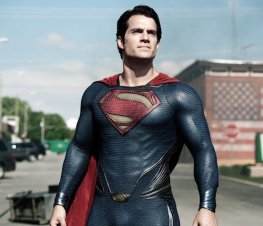 The filmmakers have certainly bought into their own conceit, to a frankly laughable extent. The Blu-ray contains a featurette called All-Out Action, which the menu describes as follows: “The action in Man of Steel soars to new heights with a level of realism never before seen in a super hero film.” Hahahaha! Realism my arse. Once the action kicks in it’s positively comic book. Men are hurled around like rag dolls; Metropolis is destroyed in a huge flying punch-up, which just feels like a less effective re-hash of The Matrix Revolutions. There’s nothing wrong with comic book action in a comic book movie, in my opinion, but shooting it on desaturated grain-addled film stock with handshake and ragged zooms does not make your OTT computer-generated fight “soar to new heights with a level of realism never before seen”.
This is before we even get on to the morally divisive aspects of said fighting. Much talk focused on two elements (spoilers follow for the next three paragraphs): the large-scale destruction of Metropolis, and Superman killing Zod. Defenders say that destruction happens, that Metropolis was evacuated, and that Superman had no choice but to kill Zod to save innocent lives. Opposers say we don’t need to see so much disaster on screen (especially in the wake of other films, like The Avengers, showing similar city-level destruction), and that it’s out of character for Superman to murder someone in cold blood and it simply shouldn’t have happened. My view is split between the two.
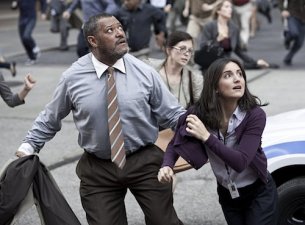 As to the destruction of the city, I think the criticism is right. The city clearly isn’t evacuated before buildings start falling — it’s being evacuated, but no one even knew to start running before the Massive Machine Of Destruction (I forget what it was actually for) turns up and starts destroying things. People run into the streets as buildings fall on them. As a viewer, how can you miss that hundreds, possibly thousands, of innocents are dying? The cinematography makes it look like 9/11 — incredibly like 9/11, in fact. That was 12 years ago by the time of the film’s release, but is it OK to trade on such iconography in a blockbuster entertainment? Should we just ignore the notion that so many ‘extras’ are dying because, hey, it’s just a superhero movie? But aren’t we meant to be taking this as Real World, chaps?
The fate of Zod, on the other hand, is a different matter. I think it’s interesting to push heroes — heck, characters fullstop — in new and challenging directions. It’s all too easy to just avoid putting a character in a certain situation so you don’t have to see what they’d do; to give Superman an easy way to lock the villain up so he doesn’t have to make any other decision. But what if that isn’t an option? What if someone just as powerful is running around killing people at random; what if it’s within your power to stop him from imminently murdering a family with kids, but the only way to achieve that is to kill him? That’s the position Snyder, Goyer and Nolan put Superman in at the climax, and that’s the decision he has to make. Does he do the right thing? In fairness, I think that’s the debate the film is asking for. It’s not like Superman walks away fine with what he did, and I expect the idea is that his actions will have an impact on his values going forward.
 There’s a lot else that Man of Steel plays with in the Superman legend besides the violence and cinematography. Some people will surely miss the bumbling Clark Kent, the burgeoning relationship with Lois Lane, and so on. These elements are eventually brought in, sometimes in a modified way, which makes it feel like they’ve been put in place — Superman Begins style — to be used in a sequel. Except we know the sequel is headed off in the Batman vs Superman direction, so how much ‘clumsy Clark’ we’ll get to see is questionable. I have to say, I don’t blame the makers going a new way — how do you compete with the Christopher Reeve classics? And if you try to emulate them, you end up with Superman Returns, which was a box office and critical success but for some reason is remembered as a failure in both regards.
A 21st Century reinvention of the oldest superhero is an interesting notion, and in some regards Man of Steel works; but those successes are regularly marred by superficial ‘innovations’ that don’t click. The final result is a standard blockbuster masquerading as something revolutionary; an adequate film that indulges itself, leading to a belief it’s something more, which is ultimately to the detriment of its audience.

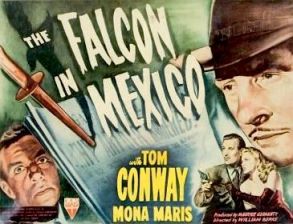 “In our peaceful country, life is very seldom in danger,” states one character halfway through The Falcon in Mexico, just one of many instances that might make you think the film was co-funded by the Mexican tourist board. Oh sure, there’s the usual array of thefts and murders that you’d expect from a Falcon adventure, but they’re mostly committed by Americans. No, the film on the whole is very keen on the place, and the quality of its police, and even ends with a shot of a poster proclaiming “Visit Mexico!”
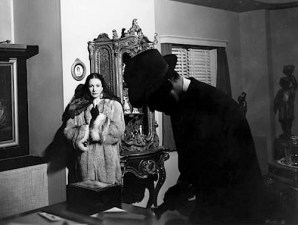 What I did make out was grandly far-fetched — more so than normal, I mean. Considering the tone and style of the series, it’s kind of OK that most of the plot’s explanations are not even close to plausible in the real world. On the bright side, it does make for another genuine mystery (I should stop praising the series for this now, all the films do it).
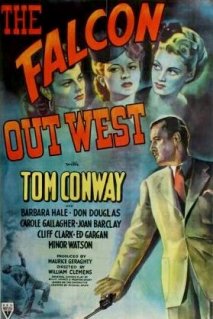 With each passing entry, the Falcon films become less reminiscent of their Saint forebears and more akin to the Poirots and Marples of this world: a gently comical murder mystery, with a finite location and a finite number of suspects, where the ‘game’ of solving the plot is the point.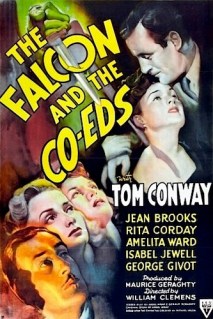
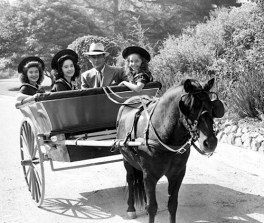 In fact, the worst thing about the film is purely a result of its age, and that’s the occasional bout of misogyny. Let’s face it, the girls going all giggly over the Falcon is pretty defensible (look at modern-day reactions to the likes of One Direction, Justin Bieber, or even Benedict Cumberbatch), but the bit where he picks a twenty-something girl up to smack her bottom is a bit much. Still, it opens with a great bit: the Falcon parks his car, a girl immediately runs up to it: “Mr Lawrence?” “Yes?” She jumps in, instantly kisses him full on the lips, and when she pulls away all he can say, with a slightly surprised look, is, “Nice!” You could put that in something today and it’d still work.
 such thoughts always endear them to me.
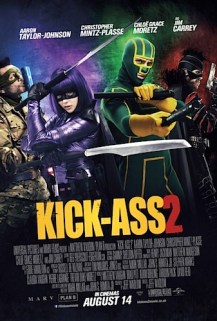 When
When  hiding that fact from her disapproving guardian (Morris Chestnut). Meanwhile, Chris D’Amico (Christopher Mintz-Plasse) wants revenge on Kick-Ass for murdering his father, but is being kept out of the way by his mother and the remains of his father’s mob organisation… until she dies in a freak accident, when Chris dubs himself “the Motherfucker” and sets about forming a gang of supervillains…
 the sequel doesn’t feel as focussed. The themes are somewhat familiar — superheroes leading to supervillains, as seen in
 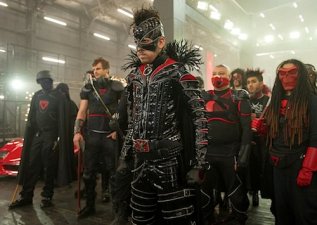 Wadlow does make welcome changes to Millar’s notoriously nihilistic comic, however: instead of gang-raping Kick-Ass’ girlfriend, the Motherfucker can’t get it up (I guess because Kick-Ass isn’t dating his mother (ho ho!)); instead of murdering Colonel Stars & Stripes’ dog, he remarks that “I’m not that evil!”; and so on. The film version still has its points of offensiveness and some outré ideas, certainly, but the needlessly-harsh edge has been taken off, especially when it comes to punishing characters who are innocent. With the exception of Kick-Ass’ dad, but then that’s a superhero staple… just one that’s more violently executed here than normal.
 So is Kick-Ass 3 a good idea? Kick-Ass 2 does provide a kind of conclusion to the story… but it also leaves it wide open for more, not to mention that Millar & Romita’s third comic book miniseries (currently running) is supposed to be the definitive final act for the characters. It would be a shame not to see that completed on screen, but perhaps with more care in how it’s executed.
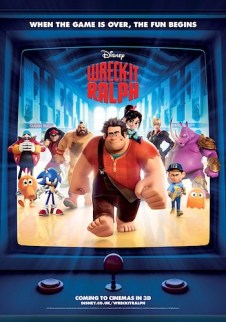 Disney’s 51st and/or 52nd animated classic (depends who you listen to) is, essentially,
  Unfortunately, despite the rarely-filmed milieu of video games, it’s all a bit predictable — like I said, it basically does with video game characters what Toy Story did with toys, both in terms of the story and its themes of acceptance. At least one wearing subplot had me involuntarily exclaim “oh get on with it!” out loud (and I was watching by myself). The pace rarely lets up, and at 101 minutes that becomes tiring. When it does give you a break, you kinda wish it would get a wriggle on, because it’s obvious where things are going and it’s wasting time getting there. Of course, most mainstream films (especially kids’ movies) are going to follow broadly the same arcs — however bad it gets we know the hero will win, etc — but the trick is to make you enjoy the journey, not long to arrive at the destination. I spent most of the third act almost drumming my fingers as I waited for it to get to the latter.
 Wreck-It Ralph isn’t actually a bad film. There’s a fair bit of inventiveness with the concept, and the makers have worked hard to establish a world with rules (though your mileage may vary on how successfully they’ve done that), but it descends into a breathless, sugar-fuelled, reheated runabout. I imagine young kids will adore its colourfulness and its energy, and won’t be bothered by the over-familiar plotting and life lessons; but, beyond nostalgia for arcade gamers, I don’t believe it has huge amounts to offer a grown-up viewer.
 Jackie Chan and Owen Wilson are back as… um… whatever their characters were called, in this follow-up to
 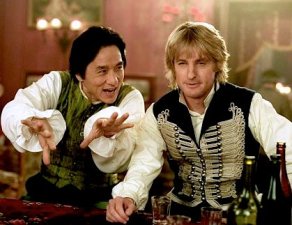 Knights as a whole feels like it moves better than its predecessor — it gets going quicker, without the need to establish these characters and force them together; there’s a greater reliance on those quality action sequences. The guest cast feels a bit bargain basement, though the villains — Aiden Gillen and the aforementioned Yen — are of a higher calibre. This means we’re treated to a pair of great climaxes, with Chan first having that punch-up with Yen, followed by a three-sword duel with Gillen (or possibly a stuntman).
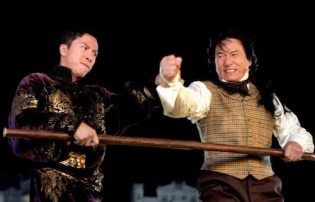 In the end, I’m not sure if I like it more or less than the first film. The Western setting was a smoother fit in many ways, but here there’s a less stodgy plot, a general reduction in the overlong comedy sequences, and even better action sequences. All things considered, I think Knights may actually have the edge.
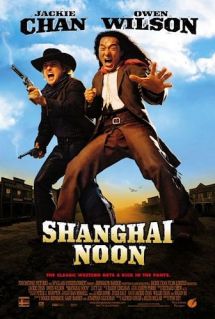 Hong Kong martial arts legend Jackie Chan and Hollywood funnyman also-ran Owen Wilson team up for a film that I don’t think anyone involved could reasonably deny is just “
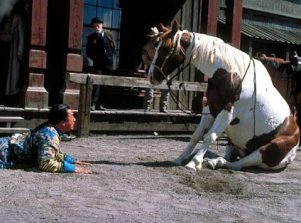 Things that could have (should have) been fixed way back at the writing stage leer out at the viewer. The plot is treated almost perfunctorily, as if it’s not interesting enough to bother explaining or expounding upon. It’s hardly highly original or complex, but it feels as if important beats or character motivations have just been skipped over. For instance, the character/story impact of the final fight would be so easy to build up a bit, but they haven’t and so it falls a bit limp. Not to mention the bit when two characters who are essentially on the same side have a duel when they have more pressing things to worry about — save the Princess first, fight amongst yourselves later! Then there’s all the time given to Wilson’s rivalry with the local sheriff/martial/whatever, which we’re told exists, isn’t really built from anything, and suddenly is half the focus of the climax.
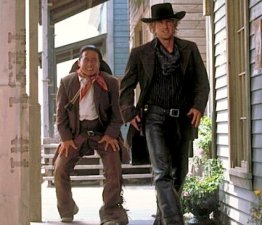 Shanghai Noon should be a lot of fun. It should be Jackie Chan and Owen Wilson engaging in a bit of comedy between skilfully choreographed, occasionally amusing, balletically staged fight sequences. But it isn’t. It’s laden with an underwritten plot, bulked up by clichés, stereotypes, overplayed character scenes, humour that doesn’t work, and a shortage of judicious editing. It is still kinda fun, but it could so easily have been more.
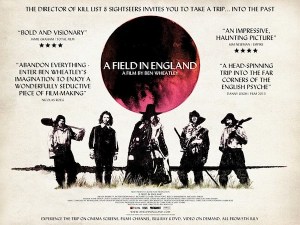 Much was written about A Field in England at the time of its release, so if you frequent the right places online or in the press you can’t’ve missed it. Nonetheless, there’s a good chance you’ll have heard of it more for its release format(s) than for anything in the film itself: the fourth feature in just five years from new British critical darling Ben Wheatley, it was released to cinemas, DVD, Blu-ray, download, video-on-demand, and shown on free TV all on the same day, a first for British cinema. Any casual viewers who checked it out for that reason were in for a shock, because this certainly isn’t an easily-digested mainstream experience.
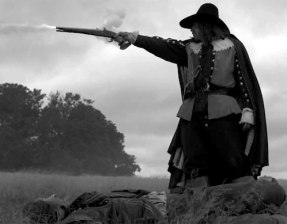 That very subtlety leads some viewers to write this kind of movie off — and fair enough, because if you’re searching for any kind of mass acceptance you don’t do it with a black-and-white film about a few blokes in period dress running around a field doing weird, inexplicable things. Though you might top it off with a shoot-out that is arguably one of the year’s best action sequences, something Wheatley and co do do. And without making it feel tonally out of place, either. Impressive. In keeping but even more memorable is the moment you’ve surely heard about — “when he comes out of the tent with that look on his face”. I wasn’t able to watch the film until something like 24 hours after its Big Premiere, by which time I’d already heard everyone talk about that, and yet it was still uncomfortably uncanny. Kudos, Reece Shearsmith, you’re an odd’un.
 In terms of the new funding models and simultaneous multi-format release and all that… well, it depends what their goals were. If it was to make interesting, alternative, minority-interest films… fantastic, they’ve done it — and got a remarkable amount of interest in the process. If it was meant to be a way of turning a profit, or of reaching a bigger audience… well, it succeeded this time — but how many of those viewers are going to come back? A Field in England is definitely the kind of film that appeals to some people, but it is defiantly not “mainstream cinema”. No bad thing, and something that should be encouraged, supported and funded in some way; but however you do it, it’s not going to continuously bring in big bucks.
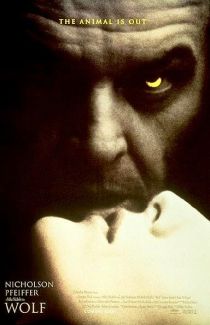 Without meaning to spoil anything, Wolf is rated R for “language and werewolf attacks”! I love the ludicrous specificity the MPAA indulge in sometimes. I know the BBFC’s famous “mild peril” is pretty useless, but at least they draw from an academic- and objective-sounding pool of phrases in their summaries, rather than throwing in ‘advice’ that is meaningless (there are perfectly PG werewolf attacks in other movies).
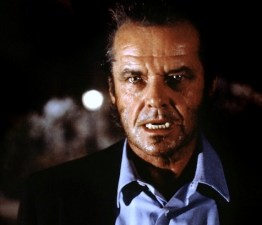 It’s those early sections where the film is at its best, when it tries to stay grounded in some form of realism. Any time it gets too Fantasy, it begins to get a tad silly. The climax in particular seems to come from a different film: Wolf abruptly moves from being an office politics drama with a fantasy edge, to a full-on manwolf-vs-manwolf brawl. As a straight dramatic director, Mike Nichols doesn’t seem to quite have the chops to pull off this fantasy/horror stuff without it beginning to look daft. That might not be entirely his fault, however, as reportedly the film was delayed by months to re-shoot the entire third act. Perhaps originally it had something more in-keeping? That said, he did want Michelle Pfeiffer to wear a red-hood sweatshirt during the finale! She refused, fearing it would harm the film’s credibility. She was right — it’s quite silly enough as it is.
 I can only presume there were hefty paydays for Nicholson and Pfeiffer, both megastars at the time, and possibly Christopher Plummer’s supporting role, maybe Nichols, and on scoring duties (obviously), Ennio Morricone. And maybe those re-shoots were really extensive. Or perhaps they spent it all on the nighttime aerial photography of Manhattan, which is gorgeous — that would’ve been worth it.
 100Films.co.uk