2013 #56
Andrew Dominik | 160 mins | Blu-ray | 2.40:1 | USA, Canada & UK / English | 15 / R
 September 1881: after admiring their leader for years through cheap magazine stories, 19-year-old Robert Ford manages to hook up with the James Gang. Little does he suspect that, just seven months later, he will be responsible for the murder of his idol, Jesse James. (That’s not a spoiler, it’s in the title.)
Ultimately released in 2007, The Assassination of Jesse James by the Coward Robert Ford found itself going head-to-head in the awards season with No Country for Old Men and There Will Be Blood. The accepted narrative of that time is about the two-horse-race between the latter two, though Jesse James fits with them in some kind of thematic and stylistic triumvirate: they’re all products of what I’d call “American mainstream art house” cinema; all classifiable as Westerns, though none in a strictly traditional sense; all more concerned with their characters and their lives than the machinations of the plot. In the end, No Country garnered most of the awards, There Will Be Blood seems to have settled in as a critical darling, but, for my money, this purest Western of the three is by far the best.
I’m not going to waste much time making direct comparisons between the three films. I suspect there’s an article in that, if someone hasn’t written it already, but it’s not one I have much interest in penning: I don’t think I’ve made much secret of my distaste for the Coen and Anderson efforts in this little threesome, both being films I never really engaged with and certainly didn’t enjoy (in fairness, I should give Blood a second shot, but even the idea of sitting through No Country again makes me shudder). The Assassination of Jesse James, however, is a film I both engaged with and enjoyed greatly.
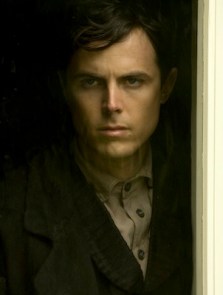 Let’s be clear, though: this is not a film for everyone. This is not an action movie set in the Wild West, which might be what’s expected from a Hollywood studio movie starring Brad Pitt. Apparently director Andrew Dominik intended to make a film with a Terence Malick vibe, so I read after viewing, which chimed with me because “Malick-esque” was one of my foremost thoughts during viewing. This is a slowly-paced two-hours-and-forty-minutes, with more shots of crops blowing gently in the breeze or riders approaching gradually over distant hills as there are flashes of violence. Despite what the studio wanted, this is not a fast-paced action Western, it’s a considered, sometimes meditative, exploration of character and theme.
The character explored is not particularly Jesse James, but Robert Ford. As the latter, Casey Affleck was largely put forward for Supporting Actor awards, which does him a disservice — the film is largely told from Ford’s perspective, and though there are asides where it follows James or other members of the gang, it begins with Ford’s arrival and ends with his departure from this world. Affleck is superb in a quiet but nuanced performance, which I would say ranges wildly without ever appearing to change. At times he is cocky and self-sure, at others cowardly and defensive, often creepy and occasionally likeable, sometimes both worldly and naïve, a perpetual wannabe who even when he achieves something is still poorly viewed. You might think the title is stating its position on him, but it really isn’t — it’s a position to be considered, a point of contrast to the man’s motives and actions; a statement that is in fact a question.
Conversely, Pitt’s Jesse James is closer to a supporting role. We see him primarily through the eyes of others; he is distant, unknowable, his moods and actions unpredictable thanks to years of law-dodging that’s led to a paranoia about his own men — not all of it misplaced.  Jesse’s mood swings are more obvious than Ford’s, but Pitt makes them no less unlikely. At times charming and a clear leader, at others he is a genuinely tense, frightening presence, without ever needing to resort to the grandstanding horror-movie grotesques offered by (Oscar winners) Daniel Day-Lewis and Javier Bardem in There Will Be Blood and No Country respectively.
Though there are other memorable and striking performances — particularly from Sam Rockwell, Paul Schneider, and a pre-fame Jeremy Renner; plus a precise, perfectly-pitched, occasional voiceover narration from Hugh Ross (who doesn’t have many credits to his name but surely deserves some more now) — the third lead is Roger Deakins and his stunning cinematography. There are many clichés to use for good-looking films, and the vast majority of the time they are trotted out as what they are and not really meant. Jesse James, however, is one most could be applied to with total accuracy. For example, there are very few — if any — films where you could genuinely take any frame and hang it as a perfect photograph; but if there is one where you could, this is it.
Deakins has reportedly said that “the arrival of the train in darkness is one of the high watermarks of his career”, and he’s right to think that. It’s a glorious sequence, made up of several shots where every one is perfectly composed and lit to create a remarkable ambience and beauty, as well as telling the story, which in this instance involves as much creation of suspense as eliciting pure artistic appreciation. Deakins did take home a few awards for his work here, but not the Oscar. I can’t remember which film did win and, frankly, I don’t care, because whichever it was this outclasses it by miles.
 This must also be thanks in part to director Andrew Dominik. Every last shot feels precisely chosen and paced. Of course, every shot in every film has been chosen and placed where it is, but the amount of thought that’s gone into that might vary. Jesse James somehow carries extra weight in this department, with no frame in its not-inconsiderable running time wasted on an unnecessary angle or take that’s allowed to run even a second too long. Somewhat famously, there was a lot of wrangling over the film’s final cut (delaying its release by a year or more), with the aforementioned debate between something faster and something even slower: a four-hour version screened at the Venice Film Festival, to a strong reception. Sadly, the intervening years haven’t seen that cut, or any of its parts, resurface (to my knowledge). That’s an hour and twenty minutes of material and I’d love to know what’s in them.
One thing in there, I’d wager, would be the performances of Mary-Louise Parker and Zooey Deschanel. Both their characters have a tiny presence in the finished product, and while that may be fine for the overall story (some would criticise how much female characters are sidelined, but that’s another debate), casting two moderately major actresses creates a disjunct with the size of their roles. I was going to say this is one of the film’s few flaws, but it’s debatable if it even qualifies as that: if they’d cast less recognisable faces, their lack of presence would pass by unnoticed.
The other thread I mentioned, seven paragraphs ago, was “theme”. The film has a lot of concurrent aspects one might consider — “loyalty” being a major one, for instance — but I think the biggest is “celebrity”. Not in the modern sense, though I’m sure there are analogies for those that wish. To pick up on what I was saying before: Ford is the main character, and the main thing he wants, even if he doesn’t realise it, is fame. He joins the James Gang because he’s enamoured with the adventurous tales he’s read; 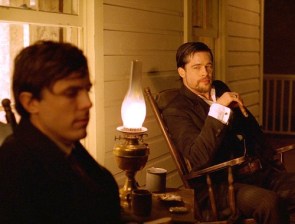 because he’s obsessed with the notoriety of Jesse. Later, once the titular deed is done, he becomes an actor (not without talent, as the narration informs us) and re-performs the act that made him famous hundreds of times. It’s his legacy, however, to not be as well-remembered as his victim; to not be as well-liked, even; not even close. There’s something there about the pursuit of fame for its own sake, if nothing else.
It’s difficult to call any film “perfect”. Certainly, there would be plenty of viewers who would consider The Assassination of Jesse James to be an overlong bore. Each to their own, and I do have sympathy with such perspectives because there are acclaimed films that I’ve certainly found to be both overlong and boring. Not this one, though. From the constant beauty of Deakins’ cinematography, to the accomplished performances, to the insightful and considered story (not to mention that it’s been cited as the most historically accurate version of events yet filmed), there are endless delights here. As time wears on and awards victors fade, it deserves to elbow its way back into the debate for the best film of the ’00s.
The UK TV premiere of The Assassination of Jesse James by the Coward Robert Ford is on ITV4 tonight at 10pm. It’s screening again tomorrow at 11pm.
It placed 3rd on my list of The Ten Best Films I Saw For the First Time in 2013, which can be read in full here.

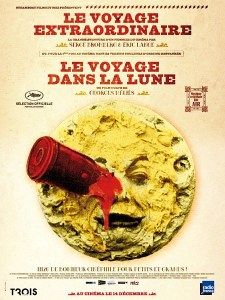 Documentary about the life and work of Georges Méliès, with particular attention to A Trip to the Moon, which then moves on to discuss how the hand-coloured print was rediscovered and the various attempts at restoring it.
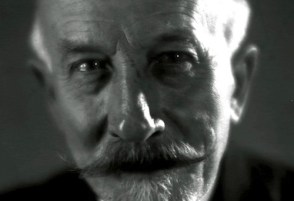 The Extraordinary Voyage accompanies A Trip to the Moon on DVD (or, if you fancy spending a small fortune, Blu-ray), but arguments that it goes beyond a mere ‘special feature’ are worth hearing. It’s a worthy biography/tribute to a cinematic force whose influence is still felt today, coupled with the extraordinary story of how his supremacy is being preserved.
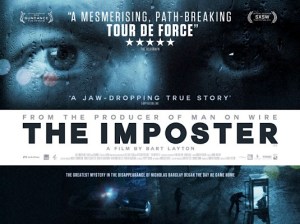 Some films benefit from knowing as little as possible going in; some are at their best when you know nothing at all. But that’s pretty much impossible — unless you go purely on someone’s “you’ll like this, trust me” recommendation about a film you’ve never even heard of, you’ll be aware of something. Normally this comes from a review or blurb, and you just have to trust that the reviewer or copywriter was kind enough to keep it spoiler-free.
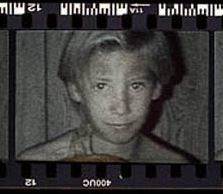 So here’s what the film lets you in on in the opening moments: in 1993, 13-year-old Nicholas Barclay went missing in Texas. In 1997, a boy claiming to be him surfaced… in Spain. He had Nicholas’ tattoos, but he had a French accent and the wrong colour eyes. And yet the first relative to see him, Nicholas’ older sister, gave a positive ID, and upon returning to America he was accepted into the family. Why did they take in such an obvious fraud?
 but, nonetheless, it makes the documentary itself feel untrustworthy, just like its participants. Is that an intended effect? Arguably the film’s main theme is lies — the lies we tell ourselves, the truths we want to believe; confirmation bias, perhaps, though that term is never mentioned — but the documentary itself never lies to us… I don’t think. It just feels like it might be.
 as the poster prominently tells us, this is “from the producer of
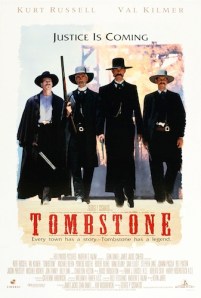 The story of the OK Corral is one I know by name only; I haven’t even seen the
  That may be down to historical accuracy. There’s a distinct feeling of veracity to proceedings, and as I understand it a concerted effort was made in that regard. The Movies perhaps shouldn’t worry about sticking too closely to fact (if you want an accurate lesson, read a textbook), but when they can manage to be both factually accurate and entertaining, it’s all the better. Cosmatos & co appear to balance this well.
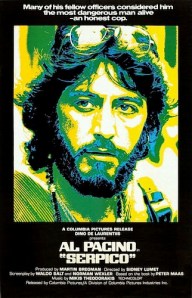 Before
  As the titular copper, it’s a typically strong performance from Al Pacino. Not his best work — I don’t think the part really gives him enough to deliver that — but he’s more often than not the most engaging element of the film. This was his fifth film; considering
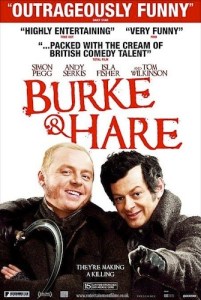
 As seems to be the case fairly often these days (I feel like I’m noting it in more and more reviews, anyway) there’s a host of famous cameos and recognisable faces. This time I won’t ruin it by listing them, but there’s a regular stream to look out for.
 Tony Scott teams up with Denzel Washington for the fifth time to tell the (kinda) true story of a runaway train with the potential to cause massive destruction.
 are as stock as they come. Also look out for Kevin Dunn playing the kind of role (condescending middle-management ‘bad guy’) he always plays.
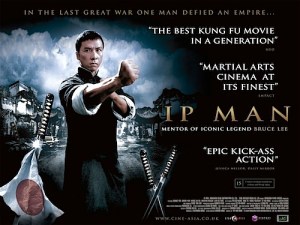 I liked Ip Man, but as we know from experience there are times when I find myself with little to say about a film, or I fail to make any notes, and this was an example of both. So I’ve decided to try something a little different.
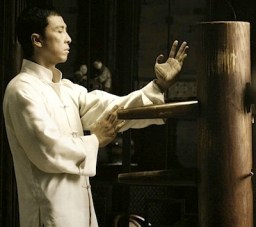 Though that’s an amusing thought, the film’s not quite that simplistic: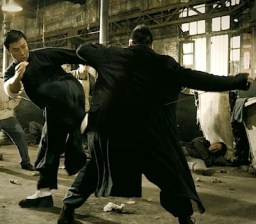
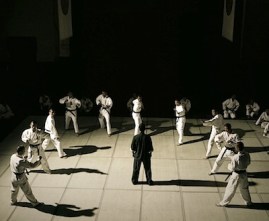 Indeed, fighting is still what the film does best:
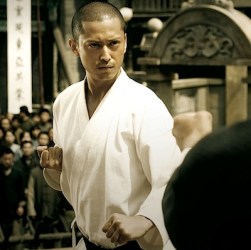 On the other hand, as that “sinister Japanese general”:
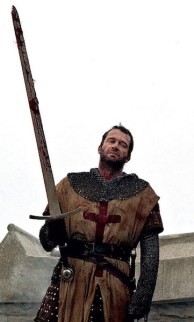
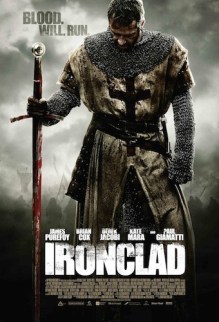 In medieval times, a group of filmmakers set out to prove you can make a Hollywood-quality historical action epic with independent funding in Britain, while in the present day a ragtag group of seven samurai— sorry, gunslingers— sorry, warriors, defend a small town— sorry, castle, from evil bandits— sorry, an evil king.
 Anyway, it seems to me its use of facts are probably strong enough to support it as an entertainment. So some of the story structure may be reminiscent of
  I’ve seen some complain about the level of graphic detail in this regard, but this is medieval times, they didn’t just bump each other about a bit; and you don’t think a giant axe swung down on someone’s shoulder with all a man’s weight is going to just leave a scratch, do you? Director Jonathan English doesn’t linger on detail as if this were a horror movie. There’s cleaved bodies, severed limbs, squirts of blood and more, and it all feels gruesomely realistic, but individually each moment passes quickly.
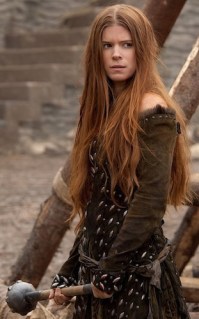 I imagine it also makes some of those fight scenes even more disorientating, which is a pity. Nothing will help the sometimes-too-obvious use of digital video though, which looks as nasty as ever.
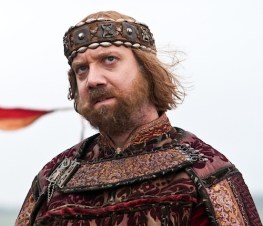 The unfamiliar true story also gives it the added edge of not knowing who lives or dies, or whether our heroes even succeed. If the ultimate end feels guessable, I think it’s only in retrospect. Of course, that doesn’t mean any of it’s historically accurate anyway.
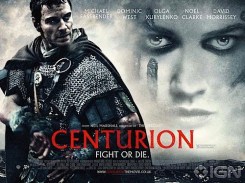 The fourth feature from writer/director Neil Marshall (despite owning his first three on DVD, this BD rental is the first I’ve actually watched — story of my life) is a bit of a departure: where the first three were horror (or at least horror-leaning) flicks, Centurion is an action-adventure crossed with something a little more artsy. Only a little, mind. Think
  Regular readers may know that I have an ever-growing dislike for films that begin at or near the end for no good reason (and most of those that do have no good reason to do so). Centurion’s opening line notes that “this is neither the beginning nor the end” of the lead character’s story. Oh dear, thought I; though perhaps “nor the end” signifies we might reach this point suitably distant from the credits, maybe. Not meaning to spoil it, but we’re there just 10 minutes later. Nice work Mr Marshall.
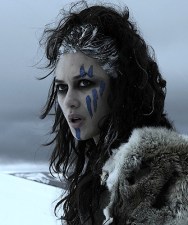 The cast is packed with people who, even if you don’t know their names, there’s a fair chance you’ll know the faces (assuming you watch your share of British drama): in addition to Fassbender and Morrissey there’s Dominic West, JJ Field, Lee Ross, Paul Freeman, Liam Cunningham, Noel Clarke, Riz Ahmed, Imogen Poots, Rachael Stirling, Peter Guinness… not to mention Film Star Olga Kurylenko. Recognisability doesn’t guarantee quality, of course, but that’s a pretty good list.
 I really enjoyed Centurion, appreciating its mix between brutally real action and stunning scenery, with a slightly more thoughtful side emerging in the final act. It’s also always pleasant to see a film that runs the length it wants to at a reasonable speed, rather than padding itself to reach two or even two-and-a-half hours. Splendid.
 100Films.co.uk