
You will.

 #45 Chappie (2015)
#46 Blackhat (2015)
#47 The Witches of Eastwick (1987)
#48 Teenage Mutant Ninja Turtles (2014)
#49 Barely Lethal (2015)
#50 The Book of Life (2014)
#51 Kill List (2011)
#52 Fast & Furious 7 (2015), aka Furious Seven
 #53 Beverly Hills Cop II (1987)
#54 Office Space (1999)
#55 Exodus: Gods and Kings (2014)
#56 The Boxer from Shantung (1972), aka Ma Yong Zhen
#57 The Descendants (2011)
#58 One-Armed Swordsman (1967), aka Du bei dao
#59 The Hunger Games: Mockingjay – Part 2 (2015)
 #60 Bridge of Spies (2015)
#61 Scotland, Pa. (2001)
#62 Lincoln (2012)
#63 Brooklyn (2015)
#64 Turbo Kid (2015)
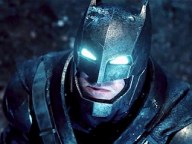
#65 Batman v Superman: Dawn of Justice (2016)
#66 The Color Purple (1985)
#67 Grave of the Fireflies (1988), aka Hotaru no haka

- After sitting out last month, I got back to WDYMYHS in March with IMDb voters’ 7th favourite war movie, 5th favourite ’80s movie, and 3rd favourite animated movie: Studio Ghibli’s Grave of the Fireflies.
- With Bridge of Spies coming out on Blu-ray, Lincoln premiering on TV, and The Color Purple being removed from Amazon Prime Instant Video, the last week of March turned into a bit of a Spielberg-athon for yours truly. I’m now just 3¼ films away from finally having seen all his features…
- Value For Money Assessment, Part 4: adding 10 more films from Now TV to the 10 (plus the Oscars) from last month gives a final cost of £0.48 per film. I’d say that’s good value.

With 23 new films watched this month, March 2016 joins the elite pantheon of months to reach 20 films — it’s only the sixth ever, and the third this year. In the process, it became the 22nd consecutive month with a 10+ total; it leapt spryly over March’s previous best tally (2013’s 17); and it handed 2016 the record for earliest #50, on the 6th (besting last year’s 8th April). It raises the March average from 11 to 12.3, and nudges the 2016 average up a smidgen from 22 to 22.3.
And there I was thinking that 13 hours of Daredevil would knacker my film viewing. (As it is, I’m actually only 10 hours through Daredevil. It’s really good, though.)
I normally end this with a prediction for the rest of the year, but they feel increasingly meaningless. I mean, they’ve always been meaningless — they’re based on averages, which only hold true until they don’t — but I’m still intending to cut back on film viewing this year (at some point), so they’ll definitely go awry. That said, I’m also intending to maintain my 10-film-minimum for a second calendar year, meaning 2016’s final tally should be at least 157 films. And, frankly, I’m intending April and May to continue in a similar vein to these first three months; at least until I reach #100, anyway. Assuming I do get there in May (which will be a whole Thing that I’ll discuss at the time), 2016 will be looking towards 170+ films.
2015 has really recalibrated my notion of “a lighter year”…



















This month: Bourne, Bond, and Ben Affleck twice.








The 10th Monthly Arbitrary Awards
 Favourite Film of the Month
Although a couple of fun action movies turned my head this month, none of them were fun enough to detract from the sheer class of Steven Spielberg’s collaboration with Abraham-Lincoln-pretending-to-be-Daniel-Day-Lewis-pretending-to-be-Abraham-Lincoln (last time I make that joke, promise) in Lincoln.
Least Favourite Film of the Month
My memories of it have softened a little in the four weeks since I watched it, but as it remains the only film this month that I’ve got down for a 2-star rating, the loser is Michael Mann’s disappointing cyber thriller Blackhat.
Winner of Batman v Superman
Wonder Woman.
Loser of Batman v Superman
Film critics, apparently. Or not.
The Audience Award for Most-Viewed New Post of the Month
This almost went to everyone’s favourite movie about a blind superhero*, but it was edged out by everyone’s second favourite filmed production of Shakespeare’s Scottish play starring an actor who’s also played Magneto** — Macbeth.
* It’s true! If you can find another one, I’ll retract that statement.
** OK, I’m certain some people prefer the Fassbender one to the old McKellen-and-Dench one, but acknowledging that fact would’ve ruined the mirroring structure of my sentence.

¾.
 I’ve observed before that the ’80s seem to be everywhere in film these days, and here’s another example: Turbo Kid is in every respect an homage to low-budget ’80s genre fare.
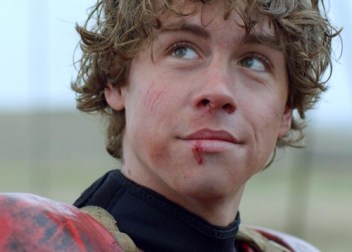 Then there’s the score, which is of course all ’80s synths, in a similar style to the score of


 Score:









 Hated by Americans and loved (well, ok, “liked”) by everyone else (well, ok, “by lots, but by no means all, of people who reside outside America”), Disney’s attempt to pull a
  I know some people complain about simplistic stories that are used to just string action sequences together, and that’s a perfectly valid thing to get annoyed about, but The Lone Ranger swings to the other extreme and uses an over-complicated story to string together its action sequences. All it actually needs is a little streamlining, because the film is allowed to swing off into too many sideplots. This makes the middle of the film a slog, and you feel every minute of its excessive two-and-a-half-hour running time.
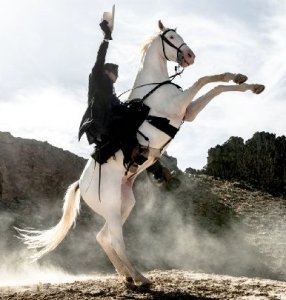 a recurring problem for Disney at the minute. To be frank, I’m not convinced anyone made a truly concerted effort to stem the overspend. When a gaggle of CG rabbits hopped on screen, all I could think was, “who allowed this?!” You’ve got a massively over-budgeted film that the studio want cut back, and one reason for that is CG bunnies that have almost no bearing on anything whatsoever! The amount of time and effort that must’ve gone into creating those fairly-realistic rabbits for such a short amount of screen time… it cost millions, surely. Millions that could’ve been saved with a simple snip during the writing stage if only someone had said, “well, those bunnies don’t add anything and they’ll be bloody expensive, so let’s lose them.”
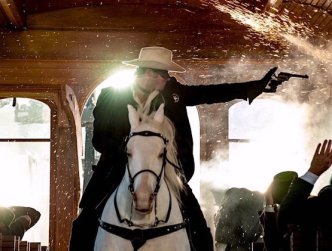 I’m not quite as effusive as Hughes, but The Lone Ranger is worth the time of anyone who enjoys an action-adventure blockbuster. It’s a three-star adventure-comedy bookended by a pair of five-star railroad action sequences, which make the trudge through the film’s middle hour-or-so feel worthwhile. There was a better movie to be made here — one that was half-an-hour shorter, more focused, and probably several tens of millions of dollars cheaper to make — but that doesn’t mean the one we got is meritless.
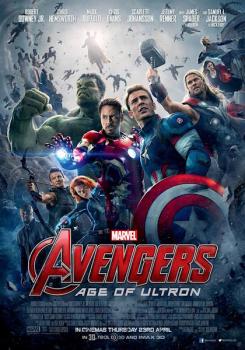 It feels kind of pointless reviewing Avengers: Age of Ultron, the written-and-directed-by Joss Whedon (and, infamously, reshaped-in-the-edit-by committee) follow-up to 2012’s “third most successful film of all time” mega-hit
 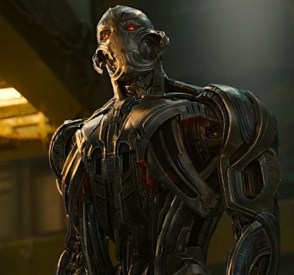 Even though the first half of that is still three years away, we’re still very much on the road to it. Heck, we have been practically since the MCU began, thanks to those frickin’ stones (if you don’t know already, don’t expect me to explain it to you), but now it’s overt as well as laid in fan-friendly easter eggs. The titular threat may rise and be put down within the confines of Age of Ultron’s near-two-and-a-half-hour running time, but no such kindness is afforded to the myriad subplots.
 (not just obvious stuff like the Hulk, but digital set extensions, fake location work, even modifying Stark’s normal Audi on a normal road because it was a future model that wasn’t physically built when filming) that stuff they genuinely did for real looks computer generated too. All that time, all that effort, all that epic logistical nightmare stuff like shutting down a capital city’s major roads for several days… and everyone’s going to assume some tech guys did it in an office, because that’s what it looks like. If you’re going to go to so much trouble to do it for real, make sure it still looks real by the time you get to the final cut. I’ll give you one specific example: Black Widow weaving through traffic on a motorbike in Seoul. I thought it was one of the film’s less-polished effects shots. Nope — done for real, and at great difficulty because it’s tough to pull off a fast-moving bike speeding through fast-moving cars. What a waste of effort!
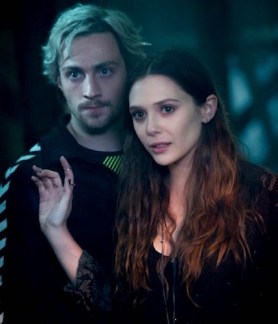 The really daft thing is, Whedon specifically added Scarlet Witch and Quicksilver… wait, are Marvel allowed to call them that? I forget. Anyway, Whedon added the Maximoff twins because, as he said himself, “their powers are very visually interesting. One of the problems I had on the first one was everybody basically had punchy powers.” I know Hawkeye’s power is more shoot-y than punchy, and we all know
  At the end of the day, what does it matter? Age of Ultron isn’t so remarkably good — nor did it go down so remarkably poorly — that it deserves a reevaluation someday. It just is what it is: an overstuffed superhero epic, which has too much to do to be able to compete with its comparatively-simple contributing films on quality grounds, but is entertaining enough as fast-food cinema. Blockbusterdom certainly has worse experiences to offer.
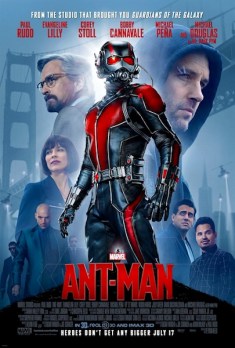 The final film in ‘Phase Two’ of the Marvel Cinematic Universe is perhaps the most fun Marvel movie since
 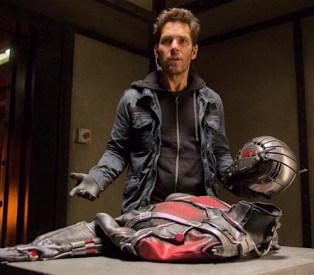 Nonetheless, some have criticised the film for not being especially original. I mean, originality’s good ‘n’ all, but c’mon, what do you expect when you sit down to a superhero movie from the primary purveyor of superhero movies? Ant-Man may blend elements from a few other genres into the superhero mix, but, yeah, it’s a superhero movie that, at times, plays like a superhero movie — just like everything else Marvel Studios has produced (with the possible exception of
  It remains tough to talk about Ant-Man without referencing The Edgar Wright Situation. I mean, you could ignore it, but then it becomes the elephant in the room. If you somehow missed it: writer-director Edgar Wright pitched Ant-Man to Marvel as a movie before Marvel Studios even existed, back in 2003, and had been developing it on and off ever since. The ideas he brought to the table — an action-adventure-comedy style, being a special effects extravaganza but with a lighthearted tone — influenced how the studio approached Iron Man and, consequently, the whole MCU. Nonetheless, Ant-Man wound up positioned as the 12th film in the studio’s slate, finally going into production after a decade of prep. Wright had a script almost finalised, he’d cast the film, a release date was set… and then he left due to “creative differences”. And the internet was on his side because Edgar Wright has made
 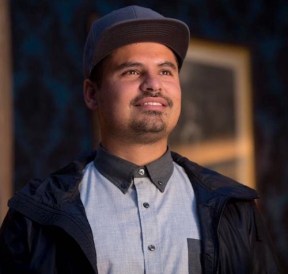 After Wright left, the screenplay was rewritten by a host of scribes (far more than the two extra writers ultimately credited). Other things they’re responsible for include bulking up the supporting characters, especially Hope, which works pretty well, and Lang’s friend Luis (Michael Peña), which we should all be thankful for: Peña’s Luis is one of the best things in the movie, an enthusiastic motormouth who’s consistently entertaining whenever he’s on screen. He’s the standout from an ensemble that is generally strong, with Rudd proving a likeable lead and Douglas committing to the material in a way you wouldn’t necessarily expect an older actor to with ‘just a comic book movie’.
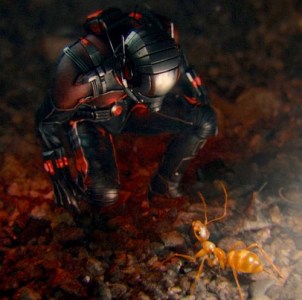 That doesn’t mean it’s a story that doesn’t have stakes, they’re just different stakes. It’s a refreshing change of pace at this point. It’s also pretty much standalone, with nice nods to the shared universe but without being dependent on other films (either before or to come) for its story. Guardians of the Galaxy did that too, but how many other recent Marvel movies is it true of? Even the highly-praised
  This informative documentary uses interviews with all the key players to tell the story of how a small indie comic, created incidentally and published almost on a whim, became a true cultural phenomenon.
 As for this documentary, it nonetheless finds an almost emotional conclusion with Eastman and Laird today talking about the chain of chance and coincidence that brought them together three decades ago to accidentally create something that transformed their lives, and which continues to endure in all kinds of media (no one liked
  100Films.co.uk