
Ernst Lubitsch | 82 mins | DVD | PG
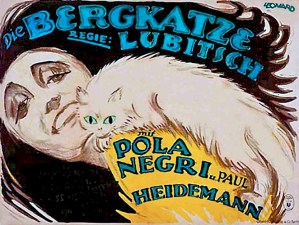 Die Bergkatze apparently rounds off Masters of Cinema’s Lubitsch in Berlin box set with appropriate heft: as the blurb asserts, this was “Lubitsch’s personal favourite work of all his German films, [it] represents a peak in both Lubitsch’s silent oeuvre and the silent cinema as a whole.” I wasn’t quite so enamoured with it.
Which, again, isn’t to say it’s bad. The setup takes some time to build up speed, but when it does the gags begin to flow more readily, even if it degenerates to a more stop-start pattern later on. But scenes like the Lieutenant leaving town to an army of toddlers crying “Adios, daddy!” are on the one hand simple but on the other inspired; the first battle sequence is full of marvellously surreal touches, like the robber-leader making coffee to be drunk mid-shoot-out; and the satire on the military (always welcome) is pleasantly thorough, taking pot-shots at numerous elements rather than picking one trait and exhausting it.
Lubitsch once again flips the roles of the sexes: the Lieutenant preens and prunes, spending ages tweaking his hair and clothes in the mirror, and one of the gang of robbers lies on a bed literally crying a river over his lost love; the titular robber’s daughter, however, leads a gang of men in thieving and fighting, living wild, free, and rather dirty, among them. A desired-by-all woman (Pola Negri, successfully branching out into comedy) and at least one mass of man-desiring women help round out a succession of familiar Lubitsch elements. Familiarity may be said to breed contempt, but Lubitsch’s reworking of similar sequences is more a recognisable touchstone than irritating repetition.
Location filming in snow-covered Alps adds a scale and breadth to the film’s imagined-kingdom setting that would be inimitable in a studio. Perhaps art director Ernst Stern was right that the realism of using genuine locations doesn’t quite sit with the highly stylised fort; on the other hand, a studio set simply wouldn’t have the same effect: this isn’t the card-and-wood world of Die Puppe, where clearly-fake trees and horses were all part of the illusion. Instead of seeming fake, then, the contrast of a hyper-real fort and genuine-but-exotic locations creates the sense of a proper fantastical realm rather than some fictional stage set. Stern’s design for the fort is beautiful, from the overall look to specific features in each room. It’s scale is quite astonishing, particularly considering it was built on location in the Alps.
Lubitsch’s love of camera mattes, seen with increasing frequency throughout Die Puppe, Die Austernprinzessin and, particularly, Anna Boleyn, is finally allowed free reign here, with shots that conform to the standard 4:3 frame seeming to be the irregularity amongst an unimaginable array of shapes and angles. At times it’s distracting, particularly at the start, but that’s more because it’s a technique we’re now almost entirely unused to rather than any flaw in Lubitsch’s application of it. That said, though he often uses the mattes to enhance or emphasise composition, or suggest something about a character or location, it’s not always clear why he’s choosing to vary the frame so much — other than the sheer fun of it, which, particularly in a comedy, may be reason enough.
Die Bergkatze was a flop on its release in Germany and consequently never distributed elsewhere. Maybe it was, as Lubitsch thought, an unwillingness on the part of German people to have the military satirised; maybe it was the extreme use of unusual framing techniques that left them cold; maybe they just didn’t like it. Though it’s far from my favourite film in the set, it didn’t and doesn’t deserve to be dismissed.

Read more reviews from Lubitsch in Berlin here.
 In an age where Henry VIII is young, slim and sometimes irritatingly called “Henry 8”, not to mention more interested in shagging every young girl he can find than in, well, anything else, it’s somewhat refreshing to return to a time when he was always older, fatter and more interested in polishing off a huge slab of meat than seeing his wife. OK, so they call him “Heinrich VIII”, but at least that’s because this production team spoke a different language.
 Sumurun seems completely different to any film yet seen in the
  Die Austernprinzessin seems to be one of, if not the, most respected and/or beloved of Lubitsch’s early films. It makes
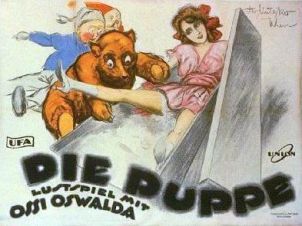 From the very start, Die Puppe sets out its stall (literally) as being something a bit special. The first sequence sees director Ernst Lubitsch himself unpack and assemble a doll’s house set and two dolls, which then become life-size and the dolls — now humans — the first characters we meet. It’s a neat framing device, a joke in itself, and some kind of early commentary on the role of a director.
 Ich möchte kein Mann sein is the kind of silent film that might surprise some among a wider film-viewing audience, both in terms of the attitudes prevalent in what is occasionally assumed to be a highly prim era, and, even accepting that it really wasn’t, the things people were prepared to put on film then — the latter due to, I think, the perception of older films as wilfully innocent (a view no doubt influenced by the effect the Hays Code would later have on American movies).
 “What if
 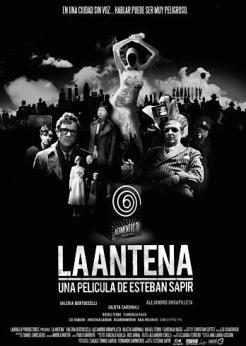 La Antena is a Silent Film. And by that I mean there is no dialogue, though there is music, and it’s in black and white with low-budget (looking, at least) effects, though it was made in the 21st Century — but it is entirely in the style of those films made in the era before sound was technically possible. It could sit comfortably alongside ‘real’ silent films to the extent that the uninitiated might reasonably be fooled into believing it was one.
 The first of the silent Fantômas films (I reviewed the second
  100Films.co.uk