
Carl Th. Dreyer | 96 mins | Blu-ray | 1.37:1 | France / silent (Danish) | PG
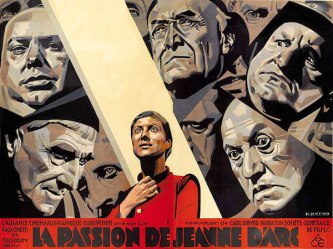 Widely regarded as one of the greatest movies of all time (look at the lists!), Danish director Carl Theodor Dreyer’s French-produced silent movie depicts the last hours in the life of Joan of Arc (Falconetti), a nineteen-year-old who is on trial by the Church for claiming God instructed her to fight to free France from British rule. You probably know it doesn’t turn out well for her.
Such a summary, while not inaccurate, is almost disingenuous. “This is by all odds the least religious and least political Joan ever made,” write Jean and Dale D. Drum (in a piece included in the booklet accompanying Masters of Cinema’s Blu-ray release), because Dreyer was explicitly not interested in the political or theological issues of the trial, which he felt were no longer relevant by the 20th Century. As he wrote in 1950, “I have tried to show that people in the medieval tragedy were, behind their historical costumes, people just as you and I are, caught up in the web of political and religious opinions and prejudices of the time.” With those religious and political issues set aside, Dreyer was instead focused on the universality of Joan’s experience as a human being. He was attempting to relate the tale — and, more importantly, the emotions — of a young woman sure of her convictions but persecuted for them.
 Dreyer based his telling on the written records of Joan’s trial. Although that’s grand for claims of historical accuracy, it’s hard to deny that silent cinema is ill-suited to thoroughly portraying something dialogue-heavy. There are many things silent film can — and, in this case, does — do very well indeed, but representing extensive verbal debate isn’t one of them. Bits where the judges argue amongst themselves — in silence, as far as the viewer is concerned — leave you longing to know what it is they’re so het up about. Sometimes it becomes clear from how events transpire; other times, not so much.
Dreyer’s faithfulness was not in aid of precisely representing what happened, however. For instance, the film takes place over a day or two, at most, while in reality Joan’s imprisonment, trial and execution took most of a year. Events were condensed so as to provide “a kind of bird’s-eye view, where all the unnecessary elements disappear” (Dreyer, quoted by Drum & Drum). This was partly in aid of what Dreyer described as “psychological realism”: rather than slavish fidelity to the facts of the era, it was about accurately and universally conveying the human experience.
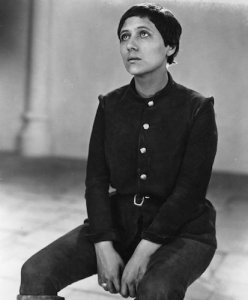
According to Chris Marker (also in Masters of Cinema’s booklet), the aesthetic element of achieving this goal is one reason the film has endured so. Dreyer’s efforts to make the events seem ‘present’, as opposed to historical, works to make the film eternally present; they help it to transcend not only the 15th Century, but also the more recognisable trappings of “a silent-era movie”. The actors wear no make-up, perform in  neutral costumes on sparsely-decorated sets, and are almost entirely shot in close-ups — all elements that avoid the usual grandiosity of historical movies, both in the silent era and since. What we perceive as being ‘grand’ changes over time (things that were once “epic” can become small scale in the face of increasing budgets, for instance); pure simplicity, however, does not age much.
The near-constant use of close-ups, in particular, is one of the film’s most renowned elements. Dreyer was inspired by D.W. Griffith’s Intolerance, feeling this was an area film could excel in a way theatre obviously couldn’t. For Dreyer’s goal of giving us access to Joan’s very soul, it’s arguably the perfect medium — eyes are the window, and all that. This hinges on Falconetti’s acting. In her only major screen appearance, she delivers a performance that is still considered one of the greatest ever. It’s hard to pinpoint what she’s doing, but her wide eyes and almost crazed expression convey more subtlety than that sketched summary might imply. She is Joan, you feel, which again was Dreyer’s goal: he wanted his cast to inhabit their characters; to be them. He insisted the words from the trial record were spoken accurately (even though they obviously couldn’t be heard by the audience) and he built a whole 15th Century city set so that the actors might feel they were really there. As the film is shot largely in close-ups, that feels like a stupendous waste of money; and it led to the crew having to drill holes in walls and dig pits in the floor in order to get the shots Dreyer desired. But hey, whatever works.
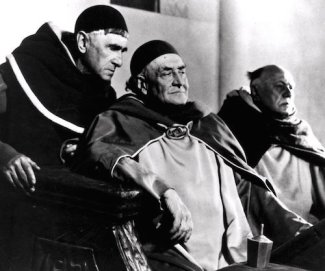 The actors playing the judges may be less individually memorable than Joan, but it’s their conflict — the personal battle between Joan and these men, as Dreyer saw it — that drives the film. Dreyer believed the judges felt genuine sympathy for Joan; that they did what they did not because of politics (they represented England, and she had led several successful campaigns against the Brits) but because of their devout belief in religious dogma. Dreyer says he tried to show this in the film, though it strikes me the judges still aren’t portrayed too kindly: they regularly seem contemptuous of Joan, and are outright duplicitous at times. Maybe that’s just religion for you.
Despite being one of the film’s most famed elements, Joan isn’t entirely constructed of close-ups. When Dreyer breaks free of such constraints, the dynamic camerawork on display transcends many people’s view of silent cinema. A swinging pan as maces are dropped from a window was a personal highlight, but there are some great, dramatic push-ins during the trial. That’s just the tip of the iceberg. There’s the editing as well: it’s surprisingly fast-cut at times, and the use of montage for some sequences (particularly in the torture chamber and the epic climax) makes for stunning visual cinema.
Reportedly Dreyer’s preferred soundtrack was complete silence, which makes sense given his other aims and views on depicting realism rather than interpretation. That sounds a little like an endurance test, however, and so of course the film is usually presented with a score. In the US, it’s now routinely accompanied by Richard Einhorn’s Voices of Light. Clearly it’s a noteworthy soundtrack because it feels like the vast majority of reviews and comments online make reference to it. Masters of Cinema’s Blu-ray doesn’t include it, 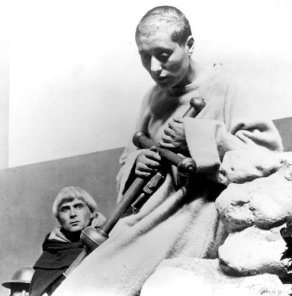 however, so I have no opinion. Instead, they offer two alternatives. On the correct-speed 20fps version, there’s a piano score by silent film composer Mie Yanashita. Apparently this is the only existing score set to 20fps, and Masters of Cinema spent so much restoring the picture that there was no money left to commission an original score. Personally, I don’t think they needed to. Yanashita’s is classically styled, which works best for the style of the film, and it heightens the mood of some sequences without being overly intrusive, by and large. Compared to Dreyer’s preferred viewing method, of course it affects the viewing experience — how could it not, when it marks out scenes (with pauses or a change of tone) and emphasises the feel of sequences (with changes in tempo, for instance). That’s what film music is for, really, so obviously that’s what it does. Would the film be purer in silence? Maybe. Better? That’s a matter of taste. This particular score is very good, though.
The Masters of Cinema disc also includes the film in a 24fps version, which is how it used to be presented most of the time (what with that being the standard speed for so long; it’s also the version Einhorn’s score was written for). I watched just the climax at that speed, and I’d agree with the scholarly consensus that it’s clearly running too fast. If it was the only version you knew, you might not notice; but in direct comparison, people are clearly moving unnaturally fast and the pacing of camera moves and edits feels off, like there’s not quite long enough to appreciate what you’re being shown. At 24fps the Blu-ray includes an avant-garde score by Loren Connors. It feels apocalyptic and so, in its own way, is somewhat appropriate, but it’s far too dissonant for my taste. I can’t imagine enduring it for the entire film, even at the commensurately shorter running time. Silent London’s review describes it as “tedious and barbaric… insensitive and intrusive”, and advises first-time viewers to “steer well clear.” I concur.
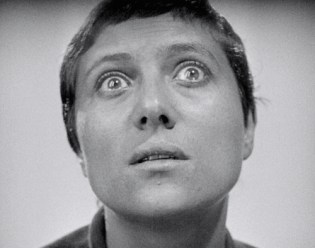 Some viewers describe how they’ve found The Passion of Joan of Arc to be moving, affecting, or life-changing on a par with a religious experience. I wouldn’t go that far, but then I’m not religious so perhaps not so easily swayed. As a dramatic, emotional, film-viewing experience, however, it is highly effective. As Dreyer wrote in 1950, “my film on Joan of Arc has incorrectly been called an avant-garde film, and it absolutely is not. It is not a film just for theoreticians of film, but a film of general interest for everyone and with a message for every open-minded human being.” A feat of visual storytelling unique to cinema, it struck me as an incredible movie, surprisingly accessible, and, nearly 90 years after it was made, timeless.

The Passion of Joan of Arc was viewed as part of my What Do You Mean You Haven’t Seen…? 2015 project, which you can read more about here.
It placed 14th on my list of The 20 Best Films I Saw For the First Time in 2015, which can be read in full here.
Also of note: this is the 1,000th feature film review I’ve published. (For what it’s worth, 2015 #112 will be 100 Films #1000. I’ll probably reach that in August.)
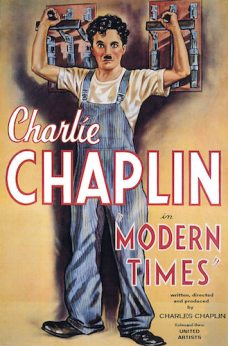 Charlie Chaplin satirises technology and modernisation in arguably
 Arguably the most famous clash of the First World War, the Battle of the Somme lasted four-and-a-half months from July to November 1916 and, with over a million men wounded or killed, is “
 The British press certainly believed they were seeing “the real thing at last” (the Manchester Guardian), feeling it showed “war, grim, red war; the real thing” (the Daily Sketch). The British public agreed, flocking to see the movie en masse: twenty million admissions were sold in the first six weeks of release. At the time, the battle still raged (the film debuted on 10th August 1916) — as Smithers notes, “to its original audience, the film was not history but a despatch from the front”. It is such an historical document now, but at the time it wasn’t even recent-history — it was produced as newsreel, a record of current events, designed to make people at home feel connected to the everyday lives of their family, friends and countrymen serving on the frontline.
 Equally striking is the scale of the operation. You know it was a monumental effort, but actually seeing so many men… You never see that scope in dramas because they don’t have the budget for all those extras, I guess, but here the crowds of soldiers just waiting around are remarkably large. And crikey, the heavy artillery! Even though you know these were real weapons, today they look more like some fantastical steampunk creation, so covered are they in rivets, and so damn huge.
 Speaking of the music, the Imperial War Museum DVD release offers up a choice of two scores: a newly-commissioned (in 2008) one by film composer Laura Rossi, and a recreation of the kind of music that would have accompanied the film in 1916. The film’s producer and distributor, William F. Jury, was also the editor of trade paper The Bioscope, and had columnist J Morton Hutcheson draw up a list of suitable pieces to be performed alongside screenings, which was published days before the film’s release. To quote Dr Toby Haggith (the Imperial War Museum’s film programmer), again in the DVD booklet
 Haggith summarises many of Hutcheson’s choices as “motivated wholly by the needs of propaganda… jaunty, martial and unashamedly heroic. Given the nature of the scenes recorded and the bloody history of this phase of the battle, the selection of such upbeat music seems deeply inappropriate.” However, other selections “reflect Hutcheson’s personal response to scenes that he found distressing on a universal level, and which led him to warn musicians that ‘they must realise the seriousness and awfulness of the scenes’… These contradictions suggest that Hutcheson had difficulty selecting music for the film because he was torn by the contrasting images and messages it conveyed. In this way the medley highlights the tension at the heart of the film.” Musician Stephen Horne, who leads the 1916 medley recreation, agrees that the film is torn “between a sense of propagandist duty and a desire to honour the reality that had not evaded the camera’s gaze.” It’s true that, however positive the final movie wants to be, it can’t completely escape reality. At one point it cuts abruptly from a jauntily-scored scene of men happily receiving post to “German dead on the field of battle”. A deliberate juxtaposition of happiness with the fate that awaits them with near inevitability? Seems a bit radical for a propaganda piece…
 But it can’t avoid drawing parallels: the film ends almost as it began, with artillery being moved up for the next assault and men marching to the front, waving merrily as they go. History repeats — probably not the lesson a propaganda film wants to impart, but one it can’t quite escape. And one that, even a hundred years later, we can’t quite learn.
 #45
#45  #49
#49  The General
 The Gold Rush
 The Passion of Joan of Arc
 Intolerance
 Empire readers considered this the 399th best film ever. TSPDT treated it more kindly, slipping into the top 100 at #94; the Top 300 Silents rank it among their top ten, however, at #10. The original (now lost) cut ran eight hours; the version released was merely two. In 1999 a four-hour version was created using stills from the deleted scenes, which seems to be the only one readily available, though I’ve heard the shorter cut is superior.
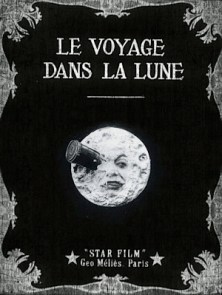 Of all the defining images of cinema — certainly of the silent era — the face on the Moon with a rocket in its eye must be one of the most recognised, though you have to wonder how many have actually seen Méliès’ full vision. More than it could have been, though, because A Trip to the Moon was so popular that, in the copyright-lax world of early cinema, it was widely copied and ripped-off; the kind of thing that destroyed Méliès’ career and, along with it, much of his work.
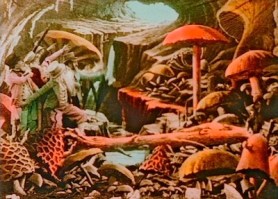 But Méliès wasn’t making a documentary, he was making an entertainment. Indeed, the analogy to a blockbuster is a good one, because this is essentially the turn-of-the-century equivalent. The fantastical sets, costumes and story are all designed to wow the viewer — and remember, we’re only a few years on from people diving out of the way of film of a train arriving in a station.
 Whatever it is, it’s certainly not period-authentic.
 The first film I watched as part of my new-this-year
  Much of the film’s emotional impact comes courtesy of Cherrill, who gives a suitably pretty and sweet performance. Chaplin wasn’t impressed with her as an actress and attempted re-casting (the film has a
  Beginning in 1927, you could (and some have) accuse The Artist of being a remake of
  Besides which, it isn’t a real silent film, and not just because it uses sound on one or two occasions, to very specific effect. Made 80 years after the invention of sound revolutionised cinema over night, The Artist is a tribute and homage to that great era — it’s not trying to beat them at their own game. It’s certainly not the first ‘modern silent’ either, but it’s an appropriate one to have received the most widespread attention (
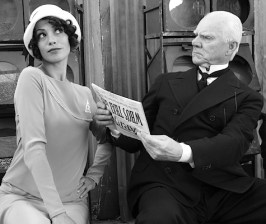 you’d believe they were a precisely-planned specially-constructed set, and unceremonious symbolism is created with former-star George being on the way down and Peppy being on the way up.
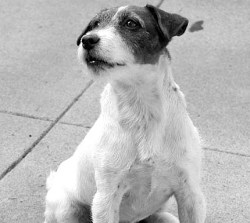 or just faithfully following George around, he draws your attention. I might think that was just me (we’ve been over my love of terriers
 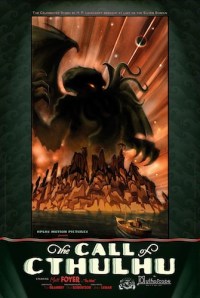 I must admit to not being at all familiar with the work of H.P. Lovecraft. I know the name, of course, and the titles of some of his stories, not to mention being aware of the array of well-known fans. Aside from that, I’ve only encountered his work through its influence — there’s some stuff in the
 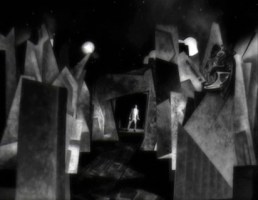 The marriage of low-budget and silent film style is one made in heaven, particularly when you add in the dedication of the makers. They built impressive props, ingenious sets, and employed model work in various inventive ways, all to execute a story that includes a cultist swamp orgy, a mysterious island, a sea battle, and a skyscraper-sized monster. Some online reviews have criticised the effects, but those people are quite frankly idiots. This isn’t meant to be slick CGI — it’s re-creating lo-fi early film techniques, and (aside from one or two rough-round-the-edges spots of greenscreen) it all looks fabulous.
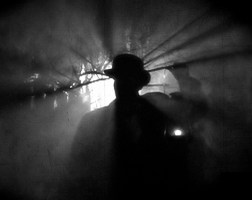 I have no idea how closely it hews to Lovecraft’s original, but there’s a layered stories-within-stories approach (I think it gets four deep at one point) that is difficult to pull off with clarity, but never falters here. Christopher Nolan would be proud. It also effectively builds a sense of uncanny mystery; not outright scares, but a kind of disquieting unease. It’s my impression that was absolutely Lovecraft’s aim too, so another job well done.
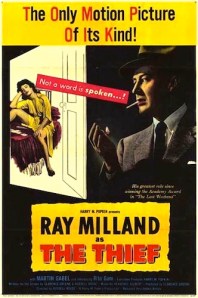 Ray Milland stars as Dr. Allan Fields, a nuclear physicist working at the United States Atomic Energy Commission, who is photographing secret files and passing them to The Other Side, until something goes wrong and the authorities are on his tail. But that’s almost beside the point, because if The Thief is known for anything it’s for its dialogue — as the poster proclaims, “not a word is spoken…!”
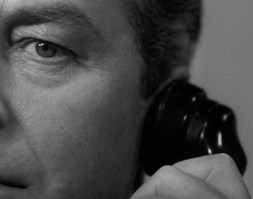 Obviously we can look back to the silent cinema for that kind of thing, but while that era could probably still teach many filmmakers something about visual storytelling, it’s hard to deny that the advent of synchronised sound adds a helluva lot to the ability of film — if it didn’t, it wouldn’t have taken over so fast and remained virtually 100% dominant for the last 80+ years.
 Perhaps this is why the villains are never explicitly named. But they’re definitely not American! Tsk tsk. More crucially, it’s a bit slow at times — it seems to take longer to explain things when stuck doing them through visuals alone. That said, it could probably have survived a speedier approach even doing what it does — perhaps, then, Rouse is playing for time: the film only runs 87 minutes in spite of its pace.
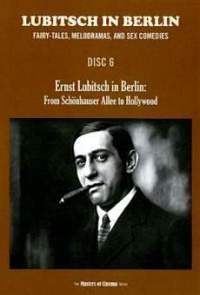 Part biography, part making-of, part analytical retrospective, Robert Fischer’s documentary does what it says on the tin: tells the story of the life and work of actor/director Ernst Lubitsch from his formative years, living on Schönhauser Allee in Berlin, to when he made the move to America in the early 1920s.
 100Films.co.uk