Macbeth (1948)

2013 #79
Orson Welles | 103 mins | TV | 4:3 | USA / English | PG
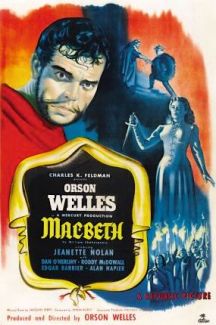
MacbethTwelve years on from his innovative, acclaimed, career-bolstering ‘Voodoo Macbeth’, and with the infamous War of the Worlds radio broadcast and films like Citizen Kane, The Magnificent Ambersons and The Lady from Shanghai now under his belt, Orson Welles tried to interest Hollywood in something they’d only attempted a handful of times since the advent of talkies: a Shakespeare adaptation.

“Tried to interest” and “attempted” are not inapt phrases here. After failing to elicit interest in an adaptation of Othello, Welles switched to pitching the ever-popular Macbeth as “a perfect cross between Wuthering Heights and Bride of Frankenstein,” interesting Republic Pictures because of their desire to move from producing low-budget Westerns to being a prestige studio. The end result was Welles had to shoot his film in just 23 days for only $700,000. The end result was a movie that struggled against Laurence Olivier’s Hamlet, released the same year, and for which poor critical reception led to nearly 20 minutes of cuts and the remainder being dubbed to change the actors’ accents.

Restored in 1980, the original version is a compromised but interesting adaptation. Welles has chopped and changed the play, cutting scenes, transposing others, assigning speeches to different characters, even creating new ones. This array of modifications scandalised critics at the time, though nowadays it’s much more common for film (and stage) versions of Shakespeare to mess around with the text as needed, usually to make the works a manageable length. Macbeth is one of the more sensibly-sized plays, however, though I suppose this is the legacy of Welles’ 23-day schedule.

Moody MacbethThe low budget and quick schedule affect the film across the board, for good and ill. There’s much dramatic staging, with grand sets and doom-laden lighting. The shadow-drenched cinematography may well be a result of the cheap production, but the resulting effect is marvellous. Indeed, all the camerawork is great. There are some striking long takes, including the majority of the night of the murder occurring in one long unbroken shot. The costumes, on the other hand, look like a ragtag bunch of Past Clothing from the studio’s store… which is because they essentially were.

Welles chose to have the cast speak with Scottish accents, which unfortunately end up a bit squiffy. I suppose it’s an attempt at authenticity at least, and if you don’t allow them to bother you then they won’t bother you. I certainly wound up not noticing them after only a few minutes. In spite of that, many of the performances are quite strong. Of their era — they can be a little stagey and histrionic, lacking the subtlety we might expect today — but good. The dialogue was pre-recorded for the sake of the schedule, with the actors miming their lines on set. Seems like a ridiculous idea, and no doubt had an effect on performances, but I only noticed it once in the entire production.

Much of the score (by Jacques Ibert, after Welles failed to secure Bernard Herrmann for contractual reasons) is appropriately atmospheric, but at one point it goes all Comedy. Mad MacbethMacbeth himself is hardly in possession of all his faculties at that point, acting like a drunkard; but rather than make the sequence appropriately sinister (it’s in this state that he orders the execution of Banquo and Fleance, for example), it plays up the silliness, which is a shame.
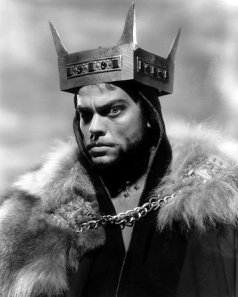
For a variety of reasons, stemming from both the production situation and Welles’ creative choices, this is a flawed film. That said, its successes outweigh its problems to create a memorable adaptation that is justly regarded as one of the more significant films in Welles’ oeuvre.

4 out of 5

September 2013 + 5 Great Shakespeare Films

Bah-da-bah-da (bah-da-bah-da) bah-da-bah-da-daaa!

For most of the month I’ve been playing, virtually on loop, the Iron Man 3 main titles, Can You Dig It.

Turns out, yes I can.


What Do You Mean You Haven’t Seen…?

There’s no doubting that WDYMYHS has been a success in terms of making sure I see more films I’ve long been meaning to see (I may not have watched one every month as intended, but I’ve still seen 7 of the 12, with 3 months to go), but it’s been less satisfying in terms of my enjoyment. City Lights and Dr. Strangelove were comedies that left me fairly cold; Bicycle Thieves and The Seventh Seal are films that surely helped define our cliches of Arthouse Cinema; and though I was suitably awed by both Once Upon a Time in America and Touch of Evil, for neither would my watchword be “enjoyed”.

That changes this month, however, with a film that was pure enjoyment from start to finish: Alfred Hitchcock’s North by Northwest. Unsurprisingly it’s my favourite WDYMYHS film to date, and it’s up there with the Welles and the Leone in terms of sheer filmmaking quality too.

Also this month, my review of Dr. Strangelove, trying to fathom what I didn’t see that so many other people do.


September’s films

Iron Man 3#72 Star Trek Into Darkness (2013)
#73 The Tempest (2010)
#74 Iron Man 3 (2013)
#75 LEGO Batman: The Movie – DC Super Heroes Unite (2013)
#75a Marvel One-Shot: Item 47 (2012)
#75b Marvel One-Shot: Agent Carter (2013)
#76 The Naked Gun 2½: The Smell of Fear (1991)
#77 The Falcon in Mexico (1944)
North by Northwest#78 Real Steel (2011)
#79 Macbeth (1948)
#80 Wolf (1994)
#81 North by Northwest (1959)
#82 The Falcon in Hollywood (1944)
#82a Batman: The Dark Knight Returns (Deluxe Edition) (2013)
#83 Flight (2012)
#84 The Falcon in San Francisco (1945)


Analysis

You might not think it, but September is a surprisingly key month in my annual drive to 100 films: the only two times I’ve beaten 100, I reached the titular goal in September. That being said, in other years its use as an indicator is minimal: the past two years were both at #81 by now, but on one of those I made it to 100 and the other I failed. (In fairness, I did get to 97 — a margin of 3% isn’t that bad.) In 2008 I made it to 100 off a 64 in September, and in 2009 I only reached 94 off September’s 54.

Having reached #84 in 2013, then, it looks like I’m pretty well set going into the year’s final quarter. It won’t be a record-breaking year (unless I average over 15 films per month from here on out — to put that in perspective, my best month ever was 17 films; my average for the year to date is just over 9), but I have fair hopes of at least making it to 100. Hey, that’s the title, and always feels doubly important when I failed the year before.

Before now, I’ve noted that the first six years of this blog have followed a pattern: a year where I reach 120-something films, a year of exactly 100 films, a year of failure, repeat. What also happened is that both the 120-something years reached the titular goal in September, while both the 100-exactly years only got there on December 31st. This being the seventh year, I should be on 120 films and getting to 100 in September. Obviously, I haven’t. Something about humans always seeing patterns that aren’t there and all that, eh…

Viewed in other contexts, however, this has been a very good September. It’s the second-best month of 2013, behind March’s stupendous 17; and in terms of Septembers past, 2013 is one for the ages. I watched 13 brand-new films, making it my most prolific September to date (previous best was 11 in 2010). The past two years I’ve watched four and eight films respectively, so this year is a marked improvement. Though somehow I doubt next September will continue the pattern by reaching 19 films. But you never know — I’ve done 19 in a month (once) before…


Summer 2013 update

I mentioned last month that my Summer 2013 was kicking off now, as the big films made their way to Blu-ray and I finally started to see them. I wasn’t necessarily convinced of my own prediction — the list of films I have accessible to me but still haven’t watched from the summers of 2011 and 2012 is too long to go in to here — but, lo and behold, look what’s up there: both Star Trek Into Darkness and Iron Man 3.

Only two films, I know, but this month’s other big release was Fast & Furious 6 and I’ve not seen 4 or 5 yet. All the other high-profile releases are still to come, and, looking at the release calendar, there’s not much of particular interest until November. October can only offer After Earth and World War Z, both of which I intend to see, but neither are day-one purchases for me. Looks like summer will be going on until at least Christmas.


5 Great Shakespeare Film Adaptations

There are an awful lot of Shakespeare screen adaptations. I’ve not seen most of them. But nonetheless, inspired by this month’s viewing of Orson Welles’ Macbeth, here are a fantastic five:

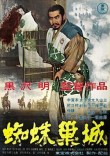
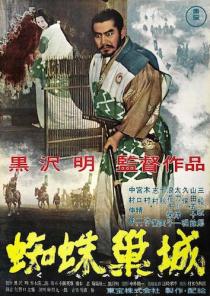
  1. Throne of BloodThrone of Blood
    Kurosawa abandons Shakespeare’s setting, some of his characters, and, most contentiously, all of his dialogue in this nonetheless extremely faithful rendering of Macbeth. Dripping atmosphere from every frame and gorgeously staged throughout, this both illuminates and transcends the Bard’s work. I bet it’d look great on Blu-ray. Why isn’t there a Blu-ray?
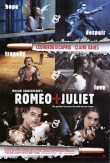
  2. Romeo + JulietRomeo + Juliet (1996)
    As if using teen heartthrob Leonardo DiCaprio to bring Shakespeare to a whole new generation wasn’t admirable enough, Baz Luhrmann also produces a remarkable rendition of Will’s most famous play. The entire film is a feast of invention (who can forget the swords-as-guns thing?) and fabulously cinematic.
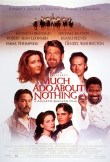
  3. Much Ado About NothingMuch Ado About Nothing (1993)
    The ’90s offer us a veritable banquet of Shakespeare adaptations, and the man involved with a good many of them was Kenneth Branagh. Here he takes one of Shakespeare’s most accessible works and, while retaining period costumes and a classical directorial style, still produces a movie capable of entertaining any modern audience.
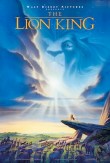
  4. The Lion KingThe Lion King
    Apparently Disney now deny this is an adaption of Hamlet, but tosh and piffle, the similarities are numerous — too numerous to go into here. There are more faithful adaptations of Hamlet out there (loads of them), but I’d wager few are as purely entertaining as (and none less depressing than) this indisputable masterpiece.
  5. Looking for RichardLooking for Richard
    Not strictly an adaptation, though chunks of the play are performed, in this documentary/adaptation Al Pacino looks into “Shakespeare’s significance and relevance to the modern world”. If that sounds dry, it’s actually quite engrossing. Also, much better than that dappy horribly-mid-’90s poster might suggest.

And one I disliked…

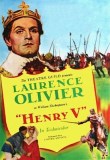
    Henry VThe Chronicle History of King Henry the Fift with His Battell Fought at Agincourt in France
    Oh sure, most people love Larry Olivier’s wartime version of Henry V, but I didn’t take to it. Indeed, in my review I asserted that “however good it may once have seemed, I think this version has had its day.”
    So there.

Want to tell me how wrong I am about Romeo + Juliet, The Lion King, and Henry V? Or just tell me which adaptations I’ve missed and really ought to check out? That’s what the comment section is for.


Next month on 100 Films in a Year…

Just 16 films remain this year!

Probably not one month’s work, but October could dictate whether I reach #100 in November, or December, or not at all…

Anonymous (2011)

2013 #24
Roland Emmerich | 125 mins | TV | 2.35:1 | UK, USA & Germany / English | 12 / PG-13

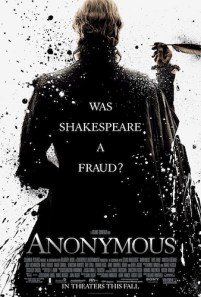
Was Shakespeare a fraud? No.The director of Independence Day, The Day After Tomorrow, 2012, and other films which don’t imply a specific timeframe in their title, helms a film about Shakespeare? Oh yeah, that sounds like a good idea…

And it is indeed dreadful.

In fact, it’s one of those films that’s hard to criticise because I just thought it was so consistently weak. There’s a lot of middling to couched-positive reviews of it floating about, but I practically despised it. For a start, there’s the faintly ludicrous premise that Shakespeare didn’t write the works of Shakespeare. It’s a conspiracy theory that’s been around for decades, at least, and some people do believe it… but not anyone who’s serious about Shakespeare. I think the film takes it seriously, though, and that sets me against it from the off. I know there are plenty of films that tell silly stories in a silly way, but no one’s trying to convince you Avengers Assemble or 2012 actually happened.

Then there’s the confusing storytelling, which occasionally jumps around in time; the attempts at a court intrigue storyline (because the “it’s not by Shakespeare!” thing doesn’t sustain a whole plot), the kind of thing which has been done better even in something as simplistic as The Tudors; the too-dark cinematography (with occasional eye-catching images); the attempts at spicing up a period thriller with action scenes and other histrionics, This film by any other name would smell just as shitwhich is what you should expect from the director of all those films I listed above but quite blatantly doesn’t sit right. And it’s over two hours long too, so it keeps going… and going…
Unlike Emmerich’s other films, which are hardly the height of art but are largely entertaining on some base level, Anonymous is just bad. With a quality cast and the occasional scene-redeeming moment, it’s not an unmitigated disaster. Still, this film by any other name would smell just as shit.

2 out of 5

(If you think that one-liner was bad, try watching the film.)

(But, seriously, don’t.)

Anonymous featured on my list of The Five Worst Films I Saw in 2013, which can be read in full here.

The Tempest (2010)

2013 #73
Julie Taymor | 110 mins | Blu-ray | 2.35:1 | USA / English | PG / PG-13

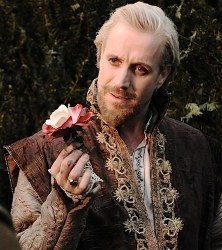
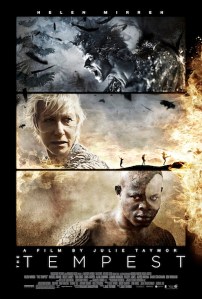
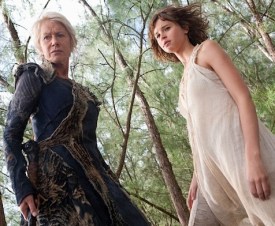
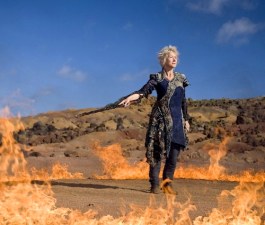
The TempestFilm and theatre director Julie Taymor (infamous now for Spider-Man: Turn Off the Dark) here brings us a radical-seeming interpretation of Shakespeare’s final play. The main character’s changed gender! There’s CGI being tossed about everywhere! It’s got Russell Brand in it! If that sounds superficial, it is. Taymor’s film is still set in the Elizabethan period, in Elizabethan dress (broadly speaking), with a cast of mostly classical actors, enacted on an island that is admittedly a stunning setting but is nonetheless where the original play is set. If it’s a “modern retelling of William Shakespeare” (per the blurb), it perhaps missed what Baz Luhrmann brought to the table 14 years earlier.
Or perhaps not. Just because a temporal re-staging worked for one adaptation doesn’t mean they all have to do it, and Taymor’s adaptation is still packed with modernist flourishes. But that’s the thing: they’re flourishes. Luhrmann reconstructed Shakespeare in a way that worked for modern audiences, leaving the text untouched but adorning it with visual and stylistic touches that made it fresh and relatable for a new audience. Taymor may throw in some cool stuff, like a three-storey high Ariel setting a ship afire in a storm, or Russell Brand speaking how Russell Brand speaks, but there’s nothing in the surrounding work to appeal to the kind of audience who might think a ship on fire in a storm or Russell Brand being Russell Brand would fit nicely into the next Pirates of the Caribbean film that they’re really excited for.

I studied The Tempest at university and rather enjoyed it. It’s not too long, it has some striking ideas, and, as I remember it, it’s not too deep or complex, really. On screen, that doesn’t come across. Women, ehIt goes on in the middle, a mess of scenes of characters traipsing about the island for no apparent reason. (This reminded me of A Field in England a little, actually: a group of people who don’t know what’s going on wandering through a weird supernatural landscape having tangential conversations.) When describing the plot the Shakespearean dialogue is clear enough to follow, but the story seems to be set in motion at the start and then put aside to be resolved at the end, with meandering asides in between. Either that’s Shakespeare’s fault or Taymor bungled it in her execution. Or I missed something.
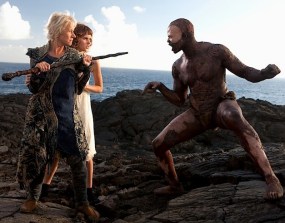
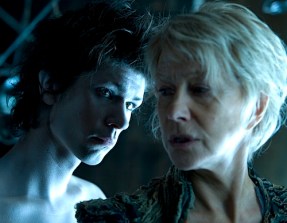
It may be easy to jump on criticisms of the film — as many have, judged by its low scores on Rotten Tomatoes and IMDb — but there is quality here. The cast is filled with recognisable names and faces, which naturally pays off in many instances. In the lead, Helen Mirren turns Prospero into Prospera, a transition so faultless you’d well believe it’s how it was written. She’s obviously a strong actress and delivers a powerful nuanced performance, justifying a gender change that would otherwise be labelled needless. Supporting roles are bolstered by names like Ben Whishaw (Olivier-nominated at just 24 for his Hamlet, lest we forget), Tom Conti, David Straitharn, Chris Cooper, Alan Cumming, Alfred Molina, and the latest constant-up-and-comer, Felicity Jones. If anything some of them are underused. By “some” I really mean Straitharn, who doesn’t have a great deal to tackle as King Alonso. Conti, Cooper and Cumming fare best, with Whishaw hampered by all the effects he’s buried in.

Caliban colonisedAnother key role sees Djimon Hounsou as the slave Caliban, immediately suggesting a colonialist reading that isn’t exactly a huge reach anyway. And Russell Brand makes Shakespeare sound like Russell Brand talking, which at some points I’m not convinced he isn’t (I’ve no idea if Taymor allowed him to stray from the text or not). Love interest is provided by Reeve Carney. I’ve never heard of him, but he’s young and quite pretty and has a music video on the Blu-ray, so I guess he’s from that kind of arena. He speaks with an English accent, but so does everyone else (bar Caliban and the boatswain), so he may still be sourced from the other side of the pond’s teenybopper scene.
Talking of music, Elliot Goldenthal’s score also aligns itself with the film’s modern CGI-bolstered take on the material: it squeals with electric guitars and thunders with drums, evoking so many other computer-accented history-set films of recent years. It took me a while to recall what in particular it most reminded me of, but eventually realised it was 300. I checked that they didn’t share a composer, though that did lead me to notice that Goldenthal is listed on IMDb as providing uncredited stock music for 300. So there you go.

The most striking thing about the film is the visuals. Stuart Dryburgh’s cinematography sometimes offers up breathtaking imagery, aided by beautiful shooting locations in Hawaii, largely sparse and barren places with dramatic coastal settings. And then there’s the lashings of CGI, which render Small breasts not picturedAriel as a truly spiritual spirit, half invisible and jetting off into the sky on a regular basis. I found his realisation a mixed bag: it’s nice to take advantage of the medium to render the spirit in a way that’s impossible on stage, but sometimes it goes a bit far and looks a bit cheap. They’ve also tried to make him androgynous, but done it a bit weirdly: he’s always naked, occasionally making it clear he has no penis, sometimes has small breasts, but always has a moderately deep, clearly manly voice. Show it to a class of teenagers studying the play and you may illicit some confused feelings… That aside, the make-up effects are brilliant. Caliban’s patchwork skin is the best piece of work, but Ariel’s rendering as a giant crow is a fearsome sight as well. For all I know the latter may count as costume design, which is what earnt the film an Oscar nomination. But, hey, the clothes are nice too.
Taymor’s rendering of The Tempest is the kind of film you might dub a fascinating failure. It’s a bizarre mash-up of classical interpretation and modern filmmaking, and I don’t think it’s unfair to call the latter superficial flourishes rather than fundamental revelations. The story wanders, the humour isn’t funny, the visuals swing between a bit cheap and memorably staggering, there are strong performances but others that, while not out of their depth, do sit awkwardly. Some people will despise it, but I don’t know if anyone will love it. I’d have liked to, and early on I thought I might, but then it lost its way.

Woah-oh-oh her gender's on fi-ireIt would be nice to say the magic and fantasy could convert new fans to Shakespeare, much as Leo DiCaprio and swishy editing did for teens nearly two decades ago, but there’s nothing beyond that trailer-friendly neat-looking stuff to convince them it was worth their time. Meanwhile, Shakespeare traditionalists may find it all a bit much. If that leaves it stranded on an ill-located isle of terrible beauty, then at least it’s an apt fate.
3 out of 5

The UK TV premiere of The Tempest is on BBC Two and BBC Two HD tonight at 11:05pm. Note it’s not available on Blu-ray in the UK, so if you want to see it in HD, now’s your chance.

Gnomeo & Juliet (2011)

2012 #14
Kelly Asbury | 84 mins | Blu-ray | 1.78:1 | UK & USA / English | U / G

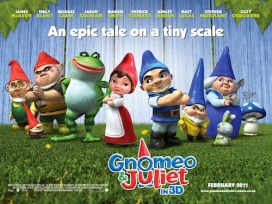
Gnomeo and JulietGnomeo & Juliet is the latest British attempt to crack the lucrative CGI animated kids’ movie market, after the lack of success (or, alternatively, failure) from the likes of Flushed Away and that one about the carrier pigeon whose name escapes me (after a quick IMDBing, it’s Valiant). Finally, this one seems to have been more of a success… perhaps because it was backed by Elton John, released by Disney (under Touchstone), and helmed by the co-director of Shrek 2.
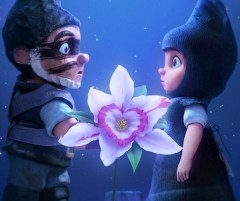
The obvious high-concept — Romeo and Juliet, with gnomes! — is the kind of thing that will tickle you or set you screaming with rage (or possibly just tutting with contempt). If the latter, your mileage will vary on how charming it is to win you over; if the former, “tickled” is about the level the film operates at. It pulls off a couple of nice jokes, mainly around the fact it stars garden gnomes, and it plays with your expectations towards the end, but it’s pretty forgettable — I know there were some bits that made me chuckle, but I can’t actually remember any of them now. It’s also stuffed with recognisable British voices, making it quite fun for anyone who (like me) likes to play Spot The Famous Voice.

Gnomeo meets JulietMy only other note is that it ends with a truly awful cover of Crocodile Rock by Nelly Furtado. A storyboarded “all’s well that ends well” ending (included on the BD, and the DVD for all I know) looks much better.

Gnomeo & Juliet is more amiable than its “oh, you didn’t” title might suggest, but that’s about all. Shakespeare certainly has nothing to worry about.

3 out of 5

A Bunch of Amateurs (2008)

2011 #46
Andy Cadiff | 92 mins | TV | 15

A Bunch of AmateursA faded action movie star (Burt Reynolds) thinks he’s been signed up to play King Lear with the RSC… but when he arrives in England, he finds it’s just a small village amateur dramatics group. Hilarity, and the odd heart-warming message, ensue.
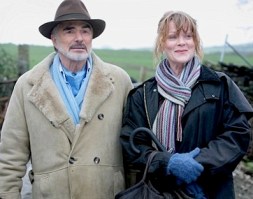
To put it simply, A Bunch of Amateurs is entertaining enough and has its moments. It’s thoroughly predictable — most viewers could probably map out the plot before the film even begins, so it’s certainly easy to guess what’s coming next as it trots along — but there’s also something reassuring about that predictability — it’s exactly the sort of Quaint British Movie you expect it to be. Some will find that insufferable; I’m sure there are some who find it absolutely lovely and it’s the only kind of film they ever want to watch. I think it’s fine for what it is, a nice hour-and-a-half on a Sunday afternoon with something unchallenging but likely to raise a smile.

It’s certainly well cast. Well, mostly. Reynolds isn’t a great actor, is he? Appropriate casting when his bad-actor character is acting, then, but not so hot the rest of the time. (Reportedly he struggled to learn his lines and consequently many differ significantly from the play. So I’m not wrong, am I.) Luckily he’s made up for by a cast that includes Samantha Bond, Not Bond, BondImelda Staunton and Derek Jacobi, all ceaselessly watchable, plus a supporting cast of faces you’ll likely recognise from British telly.
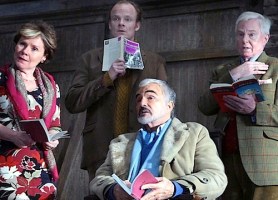
Late on, there are a couple of jumps in the plot that suggest cut scenes. Or bad writing. So we’ll go with the former. I appreciate the (presumed) desire to keep the running time tight, but there were a couple of glitches I observed and it would be nice if they’d been smoothed over. Ian Hislop is a credited writer — I guess we know the source of some light newspaper satire that’s sprinkled across the film (most notably in the final act), then.

The worst gap in the writing is that it goes unexplained why the am-dram group thought he was a good idea at any time. It’s ‘explained’ as the school-age daughter of the group’s director suggesting him, but no idea is given as to why — he’s not a great actor; he’s a wash-up who used to be in crap action films. If he’d been suggested by a version of Nick Frost’s character from Hot Fuzz, or by the B&B lady who fancies the pants off him, that might make sense, but why the schoolgirl? And why did anyone agree to it? It’s sort of ignored in the hope we won’t notice this massive whole in the logic, but… well, I noticed.

Not so amateursProbably the best bit is the series of films Reynolds’ character is known for: Ultimate Finality 4 plays as a nice, subtly-used background gag.

The 15 certificate is overdoing it. There’s a couple of instances of swearing that make it clear how that rating was achieved (according to the BBFC, ten in total, including seven in one sentence), but those aside it’s really not a 15 kind of film; it’s far too gentle for the vast majority of its running time to merit so high a classification. Not that anyone under the age of 15 is going to be dying to see it, but the implication of what a 15 contains is more likely to put off the real prospective audience. Maybe. Oh I don’t know, but it doesn’t seem right.

IMDb reports that “Queen Elizabeth II and Prince Philip requested a copy of this film after attending it’s Premiere 2008 Royal Film Performance so they could show it at Sandringham Castle for the rest of the family over the Christmas holidays.” Take from that what you will.

3 out of 5

Hamlet (2009)

aka The Royal Shakespeare Company’s Hamlet

2009 #90
Gregory Doran | 183 mins | TV | 12

Hamlet (2009)It doesn’t seem like 18 months since the RSC brought Hamlet to the stage with British TV’s biggest star actor (probably) as the titular Dane, but it is (more or less). Thanks to sold-out performances and largely positive reviews (theatre critics seem even less keen to agree on anything than film ones), we’re now treated to this film adaptation, shown on BBC Two on Boxing Day and released on DVD (but not Blu-ray, boo*) earlier this week.

Hamlet hangs primarily on its central performance — so we’re constantly told, anyway; this being only the second production I’ve seen I can’t confidently assert so for myself, but I can certainly see where the consensus comes from. Equally, I can’t accurately compare David Tennant’s performance to any other, which often seems to be a central consideration in any review of the play. In near-isolation, however, it’s a thoroughly convincing performance. He glides seamlessly from withdrawn and grief-stricken in his first appearance, to intrigued and excited by the ghost of his father, to clever and wily as he plots, and finally to an alternation between assumed madness and serious introspection as he enacts his plans.

Any number of scenes show off Tennant’s abilities, particularly the way he treats other characters. He resolutely takes the piss out of both Polonius and Rosencrantz & Guildenstern, but plays each in subtly different ways: the former is like someone intelligent teasing with someone who doesn’t get it, which sounds distasteful but is enjoyable because of Polonius’ plotting and influence; while the latter is like a cat toying with a pair of treacherous mice, who are aware they’ve been caught out but struggle on regardless. Hamlet’s pair of ‘friends’ can be seen as insignificant characters by some — it’s part of what led Tom Stoppard to pen Rosencrantz and Guildenstern Are Dead, after all — but with a few silent additions around Shakespeare’s dialogue and the way Tennant, Sam Alexander and Tom Davey choose to play the original lines, their roles seem to have increased importance.

The other notable facet of Tennant’s interpretation of the character is humour. Hamlet’s madness here is almost unrelentingly funny — even in deadly serious situations, like capture following a murder, Tennant’s Hamlet can’t resist taunting the other characters, keeping the viewer onside by keeping his apparent insanity entertaining rather than scary or darkly intense. If anything, however, this screen version fails to capture just how funny Tennant was on stage. Perhaps it’s the loss of a bigger audience, or the energy of performing on stage, or perhaps Tennant has reined in, switching from Stage Acting to Screen Acting. He’s still funny, certainly, but its not as striking as it was live. In fact, more laughs are earnt by Oliver Ford Davies as Polonius. As his lines dither on like many a real forgetful old man, it’s difficult to imagine the part played any other way.

The other stand-out is an award-winning Patrick Stewart in the dual role of Claudius and the Ghost, though the fact he plays both feels relatively insignificant. His cool politician of a King makes a perfect contrast to the crazed energy of the Prince, the latter constantly bounding around while the former remains still and collected. In my view it’s a shame Stewart has a beard in the filmed version (a necessity forced by his concurrent appearance in Waiting for Godot, I believe) — on stage he was clean-shaven and therefore somehow more reminiscent of numerous other political villains, both real and fictional, whereas his bearded visage is more reminiscent of a traditional Kingly role. Still, it’s a minor aesthetic point that doesn’t hamper his wonderful performance.

Director of the original stage production, Greg Doran, also helms this version. It’s a convincing adaptation too, making good use of sets, locations and, vitally, camerawork, rather than employing static shots of the original theatrical blocking. A quick shoot (18 days for an over-three-hours film) and single location combine to reduce the number of on-screen locations, unfortunately, though the main set is fairly well rearranged to stand in for a number of rooms. It does branch out occasionally, but it’s a shame this couldn’t have been done more often, as consecutive scenes on the same slightly-redressed main set occasionally confuse whether we’ve changed location or not.

Doran’s main screen gimmick, however, is security cameras. Every so often our viewpoint switches to a grainy black & white high angle as we survey the scene via CCTV. It’s a neat idea to convey the concept of Elsinore as a place where everyone is under constant scrutiny, and it’s occasionally used very well indeed — during the Ghost’s appearance to Hamlet, for example, or when he rips a camera down to declare “now I am alone”. Unfortunately, it’s not as consistently thought-out as one might like. When Claudius and Polonius spy on Hamlet and Ophelia, for example, they do so from behind a two-way mirror (as in Branagh’s film, incidentally) rather than, say, from a control room with a bank of security monitors, an idea which seems to naturally flow from the presence of CCTV. Following this, when Polonius talks to Hamlet he delivers several asides to camera — not the security camera, mind, just to the audience. It would have been more effective to have him offer them to a security camera, knowing Claudius to be viewing in another room. It’s moments like these that turn the omnipresent video surveillance from a clever idea to little more than a gimmick. And by the time it’s cut to during the climactic sword fight, you just want it to go away.

It’s almost certain that this production will be remembered as “The Doctor Who Hamlet” thanks to its leading man. Whether that’s unfair or not is another debate, though it shouldn’t mean this version goes ignored. Tennant’s excellent performance reminds us that he was an accomplished performer with the RSC long before he gained televisual fame, and a strong supporting cast ensure this can’t just be dismissed as a popularity-seeking vanity venture by the RSC. Indeed, if there’s one good thing about the “Doctor Who Hamlet” label, it’s that the potential viewership is increased massively, bringing some to Shakespeare who never would have bothered otherwise. Surely no true theatre aficionado could argue with that.

4 out of 5

* A Blu-ray was eventually released in April 2010. ^

Hamlet (1996)

2008 #50
Kenneth Branagh | 232 mins | DVD | PG / PG-13

Hamlet (1996)Following his success with Henry V and Much Ado About Nothing, Kenneth Branagh tackled arguably Shakespeare’s most revered play, Hamlet. And he didn’t do it by half. It’s the first ever full-text screen adaptation, which means it clocks in just shy of four hours; he unusually shot it on 70mm film, which means it looks gorgeous; and, while he grabbed the title role himself, he assembled around him a ludicrously star-packed cast from both sides of the pond — in alphabetical order, there’s Richard Attenborough, Brian Blessed, Richard Briers, Julie Christie, Billy Crystal, Judi Dench, Gerard Depardieu, Nicholas Farrell, John Gielgud, Rosemary Harris, Charlton Heston, Derek Jacobi, Jack Lemmon, John Mills, Jimi Mistry, Rufus Sewell, Timothy Spall, Don Warrington, Robin Williams and Kate Winslet — not to mention several other recognisable faces. Even Ken Dodd’s in there!

But, with impressive statistics and name-dropping put to one side, what of the film itself? Well, it’s a bit of a slog, especially for someone unfamiliar with the text. While there is much to keep the viewer engaged, the high level of attention required can make it a little wearing; certainly, I took the intermission as a chance to split the film over two nights. Amusingly, the second half uses the original text to provide a sort of “Previously on Hamlet“, which was very useful 24 hours later. None of this is the fault of Branagh or his cast, who do their utmost to make the text legible for newbies — for example, there are cutaways to events that are described but not shown by Shakespeare, which, among other things, help establish who Fortinbras is (Rufus Sewell, as it turns out) before he finally turns up later on.

That said, some of the performances are a bit mixed. Branagh is a good director and not a bad actor, but his Shakespearean performances are variations on a theme rather than fully delineated characters. While there a new facets on display here thanks to the complexity of the character, there are also many elements that are eerily reminiscent of his Henry V and Benedick. The Americans among the cast seem to be on best behaviour and generally cope surprisingly well, while Julie Christie achieves an above average amount of fully legible dialogue. Perhaps the biggest casting surprise is Judi Dench, appearing in what is barely a cameo — one wonders if the film-career-boosting effects of a certain spy franchise would have changed that.

The best thing about this version, however, is how it looks. Much credit to cinematographer Alex Thomson for using the larger 70mm format to its full, loading every frame with vibrant colours and packing detail into even the quietest moments. Not every frame is a work of art — there is, after all, a story to be told — but there’s more than enough eye candy to go round. Also, a nod to the editing (the work of Neil Farrell), which makes good use of long takes — many of them full of camera moves — but also sharply edited sequences, such as the all-important play. The fast cuts make for a joyously tense scene in a way only cinema can provide, which I suppose is rather ironic during a ‘play within a play’.

For fans of Shakespeare, I suspect Branagh’s Hamlet is a wonderful experience, finally bringing the complete text to the screen and executing it all so well. For us mere mortals, it’s a beautifully shot and engagingly performed film, that I’m sure would benefit from a greater understanding of the text.

4 out of 5

Throne of Blood (1957)

aka Kumonosu jô

2008 #33
Akira Kurosawa | 105 mins | DVD | PG or 12

Throne of BloodKurosawa moves Macbeth from Scotland to 16th Century Japan in this retelling of Shakespeare’s infamous Scottish Play. I’ve heard this described as a loose adaptation — perhaps those reviewers have never read the play. Kurosawa sticks very closely to the structure of Shakespeare’s version of the story (though based on real events, Shakespeare changed key details), often choosing to adapt it scene-for-scene. It works well in the new setting, with some of the themes — honour, respect, betrayal — perhaps becoming more understandable when placed in samurai culture. Kurosawa changes other elements too — character names are understandably localised, there’s only one witch, there’s no version of the famous “Is this a dagger which I see before me?” monologue, and so on. It’s not all omissions however, as Kurosawa adds imagery and symbolism of his own. Again this helps to place the story in its new context, but also covers the loss of Shakespeare’s original language (a major sticking point for some critics).
Beyond the Shakespearean similarities (or lack of), there’s much to see in Throne of Blood — literally, thanks to the atmospheric cinematography. Most of the exteriors are doused in fog, and while this is sometimes over-done (an extended sequence of Washizu and Miki riding in and out of it goes on too long) it also makes for some amazing moments, such as when the trees of Cobweb Forest drift menacingly forward. The interior of the forest is suitably oppressive and scary too, the perfect location for encountering a witch. Kurosawa was inspired by Japanese Noh theatre in his construction of the film, so there are a lot of longer shots that allow the characters to be blocked as if on stage. It’s not overly theatrical, thankfully, and works suitably.

Cinematic techniques are not entirely abandoned however. The most memorable is the banquet scene, in which Washizu sees Miki’s ghost: we see Miki’s empty seat, the camera tracks forward to a shocked Washizu, then back to reveal the ghost of Miki sat at his place, before tracking and panning around the room to follow Mifune’s brilliant performance. It’s an infinitely more effective reveal than any amount of jiggery pokery with dissolves or CGI could provide. Similarly, Washizu’s iconic death scene — in which hundreds of arrows puncture him and the surrounding walls — is impressively achieved (using real arrows), including one seamless shot when an arrow pierces his neck.

Macbeth is my favourite Shakespeare play — it’s a great story, with great themes, imagery and language. Throne of Blood obviously loses some of this, but it doesn’t matter in the slightest — Kurosawa has constructed an excellent and well-conceived retelling with a few of his own flourishes.

5 out of 5

A note on the classification: the UK DVD from the BFI is rated PG, classified in 1991. A few months after the DVD’s release in 2001, the film was re-submitted to the BBFC and received a 12. Quite way the rating was raised isn’t explained, and copies of the DVD still bear a PG on the cover.

Henry V (1989)

2008 #29
Kenneth Branagh | 132 mins | DVD | PG / PG-13

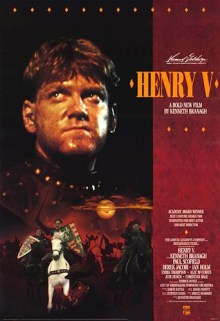
Henry V (1989)Once more unto the breach, dear friends, as I delve into a second version of Henry V in as many (viewing) days. (I dread to think how many reviews of this film began with a similar quote-based pun.) Inevitably, having watched them so close together, this is as much a comment on the relative merits of Branagh’s and Olivier’s interpretations of Henry V as it is a review of Branagh’s film in its own right.

Branagh’s version opens with almost a direct homage to Olivier’s, though with an important difference. Olivier opened with the Chorus’ narration on a stage ; Branagh opens with the Chorus’ narration on a film set. Rather than wasting half an hour with this conceit (as Olivier did), Branagh pushes into the ‘reality’ of the story before another actor has even entered. And his reality is much more real. The film looks as if it’s lit by candles and daylight, the castles and tavern are rough and dark, the battlefields muddy and grimy; everyone gets dirty and bloodied by the fights. On the whole it’s a grittier and more realistic version. Yet there’s room for more than that. The story still seems concluded at the Battle of Agincourt, but the proposal scene no longer feels tacked on. In fact it’s now laugh-out-loud hilarious, with Branagh and Emma Thompson demonstrating the undeniable chemistry that would help make Much Ado About Nothing so good a few years later. Unlike Olivier’s fluffy limp to the credits, this is an entertaining round-off to the plot.

The fact I’d never seen a version of Henry V before Olivier’s ostensibly gives Branagh’s the benefit of a better understanding on my part. Practically, it matters little that I saw Olivier’s first, as the more modern and film-friendly performances in Branagh’s version mean that, while Olivier’s allowed me to broadly follow the majority of what was happening, Branagh’s gives more access to the nuances of both plot and character. He’s aided in the latter by the inclusion of scenes deemed inappropriate for a World War 2 propaganda film: in one, Henry and co confront three traitors; in another, he hangs an old friend in order to make an example. Other scenes are played differently too, so that Branagh’s Henry is a more complex and morally debatable figure, unlike Olivier’s bright-eyed hero. Whatever your opinions on the two actors on the whole, these changes make for a better character and therefore a better film.

It would be remiss not to mention the rest of the cast. Brian Blessed is positively restrained as Exeter, one of Henry’s key associates — you’d never imagine he could turn in such a performance if you’d only seen his recent go at hosting Have I Got News For You. Paul Schofield, as the aging French King, and Michael Maloney, as the contemptible Dauphin, help flesh out the French side more than Olivier’s version managed, as does Christopher Ravenscroft’s Mountjoy, the French herald who all but switches his allegiance. The English ranks are swelled by Bilbo Baggins, Hagrid, and the current incarnations of ‘M’ and Batman (don’t worry, the French have Miss Marple); not to mention the recognisable faces of Richard Briers, Danny Webb, Simon Shepherd and John Sessions (and no doubt others I’ve accidentally missed). Of course, a starry and recognisable cast does not necessarily a good film make, but this is a dependable lot and there are good performances all round — even if Ian Holm’s Welsh accent is somewhat dubious (though it’s a lunar leap on from the one in Olivier’s version).

And deserving of a paragraph unto himself is Derek Jacobi’s masterful Chorus, who, with just a handful of narrational lines and a big black coat, is somehow one of the coolest characters I’ve seen of late.

There’s no contest here for me. Olivier’s version is an over-stylised, propaganda-inspired, outdated version of Shakespeare, whereas Branagh’s is a comprehensible, realistic, textured and, perhaps most importantly, genuinely enjoyable interpretation.

4 out of 5