Chicago (2002)

2008 #96
Rob Marshall | 108 mins | DVD | 12 / PG-13

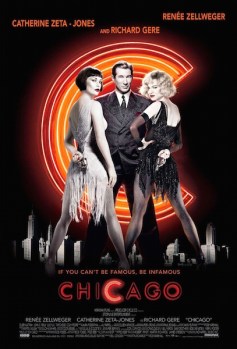
ChicagoI remember being distinctly unimpressed when Chicago took the Best Picture Oscar in 2003, especially as the alternatives included Gangs of New York and The Two Towers — not to mention Road to Perdition, an excellent film that was massively undervalued during award season.

In its favour are a number of memorable songs, all performed with impressive routines. On the downside, they’re all quite stagey in their choreography, though this suits the daydream-fantasy style in which they come about. In fact, the ability of film to make clear the distinction between ‘real life’ and fantasy means the film is far easier to follow than the stage version.

The story is passable enough, serving as a roadmap between the songs and offering the occasional bit of commentary/criticism on celebrity culture — it may be set in the ’20s and have been written in the ’70s, but the characters’ underhand tactics to keep their story on the front pages are as pertinent now as ever.

Five years on, Chicago isn’t as poor as expected — it manages to be consistently entertaining — but nor is it superior to the alternatives. For a current comparison, it’s only marginally better than if Mamma Mia were to trot round winning Best Picture gongs this year.

4 out of 5

Fist of Legend (1994)

aka Jing wu ying xiong

2008 #77
Gordon Chan | 99 mins | TV | 18 / R

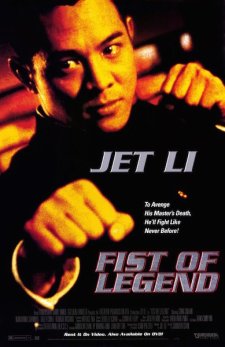
Fist of LegendI found myself watching Fist of Legend unintentionally following this year’s Children in Need appeal. The significance of this piece of trivia is that I watched it on TV, which means I had to watch it dubbed. Apparently, “it is regarded as one of the best martial arts films of all time, and almost universally viewed as Jet Li’s best” (thank you Wikipedia), but the dub does its utmost to obscure this.

Putting the audio aside (for the moment), the film has a lot to recommend it — primarily, the fights. At 2am, after seven hours of near-solid TV watching, it was these that drew me in. I’m no expert on martial arts, but I do like a good fight (on film) and Fist of Legend serves up plenty of those. In fact, there’s approximately one every five minutes, an impressively high ratio that consciously — and very pleasingly — fulfills what you want from this kind of film. This quantity doesn’t seem to have damaged quality either: all are generally impressive, but there are some particularly good ideas floating about too, such as a long fight where both participants are blindfolded.

There’s a plot too, which includes a few surprisingly surprising twists and an interesting undercurrent of Japanese/Chinese racial tensions thanks to the setting (1937, during a Japanese occupation of Shanghai). This adds an extra level to what could otherwise be a stock revenge plot.

So, that just leaves the soundtrack. The English audio is at least as bad as you’d imagine, and a reminder — if one were needed — about why dubbing foreign language films is so hated. Whatever the qualities of the film itself, the clichéd dub script and flat voiceover performances, awkwardly delivered to fit the actor’s mouth movements, make the film look cheap and poorly done. On the bright side, the main villain has an amusingly gravelly “I am playing a villain!” voice.

If you can look past the rubbish dub (which I should imagine is even easier on DVD, what with turning it off), Fist of Legend is very enjoyable. However, with the action being the primary source of pleasure, those who don’t like martial arts movies may want to imagine a lower score.

4 out of 5

The Invasion (2007)

2008 #72
Oliver Hirschbiegel | 99 mins | download | 15 / PG-13

The InvasionThe Invasion is a modern thriller aimed at a mainstream audience, which naturally means it begins at the end. Is there a reason for this? As is too often the case these days, no. The only explanation I could come up with is that such an opening suggests there’ll eventually be some some actual scares in this sci-fi/horror, and so is designed to help the viewer persevere through the distinctly lacking film that follows.

Things go sharply down hill from the lacklustre opening ending opening: Jeremy Northam accidentally stabs himself with an Evil Alien Parasite Thing in a blatant genre convention that seems to have moved from the “necessary to get on with the plot” to the “badly obvious cliché”. The order of scenes that follow seems to be a random mess — for example, Nicole Kidman’s kid, Olly, begins to have nightmares again; a few scenes later, his dad (Northam, now taken over by the Evil Alien Parasite Thing) phones wanting to see him after a long absence; a few scenes later, Kidman tells a friend that Olly’s nightmares restarted after he was told he was going to see his dad. This is not an isolated example.

Much of the dialogue is on the level of bad exposition, but, to rub salt in the wound, it explains things we’ve already been shown. Normally reliable actors turn in flat performances with such an awkward script, which ponderously works its way through a plot that’s far too slow-moving considering how obvious it is. We know it’s an Evil Alien Parasite Thing within the opening minutes and even a passing familiarity with the genre will let you know how things are going to end up (as if opening with the ending didn’t give you a hint), but we’re still treated to near-endless scenes of our luckily-immune heroes trying to work out why everyone else is behaving oddly. It takes a full 36 minutes for Kidman to finally realise what we’ve all known from the start, but just in case you’ve missed the bleeding obvious there’s a pile of handy flashbacks. More to the point, how come only two people in the entire world (the other being Daniel Craig) have noticed what’s going on? The possessed have all the subtlety of a Jeremy Clarkson joke, walking around in a permanent mechanical daze.

A lot of articles have noted that the studio disliked how the film ended and so brought in other writers and director(s) to re-shoot the final act, aiming to bolster the action. Thank goodness they did, because it’s at this point that there’s finally something worth watching. The aliens’ dominance is a near-inevitable and obvious eventuality from very early on, and so structurally speaking should have been reached sooner. Unfortunately, when it does arrive, the weak early scenes mean we don’t care about the characters, so while some of the more action-packed scenes are well staged they have little genuine impact. Some good moments sneak through though, like a couple’s very public suicide, or… No, that was the only one I noted.

In this structural imbalance The Invasion is reminiscent of I Am Legend: a ponderous dramatic first half turns into an all-action assault as the only uninfected people are relentlessly pursued by the infected majority. In an inversion of the disappointing (but not dreadful) Will Smith vehicle, The Invasion‘s first half is dire while the second at least has some excitement and jeopardy. In Legend it was a shame that they couldn’t keep the first half running for the rest of the film; here you’re glad the studio intervened and forced some actual events on the film. It would be quite interesting to see how it was all meant to turn out originally, but I doubt it would be entertaining in the slightest.

Once it’s all over there’s a truly dreadful info-dump that explains what happened next. Besides making you cringe and wonder how a piece of exposition so blatant could ever have been greenlit, all it achieves is the delivery of a killer blow — not by blatantly stating the film’s subtext (which it does — not so ‘sub’ then), but with what that subtext actually is: when humanity is taken over by aliens, war stops; ergo, war is what makes us human. Lovely.

2 out of 5

The Invasion featured on my list of The Five Worst Films I Saw in 2008, which can be read in full here.

St. Trinian’s (2007)

2008 #71
Oliver Parker & Barnaby Thompson | 97 mins | download | 12

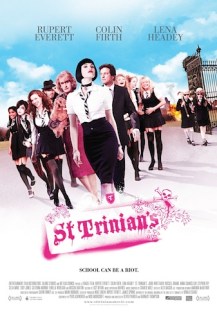
St. Trinian'sI really didn’t think I was going to like St. Trinian’s. It seemed to be aimed squarely at teens whose quality barometer is fixed at Girls Aloud being the best music artists of all time and aren’t old enough to have seen There’s Something About Mary. Certainly, some of the film lives up to these expectations, but other bits are surprisingly good.

For one thing, it has a pleasantly wicked sense of humour, which must be pushing that 12 certificate on moral grounds — 10-year-olds producing black market vodka, for just one example. There’s a number of good, brief, visual gags too, such as the RE department having a Practical Study of the Easter Story with a girl strung up like Jesus on the cross (Christian bating is always funny). On the other hand, it merrily includes some ancient gags too — a dog shags someone’s leg! Hilarity! But then again, it makes no bones about being aimed at a relatively young audience, and for them this probably seems wonderfully fresh and naughty. Thankfully it’s not all down on this level — it has an even better line in Colin Firth spoofing than the Bridget Jones movies, and while some of these references may fly over the heads of that intended audience, they should at least keep any adult viewers amused. My personal favourite was the two 10-year-old girls who keep quoting famous movie lines. Simple, but effective.

A fair number of people seem to have considered the moral vacancy of St. Trinian’s’ style of comedy a bad thing, claiming impressionable girls will copy the characters’ actions or at least be influenced by their anarchic attitude. Not likely, I say — the school is such a fantasy-mess that I think even the very young would struggle to believe it as a potential reality. In fact, I’d go so far as to say that most of it is relatively harmless fun — if only some of The Youth Of Today would copy this lot rather than getting stupidly drunk, pregnant as soon as they’re able, and knifing each other every evening, then we might not be in the state we’re in. But anyway…

Through any weak patches, affairs are buoyed by a rather wonderful cast. The likes of Colin Firth and Rupert Everett are clearly having a ball, the young (though most not as young as their characters) cast all do a good job, with Gemma Arterton standing out in particular, and anything featuring Stephen Fry is at least worth a look. Yes, he’s only playing himself (literally) on a version of University Challenge that no doubt owes something to QI (even if it is just Fry hosting), but luckily he’s given a smidgen more to do than just read out cue cards. In spite of which names may be above the title or which characters get introduced first, it’s decidedly an ensemble piece — every time you think a lead is emerging another takes centre stage. In that respect it might be seen as a bit messy, but each one gets a decent enough through-line.

Incidentally, it’s incredibly British — not just in its setting and style, but also the very current cultural references — which might explain why it still hasn’t had a US release. It wouldn’t look out of place premiering on TV, probably at Christmas considering the scale of it, and I wouldn’t be surprised if the budget had been TV-sized. It’s also got a posh girl played by that girl who plays a posh girl in everything on TV (namely, Lucy Punch). That doesn’t really signify much, but my God she’s done well out of playing essentially the same role in numerous productions.

Despite my preconceptions when starting out, which were all supported by the opening few minutes, I ultimately found St. Trinian’s quite enjoyable. It’s far from perfect, and every time I began to truly warm to it — I even found myself laughing at a final beat for the leg-shagging dog cribbed from a decade-old comedy (I believe I already mentioned it…) — there was another recycled or immature joke to make me despair. In spite of that, the overall impression was adequate enough.

3 out of 5

Hairspray (2007)

2008 #53
Adam Shankman | 111 mins | DVD | PG / PG

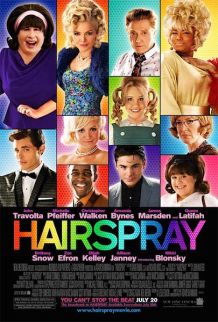
HairsprayWho’d’ve thought a John Waters film could become a bright and breezy musical? It’s a bit of a surprise but, thanks to a successful Broadway version, that’s exactly what’s happened. But while the key to Hairspray’s success may be its positive attitude and memorable songs, perhaps the key to its quality — and the eventual score of this review — are the issues it tackles around those.

It’s the latter that I found must surprising while watching the film. Everything about its advertising campaign, largely young cast and candy-coloured design suggested Hairspray was a light-as-air feel-good flick — no bad thing, but nothing more than a couple of hours of disposable fun. Pleasantly that’s not the case, as the film tackles head-on issues of racism and other such discrimination, with the ‘beautiful people’ — led by a deliciously bitchy Michelle Pfeiffer — doing their best to keep down those who are in any way different, be they black or, in the case of lead character Tracy Turnblad, fat. The apparently fluffy style of the film in many ways makes it perfect to tackle such issues, showing how they can permeate every area of life, not just Serious Social Dramas, and forces those who would normally avoid the latter type of drama to face up to them. Its ultimately happy ending may be more in keeping with the film’s overriding optimism than with reality, but equally it’s wholly appropriate: the crusade against oppression has to end well here, because if it didn’t the concluding message would be “don’t bother fighting, things won’t change”.

The film’s unwavering optimism is perfectly encapsulated by newcomer Nikki Blonsky, leading the cast as Tracy. She’s instantly and constantly likeable, irrepressibly chirpy and yet not annoying — an impressive feat. Equally remarkably, she’s never overshadowed by the heavyweights who round out the cast; instead, they provide able support. Even John Travolta, disturbingly convincing as a housewife (under a ton of makeup), doesn’t steal the show — he comes close, but Blonsky’s performance holds sway. Elsewhere, Christopher Walken, Queen Latifah, James Marsden and Zac Efron all get catchy songs and have a whale of a time — and, unlike the Ocean’s… sequels, the fun the cast is having is infectious.

The first credit at the close is an unusual one: “Directed and Choreographed by Adam Shankman”. Rather than shirking in either department, the rare combination seems to have helped proceedings: the numbers are all exemplarily executed and the direction doesn’t suffer elsewhere. It’s an indication of the music’s quality that even the three cut songs, which play over the end credits, are pretty good and wouldn’t’ve been out of place in the film itself. The first of these is clearly the actual closing number, though the decision to bump it to the end credits, thereby leaving You Can’t Stop the Beat as the final song of the film proper, was a wise one — it makes for a stronger, catchier, more upbeat finale.

Hairspray is a deft mix of issue-driven drama and colourful musical levity. Catchy, optimistic, uplifting, funny and fun, it may just surprise you.

5 out of 5

Hairspray is on Film4 today, Tuesday 11th November 2014, at 6:45pm.

Hairspray placed 6th on my list of The Ten Best Films I Saw For the First Time in 2008, which can be read in full here.

Hamlet (1996)

2008 #50
Kenneth Branagh | 232 mins | DVD | PG / PG-13

Hamlet (1996)Following his success with Henry V and Much Ado About Nothing, Kenneth Branagh tackled arguably Shakespeare’s most revered play, Hamlet. And he didn’t do it by half. It’s the first ever full-text screen adaptation, which means it clocks in just shy of four hours; he unusually shot it on 70mm film, which means it looks gorgeous; and, while he grabbed the title role himself, he assembled around him a ludicrously star-packed cast from both sides of the pond — in alphabetical order, there’s Richard Attenborough, Brian Blessed, Richard Briers, Julie Christie, Billy Crystal, Judi Dench, Gerard Depardieu, Nicholas Farrell, John Gielgud, Rosemary Harris, Charlton Heston, Derek Jacobi, Jack Lemmon, John Mills, Jimi Mistry, Rufus Sewell, Timothy Spall, Don Warrington, Robin Williams and Kate Winslet — not to mention several other recognisable faces. Even Ken Dodd’s in there!

But, with impressive statistics and name-dropping put to one side, what of the film itself? Well, it’s a bit of a slog, especially for someone unfamiliar with the text. While there is much to keep the viewer engaged, the high level of attention required can make it a little wearing; certainly, I took the intermission as a chance to split the film over two nights. Amusingly, the second half uses the original text to provide a sort of “Previously on Hamlet“, which was very useful 24 hours later. None of this is the fault of Branagh or his cast, who do their utmost to make the text legible for newbies — for example, there are cutaways to events that are described but not shown by Shakespeare, which, among other things, help establish who Fortinbras is (Rufus Sewell, as it turns out) before he finally turns up later on.

That said, some of the performances are a bit mixed. Branagh is a good director and not a bad actor, but his Shakespearean performances are variations on a theme rather than fully delineated characters. While there a new facets on display here thanks to the complexity of the character, there are also many elements that are eerily reminiscent of his Henry V and Benedick. The Americans among the cast seem to be on best behaviour and generally cope surprisingly well, while Julie Christie achieves an above average amount of fully legible dialogue. Perhaps the biggest casting surprise is Judi Dench, appearing in what is barely a cameo — one wonders if the film-career-boosting effects of a certain spy franchise would have changed that.

The best thing about this version, however, is how it looks. Much credit to cinematographer Alex Thomson for using the larger 70mm format to its full, loading every frame with vibrant colours and packing detail into even the quietest moments. Not every frame is a work of art — there is, after all, a story to be told — but there’s more than enough eye candy to go round. Also, a nod to the editing (the work of Neil Farrell), which makes good use of long takes — many of them full of camera moves — but also sharply edited sequences, such as the all-important play. The fast cuts make for a joyously tense scene in a way only cinema can provide, which I suppose is rather ironic during a ‘play within a play’.

For fans of Shakespeare, I suspect Branagh’s Hamlet is a wonderful experience, finally bringing the complete text to the screen and executing it all so well. For us mere mortals, it’s a beautifully shot and engagingly performed film, that I’m sure would benefit from a greater understanding of the text.

4 out of 5

Brideshead Revisited (2008)

2008 #49
Julian Jarrold | 133 mins | cinema | 12A / PG-13

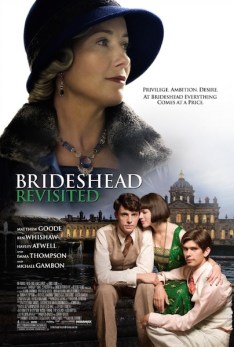
Brideshead RevisitedI’ve not seen the miniseries and I’ve not read the book, but I do know that both are considerably longer than Jarrold’s two-and-a-quarter hours film. So why does it feel so slow? Perhaps it’s the pair of opening flashforwards (easier to refer to them as that than to the majority of the film as one great big flashback), an overused technique these days that here serves no purpose whatsoever: there’s no additional insight on events that follow (or, rather, precede) by placing these snippets at the start, and there’s no new perspective on the snippets when we reach them chronologically (except that, second time round, we actually know who the characters are). It’s the most niggling fault in a film that, like my just-reviewed WALL-E, is of two halves.
The first is very good. It’s entertainingly written and performed, firmly in the tradition of the ‘heritage’ films and TV series that Britain churned out through the ’80s and ’90s — it’s the natural successor to the work of Merchant-Ivory, who of course produced the tonally-similar (at least at first) A Room With a View, which makes this all seem very appropriate. As Sebastian, Ben Whishaw is, perhaps unsurprisingly, the best of the three leads. When he’s off screen you miss him, and the point at which Sebastian leaves the story is arguably when things go off the boil. As Charles, Matthew Goode by and large holds his own — handy really, as he is definitely the centre of the film. Emma Thompson is as you’d expect her to be, which is to say she’s pretty good but ultimately it’s all rather familiar from her other performances.

The second half is where the film falls apart. The focus shifts from Charles and Sebastian’s friendship/possible homosexuality, to Charles and Julia’s love affair. The latter seems to come from nowhere and never takes off, consequently making it hard to accept the lengths they’re prepared to stretch to in order to make it work when they’re finally reunited years later. The plot slowly slides into darker and bleaker territory, needlessly dragging small characters back into proceedings to kill them off and finally pushing towards an Atonement-esque World War II epilogue. Some or all of this is obviously derived from the source, but considering the praise garnered by the novel and miniseries I presume it’s made to work there. Here it doesn’t.

An hour-and-a-half in I couldn’t understand what story there was left to tell, and I continued to be bemused by the sudden import of Charles and Julia’s relationship as the next hour dragged by. It’s a shame, because Brideshead starts out so promisingly and enjoyably, but once it begins to slide it never recovers.

3 out of 5

I Am Legend (2007)

2008 #35
Francis Lawrence | 96 mins | DVD | 15 / PG-13

This review contains major spoilers.

I Am LegendWill Smith stars in this adaptation of Richard Matheson’s classic sci-fi novel from the director of Constantine. The latter is a film I personally enjoyed (and which features a relatively early appearance of the currently prolific Shia LaBeouf) but received some mixed reactions on the whole. By a broadly similar token, I Am Legend has received a fair share of negative reviews, though my opinion is a little more divided.
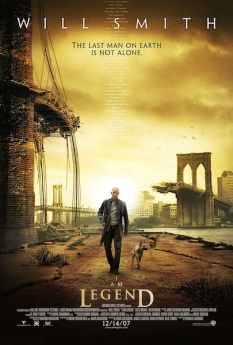
Things go very well for the first half. It’s nicely paced, concentrating on a depiction of one man’s loneliness taken to the extreme. The script, and Smith’s acting, handle the material well. The deserted and destroyed New York looks as stunning as the trailers promised, while the CGI animals that roam it are as good as any. The flashbacks that punctuate the film are well executed too, drip-feeding clues to what happened while maintaining some mysteries of their own. There are some other good sequences: Neville’s exploration of a pitch-black Dark Seeker-infested building is tense, and the death of his pet dog — his one remaining companion — is moving, even if it was given away in the trailer. That scene is effectively played and shot, showing only Neville’s face as he is forced to euthanize the diseased animal by suffocation.

Sadly, this is where things begin to go down hill. The Dark Seekers — the film’s vampires/zombies/whatever — are crafted with pretty good CGI, but they’re still not life-like enough to work. If it were a mindless blockbuster they would’ve been more at home, but as it’s managed to be an effective drama they feel entirely out of place. It’s true that real actors couldn’t have managed the physical feats the creatures are made to pull off, but do they really need to do those things? I suspect not. The film also leaves several holes in the Dark Seeker’s actions — for example, they copy Neville’s trap, a move apparently beyond their intelligence, but the film neglects to explore why or how they did this.

Instead it moves on to the arrival of some more survivors. Quite where they came from, or how they got into the supposedly isolated Manhattan, is another inadequately explained set of circumstances. After they arrive, the film’s climax comes out of nowhere. It’s as if the screenwriters ran out of ways to keep things going so just bunged on a big climactic action sequence. And what happens in it is pretty silly too, especially Neville’s self sacrifice — why not get in the Magic Safe Hole too and then chuck the grenade out? Perhaps he just has a death wish by that point. It would seem most of the audience did. There’s also a pathetic epilogue, and an even worse final line that attempts to make sense of the title.

I Am Legend is something of a disappointment. The considered and effective first half gives way to an increasingly nonsensical second, marred by numerous flaws that stack up til a near-laughable conclusion comes from nowhere. I’ve been told that the ‘alternate theatrical cut’, with a handful of additional scenes and a new ending, is marginally more effective. I’m sure I’ll watch it someday and share my thoughts. For now, I Am Legend’s two halves of differing quality just leave it in the middle of the road.

3 out of 5

I Am Legend is on Watch tonight, Saturday 11th October 2014, at 9pm. It’s on again on Tuesday, when I’ll (re-)share my thoughts on the so-called “Alternate Theatrical Version”.

Henry V (1989)

2008 #29
Kenneth Branagh | 132 mins | DVD | PG / PG-13

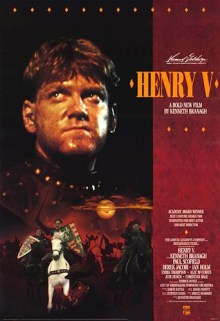
Henry V (1989)Once more unto the breach, dear friends, as I delve into a second version of Henry V in as many (viewing) days. (I dread to think how many reviews of this film began with a similar quote-based pun.) Inevitably, having watched them so close together, this is as much a comment on the relative merits of Branagh’s and Olivier’s interpretations of Henry V as it is a review of Branagh’s film in its own right.
Branagh’s version opens with almost a direct homage to Olivier’s, though with an important difference. Olivier opened with the Chorus’ narration on a stage ; Branagh opens with the Chorus’ narration on a film set. Rather than wasting half an hour with this conceit (as Olivier did), Branagh pushes into the ‘reality’ of the story before another actor has even entered. And his reality is much more real. The film looks as if it’s lit by candles and daylight, the castles and tavern are rough and dark, the battlefields muddy and grimy; everyone gets dirty and bloodied by the fights. On the whole it’s a grittier and more realistic version. Yet there’s room for more than that. The story still seems concluded at the Battle of Agincourt, but the proposal scene no longer feels tacked on. In fact it’s now laugh-out-loud hilarious, with Branagh and Emma Thompson demonstrating the undeniable chemistry that would help make Much Ado About Nothing so good a few years later. Unlike Olivier’s fluffy limp to the credits, this is an entertaining round-off to the plot.

The fact I’d never seen a version of Henry V before Olivier’s ostensibly gives Branagh’s the benefit of a better understanding on my part. Practically, it matters little that I saw Olivier’s first, as the more modern and film-friendly performances in Branagh’s version mean that, while Olivier’s allowed me to broadly follow the majority of what was happening, Branagh’s gives more access to the nuances of both plot and character. He’s aided in the latter by the inclusion of scenes deemed inappropriate for a World War 2 propaganda film: in one, Henry and co confront three traitors; in another, he hangs an old friend in order to make an example. Other scenes are played differently too, so that Branagh’s Henry is a more complex and morally debatable figure, unlike Olivier’s bright-eyed hero. Whatever your opinions on the two actors on the whole, these changes make for a better character and therefore a better film.

It would be remiss not to mention the rest of the cast. Brian Blessed is positively restrained as Exeter, one of Henry’s key associates — you’d never imagine he could turn in such a performance if you’d only seen his recent go at hosting Have I Got News For You. Paul Schofield, as the aging French King, and Michael Maloney, as the contemptible Dauphin, help flesh out the French side more than Olivier’s version managed, as does Christopher Ravenscroft’s Mountjoy, the French herald who all but switches his allegiance. The English ranks are swelled by Bilbo Baggins, Hagrid, and the current incarnations of ‘M’ and Batman (don’t worry, the French have Miss Marple); not to mention the recognisable faces of Richard Briers, Danny Webb, Simon Shepherd and John Sessions (and no doubt others I’ve accidentally missed). Of course, a starry and recognisable cast does not necessarily a good film make, but this is a dependable lot and there are good performances all round — even if Ian Holm’s Welsh accent is somewhat dubious (though it’s a lunar leap on from the one in Olivier’s version).

And deserving of a paragraph unto himself is Derek Jacobi’s masterful Chorus, who, with just a handful of narrational lines and a big black coat, is somehow one of the coolest characters I’ve seen of late.

There’s no contest here for me. Olivier’s version is an over-stylised, propaganda-inspired, outdated version of Shakespeare, whereas Branagh’s is a comprehensible, realistic, textured and, perhaps most importantly, genuinely enjoyable interpretation.

4 out of 5

Great Expectations (1998)

2008 #8
Alfonso Cuarón | 111 mins | download | 15 / R

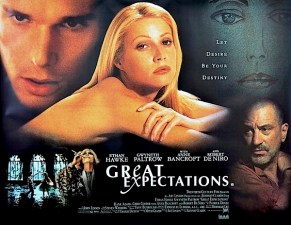
Great ExpectationsAfter re-enjoying the classic David Lean version of Great Expectations (which I reviewed in 2007) last week as part of my adaptations module, it’s now the turn of this American-set re-imagining. Despite a generally-held negative opinion toward this version, I found it to be more of a mixed bag.

Its main problem is that it can’t escape its roots. Not a fault in an adaptation, you might think, but in the case of one so radical as this it is a flaw: you’re left comparing and contrasting it with Dickens’ novel and Lean’s film, rather than appreciating it as a film or narrative in its own right. It comes across more as an academic exercise in turning a British Victorian novel into a modern American movie than a believable tale that works in isolation. Indeed, many of the changes appear to be designed purely to help distance it: the changed character names, the focus on the love story, and so on. Yet it directly recreates many scenes from the novel, and it obviously retains its title, despite there being no reference to that in the film itself.

Another product of this re-imagining is an unremitting sexualisation of everything. When Pip — sorry, Finn’s — hand is placed on Ms Havisham — sorry, Ms Dismoor’s — chest his first guess is that it’s her “boob” rather than her heart; when 10-year-old Estella kisses Pip — Finn, even — it now comes with added tongues; Finn — Pip — Finn! — draws now, and what he draws are nudes of Estella; and then they have sex too; and there are undoubtedly other examples that have since slipped my mind. This was pre Y Tu Mamá También, of course, where perhaps Cuaron exorcised this sexual preoccupations — they’re certainly not so evident in Children of Men or (unsurprisingly) his Harry Potter. His penchant for long takes, as seen constantly to great effect throughout Children of Men, also put in the odd pleasing appearance here.

By the end, it’s tricky to know what to make of this Great Expectations. It’s nicely faithful for a modern version, and yet that forbids it from striking out as its own work — it’s a fairly basic romantic film, bookended with some bizarre American Gothic trappings. I think it must stand as neither a success nor a failure, but as an interesting curio in the canon of Dickens adaptations.

3 out of 5

That picture was the only one I could find in high enough quality to make a banner image. Honest.