2013 #100
David Lean | 227 mins | Blu-ray | 2.20:1 | UK & USA / English | PG / PG
In tribute to the great Peter O’Toole, who passed away on Saturday, today’s review is his defining role, and this year’s very special #100…
 If you were looking for the archetype of an epic movie, Lawrence of Arabia would be a strong contender. It has a wide scope in just about every regard, from the desert locations that stretch as far as the eye can see, to the thousands of extras that fill them, to the glorious 70mm camerawork that captures it all, to the sweeping story that also contains a more personal throughline, to the 3½-hour running time.
The film begins at the end, with Lawrence (Peter O’Toole) dying in a motorcycle crash. At his funeral, various people express how they never really knew him. From there, it’s back to the height of the First World War, where Lawrence is performing menial duties for the British Army in Cairo before (in a series of events too incidental to go into here) he’s sent off to Arabia to assess the military prospects of Prince Faisal (Alec Guinness). Instead of merely reporting back, however, Lawrence leads some of Faisal’s men on an impossible mission… and succeeds. Supposed to be the British Army’s liaison with the Arab forces, he more ‘goes native’, leading the Arab troops in successful attacks on the enemy Turks, before considering turning on the British for Arabia’s independence…
And that’s much of the film summarised. But it’s almost besides the point, because it’s in the telling and details that Lawrence of Arabia thrives. For instance, as a war epic you might expect numerous battle scenes, and you get some of those; but the 140-minute first half deals with Lawrence’s journey to meet Faisal and then his first victory, while the second part begins later, after Lawrence has won many significant victories. Director David Lean is concerned more with this unknowable man, how he rose and how he fell, than with the ins and outs of all his triumphs.
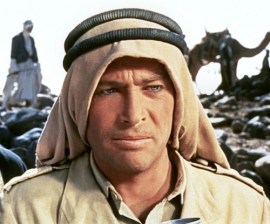 As such, the film hangs on the performance of O’Toole. We’re told Lawrence is an enigmatic figure and his depiction arguably supports that — we never fully get inside his head; we’re always observing him. And yet that’s no bad thing, because even as Lawrence’s confidence waxes and wains, as his allegiances shift and alter, we can feel what he wants to achieve, why he thinks he can. He attempts the impossible and succeeds, which is why he later attempts a bigger impossibility, and must leave the pieces to the more level-headed men, who didn’t have his genius but can therefore play the political game better than he.
O’Toole carries us through all this with the skill of a seasoned pro, and yet this was his first major role. No wonder it made him a star over night. He makes every tweak in Lawrence’s attitude plausible; sells both the supreme self-confidence and crushing tumbles to inadequacy. Whatever else is going on, he draws your attention — not harmed by his piercing blue eyes, and looks so beautiful that Noel Coward remarked if he were any prettier they’d have to call it Florence of Arabia.
His command of the screen is even more impressive considering who’s playing opposite him. With hindsight it may be a mistake to have Alec Guinness blacked up as an Arabian prince, but his is not a caricature or cartoon villain. Indeed, Faisal is one of the most respectable men in the film, far more so than any of Lawrence’s British superiors. I said before that no man here outclassed Lawrence’s genius, but that would really be wrong: while he might not share Lawrence’s outward brilliance, Faisal is intelligent enough to hold back, to recognise that Lawrence will do much of what needs to be done, but that someone with a calmer head will need to be there to sweep up afterwards.

Then there’s Omar Sharif. Famed for having one of the greatest introductions in the history of the cinema — and one of the longest — there’s much more to his character than that sequence. At first Lawrence’s apparent enemy, he becomes perhaps the closest thing he has to a friend, before it disintegrates again. Such is the volatile nature of Lawrence’s relationship with most of the characters. A psychiatrist could probably diagnose him with some kind of mental health issue.
While those three may dominate, a film of this size has room for many more characters, and — at the risk of just sounding like a cast list — actors such as Anthony Quinn, Jack Hawkins, José Ferrer, Anthony Quayle, Claude Rains and Arthur Kennedy all make a mark, to one degree or another.
 A similar legacy is left by those behind the scenes. Maurice Jarre’s score is the reference point for many a period desert epic — indeed, his music is so synonymous with such settings that it has arguably transcended its source to simply be what music for those locations and times is. It graces a film edited with class by Anne V. Coates, where scenes are allowed to play in luxuriantly long takes at times, while at others smash edits throw us from one location to another. This is undoubtedly supported by F.A. Young’s cinematography, where the wide frame can encompass so much action that there’s no need to cut amongst close-ups; and which can show the world in such majesty that you want it to hold for long, lingering takes. Even viewed on the small screen, the 70mm photography shines, especially on Blu-ray.
And, of course, overseeing all that, and surely as attributable for praise as any of those individuals already mentioned, is director David Lean. His ability to marshal a project of his size is unparalleled. To play it out across such a length without it feeling self-indulgent or overplayed is another skill, in part dictated by the material, but no less by the way that material is portrayed. I think, in the face of all this praise, there’s an argument that the film’s size has sometimes run away with. I couldn’t begin to tell you where a cut should be made or an element changed, and I’m not sure I’d presume to even if I had an idea (it was already sliced up once, then restored in 1989). Perhaps it doesn’t actually need changing at all — but on a first viewing, oh my, there’s an awful lot to it!
 As with any great film, Lawrence of Arabia is at least the sum of its parts. Replace any of the artists I’ve mentioned, or surely many more, and it would not be the film it is. In fact, when working on such a scale, this is more than a film — it’s an experience. And if that sounds pretentious, well, tough. If you haven’t experienced it yet, try not to leave it as long as I did.
Lawrence of Arabia was viewed as part of my What Do You Mean You Haven’t Seen…? 12 for 2013 project, which you can read more about here.
This review is part of the 100 Films Advent Calendar 2013. Read more here.

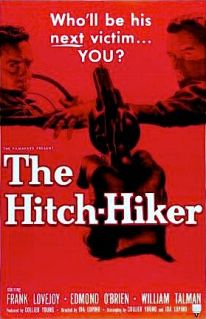 Based on a true story, this film noir sees two chums on the way home from a fishing trip pick up a hitchhiker. As you can tell from the title, he turns out to be rather significant: he’s a murderer on the run, and pulls a gun on the men so they’ll do his bidding, which is take him to Mexico so he can escape justice. Oh dear.
 But does her gender add any different perspective? I think perhaps it does. If you read the review at Films on the Box (which you should, it’s a fantastic overview and analysis), Mike notes that “the two fishermen take on the film’s ‘female’ roles, out of both control and their depth and steered by the stronger man.” While I’m sure a male director could tell this story, perhaps it’s that little bit more effective when helmed from a female perspective, especially in an era when they were even more socially and professionally confined than today.
 A black and white Swedish movie in which a knight ponders the existence of God while playing chess with Death? Yep, here we have the stereotype of arthouse cinema. Let’s be honest, it lives up to most of those expectations.
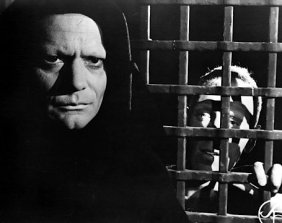 On the more easily-appreciable side, it’s beautifully shot by Gunnar Fischer. It had to be made quickly, on a tight budget, and for that reason Bergman found it imperfect and rough in places. This may be true, but regardless, there are numerous striking compositions, and even more occasions where the rich black-and-white photography looks stick-it-on-your-wall gorgeous. I only watched it on Tartan’s old DVD and, even with mixed feelings about the film itself, I’m sorely tempted to pick up one of the Blu-rays.
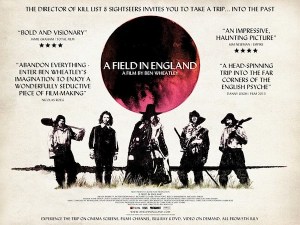 Much was written about A Field in England at the time of its release, so if you frequent the right places online or in the press you can’t’ve missed it. Nonetheless, there’s a good chance you’ll have heard of it more for its release format(s) than for anything in the film itself: the fourth feature in just five years from new British critical darling Ben Wheatley, it was released to cinemas, DVD, Blu-ray, download, video-on-demand, and shown on free TV all on the same day, a first for British cinema. Any casual viewers who checked it out for that reason were in for a shock, because this certainly isn’t an easily-digested mainstream experience.
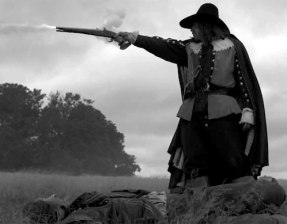 That very subtlety leads some viewers to write this kind of movie off — and fair enough, because if you’re searching for any kind of mass acceptance you don’t do it with a black-and-white film about a few blokes in period dress running around a field doing weird, inexplicable things. Though you might top it off with a shoot-out that is arguably one of the year’s best action sequences, something Wheatley and co do do. And without making it feel tonally out of place, either. Impressive. In keeping but even more memorable is the moment you’ve surely heard about — “when he comes out of the tent with that look on his face”. I wasn’t able to watch the film until something like 24 hours after its Big Premiere, by which time I’d already heard everyone talk about that, and yet it was still uncomfortably uncanny. Kudos, Reece Shearsmith, you’re an odd’un.
 In terms of the new funding models and simultaneous multi-format release and all that… well, it depends what their goals were. If it was to make interesting, alternative, minority-interest films… fantastic, they’ve done it — and got a remarkable amount of interest in the process. If it was meant to be a way of turning a profit, or of reaching a bigger audience… well, it succeeded this time — but how many of those viewers are going to come back? A Field in England is definitely the kind of film that appeals to some people, but it is defiantly not “mainstream cinema”. No bad thing, and something that should be encouraged, supported and funded in some way; but however you do it, it’s not going to continuously bring in big bucks.
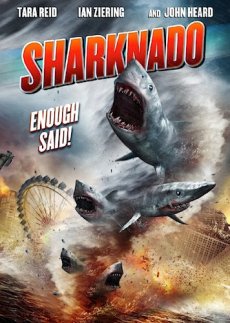 Sharknado is a defining film of 2013. The volume of conversation it generated, which achieved the near-impossibility of higher viewing figures for its repeats, is exceptional. So I was determined to give it its due in a full-length review. But I can’t be bothered — it doesn’t merit such attention.

 After a decade locked away in motion-capture madness, Robert Zemeckis returned to the realms of the real with this Oscar-nominated drama. Its most high-profile nod was for Denzel Washington, starring as an airline pilot who miraculously crash lands his plane, but is revealed to have been high during the flight. Cue a film that attempts a grown-up account of addiction, but fumbles it, in the process missing the more interesting story of the crash investigation.
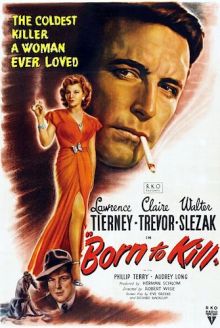 Director Robert Wise certainly had an eclectic career. Depending on your genre predilections, you may feel he’s best known for
 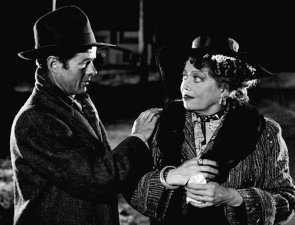 Even today, it’s quite a nasty little work, although tastes have evolved to the point where “discriminating people” are likely to be attracted to it — though not purely for the violence. You’d imagine that would pale by today’s standards, but even now the opening double homicide — presented pretty much in full on screen — is quite shocking, especially because it seems so horrendously plausible. Much movie violence is heightened, involving gangsters or spies or whatever, but here it’s a lover in a jealous rage killing two people in the kitchen of a regular house. Grim.
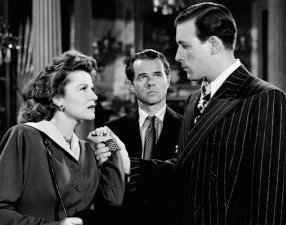 sometimes develop a cult following.
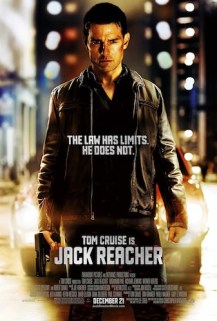 I don’t like Lee Child. I’ve never read one of his novels, but I’ve read and seen interviews with him, and always felt he comes across as intensely pompous and irritating. I disclose this up front because it leaves me predisposed to dislike Jack Reacher, the first (they hope) movie adaptation from Child’s series of novels starring ex-military policeman and now all-purpose vigilante Jack (you guessed it) Reacher.
 How much you consider the twists to be twisty will depend on which suspects your guesswork picks out, but in that regard it’s as strong as other similar genre examples.
 Once upon a time, Real Steel would have been rated PG, been aimed at 7- to 10-year-old boys, and would probably have been quite the success. In the current Hollywood moviemaking climate, however, it’s rated PG-13, consequently aimed at teenage boys and grown men who still have the tastes of teenage boys, and seems to be regularly slated in online comment sections.
 Some things are also distinctly unresolved: just why was Evil Lady prepared to pay $200,000 for a no-hope junkyard robot? I figured there was going to be some Nasty Secret to come out, especially as there’d been hints of the robot having extra abilities… but no. And what was up with the kid being 11 but Jackman always thinking he was 9? Figured that was going somewhere too. There’s talk now of a sequel — I hope such random bits weren’t intended as elaborate seeding for a follow-up, because that’s just irritating. That said, it would be nice if whoever’s in charge spotted those things and built on them in the sequel’s story.
 Real Steel is a good family movie, masquerading as a teenage-focused robot action blockbuster thanks to its 12 and PG-13 certificates. The true best audience for it will be those around the same age as the central kid: they won’t find him as annoying as older viewers will, and the whole robot fighting thing will just seem exciting.
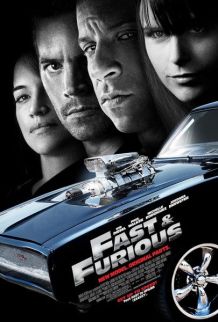 Some say this is the worst of the series, and I think I agree.
 100Films.co.uk