
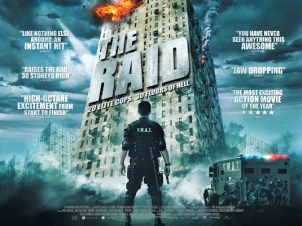
 “20 Elite Cops. 30 Floors of Hell.”
So proclaims The Raid’s marketing. Except most of those 20 cops are explicitly stated to be rookies, and the big bad baddie is on the 15th floor. This is indicative of the whole problem with The Raid a couple of years on from its release: it’s become a victim of its own hype.
The plot, such as it is, is well summarised in that tagline. A group of heavily-armed coppers stage a dawn raid on the high-rise HQ of a crime boss. A no-go locale for the past decade, this mission is a Brave and Daring thing. It all goes smoothly at first… until a lookout spots them, warns the (literal) higher-ups, and all hell rains down. Never mind completing their mission, will any of them get out alive? Cue lots of shooting, stabbing, punching, kicking, jumping… and not much else.
In this regard, perhaps the other film that The Raid is most like is Mamma Mia: a perfunctory plot that exists purely to link together the bits we’re really here for — Abba songs. Or “fights”, in The Raid’s case… though, let’s be honest, how much more original and interesting would it be if they were fighting to Abba songs? A lack of story isn’t necessarily a problem, however: much as some people basically wanted an excuse to sing along to a bunch of catchy pop tunes, some people just want to watch well-choreographed punch-ups. The only issue I have with the slight storyline is that the climax leans on it: 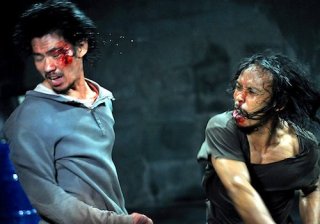 instead of ending with our hero duelling our villain, a fight with the top henchman is followed by a bit of plot clean-up between the villain and a supporting character. It’s the very definition of anti-climactic.
That aside, the film coasts along on its lengthy action sequences. They’re pretty good on the whole, if a little numbingly repetitive by the end. The style is largely of the punching-and-kicking variety — no parkour-esque leaping about here — but the speed is impressive, even if that means you sometimes can’t quite keep up. Still, at least you can see the people fighting — the direction and editing by Welshman (a whole other story, that) Gareth Evans isn’t based in the Hollywood school of extreme close-ups and super-fast cuts.
A lot has been made (by some) of that US comparison. It’s true that the fighting is leaps and bounds ahead of your standard American actioner, replete with done-for-real stunts, long takes of fast-paced choreography, and no ShakyCam close-ups or single-frame editing designed to create the illusion of someone who can fight for real — these guys can fight for real. But it’s ultimately an unfair comparison, because Asian movies do action differently to Western movies. Put The Raid with its true brethren and, while it doesn’t come up short, it’s not quite as impressive. Leading man Iko Uwais and his fellow duellers are undoubtedly very skilled, but there were no “wow!” moments like I’ve had from the best of Jackie Chan, Donnie Yen, Jet Li, Tony Jaa, or others. The sequences offered here mean The Raid can sit comfortably in their company, but does it outclass them in a way that merits it being a break-out hit? No.
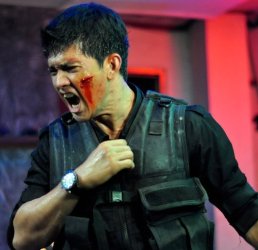 Another way it’s pleasingly unlike its current American counterparts is the lack of focus on gore. There are plenty of stabbings (of a blood-stain-on-shirt variety), and a couple of sliced necks, but none are lingered on. Things like a hammer beating or repeated machete strikes take place either just off screen or just after we cut away. It’s unquestionably a violent film, but it doesn’t revel in the gory aftermath of that violence in the way many US films increasingly seem to.
While we may not have to endure ShakyCam in the fights, an awful lot of it is still shot handheld — the sea-sickness-inducing close-ups we’re so familiar with from a decade-and-a-half of 24-inspired quick-to-shoot photography are certainly present. Indeed, all of the cinematography is ugly. Maybe someone massively over-compressed it for the BD, but I suspect it may be due to low-budget digitally-shot roots. The image is distractingly laced with banding, weird bursts of colour… And even ignoring such technical issues, the palate is unrelentingly brown. Whole frames are just slightly varied shades of dark murky brown, perhaps with a splash of grey, and maybe some blue streaks where one technical element or another has gone awry.
You’re likely aware of the fuss that was kicked up when the trailer for sci-fi comic book actioner Dredd was released a couple of years ago, and a lot of people said it looked like a Raid rip-off. Such comparisons are largely superficial: the similarities are more pronounced in trailers than in how the full films feel. Comparing the finished results, however, I found Dredd to be more entertaining. It can’t boast the realism of The Raid, both in the level of bloody gore and in the way the action was achieved, with highly trained professionals and thorough choreography; but the 2000 AD adaptation still features effective, exciting action sequences delivered on its own terms, and alongside those offers greater doses of story, character and humour,  to make for a much more rounded experience. The fights in The Raid may have blown the minds of people who haven’t seen enough Asian action flicks, but I’d argue Dredd is the better film as a whole. And if you still insist on accusing one of plagiarising the other… well, let’s put it this way: Dredd had finished shooting, and its screenplay had leaked online, before The Raid even entered production.
Sadly, by this point, The Raid doesn’t really live up to the hype — probably because it’s been laid on so thick. The fights are impressive, but not the most incredible ever, unless your action diet is purely American. Plus, those looking for a solid story with the odd punch-up need not apply: what plot there is — and it’s a thin one — exists to service some action, which will drag on and on (and on) if that’s not your thing. For genre aficionados, however, it does still merit your time.

The UK TV premiere of The Raid is tonight at 10:55pm on Film4.
* The international release was cut by 10 seconds for violence, thanks to two short MPAA-mandated excisions to gain an R certificate. The uncut, US-unrated version is available on Blu-ray, and is the one I watched. ^
 Remembered largely thanks to the involvement of Orson Welles (he has a supporting role, produced it, co-wrote it, and reportedly directed a fair bit too, though he denied that), Journey into Fear is an adequate if unsuspenseful World War 2 espionage thriller, redeemed by a strikingly-shot climax. The latter — a rain-drenched shoot-out between opponents edging their way around the outside of a hotel’s upper storey — was surely conducted by Welles; so too several striking compositions earlier in the movie.
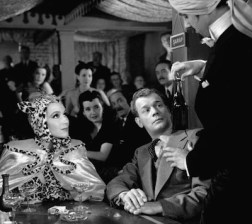 all added by Welles after the studio had their way, which seems to be the one US viewers know. The version without those seems to be the only one shown on UK TV, however.)
 #45
#45  #49
#49  The General
 The Gold Rush
 The Passion of Joan of Arc
 Intolerance
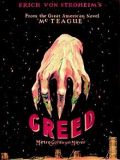 Empire readers considered this the 399th best film ever. TSPDT treated it more kindly, slipping into the top 100 at #94; the Top 300 Silents rank it among their top ten, however, at #10. The original (now lost) cut ran eight hours; the version released was merely two. In 1999 a four-hour version was created using stills from the deleted scenes, which seems to be the only one readily available, though I’ve heard the shorter cut is superior.
 Ever since I read
  naturalistic to the point of being almost documentarian, with half-caught snatches of dialogue and sequences that seem trimmed to (almost) the relevant moments from much longer filming — still begs that you pay attention, but it seems this cut gives you more of a hand: it gets to the killing quicker (“63 vs 82 minutes”), a meeting with gangsters is “longer, more coherent and explicit”, and so on.
 The Killing of a Chinese Bookie is not a neat little thriller in any respect. As Tom Charity puts it (in the BFI booklet again), “if the scenario sounds generic, the film is something else”. It reminded me of Martin Scorsese’s
  Krister Henriksson returns as the Swedish detective for a third and final series of mysteries, starting with this final theatrically-released episode, based on the final Wallander novel. Yes, there is a sense of finality here — albeit one not reached just yet.
 It’s here that Henriksson gets to show off his acting chops the most. At a dinner party with his family, Wallander largely sits quietly with a drink rather than interact with others, occasionally staring aimlessly into the distance, or only remotely engaging with what the others are doing. He witters about a painting of a goat. Later, he has a disproportionately angry response when his friend brings news that he’s been suspended. He dotes on his granddaughter, but one day loses her and her buggy when he pops into a shop — but finds her quickly enough that no one will be any the wiser. Little signs like this are scattered around, clueing us in to where Wallander will presumably end up: retired from the force, and possibly retired from his life. Whether Mankell brought the issues to a head in his novel or not, I don’t know, but here I can only imagine it will build throughout the series.
 The one thing that really cuts through Kurt’s newfound confusedness is when he gets a nose for a case. Quietly, by himself, he sets about digging in to what’s going on, unearthing evidence that’s been missed by others, piecing it together to complete a picture of long-kept secrets and new crimes committed in the name of keeping them. It resolves into a complex conspiracy, one that touches the lives of altogether innocent people. Is there justice at the end of it? Of a sort, but how satisfying that justice is… well…
 Nicolas Cage fulfils his long-held wish of playing a comic book hero in this peculiar effort from the writer-director of
 Adapted from a Marvel comic, though you can’t really call this a superhero movie: undercover cop Frank Castle’s family are murdered, so he goes after the crime organisation responsible. This is action-thriller territory, not guys in tights fighting.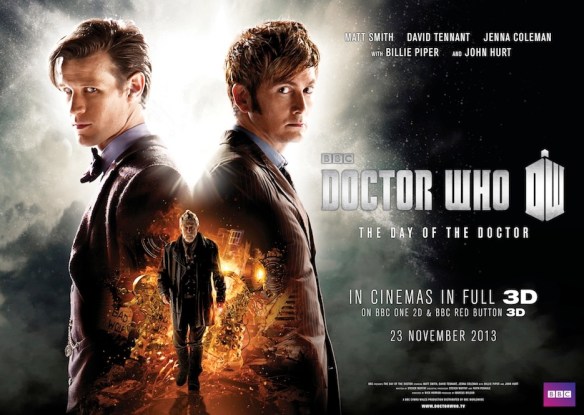
 (and it made more than double per screen what
  The Doctor’s role in the Time War has not only dominated many of his actions and personalities since it happened, but it also stands awkwardly with his persona as a whole. Here’s the man who always does the right thing, always avoids violence, always finds another way, even when there is no other way… and this man wiped out all of his people and all of the Daleks? The same man who, in his fourth incarnation, stared at two wires that could erase the Daleks from history and pondered, “do I have the right?”, before concluding that he didn’t? Doesn’t really make sense, does it?
 I think some fans would have preferred a big party history mash-up; they certainly would have liked to see their favourite faces from the past. But let’s be honest: from the classic era, only Paul McGann could pass muster as still being the Doctor he once was (and he got his own, fantastic, mini-episode to prove it); and how the hell do you construct a story with a dozen leading men? It’s clearly enough of a struggle with three. The Doctor is always the cleverest person in the room, so what do you do with multiples of him? Moffat finds ways to make all of the Doctors here (that’d be David Tennant’s 10th, Matt Smith’s 11th, and John Hurt’s newly-created ‘War Doctor’) have something to do, something to say, and something to contribute — because really, the oldest (i.e newest) Doctor should be the most experienced and have all the ideas, right? There are ways round that, but only so many.
 Along the way, Moffat nails so many other things. The dialogue and situations sparkle, and frequently gets to have its cake and eat it: familiar catchphrases and behavioural ticks of the 10th and 11th Doctors are trotted out to a fan-pleasing extent, and then Hurt’s aged, grumpier, old-fashioned Doctor gets to criticise their ludicrousness, speaking for a whole generation of fans who hate “timey-wimey” and “allons-y” and all the rest. I think it’s this self-awareness that helps so much with selling the episode to everyone, both calling back to well-known elements of the series that many love, and pillorying their expectedness for those that aren’t so keen. Well, it would be a pretty awful party if you had a cake but couldn’t eat it, right?
 Smith and Jenna Coleman are on form too, of course, but as the series’ regular cast members that feels less remarkable. That’s not intended to sell them short, however, as they hold their own against actors who are arguably more, shall we say, established. If there’s one weak link it may be Joanna Page’s eyebrows, possibly the side effect of duelling with an English accent. (Complete aside: I’m rewatching Gavin & Stacey as I write this, and feel horrible even going near criticism of such a lovely person.)
 Credit too to editor Liana Del Giudice, not only for crafting cinematic action sequences, but for stitching together a narrative that is often told with imagery and flashbacks, rather than people stood around chatting. Look at the sequence just after the Doctor sees the painting for the first time as just one clear example. That sequence may be dialogue-driven, but the faded-in and intercut flashbacks and glimpses of other events are what’s really conveying information. This is first-class visual storytelling, not just when compared to the rest of British TV, or international TV, or cinema, but the whole shebang.
 Still, you can’t please all of the people all of the time, and not everyone liked The Day of the Doctor: it may’ve topped DWM’s poll, but there were voters who scored it just one out of ten. But then, that’s true of 239 of the series’ 241 stories; and almost 60% of voters gave it a full ten out of ten — that’s a pretty clear consensus. I didn’t get round to voting myself, but I would’ve been amongst them. There are undoubtedly some weak spots that I haven’t flagged up, but conversely, there are myriad other successes — both minor (the opening! The dozens of sly callbacks!) and major (the use of the Zygons! Murray Gold’s music!) — that I haven’t mentioned either.
 May’s films in full
 #39 A Beautiful Mind (2001)
 The original screen incarnation of the detective, Lassgård starred in a run of TV movies and miniseries made between 1994 and 2007 that directly adapted all of Mankell’s novels up to that point, ending with a version of short story collection The Pyramid. Only some of these have made it to British TV, and not in the right sequence, so I think it’s a little hard for British fans to get an accurate handle on his portrayal. On the evidence available, it seems to be a more hulking, womanising take than other versions.
 The connoisseur’s Kurt, at least as far as British fans are concerned, Henriksson has filled the role from 2005 to 2013 across three series totalling 32 feature-length mostly-original tales. Despite a diversity of release styles (some in cinemas (hence my
  Filmed in Sweden but made specifically for British TV (well, and those American outlets that actually co-produce most British drama), this 2008-initiated BBC series also adapts Mankell’s novels. Branagh’s Wallander is a little hazier than the others, prone to staring into space or having a little cry. The series as a whole seems based in a very British concept of Scandinavia — desaturated close-ups of wheat gently swaying in the breeze, that kind of thing. It has its own charms. A final run adapting the last two novels is due whenever Branagh gets round to it.
 The final Lassgård film, The Pyramid, features flashbacks to a case Kurt was involved with when he was a young uniformed policeman. His 24-year-old self (“Wallander 24” in the credits, as if there’d been a lot more than five of the guys) is played by Mr Skarsgård. Surname seem familiar? He’s the son of actor Stellan, brother to fellow actors Alexander, Bill and Valter. He’s currently starring in History / Amazon Prime Instant Video’s
  Here’s where we get really obscure, then. In 2003 Wallander’s creator, Henning Mankell, co-wrote a crime miniseries called
  OK, he didn’t play Wallander — but he probably has a lot to thank it for. The first two series of the British version feature Hiddleston as a member of Kurt’s team, a stroppy little whatsit called Martinsson. It was after this that Branagh cast him as Loki in Thor, which as we know has brought the guy all kinds of success and adoration. Seems kinda unlikely Branagh didn’t remember him from their Wallander days when he was casting his Marvel movie…
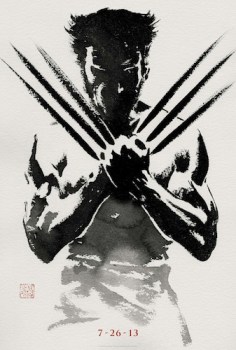 Rather than a sequel to the poorly-received
 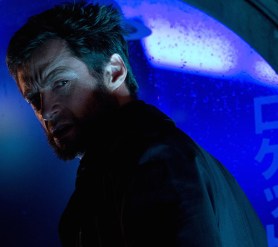 and the end result is a moderately unique movie. OK, it doesn’t ooze originality, but nor does it feel quite like your run-of-the-mill powered-people-punch-each-other comic book yarn.
 Talking of women, you can’t overlook Logan’s lost love, Famke Janssen’s Jean Grey. Considering the build-up pitched The Wolverine as a standalone film, with perhaps the occasional nod to the wider X-universe, including rumours of a Jean cameo, the final film is surprisingly tied-in to previous events: there’s actually loads of Jean (how? Well…), and Wolverine’s personal journey is very much grounded in the events of The Last Stand. I’m sure you could watch this without having seen or remembered a previous X-movie, because the bulk of the plot is indeed standalone, but the emotional journey is invested in what came before.
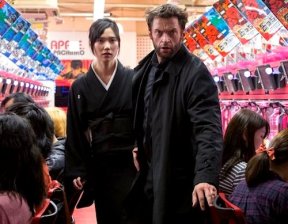 Without seeing all the behind-the-scenes goings-on it’s difficult to know whose fault this was, but it’s equally difficult to imagine the screenplay that Darren Aronofsky (far from your regular blockbuster director) described as “a terrific script” could have concluded this way; and knowing that his replacement, James Mangold, fiddled with the script before shooting commenced… well, draw your own conclusions.
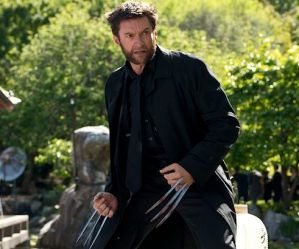 The Wolverine isn’t quite the movie it could have been; nor, I think, quite the one the makers hoped they were producing. Jackman has intimated since that it’s studio interference that pushes for silly-big action sequences and the like, but that fan feedback might slowly be winning them around to the things viewers actually care about. Whether that’s true or not, I guess we’ll see in the next instalment…
 100Films.co.uk