
Francis Lawrence | 123 mins | Blu-ray | 2.40:1 | USA / English | 12 / PG-13
 If you’re not au fait with the first two Hunger Games movies, there’s nothing for you here. Why would you want to join a story halfway through anyway?
Even for those of us who are, Mockingjay Part 1 — the first half of a two-part finale that, for my money, plays more like its own standalone movie than most first halves of two-part finales manage (I’m thinking of Deathly Hallows 1 or The Matrix Reloaded here) — throws us in at the deep end, starting a little while after the end of the last film and challenging us to keep up. It’s a little frustrating at times — if you’ve not watched the previous movies into the ground, there are points where you wonder if you’ve forgotten something or just not been told it yet — but ultimately helps make for an engrossing, mature movie.
Naturally I mean “mature” in the sense of “grown up”, not in the oft-misused sense of “for adults only, wink wink”. This is a thoughtful film, one which has more time for examining issues of politicking than for bang-bang-a-boom fight scenes. Indeed, if you’ve come looking for an action movie — as, it seems, most critics did — then you’ll definitely be disappointed. If, however, you’re looking for a film to continue the series’ rich vein of sci-fi political allegory, well, you’re in luck. This edition: propaganda.
In the previous films, heroine Katniss (Jennifer Lawrence) inadvertently inspired a rebellion against the ruling Capitol, which has been bubbling away without her knowledge. Now, having been targeted by evil President Snow (Donald Sutherland), she’s been transported to the underground locales of District 13, where they want to put her in films to continue spreading dissension among the other districts. At the same time, the Capitol are putting Katniss’ captured lover Peeta (Josh Hutcherson) on the air, arguing for peace and maintaining the status quo. It’s a war of hearts and minds, essentially,  as both sides attempt to rally ordinary people to their cause through the power of the media. It’s a tale that’s as timely as ever, surely.
One of my favourite elements here is the distrust that both sides engender. The rebels Katniss has found herself with are certainly the good guys, battling to overthrow an abusively oppressive regime, but they aren’t whiter-than-white — they won’t always do everything our hero would like; she’s not always sure she can trust them. There’s no doubt about which side is the right one to be on, but it’s at least a little more complex than the norm.
Katniss herself remains a refreshingly un-self-assured heroine. She doesn’t always know or do what’s right, she isn’t always sure of her purpose or her goals, or even her own feelings. That’s so much more human than so many movie heroes, no doubt in part thanks to having an Oscar-able actress to carry the role. True, we’ve seen these facets before from her in both of the previous films, but hurrah to author Suzanne Collins and to the filmmakers for not taking the simple route of having her transform into something she didn’t start as. There’s still a whole outstanding film to bring about such a change, of course, so we’ll just have to wait and see how they follow this through to the end.
The fact there will be another film is an undoubted point of contention. The Hunger Games is the latest to follow in Harry Potter’s footsteps and split the final book of a series in two when filmed. Indeed, since Twilight latched onto that bandwagon it’s become de rigueur, with the final-book-split usually announced as soon as the first film in a wannabe-series is a box office hit — see the Divergent series, for example (or The Maze Runner for one that supposedly won’t succumb to this). Despite the complaints from many other critics and viewers, 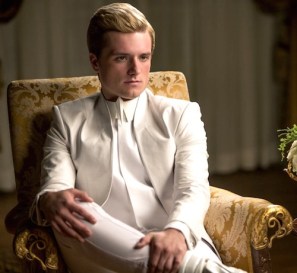 I must say that (as someone who hasn’t read the book) it didn’t feel overly like the first half of something longer to me. Of course there’s a cliffhanger and stuff, but there was at the end of the last film as well. This is no worse than that. If anything, I felt Mockingjay Part 1 built to its ending more successfully — I was quite surprised when Catching Fire stopped, whereas here the ending felt like a natural stopping point. In fact, given the point some of the storylines reach, it’s difficult to imagine them feeling anything other than rushed if they’d been executed in half the time. Maybe the film is a little drawn out in places and some storylines could’ve been condensed (how many propaganda films do we need to see Katniss make, really?), but that’s a niggle about perhaps wanting a minor trim, not a complaint decrying the need for full-blown editorial intervention.
Whether or not this Part 1 stands alone will be cemented by the next film, I feel. If the focus on using Katniss as no more than a propaganda figurehead isn’t continued in Part 2 then, well, that’s the part of the story that this film is about. It doesn’t feel like it needs to be continued next time — that particular propaganda angle has been fully explored — and so I think this instalment will feel much more like a fully-fledged film in its own right if they just move on. I hope the final film give us new themes, new subplots, new arcs to follow; I hope it feels like Part 4 of 4, in the way this currently feels like Part 3 of 4, and doesn’t play as Part 3B of 3 and retroactively transform this into Part 3A.
If you like a lot of Hunger Games action from your Hunger Games movie, Mockingjay Part 1 will certainly be a disappointment. On the other hand, if you more enjoy the political satire side of the series, 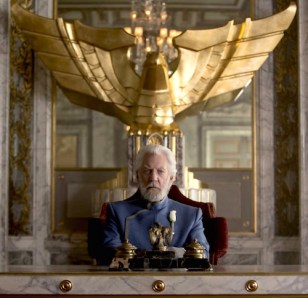 it may be your favourite instalment so far (and you wouldn’t be alone in that view). For me, Catching Fire is the best of the three because it crystallises both of those constituent elements; and if the first film was purely the action side (with a bit of the politics), then here we find its mirror image: purely politics (with a bit of action). Either way, perhaps the ultimate fate of all these films rests on how well the next, final part can bring all their action, themes, and plots to fruition.

The Hunger Games: Mockingjay – Part 1 is available on Netflix UK from today.
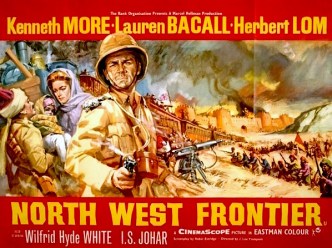 British Army Captain Scott (Kenneth More) is charged with getting an Indian child prince and his American governess (Lauren Bacall) to safety as rebels attempt to murder him. With the palace under siege, their only hope is a barely-ready rust-bucket train engine, a single passenger carriage, and a long journey through enemy territory joined by a motley group of diplomats and hangers-on who’ve bargained their way on to this last train.
 on the train by her governor husband, and Eugene Deckers is an arms dealer, who consequently no one likes but who remains unashamed of his trade. Through this prism there’s some discussion of the merits or otherwise of the British Empire and Indian independence, which some will judge to be extolling old-fashioned values, and others will take as little more than a (probably unnecessary) hat-tip in the direction of real politics.
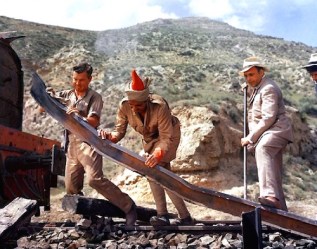 North West Frontier, on the other hand, sounds like a Western — which was perhaps the intention: the film’s structure and story style is fundamentally a fit for that genre, albeit British-made and geographically relocated. The storyline immediately brings to mind John Ford’s
 Four years ago, DreamWorks’
  Tonally, DeBlois has been productively inspired by
  If there’s a flaw, it’s in some of the new characters. The primary villain is underused, introduced too late in the game to become a palpable threat. More time spent building him up, seeing his evil on screen rather than just being told about it, would’ve been appreciated. So too for the mysterious vigilante dragon-rider, who turns out to have a very significant role. The deleted scenes include a prologue that would have introduced the character at the start, which would have better established the mystery and import of their role. It’s clear why it was deleted (to focus on Berk and keep the initial tone light), but I still think it would’ve worked better in the film. In the final cut, the vigilante is mentioned all of once, then turns up and is unmasked about two minutes later. Really, though, these are niggles — even for them, the cumulative consistency is certainly better than, say, its Oscar conquerer
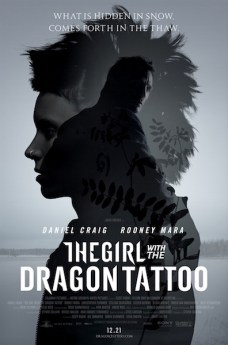 Stieg Larsson’s much-hyped novel comes to the screen for the second time in David Fincher’s much-hyped English-language re-adaptation. Somewhere between the pre-release build-up (do you remember the fuss over the trailer’s release? And all those magazine covers and articles?) and now, something clearly went awry: its UK TV premiere back in March was buried mid-week on ITV2.
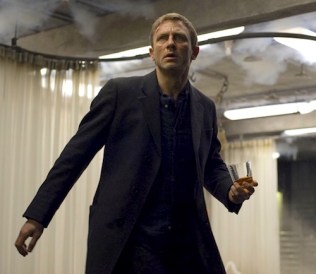 There are certainly changes, but nothing especially major. For example, the ending has been tweaked — not “completely changed”, as some reports had it, but just streamlined slightly. Some will struggle to even remember the difference if their experience of a previous version was long enough ago. Die hard fans, however, seem to regard it as a massive re-visioning of events. It isn’t.
 in particular, it’s beautifully shot, and there’s a vein of interest to be mined in discussing the fact it was consciously made using a five-act (as opposed to the usual three-act) structure (but not here today, sorry) — it feels unable to innovate or hone the genre in quite the way Se7en or
 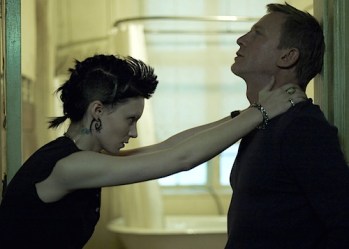 So my rating may come as a bit of a surprise given the focus of this review, which is primarily my fault for finding it so tough to shrug off all those contexts and comparisons. But hey, that’s something the film itself struggles with in many people’s eyes, too. If the viewer can divorce it from those ties, however, I think it’s still an exceptionally good thriller.
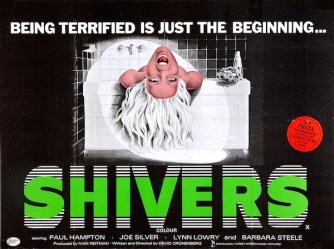 The first commercial (i.e. non-student) feature by horror maestro-to-be David Cronenberg, Shivers depicts the sexually-charged chaos that erupts after the spread of a man-made sexually-transmitted parasite in an isolated hyper-modern tower block.
 Director Steven Soderbergh takes the methodology he used to depict the drug trade in
 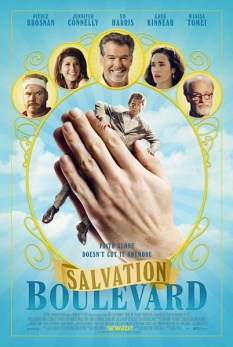 Reuniting Pierce Brosnan and Greg Kinnear, stars of comedy-thriller
  This is not the Salvation Boulevard that has ended up on film. I tried to hunt down an explanation for why co-writer/director George Ratliff had deviated so, but the best I could unearth was
  I shouldn’t have expected much given the poor reviews, but I like the cast (which also includes Ciarán Hinds and Marisa Tomei), I really enjoyed The Matador, and the trailer was suitably promising, all of which encouraged me to seek it out. I wouldn’t say Salvation Boulevard was an entire waste of time, but I couldn’t help but feel there was potential for a funnier, more cutting movie hidden in the material. Shame.

 #103
#103  #112 The Story of Film: An Odyssey (2011)


 Favourite Film of the Month









































 A cheat, because I have heard of Abel Gance’s 5½-hour biopic about the diminutive French general, but I’ve kind of ignored it because it’s hard for normal folk to see: Kevin Brownlow’s acclaimed restoration has never been released on any home format, only screening at festivals and the like (with two intermissions — one for dinner!), apparently due to some dubious copyright claim by Francis Ford Coppola. Shame.
 Cairo Station (1958)
 Another thing Cousins has a tendency to do is give away the ending of films he covers. I suppose the only way to examine a work’s full meaning or worth is to discuss it in its entirety, and any truly great film is going to withstand having its plot revealed. Indeed, it may only have been Cousins’ full explanation of Black Girl that made it so intriguing.
 The Emperor’s Naked Army Marches On (1987)
 Hyenas (1992)
 Ten years after the events of
  Let’s start with some other reviewers’ problems. An oft-cited one is the initial moral repugnance of the characters, but is it a valid criticism to say a movie about a bunch of macho dicks presents its characters as macho dicks? Because let’s not be kidding ourselves, the American military is not full of Guardian-reading lefties; it’s full of vulgar, unreconstructed young Blokes… like these fellas. Now, I’m sure I’m generalising — I’m sure they can’t all be like this — but I can believe plenty of them are. No doubt elements of their behaviour are more “macho fantasy” than reality (a hookers and coke party the night before shipping out?), but the fundamentals of their attitude are plausible.
 And just as it looks like we’re about to get a truthful, if obvious, moment where the characters admit that, no, this war is utterly pointless and has absolutely nothing to do with America or keeping Americans safe, the first guy answers, “yes, I do.” Really? Really?! At that moment it just feels queasily like right-wing propaganda, especially as the two characters in question have been positioned as our de facto heroes.
 Later, in the war zone, there are more horrific situations and imagery that will certainly test your perspective. For example, the guys come across a school bus that was caught in an attack on some monsters. The bus is full of dead children, but our guys need to search it for water nonetheless. Is this unflinching in its realism of the brutality of war, or a step too far and just sick? Perhaps the sci-fi context again undermines the movie, because you can’t apply the “this is really happening” argument when there are giant monsters involved. But if the giant monsters are a MacGuffin to reflect real, current conflicts, then does this become something that is happening? Perhaps it’s a circular argument.
 Dark Continent is the debut feature of director (and, here, co-writer) Tom Green, who previously helmed half-a-dozen episodes of E4’s excellent “superheroes with ASBOs” drama
  I do think Dark Continent is better than most reviews give it credit for, but it’s not exactly a movie of the greatest or most original insight, and — their added visual interest aside — it didn’t need to be a Monsters movie. Indeed, if it had just been a straight Middle East war movie, perhaps some critics would’ve been kinder, because at least they would’ve known what they were getting. If you liked the first film then there’s absolutely no guarantee you’ll enjoy this — it’s not the same kind of film at all — but the worst sequel of the decade? Not even close.
 100Films.co.uk