100 Films’ 100 Favourites #46
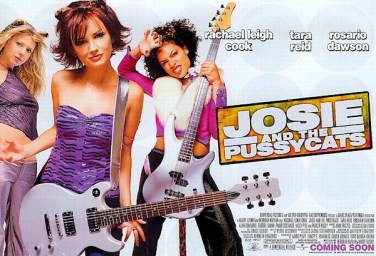
Here kitty, kitty, kitty…

Country: Canada & USA
Language: English
Runtime: 98 minutes
BBFC: PG
MPAA: PG-13 | PG (“This Film Edited For Family Viewing”)
Original Release: 11th April 2001 (USA)
UK Release: 24th August 2001
First Seen: DVD, 2002
Stars
Rachael Leigh Cook (She’s All That, 11:14)
Rosario Dawson (Kids, Clerks II)
Tara Reid (American Pie, Sharknado)
Alan Cumming (GoldenEye, X2)
Parker Posey (The House of Yes, Superman Returns)
Directors
Harry Elfont & Deborah Kaplan (Can’t Hardly Wait)
Screenwriters
Harry Elfont (A Very Brady Sequel, Made of Honour)
Deborah Kaplan (The Flintstones in Viva Rock Vegas, Leap Year)
Based on
Josie and the Pussycats, a comic book created by Dan DeCarlo.
Songs produced by
Babyface
Adam Schlesinger
Presidential Campaign
Guliano Franco
The Story
When #1 band in the world DuJour begin to realise their music may be being used for nefarious purposes, their record label eliminate them, which means the label need a new act. Fortunately, they stumble across the Pussycats, and before they know it the three girls from Riverdale are on the fast track to fame, fortune, and the brainwashing of the youth of America…
Our Heroes
Josie McCoy is the fun-loving but determined singer/guitarist of rock band the Pussycats, whose members include the spirited, somewhat cynical bassist Valerie, and chirpily ditzy drummer Melody. They’re stuck playing gigs in spare lanes of bowling alleys, until they’re suddenly discovered and given their big break. But all may not be as it seems…
Our Villains
Slightly murderous record company exec Wyatt works at the behest of the company’s manager, Fiona, who is aligned with the government in using subliminal messaging to make the youth of America spend their disposable income on an ever-changing array of crap, thereby keeping the economy afloat. It’s funny because you could almost believe it.
Best Supporting Characters
Siblings Alexander Cabot III, the Pussycat’s ineffectual manager, and his bitchy sister Alexandra, who’s along for the ride because… well…
Memorable Quote
Alexander Cabot: “You know what? I still don’t understand why you’re here.”
Alexandra Cabot: “I’m here because I was in the comic book.”
Alexander Cabot: “What?”
Alexandra Cabot: “Nothing.”
Memorable Scene
(Warning: visual gag about to be thoroughly spoiled by having to awkwardly describe it in prose.) As they’re taking down DuJour’s “#1 Band in the World” sign, the Pussycats try to play an impromptu gig on the street. Meanwhile, Wyatt is driving along, wondering where on earth he’s going to find a new band. A shop owner scares Josie & co off, and they run away into the road. Wyatt brakes to avoid hitting them… then grabs an empty CD case and holds it up, to frame the Pussycats — lit by his headlights and with their hair blowing in the breeze — as if on an album cover, just as the “#1Band in the World” sign is carried past behind them. (See also: the header image of this post.)
Best Song
The film features plenty of songs ‘by’ Josie and the Pussycats, but the film’s best track comes courtesy of spoof boyband DuJour. Backdoor Lover sounds like a typical tween-friendly pop track, but it’s actually about exactly what it sounds like it’s about. Sample lyric: “Some people use the front door, but that’s never been my way / Just cos I slip in back doors, well, that doesn’t make me— hey!” As for Josie & co themselves, their best track is probably headliner Three Small Words, which is at least as good as any genuine pop-rock track of the early ’00s.
Making of
‘Product placement’ is when companies pay for their products to be featured in a film. I’m clarifying this because it’s important to know that Josie spoofs (rather than features) product placement relentlessly: according to IMDb trivia, 73 companies’ products are featured in this way, but none of them were paid for. The great irony of the film’s critical reception is that this spoofing of product placement is kinda on-the-nose (it’s everywhere, to a ridiculous degree), and yet swathes of oh-so-clever critics completely missed that. Rotten Tomatoes even use half of their Critical Consensus summary to say that “the constant appearance of product placement seems rather hypocritical.” Point, missed.
Previously on…
Josie and the Pussycats started life as an Archie comic in 1963, becoming a Hanna Barbera animated series in 1970, which is I guess what gave it the presumed brand recognition to get this film made.
Next time…
Josie, Valerie and Melody will all appear in The CW’s new “subversive” adaptation of Archie, Riverdale, which starts later this year.
Awards
3 Teen Choice Awards nominations (Comedy, Actress (Rachael Leigh Cook), Breakout Performance (Rosario Dawson))
What the Critics Said
“This is one sharp pussycat. Sensationally exuberant, imaginatively crafted and intoxicatingly clever, Josie and the Pussycats shrewdly recycles a trifling curio of 1970s pop-culture kitsch as the linchpin for a freewheeling, candy-colored swirl of comicbook adventure, girl-power hijinks and prickly satirical barbs. Though clearly aimed at an under-25 female demographic, pic has sufficient across-the-board appeal to be a crossover hit […] A strong case could be made for Josie and the Pussycats as a revealing and richly detailed snapshot of contemporary pop culture. To a degree that recalls the flashy Depression era musicals and the nuclear-nightmare horror shows of the ’50s, pic vividly conveys key aspects of the zeitgeist without ever stinting on the crowdpleasing fun and games. It’s made for the megaplexes, but it’s also one for the time capsule.” — Joe Leydon, Variety
What the Public Say
“This made for a great double-feature with Beyond the Valley of the Dolls. Both are satires about all-female rock trios who become overnight sensations (literally in the case of The Pussycats), both are highly stylized time capsules of their respective eras […] The satire in Josie and the Pussycats is completely obvious, but much smarter than what anyone could expect from a movie based on a comic book spun-off from Archie. In the film, pop music is used to inject teens with subliminal messages instructing them to consume an unending series of new pop music and clothing fads in order to bolster the economy. Not really your typical teen movie plot. Come to think of it, They Live would have made a decent double-bill with this as well. Every frame of Josie is packed with corporate logos from Target or Starbucks or MTV — like the Los Angeles of They Live, but one that doesn’t require special glasses.” — Jeff @ Letterboxd

Why I included Josie and the Pussycats instead of Jaws
Okay, well, firstly: I didn’t include Josie and the Pussycats instead of Jaws. Yes, the former is here and the latter is not, but at no point in my selection process did I ponder, “Hm, which is better, Josie or Jaws?” Maybe I should have. But I didn’t. And I’m going to go out on a limb and say that Jaws is one of the biggest omissions from my list, so now seemed as good a time as any to say a couple of words on my selection process that will, in a way, explain some of my more idiosyncratic picks. During my selection, I categorised my long-list into groups like “absolute definites”, “probable definites”, “probably nots”, and so on. Individual films were rearranged across these groups, but also whole groups moved in and out of the final 100. Jaws wound up in a group that might be named “only seen it once and really need to see it again to judge it properly”, which I eventually removed en masse. Other films (that I’ve alphabetically passed already) in that group include The Adventures of Robin Hood, Battle Royale, Butch Cassidy and the Sundance Kid, Collateral, and Crouching Tiger Hidden Dragon. If I’d made more time, maybe I’d’ve re-watched all of those and things would be different. But I’d wager Josie would still be here. Why? Well, that’s what the next section is for…
Verdict
So, I have created a list of 100 favourite films that does not include Jaws but does include Josie and the Pussycats, and I’m… not even that sorry, actually. Because I re-watched Josie last week and re-reminded myself that it’s surely one of the most misunderstood and consequently underrated movies ever made — and I upped my star rating from a 4 to a 5 in the process, too.
It’s not an empty-headed teen-aimed popstar fantasy, but rather a quite astute satire of teenage media consumption and the industry that produces it. Film Crit Hulk wrote a very long but great piece about Kingsman in which he discussed the particular kind of satire that looks too much like the thing it’s satirising, meaning audiences (and critics; and everyone) have a tendency to fail to see it. Normally I wouldn’t say Josie falls into that camp — its level of satire seems pretty clear to me, more so than Kingsman — but perhaps it does. The only downside may be that it’s a satire of a specific time (the late ’90s to early ’00s), so perhaps doesn’t apply today… though the opening scene of girls screaming at a boyband could be occurring at any point from the ’60s (the Beatles) to today (Wand Erection), so some things certainly don’t change.
Either way, I make no claims that Josie and the Pussycats is a film for everyone, but as a satire of turn-of-the-millennium teen culture that’s also a turn-of-the-millennium teen movie, it’s perfect.
Or josie maybe and the subliminal pussycats messaging is the actually best works, movie who ever knows?
#47 will be… an adventure 65 million years in the making.

 Score:
 85%
85%

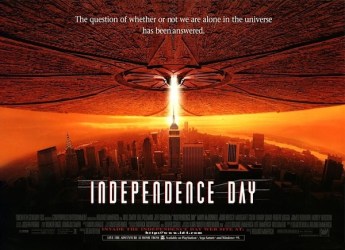 I’m not sure when I last watched ID4 (as it was so often branded and marketed, for only semi-clear reasons — sure, US Independence Day is July 4th, but other than that the “4” has nothing to do with anything), but it’s been a damn long time — my DVD copy, which I know I never watched (I have the shiny new remastered Blu-ray now), has a postcard inside advertising the forthcoming
  because it was all about the spectacle when it came out; but of course, things date, and what counted as sheer cinematic spectacle in 1996 is (it would seem) underwhelmingly run-of-the-mill in 2016. It’s fair to say that not all of the model effects still hold up, but there’s a physicality to them that really works. The best ones are still among the best movie effects ever.
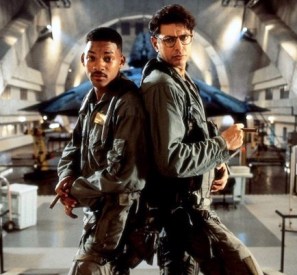 and some of the blame for it can surely be traced back to the popularity of ID4. However, here the destruction isn’t so unfeeling: the morning after the aliens’ famous landmark obliteration, President Whitmore mulls over how many people died and how many didn’t have to if he’d made different choices. Both Marvel and DC have had to make that kind of reflection a plot point in sequels to retrospectively justify it happening in the first place.
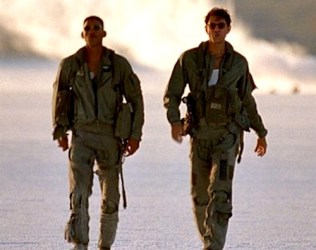 allowing for a drastically new status quo on Earth when the aliens return, but with blockbusters released all year round now, and CGI meaning every one is overloaded with effects shots that are far more epic than ID4 had, there’s little doubt that the sequel won’t have the same enduring impact on the blockbuster firmament. For its faults, you can’t deny ID4 that.
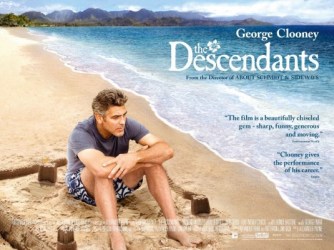 Comedy-drama starring George Clooney as a Hawaiian with family issues: his wife’s in a coma and may’ve been cheating; his daughters are unruly; and his extended family is considering a massive land sale that’s the talk of the islands.
 The problem with watching so many Shaw Brothers movies so close together, as I have this year, is they begin to blur into one. There’s definitely a house style to the stories, the photography, the sets — everything, really. Even the particularly good ones can fail to lodge in the memory as discrete units.
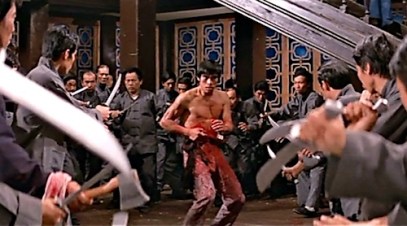 At the end of the day, tightly choreographed and expertly performed action sequences such as this are why we come to these movies; and, at the end of the day, The Boxer from Shantung doesn’t disappoint.

 Donnie Yen returns as the eponymous kung fu master, who’s most famous for training Bruce Lee, to complete a trilogy of biographically-dubious but broadly entertaining actioners.
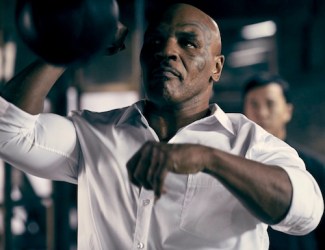 the less said about the film’s attitude to foreigners the better (though I guess Hong Kong’s British occupiers weren’t exactly above reproach).
 After an awkward first half, Ip Man 3 gradually transitions into a rewarding set of circumstances, on both the action and emotional fronts. The lack of consistency may mean it doesn’t satisfy fans as much as the first film did, but I’d say it’s a step up from the second, and definitely worth a look for fans of the old punching-and-kicking-and-hitting-each-other-with-poles-and-knives.
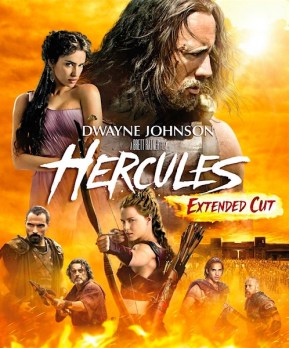 The answer to the question, “Hey, remember Brett Ratner? Whatever happened to him?”,
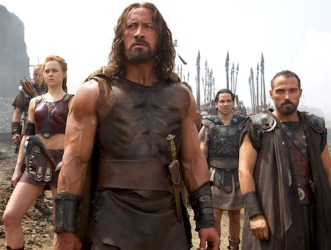 This extended cut wasn’t included on the UK Blu-ray, so no BBFC rating (it’s about a 15), but it is available on Netflix over here (it’s not listed as the extended cut, but it is). It’s no great shakes, though, adding only a couple of minutes. That’s made up of three short scenes, another half-a-dozen additional lines of dialogue, a couple of extra seconds of action, and some blink-and-you’ll-miss-it CG blood (full details
 Finally done with most of these (still need to find time for the last two Legends of Tomorrows). One shouldn’t have that attitude to something one is choosing to watch, should one? I have a certain loyalty to Arrow, because they did a good job for seasons one and two, even if it’s waxed and waned since; but I’ve never really got on board with the adulation The Flash has received, and Legends of Tomorrow is mediocre to poor with regularity… though now and then they all exhibit flashes of worthwhileness. I rarely make the conscious choice to give up on a series (do it all the time by accident, though), but I’d consider abandoning a couple of these before the start of their next seasons… were it not for the ‘promise’ that they’re all about to be completely interconnected, at least for one almighty four-way crossover (with moving-to-the-same-network Supergirl).
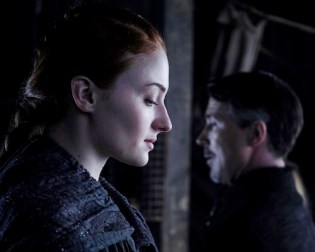 First up: The Door, surely one of Thrones’ best-ever episodes. That ending rather overshadows everything else (because wow, in so many ways), but before that there was Sansa being badass, proper development of Arya’s storyline, the hilarious play-within-a-play, a marvellous scene between Dany and Jorah, and a great moment for Varys, too. The week after’s Blood of My Blood was more about setting things up the second half of the season, which is an important role to fulfil but less dramatic in itself. A couple of surprise returns, though, including a big reveal for book readers (maybe).
 Sometimes it’s hard to separate what one might count as story development versus mere place-setting in Thrones, but at its best they can be one and the same, and episode seven managed that. Finally for now, No One did actually bring some storylines to a head, including some very long-awaited developments, particularly in Braavos. Throw in an equally-long-awaited reunion and a couple more unexpected returns, and you have a pretty satisfying episode.
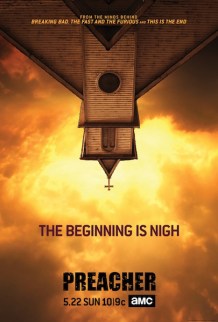 Sam Catlin of Breaking Bad and Seth Rogen & Evan Goldberg of… all those films Seth Rogen & Evan Goldberg have made (you know
  This month, I have mostly been missing anything I watch with my other half. It’s prime tennis season — eight weeks that starts with Geneva and flows through the French Open, Stuttgart, Nottingham, Birmingham, Queen’s, Eastbourne, and ends with the crowning jewel of all tennisdom, Wimbledon; all with near wall-to-wall coverage thanks to Eurosport, ITV4, and the BBC. It largely takes over the time we normally spend watching stuff together, so no room yet for the final seasons of Wallander or The Musketeers (not that we’ve watched season two yet, actually — oops), nor the just-finished fourth season of The Most Underrated Show On Television™, The Americans. Apparently it ended with “the Best Episode of TV So Far This Year”, according to one review’s headline (which obviously I can’t read because spoilers). Maybe in July.
 In the US Deadpool was, famously, rated R — which (for those not up on their international film certificates) ostensibly means you have to be over 17 to see it. In the UK it was rated 15, which is much more appropriate, because if Deadpool had a mind it would be that of a 15-year-old boy. Of course, plenty of grown men also have the mind of a 15-year-old boy, and that’s why it’s the highest-grossing R-rated movie (worldwide) ever. And I guess I must still have the mind of someone half my age too, because I loved it.
 It depends what you’re looking for. I think Deadpool’s makers set out to make a superhero film that was genre-aware and prepared to take the piss out of that, but I don’t think they were aiming to deconstruct superhero narratives. It might make Deadpool a less ‘intelligent’ movie than Kick-Ass, but it doesn’t stop it being entertaining.
 The film handles this really well: it’s not a non-stop commentary, but it’s also not isolated off in little clumps, like, “this had to be here but it’s kinda awkward to have him always talking to the audience”. It’s often used for irreverence, and I like a bit of irreverence. There are clearly some rules and/or considered choices with this fourth-wall breaking, though. In his commentary on the deleted scenes, Miller says that Reynolds kept wanting to pull the boom mic down from out of frame and use it to batter one of the villains, or something along those lines, but Miller thought this would be breaking the film’s rules. That’s a pretty fine line to tread — knowing he’s in a film, but not, like, using the fact he’s in a film… I guess it’s more of a “what feels right” set of choices than a little rulebook.
 One of the film’s best bits comes courtesy of that X-connection: stroppy teenage goth mutant Negasonic Teenage Warhead (excellent newcomer Brianna Hildebrand), and her immensely comic-faithful costume. Ironically, it’s not at all faithful to how NTW is portrayed in the comics (and you can find dozens of think-pieces about how the film changed her character and how that’s more than OK, if you’re so inclined), but it is generally like X-Men comic costumes, certainly ones that cropped up in the early ’00s. (I swear there was a Frank Quitely New X-Men cover showing a bald female in a costume really like NTW’s yellow-and-black X-Men uniform, but I can’t find it now. Maybe I imagined it.) Comic-faithful costumes are very much the MO of Marvel movies nowadays, but because the X-Men film franchise sprung from the “how do we make superheroes acceptable in movies?” period of the genre, the X-movies have never really done that before (though they do sort of, in passing, at the end of Apocalypse — I’m beginning to think we’re one day going to look back at that as a transition movie, assuming the next one goes super comic-book-y). I mean, this doesn’t really signify anything about Deadpool, I’ve just gone off on a geeky tangent.
 Speaking of which, I do feel like I should be mature enough to have grown out of loving Deadpool… buuuut tough. It’s fantastic fun. Though, it’ll be interesting to see how it holds up to re-watches. I’ve read reviews which point out it doesn’t have the substance underneath the jokes that Kick-Ass does (did I mention that already? I didn’t steal that point from someone else, nope, noooo sir), so while Matthew Vaughn’s film is completely enjoyable on multiple go-rounds, any enjoyment to be found in Deadpool will ultimately fade once the novelty has gone. I mean, that’s possible — literally, only time will tell — but there’s not necessarily anything wrong with a “first time is definitely the best” movie, if that first time is good enough. Heck,

 100Films.co.uk