Zack Snyder | 183 mins | Blu-ray | 2.40:1 | USA / English | 12 / R
 The Batman v Superman Ultimate Edition has been available via various means for a month or more now, but has only hit disc in the UK this past week (and I waited for it, because I’m a good boy). This extended cut adds half-an-hour of material, give or take (comparing the two Blu-rays tells me the difference is just under 31 minutes; Movie-Censorship.com says it’s just under 30 minutes) — material that is unlikely to completely transform anyone’s opinion of the movie, but at the same time definitely does improve it. That means two things: firstly, most of my original review still applies; but secondly, and crucially, some of it doesn’t.
If you hated the movie’s overall dark tone, or its depiction of either of its titular heroes, or the over-CGI’d climax, or the way it shoehorned in teases for DC’s future movies, this cut fixes none of that. I mean, of course it doesn’t — they didn’t remake the movie. If you thought the storyline wasn’t clearly explained, or that Superman’s half of the story needed more screen time, or that you’d really like to have to wait even longer before the title fight, then this is the cut for you.
As per Movie-Censorship.com, there are 99 changes. Yes, 99. That’s made up of 18 wholly new scenes and 60 extended ones, plus 19 scenes with alternate footage and two slight audio tweaks. The clearest effect of these additions is in filling out the events in Africa near the start of the film and Lois Lane’s subsequent investigation into them, as well as showing Clark actually investigating Batman, rather than just having Perry constantly tell him off for doing it. In the process, it massively clarifies who the overall villain is and what connects all the many disparate plot threads, so that it’s a logical reveal rather than an end-of-act-two declaration that some viewers completely missed. Let’s take each of those in turn.
 You may have read that the photographer with Lois in Africa is Jimmy Olsen, identified in the credits but not on screen in the theatrical cut. In this version he is named on screen, but that’s not the important part. More is done to establish why Lois is in Africa, what she’s hoping to achieve, and lay the seeds for why it’s all going to go wrong. This is achieved in such a short space of time that it seems ludicrous it was cut out, leaving theatrical viewers playing catch-up when a couple of extra moments would’ve explained it clearly. (Of course, there may be an element of re-viewing bias in this: I already know what’s happening so of course I cottoned on to everything sooner.) When things do go south, more material makes it explicit what happened — what the bad guys do to frame Superman, essentially. It’s possible some of this material was cut to achieve the PG-13 rating, but in doing so they left out bits and pieces that are referenced later, heightening the sense of confusion for theatrical viewers — how are we meant to know a woman testifying to a congressional hearing about “burned bodies” is a reference to events we just witnessed if we don’t see anyone burning any bodies?
This kind of increased clarity follows throughout the film. The fleshing out of Lois’ investigations is what leads to us understanding the overall scheme better when it comes to a head. It’s also where you’ll find Jena Malone’s character. There was much speculation about who Malone was playing, especially after she was cut and director Zack Snyder claimed it was because her character was of greater significance to the DC movie universe than this movie in particular. Turns out she’s… some lab tech. That’s it. Now, her role seems disproportionately small considering the level of actress cast, so maybe she has some secret identity that will be revealed in Justice League; but on the BvS level, she actually helps explain some of the plot, and therefore is much more relevant to BvS itself than that awful Flash cameo or the terribly clunky scene with the meta-human files. If Snyder really wanted to ring-fence the universe-building into the Ultimate Edition, those are the scenes he should’ve excised from the theatrical cut.
 Less vital to the overall plot, but which certainly contributes to the titular conflict, is that Clark’s investigation into the Batman is seriously beefed up. It makes Clark/Superman feel like more of a leading character in a film that was, at least as originally conceived, his sequel. In some respects this storyline is a more understandable excision, because Superman’s dislike for the Batman and his methods isn’t entirely unclear in the theatrical cut. Equally, it does flesh it out better and connect up some of the dots, like why he intervened when Batman was trying to steal the Kryptonite at the docks (essentially: a Bat-victim’s girlfriend said Batman needed stopping. Maybe not a great reason, but hey, it’s a reason). It’s a case in point of how this film simply has too much going on. To create a workable version it’s had to be three hours long — that’s the length of two movies, and it does feel like two movies’ worth of material. Not back-to-back movies — you couldn’t cut it in two at the middle and be left with two independent films — but two movies that occur concurrently; intercut. I mean, there are even two big action climaxes, back to back.
In my original review, I noted that there was an “almost-throwaway sliver of dialogue that indicates Lex put all of this together, [but] the way it’s presented in this cut makes it come a little out of nowhere.” I believe some viewers missed that reveal entirely. The primary achievement of the Ultimate Edition, then, is making this story clear. It’s still something of a reveal that Lex is behind everything, but we get there through investigations and deductions that the characters make, rather than arriving at the end and Lex simply declaring, “b-t-dubs, everything you’ve just seen? Totally planned it all.” Personally, I thought Lex’s plot was already fairly clear; not crystal, by any means, but you could get there. I mean, you had to pay attention — probably more attention than most people expect to have to pay in a Zack Snyder blockbuster — but it was there. So it’s tough for me to say exactly how much clearer the Ultimate Edition makes it. It does feel more streamlined, with obvious new bits that help clarify certain points. 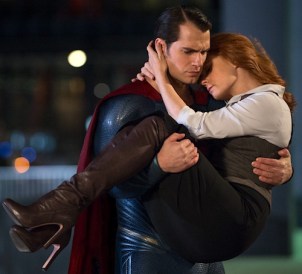 I don’t think it sinks to the level of spelling it all out slowly and carefully in case you missed it, but it does make it more explicit; and, as discussed, it does that by showing more of Lois’ investigation, so it feels like her role is more substantial too. She felt a little cursory in Man of Steel — “it’s a Superman movie, we have to put Lois Lane in” — whereas here she has a bigger role than her boyfriend… at least until the punchy-punchy climax, of course, when his superpowers win out.
Also in the Lex camp, his mystifying line to Batman about aliens coming (or something) is somewhat explained by a short scene (which was made available online after the theatrical release and is now cut into the film) where he’s shown in front of some kind of creature that disappears when troops turn up to arrest him. I say “somewhat explained” because that’s literally the extent of the scene — there’s not even the vaguest explanation of who the creature is, or what the creature is (another Kryptonian mutant? An alien entity? A man in a suit?), or how it got there, or why it got there, or what it’s doing with/to Lex… It’s just another vague tease, which non-fans must either shrug and ignore, or scurry online to find a forum thread or news article or tweet where knowledgeable fans can tell them what the hell they just witnessed and why it’ll be relevant next time.
That was one of the more sensible removals from the theatrical cut, then. Otherwise… well, I’m not the first to say this, but it’s really bizarre that Snyder seems to have consciously chosen to cut out scenes that actually explain the plot. As I’ve said, it was followable in the theatrical cut, so maybe he just got blinded by the fact he’d seen the movie a thousand times while editing and so it all still made sense to him? Nonetheless, watching the extended cut enhances the feeling (which is there in the theatrical if you know a longer version exists) that the methodology for shortening the movie by half-an-hour was to just select scenes at random and delete them. How else do you explain losing chunks of Lois’ and Clark’s respective investigations while that awkward scene of Perry wondering where Clark’s gone remains in both cuts?
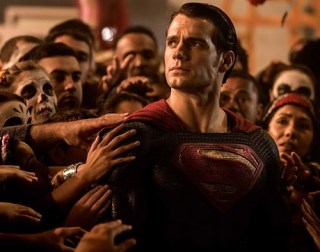 One thing that is pretty apparent about Snyder’s intentions is that he really wanted to make a Batman movie, and I suspect Man of Steel was his way in to getting to do that. Despite launching out of the events of Man of Steel, and engaging with issues of what it means to be Superman (therefore continuing MoS’s theme of “what would it be like if Superman was real?”), and having Lex Luthor as the main antagonist, BvS feels like a Batman-driven movie more often than it does a Superman one. Personally, I get it — I’m more of a Batman fan than a Superman fan too, so that approach warrants little complaint from me — but I can see why Supes’ fans would be miffed.
Another Snyder-related point comes to mind thanks to the numbering system I use for this blog. Most extended cuts of films I’ve already seen don’t merit a new number — i.e. this would be #127a — because they’re usually not significantly different to the existing versions, just adding some character beats, bonus action moments, or extra gags. They’re not fundamental enough to consider it a “new movie”. To be honest, because the extended BvS mostly serves to clarify the plot that was present in the theatrical version, I might’ve just gone with my usual numbering if it weren’t for, (a) everyone else saying how different it is, and (b) the fact a 30-minute extension amounts to 20% more film — no one can call that an insignificant addition. Interestingly, one of the few other extended cuts I gave a new number to was the Watchmen Director’s Cut. And I never bothered to watch the theatrical version of Sucker Punch, but from everything I read I’m sure the extended cut is substantially different and substantially improved. When Snyder does an extended cut, he means it. It’s not just “here are ten minutes of scenes I had to delete but rather liked”, it’s a revised version of the film — and it’s always a better version.
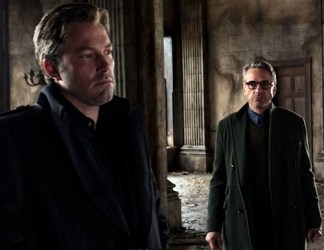 Other, more minor changes in this cut include increased violence, though personally I barely noticed it. Some people seem adamant this should’ve upped it to a 15 certificate, but I think you can justify saying it stops just short of that. Quite what the MPAA saw that merited an R, I’m not entirely sure. More interesting to my weirdly-obsessed mind is that the film actually includes the “Ultimate Edition” title on screen, both during the opening credits and at the end (where it’s technically titled “Batman v Superman: Dawn of Justice Ultimate Edition” without any additional punctuation). How many other extended cuts actually change their title card to reflect that fact? Off the top of my head, I can’t think of any.
As someone who genuinely enjoyed Batman v Superman’s theatrical cut, it’s hard to say how much better the Ultimate Edition is for viewers who were less convinced. However, I do think it’s a question of “how much better” rather than “is it better”, because this is certainly a superior version of the film — the fact it’s now over three hours long notwithstanding. The new cut won’t ‘fix’ the movie for viewers who object to the inherent tone and style of the piece, but if you’re open to that, this cut does improve the storytelling and character arcs for a smoother experience overall. I do understand some of the reasons people dislike this movie — the way it modifies characters from their traditional depictions; the overall serious and dark tone — but they’re not opinions I share. It’s certainly not a perfect movie, though: the climax descends into CGI-fuelled mayhem (though the reduced scale of a TV screen makes it more followable); the desire to counter accusations levelled at Man of Steel’s destructive climax gets old fast (the film is at pains to constantly tell us that such-and-such an area is deserted for this-and-that reason); the meta-human set-ups are clunky and distracting; and your mileage will vary on the revisionist versions of Superman and Lex Luthor (I didn’t love Eisenberg’s take on the character, but I don’t mind it either).

I gave the theatrical cut 4 stars, which doesn’t leave me much room for manoeuvre here. Is the Ultimate Edition a whole star better? Maybe it is. I enjoyed it enough that I’m almost kind of tempted to go for the full 5… but that would be pushing it. I’m not sure any movie is perfect, but even for someone who likes it Batman v Superman has enough niggles to discount it. Still, I think it’s an enjoyable, interesting movie, that provides a welcome tonal counterpoint to the efforts of the other superhero shared movie universe. Variety is the spice of life, after all.

Batman v Superman: Dawn of Justice – Ultimate Edition placed 10th on my list of The 20 Best Films I Saw For the First Time in 2016, which can be read in full here.
The next film in the DC Extended Universe, Suicide Squad, is in cinemas from today.
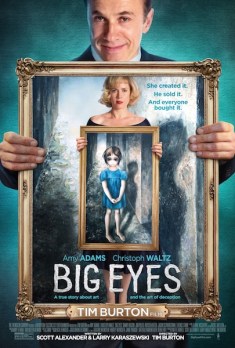 After a smidgen of early awards buzz that pegged it as a dark-horse major contender (which obviously never materialised into anything), everyone seemed to stop talking about Big Eyes, Tim Burton’s latest, and the first thing he’s made in over a decade that doesn’t instantly strike you as an obvious Burton-esque choice.
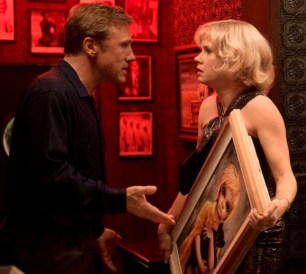 There’s thematic meat that could’ve filled the sandwich between those establishing and climactic, er, pieces of bread(?) — the tastes of critics versus the general public, and the disparity that exists there and what it means; or the inbuilt sexism of the era (though maybe everyone thought
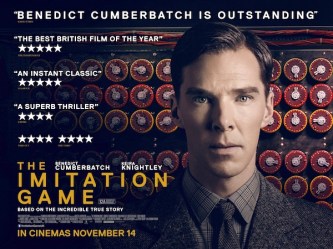 Alan Turing was a war hero: he led a team of cryptologists who managed to break the Germans’ Enigma encryption, thereby giving the Allies access to tonnes of vital information that (historians estimate) helped shorten the war by up to four years. This information was beyond top secret — so much so that they created a new designation for it, “ultra secret” — so when the war was over, Turing & co’s contribution went unrecognised for decades. Alan Turing was also a homosexual in an era when that was illegal. When he was caught, he was sentenced to chemical castration, which caused (or at least contributed) to him taking his own life. Fine way to treat a war hero, but that’s what you get with discriminatory attitudes.
 The screenplay by newcomer Graham Moore topped the Black List in 2011, so it’s probably of little surprise that it went on to win an Oscar, but I think it’s fair to say its quality, while good, isn’t that good. The use of three concurrently-told timelines seems to be too much for Moore and/or director Morten Tyldum to handle at times, occasionally flitting to a different era with little purpose beyond “it’s about time we told more of that storyline”. That’s not to say a wholly chronological telling would’ve been more effective — though perhaps it would’ve placated critical viewers who expected (and retrospectively demand) a cryptography-based wartime thriller — but the period juggling clouds the point as often as it illuminates it.
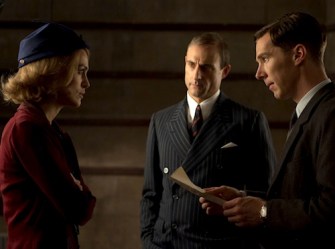 Also up for the golden man was Knightley, who does give one of her better turns as Turing’s sort-of-sidekick. The pair have a fairly complex relationship — both halves are key to conveying that, and they both do. At least as remarkable as either is young Alex Lawther, who arguably gets the film’s stand-out acting moment in his final scene, where a tumult of emotion is contained beneath a stiff-upper-lip surface in a tight close-up. On the strength of this, an actor to watch out for. The rest of the cast don’t get the same depth of material, but Charles Dance and Mark Strong provide exceptional value, as always, and Rory Kinnear does his best to bring some nuance and interest to a part he’s overqualified for.
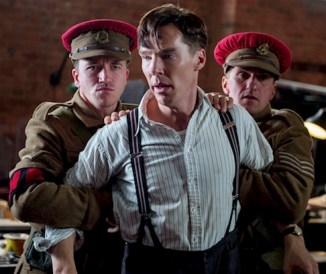 Perhaps that just stems from a frustration at some of the film’s other issues. It clearly has a flexible relationship with historical accuracy — well, what biopic doesn’t? Without wanting to spoil plot developments, some viewers feel the film suggesting Turing knew of the spy at Bletchley Park is insulting to his memory, because in real-life he didn’t even know the individual. Alternatively, is it not a way to integrate that part of the Enigma story into a film that otherwise wouldn’t have a satisfactory way to touch on it? Everyone’s mileage will vary on whether that should’ve been done or not.
 Without meaning to sound too judgemental (though when has that ever stopped me?), those factors making me think this is the kind of film “normal people” will probably love a lot more than “film fans” — which probably explains why it’s in the IMDb Top 250 but all the most-liked reviews on Letterboxd have exceptionally low scores. Personally, I’m going to side with the populous: not everything has to be a groundbreaking feat of Cinema to be a story worth telling and told well, and if it is indeed some kind of “historical revisionism” to say that there’s nothing wrong with being gay and the way Turing was treated post-war was horrendous, well, I’m OK with that revisionism.
 Stanley Kubrick made a good many exceptionally well-regarded films — indeed, with possibly the exception of his first semi-amateur feature,
 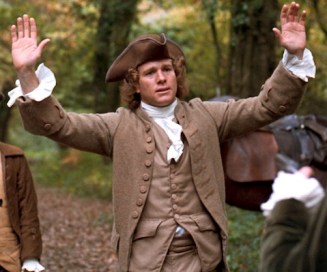 who often tells us less-than-favourable things about the lead character. Apparently this is an example of an unreliable narrator, and I suppose some of the things we’re told aren’t directly evidenced on screen, but I’m afraid I’m going to have to leave that seam to be mined by other writers, because (on a first viewing at least) I didn’t see where or to what effect the narrator was lying to the viewer.
 but a fictional biopic, that ranges across Europe and across time to… what effect? It’s a Kubrick film, so the ultimate goal of the tale, the message(s) it may be trying to impart, are debatable. You could see a story of the pitfalls of hubris. You could see an exploration of how a certain class lived in this time period. You could just see a man who led an adventurous life.
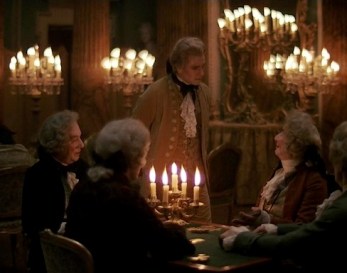 just that it remains the best among greats. (That said, having looked up images online for this review, it seems slightly less striking to me now. That may be the quality of the screengrabs; it may be that the painterly quality is so remarkable at first appearance (before becoming more familiar when the whole movie has that quality) that its memorableness is heightened.)
 The director of

 Score:




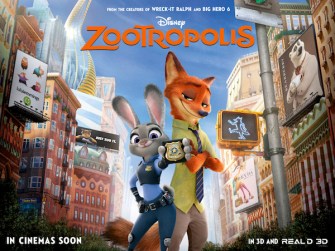 Disney’s 55th Animated Classic is their second highest-grossing ever, the 25th film to take over $1 billion at the worldwide box office, which makes it a hit of
  I think Zootropolis may be the first time they’ve attempted a neo-noir crime thriller, though. And I bet no one ever thought they’d see a Disney film with a sequence set at a nudist resort. Or in a drugs lab, for that matter. Or one with a substantial parody of
  However, that’s not to say kids can’t get enjoyment out of it: there are plenty of colourful characters and locations, relatable situations, cross generational humour, and a moral lesson young’uns will understand. There’s the DMV sequence, for instance, which is grounded in an adult experience but so funny it must cross over. Considering all the praise I’ve heard for that one scene, it’s also a feat it lives up to the hype. It’s gorgeously animated throughout, bolstered by a world that has been magnificently realised, with all the different themed districts of the city. (After all the Disney movies that have had contrived TV series spin-offs, this is a film that actually feels like it deserves one. The setup is obvious — a police procedural — and the world the film suggests is big enough to warrant it. Heck, it practically demands it — there’s so much more of this world, you want to see it explored.) Michael Giacchino’s score is different too: memorable and fun, in part thanks to using a cornucopia of unusual instruments to provide a ‘world music’ sound that’s in-keeping with the movie.
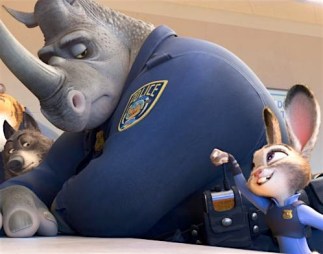 too, but that doesn’t mean the journey getting there is any less fun.



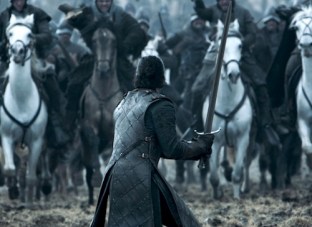 GoT produced two of its greatest-ever episodes to conclude this season. Actually, that’s arguably an understatement: based on IMDb votes, if nothing else, Thrones produced two of the best episodes of TV ever made. But what do IMDb voters know? Well, more than some people give them credit for. Obviously everyone has different tastes, but for the genres Thrones operates in — and, in some instances, even transcending those — these are incredible hours of TV. Episode 9, Battle of the Bastards, is surely one of the most thoroughly-realised medieval-style battles ever depicted on screen: the scale is epic, the strategy is clear, the feeling of what it’s like to be in the thick of that environment is palpable. How it turns out may have been predictable, but something being predictable is not the same as it being bad — not everything needs to be a twist.
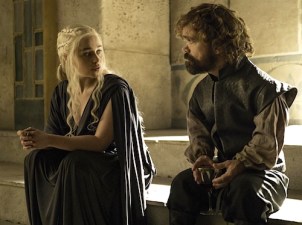 As for the forthcoming seventh season, it’s pretty clear we’re now entering the show’s endgame — though we’re going to have to wait even longer for it, with the next season set to have a later-than-normal premiere and the final end not coming until the season after that. It’s going to be an excruciating wait, but if they can maintain the form displayed throughout season six, it’ll be worth it.
 This is done and dusted Stateside now, but goodness knows when Channel 5 will choose to ‘officially’ air it over here, so I’m just getting on with it. I used to despise most of PoI’s arc plots and often wished it would stick to being just a pretty cool vigilante procedural; but at this point, it’s so invested in the epic Super-AI vs. Super-AI sci-fi storyline that any attempts at case-of-the-week episodes feel like a waste of time — especially when this truncated season is fast approaching the show’s final end. I really hope it comes to a proper conclusion, because there’s too much going on here to let it end forever on a cliffhanger. (Obviously that answer’s now out there, but naturally I’m avoiding spoilers.)
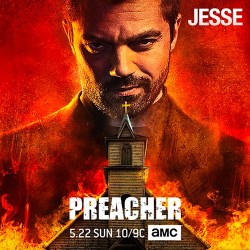 I’m a bit behind on this at the minute (the latest episode was the eighth), but, as of the halfway point, it’s definitely settled into its own skin — or maybe it was always settled there, but it’s taken time for viewers (or this viewer) to get past the expectations brought as a reader of the comic books. It’s still far from being a literally faithful adaptation, carving out its own path from some of the comic’s building blocks, which makes it an odd and hard-to-judge work if you have read any of the original. Still, it’s an entertaining series, and people involved keep talking about this season being something of a prequel to what we saw in the comic, so maybe the already-commissioned season two will feel more recognisable.
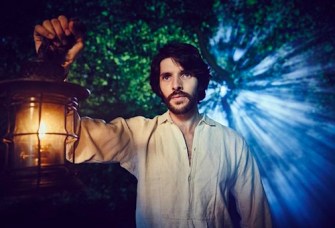 This month, I have mostly been missing stuff I don’t even know I’m missing. By which I mean, I haven’t been paying enough attention to the TV schedules to know what I’ve missed. The BBC’s supernatural drama The Living and the Dead sounds kind of interesting; I know Mr Robot is back, not that I ever got round to season one; plus The Musketeers continues (though I hear it’s gone off the rails this season); and I keep hearing vaguely good things about Netflix’s new series, Stranger Things, like that it’s a cross between Steven Spielberg and Stephen King, or The Goonies mixed with The X Files… which just reminds me that I need to get round to seeing The Goonies someday.
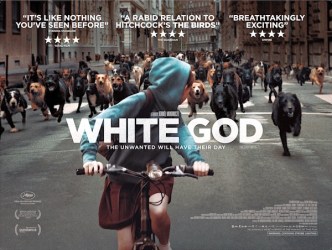 Thirteen-year-old Lili (Zsófia Psotta) and her dog Hagen are forced to temporarily live with her father, Dániel (Sándor Zsótér), because her mother is going on holiday with her new partner. Dániel doesn’t like Hagen anyway, but when the dog’s behaviour causes problems for him, he sets Hagen loose on the streets. Already angry with her father and his attitude, a devastated Lili sets out to find her beloved dog, who is busy discovering the darker side of mankind and our treatment of animals.
 For all the toughness of the journey, where it leads is triumphant; not entirely so, I must add, but enough. The film’s third act can pithily be described as Rise of the Planet of the Dogs: having seen the abuses of humans, an impounded Hagen leads a canine uprising that seeks to… well, they don’t speak (they’re dogs, remember, and this isn’t Disney), so who knows what their precise aims are? “Revenge” would be too cruel, but they definitely seeking some retribution. The film’s sadness doesn’t disappear (hence why not entirely triumphant), but some wrongs are righted.
 Some will find the middle of the film a slog, I suspect, both emotionally and with its occasionally lagging pace. However, the bookends seek to justify it. There’s catharsis in the finale, as described, but even better is the film’s opening. It has to be seen to be properly understood, but it’s operatically scored, shot, and edited, and involves hundreds (literally) of trained dogs en masse. It’s spectacular, unforgettable moviemaking; perhaps even one of the best openings to a film ever. And I don’t say that just as a “dog person”.
