100 Films’ 100 Favourites #66
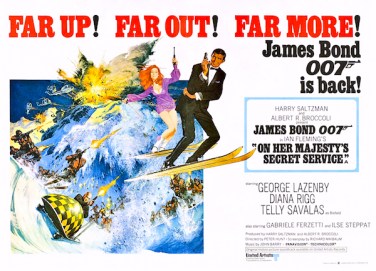
Far up! Far out! Far more!
James Bond 007 is back!

Country: UK & USA
Language: English, German & French
Runtime: 142 minutes
BBFC: A (cut, 1969) | PG (1987)
MPAA: M (1969) | PG (1994)
Original Release: 13th December 1969 (Japan)
UK Release: 18th December 1969
US Release: 18th December 1969
First Seen: TV, c.1995
Stars
George Lazenby (Who Saw Her Die?, Gettysburg)
Diana Rigg (The Assassination Bureau, Theatre of Blood)
Telly Savalas (The Dirty Dozen, Kelly’s Heroes)
Director
Peter Hunt (Shout at the Devil, Death Hunt)
Screenwriter
Richard Maibaum (From Russia with Love, The Spy Who Loved Me)
Additional dialogue by
Simon Raven (Unman, Wittering and Zigo, The Pallisers)
Based on
On Her Majesty’s Secret Service, the tenth James Bond novel by Ian Fleming.
The Story
After James Bond saves the life of Teresa DiVincenzo, her mob boss father offers him information on the location of Ernst Stavro Blofeld, who Bond has been unsuccessfully tracking for years. Operating against orders to drop his investigation, Bond goes undercover in Blofeld’s Swiss research facility to find out what nefarious scheme he’s plotting now…
Our Hero
Bond, James Bond, agent 007 of the British secret service. On this mission, he falls in love and gets married — that never happened to the other fella!
Our Villain
Bond’s second face-to-face confrontation with the head of S.P.E.C.T.R.E., evil mastermind and archetypal uber-villain Ernst Stavro Blofeld, now played by Telly Savalas. It’s a very good villainous performance, though possibly suffers by coming after Donald Pleasance’s iconic turn in You Only Live Twice.
Best Supporting Character
Contessa Teresa Draco DiVincenzo — aka Tracy, the only woman headstrong, intelligent, and bold enough to tie down international playboy James Bond.
Memorable Quote
“It’s all right. It’s quite all right, really. She’s having a rest. We’ll be going on soon. There’s no hurry, you see. We have all the time in the world.” — James Bond
Quote No One’s Going to Use in Everyday Conversation Anymore, That’s For Sure
Bond: “I find her fascinating, but she needs a psychiatrist, not me.”
Draco: “What [my daughter] needs is a man… to dominate her! To make love to her enough to make her love him! A man like you!”
Memorable Scene
As M, Q, and Moneypenny sit around wondering where the devil 007 is, a shadowy man drives an Aston Martin accompanied by the Bond theme. (As in we hear it — he’s not got it on the stereo.) To his surprise, he’s overtaken by a woman. A few miles down the road, he sees her car stopped by the beach, and she’s walking out to sea. He runs after her, scoops her up and carries her back to the shore. As she wakes up, we see his face for the first time — and it’s not Sean Connery! But he does say, “My name’s Bond. James Bond.” Then he has a punch-up. A tradition (keeping the new Bond’s face a ‘secret’ until some kind of reveal*) is instantly born.
* Not that this happens in Live and Let Die. Or Casino Royale, really. Oh well.
Write the Theme Tune…
Regular series composer John Barry aimed to help cover for the absence of Connery by making the score “Bondian beyond Bondian”, and this certainly applies to the main title theme: an instrumental number (of which there are only three in the entire series) which is surely second only to the main James Bond theme in its Bondianness. It’s a fantastic action number that sits just as well over the ski sequences as it does the opening titles. (There’s also a great cover version by the Propellerheads on David Arnold’s Shaken Not Stirred album, by-the-by.)
Sing the Theme Tune…
Nonetheless, the film does contain an original song, composed by Barry with lyrics by Hal David, and — most famously — sung by Louis Armstrong in his final recording: We Have All the Time in the World. Considering the 1967 Casino Royale also produced The Look of Love, it was clearly an unusually fertile time for Bond films to produce songs that transcended their origins.
Technical Wizardry
Various methods were used to capture the Alpine action scenes, including camera operators skiing alongside the stuntmen (backwards while holding a camera!), and using Swiss Olympic athletes for the bobsled chase (with the sequence rewritten to incorporate their accidents). Most remarkable, though, was the aerial photography achieved by cameraman Johnny Jordon. To get flexibility to shoot scenes on the move from any angle, he developed a system where he was dangled 18 feet below a helicopter in a parachute harness. Mad.
 Letting the Side Down
There’s little doubt that George Lazenby is the worst big-screen Bond (though all of those who came after have their detractors), but he’s not actually that bad — he certainly sells the film’s emotional ending in a way I can’t quite picture Connery managing. If he’d stuck around for a few more movies I imagine he’d be better regarded. What really lets him down is his costuming — that frilly-shirt-and-kilt outfit is half the reason people who dislike the film dislike it so much, I swear. (Here it is bigger, if you want a good look.)
Making of
Various stars of The Avengers (the classic British TV series, not the Marvel superheroes) have appeared in the Bond series — Honor Blackman in Goldfinger, Patrick Macnee in A View to a Kill (plus narrating loads of the DVD documentaries), and of course Diana Rigg here — all after they appeared on the TV show. The exception is Joanna Lumley, who appears in a small part here a few years before joining The New Avengers. Despite the diminutive size of her role, Lumley spent two months on the production, dubbing the voices of Blofeld’s whole cadre of women using German, Chinese, and Norwegian accents. She also taught the other actresses to crochet, so that was nice.
Previously on…
Five James Bond films starring Sean Connery.
Next time…
After Lazenby pulled out of his contract, Connery returned for Bond’s next adventure. There have been 17 Bond adventures on the silver screen since that, and the series continues indefinitely, with a 25th entry due in 2018 or so. On Her Majesty’s Secret Service was adapted for radio in 2014, the fourth of (to date) five Bond radio adaptations starring Toby Stephens as 007.
Awards
1 Golden Globe nomination (Most Promising Male Newcomer (George Lazenby))
How OHMSS Got a Bad Reputation
“I suspect the average filmgoer still believes Lazenby was fired because the movie flopped. Wrong on both counts. OHMSS was not a blockbuster on the scale as Connery’s previous two films, but it was a solid hit. Box-office returns were no reason to fire Lazenby, and he wasn’t fired. He quit. […] OHMSS would go over schedule and over budget and [director Peter Hunt] would continually clash with his producers as well as his star. When OHMSS didn’t prove to be a runaway success, the public would blame Lazenby, but Saltzman and Broccoli and United Artists privately blamed Hunt along with his insistence on creating a tense, serious action film faithful to Fleming. Perversely, the finest film in Broccoli and Saltzman’s series became the model of everything they wanted to avoid in the future. In their desire to run from all that OHMSS represented, they turned the next film, Diamond Are Forever, into the dumbest, sloppiest mess in the series’ history. But Connery had returned so it was another substantial box-office hit, and the producers felt vindicated in their artistically disastrous decisions. The success of Diamonds Are Forever dealt a hit to OHMSS’s reputation. Thankfully, quality cannot go ignored for long and as more people discovered Hunt’s neglected masterpiece, the more admired it has become.” — Jeffrey Westhoff, Culture Spy (that whole piece is excellent, by-the-by)
What the Critics Said
“it is nothing short of miraculous to see a movie which dares to go backward, a technological artefact which has nobly deteriorated into a human being. I speak of the new and obsolete James Bond, played by a man named George Lazenby, who seems more comfortable in a wet tuxedo than a dry martini, more at ease as a donnish genealogist than reading (or playing) Playboy, and who actually dares to think that one woman who is his equal is better than a thousand part-time playmates. […] The love between Bond and his Tracy begins as a payment and ends as a sacrament. After ostensibly getting rid of the bad guys, they are married. They drive off to a shocking, stunning ending. Their love, being too real, is killed by the conventions it defied. But they win the final victory by calling, unexpectedly, upon feeling. Some of the audience hissed, I was shattered.” — Molly Haskell, The Village Voice
What the Public Say
“Not everybody is wrong about this film, of course. Steven Soderbergh and Christopher Nolan are both fond of this film. As am I. There are problems with this film, to be certain, and the problems do lie (mostly) with Lazenby. […] Having gone with the amateur Bond, they upped the ante for the girl. Diana Rigg was already a star from The Avengers and was perfectly suited to be a Bond girl. [She] is the answer, of course, as to why this film ranks as high as it does on the list of Bond films when Lazenby is so lackluster a Bond. Yes, there are good things in the film beside her – the ski scenes, the bobsled scene (you can tell the close-ups are rear projection but the longshots are real and exciting), the tragedy of the ending. But, for the first 40 years of the series she was the height of the Bond girls and she pulls this film higher than we had any right to originally expect.” — Erik, News from the Boston Becks
Verdict
The history of opinion on OHMSS is a fascinating one: written off as a failure, the series’ black sheep thanks to Lazenby and the less fantastical tone than the films that surround it; then gradually rehabilitated precisely because of that tone, to the point where it’s now almost “the Bond fan’s Bond film” (it certainly still has its detractors, who are either baffled by or in denial of its acclaim in other quarters). The ways it subverts the Bond formula are part of what makes it so memorable, but so are the ways it plays up to it, like Blofeld’s mountaintop base: considerably more plausible than the hollowed-out volcano (it’s a real place, for one thing), but no less incredible. Similarly, there’s an atypical plot, but also incredible action sequences — all done for real, too (well, aside from some iffy back projection). It does have faults that hold it back from being the best Bond movie in my estimation, but it’s up with the series’ best nonetheless.

#67 will be… a Western fairytale.

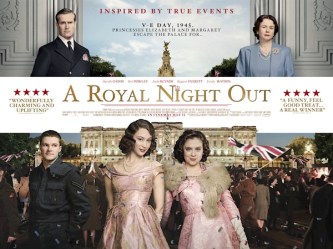 A somewhat remarkable true story gets romanticised in this likeable comedy about King Colin Firth (Rupert Everett) and Queen Olivia Colman (Emily Watson) allowing Princesses Elizabeth (Sarah Gadon) and Margaret (Bel Powley) to go out on the town on V.E. Day. When Margaret runs off, Liz teams up with a grumpy squaddie (Jack Reynor) to track her down.
 Score:


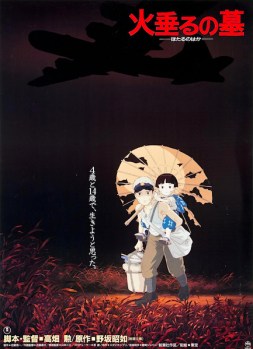 One of the most praised animated films of all time, this Studio Ghibli feature tackles grim subject matter: it’s the story of Seita and his little sister Setsuko, a pair of Japanese children who are orphaned and eventually left to fend for themselves in the closing months of World War 2. It begins with Seita dying of starvation and joining the spirit of his dead sister, so you know it’s not going to end well. A Disney movie this is not.
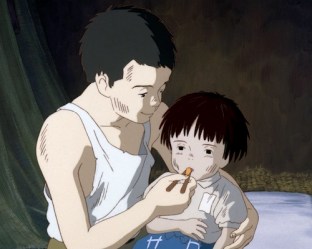 Another thing is that the film is often cited as a powerful anti-war movie, because it depicts the ravaging effects on innocents. However, director Isao Takahata insists it isn’t, saying it’s about “the brother and sister living a failed life due to isolation from society”. I’m inclined to believe him, because, from what we actually see on screen, these two kids are the only ones to be so badly affected! Okay, we do see people have died, and we’re told that food is running out… but there’s a gaggle of kids who seem to be having a fun day out when they stumble across the siblings’ makeshift shelter; or, right at the end, people who merrily arrive home and pop their music on. The film doesn’t try to claim that only these two kids suffered, but — aside from a few other destitutes at the start, and the bodies we see after the first bombing (later bombings don’t make any casualties explicit) — we don’t really see anyone else suffering. I’m not arguing that Takahata is saying no one else suffered, nor that these observations make it pro-war (I mean, any children dying, even if others are surviving, is not a good thing), but I didn’t get an anti-war message that was as powerful or as overwhelming as other viewers seem to have.
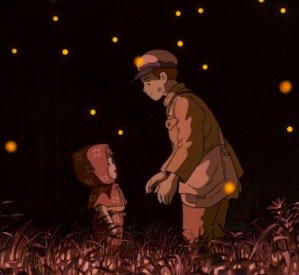 and, really, this story shouldn’t be “bearable”. That’s not to say you can’t feel an emotional connection to animated characters, but, as a medium, animation regularly deals in fantastical subjects, so with material this gruelling it does make it seem less real.
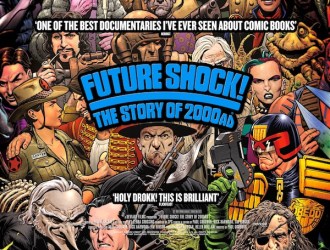 Talking heads documentary about the galaxy’s greatest comic,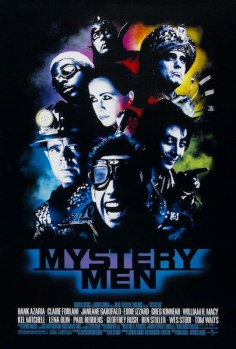


 Inspired by real events (more on that later), The Bank Job sees the British Secret Service covertly enlist a gang of crooks to rob a bank’s vault in order to retrieve some compromising photos of a member of the royal family — not that the robbers know this is what they’re up to. Unfortunately for them, the vault also contains property belonging to an organised crime boss, who isn’t too happy it’s been pilfered.
 but, most pertinently, solid TV thrillers like
 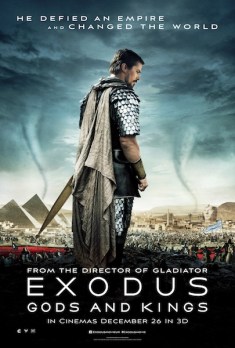 For his most recent historical epic, Ridley Scott tackles the story of Moses. It’s easy to nitpick, depending on your proclivities: whitewashed cast; lack of adherence to the Bible; Ridley’s typically flexible attitude to historiography; it was even banned in Egypt for the negative depiction of both rulers and slaves.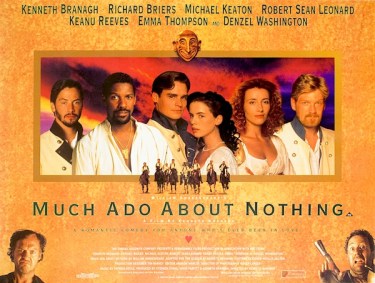

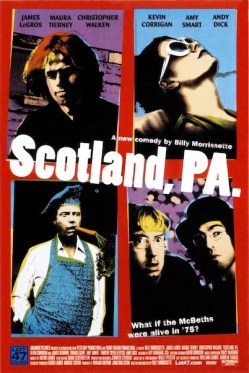 Shakespeare gets transposed to 1970s Pennsylvania in this blackly comedic reimagining of Macbeth, which converts the Thane of Glamis into a diner chef and the Scottish throne into ownership of a new concept: drive-thru.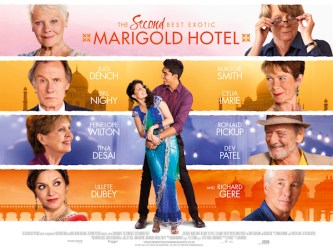
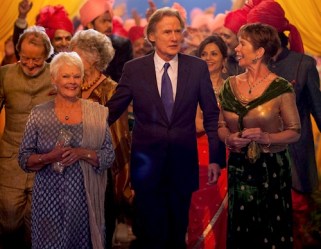 though this time there’s an added dose of romance in pretty much every plotline. It works because the cast are so darn good at delivering their material. Dev Patel and Maggie Smith are both hilarious, though everyone gets a moment to shine in the comedy stakes; conversely, Judi Dench and Bill Nighy carry the heart of the movie — though, again, everyone gets their emotional moment.
 100Films.co.uk