Annihilation (2018)

2018 #45
Alex Garland | 115 mins | streaming (UHD) | 2.39:1 | UK & USA / English | 15 / R
Annihilation

Many column inches (and even more tweets) have been penned about Paramount’s decision to relegate director Alex Garland’s second third film straight to Netflix outside the US, Canada, and China, so I presume the pros and cons of that move have been thoroughly discussed elsewhere. Personally, I’m on the fence: it’s disappointing not to see intelligent sci-fi being given a shot at the box office, but I’m one of those people who’s 50/50 on whether I go to see it or just wait for disc/streaming/etc. (I’ve not even seen The Shape of Water, for example, although that’s partly due to a dearth of convenient screenings during its brief theatrical appearance. Conversely, I did go to Arrival.) Anyway, it is what it is at this point, so let’s move on to the film itself.

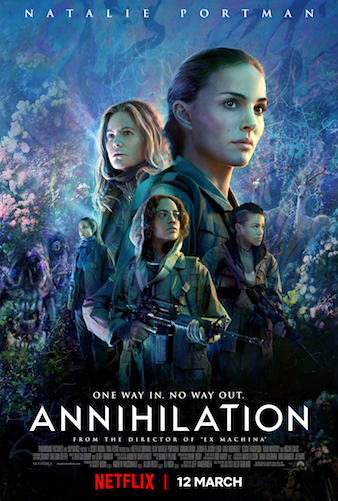
Loosely based on the acclaimed novel by Jeff VanderMeer (reportedly Garland read the book once then wrote the screenplay from memory), it follows biologist, academic, and former member of the Army, Lena (Natalie Portman), whose soldier husband Kane (Oscar Isaac) went missing a year ago during a secretive mission. After he suddenly reappears, apparently with no memory of his time away but with some severe medical problems, the couple are scooped up by a military organisation investigating Area X, a top-secret quarantined zone affected by an unexplained phenomenon known as the Shimmer. Various teams have been sent inside the Shimmer, but Kane is the only person to ever return. As his health deteriorates, Lena, desperate for answers, joins the latest squad to venture inside. That’s where stuff gets crazy…
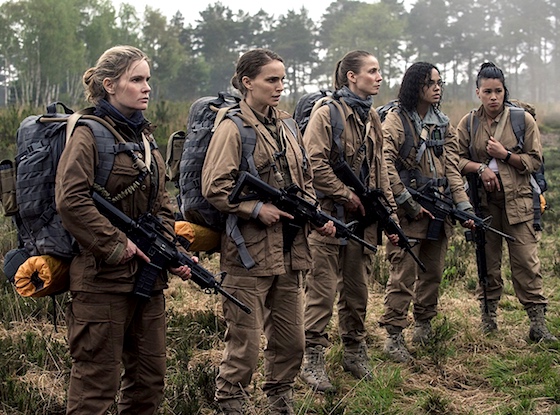
Squad goals

The first thing Annihilation made me think of was Denis Villeneuve’s Arrival. The connection was initially triggered by the score: the ambient soundtrack by Geoff Barrow and Ben Salisbury reminded me so much of Arrival’s that I had to check this wasn’t a last work by Jóhann Jóhannsson. Once I spotted that, the other similarities in the story leapt out: they’re both thoughtful sci-fi parables about a female university lecturer being co-opted into a military operation to investigate a strange extraterrestrial presence on Earth, while also remembering her family life in flashbacks.

Despite Paramount’s insistence that the film was too intelligent for non-US audiences (you can take a moment to laugh at that notion if you like), Annihilation is perhaps more accessible than Arrival, at least initially. Whereas Villeneuve’s film played like a character drama, Garland’s has a strong adventure-movie vein, also laced with elements of the horror genre. It’s still not a mile-a-minute thrill-ride, but, if you wanted, you could engage with it on the level of a quest through an alien event, encountering strange phenomena and creatures, with events of life-threatening jeopardy. However, for all the original sci-fi ideas, it does also touch on weightier, more human psychological issues — as the Empire review summarised it, “depression, grief and the human propensity for self-destruction.”
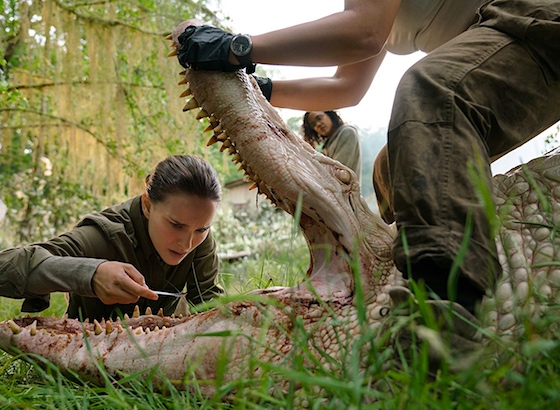
All the better to eat you with

Naturally this material is carried by the cast. Portman makes for an interesting lead. Clearly damaged by grief, she’s quite a cold figure, which may distance her from some viewers in the way it does from some of her team mates. But there’s more to it than that, and Portman delivers subtle nuances that hint at more beneath the surface. The rest of her all-female squad — played by Jennifer Jason Leigh, Tessa Thompson, Tuva Novotny, and Gina Rodriguez — all have distinct personalities, all get brief subplots and moments, and they’re mostly managed with an equal level of understatement. Perhaps the best is Thompson, whose calm, gently heartfelt performance is quietly superb, and even more striking as it marks a huge contrast to her star-making turn in Thor: Ragnarok just a few months ago. As a pair of films to be a calling-card for her skills, one could barely ask for more.

A lot of disappointment about the lack of a theatrical release stems to not being able to see these visuals on a cinema screen; not being able to experience the audio with a cinema sound system. Well, that partly depends on your own setup at home, of course. Setting that aside, though, while there are certainly some very striking visuals, it wasn’t as consistently stunning as some reviews made it sound. I’m not saying it wouldn’t benefit from the big screen, especially if you’re particularly fond of that experience, but I didn’t feel I was missing much scale by watching at home. I felt similarly about the sound design, though I do say that as someone with a 7.1 system. For spectacle, the intricate and colourful end credits are the most striking bit — I’m certain they benefitted from my viewing the film in 4K HDR.
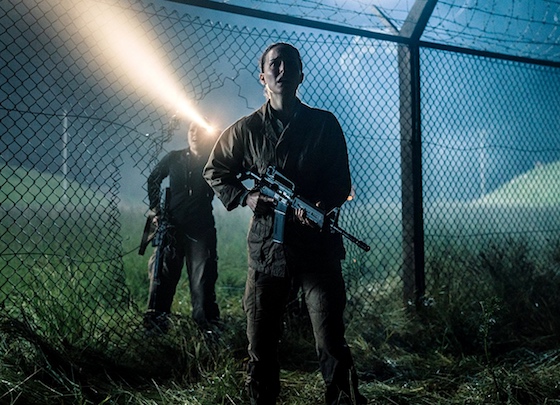
Scared of the dark?

However you get to see it, writer-director Alex Garland has crafted another sci-fi mystery/thriller that engages on multiple levels. For me it was somewhat damaged by the hype, perhaps a result of US reviewers frantically urging people to get out and see it to prove that Paramount’s lack of faith was a mistake. While I didn’t instantly love it in the same way as, say, Arrival, or Garland’s debut, Ex Machina, it’s undoubtedly a fascinating, thought-provoking slice of science-fiction — and a much-needed critical success for the “Netflix Original” brand after a couple of recent duds. I’d also say it places Garland ahead of genre contemporaries like Neill Blomkamp and Duncan Jones as a filmmaker to keep an eye on. Okay, he’s not quite Denis Villeneuve, but he’s a lot closer than the others.

4 out of 5

Annihilation is available on Netflix in most of the world now.
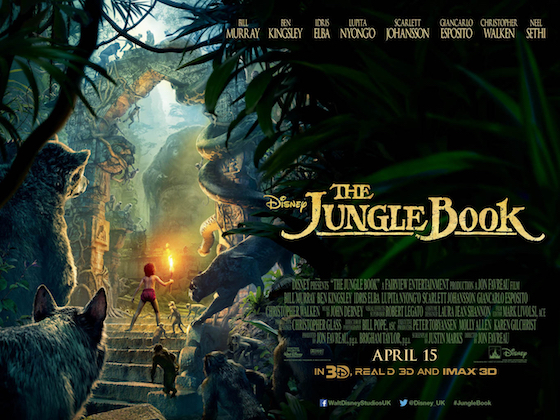
The Jungle Book (2016)

2018 #40
Jon Favreau | 106 mins | Blu-ray (3D) | 1.78:1 | USA & UK / English | PG / PG

The Jungle Book

One of the successes that has convinced Disney to remake basically their entire animated back catalogue in live-action, Jon Favreau’s take on Disney’s adaptation of Rudyard Kipling’s stories barely counts as “live-action” really: the vast majority of it is animated — often the only real bits are Mowgli and some (but by no means all) of the props and scenery he interacts with — but it’s done to be photo-real and so we pretend that’s live-action.

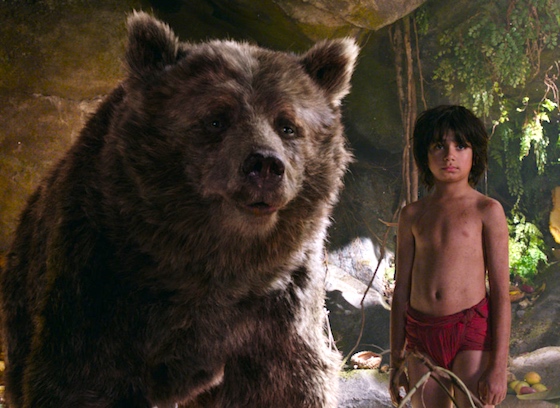
Whatever you want to call it, the visuals are stunning. It’s incredible stuff by the animators, though also by Favreau and DP Bill Pope to make all that hard work look great as a film too — they put special effort into making sure the CGI was properly lit, etc. And I reckon it’s even better in 3D. Presented in a screen-filling 1.78:1 ratio, unconstrained by the black bars of your nowadays-standard 2.35:1, it honestly feels like a window into another world. You sometimes see reviews of good 3D that say “you feel like you could reach out and touch it”, which I’ve always taken as A Thing People Say rather than an actual inclination, but at one point I did feel like I wanted to reach out and stroke Baloo’s fur, he looked so soft. The end credit sequence (a kind of pop-up book routine) looks particularly great in 3D, which helps to sell the miniaturised dimensions.

Bear necessities

Anyway, the film itself. Disney’s Jungle Book is such a well-known childhood classic that I don’t imagine you need me to recap its plot, though this version doesn’t ape it one-for-one. When Favreau was first brought on board the story treatment Disney had in development was much closer to Kipling’s work, including none of the changes Disney made when they adapted it before (i.e. adding songs and the character of King Louie), as well as being more violent, aimed at a PG-13 rating. So it was Favreau who decided it should be closer to the Disney classic, aiming to find the sweet spot between the two styles. I think he’s nailed that, mixing in enough that’s familiar from the animation with a bit more seriousness derived from Kipling.

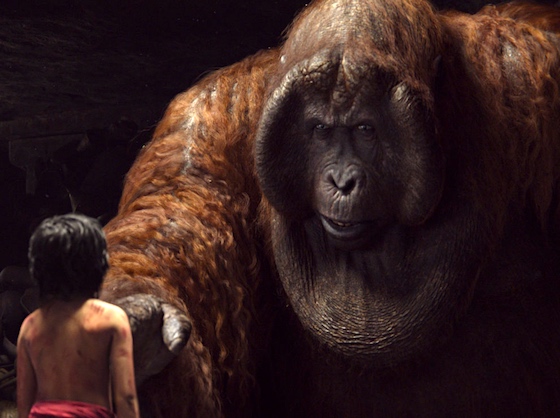
That said, I wasn’t wholly convinced by the use of the songs. The rendition of Bare Necessities is disappointingly truncated, though at least fits in context. Conversely, King Louie’s song, I Wan’na Be Like You, is so out of place that I found the sequence kind of uncomfortable. Weirdly, its reprise at the start of the end credits is great. There it’s followed by Trust In Me, which isn’t included in the film proper but might actually have worked there.

I wanna be like you-oo-oo

Still, the film as a whole functions well; surprisingly well, one might even say. You may remember the Rotten Tomatoes score for it went crazy when it came out, hiding the high 90s — it ended up at 95%. And it’s the perfect example of why Rotten Tomatoes doesn’t score a film’s quality, but does score the chance that you’ll enjoy a film. I’m not sure many people would think this is a “9.5 out of 10” kind of film, but one there’s a 95% chance you’ll think is good? Yeah.

4 out of 5

The Jungle Book is available on Netflix UK from today.

Murder on the Orient Express (2017)

2017 #164
Kenneth Branagh | 114 mins | cinema | 2.39:1 | USA, UK, Malta, France, Canada & New Zealand / English, French & German | 12A / PG-13

Murder on the Orient Express

Did we need another version of Murder on the Orient Express? That seems to be the question that preoccupies many a review of the film, primarily with reference to the Oscar-winning 1974 version directed by Sidney Lumet and starring Albert Finney as Agatha Christie’s Belgian detective, Hercule Poirot, alongside an all-star supporting cast. That’s not the only other adaptation of arguably detective fiction’s most famous novel, though there were fewer than I thought: a modernised TV movie starring Alfred Molina was made in 2001, and it was of course filmed as part of the David Suchet Poirot TV series in 2010, but that’s your lot (in English — the Germans and Japanese have both done it on TV). So, on the one hand, maybe we should be all set for screen versions; on the other, it’s not like it’s the only remake.

So, if you’ve not seen a version before, you’re spoilt for choice. If you want to know which I think you should pick… Well, I’ve not seen it, but I imagine we can discount that 2001 TV movie. Suchet is still the definitive screen interpretation of Poirot, but that particular episode is not the series’ finest hour, as I recall. And while I enjoyed the ’74 version a good deal, I wasn’t bowled over by it. Which brings us to this new one.

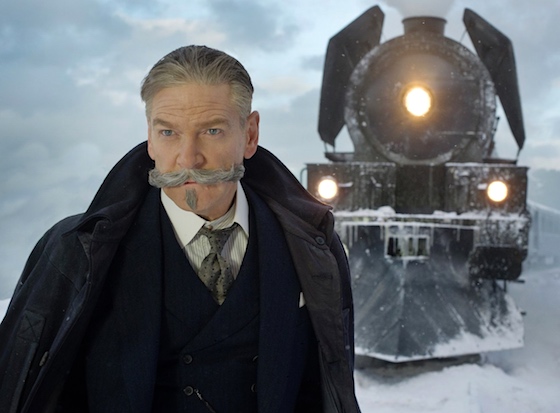
The star of the film: Branagh's moustache

Personally, I thought it was very good indeed. It’s a film of its genre and heritage — by which I mean it functions the way Christie-style murder mysteries always do, and it’s staged and shot mostly with a classical dignity — so if you have a dislike for that then this isn’t revisionist in a way that will win you over. But within those ‘constraints’ it’s very well done. The photography, in particular, is magnificent. Shot on 65mm, but without showing off about it in the way some other directors have recently, it has a richness, a grandeur, and an elegance that is most befitting.

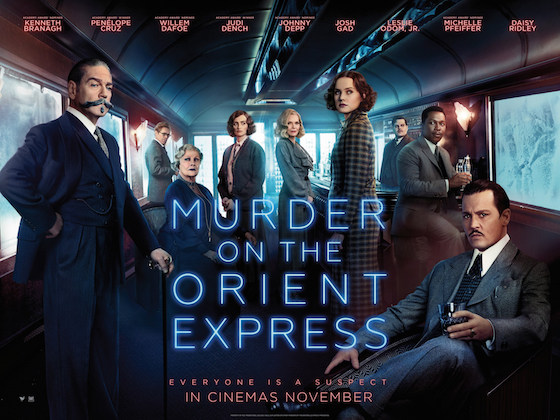
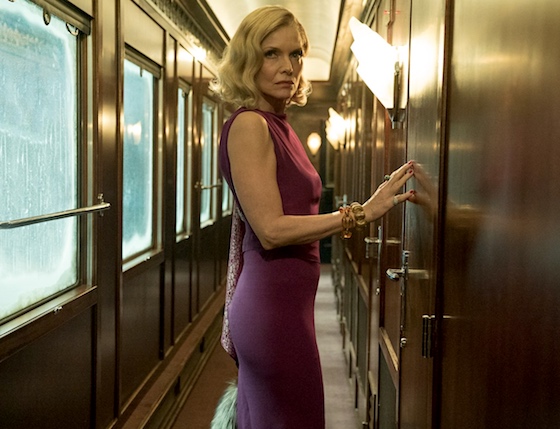
Having mentioned the all-star cast of the previous film, it must be said that this version doesn’t skimp in that department either. The key roles are filled with a veritable who’s-who of acting talent, including big names (Johnny Depp, Michelle Pfeiffer, Penélope Cruz), quality thesps (Olivia Colman, Willem Dafoe), people who’ve worked with Branagh before (many of the small roles), people who tick multiple of those boxes (Dame Judi Dench, Sir Derek Jacobi), and freshly-minted stars too (Star Wars‘ Daisy Ridley, Sing Street‘s Lucy Boynton; depending on your point of view, Beauty and the Beast‘s Josh Gad and Hamilton‘s Leslie Odom Jr as well). The size of the cast and style of the story means that even the most-featured only get a couple of scenes of their own (plus scattered lines in ensemble moments), but the talent involved imbues the roles with inherent character.

A dangerous liaison?

And then there’s Branagh himself as Monsieur Poirot. Most discussion of his performance has focused on the moustache, understandably. It’s certainly a magnificent feat. But Branagh is a very fine actor, of course, and he manages to make Poirot his own — an impressive job when there’s the spectre of David Suchet’s definitive performance looming. I wouldn’t say he’s surpassed Suchet in any way, but his take on the character is different enough to dodge too many direct comparisons, while not being so different that it no longer feels like Poirot, at least to me.

Frankly, I feel like an important element to enjoying the film is to approach it with an openness to it being its own thing — a courtesy I don’t believe it was afforded by some critics and viewers. Many reviews I’ve read had a tendency to compare it to the 1974 film, either in a specific “what I thought of each” sense or a broad “your opinions of that film may colour your view of this one”. I guess that’s a useful metric to some people, but it’s better to judge the film on its own merits, I feel. That said, I’ve also seen some call it too slow, others call it too fast; some say it’s too dull, others say it’s too full of action… No wonder it ended up with middling average scores: never mind not being able to please everyone, it seems like you can’t please anyone. Personally, I thought it largely hit the mark in all those respects.

Classical elegance

And it seems like the wider audience agreed: it ended up grossing $350 million worldwide, which places it in the top 30 releases of 2017. For a film of this type in the current box office climate, that’s an excellent achievement. For comparison, it’s just below the likes of Fifty Shades 2, Cars 3, and The Mummy Mk.III, and it also out-grossed films such as The LEGO Batman Movie, Blade Runner 2049, Split, Baby Driver, and even Get Out. I guess it appealed to a different audience than the one that routinely discusses movies online. It also means we’re getting a sequel, with Death on the Nile set for a 2019 release. Do we need another version of that too? Well, why not?

4 out of 5

Murder on the Orient Express was released on DVD, Blu-ray, and all the rest, in the UK this week.

La La Land (2016)

2018 #10
Damien Chazelle | 128 mins | streaming (HD) | 2.55:1 | USA & Hong Kong / English | 12 / PG-13

La La Land

Oscar statue2017 Academy Awards
14 nominations — 6 wins

Won: Best Picture, Best Actress, Best Director, Best Cinematography, Best Score, Best Song (City of Stars), Best Production Design.
Nominated: Best Picture, Best Actor, Best Original Screenplay, Best Editing, Best Costume Design, Best Sound Mixing, Best Sound Editing, Best Song (Audition (The Fools Who Dream)).

Yes, I am very, very, exceptionally late to the party here. For example: whenever I watch a film I log it on Letterboxd, then have a scan through the ratings my ‘friends’ have given it, whether that’s just one other person or a few dozen. This had by far the highest number of ‘friends’ who’d already seen it that I’ve ever encountered. And it was on Letterboxd that I first encountered La La Land, in fact, when it started screening at festivals in the latter half of 2016 and everyone was raving about it. It was a must-see long before the Oscar buzz started to build, and obviously that only intensified the film’s reputation. It’s a lot of anticipation to heap upon one movie. Fortunately, La La Land can bear it.

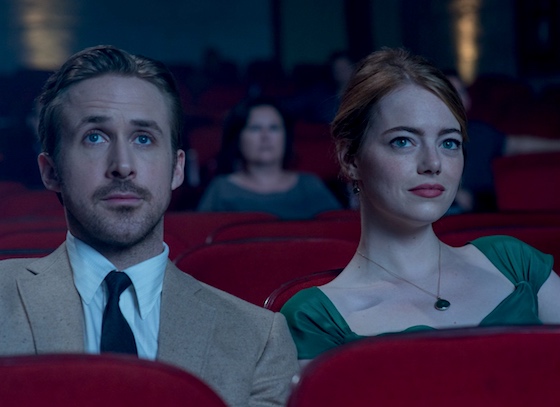
For anyone who’s even later to it than me, it’s the story of aspiring actress Mia (Emma Stone) and aspiring jazz musician Sebastian (Ryan Gosling), who encounter each other randomly, initially hate each other, but fall in love. Don’t worry, I haven’t spoilt the ending — there’s more story beyond that typical romance plotline. And much of it is told through the mediums of song and dance.

Watching the best picture...

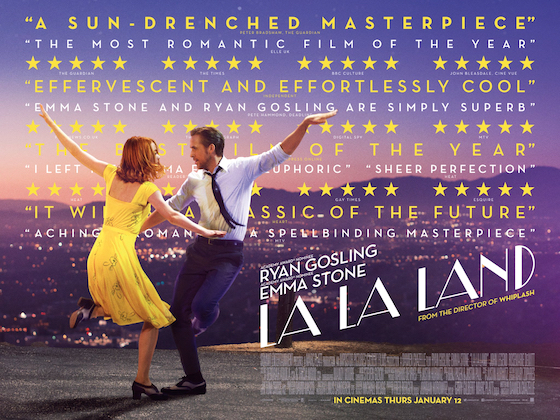
La La Land isn’t “kind of a musical”, or “I suppose you could call it a musical”, or “a film with songs, a bit like a musical” — it is a Musical. And while the leads can’t really sing, that doesn’t stop there being some beltingly good numbers in it — though, for my money, the best either (a) don’t involve the leads at all, or (b) don’t involve singing. Coincidentally, two of those are the set pieces that bookend the film. The opener is a colourful stunner, a bright and breezy singalongathon on a gridlocked freeway, made even more enjoyable by being realised in a (faked) single-take. Related thought: I feel like we need to bring back done-for-real oners — people are faking them too easily and too often nowadays. Though, saying that, another particularly joyful sequence is the dance routine that adorns the poster. Its success lies in part with Gosling and Stone’s well-performed moves, but also, like the opening number, with how well shot it is. I assumed it was done on a set with some CGI’d backgrounds and probably some invisible cuts, but no, it was achieved on location, the shoot squeezed into the real ‘magic hour’ — actually a half-hour window — and is, I believe, a genuine single take.

Now, the other bookend is (obviously) the ending. Well, I think they actually label it an epilogue, because its events occur after the main story; but an epilogue is an addendum, isn’t it?, and I reckon this final sequence is as vital as any other part of the film. It’s how the story really ends, and it’s an all-timer of a finale. That comes both from the tone it takes (no spoilers here, but see my Letterboxd comment) but also the sequence itself, a stunning marriage of visuals, soundtrack, and meaning — and I say this as someone who (for a pertinent example) disliked An American in Paris specifically because of its extended ballet bit at the end. Damien Chazelle well earned his Best Director Oscar.

Finale

Speaking of which, I must mention what went down at the Oscars. Well, not so much the snafu itself (though that made for great telly), but the ultimate result. I think there can be little doubt that Moonlight is a more significant film for our times, for all kinds of reasons, and it’s certainly a quality work of filmmaking in its own right, but La La Land is a more purely enjoyable cinematic experience, with just enough grit in the mix to stop it being too sappy. I don’t resent Moonlight its victory, but I’d’ve voted for this.

5 out of 5

The 2018 Academy Awards are handed out tonight from 1am GMT.

La La Land placed 4th on my list of The 26 Best Films I Saw For the First Time in 2018.

The Love Punch (2013)

2018 #7
Joel Hopkins | 94 mins | streaming (HD) | 2.35:1 | France & UK / English | 12 / PG-13

The Love Punch

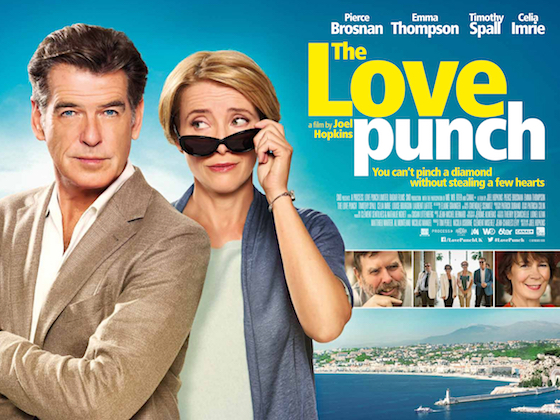
In this very daft comedy heist thriller (calling it a thriller is a bit of a stretch, but anyway), Pierce Brosnan plays Richard, a businessman whose company is bought out by mysterious others, only for them to strip its asset and sink the employees’ pensions — as well as that of Richard’s ex-wife, Kate (Emma Thompson). When the man behind the buy-out, Kruger (Laurent Lafitte), refuses to play fair, Richard and Kate team up with their neighbours, Pen (Celia Imrie) and Jerry (Timothy Spall), to pilfer the extraordinarily expensive diamond Kruger has bought his fiancée (Adèle Blanc-Sec’s Louise Bourgoin).

The Love Punch flirts with seriousness in its setup — what could be more current than unscrupulous moneymen buying a company and screwing over people’s pensions? — but quickly reveals its true nature as an implausible farce. Despite the lead cast, it seems to have been a French-driven production (even the UK-set scenes were filmed over there), so I suppose that style is only appropriate. While never scaling the heights of genuine hilarity, I don’t imagine anyone thought they were making anything other than a light romp.

So if you like any (or all) of Brosnan, Thompson, Imrie, and Spall, as well as the idea of a bit of gently-farcical gadding about in the south of France, then The Love Punch is amiable fluff to while away 90 minutes on a Sunday.

3 out of 5

T2 Trainspotting (2017)

2017 #124
Danny Boyle | 117 mins | streaming (HD) | 1.85:1 | UK / English & Bulgarian | 18 / R

T2 Trainspotting

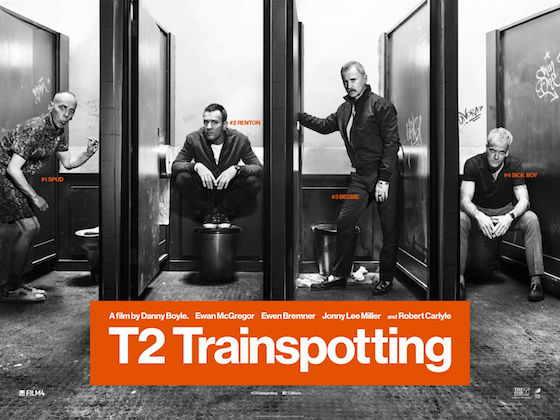
At one point during T2, a younger character accuses some of the returning characters of living in the past; that it’s all they talk about. It’s true of the characters, and it’s kinda true of the film itself too: this belated sequel to the era-defining original feels try-hard, like it wants to recapture the verve and inventiveness of its predecessor, but everyone’s now too grown up to do it properly.

Set 20 years on, it reunites the first film’s main characters… and, really, that’s the plot. Obviously other things happen, and the details are important, but that seems to be why the film exists: to get the gang back together for another couple of hours. Is that reason enough to make a movie? I guess everyone will have their own answer to that question. For me, it wasn’t reason enough to justify T2.

(Trivia aside that, frankly, I find more interesting then the film itself: reportedly director Danny Boyle wanted to call it simply T2, if James Cameron would let him — they thought they needed that permission because of Terminator 2 being commonly marketed as T2. But then it turned out that Terminator 2 was never officially called T2, so they were free to do as they pleased. But then internet searches for “T2” were found to still mainly turn up the Terminator sequel (unsurprisingly, let’s be honest), so they settled on T2 Trainspotting so people would know what it was. You have to wonder why at that point they didn’t just call it Trainspotting 2…)

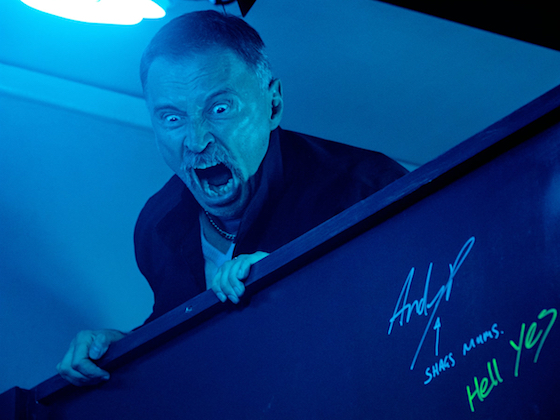
Looking as bored as I felt

Anyway, back to this T2. The meandering plot, such as it is, lacks the grit and realism of the first movie. For example, that ended with a simple betrayal — a guy stealing money while his mates were sleeping — while this ends with a knock-down drag-out fight in a construction site like something out of a low-budget thriller. Visually, too, it’s so clean and pristine. There are some properly beautiful shots, especially of the scenery outside Edinburgh, but I’m not sure that’s in-keeping with the Trainspotting aesthetic. Boyle does at points try to reheat the visual tricks of the first movie, but I didn’t feel it worked. The original’s many stylistic flourishes are now much imitated, but they were fresh back in the day and somehow that freshness still comes across when watched now. By trying to ape ape them, T2 just joins the long line of copycats.

Another key element of Trainspotting was the soundtrack. I don’t know what they were thinking with the music here — it isn’t even close to being as memorable or iconic as the original. Maybe that was the point, to not try the same trick again; but there are still plenty of jukeboxed tracks that attempt to draw attention to themselves, but… don’t.

I felt like this, too

Trainspotting had energy, dynamism, exuberance; it pulsed with life and youth. Its sequel is more sedate, more… middle-aged. Well, so are the characters, so that could work; but they don’t behave like they’re middle-aged — they’re too busy trying to recapture their youth, reliving past glories and past conflicts. The film is doing the same. You could perhaps argue that it’s form mirroring content, but the form lacks the wink at the audience to say “this is deliberate.” Like the characters, it seems unaware of the sad state it’s in. Ultimately, it feels like a slightly unfocused, thematically inconclusive, largely unnecessary postscript.

3 out of 5

Making of the Living Dead

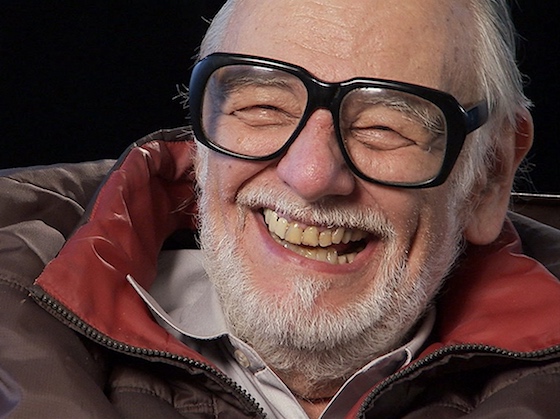
To mark the UK release of Criterion’s remastered, definitive Blu-ray edition of George A. Romero’s seminal subgenre-starting zombie classic Night of the Living Dead, I finally got round to watching two related feature-length documentaries that, er, aren’t included on that release. Never mind, eh?

Anyway, here are my thoughts on One for the Fire and Birth of the Living Dead.


One for the Fire:
The Legacy of “Night of the Living Dead”

(2008)

2018 #29
Robert L. Lucas & Chris Roe | 84 mins | Blu-ray (SD) | 16:9 | USA / English

One for the Fire Italian DVD

Made to mark the film’s 40th anniversary, this documentary interviews many of the surviving creators of Night of the Living Dead to tell the full story of the project’s genesis, making, release, and legacy.

After an opening segment that imitates Night’s own beginning and interviews the graveyard scene’s stars, One for the Fire goes for a chronological telling of events. It starts with Romero’s college days, when he met most of the gang who would eventually create Night. There are some great tales of him as a flamboyant student, swishing around in a cape or dressing up as a Mexican bandit for no particular reason — if you put it in a biopic it’d look like an OTT sitcom-ish affectation. After that they set up a production company, The Latent Image, making local TV ads. The expertise (and equipment) gained there would eventually embolden them to make a feature film, choosing the horror genre because it would be a relatively easy sell.

“We were just a bunch of guys out to make a movie,” says Romero, which kind of sums up the whole shoot — they basically winged it, making up the process of moviemaking as they went along. Any one of them could’ve done each other’s jobs because they all knew about as much as each other did; if someone knew slightly more about something, they were assigned that role. Everyone mucked in, doing what was necessary, be that zombie make-up or running to the shop for lunch. But they were canny, reaching out to local TV personalities, police, and helicopter pilots to lend a sense of scale to some sequences, or popping to Washington D.C. on a quiet Sunday to shoot a scene guerrilla-style, all to make it look like the film had some budget.

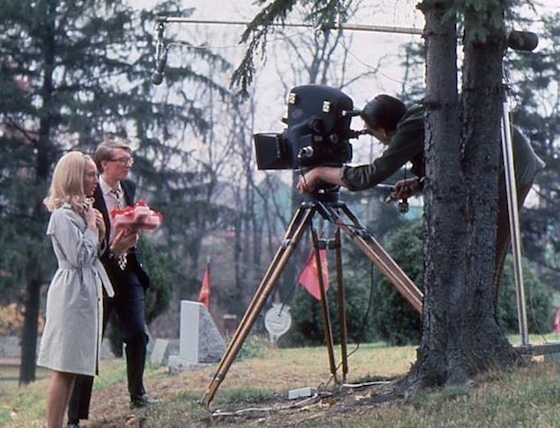
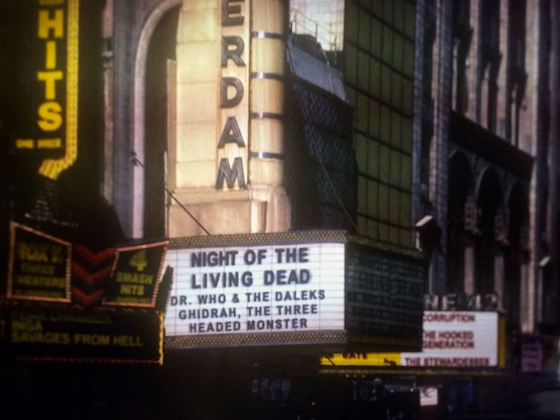
Making Night of the Living Dead

Interestingly, Romero says that Night is not only his scariest film, it’s in fact his only scary film. Not what you expect from a renowned horror director. But he says a specific part of the impetus while making Night was to try to scare the viewer, which hasn’t been his goal on any film he’s made since, despite the genre.

The documentary’s general narrative is interspersed with short asides that focus on minor-seeming individuals and the contributions they made to the film, which is a nice way of giving people credit. One who merits a longer discussion is Duane Jones, the actor who played the heroic role of Ben. He died in 1988 and they all pay quite moving tribute to him — he was clearly very well liked; admired, even. His part was written as colourless… well, so they say — I’m sure they assumed he’d be white. But they were young, hip guys, and so they happily cast Jones because he was the best actor they knew. They proudly didn’t change a single thing about the script to accommodate the race change. Romero thought they were being hip, treating him exactly the same as if he were white, but Jones disagreed, arguing they should acknowledge his race at least a bit. Speaking now, Romero thinks Jones was right — they were so busy being cool about it that they didn’t really understand that, in those days, it really was different him being black.

One for the Fire doesn’t get too far into that kind of analysis, mind. It’s really an oral history of how the film was made, by many of the people who were there doing it. How much that interests you will dictate how much this film does. Movie buffs may prefer the next documentary…

3 out of 5

Birth of the Living Dead
(2013)

2018 #30
Rob Kuhns | 76 mins | Blu-ray | 1.78:1 | USA / English | 15

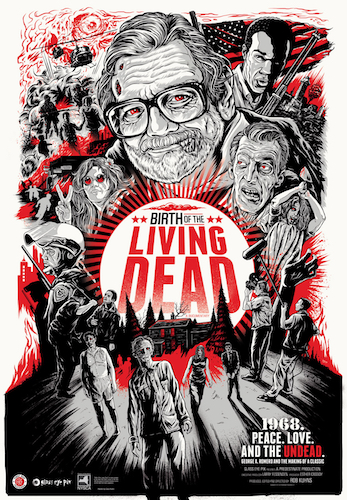
Birth of the Living Dead

As Birth of the Living Dead got underway, I was worried I’d made a mistake watching it so soon after One for the Fire: it seemed to be telling the same making-of story (though starting later: it jumps straight to the Latent Image days), but with only one interviewee who was there (at least that interviewee is Romero himself) and some slick animations to illustrate events. However, it moves very quickly on to commenting on and analysing the film’s construction, effect, and influence, and puts both the finished film itself and its production methods into wider social and historical contexts.

There are some familiar stories and anecdotes here, unsurprisingly, but there’s actually not that much overlap with One for the Fire, and Romero even tells some new behind-the-scenes stories. Much more of the film is about commentary from knowledgeable individuals — other people in the industry, journalists, movie experts, and so on. What the film lacks in not having other voices from the production, it makes up for with this outside analysis. This is all good stuff for those interested in the movie’s effect more than its production. Some of the discussion is obvious or reiterates well-known perspectives, but there’s a good variety of voices. It’s the kind of commentary that can enhance your appreciation of the film itself.

George Romero interviewed in Birth of the Living Dead

The only seemingly pointless thread follows a school teacher as he shows Night to a bunch of elementary school kids. No, that’s not a typo — they’re surely far too young for it! But they seem to delight in it. Nonetheless, it seems like a needless addition to the film, until quite late on. When the documentary gets on to discussing Night’s release, it talks about how horror had become a genre mainly marketed to kids — it was seen as colourful campy fun, with only the occasional hint of slight scariness. But then it was that audience that saw Night of the Living Dead, and they were fucking terrified (see: Roger Ebert’s contemporary article about watching it with an audience of children). I thought the documentary wouldn’t dare to revisit the modern teacher after that, but it does — and they still seem to love it. I don’t know what that says about our society now, if anything.

Aside from traumatising small children, Night of the Living Dead was initially dismissed by American critics as trash; but when it was re-released the next year, it was seen by a writer for Andy Warhol’s magazine, who called it art and said it should be playing in art houses. When it reached Europe in 1970, the French had a similar reaction. That fed back to the US: the Museum of Modern Art played it to a standing-room-only crowd. I guess that’s how we get to where we are today, with it acknowledged as a solid classic.

Now THAT's a triple bill

As I said earlier, when I decided to watch these two documentaries basically back to back I thought it would probably turn out to be a stupid idea. Fortunately, the overlap is minimal, meaning they actually compliment each other pretty well. Fans would surely benefit from seeing both. Alternatively, the fact that they offer distinctly different things means a viewer could pick the topic that particularly interests them. In that regard, I’d err towards recommending Birth of the Living Dead, for its critical appreciation and historical analysis that furnishes viewers with wider perspectives with which to appreciate one of the most significant horror movies — arguably, one of the most significant movies full stop — ever made.

4 out of 5

One for the Fire is available as a special feature on certain releases of Night of the Living Dead: the Australian and US 40th anniversary DVDs, the Japanese 40th anniversary Blu-ray, and Optimum’s UK Blu-ray (not the one released by Network). It seems it’s also available on an Italian DVD and Blu-ray, which provided the cover art above.

Birth of the Living Dead is available by itself on DVD in the US and on Blu-ray in the UK, as well as bundled with Network’s UK Blu-ray of Night. It’s also streaming free to Amazon Prime members in the US, and I’m sure available to rent and/or purchase from other digital providers.

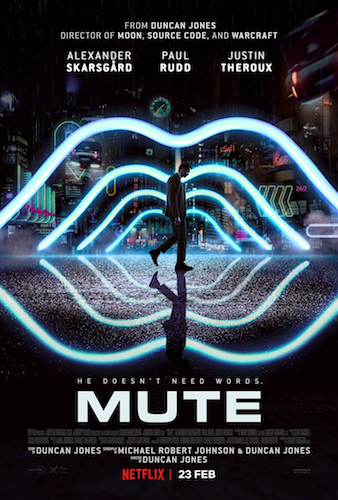
Mute (2018)

2018 #31
Duncan Jones | 126 mins | streaming (UHD) | 2.00:1 | UK & Germany / English & German | 15

Mute

For those in the know, Mute was probably one of the most anticipated movies of 2018. The new film from writer-director Duncan Jones, who made waves with his excellent debut, the low-key sci-fi mystery/drama Moon, and backed it up with the strong sci-fi thriller Source Code, this was his return to that genre after an ultimately futile aside into studio blockbuster-making with Warcraft. More than that, it’s a passion project that’s been gestating for 16 years, rejected by everyone else and now only made possible by Netflix. Greatness was expected. Unfortunately, instead it’s been met with critical derision (11% on Rotten Tomatoes) and audience apathy (5.4 out of 10 and dropping on IMDb; 2.2 out of 5 on Letterboxd and heading in the same direction). Empire’s review perhaps summed it up best: “a crushing disappointment… sadly, almost tragically, not worth the wait.”

Set in near-future Berlin, the setting is probably the best part of the film. It’s extrapolated from the present to give a very convincing world, where technology has advanced in ways that already feel just around the corner. The production design also owes a huge debt to Blade Runner, though clearly on a lower budget. That doesn’t mean it isn’t effective, just familiar. It’s not quite as nihilistic as Blade Runner, though — again, this is our world a few years hence, and there are still malls and diners and libraries and other such mundanities.

Leo's looking

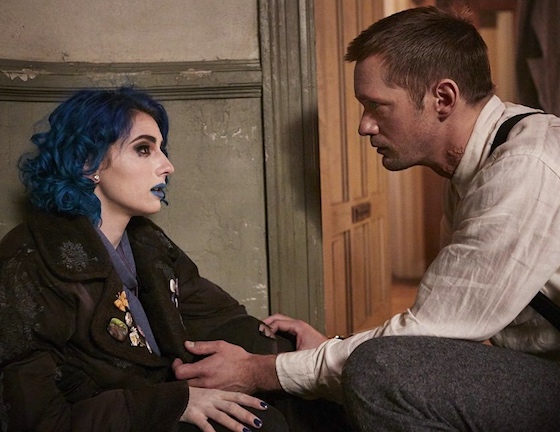
The protagonist is Leo (Alexander Skarsgård), a bartender getting by in a world not built for him: he’s Amish, meaning he avoids using most technology, and he’s mute, thanks to a childhood accident. As the story unfurls he has to engage with a bunch of tech for the first time, and when he comes up against devices that are only voice-controlled then he’s got a problem. I’m not sure if this is designed as a social commentary on how some people struggle now and it’ll be even worse in the world to come, or if it’s just a convenient way to put more obstacles in Leo’s path. I’m tempted towards the latter, but that’s okay. It seems his muteness is a barrier to some viewers, with critics describing him as a blank canvas, either unknowable or personality-free. I think that’s a bit harsh, but Leo does fall into the familiar bracket of the “strong, silent type”. He can’t express himself vocally, obviously, but rather than that leading to him letting his emotion out in other ways he seems to have repressed it. I got the impression that he was now having to deal with certain feelings, and how they’re expressed, for the very first time.

That’d be because Leo is now in love, with Naadirah (Seyneb Saleh), a blue-haired waitress at the club he works in. Naadirah clearly has secrets, both from Leo and from us, and when she goes missing Leo has to venture into the seedy underworld of future-Berlin as he tries to track her down. If the overt Blade Runner stylings hadn’t already clued you in, this is very much a noir detective movie, full to the brim with dark people and dark deeds. It gets grim indeed at times, more thematically than visually (though there are a couple of scenes of surgery, if that’s your particular bête noire), and this is where one begins to wonder if Jones has full control over his film’s tone.

Gone girl

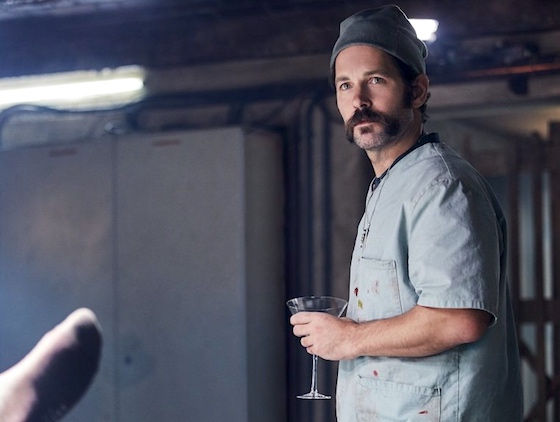
That’s not much of a problem in Leo’s storyline — I’d wager you could recut Mute to focus on him entirely and create a more straightforward future-noir tale — but rather in the concurrently-told B-plot. This side of the film focuses on Cactus Bill (Paul Rudd), an army surgeon who deserted and now plies his trade for gangsters, hoping to afford passage back to the US for himself and his daughter. Bill works alongside his best mate Duck (Justin Theroux), and much of their half of the film plays more like a hang-out movie, just spending time with the characters as they go about their business. As they mooch around sharing comical buddy banter, it’s a definite tonal counterpoint to Leo’s story. That’s not necessarily a problem unless you want a straight-up serious noir, but later Bill and Duck’s thread diverges into some heavy territory; stuff that some viewers would find distasteful no matter what, but which is made more so as their chirpy-funsters act is allowed to roll through it.

For this reason I thought Mute was more effective in its first hour-or-so than in its second. Others disagree, calling it either slow or disjointed, because the links between Leo’s and Cactus Bill’s storylines are not immediately evident. I didn’t think the pace was a problem: it’s gradually drawing you into this world, setting out the mystery and then peeling back more layers as Leo begins his hunt. It’s not as dreamily atmospheric as Blade Runner 2049 in this regard, but it’s closer to that than to an action-thriller, which makes me tempted to say pace issues are a viewer problem rather than a film one. In the first half, at least, because by the second it does seem to go on a bit. As for the disconnect between the storylines, it didn’t bother me at all. Links are actually established early on, and you know these two halves are going to come together eventually — that’s how narrative structure works.

After surgery drinks

The idea some reviews are peddling that “maybe everyone else rejected the Mute screenplay for a reason” is disingenuous. If a decent exec wanted to make this kind of movie (i.e. a mid-budget sci-fi noir) then they definitely could have seen its potential. But few studios are interested in that kind of work anymore, for reasons that barely make sense, and so the film ended up passed to Netflix. One wonders if their hands-off approach is part of the problem. People complain about studio interference, and clearly that can scupper projects, especially ones with unique voices, but execs who are good at their jobs do improve movies. Jones has said that, after Netflix bought the project, they just gave him the money and let him make whatever; and they gave him final cut too, so when the finished film came in and they weren’t sure about it, they just went ahead and released it as-was. Maybe if someone had helped him develop the project better, had helped him even out the tone, or tighten up the pacing, we’d be looking at a great movie right now.

Instead, I don’t think the Mute we’ve got is anything like as unremittingly terrible as some reviews would have you believe, but it is a tonally strange film. I’m not sure it works as a whole, but bits really do. I wouldn’t dismiss the idea of it becoming a cult classic, and maybe in a couple of years we’ll all be reevaluating it. Before its release Jones did say it would be a Marmite film — that some people would love it and others would absolutely hate it. Broad reception is undoubtedly hewing to the latter end of the spectrum; and while I’d love to be the former instead, there are too many inconsistent oddities for me to embrace it. I think it may someday be worth a revisit though, which is not something you can say about a genuinely bad film.

3 out of 5

Mute is available exclusively on Netflix now and forever.

Warcraft: The Beginning (2016)

aka Warcraft

2017 #38
Duncan Jones | 118 mins | streaming (HD) | 2.35:1 | USA, China, Canada & Japan / English | 12 / PG-13

Warcraft: The Beginning

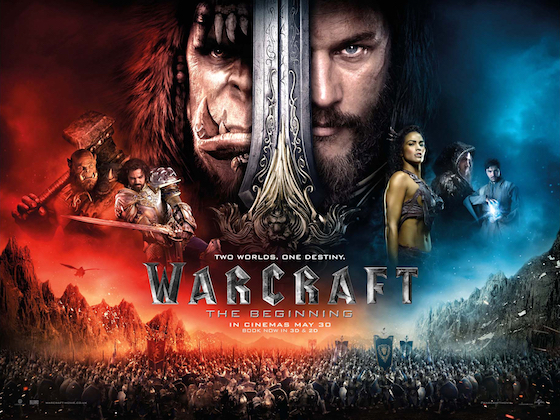
Produced by Legendary — one of the companies behind the Dark Knight trilogy, Jurassic World, Godzilla, and many other massive hits — the only thing that’s “legendary” about the Warcraft movie is how terrible it is.

Based on the long-running video game franchise, Warcraft (optimistically retitled Warcraft: The Beginning in many territories) is, based on what I’ve read, less an adaptation of the game (which has many different incarnations anyhow) and more an expansion of its universe. Rather than take the game itself and try to mush it into the shape of a movie, as most video game adaptations are forced to do, Warcraft depicts some of the game-world’s backstory, taking care to keep events canonical. I’m sure this is brilliant for fans and players, but I wonder if it’s part of why the film feels muddled and tacky to those of us who are uninitiated. Of course, at its best such efforts can make newcomers want to learn more; but at its worst it leaves you feeling confused and shut out. Warcraft is definitely a case of the latter.

It plays like a $160 million fan film. It doesn’t bother with world-building, just throwing the viewer in at the deep end. That can work, but it needs to be carefully managed. Warcraft just ploughs ahead, going deeper and deeper. It’s been made for people who know this world, its places, its people, its concepts, its rules. The film is a prequel to something that doesn’t exist — or, rather, something that doesn’t exist as a movie. And yet, for all co-writer/director Duncan Jones’ efforts to remain faithful, apparently it’s not faithful enough for some of the hardcore. It seems the movie has wound up in a place where it’s not stuck to the backstory enough to please initiated fans, but not opened itself up enough to be accessible to newcomers either.

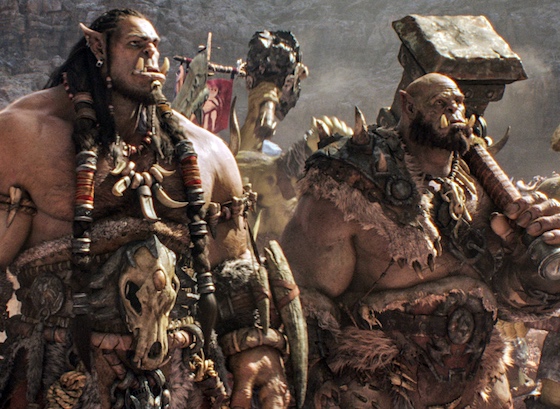
This could get orcward

Unfortunately, the problems don’t stop there. Characters’ personalities change from one scene to the next, with no sense of development or connection. Many of the performances are stilted or clumsy, with a good deal of the actors feeling miscast. Scenes exist in isolation, with little sense they should follow what was before or precede what comes after. It feels like it was heavily messed around in post — not just stuff chopped out (reportedly Jones’ director’s cut was 40 minutes longer), but things moved around within the story — but then something will happen that suggests those scenes were always meant to be where they are. Whatever the cause, it makes it even harder to follow a story that already feels like it’s shutting out newcomers.

The biggest shame is that you can see glimmers of potential — mainly in the world itself, which is clearly quite thoroughly realised (presumably thanks to having been developed over many, many years of the games’ existence). But then, the story that takes place within that world isn’t an especially original or interesting one. Or, rather, I don’t think it is. I mean, it’s hard to tell what precisely is going on half the time.

A lot of the technical merits are strong, too. Almost every shot is loaded with CGI, but the vast majority of it looks pretty incredible. It’s no wonder some bits come up short, however, because the sheer volume of different locations, creatures, and spell effects is mind-boggling. Obviously some parts are going to suffer when you bite off more than you can chew. If there’s a problem here it might be that the design work is quite “high fantasy” — it’s all exaggerated and almost cartoony, as opposed to the more realistic take of something like Peter Jackson’s Lord of the Rings. That’s not to everyone’s taste; indeed, it might be part of why such fantasy tales used to be (and, often, still are) such a niche market.

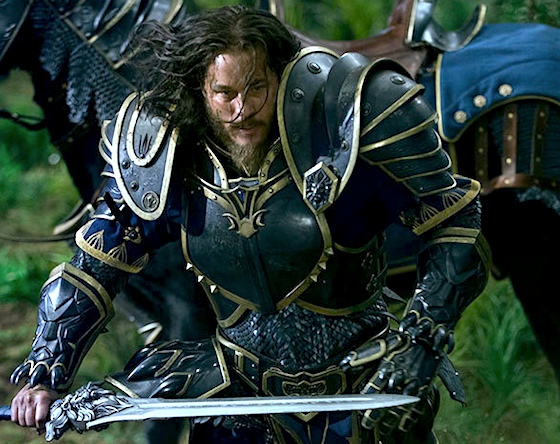
Totally realistic costumes

Talking of the market, reports say Warcraft needed to gross $450m just to break even. In the US, it took $47.4m. No, I didn’t put the decimal in the wrong place. And that’s not opening weekend, that’s in total. It was a big hit in China, but that wasn’t enough: worldwide it managed just shy of $434m (which, fact fans, makes it one of only two American movies to gross over $400m without making $100m in the US (the other was Terminator Genisys)). Jones had plans for sequels (he’s shared them on Twitter, which naturally got turned into news articles, if you’re interested), but, yeah, they’re not happening. Thank goodness the Chinese didn’t give it another few million, because this project already feels like a waste of five years of the director’s promising career. You could see Jones as currently being on a similar path to that previously trodden by the likes of M. Night Shyamalan and Neill Blomkamp: a hugely successful debut followed by increasingly poor, eventually terrible films. Hopefully his next movie, Mute (available exclusively on Netflix from today), will rectify that.

2 out of 5

Warcraft: The Beginning featured on my list of The Five Worst Films I Saw For the First Time in 2017, which can be read in full here.

The Duellists (1977)

2018 #26
Ridley Scott | 96 mins | DVD | 1.78:1 | UK / English | PG / PG

The Duellists

It’s 40 years this month since Ridley Scott’s debut feature appeared in British cinemas, which perhaps makes now the most appropriate time to have awarded him the BAFTA Fellowship (as he was this past weekend, of course).

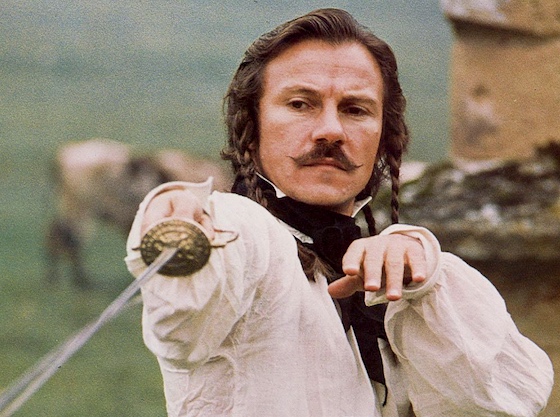
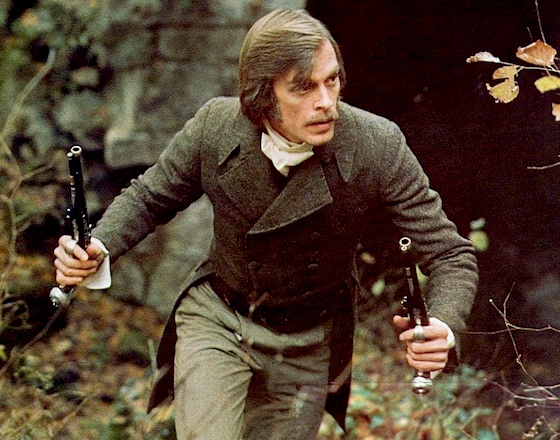
Adapted from a short story by Joseph Conrad, which was itself inspired by a true story, The Duellists stars Keith Carradine and Harvey Keitel as a pair of soldiers in Napoleon’s army who, for reasons only properly known to one of them, end up fighting a series of duels — or, really, one duel constantly reignited — over the better part of two decades. They become renowned for it (Conrad discovered the story through a newspaper article noting the death (by natural causes) of one of the real-life pair), to the chagrin of Carradine’s reluctant duellist. He dreads every potential encounter, aware of the fight’s futility and danger, but honour keeps drawing him back.

Ultimately, honour and the futility of fighting are what The Duellists is most about, if it’s about anything — if you like, you can enjoy it as merely a series of well-staged combats between two men, each stubborn in their own different way. They also each have slightly different ideas of honour, it would seem, but they’re compatible enough that it keeps drawing them back to the fight. “Acting with honour is all well and good,” the film seems to be saying, “but look where it gets them.” It doesn’t completely ruin their lives, but it does take a serious toll. A bit of common sense goes a long way, and acting with so-called honour, which might seem to be the moral course, doesn’t actually involve a great deal of common sense.

The bad duellist

Scott also intended the pointless, never-ending fight to represent a microcosm of war. Speaking to Empire magazine, Scott described Conrad’s story as “a very nice pocket edition of the Napoleonic Wars” because it “somehow encapsulated the craziness of an argument and how at the end of a 20-year period one of them forgot the reason why they were fighting. Isn’t that familiar?” Fighting for fighting’s sake; not wanting to be the one to back down… it seems it’s human nature, just as much in a conflict between two men as in between two nations. A bit of common sense would go a long way…

The other aspect of the film most worthy of comment is its photography. Reportedly Scott set out to imitate Stanley Kubrick’s Barry Lyndon, released just a couple of years earlier. It’s an appropriate inspiration: both tales are set in the same era, and Lyndon looks incredible. Scott undoubtedly succeeds in his goals — both that of copying Kubirck’s visuals and that of such copying being a good idea: much of The Duellists looks gorgeous, particularly wide scenery shots. Although the cinematography is credited to Frank Tidy, Scott says he operated the camera himself for the entire shoot, so who’s to know where exactly the credit for that achievement lies.

The good duellist

Resemblances to Barry Lyndon extend beyond just the visuals, mind. As noted, it’s set in the same era, so various visual trappings are similar, from costumes to some of the locations — if not direct copies, they certainly evoke Kubrick’s film more than once. There’s also the story itself: a tale focused on just one or two characters but spanning decades, and during a particularly tumultuous and eventful period in history. As Tim Pelan puts it (in this piece at Cinephelia & Beyond), “while Barry Lyndon advances with the forward momentum of one of Napoleon’s columns in its telling of a fool’s misfortune and slow glide towards the destruction of all he worked for and holds dear, The Duellists dashes pell-mell between the very different clashes of the antagonists.” Scott’s film feels like it thinks it is, or wants to be, an epic, just like Lyndon, even though it only lasts a little over 90 minutes.

Comparisons to such a lofty cinematic success would damn a lesser film, but The Duellists is a very fine work in its own right. Despite the similarities I’ve highlighted, it’s really a very different film: Barry Lyndon has a kind of leisurely elegance, whereas The Duellists is more economical and straightforward. It’s certainly not Scott’s greatest film (his next two immediately put paid to that), but it’s perhaps his most under-appreciated one.

4 out of 5