
Gareth Edwards | 94 mins | Blu-ray | 12 / R
Six years ago… NASA discovered the possibility of alien life within our solar system.
A space probe was launched to collect samples but broke up during re-entry over Mexico.
Soon after new life forms began to appear and half the country was quarantined as an INFECTED ZONE.
Today… The Mexican & US military still struggle to contain ‘the creatures’…
 So begins Monsters. Expecting an epic SF-action movie where soldiers kitted out with futuristic weaponry battle an alien menace? You might be disappointed. Indeed, the relatively low IMDb rating suggests people have been. Monsters isn’t an action movie. It’s barely a sci-fi movie. And that’s not a bad thing.
It is a science-fiction movie — it’s set in the near future (about 2017, it would seem) and there is an alien presence on our planet — but this is a science-fiction film that transcends the sci-fi genre. It’s got more in common with Lost in Translation or Before Sunrise than it does with Independence Day or Battle: Los Angeles. This probably explains its low rating on IMDb: I imagine most viewers are SF fans in search of an action/horror experience, something this film resolutely does not provide. It also doesn’t deal particularly with SF concepts, so I can see the more intellectual SF fan being disappointed too.
What it has instead is a real-world aesthetic and a human story. It’s certainly science-fiction, because it’s set in the future and the titular monsters are extraterrestrials, but the story is rooted in humanity: it’s about two twenty-somethings trying to get home and having a very grounded ‘adventure’, learning about each other and the world and all that. 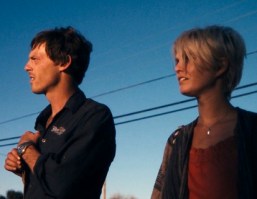 Only without being as worthy or on-the-nose as that makes it sound, I promise. As writer-director, Edwards has made a film that’s relatively Arty (for want of a better word), with lingering shots and wordless scenes. It tells the story visually quite often, letting the Infected Zone signposts or candlelit shrines to dead children or stunning scenery do the talking when dialogue isn’t necessary.
There’s a slight documentary aesthetic to the whole thing, and not only because Edwards (also acting as cinematographer) has shot it handheld — that’s everywhere these days and when it’s unnecessary it pisses me off, but here it fits. Rather, it’s like one of those films which don’t hide the fact the main story and characters are fictional, but has been shot in the real locations and has used real people for extras. Take, for instance, a sequence where Kaulder and Sam (our two twenty-somethings) are in the jungle spending the night with their Mexican escorts. The men talk about what it’s like to live in these conditions, prompted by questions from their American charges, and it plays for all the world like real people really living in this situation telling their stories; like the bit with the fascists in It Happened Here, say. Obviously it’s all fake — we’re not in 2017 and we don’t really have aliens roaming across Mexico (just in case you forgot) — but it plays as real, and that grounds the whole film.
 The CGI is virtually faultless, which is doubly impressive as the vast majority of it is on shaky handheld shots, not nice clean plates. And Edwards created it all by himself I believe. Writer, director, cinematographer, single-handed visual effects unit — it’s no wonder much of the focus on Monsters has been on the clearly considerable skill of its creator. Much of the CGI would, I imagine, pass the casual viewer by: everyone knows the aliens are CG, but the film is littered with signposts and other such set and scenery extensions. It’s the kind of thing a bigger budgeted film would simply have created physically, but, working with next-to-no money, Edwards has managed to paint flawless versions of everything from simple road signs up to border checkpoints with his computer (and even bigger things, but they’d be CG’d in a big-budget movie too, so… well, hopefully you see my point). There’s the odd thing that doesn’t sit with complete realism, but even that depends how hard you’re looking. I’d say they’re the exception rather than the rule and very easy to forgive — nothing ruins its own shot, never mind the whole film.

The next paragraph is spoilersome. Not wholly spoilersome — I’m protecting you from yourself a bit, gentle reader — but if you want to go in knowing nothing of the ending, please skip it.
The ending of Monsters is at the beginning. Normally this irritates the hell out of me, as regular readers may have noticed, but Edwards uses the trope to a slightly different effect. For starters, the line is blurred: the film starts with green night-vision footage of a military strike on a creature, before jumping into full-colour ‘the film proper’ with a scene of devastation and the dead remains of an alien —  it’s easy to think what we saw in the night-vision sequence has led to this. But it hasn’t, because the military were Americans and we’re in Mexico. I’d wager this passes some viewers by, and perhaps it’s meant to, but there’s another clue: one of the soldiers whistling the Ride of the Valkyries; and when we get to the end of the film, as a pair of humvees trundle out to retrieve our heroes (by this point stranded in an evacuation zone just inside the US border), we hear the same soldier whistling again. And here’s where the change comes: rather than reaching the bit we’ve already seen and going beyond it, Edwards cuts off before he even reaches it. To put it another way, the chronological end of events is only at the beginning. It’s quite clever, and it also obscures what happens to the characters (how I shan’t say). That’ll irritate some, especially as even when you piece it back together it’s inconclusive. I’ll leave it to others to argue whether that’s the point and whether it matters. The final shot is clever though: instead of closing on the characters’ finally kissing, it ends on them being pulled apart. Technically their separation is only temporary — they’re both going with the military after all — but, as we saw at the beginning, one of them might not survive the journey home; a more permanent pulling apart. Nice metaphorical linking, Edwards.
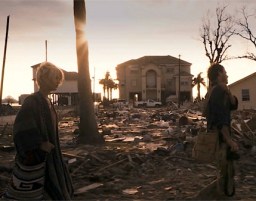 Another review I read somewhere commented that it’s a shame the title Aliens was already taken because it would suit this film down to the ground. And they’re right. Damn you, James Cameron! It has to be said, as simple and iconic as “Monsters” is, it doesn’t really describe the film. Perhaps if this was like Spielberg’s War of the Worlds, with every human a bastard out for themselves — “are the aliens the monsters or is it us? gasp!” and all that kind of fairly obvious palaver — it would fit, but Edwards’ film is a bit above that and perhaps deserves a more reflective title. It might also have led to less people being misled — it’s certainly not the kind of film I thought it was going to be when I first heard about it and saw the first trailers. Perhaps the title belonged to an earlier concept of the film, one with less heart; or perhaps there are human monsters in the film after all — the US presence, for instance, is entirely militaristic; we see even less of it than the creatures and it’s arguably more brutal and devastating, and therefore more monstrous and/or alien.
But the issue of the title and expectations are an aside, really, because taken on its own terms — as all films should be — Monsters is a triumph. The word visionary is overused in trailers these days (mainly, Zack Snyder trailers), but with filmmakers like Edwards, Duncan Jones* and Niell Blomkamp**  emerging with their low-budget, story/concept-driven genre films, not to mention Chris Nolan being allowed to do more or less what he likes in the big budget sphere, it’s easy to see why this is a very exciting time to be a lover of proper science-fiction. If they all continue to make films like this, we can look forward to an astounding future.

Monsters is out on DVD and Blu-ray next Monday in the UK. The US Blu-ray is region free, has more extras, and is barely more expensive even with international shipping. Just sayin’.
Monsters placed 6th on my list of The Ten Best Films I Saw For the First Time in 2011, which can be read in full here.
* not that I’ve seen Moon, still. ^
** or District 9. I’m a bad bad fanboy. ^
 A World War II espionage thriller about the OSS — spies, basically, and the forerunner to the CIA. Despite all the thrills this should elicit, especially when directed by Fritz Lang, I wasn’t particularly impressed.
 This is probably the benefit of being based on a non-fiction book.
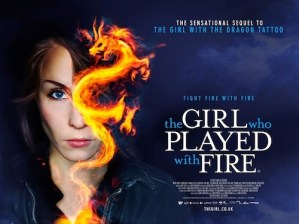 Creating any kind of sequel is hard — the endless array of failed attempts is testament to that — but I think creating a direct sequel to a successful crime thriller may be the hardest.
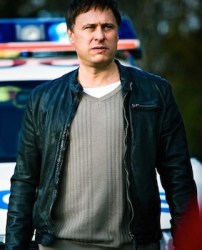 and they need a brand new case to become embroiled in. And it’s got to be as good as the last one, but it can’t be the same because we’ve had that mystery solved. You could have a different solution, of course; you could change some of the details, naturally; but police dramas on TV vary their types of murders every week for a reason. So in your new tale, the new characters have to be just as interesting as the first batch, the new mystery has to be just as intriguing too, and it really ought to be a notably different crime being investigated.
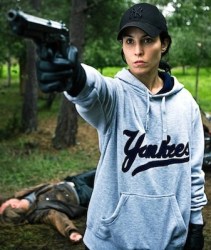 One solution to the sequel problem is to “make it personal”, and that’s exactly what we get in The Girl Who Played with Fire. A journalist and his girlfriend working for Mikael are murdered and Lisbeth is suspected of the crime. It’s somewhere around here that the coincidences begin to pile up. It makes perfect sense as a plot in itself, but in bringing Mikael and Lisbeth back together it doesn’t work — it’s not related to their previous encounter, so it’s entirely coincidental. Coincidence is a dangerous thing in fiction; it asks your audience to accept something that doesn’t fit our logic of how stories work. It happens all the time in real life of course, but in real life a flipped coin with a 50/50 chance of being heads or tails could turn up heads twenty times in a row, but a person asked to estimate twenty results of a flipped coin will never put more than two or three of one side in a row (unless they know to subvert it… look, this isn’t the point).
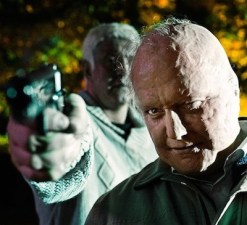 it’s never seriously looked into and, consequently, other dramas have tackled the issue with greater depth, sensitivity and insight. What Mikael and Lisbeth are actually looking into is a conspiracy of sorts around some murders. The way the trail is followed isn’t as clever as it was in Dragon Tattoo and, consequently, isn’t as interesting. The two protagonists go about their investigations independently. This is a long-held technique in novel writing — multiple strands allows the author to alternate which is followed from chapter to chapter, almost by itself providing momentum and the must-keep-reading factor as the reader has to race through the next chapter to rejoin the thread of the previous one (it’s not that simple or we’d all be churning them out… but look, I’m getting off the point again). The problem here is that Dragon Tattoo was largely at its best when the two were together, so keeping them apart is less satisfying. To top that off, they’re each finding out different things, which means as the audience we can feel a few steps ahead of the characters as we have the benefit of both sides of the case. That’s not always a bad thing, but it can be slightly disconcerting when you know the answers your hero is still searching for.
 Despite Lisbeth being the focus of much of the attention laden on these books/films/remakes, she’s a less engaging character when by herself. Here she shuffles around silently, digging up files that she and we stare at to reveal information. There are only a few moments for her (and, consequently, Noomi Rapace) to show off what endeared her to viewers before — her confrontation with a pair of arson-bent bikers, for instance.
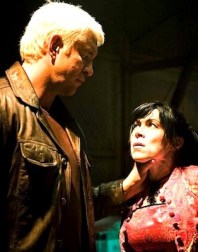 It also feels less filmic than the first film. Is it poor direction? Is it just the opened-up 1.78:1 ratio? I’ve read that all three films were shot like this, as they were intended for Swedish TV, meaning Dragon Tattoo’s Blu-ray is cropped to 2.35:1. You hardly ever see 2.35:1 on TV (
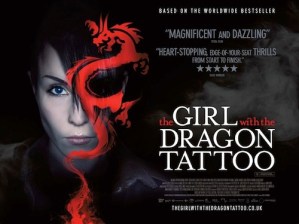 From the same production company that brought us the
 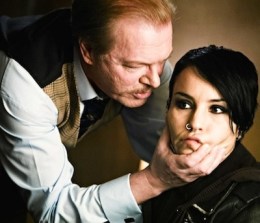 The original title translates as Men Who Hate Women, which is certainly very apt. The subject matter is grim and dark; horribly plausible, in fact. It’s unwaveringly depicted with some brutal, hard-to-watch scenes. They’re not exploitative though, as a lesser film merrily would be, and that makes them appropriate to the tale being told. Subplots about the two leads support the themes underpinning the main investigation — both about abuses of power, in different ways — justifying their apparent tangentiality, and consequently the film’s length.
 Despite the modern stylings, dark themes and attention-grabbing characters, much of the film unfolds as a procedural whodunnit like, for instance, the Wallanders, complete with piles of red herrings and last-minute twists. This is probably why the book has sold so well and the film has taken over $100 million worldwide: it tickles the same nerves as all those ever-popular TV police dramas. Indeed, this adaptation is rooted in a television miniseries (an extended version exists as two 90-minute TV episodes) but it doesn’t look like it: it’s quite beautifully shot; not showy or stylised, but there are some lovely shots of scenery in particular.
 With Dragon Tattoo featuring material that seems ideally suited to the director who gave us
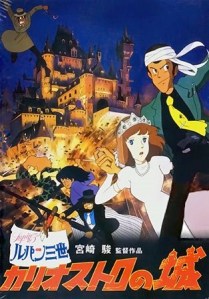 The Castle of Cagliostro, the second animated big-screen spin-off from manga-inspired anime TV series
 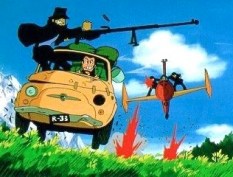 As I mentioned, this is the second spin-off film from a TV series, and at times it does feel like it: characters turn up under the impression the audience already knows who they are and what their connection is to the others. It’s not a major problem — most are introduced well enough within the context of the film that it can still be easily followed — but it’s there.
 Um, where was I? Oh yes: Indiana Jones; Roger Moore-era James Bond — it’s that kind of tone, more or less, and if you enjoy that kind of film then I don’t see why you wouldn’t enjoy this. Unless you think cartoons are for kiddies only (in which case, see the long sentence at the end of the last paragraph).
 Bolt is the 48th film in Disney’s animated canon (whatever the official name for that is these days), from their CG-only era that filled most of the ’00s. It’s a period already remembered as When Disney Lost Its Way, after the second (or is it third? I forget) ‘golden era’ of the early ’90s; the time that produced flops like
 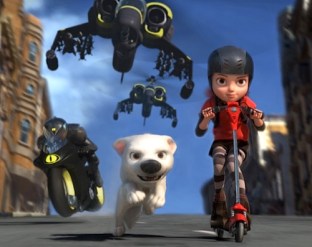 Also noteworthy are the action sequences. Far from being perfunctory attempts at liveliness, these are properly exciting, making full use of 3D CGI to create exciting and dynamic sequences. I’m not just talking about the couple we get from the TV-series-within-the-film either, but also the ‘real world’ ones as Bolt, Mittens and Rhino jump onto trains, out of moving vans, escape from a pound, etc. Of course, the TV-series-within-the-film is completely implausible — like you could film a TV show with massive action sequences in such a way that you only ever do a single take, never mind achieve all those effects on a TV budget. But then this is a film where a talking dog, cat and hamster work together to travel from New York to Hollywood entirely of their own volition — I think it’s safe to say no one’s aiming for documentary levels of realism.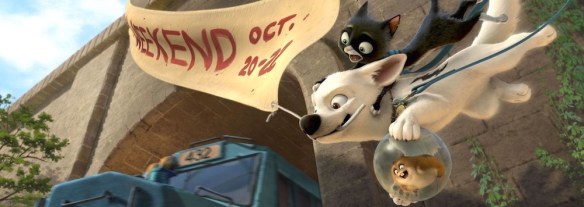
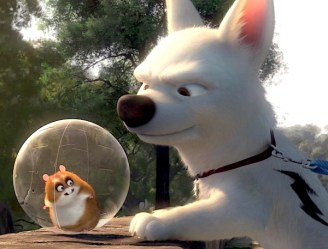 It would be easy to dismiss Bolt as part of Disney’s CG folly, especially as it stars Miley Cyrus and is immediately followed by their return to 2D animation, but I think that would be a mistake. It’s a fast-paced and fun adventure, with accurately-captured animals meaning it’s especially likely to appeal to dog lovers. Disney’s next golden era just might begin here.
 four for
  I have a good deal of affection for — and, therefore, expectation for its films. The same could be said of other favourite genres — action, thriller, etc.
 I’ve never seen films reviewed with a percentage. Theoretically, this method allows for 100 different scores — much more precise. In practice, of course, the lower ones are rarely used and the tippity-top ones are seldom (if ever) reached. Partly this is because you find your ‘average’ review score sitting less at 50% and more at 70% or higher. I believe this is because (like almost any reviewed art form) the bulk of what one encounters has been polished enough to earn a higher score — the average quality of work is of above-average quality, if you will. It also makes the system more liable to awkward questions: give one thing 95% and another 96% and you provoke “is the second definitely superior” arguments you wouldn’t get if they both just had 5 out of 5. Arguments aren’t necessarily a bad thing, of course, but it does require one to be frighteningly precise when scoring.
 but I don’t think there are many of them about. Giving something a score stamps your opinion nice and clearly: there have been a good few reviews where I’ve mainly discussed the negative points of a film I’ve primarily liked, for whatever reason, and without the score at the end readers might get the wrong impression; I may even have penned a review or two where I’ve tried to draw out the positives from something I was giving a low score to. I’d wager this is true of most reviewers — it’s always possible for your text to be misinterpreted; for a reader to see a positive (or negative) bias, however balanced or actually-the-other you thought you were being.
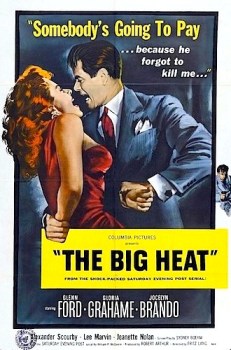 Fritz Lang is probably best remembered for the films he made in Germany; medium-defining classics like
 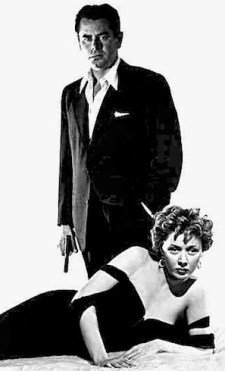 but it does manage what might be described as twists in how far it’s willing to go — mainly, who gets killed and how.
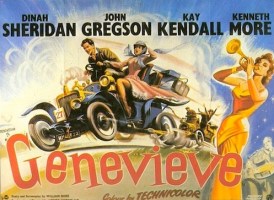 The further behind one gets on reviews, the easier it becomes to forget a film. Or not so much forget the film itself, but when one watched it. Or, to put it another way, I was a little surprised when I looked back over the 20 films I had left to review and saw Genevieve still there. At least I had a hundred or so words of notes for this one.
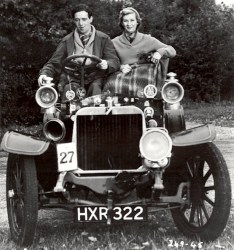 heightened by an evening of irritations and revelations, tipping the second half’s journey-back into an out-and-out race. It’s the second half that contains the more overt comedy as the rivals compete to scupper each other’s chances. That’s not to do down the more gentle style of the opening half, which has its moments. That said, depending on one’s perspective, the realistic sparring of the married couple during the opening scenes might be seen to give the film a bit of an edge of reality, making it not just the staged, (relatively) high-concept comedy it could have been.
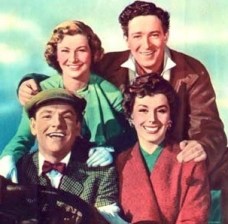 Director Henry Cornelius was vetoed on most of his first [casting] choices… and he was forced to make it at studios he didn’t want to work at. Cornelius’ displeasure was acutely felt by cast and crew as he didn’t hide how unhappy he was. He was also seemingly highly lecherous. Consequently both Dinah Sheridan and Kay Kendall carried whistles on them at all times… Olive Dodds, Rank’s head of contract artists, later testified that every leading cast member came to her at one point and said they wanted off the film.”
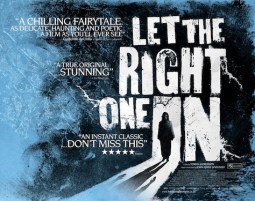 The most recent example of this speedy-remake phenomenon is Swedish vampire drama

 in fact, the director is keen to point out (in a surprisingly unpretentious fashion) that he doesn’t aim his work to slot into any particular genre — while Reeves set out to make a horror movie first and a young-love drama second. Though don’t go expecting out-and-out vampire thrills and gore from Let Me In, because it retains enough of the original’s DNA to make it still a pleasantly unusual genre entry.
 100Films.co.uk