
Bart Layton | 99 mins | Blu-ray | 2.35:1 | UK / English | 15 / R
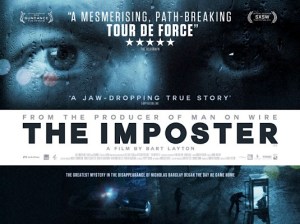 Some films benefit from knowing as little as possible going in; some are at their best when you know nothing at all. But that’s pretty much impossible — unless you go purely on someone’s “you’ll like this, trust me” recommendation about a film you’ve never even heard of, you’ll be aware of something. Normally this comes from a review or blurb, and you just have to trust that the reviewer or copywriter was kind enough to keep it spoiler-free.
BAFTA-winning drama-documentary The Imposter is a definite case of the less you know the better, and yet it’s been quite widely praised and pushed so that if you’ve heard of it you probably know what it’s about. Documentaries need that more than fiction films, because they have to fight to ‘cross over’. It’s arguable that Catfish suffered from the same problem of having to reveal too much in order to attract attention. But Catfish had the advantage that its Big Twist was at the end, meaning it went largely unspoiled — The Imposter’s is right at the start. I suppose this is because it’s a fairly well-documented news event (at appropriate junctures, the film is littered with clips from American media coverage), but also because it’s such an implausible story you have to be honest about it upfront.
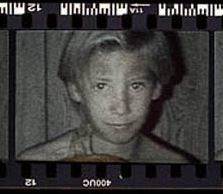 So here’s what the film lets you in on in the opening moments: in 1993, 13-year-old Nicholas Barclay went missing in Texas. In 1997, a boy claiming to be him surfaced… in Spain. He had Nicholas’ tattoos, but he had a French accent and the wrong colour eyes. And yet the first relative to see him, Nicholas’ older sister, gave a positive ID, and upon returning to America he was accepted into the family. Why did they take in such an obvious fraud?
The blurb on the DVD/Blu-ray cover will also tell you that much. And the thing is, the film is basically that story in more detail. There’s more at the end of it, of course — when the FBI get involved; when deeper questions get asked about what really happened to Nicholas — but for a good long while it’s putting flesh on the bones of a story you’ve already had sketched. While that has its plus points (just how a set of events so ridiculous you wouldn’t buy them in a fiction came to pass is naturally a fascinating tale), there’s the odd bit of thumb-twiddling while you wait for it to get to the inevitable.
For me, this was hindered rather than helped by Bart Layton’s flashy direction. This doesn’t look like your standard documentary (even the talking heads have a different visual feel), to the point where the line between archive footage/audio and dramatic recreation is blurred. It’s quite a straightforward retelling — Layton doesn’t indulge in the game of dramatising a lie only to reveal it was indeed a lie —  but, nonetheless, it makes the documentary itself feel untrustworthy, just like its participants. Is that an intended effect? Arguably the film’s main theme is lies — the lies we tell ourselves, the truths we want to believe; confirmation bias, perhaps, though that term is never mentioned — but the documentary itself never lies to us… I don’t think. It just feels like it might be.
The story comes alive in the last half hour or so. Early on it is fascinating how fake-Nicholas sets the ball rolling, but then you just wait for everyone to cotton on. As things begin to unravel, however, the story moves in a slightly different direction — in my opinion, a more engrossing one, because it’s an area of the tale that isn’t covered in the blurb! Unfortunately, it has no definite ending. This is real life, that happens, and the objectivity of not forcing a conclusion or pushing an agenda is to the documentary’s favour; but it’s nonetheless a smidgen unsatisfying.
There’s no doubting The Imposter tells a bizarre and fascinating tale, but at times I felt it was one that might be better served through a solid Sunday supplement article than a feature-length documentary film. Layton’s over-eager style also grated occasionally, particularly when it drew attention to itself over the story it was trying to tell. Perhaps he better belongs in fiction filmmaking? Perhaps that’s where he wants to go in future:  as the poster prominently tells us, this is “from the producer of Man on Wire”, a film whose director went on to helm Red Riding 1980 and IRA thriller Shadow Dancer, so there’s a pathway there.
Still, for its faults, The Imposter is a tale worth hearing — a tale so unbelievable, it can only be true.

The UK TV premiere of The Imposter is on Channel 4 tonight at 9pm.
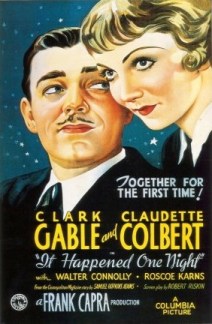 It Happened One Night was the first film to win the Oscar “grand slam” (Best Picture, Actor, Actress, Director, Screenplay), and is still one of the few to have won everything it was nominated for (alongside
 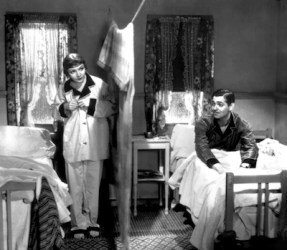 The Walls of Jericho running motif is also nicely executed, leading to perhaps the sauciest final scene not to feature a single shot of human beings that I can think of.
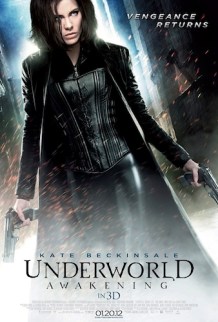 Just when you think the Underworld series is dead, it suddenly lurches back to life with a new instalment. Fitting for a series all about vampires & that, I suppose.
 By taking such a bold move with the plot, meanwhile, the story pushes the series’ mythology in new and relatively interesting ways. It’s becoming a bit dense and fan-only (unless you let it wash over you and just enjoy the punching), but at least they’re not regurgitating the same old stuff. It manages a few twists along the way too, which is always nice. The plot seems to have been half worked around Speedman’s non-involvement, leading me to wonder why — he’s not too busy, surely? Perhaps he’d just had enough? But no, apparently it was genuinely just written this way. I guess he couldn’t be bothered to turn up for some cameo shots, because the stand-in is really obvious.
 means the next one will probably turn up out of the blue with little hype, much as Awakening did last year. Plus, though this is the most expensive film to date (double the budget of the preceding one!), it’s also the most financially successful: $160.1 million worldwide, beating number two’s $111.3 million. Assuming Beckinsale still feels up for it, I imagine 2015 will bring us a continuation — and, hopefully, a conclusion.
 Also worthy of commendation: new-style ‘evolved’ Lycans; a small role for Charles Dance (always worth seeing); the evocative near-future setting; good quality action sequences; some nice steel-blue cinematography/grading. Some of it was shot at 120fps on brand-new pre-alpha never-used RED cameras — take that Peter Jackson, eh. Plus it’s only a little over 1 hour and 18 minutes long without credits. Some would bemoan such brevity, but it has its positives.
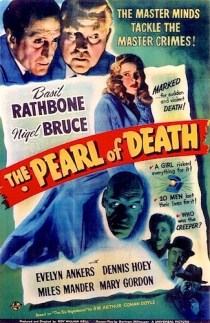 The Pearl of Death is one of the better-regarded films of the Basil Rathbone Sherlock Holmes canon, but somehow it didn’t quite click for me. That doesn’t meant there isn’t a lot to enjoy, however.
 Elsewhere, Nigel Bruce gets to indulge in a slapsticky scene that, as ever, people who dislike this interpretation of Watson would be happy to do without. Also worth noting is the female lead, British actress Evelyn Ankers: she was a regular fixture of Universal’s horror features, terrorised in no less than
 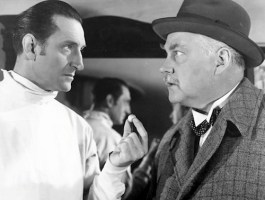 Neill somehow managed to pick one of the least dramatic. Neither of these reveal fudges are ruinous, of course, and are outweighed by the handling of sequences like Holmes setting off the museum’s alarm, the ensuing robbery, the villains stalking round a potential victim’s house, and so on. Still, I was surprised to find them so wanting.
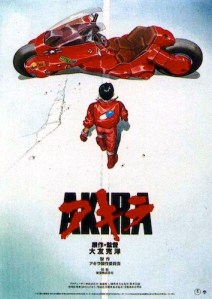 For many Westerners of a certain generation, Akira was their first (conscious) exposure to anime. Not so me: a step or two down,
 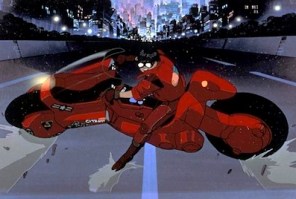 The visuals remain something to be savoured; they’re probably the film’s strongest point, in my opinion. Akira was an expensive production and it pays off on screen. It’s not just the bike chases that I appreciated either, while an extra decade of experience made the ending a bit less freakish! The other strong point is the audio. The BD’s booklet goes on about “hypersonic” sound. I’ve no idea if that worked on my system, but it sounded fantastic regardless.
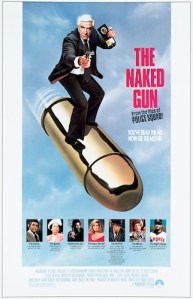 Classic spoof from the makers of
 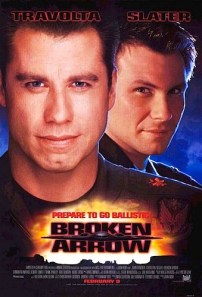 US Air Force pilot Jon Travolta crashes a plane, steals a nuke, and former friend and colleague Christian Slater must stop his dastardly plan in this ever so ’90s actioner.
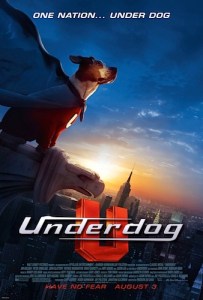 In this big screen live-action version of some old US cartoon, a dog gets superpowers and, naturally, becomes a superhero. That’s pretty much it.
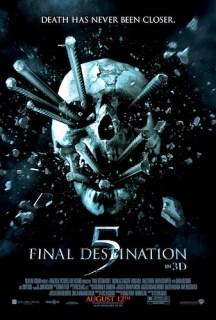 Final Destination 5 is the latest Final Destination film. Do you really need a plot description? They all have the same story.
 although on reflection it’s meaningless; a clever nod that isn’t really clever, but is neat. And perhaps means the series is finally going to rest.
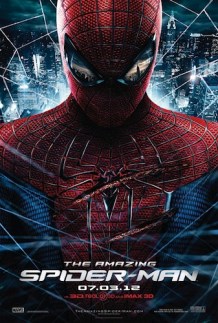 Andrew Garfield dons the webbed onesie for an unwarranted reboot of the only-one-decade-old Spider-Man film franchise, retelling his origins… but with a twist! Cos, y’know, the last version was only out about 10 minutes ago.
 some of the action sequences are alright. Mercifully, the much-trailed first-person segments are cut down to a minimum; kind of a “we made this so we ought to use it, but we’ve realised everyone was going to hate it”.
 Not that it pays off — instead it just feels like the action scenes were bunged together because, hey, some of the fans want that stuff, right?
 100Films.co.uk