2013 #72
J.J. Abrams | 132 mins | Blu-ray | 2.40:1 | USA / English & Klingon | 12 / PG-13
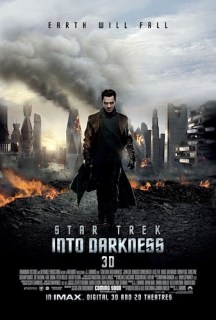 In an ethnically diverse and equal future, white American Kirk and white Vulcan-American Spock are commanded by white American Pike and white American Marcus to lead their crew to capture a Starfleet-targeting terrorist: John Harrison, a white Englishman who may be more than meets the eye…
Oh, but there are a couple of black characters. Like Uhura, who is sent to chat in their own language to one of the few other black characters… the Klingons. I don’t meant to assert the film is racist, but c’mon. This is presumably the same idea of “equal” that, in a recent survey, found men perceive a group with 17% women as being 50/50 male/female; and if 33% of the group is female, men think the women are outnumbering the men. Not really relevant to this at all, I suppose… although this future is also supposed to be gender equal, and only two of the primary crew are women… and one of them strips off to her bra for no reason…
If in that field Star Trek Into Darkness isn’t innovative, groundbreaking, or even different, then there are plenty of other aspects in which it is just as staid. For instance, like many a postmillennial sequel before it, Into Darkness is bigger and, most certainly, darker than its predecessor. Hey, at least there’s a clue in the stupid colon-less title! For goodness knows what reason, not having a colon in the title was of vital importance to the film’s writers/director/producers/tea-ladies; but surely they could’ve come up with something that made sense?!
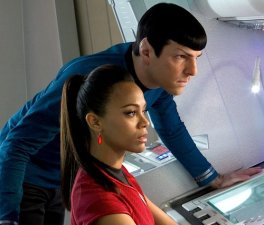 There’s still humour, mind; something which marked the first film out for a kind of geek controversy, as some felt it went too far. Because the original Star Trek TV series was dark and super-serious? An increased role for Simon Pegg’s Scotty provides most of the laughs, as everyone else is busy going Into Darkness. Unfortunately, despite the sporadic likability of several cast members, they don’t seem to have much to give. An inversion of a famous scene from a previous Trek movie ought to be tremendously moving, but doesn’t even stir.
The best performance comes from Benedict Cumberbatch as the villainous… John Harrison. Should I keep up that pretence? Paramount decided to blow it in the home video blurb, and really it’s only a twist to fans who know the character’s past. For some, therefore, the reveal of who John Harrison really is — and how he behaves from that point on — make or break the film. For me, less familiar with the original version of the character, it doesn’t really matter either way.
Anyway, Cumberbatch. Even though he’s clearly the best actor here, the script only gives him workable material some of the time. ‘Famously’ he auditioned by filming himself on a friend’s iPhone, 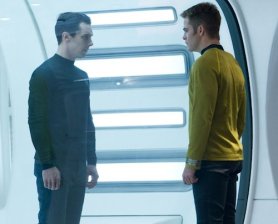 and I think the same process may have been used for some finished scenes. Which is a sarky way of saying that sometimes he phones it in. Take his first proper face-to-face with Kirk, when he’s in the Enterprise’s brig: he’s on Posh British Villain autopilot. There’s no menace, no tension; just words in our accent. It’s Cumberbatch’s Sherlock robbed of any of the charm, wit or intelligence.
It’s not the only scene to misfire, and I’m not just talking dialogue. The action sequence where Kirk and Kh— Harrison are fired from the Enterprise toward an attacking ship is somehow devoid of either tension or excitement. The sequence’s premise seems like it should offer both, so clearly that was bungled by the writing and/or directing. The same goes for the film’s climax, a punch-up on a garbage truck that both feels contrived and is distinctly low-key compared to the rest of the film — and not in good change-of-pace kind of way. At least Kh— Harrison’s first attack on Starfleet’s San Fran HQ is a pretty fine action sequence, though it gets a little videogame-boss-battle-like when Kirk fights the villain’s helicopter-like-thing.
Elsewhere, there’s a messy middle section which leaves behind an unclear structure; a lack of suitable development for some subplots (the infamous “magic blood” could have worked, but is poorly, obviously seeded… and even then feels like it comes out of nowhere later on); the score is unmemorable…
 There are good bits — in fact, I’d say that’s a pretty apt description: good bits in amongst mediocrity. There’s an arty dialogue-free bit starring Noel Clarke that’s kind of good… and kind of self consciously “look, we done told a story with no speaking!” Shot on a mix of 35mm and IMAX, the film occasionally looks very nice. I imagine some sequences were visually stunning in IMAX, though Paramount haven’t done us the courtesy of preserving the ratio shifts on Blu-ray (unless you buy some German version, apparently). I felt there was considerably less lens flare this time out too; if it was still there in hefty doses then the film was obviously doing something right because I didn’t notice it.
More so than the cinematography, it’s the production design and special effects that make the film look so good. The opening alien world, the so-called red planet (but not Mars), looks stunningly alien. The sets and/or locations used for the bowels of the Enterprise are grand and gleaming, retaining the first film’s Apple-esque future stylings. The CGI is not only flawless but at times either seamless or striking, as necessary. That said, there were no effects sequences that ‘blew my mind’. Which is fine in its own way, but less so in a film aiming for spectacle (the special features go on and on about Abrams wanting to tell a good story and every decision being driven by what the story needs, but I only half believe it).
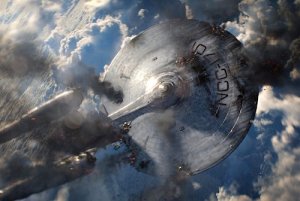 You probably remember that, just a few months after its release, a convention of Trekkies voted Into Darkness the worst Star Trek film ever made. That’s a bit much — for all its flaws, it’s still better than most of the Next Gen ones. But I don’t really see what led some to proclaim it the best blockbuster of Summer 2013. Or perhaps there’s nothing more to see, and they just let a reheated plot, adequate action sequences, and so-so technical aspects wash over them.
This review is part of the 100 Films Advent Calendar 2013. Read more here.

 Most action-thrillers are cast from the same mould; it’s the decoration which dictates whether the final product is a Steven Segal or a Jason Bourne.
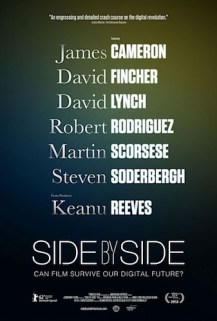 Side by Side is a documentary on camera technology. No, wait, come back! It’s much more interesting than that sounds.
 The significance of the debate is emphasised by the interviewees. Nearly every high-profile name who has at any time factored in the film vs. digital debate pops up, however briefly (renowned film advocate Christopher Nolan gets just a couple of comments; I think Peter Jackson is the only notable omission). Indeed, you can tell how significant the interviewees are just by looking at the poster — what more do you need to know? There are also others — producers, cinematographers, and so on — whose names you might not be familiar with, whose work you might not even know, but have insightful contributions to make. Presenter Keanu Reeves is not just a celebrity voiceover but also the primary (sole?) interviewer, and believe it or not he does a sterling job.
 Having heard only bad things, I expected a soul-crushing dud of
  I’ve never actually read the Narnia novels, but I did have them read to me when I was very young and, for some reason, I remember Voyage of the Dawn Treader being my favourite. Sadly, this doesn’t quite translate to the big screen.
 but as a grown adult it is painful. The level of subtlety here is so low a participant in
  Sean Bean and his ragtag band of knights investigate an unaffected village during Ye plague-adled Olden Days in this folk horror from the director of
 Well. What can I say? Curiosity got the better of me.
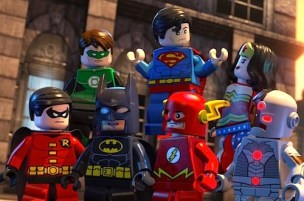 This wouldn’t matter so much if what was left was entertaining, but it’s a little weak. I’ve seen a couple of the LEGO Star Wars TV specials and found them to be quite fun, but LEGO Batman can’t reach their level. It’s not just that it’s almost four times as long as one of those, it’s that the humour it does contain doesn’t hit home in the same way. It’s often too juvenile, too “that’ll do”, too “I can tell this is supposed to be humorous but it’s just not funny”. I know I started by saying that I just watched this through curiosity, but partly it was that I’d found those Star Wars specials enjoyable enough and thought this would be more of the same with superheroes. It wants to be, but it isn’t.
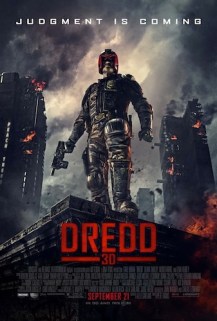 Dogged by comparisons to
 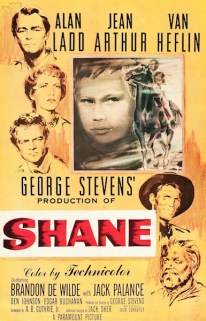 Though not part of my
  The thing with the wife, for instance, is mainly down to a few looks, or the way a line of dialogue is played. I was once taught that if a writer doesn’t put any subtext into a scene the actors will add it themselves — perhaps that’s even what happened here. I was wondering if it was going somewhere, if we were going to learn that Shane and wifey actually knew each other, or if they were going to have A Thing now (this being a ’50s American movie, “almost have a thing but then not quite” is probably nearer the mark). But, without meaning to spoil things, it doesn’t play out like that. At all.
 A mash-up of mythology and… well,
  100Films.co.uk