Lots to get through in this most decimal of months, so I’ll provide you with a nifty ten-point contents list…
October’s WDYMYHS entry (if there was one!)
Announcing this year’s #100!
All of this month’s viewing.
Analysis of the above, plus…
A note on my quite grand all-time review total.
A visual recap of this month’s archive re-posts.
A note on changes to some header images (more exciting than that sounds… maybe…)
A section I have titled “No longer loving film”…
What are your Favourite Fairy Tale Films?
And the “next time” bit. Bet no one ever clicks through to that. But this month there’s a poem. Oo-ooh.
All in all, it’s a thorough monthly round-up! So let’s get going…
What Do You Mean You Haven’t Seen…?
This one’ll be quick: there’s no WDYMYHS film this month. First time I’ve slipped this year.
Why not? I simply didn’t fancy one. The pool has narrowed to just Oldboy, Rear Window, and Requiem for a Dream, and while I’m sure they’re all great films — and all ones I’ve been keen to see for yonks — an opportunity didn’t arise where they felt right. I could’ve forced one last night, but what’s the point in forcing it?
Two months remain to make it up. And maybe actually watch Raging Bull like I said I would, too.
In happier news:
And #100 is…
I’ve tried to make previous #100s notable, when possible: in 2007 it was the (then-)greatest film of all time, Citizen Kane; in 2010 it was the most recent Best Picture winner, The Hurt Locker; and last year it was the epically epic Lawrence of Arabia. (The other two, Swing Time and The A-Team, are both films I liked, but both were viewed more of necessity than strict “what would be a good #100?” choice.)
Come this year, then, and what have I chosen for my sixth #100? After being scuppered for several days by not fancying anything too momentous, I threw the desire for meaning out the window and acquiesced to the other half’s request for me to “get that rude-sounding film off the Virgin box”, rendering 2014’s #100 as the debut feature of American Hustle’s David O. Russell, Spanking the Monkey. Here’s my drabble review.
(It’s an unfortunate coincidence that I’ve posted multiple drabble reviews in the past week. Full-length reviews do continue, and I’m sure there’ll be some soon.)
 October’s films in full
#98 Snake in the Eagle’s Shadow (1978), aka Se ying diu sau
#99 The Wolf of Wall Street (2013)
#100 Spanking the Monkey (1994)
#101 The Tourist (2010)
#102 Edge of Tomorrow (2014), aka Live. Die. Repeat.
 #103 Dead Poets Society (1989)
#104 La Belle et la Bête (1946), aka Beauty and the Beast
#104a The 10th Kingdom (2000)
#105 Ten Little Indians (1965)
#106 Furious 6 (2013), aka Fast & Furious 6
#107 Cockneys vs Zombies (2012)
#108 Last Action Hero (1993)
Analysis
Ooooooone-huuuuuundred!
Ahem, ‘scuse me. But that’s undoubtedly the headline of this month’s viewing: as you may’ve noticed, I’ve reached #100, for the sixth time out of eight attempts. That’s a 75% success rate — not bad, really. This is the first time I’ve done it in October; a month behind my two earliest years (2007 and 2010 got there in September), ahead of last year’s November finish, and considerably less stressful than the down-to-the-wire December conclusions of 2008 and 2011 (both of which reached #100 on December 31st!)
This is also the fourth time I’ve passed the 100 films total. The next milestone is last year’s 110, which I’m closing in on (I’m already further ahead than I was at the end of November last year); after that, there’s 2010’s 122 and 2007’s 129 still to overtake. 2007 was my first year and remains unbettered, so it would be just shiny to finally achieve that. I’m 22 films away from that goal, which the averages for this year suggest is possible — a little too possible, actually, as 11-films-a-month is the precise average of the year to date. (Which, you’ll note, makes October a particularly average month.) Alas, history adds no reassurance: my average tally for previous November & December viewing is 17 films — and that’s boosted by strong numbers in 2008 and 2009, too: over the past four years, my Nov./Dec. average total is just 11. Still, 2014 hasn’t played ball when it comes to past averages, so we’ll see.
And, incidentally, though I ‘only’ watched 11 new films this month, I gave over five film-viewing slots to The 10th Kingdom — if I’d watched countable films instead, I’d be at 16, which would’ve made October my second-best month of 2014. But I didn’t, so it isn’t… but without a similar miniseries re-watch project lined up for the immediate future, November and December’s numbers might benefit.
It’s all to play for! Which is exciting for me, at least.
Moving on…
Niiiiine-huuuuundred
Also this month, I passed 900 feature film reviews. Sure sounds like a lot to me.
OK, firstly, I haven’t posted 900 reviews — my backlog’s still quite extensive — but I’ve surpassed 900 films that will be reviewed. I’m somewhere in the 850s right now, I think.
Secondly, it doesn’t mean I’ve reached #900. The tally includes all the extra reviews I’ve done down the years — the repeat viewings and the not-that-different director’s cuts and so on. The official #900 (as it were) would be this year’s #148. I’m doing well, but that’s not very likely at all. Next year, then.
And with that, there’s a chance for something even bigger: if I can make it suitably far past #100 this year and next year, one of 2015’s last films will be #1000!
(For those interested in a more precise number, I need to reach #124 both years for that to happen. Alternatively, if I do make it to a record-breaking #130 this year, then 2015’s #118 would be #1000. There are dozens of other plausible permutations besides those, of course.)
This month’s archive reviews
As I discussed a couple of weeks ago, my old stomping ground of FilmJournal is no more. For more on what that means check out the link, but for the purposes of my archive re-posts: they’re now more labour-intensive to complete, and I’m lazy, so there have been fewer. The project will still be finished, but it may take a bit longer than the speed I was churning through them before.
Nonetheless, the last 31 days have seen 20 reviews re-appear:
Pretty Pictures, Mk.II
Back in August 2013, I finally added some header images to my “list of reviews” and “reviews by director” pages. This month, there’s been a little refresh and addition. “List of reviews” remains the same, but “reviews by director” has been updated to reflect my most-reviewed directors — mostly thanks to zombie movies
George A. Romero barged his way to near the top of the pile when I reviewed all six of his “of the Dead” films this time last year, while World War Z saw Marc Forster tip from the also-rans into the must-includes. There are 20 slots on that banner, and a fourteen-way tie for 18th place means I had to be selective. Quite by chance, I remained alphabetical: Hideaki Anno and James Cameron remain from the previous banner (Cameron due to significance, Anno because I’ll watch Evangelion 3.33 early next year when Manga UK are finally able to release it, which will only cement his place), while Danny Boyle is added. (Directors leaving the banner to make room are Richard Lester, George Lucas, and David Yates.)
Finally, I’ve finally added a header to the “coming soon” page. That’s a page that lists films I’ve already seen but will review in days to come — it’s looking ‘back to the future’, if you will. And that explains that.
No longer loving film
Also this month in the world of 100 Films, I finally cancelled my LOVEFiLM (or, as it’s now known, LOVEFiLM By Post) subscription. I liked it for the ability to rent pretty much anything released on disc (a far better selection than any streaming service offers, not to mention the comparative picture quality), but between all the stuff I’ve bought, the convenience of aforementioned streaming services (LOVEFiLM may have more choice overall, but only one or two discs in your possession at any one time), and recording stuff off TV too, I wasn’t getting through my rentals. Indeed, in some cases I’ve theoretically spent more on one rental than if I’d just bought a copy. Ugh. So I finally made the cancellation leap.
I’ve still got a Now TV films subscription for the time being, but as the price of that recently went up, I’m not sure for how much longer…
Favourite Fairy Tale Films
Once again I haven’t found the time to get stuck into a fully-written list of five, but having watching La Belle et la Bête and The 10th Kingdom in preparation for next weekend’s Fairy Tale Blogathon, I was thinking: what’s your favourite fairy tale movie?
Disney seem to have a near-monopoly on these, so undoubtedly some of their output would’ve made my list — Beauty and the Beast, definitely; The Little Mermaid and Aladdin are childhood favourites for me; and Cinderella is my pick of their older classics. Also from the Mouse House is Enchanted — inspired by fairy tales rather than technically adapted from them, but one of the best movies to play in that sandpit. Similarly, the Shrek series, and The 10th Kingdom too.
And if you want to get really out there, the BFI’s list of 10 great fairytale films allows in cinematic originals like My Neighbour Totoro and Pan’s Labyrinth. The former I could definitely go for in my final five, but I didn’t warm to the latter. Must re-watch that.
Feel free to share your thoughts below.
Next month on 100 Films in a Year…
Remember, remember, you films in November,
have good characters, dialogue, and plot.
I know of no movie
worth considering groovy
that does not have the lot.
(With my apologies.)

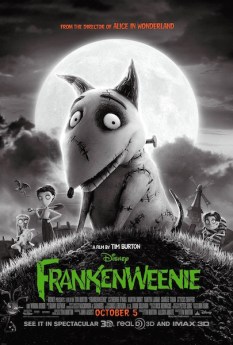 Inspired by two of Burton’s early-’80s shorts (which are most commonly found on Nightmare Before Christmas DVDs), Frankenweenie takes the black-and-white stop-motion visual style from Vincent and the storyline from the live-action Frankenweenie, and expands them out into a feature-length offering.
 Some say it doesn’t have enough of an edge. Well, maybe; but I thought it was surprisingly dark in places. Not so considering it’s a Tim Burton film based on resurrecting the dead, but for a Disney-branded animation, yes. Those edgier bits are here and there rather than consistent, but still, I’m not sure what those critics were expecting from a PG-rated Disney animation. I guess there’s an argument that Burton should have pushed it further and aimed for an adult audience, but can you imagine an American studio agreeing to finance an animation primarily targeted at anyone who’s entered their teens? Because I can’t.
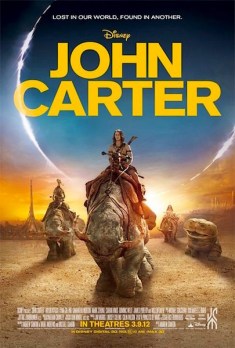 A box office flop (it made a once-astonishing $284 million worldwide, but that was off a $250 million production budget and a ginormous bungled marketing campaign), John Carter has gained something of a following among those who did enjoy it or caught it later — see
  not because it’s so famous (among Normal People, I don’t think it is), but because its influence means its imagery and concepts have already been plundered (
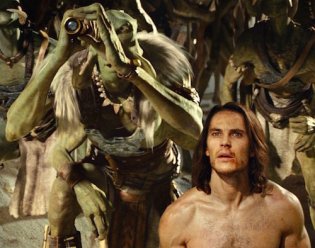 It doesn’t help that the film is structurally muddled at the offset. It begins on Mars, a voiceover detailing the conflict — an instant bombardment of names and concepts. I don’t mind things that challenge you to keep up, but it still feels a bit much. Then we jump to New York in the 1880s, where Carter is running away from someone in the streets. Then to his house, where his nephew has just turned up to be told he’s dead. You what? We just saw him in the telegraph office! And then we jump back to the 1860s, where he’s searching for gold and getting arrested (or something) by Bryan Cranston in a wig as some form of army officer. Then it gets a bit more straightforward. If being transported to Mars and meeting four-armed CG aliens who speak in subtitles is what you call “straightforward”, anyway.
 It feels a bit facile to criticise the quality of CGI these days, but that doesn’t stop John Carter from being over-ambitious in this regard. In fact, it’s not really the sometimes-half-assed green screen or occasional plastic-ness that’s the problem, but the design: those four-armed aliens are just a little too cartoony. Perhaps it’s a hangover from Stanton’s Pixar days, perhaps something just went a little awry during the process, but their design doesn’t look quite ‘real’ enough; a little like someone’s taken a real-life creature and then lightly caricatured it. I think it’s the eyes, which are perhaps a little too big and round and ‘cute’, but there’s something else indefinable there, or not there. These aliens aren’t just set dressing but proper motion-captured characters, played by the likes of Samantha Morton, Willem Dafoe, Thomas Haden Church and Polly Walker, so the lack of connection is regrettable.
 I was expecting, or perhaps hoping, to like it; to find a misunderstood old-style adventure full of entertainment value. It may be an old-style adventure, but that’s beside the point, because whatever it is, I just felt it wasn’t particularly well made: poorly constructed, weakly performed, lazily (and wrongly) assumptive of the audience’s familiarity with the material. Disappointing.
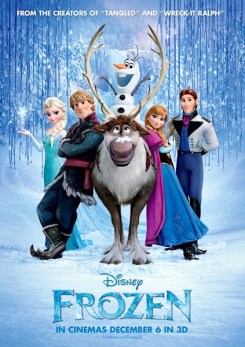 Frozen is a grim single-location thriller about three college kids trapped on a ski-lift overnight, battling hypothermia and worse over a hundred-foot drop. Or at least it was until last year, when Disney went and released its all-consuming mega-musical.
  Unlike the best Disneys, however, I think its appeal resides firmly with little girls — you don’t actually have to go very far on the internet to find people baffled by its success. Plenty of people think the music is bland, the characters underdeveloped, the moral and emotional arcs not fully thought-through, the visual style a rip-off from
 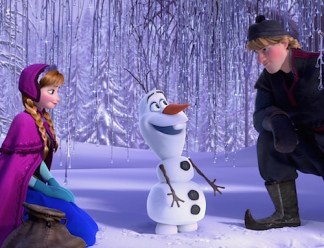 The lack of villain’s song is attributable to the fact that, for nearly the entire film, there are no nasty characters. A villain emerges right at the end to give us a climax, but for once that works — a genuine twist! It’s almost a shame it has to resort to that, but how else do you end a Hollywood movie other than a big dramatic confrontation? Plus, aforementioned snowman Olaf confounded my expectations, pulling off the quite remarkable feat of not being the most irritating CGI character since Jar Jar Binks. (I don’t know who is the most irritating CGI character since Jar Jar Binks, but Olaf is alright.)
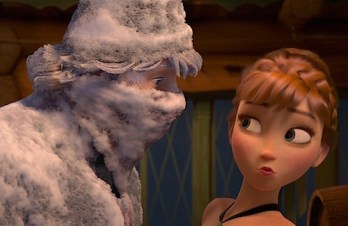 It’s not bad — it’s adequately cartoony — and actually the ice and snow effects are very, very good. It’s the character animation that I felt let it down, especially some of the more minor roles — there were points where their style and movement looked little better than you’d find in a video game cut scene.
 Frozen is by no means a bad Disney movie, and it does have a lot of favourable aspects. Whether the internet’s right and it’s not as good as Tangled, I wouldn’t care to say (I enjoyed Tangled, but at this point have largely forgotten it); conversely, the sometimes-rabid fan base are perhaps being a little over-enthusiastic. There’s nothing wrong with a kids’ movie being beloved by kids, though; and with all the dreadful things the media churns out for little girls to obsess over and centre their life values around, this is undoubtedly one of the most positive.
 Tom Hanks is Walt Disney and Emma Thompson is author P.L. Travers in “The Making of Mary Poppins: The Movie”. Disney has been desperate to turn Travers’ fictional nanny into a movie for years after he made a promise to his daughter; Travers has resisted, but now needs the money. She’s brought to LA to consult on the script, and proceeds to make life miserable for screenwriter Don DaGradi (Bradley Whitford) and songsmiths Robert and Richard Sherman (B.J. Novak and Jason Schwartzman). At the same time, we see the story of a family in Australia from the eyes of a little girl Ginty (Annie Rose Buckley), as they struggle with the whims of her father (Colin Farrell), a bank manager who’s a little too fond of the bottle. Guess what the connection is!
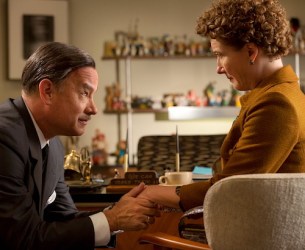 Similarly, Hanks’ part seems to be little more than a cameo at first, but he steadily appears often enough to make it a supporting role. Reportedly he has perfectly captured many of Disney’s real traits and idiosyncrasies, and who are we to doubt the word of people who knew the man? His performance is not just a shallow, simple impersonation, but there’s not that much meat to Disney’s character arc either.
 Some will find the story lacking in dirt, particularly when it comes to the portrayal of Disney. But it’s not whitewashed either, and do you really think the Disney Corporation would have allowed a movie to go ahead that depicts their founding father in a negative light? For that, I don’t think it’s as twee as it could have been — there’s definite conflict over what’s being done with Poppins, and, even with the film having turned out to be a solid-gold classic, we often find ourselves sympathising with Travers.



















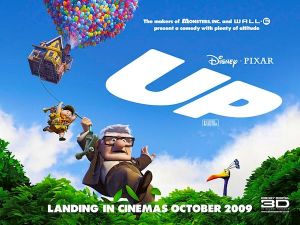 You know Up: it’s the Pixar movie where everyone talks about how amazing the first 10 minutes are, and never seems to have anything to say about the rest of the film.
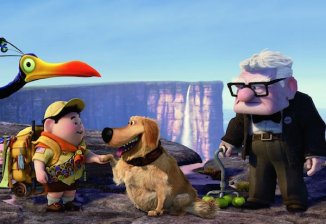 the best bits were shown off in advance. The special features reveal the extent the animators went to when researching real-world locations to influence the film’s strange, alien landscape; sadly, the fact the bizarre rock formations are actually a real thing somewhere in the world is more interesting than how they’re used in the film.
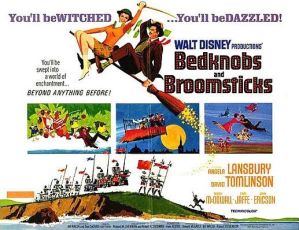 Disney attempted to replicate the success of
 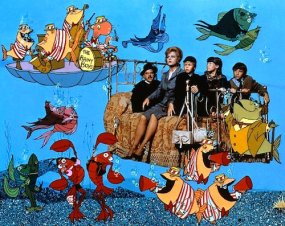 and one that’s mostly animated with our live-action heroes integrated; plus a climax where the good guys defeat one of the world’s great evils, with Poppins’ bankers here switched for the almost-as-bad Nazis. The magical special effects in that final sequence won an Oscar — and well deserved it was too. They look great, definitely holding up today, and it’s actually hard to be sure how they were all achieved.
 The director of Disney’s woeful
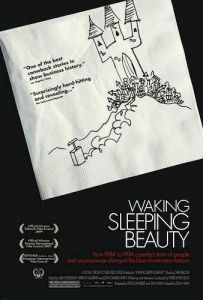 However, Waking Sleeping Beauty is told from the inside: director Don Hahn started out as an assistant director at Disney animation in the ’80s, graduating to producer by the time of Beauty and the Beast. With him he brings behind-the-scenes home movies and access to a stunning array of interviewees. Almost everyone who was anyone at Disney during that time is interviewed, either through archive footage or new audio commentary. It was a tough time, and while Hahn’s portrait is probably not quite warts-and-all, it comes damn close; for example, we get to see some of the caricatures the animators drew in disgust at their new boss, Jeffrey Katzenberg.
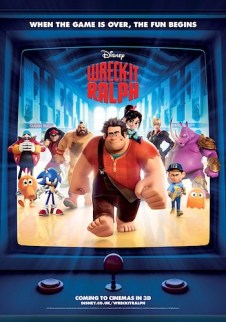 Disney’s 51st and/or 52nd animated classic (depends who you listen to) is, essentially,
  Unfortunately, despite the rarely-filmed milieu of video games, it’s all a bit predictable — like I said, it basically does with video game characters what Toy Story did with toys, both in terms of the story and its themes of acceptance. At least one wearing subplot had me involuntarily exclaim “oh get on with it!” out loud (and I was watching by myself). The pace rarely lets up, and at 101 minutes that becomes tiring. When it does give you a break, you kinda wish it would get a wriggle on, because it’s obvious where things are going and it’s wasting time getting there. Of course, most mainstream films (especially kids’ movies) are going to follow broadly the same arcs — however bad it gets we know the hero will win, etc — but the trick is to make you enjoy the journey, not long to arrive at the destination. I spent most of the third act almost drumming my fingers as I waited for it to get to the latter.
 Wreck-It Ralph isn’t actually a bad film. There’s a fair bit of inventiveness with the concept, and the makers have worked hard to establish a world with rules (though your mileage may vary on how successfully they’ve done that), but it descends into a breathless, sugar-fuelled, reheated runabout. I imagine young kids will adore its colourfulness and its energy, and won’t be bothered by the over-familiar plotting and life lessons; but, beyond nostalgia for arcade gamers, I don’t believe it has huge amounts to offer a grown-up viewer.
 100Films.co.uk