2012 #8
Jonathan English | 121 mins | Blu-ray | 16:9 | UK, USA & Germany / English | 15 / R
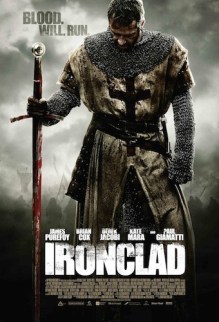 In medieval times, a group of filmmakers set out to prove you can make a Hollywood-quality historical action epic with independent funding in Britain, while in the present day a ragtag group of seven samurai— sorry, gunslingers— sorry, warriors, defend a small town— sorry, castle, from evil bandits— sorry, an evil king.
I think I got some details confused there.
Set shortly after the signing of the Magna Carta, Ironclad tells the true story of King John not being very happy and, with the backing of the Pope, setting about reclaiming England. Violently. Naturally the men who forced him into scribbling on the famous document aren’t best pleased, so while some set off to persuade the French to invade, others hole up in Rochester castle, vital to John’s efforts as it controls trade routes to the rest of the country or something.
Firstly, I say “true story” — I have no idea how much fact has gone into this. Some, at least. Was John really supported by a Viking-ish army? Dunno. Were the Knights Templar really dead set against him? Dunno. Was Rochester really defended by a dozen men? Dunno. But this isn’t a history lecture, it’s a piece of entertainment — aiming for the same ballpark as Gladiator, Braveheart, Kingdom of Heaven, and so on, albeit less grand; and there’s a sort of connection to Ridley Scott’s Robin Hood too, which I seem to remember included the signing of the Magna Carta.
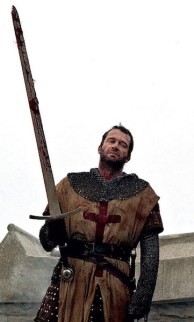 Anyway, it seems to me its use of facts are probably strong enough to support it as an entertainment. So some of the story structure may be reminiscent of Seven Samurai/The Magnificent Seven, but it’s not the first to use that and it won’t be the last (and I’ve never seen either anyway. Bad me). And so the special effects-driven climax may occur on the wrong tower of the castle’s keep — I think we can live with that level of deception.
As to the point of “why not just go round the castle?”, I presume the answer is more or less, “well… he didn’t…” Somewhat thankfully, the commander of the Danish forces puts this very question to the King, whose answer is some muttered speech about how his family built it and… I dunno. I’m not clear why they can’t just use the massive camp next to the tiny castle as their appropriate base of operations, other than the film wouldn’t be half as exciting.
And exciting it of course is. There are stretches some may find dull — there’s little new to be done with the whole Recruiting The Team bit, and once John gets the castle under siege and everyone’s twiddling thumbs and eating horses some viewers will be doing one of the two as well — but there are regular bursts of sword-swinging violence that achieve the film’s primary aims. The fights are generally well staged, even if many resort to the modern vogue for close-up quick-cut handheld shakiness, and they’re certainly gory.
 I’ve seen some complain about the level of graphic detail in this regard, but this is medieval times, they didn’t just bump each other about a bit; and you don’t think a giant axe swung down on someone’s shoulder with all a man’s weight is going to just leave a scratch, do you? Director Jonathan English doesn’t linger on detail as if this were a horror movie. There’s cleaved bodies, severed limbs, squirts of blood and more, and it all feels gruesomely realistic, but individually each moment passes quickly.
This is as appropriate a moment as any to mention that the film should be in the ratio 2.40:1, but the UK Blu-ray (and presumably DVD) was for some unknown reason mastered in a screen-filling 16:9 — I thought some of the shots looked tight! On the bright side it means English isn’t incompetent; on the dark side it means whoever mastered the UK Blu-ray is. (I’ve seen grabs from the US BD and that’s in the right ratio. Completely different special features too — a director’s commentary may well trump the half-hour of EPK interview snippets we get, for those that care.) I found this to be most blatant in dialogue scenes, where characters are barely squeezed into the extreme edges of the screen, with even the occasional moment of pan & scan required to get everyone who’s speaking on screen. I think it must also hamper the impact of the occasional epic shot — and there are a few — which is a shame because I think that feeling is really part of English’s aim here. 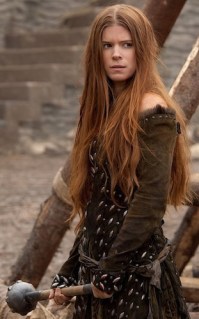 I imagine it also makes some of those fight scenes even more disorientating, which is a pity. Nothing will help the sometimes-too-obvious use of digital video though, which looks as nasty as ever.
The battling cast — led by James Purefoy and supported by the likes of Mackenzie Crook, Jason Flemyng and Jamie Foreman — all seem to have a whale of a time with their swords and axes and general fisticuffs. Their roles don’t offer too much depth, but only Flemyng (who I never rate) struggles. They’re supported by some talented thesps in the shape of Brian Cox, Derek Jacobi and Charles Dance, quality actors who maybe don’t always have the greatest taste for quality roles (Dance was recently in that direct-to-DVD Tesco-funded Jackie Collins adaptation, for instance) but always offer gravitas. There’s also Kate Mara, who does a fine British accent as an unnecessary love interest for Purefoy’s warrior monk type.
The real star, though, is Paul Giamatti as King John. Petulant, entitled and fundamentally weak, he rants and raves and chews any piece of scenery he can get his teeth into (not literally, but at times I swear he came close). It’s a well-pitched performance — he doesn’t go too far with it, making the King ridiculous and laughable without dragging the whole film down around him. That makes for a good villain.
Despite some occasional cheapness in the cinematography, Ironclad largely achieves its goal of creating a Hollywood-esque historical action movie on British soil (it was shot in Wales). Yes some of the CGI is obvious, and some stuff that looks like CGI was apparently model work, but these are all forgivable, especially when you remember this was made for just $25 million. 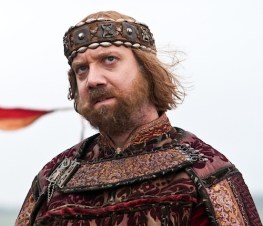 The unfamiliar true story also gives it the added edge of not knowing who lives or dies, or whether our heroes even succeed. If the ultimate end feels guessable, I think it’s only in retrospect. Of course, that doesn’t mean any of it’s historically accurate anyway.
And so what? It’s an action movie. And on all points that matter, it scores well.
Ironclad began on Sky Movies Premiere last night and continues daily throughout the week. I have no idea which aspect ratio it’s in.
It placed 10th on my list of The Ten Best Films I Saw For the First Time in 2012, which can be read in full here.

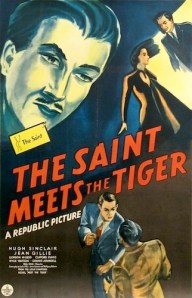 Produced in 1941 but not released until 1943, owing to Saint creator Leslie Charteris’ dispute with RKO over their new Falcon series (which is fairly unashamedly a rip-off of the successful Saint films), The Saint Meets the Tiger is a belated adaptation of Charteris’ first Saint tale, but was to be the series’ final film. Fortunately, it’s quite a good one.
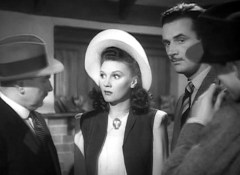 It still lacks the wit and light touch that make the Sanders films so entertaining, with only vague attempts at humour that generally raise little more than a smile. Sinclair doesn’t seem quite as wooden this time out, but he’s a straight-cut hero-type, not the kind of charmer this series really wants. In fact, one moment when he bursts into laughter, only to suddenly cut it short, is actually quite creepy. Perhaps he was trying to emulate Sanders more — the film does feel lighter than Vacation — but he still comes up short.
 The Saint’s gone on vacation indeed — with
  Apparently the villains are Nazis, though there’s absolutely nothing to suggest that here (again, that’s something I’ve since read online). The Saint knows both the villain and a Mysterious Woman of old, but it’s never explained how or why or what their relationships are. It’s like a set of stock adventure-story elements assembled without any understanding of how or why they should connect, which makes for an unsatisfying and unenthralling experience.
 The rest of the cast don’t offer much compensation. Arthur Macrae as the Saint’s cowardly friend Monty is no replacement for the parade of ex-cons he formerly hired as manservants, while Sally Gray of
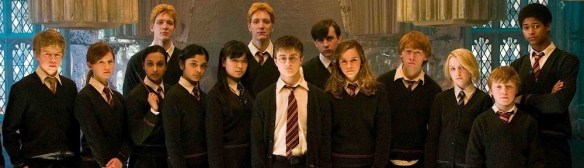
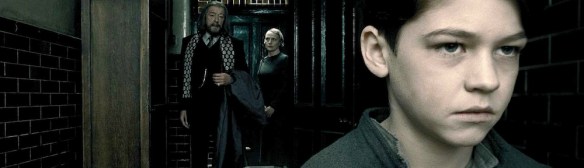
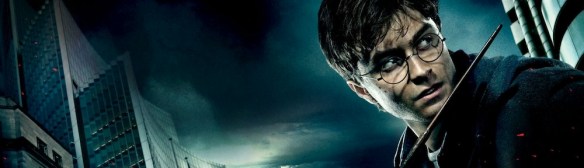
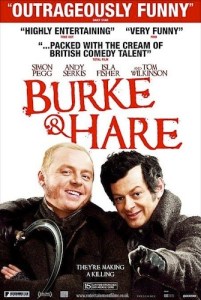
 As seems to be the case fairly often these days (I feel like I’m noting it in more and more reviews, anyway) there’s a host of famous cameos and recognisable faces. This time I won’t ruin it by listing them, but there’s a regular stream to look out for.
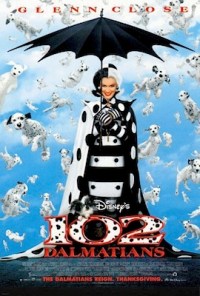 I imagine the live-action re-working of
 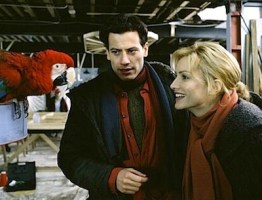 And aside from a race around the streets, ‘Paris’ is mostly a studio set anyway. Obviously they couldn’t keep Cruella in Nice Mode for the entire running time, but there’s call for a bit more originality in what happens after she goes bad.
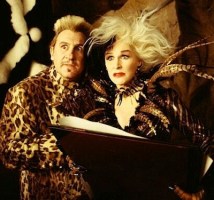 Plus there’s an awful lot of cute dogs. Always a bright side. And it’s a great answer for “name an Oscar-nominated film” trivia questions (it garnered one for, appropriately, costume design).
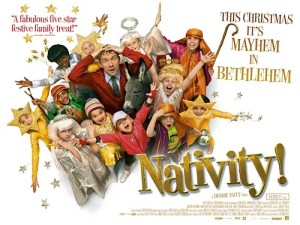 Yes, this is exactly the kind of review I should be posting in April. But hey, it’s Easter! That’s about Jesus too, right? (It’ll have to do, I’m not hanging on ’til next Christmas.)
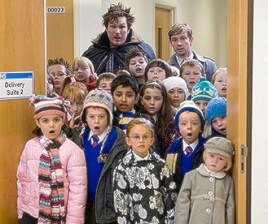 No one promised grim social realism — it’s a Christmas family film, with some moral messages and a sort of romance and sweet kids and a cute dog. And regular readers know how much I love a cute dog.
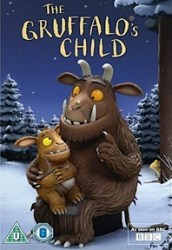 Shown on BBC One over Christmas, this animated adaptation of Julia Donaldson and Axel Scheffler’s The Gruffalo’s Child is the sequel to the Oscar-nominated adaptation of Julia Donaldson and Axel Scheffler’s The Gruffalo (of course). For my money, it’s every bit as good as the first film.
 Apparently MySpace had some hand in the creation of this movie. Remember MySpace? It’s what there was before Facebook. It was always rubbish, it just took a lot of people a long time to realise that. Anyway, some reviews seem to dwell on its involvement in the production of this movie —
  Most of the cast is drawn from the pool marked “British character actors” — you may or may not know the names, but you’ll probably know most of the faces. The lead is Eddie Marsan (Lestrade in
 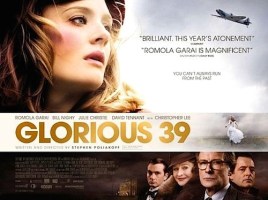 “This year’s
  I, however, thought it was rather good. I can see what turned some people off though. It’s a thriller, but it moves leisurely, especially early on. It’s also quite elliptical at times, not so much requiring you to pay attention as put the pieces together yourself. Plus it lacks a grand finale in which the hero triumphs, or at least loses in dramatic style — it’s quieter than that. Yet I liked the ending, finding it triumphant in a whole other way. But I won’t go spoiling that here.
 What’s better in a thriller than not actually knowing what will come? There should be twists in this genre — genuine twists when possible, not a stock array of “small character played by famous actor turns out to be vitally important” or ” good guy is actually bad guy” or what have you — and Glorious 39, with its balanced uncertainty, pulls some of those off.
 100Films.co.uk