Jeff Wadlow | 103 mins | Blu-ray | 2.40:1 | UK & USA / English | 15 / R
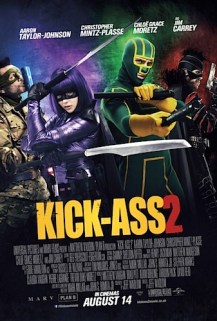 When the first Kick-Ass was released back in 2010, one of the main stories was that it had flopped at the box office. That was poppycock: it opened at #1 in the US, and because it was made for just $30m it more than broke even in the US alone, eventually earning a total of $96m worldwide. It was an even bigger hit on DVD and Blu-ray, with an uncommonly large percentage of home entertainment sales being on BD, helping it earn even more cash.
Come the release of Kick-Ass 2 in September 2013 and the first film was suddenly referred to as a renowned box office hit. I guess the media have very short memories. And it made a good stick to beat the sequel with, when it opened at #5 in the US with just $13m. What a flop! Except it only cost $28m, has gone on to make just over that in the US, and has climbed to a total of $59.6m worldwide. Not close to as big as the first film, but even before the inevitably-successful DVD & Blu-ray numbers that’s a strong performance.
Will we see a third film? That certainly looks plausible. Should we? Well…
Written and directed by Jeff Wadlow, based on two comic book miniseries (Hit-Girl and Kick-Ass 2) by Mark Millar and John Romita Jr., the movie of Kick-Ass 2 rejoins the characters a couple of years on. A wave of Kick-Ass-inspired costumed heroes now patrol the streets, though Kick-Ass himself, Dave Lizewski (Aaron Taylor-Johnson), has more or less retired. Mindy Macready (Chloë Grace Moretz) still fights crime as Hit-Girl,  hiding that fact from her disapproving guardian (Morris Chestnut). Meanwhile, Chris D’Amico (Christopher Mintz-Plasse) wants revenge on Kick-Ass for murdering his father, but is being kept out of the way by his mother and the remains of his father’s mob organisation… until she dies in a freak accident, when Chris dubs himself “the Motherfucker” and sets about forming a gang of supervillains…
If that sounds like a convoluted setup, that’s kind of how it plays on screen too — and it’s only the start of it. This is a somewhat muddled second instalment, taking time to re-introduce us to various characters and follow all their stories. Whereas the first film introduced elements gradually as they came into contact with the central narrative of a schoolboy-turned-superhero, Kick-Ass 2 picks up each character when they’ve more or less gone their separate ways, then sets about bringing them together again. So rather than one straightforward thread that others naturally emerge alongside, here Wadlow must juggle three disparate tales from the start, before he eventually ties them together.
It feels a little meandering, then, as Kick-Ass joins up with a superhero team trying to do good, the Motherfucker gradually assembles his own team of villains, and Mindy tries to fit in as a regular high school girl. You can see the germs of good ideas here, but how well they function is debatable. Whereas the first film riffed on archetypal characters and plots from regular superhero movies, as such providing an entertaining deconstruction of the genre,  the sequel doesn’t feel as focussed. The themes are somewhat familiar — superheroes leading to supervillains, as seen in Christopher Nolan’s Batman trilogy, or the assembly of superhero teams, as seen in The Avengers — but it seems these are coincidental similarities, not conscious points of reference, comparison, juxtaposition, or examination.
Wadlow is an inadequate replacement for the first film’s director/co-writer Matthew Vaughn. In fairness he’s working to an even tighter budget (in the deleted scenes, he reveals a whole 30-second action beat in the Hit Girl/Mother Russia fight was cut purely because they couldn’t afford a small patch of green screen replacement in one shot), but that’s not the real problem. There just aren’t as many gags, the action sequences aren’t as viscerally satisfying, the story meanders a bit in the middle rather than barrelling through like the first. In part this is the widely-identified fact that Moretz is now a teenager behaving like a teenager rather than the shocking/amusing pre-teen swearing like a sailor of the first movie, but it’s a more endemic problem than that. Whether it stems from Millar’s original comic or Wadlow’s treatment of it, I don’t know, but on the whole it feels less inventive, less vital, and consequently less exciting (though there are some good sequences) and less funny (though there are some proper laughs).
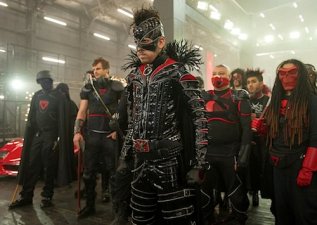 Wadlow does make welcome changes to Millar’s notoriously nihilistic comic, however: instead of gang-raping Kick-Ass’ girlfriend, the Motherfucker can’t get it up (I guess because Kick-Ass isn’t dating his mother (ho ho!)); instead of murdering Colonel Stars & Stripes’ dog, he remarks that “I’m not that evil!”; and so on. The film version still has its points of offensiveness and some outré ideas, certainly, but the needlessly-harsh edge has been taken off, especially when it comes to punishing characters who are innocent. With the exception of Kick-Ass’ dad, but then that’s a superhero staple… just one that’s more violently executed here than normal.
The quality cast keep the film watchable at all times, and the tight budget doesn’t always stand in the way — some of the green screen work may be shockingly cheap, as seen in the van sequence ever since the trailer, but the action choreography of such sequences is still good — meaning that Kick-Ass 2 remains entertaining for fans of the first outing. But it isn’t as strong a production all round, and doesn’t exceed the original in any regard — indeed, any emotional investment in the characters (and there is some) is carried over from the first film’s groundwork — meaning that those fans may be entertained, but will also be a bit disappointed.
 So is Kick-Ass 3 a good idea? Kick-Ass 2 does provide a kind of conclusion to the story… but it also leaves it wide open for more, not to mention that Millar & Romita’s third comic book miniseries (currently running) is supposed to be the definitive final act for the characters. It would be a shame not to see that completed on screen, but perhaps with more care in how it’s executed.

This review is part of the 100 Films Advent Calendar 2013. Read more here.
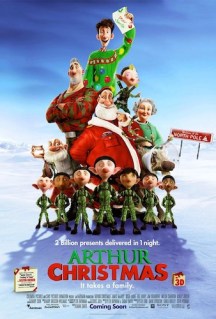 Aardman’s second CG feature attracts a starry cast (not just the leads — check out who’s credited as “Lead Elf”!) to the story of how Santa really delivers all those presents in one night: a giant spaceship-like craft and thousands of SAS-esque elves. But when one child is missed, Santa’s clumsy son Arthur resolves to fix it.
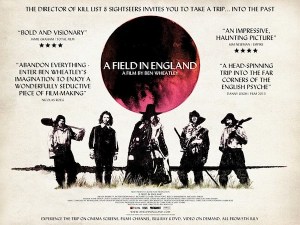 Much was written about A Field in England at the time of its release, so if you frequent the right places online or in the press you can’t’ve missed it. Nonetheless, there’s a good chance you’ll have heard of it more for its release format(s) than for anything in the film itself: the fourth feature in just five years from new British critical darling Ben Wheatley, it was released to cinemas, DVD, Blu-ray, download, video-on-demand, and shown on free TV all on the same day, a first for British cinema. Any casual viewers who checked it out for that reason were in for a shock, because this certainly isn’t an easily-digested mainstream experience.
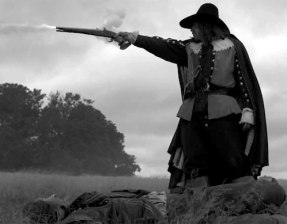 That very subtlety leads some viewers to write this kind of movie off — and fair enough, because if you’re searching for any kind of mass acceptance you don’t do it with a black-and-white film about a few blokes in period dress running around a field doing weird, inexplicable things. Though you might top it off with a shoot-out that is arguably one of the year’s best action sequences, something Wheatley and co do do. And without making it feel tonally out of place, either. Impressive. In keeping but even more memorable is the moment you’ve surely heard about — “when he comes out of the tent with that look on his face”. I wasn’t able to watch the film until something like 24 hours after its Big Premiere, by which time I’d already heard everyone talk about that, and yet it was still uncomfortably uncanny. Kudos, Reece Shearsmith, you’re an odd’un.
 In terms of the new funding models and simultaneous multi-format release and all that… well, it depends what their goals were. If it was to make interesting, alternative, minority-interest films… fantastic, they’ve done it — and got a remarkable amount of interest in the process. If it was meant to be a way of turning a profit, or of reaching a bigger audience… well, it succeeded this time — but how many of those viewers are going to come back? A Field in England is definitely the kind of film that appeals to some people, but it is defiantly not “mainstream cinema”. No bad thing, and something that should be encouraged, supported and funded in some way; but however you do it, it’s not going to continuously bring in big bucks.
 If you were looking for the archetype of an epic movie, Lawrence of Arabia would be a strong contender. It has a wide scope in just about every regard, from the desert locations that stretch as far as the eye can see, to the thousands of extras that fill them, to the glorious 70mm camerawork that captures it all, to the sweeping story that also contains a more personal throughline, to the 3½-hour running time.
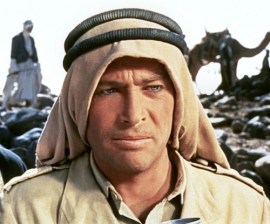 As such, the film hangs on the performance of O’Toole. We’re told Lawrence is an enigmatic figure and his depiction arguably supports that — we never fully get inside his head; we’re always observing him. And yet that’s no bad thing, because even as Lawrence’s confidence waxes and wains, as his allegiances shift and alter, we can feel what he wants to achieve, why he thinks he can. He attempts the impossible and succeeds, which is why he later attempts a bigger impossibility, and must leave the pieces to the more level-headed men, who didn’t have his genius but can therefore play the political game better than he.
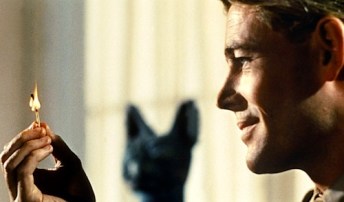 A similar legacy is left by those behind the scenes. Maurice Jarre’s score is the reference point for many a period desert epic — indeed, his music is so synonymous with such settings that it has arguably transcended its source to simply be what music for those locations and times is. It graces a film edited with class by Anne V. Coates, where scenes are allowed to play in luxuriantly long takes at times, while at others smash edits throw us from one location to another. This is undoubtedly supported by F.A. Young’s cinematography, where the wide frame can encompass so much action that there’s no need to cut amongst close-ups; and which can show the world in such majesty that you want it to hold for long, lingering takes. Even viewed on the small screen, the 70mm photography shines, especially on Blu-ray.
 As with any great film, Lawrence of Arabia is at least the sum of its parts. Replace any of the artists I’ve mentioned, or surely many more, and it would not be the film it is. In fact, when working on such a scale, this is more than a film — it’s an experience. And if that sounds pretentious, well, tough. If you haven’t experienced it yet, try not to leave it as long as I did.
 Most action-thrillers are cast from the same mould; it’s the decoration which dictates whether the final product is a Steven Segal or a Jason Bourne.
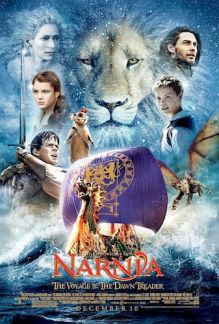 I’ve never actually read the Narnia novels, but I did have them read to me when I was very young and, for some reason, I remember Voyage of the Dawn Treader being my favourite. Sadly, this doesn’t quite translate to the big screen.
 but as a grown adult it is painful. The level of subtlety here is so low a participant in
  Sean Bean and his ragtag band of knights investigate an unaffected village during Ye plague-adled Olden Days in this folk horror from the director of
 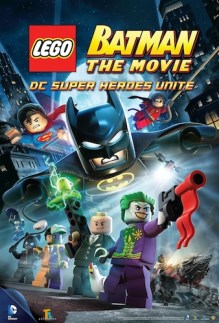 Well. What can I say? Curiosity got the better of me.
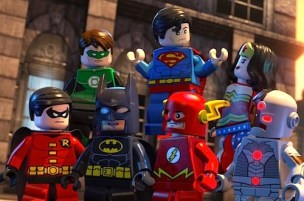 This wouldn’t matter so much if what was left was entertaining, but it’s a little weak. I’ve seen a couple of the LEGO Star Wars TV specials and found them to be quite fun, but LEGO Batman can’t reach their level. It’s not just that it’s almost four times as long as one of those, it’s that the humour it does contain doesn’t hit home in the same way. It’s often too juvenile, too “that’ll do”, too “I can tell this is supposed to be humorous but it’s just not funny”. I know I started by saying that I just watched this through curiosity, but partly it was that I’d found those Star Wars specials enjoyable enough and thought this would be more of the same with superheroes. It wants to be, but it isn’t.
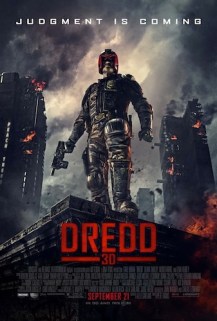 Dogged by comparisons to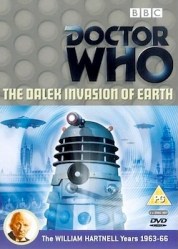
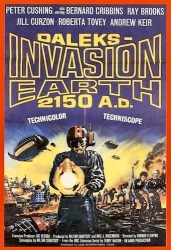
 In a week’s time, on the 23rd of November 2013, Doctor Who will celebrate its golden anniversary — 50 years to the day since the premiere broadcast of its first episode,
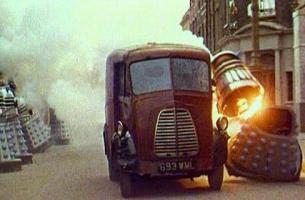
 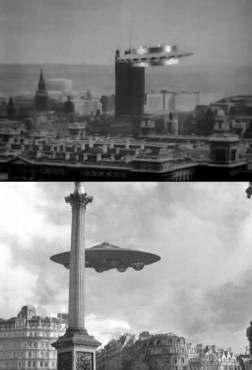 There are some fantastic sets, bolstered by peerless location filming of a deserted London (simply achieved by shooting very early in the morning), and the usual array of quality performances from the series’ regulars and guest cast. It’s only let down by the special effects. The Daleks are as great as ever, and a weird monster that turns up for a few minutes is passable (if you’re being kind), but shots of the Dalek saucer flying over London look like a pair of foil pie cases on some string in front of a photo. Even by the standards of the era it’s bad. The DVD release includes the option to watch the story with new (in 2003) CG effects in place of these sequences, and for once I’d actually recommend that.
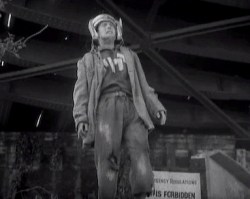 A man stumbles towards the steps, he screams in agony, battling with the strange machinery on his head. And then he hurls himself into the river, where he floats face down — dead. Beginning a kids’ programme with suicide? You wouldn’t do that today! We later learn that he’s a Roboman, controlled by the Daleks, essentially dead already… but it’s a bit late by then. Later, we meet unscrupulous country folk: a black marketeer who won’t give over food to the enslaved mine workers without payment, and won’t escort Ian out of the camp without payment either; and two women, employed by the Daleks to mend the workers’ clothes, who betray Barbara to get more food. There are heroes here, certainly — men and women who fight the Daleks, and some who give their lives for the cause — but not everyone’s doing the honourable thing.
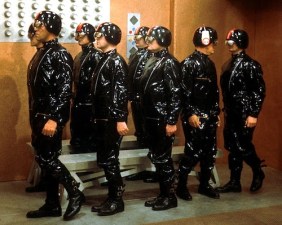 So that’s nice for them. There’s also some significant additions of humour, like when Tom is pretending to be a Roboman to stow away on the Dalek saucer and ends up in a mime act as he attempts to mimic a group of the real thing while they have lunch. Bless Bernard Cribbins. There aren’t too many of these almost-farcical bits, but the few there are lighten the general tone.
 no burgeoning romance for Susan, here a small girl rather than TV’s young woman. Both stories split our leads into three groups following the assault on the Dalek saucer, but while the film retains the outline of these subplots, it rearranges which characters take which route. It’s a slightly bizarre turn of events, to be honest, and doesn’t always pay off: whereas the TV series manages to plausibly pace the various characters’ journeys from London to Bedfordshire, in the film the Doctor and his chum walk there in the same time it takes the Dalek saucer to fly it. Either that saucer’s underpowered or they’re impressive hikers.
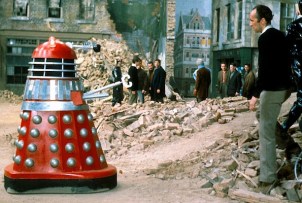
 (Incidentally, perhaps the most striking thing about the serial’s location sequences are that they don’t include the iconic shot of the Daleks rolling across Westminster Bridge. That bit is in there, but it was filmed from an entirely different angle; I guess the famous image was just a unit photograph.)
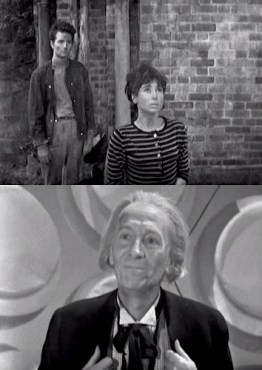 but the TV serial has a real advantage in this department. The original companion, this was Susan’s final story — the first companion departure in the series’ history. It handles it marvellously: rather than the final-minutes cut-and-run so many companions suffer, Susan’s growing sense of departure is built throughout the story… and then it’s the Doctor who realises it’s time for her to go, not her, and he leaves her behind. The speech he gives is one of the finest in the series’ history, beautifully and poignantly delivered by William Hartnell, and with a nicely under-played reaction from Carole Ann Ford. Doctor Who has had countless companion exits now, but this one still takes some beating.
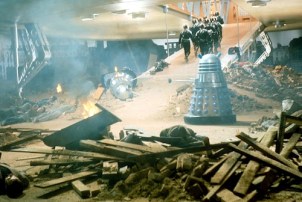 Most Doctor Who fans won’t lament that (especially as The Chase isn’t the most well-loved of Dalek adventures either), but, even though the TV series remains the superior product, I think the Dalek movies have their own merits and charm. I’m not suggesting we should be finding a way to write them into Doctor Who canon, but as an alternative to the norm, they’re a good bit of fun.