2011 #72
Zack Snyder | 128 mins | Blu-ray | 2.40:1 | USA / English | 12 / R
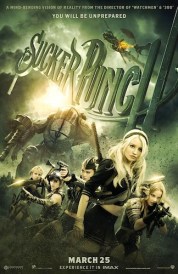 Zack Snyder’s fifth venture in the director’s chair is his first not to be based on someone else’s pre-existing material; or, to put it another way, the first wholly original story from the director of 300 and Watchmen. On the strength of its critical and box office reception, he may be relegated from the chance of doing such original work in future (his next effort, as I’m sure you know, will be a reboot of Superman).
I read a good summary of the critical reaction to Sucker Punch somewhere: that critics (and viewers) split into two types, one who thinks it’s a shallow story-free brain-dead over-indulged video game of a movie, the other who think it has hidden depths and themes worthy of exploration. And both sides are likely to call the other stupid, one for not being bright enough to spot the subtext(s), the other for bothering to read stuff that isn’t there. I side with the group that thinks there’s something more to the film, which, as the minority, I guess makes this review a defence.
I’m going to start by discussing the difference between the theatrical cut and this Extended Cut, because for once I think it makes a notable difference. Indeed, why this isn’t called the Director’s Cut is unclear: Snyder reportedly had to submit the film to the MPAA five times before they were satisfied to give it a PG-13; the R-rated Extended Cut restores all that, so surely it’s the Director’s Preferred Version rather than Version With Extra Stuff Bunged In? Some of it is significant in terms of clarifying the film’s story, themes and real-world/dream-world juxtapositions. 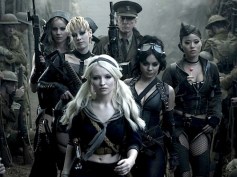 If you hated the film in its theatrically released form they’d likely struggle to change your mind, but for those seeking extra clarity they may help.
From what I’ve read, there are lots of changes here and there, but it strikes me there are four major omissions or additions:
- An extended Orc fight in the fantasy/dragon world. Fine.
- The dance number to Love is a Drug. I’d wondered why it got replayed over the end credits! Presumably it was cut because it was a bit too much like a musical, which is an understandable (people don’t like musicals allegedly) but disappointing decision. It adds to the film though, not just in terms of being Something Different, but also showing us what the club/brothel is like during working hours. It’s a great sequence.
- A climactic scene with Jon Hamm’s High Roller and Babydoll. I can only imagine how baffling it was for cinema audiences to see the Mad Men star turn up for one half-arsed scene (namely the scene which now follows the High Roller one, which had to be gutted to make sense in the theatrical version). It’s a tense, uncomfortable, challenging scene that adds a lot to chew over — especially in context of:
- The smallest cut in length, but perhaps the most significant: when the Priest first brings Babydoll to the club, it’s discussed that she’s there to sell her virginity to the High Roller. Cut (like everything else) to get a PG-13 and because of the connection to that High Roller scene, it might sound like a minor omission, but restoring it clarifies both character motivation and some of the film’s themes, while juxtaposing the real world and dream world with, respectively, lobotomy and loss of virginity.
This is where the film is better than some would give it credit for: it’s not just a muddled excuse for some action sequences, it’s a dream-logic battle by a girl poised to lose her mind… or, maybe, already has. While her stepfather is taking Babydoll to the asylum for nefarious purposes, there’s little doubt in my mind that she’s already suffering serious mental health problems — 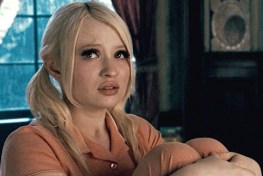 PTSD, quite probably, seeing as she accidentally murdered the little sister she was trying to protect after almost being raped by the evil stepfather her dead mother has left them to. If you know anything of the crazy, fractured dreams/hallucinations someone with a damaged mind can have, and apply that to this film, it begins to make more sense as a story.
(Major spoilers in the next two paragraphs.) That doesn’t mean it isn’t a problematic depiction of this. Is the ending really saying a lobotomy is a great solution to mental health problems? It allows Babydoll to escape her guilt and remorse for killing her sister, but that’s hardly empowering — giving in to it is, thematically, tantamount to suicide. This is supposedly offset by the escape of total-innocent Sweetpea, which wouldn’t have happened without Babydoll, but that seems scant consolation. And Babydoll’s stepfather escapes unpunished, apparently! Oh dear.
That it was Sweetpea’s story all along is also an interesting conceit. Snyder does contribute to this — Abbie Cornish gives the opening voiceover, we first see Sweetpea in a stage-set like the one Babydoll was on at the film’s open, and when we enter the (first) dream world it’s Sweetpea rather than Babydoll who emerges from the rotating transition shot. But is that enough? Because we’re undoubtedly in Babydoll’s head throughout the film, the only exceptions being the real-world bookends in which we only follow her. (We do see the result of Sweetpea’s escape, but the visual style makes it clear it’s Babydoll’s imagining of what happened.) 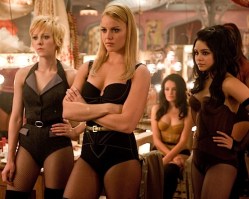 Maybe this is Snyder’s ultimate aim: it’s someone’s story told from the perspective of a (particularly interesting) supporting character. A little like the end of Super, actually.
This isn’t the end of Sucker Punch’s thematic implications though. Some say it’s a deeply misogynistic film dressed up as a female empowerment movie — look at the hyper-sexy outfits, the ultra-action, the fact it’s set in a brothel… Others probably argue it’s about female empowerment despite all that, but one of the more convincing arguments I’ve read says it’s about female oppression: these characters think they’re independent and fending for/defending themselves, but everywhere they turn there’s a man in control. Even in the dreams-within-a-dream where the action sequences take place, the girls are given orders by a male commander and they follow them unquestioningly. I suppose it’s all down to your personal perspective whether you see this as evidence of misogyny or of a deeper, more thoughtful approach. Let’s be kind and see the latter, I think — it makes the film more interesting, more thought-provoking, and therefore more enjoyable. And enjoyable is good — if you’re setting out to hate a film for the sake of hating it then… oh, then just sod off.*
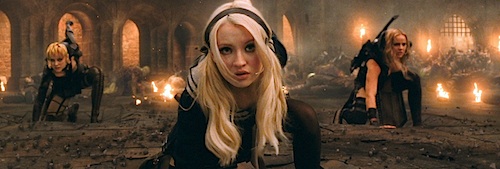
A far wiser man than I once theorised that any work of art, once completed and released, belongs to the viewing public rather than the artist.** (This is a lesson I feel someone needs to put to George Lucas.) Part of what this means is, if one reads something into the work — a thematic discourse, a moral message, whatever — then it is there, whether the author intended it or not. And if the author intended a certain message and you get the opposite, well, that’s right too (heck, even if you subscribe to the notion the work still belongs to the artist and only their intentions are valid, clearly they mucked up their delivery if you got the opposite). So, in other words, it doesn’t matter whether Snyder wrote and directed his film to ponder or convey certain points or ideas, or whether he just set out to create something that was “effin’ cool maaan, with, like, action and hot chicks and stuff, dude” — what I (and other critics) have read into it is still valid. So there.
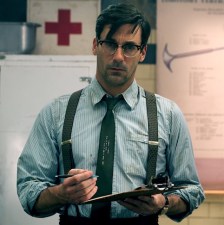 Like the rest of the film, the soundtrack is divisive. Some think it contains weak re-workings of excellent classic tracks, others that it contains interesting and appropriate re-workings of excellent classic tracks. I must again side with the latter. For instance, there’s a Queen/rap mash-up that I actually quite liked, and this is from someone who thinks the Wyclef Jean bastardisation of Another One Bites the Dust on Greatest Hits III is an offensive waste of disc space. The standout is probably the opening sequence, five minutes of dialogue-free brilliance with near-perfect visual storytelling (albeit aided by familiar imagery of abuse), set to a haunting rendition of Sweet Dreams (darkly, thematically apt for the entire film) sung by star Emily Browning herself.
Really, Sucker Punch is a musical. No, most of it isn’t sung, but every action sequence is accompanied by a cover song specially designed to fit with it, many (or all) of which in some way comment on or add to what’s happening. Not a traditional musical by any means, obviously, but the way it’s constructed around these musical/action interludes belies the truth.
Said action sequences are all inventive, but they began to feel a bit samey to me. There’s just too many, and though they should feel drastically different thanks to the variety of settings, Snyder’s style links them too well: they’re all shot in the same brown/sepia hue and our heroes all use current-day weapons and vehicles, 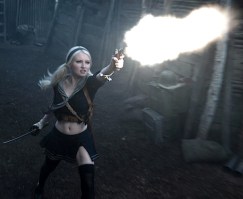 blurring what should be a clear difference between World War I with steam-powered Germans, an Orc-riddled fantasy castle, and a robot-guarded train on a distant planet. They sound incredibly distinct on paper, but on screen it’s confusing whether they’re meant to be the same world or not. The last of these, a single-shot running gun battle along a train, should be a balletic triumph, but by this point the action’s beginning to wear. I love an action film, and especially a creatively-rendered sequence, and Sucker Punch does have a ton of originality, but there’s perhaps too much of an onslaught. Maybe it’s less battering on later viewings — another reason they cut back on it in the theatrical version, perhaps.
All of the dream levels (we go at least two deep) invite comparisons to Inception, though they’re radically different films. I’m sure there’s an argument to be made along the lines of Inception being a product of a very organised, methodical mind — all steel city blocks and precise Escher paintings made real — while Sucker Punch comes from a crazed creative place — a random grab-bag of ideas and concepts. For all those who complained that Inception’s real-world-influenced dreamscape lacked the creativity and madness of real dreams, Sucker Punch should be a marvellous experience.
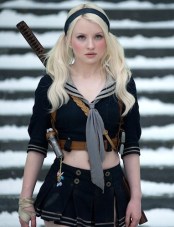 Part of me wonders if, had I seen Sucker Punch in cinemas, would I feel the same way I do now? Would those big omissions have obscured the thematic depth I believe is there? To put it another way, how much do the changes really add? You or I will never know for certain. But I do think Sucker Punch has been underrated. It’s not the masterpiece I hoped it might turn out to be when I first began to notice the themes I think Snyder was (consciously or not) tapping in to, but I do think it’s a lot better and more interesting than most gave it credit for.
* This is not the same as disliking a film that merits disliking. But that’s a whole other discussion. ^
** The man in question where I encountered this theory was Russell T Davies, writing in his and Benjamin Cook’s book Doctor Who: The Writer’s Tale. A completely unrelated article that I just happened to stumble across later reminded me that credit for the concept “that once a work of art exists, it no longer matters what the author intended” more properly goes to Roland Barthes. ^

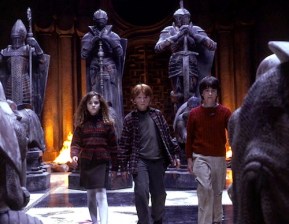
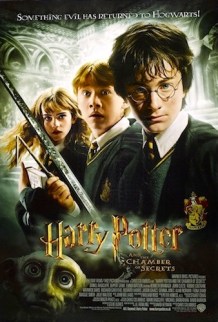 This extended cut takes the already-lengthy second instalment in the Harry Potter franchise and pushes it to nearly three hours (though if you lop off the extensive end credits it’s more like two-and-three-quarters). As with the extended version of the first film, it was originally created for the US TV premiere, then later released on the Ultimate Edition sets, and simply integrates the DVD’s deleted scenes back into the film.
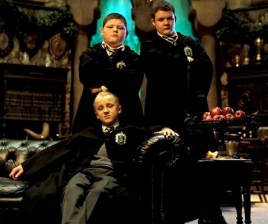 The longest extension comes near the start, when Harry misspeaks while using Floo powder and ends up in the nasty part of Diagon Alley. In the theatrical version he just walks out of the creepy shop, but here he has to hide as Malfoys Senior and Junior enter to sell some items. Though it has the advantage of showing us how Lucius treats his son when out of sight of more respectable wizards, and possibly seeds something for later films (what is the one item Malfoy isn’t prepared to sell?), it dilutes the introduction of Jason Isaacs’ villain, which in the theatrical version came slightly later in the bookshop, where he bumps into Harry, Hermione and the Weasleys as they’re leaving Lockhart’s signing. It’s a more effective, more dramatic introduction to someone who will become a major character as the series progresses.
 There are, arguably, three notable additions to the cast this time out. The first is Lucius Malfoy who, as discussed, will come into his own later. Then there’s Gilderoy Lockhart, a preening wizard celebrity played with relish by Kenneth Branagh. He’s often very amusing and there’s not enough of him. And then there’s Dobby. Apparently Dobby is a beloved character; apparently kids really like him. I’ve always found him intensely irritating, and was surprised how much Rowling made me warm to him in Deathly Hallows. I thought that might make him more palatable at the start… but it doesn’t. He’s wonderfully realised, though — despite the age of the film, much of the CGI holds up really well.
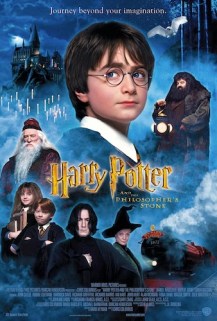 Originally created for the film’s US TV premiere in May 2004, then later released on the film’s Ultimate Edition in 2009 (and not making it to the UK in HD until the Wizard’s Collection last September), this Extended Version of the first Harry Potter film adds six-and-a-half minutes of new bits and bobs to the already lengthy adaptation.
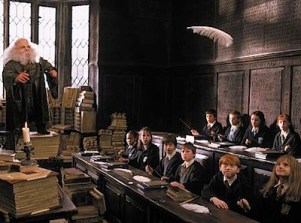 (See all of that with pictures
  that wasn’t common practice back at the turn of the millennium (unless your name was Ridley Scott), so the filmmakers can’t be blamed for not doing it. As it stands, I think they mostly struck a fair balance between fidelity and the fact it’s an adaptation. Similarly, Columbus’ direction is rarely exemplary, but it’s competent with some memorable moments.
 Seen by some as a
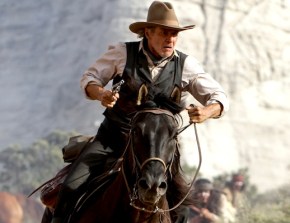
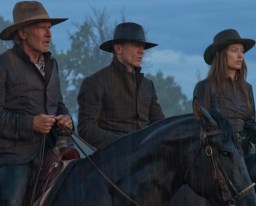
 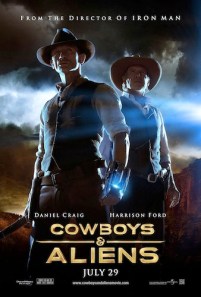 We all know the saying “too many cooks spoil the broth”, and it can’t help pop into one’s mind during the 85 seconds of company logos that kick off this genre mashup. Here the “cooks” are Paramount (serving non-US distribution only), Dreamworks, Universal and Imagine Entertainment — I can’t remember the last time I saw a Hollywood blockbuster begin with so many individual logo animations. It’s unsurprising that no one wanted to take a solo punt on a Western-with-a-twist after the failure of
 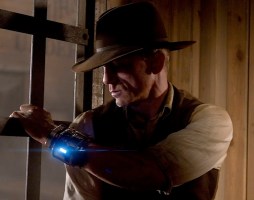 Thing is, what the film gives us doesn’t quite sit right, even if you’re expecting it to be non-pulpy. It’s still an action-adventure summer blockbuster, but with pretensions at times to be a Western drama. I think that’s the fundamental problem with the entire film, and probably why it feels slow, especially in the middle. A lot of that is character scenes, despite which the characters feel underdeveloped and under explored. One wonders if these particular writers, versed in the art of the blockbuster, don’t really know what they’re doing. Sometimes you can see what they were going for, for instance in how they set things up and pay them off (like the alien with a grudge against Craig), but somehow it doesn’t come off.
 Also note that this climax lasts a full 25 minutes. It may not sound a lot for the big finish — it’s the whole third act after all — but it felt it (especially as the build-up begins 40 minutes out), with constantly shifting goal posts and Favreau’s attempts at making a skirmish feel like an epic battle. Other parts are just straight wasted opportunities, like the extended sequence in an upturned riverboat. For one thing, no effort is made to explain its presence. For another, it’s all so darkly shot that you can’t get a real sense of it. Could have made for some impressive sets — heck, maybe they were impressive sets — but it’s not well utilised. Makes it harder to work out just what’s going on at times too. Thank goodness it wasn’t in 3D!
 I could go on. For example, Craig loses the love of his life to the aliens, then loses the new woman he seems to have quickly fallen for to them too… but it’s OK because he saw a hummingbird at the end, so he’s happy. Or there’s the fact that the town is called Absolution — I believe, anyway, because I think one of the three guys at the beginning mentions it and it’s the title of a featurette on the BD. Other than that, no mention is made in the film, despite it arguably being one of the key themes. We don’t need to be battered around the head with symbolism, but a bit more effort might’ve been nice.
 so maybe the theatrical version wouldn’t be much better pacing-wise after all. On balance this feels like an extended cut where someone decided to save a work-in-progress edit and later deem it an “extended cut”, then kept trimming to craft a more streamlined theatrical cut, as opposed to the filmmakers dropping missed elements back in post-release.
 Sad, but true.
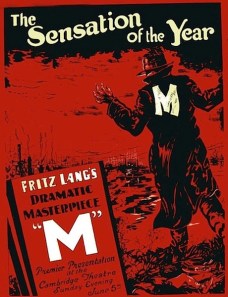 Let’s establish one thing right away: this is unquestionably an inferior version of Fritz Lang’s masterpiece,
 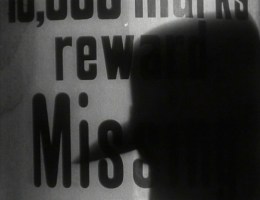 4) It’s mostly dubbed into English. The bits that aren’t have been re-shot. Primarily, there’s a phone call between the police commissioner and the minister, which is really quite poorly performed — watch out for an unintentionally comical bit with the wrong end of a pencil. These two actors are also edited into another scene, a large meeting which their characters attend, and it’s glaringly obvious where Lang’s work begins and ends and the basically-shot bits (flatter angles, simplistic sets) have been dropped in. The director of the English re-shoots isn’t specifically credited, but it certainly wasn’t Lang: Fischer’s examination of M’s export versions informs us that it was the localised version’s “Supervisor”, Charles Barnett.
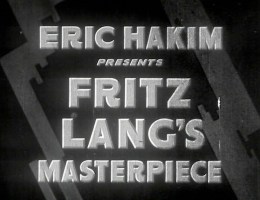 There’s no way anyone would reasonably recommend this variation of M over the original, but it does hold interest as a curio. It may leave one wondering how and why this practice of exporting films — where multiple versions in different languages were shot at the same time, rather than dubbing/subtitling later — died out. Cost, I imagine. Despite producing interesting asides like this, it’s probably a good thing it did.
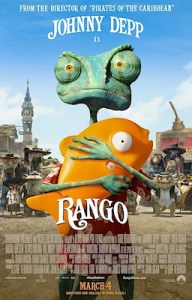 There seem to be an increasing number of live-action directors sticking their oar into animated films; and not just lending their ideas and name, as Tim Burton did with
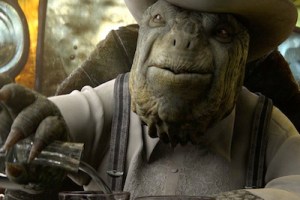
 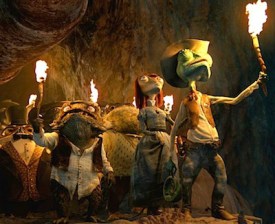 Indeed, perhaps the most striking thing about Rango is ILM’s hallmark, the extraordinary realism. Though some of the characters are rendered cartoonishly (just look at Rango’s face) and all are of course anthropomorphised, the textures and lighting are as true-to-life as any of their work in live-action movies. They consciously went for a photographic look, as if it had been shot with real cameras, including consultation with Oscar-winning cinematographer Roger Deakins, and it paid off because the whole thing looks incredible. I know I only just recommended it in the last paragraph, but the making-ofs are really great for an insight into why the film looks and feels so different to most current computer-animated films. The sequences of them recording performance reference are incredible — they essentially shot some scenes in full, with the entire cast, in costume, with full props, some sets, blocking, marks, camera angles, improvisation… (The only thing lacking on the Blu-ray is a
 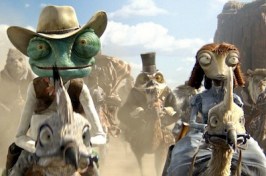 Back to the film itself. I know it’s less interesting, and it is far too slow at the start, but when it eventually gets underway it becomes very entertaining. Somewhere in the middle there’s a five-minute wagon/bat chase that’s a properly exciting action sequence, excellently realised. It was so good I watched it again immediately afterwards. It’s got a clever use of Wagner too, as well as some regular Hans Zimmer action scoring. Zimmer’s score throughout is top quality, referencing Morricone and all the other staples of Westerns.
 The plot, however, is clearly borrowed from
  With its detailed references to other films and real-world visual aesthetic, Rango may be more likely to find appreciation among grown-ups than the children who are the typical target for English-language feature animation. Then again, there’s that immature humour I mentioned. A ‘family’ film indeed. Either way, it’s an entertaining addition to — and alternative from — American animation’s usual offerings.



 I’m a bit young to have experienced seminal ’80s TV series
 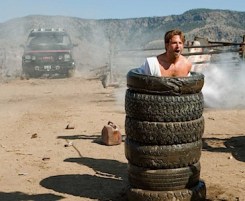 As much as I like serious action, I enjoy this kind of film too. I gave RED four stars; Shoot ‘Em Up the same. You may see where this is going. I am, once again, probably being too generous.
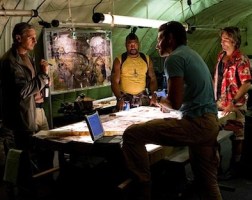 if that doesn’t or didn’t interest you, there’s no need for it. That said, one scene is apparently “big and puts some drama and emotion into the movie, maybe a bit too much for a PG rating”. (In the UK,
 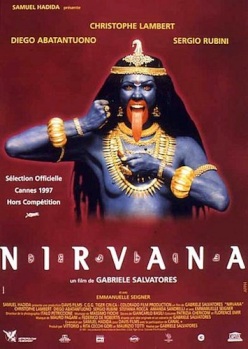 The Radio Times film section may be steadily going down the drain, but when anyone
  The most obvious point of reference for Nirvana is
  interacting with Solo merely though a series of screens on his journeys (and, one presumes, a series of microphones too). Cronenberg’s film was made a couple of years after this, so commending it for not doing the same thing would obviously be a bit rich. It is to be commended for not descending into a needlessly twist-strewn third act though, which I had thought was coming — there’s plenty of bits along the way that could be used to build a ‘surprise’ or two. There’s some ambiguity in the ending, but not too blatantly (unlike later versions of Blade Runner, for instance), and Emmanuelle Seigner’s ex-girlfriend character is never quite used in the way I expected.
 and I imagine subtitles could be easier to follow than this dubbed version, in which everyone’s covered by either the original actors straining with English (based on the accents) or the typically bad voice actors employed for such dubs. The
  100Films.co.uk