2011 #70
David Yates | 146 mins | Blu-ray | 2.40:1 | UK & USA / English | 12 / PG-13
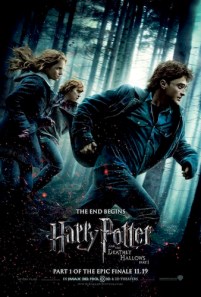 While the final Harry Potter film continues to obliterate records at box offices around the world, I finally caught up on the penultimate instalment in the phenomenal fantasy series. It’s Part 1 of 2 at the end of a series that’s become increasingly serial, rather making this the Two Towers of Harry Potter films: it doesn’t begin, and it doesn’t end either.
Indeed, at times Deathly Hallows Part 1 is too heavily reliant on knowledge of the previous films, or even, for full detail, the novels. It’s understandable — you’d be a fool to take this as your first Potter film — but at times it could work a bit harder for those who don’t live & breathe Harry Potter; it could help along those viewers who could do with a little memory jog here and there. The pay off, however, comes in lots of neat or resonant callbacks across the films — Harry reminding Umbridge it’s wrong to lie, for instance — as well as within the film itself — Hermione obliviating both her parents and some Death Eaters.
Despite the series knowledge required, the well-established Potter team have created one of the series’ best instalments here. Long gone is the cartoonish frivolity of Chris Colombus’ opening pair of Children’s Films — this is Potter at his darkest, and not just in terms of the cinematography. Film franchises have come under fire for incessantly describing each new entry as “darker”, and none more so than Potter, but at least it’s deserved: this is a grim, oppressive world, where our trio of heroes are completely removed from the safety of school and on the run as fugitives. It rather negates author J.K. Rowling’s original conceit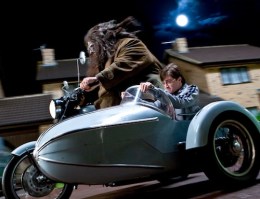 of having seven books each covering a school year, but hush, let’s overlook that (everyone else seems to).
Technically the film is well executed. Harry Potter films have had action sequences before, but few stand comparison to the bevy we’re treated to here: an in-flight fight/chase as a gang of heroes escape Privet Drive; a fast and claustrophobic duel in a cafe; the much-trailed run through a forest (interestingly realised without any score). It’s not quite an Action Movie, but if any Potter were to lay claim to that genre it could well be this one.
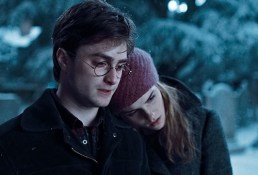
Elsewhere, several deftly constructed montages set the scene for what’s going on in the wider wizarding world while Harry, Ron & Hermione are on the run in secrecy. Similarly, the film massively cuts down on the novel’s interminable sequences of the trio wandering around Britain pondering things endlessly. Consequently the halfway point of the novel — Harry and Hermione visiting Godric’s Hollow at Christmas (if I recall correctly) — occurs under two hours into this 4½-hour adaptation. It’s one of the film’s best sequences though, the snow-coated village setting and almost dream-like pace evocative of both the magic and melancholy of Christmastime; its ultimately nightmarish events reminiscent of wintry fireside horror tales.
 Talking of exceptional sequences, the animated one can’t go unmentioned. It’s wonderfully done, inspired by old silhouette animations, though achieved in 3D animation here, which is a pity. It’s still beautiful to look at, and it’s very fluid, but I can’t help but feel it would’ve been even more effective if they’d gone all out and done it in 2D.
Visually the whole thing is, of course, dark and gritty. I was always glad the films went for a ‘real world’ aesthetic rather than the ‘Saturday morning cartoon’ stylings of the books’ jacket illustrations, but the first couple of films still had quite a bright, primary-coloured palette. As I said earlier, everyone’s talked about each film bring thematically darker to the point that it’s become a cliché, but it’s true of the production design and cinematography too. There were a couple of scenes here where I literally couldn’t see what was going on.
Yates spoke of making this one like an “urban thriller” — and, having helmed the original State of Play, he’d know — and I think they have, more or less, in a mainstream fantasy movie way, achieved that feel. There are abandoned and decrepit industrial sites and burnt-out trailer parks to really push the feel, but it bleeds out into all the fantasy settings too. It’s cold, grey, bleak, tough — all appropriate for the dark times the characters find themselves in, if not so much for the pre-teen audience the initial books and films were suitable for. 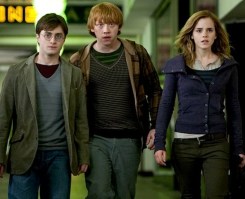 Themes of Nazi/Stalinist-style oppression are played up in the story (trials of those whose “blood status” is in doubt; listening to the radio for news of loved ones; Bellatrix’s torture of Hermione) and production design (the muggle-crushing new statue in the Ministry; the art style of anti-mudblood propaganda leaflets; the uniforms of the Ministry guards), but it’s subtle enough that it doesn’t batter you around the head.
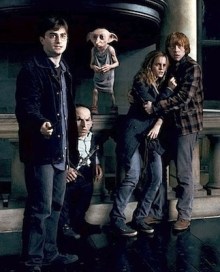
The cast are, as ever, really just pawns in a bigger game. There are nonetheless some nice character beats — the dancing scene, for instance, which uses a Nick Cave song (in a kid’s film! Excellent). Anyone in the cast under the age of about 25 struggles to convince at one point or another, but the adult cast are as exceptional as their pedigree would suggest, even in their brief cameo-sized roles. Most impressive is CG character Dobby: Deathly Hallows takes him from being the most irritating all-CG character since Jar Jar Binks, to one who has a heroic and moving death at the climax of this film. That said, it was — much like the death of Sirius Black in Goblet of Fire — more effective in the book. However filmic the deaths Rowling writes may feel, the filmmakers seem to struggle to convert them as effectively to the screen.
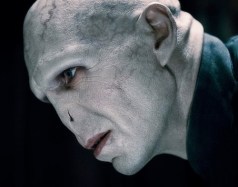
 And so, the ending — which isn’t, because we’re in the middle of the book. So how well does it work as, y’know, an ending? Quite well, as it turns out — indeed, one might even compare it to something like Empire Strikes Back: the gang are reunited and free of evil clutches (for now); the quest for the Deathly Hallows and the speculation of their meaning is all set up to continue in the next film; plus there’s an appropriately dramatic death. But this one was never truly designed to be an ending, so if you think about it too much it begins to work less well than if you just accept it. Still, having your villain acquire the MacGuffin we’ve been told is all-powerful and indestructible makes for a decent cliffhanger.
It’s interesting to consider that the ending was originally designed to be earlier, when Harry & co arrive at Malfoy Manor and Bellatrix sees his scar. It was moved it find an emotional connection for the ending, and I think it works. If it had ended where planned it would feel like a cliffhanger-ish point in a longer work; while there’s undoubtedly some of that in how it ends now, it’s a bigger, more dramatic point. A change for the better, then.
(As an aside, I think the order of the cast in the end credits reveals who has the best agent and whose could’ve worked harder. Have a read and think about the relative size and importance of their roles.)
Deathly Hallows Part 1 is, indeed, Part 1; but despite that it functions rather well as a film in its own right: there’s story development, character development, action sequences, and even a semblance of an ending. In terms of Being The Middle Instalment, it’s at least as successful as any other I can think of.
The final Harry Potter film, Harry Potter and the Deathly Hallows: Part 2, is released on DVD and Blu-ray in the US tomorrow, Friday 11th November, and in the UK three weeks later, on Monday 2nd December.

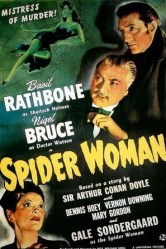 The seventh feature starring Basil Rathbone as Sherlock Holmes and Nigel Bruce as Dr John Watson is the first since Hound to drop Holmes’ name from the title and, at under an hour (59 minutes 33 seconds in PAL, to be precise), is the shortest yet.
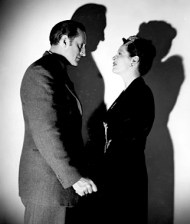 Gale Sondergaard, is so good that they crafted a sequel around her, albeit Holmes-less. I’ve not seen it and don’t own it, so I’ve no idea what that does for its quality.
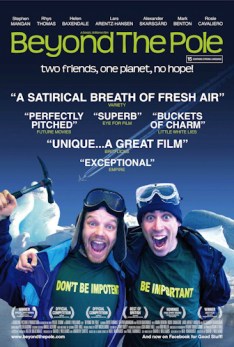 Adapted from a cult Radio 4 series, Beyond the Pole is a British mockumentary about “the first carbon neutral, vegetarian and organic expedition ever to attempt the North Pole”, starring Stephen Mangan Off
 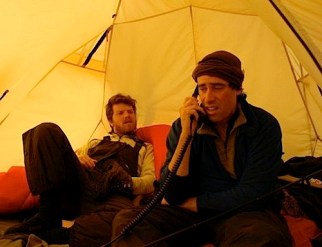 It’s also impressively realised. Its apparent low budget led me to assume we’d, a) see very little of the actual trip, and b) what we did see would be all inside-a-tent and green-screened. But no, it was really shot on floating sea ice off the coast of Greenland, and it makes for a highly effective polar landscape. Good work, filmmakers.
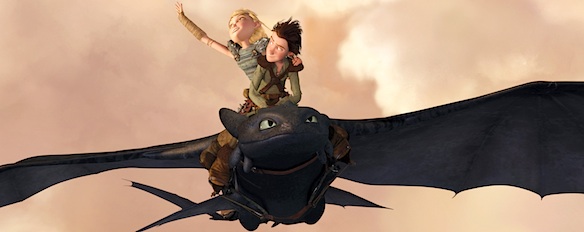
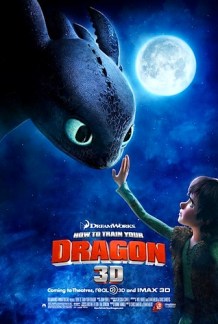 I saw a trailer for How to Train Your Dragon at the cinema a few months before its release. Having never heard anything of it, I thought it looked to have basic animation and a too daft tone. I wrote it off, expecting the kind of animated movie that would be slagged off as a Pixar-wannabe… and probably still land an Oscar nomination because there never seem to be many contenders for the animated feature award. Imagine my surprise, then, when it garnered endless positive reviews and a huge box office. What?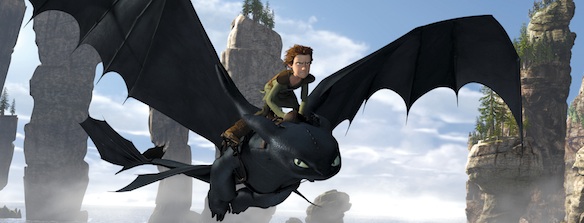
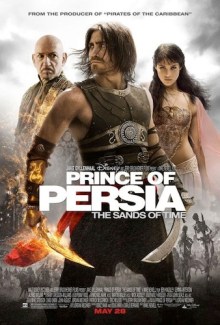 Disney’s attempt to launch a second franchise in the mould of
  There are some good action beats, but there’s also plenty of disorientatingly-edited, CGI-enhanced sequences, as per usual for the genre these days. For the former, see for instance Dastan’s climb up the wall into Alamut (or whatever it was called), or the knife-thrower-on-knife-thrower battle near the end. For explosions of CGI, see the massive logic-shattering ‘sand surfing’ sequence in the climax. Visually they’re clearly trying to evoke
 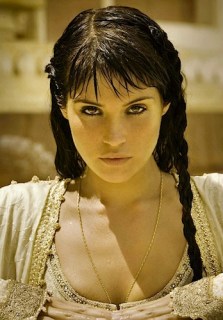 has the role Keira Knightley would’ve played five years ago. I think she’s meant to be a Strong Independent Princess but, much like Dastan, we’re told we should be inferring it rather than seeing any evidence of it.
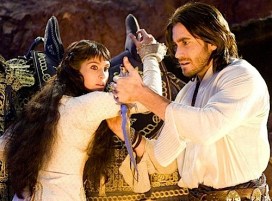 Plus, the sword-and-sandals milieu makes a bit of a change. I know we’ve had plenty of swords-and-sandals-flavoured movies in the wake of
 Holiday stars Cary Grant as an everyday chap who falls in love with a girl who, it turns out, is a wealthy heiress type… but who it also turns out may not share his views on the future. Her kooky sister, played by Katharine Hepburn, on the other hand…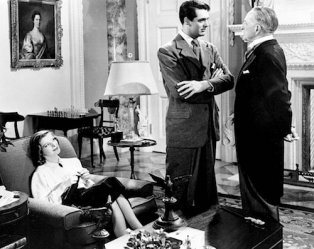

 Having been remade to Oscar-nominating effect by American Cinematic Gods the Coen brothers, the first adaptation of Charles Portis’ Western novel True Grit was around plenty (on TV, Blu-ray, etc) back in… February, I guess. The story in all three versions (which might sound obvious, but is never guaranteed when it comes to adaptations) concerns a 14-year-old girl, Mattie Ross (here, Kim Darby), whose father is murdered by his hired hand, so she sets out for murderous revenge, recruiting Marshal Rooster Cogburn (John Wayne) to help because she’s heard he has the titular attribute.
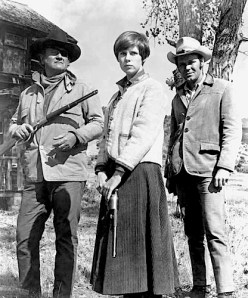 14-year-old but as a 14-year-old who’s wise beyond her years. Hailee Steinfeld’s performance in the remake has been much praised, but it has a lot to live up to from this.
 Sometimes, at least for me, films improve in retrospect. My opinion while watching may be different to when I look back days, weeks, months, or even years later. Films I thought I disliked may benefit from a kind of nostalgia; some films just gain something from extended reflection, even if that isn’t conscious; films I underrated may improve when I gain perspective on their qualities relative to other works; in some cases, it’s just that I’m getting older and wiser.
 Not necessarily a bad thing, but it has that kind of disconnect from reality that’s markedly ’60s. In
  and the kind of inhumanity that might be reached in the quest to survive nuclear war.
 With box office and critical acclaim sliding, Disney abandoned traditional 2D animation for their significant films in the early ’00s, switching to the computer-animated 3D that was doing so well for Pixar and Dreamworks. I don’t know if it helped the box office any, but it didn’t help with critics — it wasn’t the medium that was at fault, it was the storytelling. Notoriously, as soon as Pixar’s John Lasseter was put in creative control of the whole of Disney he instituted a return to 2D animation. The Princess and the Frog was the much-heralded first film after this change.
 there are just too many stacked up back to back for my taste. The voodoo material seems like it might be a bit on the scary side for kids, though maybe that’s just because too many children’s films are sanitised these days — I agree with the regular argument that it was better when films and TV aimed at kids included a bit of a scare or sadness, rather than more modern entertainment’s attempts to keep them wrapped in cotton wool for too long. The death of a character in the climax also sits in the same vein.
 where the musical numbers fit effortlessly into the flow of the story rather than stopping the film for a showpiece. This is also true of the very best entries in the canon —
  Disney’s 50th animated feature is Rapunzel in all but name, for no particularly good reason. It seemed to be met with universal praise on its release last year, critics hailing it as a return to Disney’s previous quality after a run of lacklustre releases, in particular the underwhelming return to 2D in the year before’s
  a number I usually particularly enjoy. It has one, I suppose, but it’s one of the weakest examples I’ve ever heard.
 100Films.co.uk