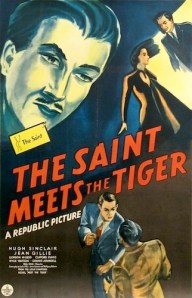
The Saint Meets the Tiger (1943)

2012 #67
Paul Stein | 66 mins | TV | 4:3 | UK / English | PG*

The Saint Meets the TigerProduced in 1941 but not released until 1943, owing to Saint creator Leslie Charteris’ dispute with RKO over their new Falcon series (which is fairly unashamedly a rip-off of the successful Saint films), The Saint Meets the Tiger is a belated adaptation of Charteris’ first Saint tale, but was to be the series’ final film. Fortunately, it’s quite a good one.

Whether it be by conscious effort or serendipity, several of the problems suffered by The Saint’s Vacation are rectified here. Consensus seems to hold this is even worse than Hugh Sinclair’s first Saint film, but I definitely preferred it. The plot is not only engaging but makes sense, flowing onwards rather than going round in circles and not trying to push ‘twists’ that can be seen a mile off. The sense of place is also back: it’s very much The Saint in Cornwall. The downside is that’s a bit less glamorous than New York or trotting around Europe, the tiny Cornish village setting giving a low-key and quaint sensation, despite the story concerning international gold thieves. Secret passages, a smugglers’ cave and a yacht add some Boy’s Own excitement and borderline grandeur nonetheless.

Unfortunately the titular villain is a damp squib. Clifford Evans’ performance is good enough, and the notion of him working with our heroes under an alias is a good one, but ultimately he’s not the kind of crime lord the dramatic title and initial setup serve to imply. His underlings are the focus of the Saint’s investigations at first, and then they overthrow the Tiger with a basic double cross and become the focus for the climax too. Insert some predictable comment about him being a tiger without teeth here.
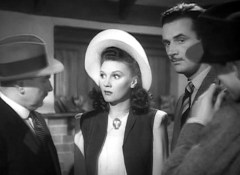
The Saint Meets the TigerIt still lacks the wit and light touch that make the Sanders films so entertaining, with only vague attempts at humour that generally raise little more than a smile. Sinclair doesn’t seem quite as wooden this time out, but he’s a straight-cut hero-type, not the kind of charmer this series really wants. In fact, one moment when he bursts into laughter, only to suddenly cut it short, is actually quite creepy. Perhaps he was trying to emulate Sanders more — the film does feel lighter than Vacation — but he still comes up short.

Gordon McLeod is Inspector Teal for the third time, but is still no Fernack; and Wylie Watson as Templar’s butler-butler (as opposed to the usual criminal-turned-butler) isn’t the series’ best sidekick either. Still, they’re both light years ahead of the ones offered in Vacation. Jean Gillie is actually one of the better ‘Saint girls’, though.

All in, Meets the Tiger plays as a straight-up thriller in the ’40s filler model. It’s fine for what it is, with some nice moments particularly during the third act, but it’s not quite as entertainingly memorable as the series’ middle entries.

3 out of 5

Read more of my thoughts on Sinclair’s time as the Saint here.

* As with many of the Saint films, this has apparently not been passed by the BBFC since 1941 (when it was also 12 minutes longer — that’s not just PAL speed-up!). Nonetheless, it’s available on DVD, rated PG. ^

The Saint’s Vacation (1941)

2012 #66
Leslie Fenton | 58 mins | TV | 4:3 | UK & USA / English | PG*

The Saint's VacationThe Saint’s gone on vacation indeed — with the saintly George Sanders nabbed for RKO’s rip-off Falcon series, here we’re treated to fellow Brit Hugh Sinclair’s take on Leslie Charteris’ hero. For “treated” read “subjected”. I’ll come back to him, because sadly he’s not the only thing that makes The Saint’s Vacation the worst film in the entire series.

On paper it should have all gone fairly swimmingly too: not only is this film adapted from a Charteris story, it’s also the first to have the Saint’s creator co-pen the screenplay; plus the character has spiritually come home, as RKO moved filming to the UK to make use of funds frozen by the British government’s Cinematograph Films Act.** But none of that helps; indeed, perhaps it hindered, because the result is a mess.

The adventure is a runaround across Europe. I say “Europe” — it looked broadly Germanic to me, but there’s mention of Paris, and I read online it’s meant it to be Switzerland. Possibly it’s a combination of the above. Considering it’s technically set during the war (not that anyone explicitly mentions that), at least one of those is thoroughly implausible. Having praised the series for its palpable sense of location in earlier entries, that’s all gone here.

The plot itself barely hangs together. The Saint for no apparent reason decides to stick his oar in to someone else’s business, at which point everyone’s racing around the countryside after a mysterious little box that we have no idea why anyone wants. Things are compounded by the regular appearance of local police who will apparently believe whatever they’re told by the first person who tells them something. The Saint's gullible policeApparently the villains are Nazis, though there’s absolutely nothing to suggest that here (again, that’s something I’ve since read online). The Saint knows both the villain and a Mysterious Woman of old, but it’s never explained how or why or what their relationships are. It’s like a set of stock adventure-story elements assembled without any understanding of how or why they should connect, which makes for an unsatisfying and unenthralling experience.

Matters are compounded by this apparently being a TV-friendly version created in retrospect. The title screen has a badly superimposed TV company credit stuck on it anyway, so I presume that’s why a fight scene halfway through has been butchered. It’s that or it was a complete hash job in the first place, with continuity-destroying jumpy editing and choppy music. It doesn’t even look especially violent, as you’d expect from ’40s filler, and it’s certainly no worse than other bits included later… but then of course I don’t know what was cut.

So we return to Hugh Sinclair, who is not a match for Sanders or The Saint in New York’s Louis Hayward. To be blunt, he’s as stiff as a board — pretty much literally, at least to begin with. Sanders oozed charisma just by appearing on screen; Sinclair doesn’t manage any throughout the entire film.

The Saint's new faceThe rest of the cast don’t offer much compensation. Arthur Macrae as the Saint’s cowardly friend Monty is no replacement for the parade of ex-cons he formerly hired as manservants, while Sally Gray of The Saint in London (but here a different character) aims again for pluck but somehow isn’t gifted with the same quality of screenplay and/or direction. Cecil Parker is a solid villain, not that the screenplay treats him that well.

This is easily the worst entry in the series to date — and, having seen the final one before writing this, I’m prepared to say the worst overall. The series spluttered to an end after the next film over an argument between RKO and Charteris about the Falcon series, which was essentially a thinly-veiled Saint rip-off, but one wonders if it wouldn’t have tottered to its own end anyway.

2 out of 5

Read more of my thoughts on Sinclair’s time as the Saint here.

* As with many of the Saint films, this has apparently not been passed by the BBFC since its release in 1941 (when it was also 20 minutes longer — that’s not just PAL speed-up!). Nonetheless, it’s available on DVD, rated PG. ^

** According to IMDb, The Saint’s Vacation “was the first film made using those frozen funds”. I’m no expert on this era, but the act I presume that bit of IMDb trivia means is the 1938 one discussed in the final paragraph of this section on Wikipedia, so presumably it was just the first RKO film to use that money. As I said, no expert — everything I know about this was gleaned from those two pages. Back to the review: ^

The Saint’s Double Trouble (1940)

2012 #63
Jack Hively | 64 mins | TV | 4:3 | USA / English | PG*

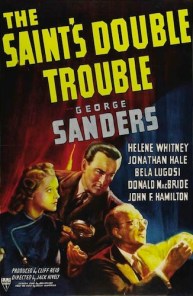
The Saint's Double TroubleAfter two fun adventures, here RKO’s series turns in my least favourite film to star George Sanders as the Saint.
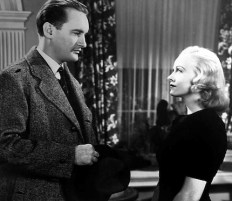
In the first film to not be directly based on a Leslie Charteris book (though he did contribute the story, according to the opening credits), the Saint arrives in Philadelphia to meet an old friend, only to get entangled in a series of murders that he may or may not have perpetrated. And that’s fine, but the way events unfold feels like no one paid a huge amount of attention to the plot. It all just about makes sense, if you care to think about it, and some of it is deliberately confusing — the “double trouble” of the title is a criminal who’s the spitting image of the Saint, meaning there’s occasional confusion about who we’re watching. But I don’t think that excuses everything; instead, I believe it’s structured to sweep you along from one bit of derring do to the next. I’ve noted before that I feel like I’m not adequately following some these films, and again I did worry I was being outsmarted, which feels somehow preposterous. I’ve come to the conclusion that a couple of them just don’t hang together as well as they could, and this one in particular.

It also runs foul of being a bit samey. Inspector Fernack is roped in by coincidence — it’s always entertaining to have Jonathan Hale and his double act with George Sanders along for the ride, but here Fernack happens to be visiting police force friends in Philadelphia when the Saint happens to turn up in town. Ugh. Then there’s yet another pretty young blonde who’s in love with the Saint but will never pin him down — Slick Sanders SaintHelene Whitney is fine in this role, but her character’s not a patch on The Saint Strikes Back‘s Val Travers or The Saint in London‘s Penny.

Sanders is as slick as ever, even if it can be hard work differentiating between the Saint and his doppelgänger even when they’re in the same scene. When we’re not meant to be able to tell, that’s fine; when we are, it’s sometimes tricky. I’m pretty sure the difference is entirely held in one wearing a dark-grey-and-black suit and one wearing a black suit, though even now I can’t remember which was which. A bit more effort in establishing who was in which suit wouldn’t have gone amiss. Either way, Sanders isn’t given quite as much wit to work with as normal. There’s some fun to be had when the henchman don’t realise whether they’re talking to their lookalike boss or the man he looks like — their frequent misunderstandings naturally mean Hilarity Ensues — but the rest of the film doesn’t have the same knowing edge as normal.

Almost every film series has its duds, and I imagine churning out two or three a year is only likely to increase that likelihood. Fortunately the remaining two films to star Sanders — both of them again directed by Jack Hively, incidentally — would be better than this.

2 out of 5

Read my thoughts on the four other films to star George Sanders as the Saint here and here.

* As with many of the Saint films, this has apparently not been passed by the BBFC since its release in 1940. Nonetheless, it’s available on DVD, rated PG. ^

The Saint in London (1939)

2012 #62
John Paddy Carstairs | 69 mins | TV | 4:3 | USA / English | PG

The Saint in LondonThe third film in RKO’s Saint series is a bit of a mixed bag, from my point of view.
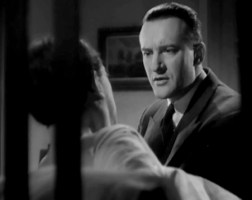
Let’s start with the bad. I’ve said it before and I will say similar again, but I found the plot to be over-complicated, like I wasn’t following it. I can’t help but feel this is my fault, because that’s not really what you expect from this vintage of adventure film, though perhaps I was just expecting too much clarity. Conversely, it was creator Leslie Charteris’ favourite film — he even dedicated a book to the director because of it.

It’s again based on a Charteris story, The Million Pound Day (part of The Holy Terror, or The Saint vs. Scotland Yard in the US), and sees the Saint encouraged by a friend to investigate Bruno Lang, who as far as I could tell didn’t appear to have done anything; but then he gets sidetracked looking into something to do with the printing of foreign currency, and… well, it goes from there.

Still, the followability of the plot is only one element. Humour is the film’s strongest point, I’d say. It’s not a comedy, but it goes about its business with wit and verve. If it were a Bond film (and we’ll return to that in a second), it would be a late Connery or one of the better Moores, where the threat still feels real enough but our hero is having a bit of fun, even if he would really rather be cracking a joke than cracking heads.

Templar, Simon TemplarI bring up Bond again because this is perhaps the most proto-Bond of all the Saint films. Within the first few minutes we have a tuxedoed Saint introduce himself as “Templar, Simon Templar”, enter a fancy restaurant where he drinks a martini, and expertly orders a swish meal and the appropriate wine to go with it. Later, villain Bruno Lang (because yes, he is relevant in the end) is a somewhat Bondian villain, a powerful man with a grand plan who thinks he’s smarter than our hero. Which he isn’t, of course. Perhaps there was an abundance of these kind of heroes in the middle decades of the twentieth century, but as Bond is the only one that’s endured while retaining the same iconography, these similarities are striking.

Sanders is again an enjoyable persona to spend time with. Here he’s partnered with David Burns as pickpocket-turned-manservant Dugan, the kind of role the series repeats with new characters across its run, though Burns is as fun as anyone. As Scotland Yard’s Inspector Teal, Gordon McLeod is adequate but a bit of a poor stand-in for Fernack. Considering the latter is rather shoehorned into some of the US-set films, it’s sensibly plausible that they didn’t force him into this one too.

Plucky PennyBest of all is Sally Gray as Penny Parker, a charming girl Templar bumps into — as he’s wont to do — who forcibly strings along for the ride. Every film in the series contains a pretty young thing who falls for the Saint, and who he seems to fall for back before casually disregarding at the end — at least Bond faded to black, leaving the inevitable parting off-screen, whereas Templar is almost callous-with-a-smile. Of all the girls the series offers, though, plucky Penny is the one you’d wish had stuck around. Even with that silly hat.
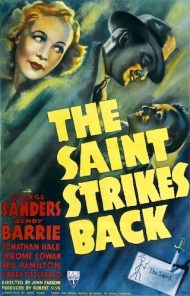
I started off thinking The Saint in London was one of the lesser films in the series — the absence of Fernack is somewhat felt and I still don’t quite understand how the villains’ scheme worked. But the triple act of Sanders, Gray and Burns works so nicely that, on reflection, I enjoy it all the more.

3 out of 5

Read my thoughts on the four other films to star George Sanders as the Saint here and here.

The Saint Strikes Back (1939)

2012 #60
John Farrow | 62 mins | TV | 4:3 | USA / English | PG*

The Saint Strikes BackThe first film to star the Roger Moore-ish George Sanders as Simon Templar, aka the titular Saint, is also one of the RKO series’ better entries.
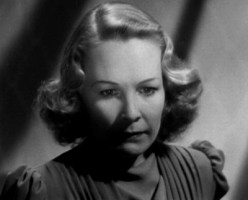
For starters, John Farrow’s direction is admirably slick for ’30s B-movie filler. One of the first shots of the film is a grand single take through a nightclub; not the longest shot ever, of course, but very effective, including a neat balloon-popping reveal of the movie’s villainess — a most striking introduction. There are a couple of directorial flourishes along these lines throughout the movie, including a bizarre hallucination sequence and a final tracking shot that loses the Saint in the fog.

If there’s one thing the Saint series is surprisingly good at it’s evoking a place. Each film seems to occupy a different setting (though there are a couple of trips to New York throughout the series) and, though I suppose fundamentally arbitrary, they do a solid job of reminding the viewer where they are. It’s no coincidence that almost half follow a The Saint in… title format. Here it’s The Saint in San Francisco, evoked with very atmospheric opening shots of the Golden Gate bridge — presumably stock footage, but its fogginess is carried on to the studio sets/backlot the film transfers to.

To be frank, I found the plot to be equally foggy in places. It’s adapted from one of Saint creator Leslie Charteris’ novels (She Was a Lady, aka Angels of Doom or The Saint Meets His Match) and perhaps it’s the legacy of squishing a book down into an hour of screentime. It’s not ludicrously unfollowable, just… foggy. The ending in particular seemed fudged, rushed, or just not as clear as it should be.

Wendy Barrie mk1Nonetheless, it’s mostly a fun romp. Sanders’ portrayal of Templar is witty and enjoyably knowing, even more so than Louis Hayward in the previous film. He’s at once more laid-back and less self-certain; by which I mean you can sometimes see him working out his devilishly clever plans as he goes along, rather than floating through with invulnerability. This Saint is the kind of man who’ll bluff that a criminal’s house is surrounded by police so that he can escape, but then can’t resist phoning back to have a little gloat about how his bluff worked. Lighter, jokier — if Hayward was Sean Connery, Sanders is (as noted) Roger Moore. Though I’ve never seen the ’60s TV series, here I can see clearly how Moore was suited to the role.
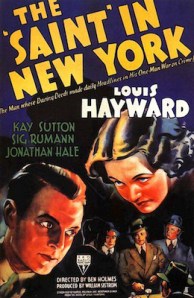
Returning as Inspector Fernack, Jonathan Hale has a great double act with Sanders. Their relationship clearly grows as the series goes on, but it clicks from the off. He’s a great sidekick and foil, here treated to a neatly constructed subplot about his diet. It’s better than that sounds. Also topping the bill is Wendy Barrie, making the first of three appearances as three different characters. This is her best turn in the series, however, the part being the most interesting of her three roles as well as getting the most to do.

Initially I would have said I preferred in New York to Strikes Back, by a smidgen; but having completed Sanders’ run in the series before writing this review, I’ve further warmed to his portrayal. As I said at the start, this is certainly one of the high points of the run.

3 out of 5

Read my thoughts on the four other films to star George Sanders as the Saint here and here.

* As with many of the Saint films, this has apparently not been passed by the BBFC since its release in 1939. Nonetheless, it’s available on DVD, rated PG. ^

The Saint in New York (1938)

2012 #59
Ben Holmes | 67 mins | TV | 4:3 | USA / English | PG

The Saint in New YorkThe Saint in New York is a B-movie in every sense of the term, but it’s certainly one of the fun kind.
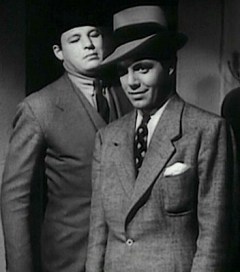
There’s a crime wave in New York City. The police know which gangs are responsible but have been unable to successfully prosecute their leaders. So a bunch of people who are somehow involved in the policing of the city elect to call in elusive vigilante-type Simon Templar, aka the Saint, to sort it out for them. It’s the sort of premise you only get in pulp fiction and comic books, and these days the kind of thing that needs subverting or justifying (look how Batman of the ’60s (and even ’90s) works with the police, but is (officially) at odds with the law throughout Nolan’s trilogy)… and I love it. And despite what I just said, you could completely sell it today as a back-room conspiracy of powerful men — I’d love to see this film remade well (and I’ll return to that).

As the Saint, Louis Hayward makes for an appealing hero. He’s cocksure, and you could well argue (as Mike does in his spot-on review at Films on the Box) that he “seems to float through all the perilous situations in which he finds himself, as though he knows he’s the hero of the story and can never die”. Alternatively, he’s a James Bond character, so justifiably confident of his own abilities and plan that he has every right to believe he’ll be OK. (Indeed, this is certainly readable as a proto-Bond movie.) The downside either way is that there’s no sense of jeopardy or danger, which I suppose is a shortcoming; but instead there’s a kind of comic inevitability to the villains believing they could ever beat the Saint.

Screenwriters Charles Kaufman and Mortimer Offner also bestow him with a clever wit. There’s every possibility this results from how he’s portrayed in Leslie Charteris’ original stories, but I’m not familiar with them so couldn’t say; either way, Kaufman and Offner pull it off here too. Hayward wears it well, making a mischievously entertaining presence. The Saint, who is in New YorkHis habit of jumping into moving vehicles, much to the surprise of their drivers, is also fun. The other stand-out character is henchman Hymie, played by Paul Guilfoyle, who is enamoured of the Saint and constantly comments on his actions. Together they make the film a light, fun, amusing experience, with more memorable lines than a film of its stature deserves.
The plot is in many ways stock crime thriller filler, though I believe it has more potential than is realised here — again, I’d love to see a swisher remake. Hitchcock was apparently interested in helming it and I think there’s little doubt he would’ve made a better fist of it than Holmes, whose work is fine if workmanlike. So the story loses some of its impact because it’s under-explained, the final twist solid if guessable (at least by me) because it’s hurtled towards so quickly. The real weak link, though, is a ludicrously rushed romance between the Saint and gangster mol Fay (Kay Sutton). Apparently they fall in love during a 30-second visit to the zoo. Again, the potential joy of a remake: bulk that up and it’d fly well enough. Same with the main plot. Perhaps I should try reading the novel this is based on…

For all its flaws, The Saint in New York is a quick jolt of B-movie fun. Clearly it doesn’t rival the Rathbone Sherlock Holmes series (it’s obviously not as fondly remembered, and that’s usually for a reason), but admirers of pulp ’30s/’40s thrillers are likely to be as entertained as I was. Daft, but certainly fun. Hopefully the rest of the series can live up to (or better) the enjoyment I got from this one.

3 out of 5

The Saint in New York is available on iPlayer until 31st July.

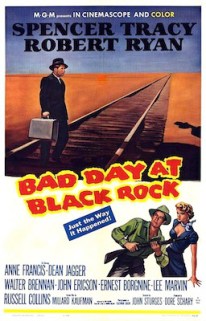
Bad Day at Black Rock (1955)

2012 #47
John Sturges | 78 mins | TV | 2.55:1 | USA / English | PG

Bad Day at Black RockBad Day at Black Rock comes with an air of the forgotten classic — or, at least, it did to me. I think that’s important to how I ultimately reacted to it. As is that wherever I first heard about it pitched it as a suspenseful mystery with a twist. I forget where that was now, but I remember consciously avoiding finding out the plot’s developments (more so than one naturally would anyway) before viewing.

The latter seems to pay off, at first. Spencer Tracy stars as Macreedy, who arrives in a tiny, remote town in the American West, shortly after the end of World War II. He’s there with an unrevealed purpose; the locals are, for some reason, immensely suspicious of him. Starting here, the story is built on slow suspense and mystery: who is Komoko? What happened to him? How does Macreedy know? And what does Macreedy want? Sturges happily lets this mull and build over the best part of an hour, before suddenly darting past the reveals as if they’re unimportant. I’m not saying they need to be sign-posted with dramatic camera angles, weighty overacting and thudding “dun-dun-DUN!” music, but they’re shoved in here as if they’re immaterial; a bit of bookkeeping before the all-action climax. Perhaps these reveals weren’t meant to be so vital to the story as I had been expecting, but it still undermined my expectation.

The film also raises issues that, in my opinion, it fails to adequately explore. Primarily, the American attitude to the Japanese in the wake of Pearl Harbor, and also notions of complicity and complacency in the face of crime. There’s room for these threads to be explored and commented on, to be better exploited than they are. I don’t think it’s an issue of subtly (that is to say, that they are present, but without a heavy hand), more that they’re only fleetingly touched upon. Perhaps that’s unfair — I’m entirely upon to the suggestion that I was so busy focusing on the mysteries, Chatting at Black RockI missed the commentary. Indeed, in his piece at Riding the High Country, Colin notes that the issue of American reaction to the Japanese “is very obviously presented”. (He also examines the film’s representation of a third area, that of Bad Day… as a modern Western and by extension a commentary on “the nature of the west itself”, which as ever I heartily recommend.)

I’ve read that Spencer Tracy was reluctant to star (presumably because of the arguably-anti-American stance of the film), but he nonetheless gives an engaging Oscar-nominated performance, perfectly embodying the character’s odd mix of qualities. He’s authoritative yet acquiescent, disruptive yet quiet, placid yet can hold his own in a fight… In a film otherwise marked by its consciously single-note townsfolk, he makes an intriguing creation.

The most underused character by far is the only woman, Liz, played by Anne Francis, who is vital to the climax but barely has any screen time before that to make us care. Most of the other cast are served at least one scene which is ‘theirs’, in which we get to learn about their archetypal character and their piece in the town’s make-up and secretive past, but third-billed Francis is robbed any of that. Considering the film barely runs 80 minutes as it is, I can’t help but feel there was room to dig into her character a considerable amount more.

Under-used AnneFor a film so based in mystery and which has what I’d call a methodical pace (despite its short running time), there are surprisingly good action sequences to look out for: a car chase/battle along a thin path, a one-handed punch-up in a bar, and a climactic shoot-out that’s at its most tense once all the bullets have been fired. It’s not an action movie by any means, but these cinematic sequences stand out nonetheless.

I imagine I’ve come across as harsh on Bad Day at Black Rock. As noted, I’m not sure where I specifically heard it recommended — several sources, more than likely — but wherever it was made it sound like an under-appreciated minor classic, with a mysterious setup that specifically appealed to me. So perhaps that’s why I’m disappointed the mystery element wasn’t as foregrounded, and why I’m niggling at the ways it could have explored its own content better. At the very least, it leaves topics of consideration open for the audience to debate amongst themselves, and that’s never a bad thing.

4 out of 5

Bad Day at Black Rock is on Film4 today at 5pm, and again on Thursday at 12:40pm.

Wallander: Before the Frost and other stories

Tonight sees the finale of the third series of British Wallander adaptations, this one based on the novel Before the Frost. It was previously filmed seven years ago, as the theatrically-released first episode of the Krister Henriksson-starring Swedish Wallander series, and I reviewed it as part of 100 Films 2009, back when BBC Four aired the Henriksson Wallander, creating the vanguard of our current obsession with Scandinavian crime drama (without this, no The Killing! Guardian readers everywhere gasp at the horror of such an imagining). The broadcast of the English-language re-adaptation seemed like a good time to bring my review over here.

The Henriksson series ran for a total of 26 feature-length episodes. They’re mostly very good and I’d recommend them (they’re available in the UK across four DVD box sets from Arrow). After Before the Frost, three further episodes were treated to a theatrical release, so naturally I reviewed them too. Links to all four follow…


The Dark Knight Rises: Initial Thoughts

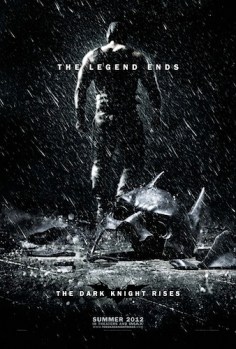
The Dark Knight RisesEveryone and their mother will be writing about The Dark Knight Rises over the next few days — I’m sure there’s already been an explosion in articles, blog posts and comments on both, not to mention various related terms trending on twitter almost constantly for most of the week already — so I figured I may as well add my voice to all the thousands shouting into the dark. But rather than a full review (which I’ll save for when things have quietened down a little, and perhaps there’s some kind of consensus or even just other reactions to respond too), here’s a couple of stray thoughts and paragraphs that immediately struck me.

Naturally, this is all spoiler free.

Christopher Nolan’s film is properly epic, and a proper trilogy-closer too. We’re so used to superhero stories that never end that even when he said this would be an ending I half expected something spectacularly open-ended. But no, this is as much a fullstop as we’re ever likely to see on a big-screen superhero… unless it proves really popular and they all start doing it, of course. It feels really weird, but only because it’s not something we’re used to.

The epic part has its pros and its cons. It creates a grand close to the trilogy, but it’s a very busy film and arguably the makers bit off more than they could chew. There’s probably enough story and characters for two whole films here, and maybe they should have pulled back a bit on some threads. Equally, that sense of scale creates the uniquely epic sensation, and maybe it will reward repeated viewings and more leisurely contemplation, each apparently-short moment loaded with information. Or perhaps not — it is literally something only time can tell.

There’s been some backlash already, and though I’ve only skimmed it the feeling I get is mostly one of mismanaged expectations, rather than flaws of the film itself. It’s definitely more comic book-y than The Dark Knight, but only about as much so as Batman Begins. That has clearly disappointed some, but may delight others, and not bother others still. The marketing is part of the problem: the final trailer’s slow, measured, elegiacal style suggested Superhero Movie As Art, whereas Nolan has instead delivered a proper summer blockbuster — albeit one with a more measured pace and less frenetic action than usual. It’s more ‘traditional’ in that respect — I’d wager the pacing is similar to a blockbuster of 20 years ago, rather than the non-stop-bombast we get today.

I also think it might have benefited from a title change — the fan-mooted Gotham City seems ever so apt. Perhaps that would have aligned some expectations in the right direction. Ultimately, you see, this isn’t A Batman Film for the people who want that — it’s The Conclusion Of Christopher Nolan’s Bruce Wayne Story. And I think that’s fine, but perhaps you need to expect that, or at least be open to it as a possibility.

Stray thoughts:

On BD I may watch it with subtitles, not just for Bane (one review I read noted that some of Gordon’s lines “seem to get lost in his moustache”, which is an amusing way of putting the fact that half the cast offer muffled lines at some point; could just be cinema sound systems though).

Criticism of Nolan’s action direction, which has gone on since Begins, is increasingly unwarranted. Some may feel there isn’t enough action, or that what we get doesn’t go on in enough detail, but that’s the style of these films — they’re story movies with action sequences, not Action Movies. The previous two were the same. But the actual shooting and cutting of the action we do get is never less than fine.

Related to the epic-ness, I’ve seen numerous complaints of poor pacing or a slow middle. I didn’t feel that once. Similarly, this epic-ness may be why it can feel certain cast members are underused. The one that surprises me is Matthew Modine — is he really a big enough name for his supporting role here to be labelled “underused”? I didn’t think so. The stand out for me was Michael Caine, who may bring a tear to your eye, but there are several other noteworthy performances.

This is why I’m going to write a full review later, though this has already turned out a tad long.

The big question on everyone’s lips has always been, can it equal or better The Dark Knight? I don’t think it does. I didn’t ever really think it could, so perhaps I just correctly managed my expectations in that regard. But it not being as good as one of the greatest action-thrillers ever made doesn’t mean it isn’t a fantastic film in its own right, and it has a tone and a feel that’s both connected to the previous two Nolan Bat-pics and distinctly its own.

I think it’s wonderful stuff.


My ‘official’ drabble-length review can now be read here.