
Jon Favreau | 136 mins | Blu-ray | 2.40:1 | USA / English | 12 / PG-13
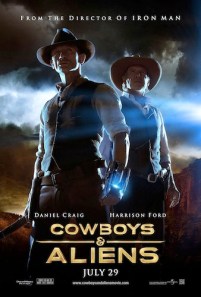 We all know the saying “too many cooks spoil the broth”, and it can’t help pop into one’s mind during the 85 seconds of company logos that kick off this genre mashup. Here the “cooks” are Paramount (serving non-US distribution only), Dreamworks, Universal and Imagine Entertainment — I can’t remember the last time I saw a Hollywood blockbuster begin with so many individual logo animations. It’s unsurprising that no one wanted to take a solo punt on a Western-with-a-twist after the failure of the last one anyone can remember, and after this (it barely reclaimed its production budget at the worldwide box office) it looks unlikely many will want to again.
Unlike that Will Smith vehicle, however, Cowboys & Aliens isn’t an appallingly bad film. It’s not a particularly great one, true, but its lack of success is due in part to someone agreeing to spend too much money on it — it made $175m and looks like a failure for Chrissake! Looked at objectively, that’s a pretty fine number, especially when its “Indiana Jones and James Bond fight aliens” selling point is tarnished by the recent films in both those franchises being poorly received.
But enough about money, what about the film itself. The story concerns Indiana Jones and James Bond fighting aliens. Sadly, not literally — it’s Harrison Ford and Daniel Craig as cowboys faced with an alien invasion. Sounds like pulpy fun, right? That’s what the title implies. Unfortunately, director Jon Favreau and the team of seven writers (that’s right, seven) decided it would be better to make it Serious. Ugh. Well, I say “ugh” — I’m not adverse to the idea of serious-minded renditions of initially-daft concepts; but not using the daft version of the concept as your final title might be a starting point.
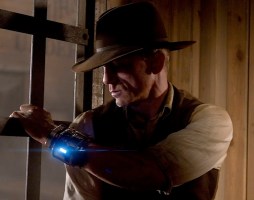 Thing is, what the film gives us doesn’t quite sit right, even if you’re expecting it to be non-pulpy. It’s still an action-adventure summer blockbuster, but with pretensions at times to be a Western drama. I think that’s the fundamental problem with the entire film, and probably why it feels slow, especially in the middle. A lot of that is character scenes, despite which the characters feel underdeveloped and under explored. One wonders if these particular writers, versed in the art of the blockbuster, don’t really know what they’re doing. Sometimes you can see what they were going for, for instance in how they set things up and pay them off (like the alien with a grudge against Craig), but somehow it doesn’t come off.
And the outcome is: maybe some of the pulpy thrills the name promised would’ve been better. It doesn’t need to be a comedy, it just needs to stop trying to be so grandiose and get on with the cowboys-fighting-aliens action. Which in this version, when it finally gets to it right at the end, is no fun because it’s too busy distracting us elsewhere — literally, the fight is a distraction for some of the other heroes to get on with the plot. Which I guess is why it feels so unsatisfying and you just want it to go away — we’ve nothing invested in that fight, other than it has to keep going on, and even that isn’t made clear (the aliens certainly aren’t desperate to get back inside their base, for instance).
 Also note that this climax lasts a full 25 minutes. It may not sound a lot for the big finish — it’s the whole third act after all — but it felt it (especially as the build-up begins 40 minutes out), with constantly shifting goal posts and Favreau’s attempts at making a skirmish feel like an epic battle. Other parts are just straight wasted opportunities, like the extended sequence in an upturned riverboat. For one thing, no effort is made to explain its presence. For another, it’s all so darkly shot that you can’t get a real sense of it. Could have made for some impressive sets — heck, maybe they were impressive sets — but it’s not well utilised. Makes it harder to work out just what’s going on at times too. Thank goodness it wasn’t in 3D!
Even without that gimmick, however, I really disliked some of the cinematography. Much of it is great, but then there are those dark bits, and even worse is some handheld psychedelically-graded stuff that just sticks out like a sore thumb. I can see what Favreau was going for, but it feels out of place, wrong, distractingly nasty rather than provocatively effective in a film that is mostly shot very classically, especially for a modern effects-packed blockbuster.
 I could go on. For example, Craig loses the love of his life to the aliens, then loses the new woman he seems to have quickly fallen for to them too… but it’s OK because he saw a hummingbird at the end, so he’s happy. Or there’s the fact that the town is called Absolution — I believe, anyway, because I think one of the three guys at the beginning mentions it and it’s the title of a featurette on the BD. Other than that, no mention is made in the film, despite it arguably being one of the key themes. We don’t need to be battered around the head with symbolism, but a bit more effort might’ve been nice.
Remember when I said the film wasn’t bad? Honestly, it… well, it wasn’t really. There are good bits. British composer Harry Gregson-Williams offers a likeable score, especially the main theme (which plays over the DVD & BD menu, if you want to hear it quickly). It’s nicely evocative of familiar Western music while giving it a modern style too, at times sweeping when we reach an appropriate bit. One of the best elements of the film, in many ways.
As you may have noticed, I watched the Blu-ray’s extended cut of the film, which in this instance offers somewhere in the region of 17 minutes of new material. (Normally that website is reliable, but this isn’t their best guide in my opinion.) That’s quite a chunk of time, which makes me wonder if some of the pacing issues — the slow middle, as I mentioned — may be down to this being extended. Still, despite their relatively large total length, the extensions mostly come in tiny bits. Some I guessed (all the stuff with them exploring the boat), some it’s hard to imagine the film without (an early scene with Craig and the town priest, or stuff about the doctor and the kid coming along on the hunt — the doc they could’ve got away with, but the kid? Did no one watching the theatrical version question why they took him along?) Conversely, some of the extensions seem borderline unnecessary — 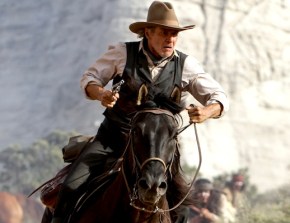 so maybe the theatrical version wouldn’t be much better pacing-wise after all. On balance this feels like an extended cut where someone decided to save a work-in-progress edit and later deem it an “extended cut”, then kept trimming to craft a more streamlined theatrical cut, as opposed to the filmmakers dropping missed elements back in post-release.
For an ending, I’m actually going to cheat a little and turn to another review. Naughty me. But Blu-ray.com’s coverage of the US disc has a good section that I may as well just quote in (almost) full as paraphrase as a source, and it goes on to a conclusion I simply agree with. So:
President of Universal Studios Ron Meyers’ brutally blunt assessment of [Cowboys & Aliens]? “Wasn’t good enough. Forget all the smart people involved in it, it wasn’t good enough. All those little creatures bouncing around were crappy. I think it was a mediocre movie. We misfired. We were wrong. We did it badly, and I think we’re all guilty of it. I have to take first responsibility because I’m part of it, but we all did a mediocre job and we paid the price for it. It happens. They’re talented people. Certainly you couldn’t have more talented people involved in Cowboys & Aliens, but it took, you know, ten smart and talented people to come up with a mediocre movie.”
Such honesty is rare indeed. As Blu-ray.com’s reviewer Kenneth Brown goes on to say,
you have to admire a studio exec willing to address criticism head on and take responsibility for projects that should have taken off but, for one reason or another, crashed and burned. So is Cowboys & Aliens really that bad? “Mediocre” is fair, “disappointing” even more so. It isn’t a bad flick — it’s actually kinda fun, if you’re willing to abandon high expectations and switch off your brain for two hours — it just isn’t nearly as good as it could have and should have been.
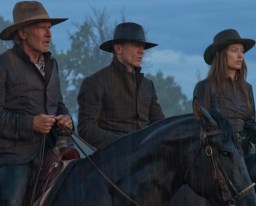 Sad, but true.
And I’m sure that, in its wake, Disney haven’t made a mistake by spending a reported $250m ($87m more than Cowboys & Aliens cost; $75m more than it earned) on Western-with-a-twist The Lone Ranger, have they?
…have they?

This review is part of the 100 Films Advent Calendar 2012. Read more here.
 16 years after they
  Conan was created by Robert E. Howard in 1932, but is probably best known to most thanks to
 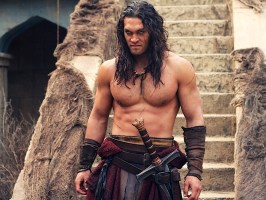 or the filmmakers ignored his work in favour of familiar bits and bobs from other sources. Visually it’s just as non-inventive, which is what you get when you hire the director of
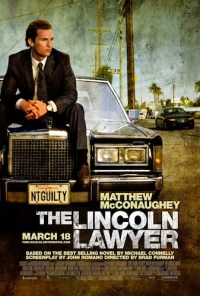 Adapted from a novel by best-selling author Michael Connelly, The Lincoln Lawyer seemed to appear out of nowhere and garner an uncommonly high amount of praise. I’m glad that intrigued me, because, while not a revelatory experience, it’s certainly worth your time.
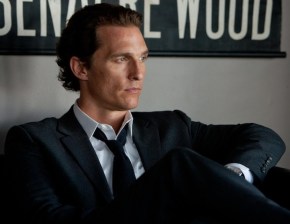 I’m not sure I’ve ever seen McConaughey in anything (nothing I remember, anyway), but my impression has been he’s not all that. Here, though, he nails the slightly-smarmy-but-kinda-likeable street-wise defence attorney Mick Haller. He’s buoyed by a quality cast: Ryan Phillippe is eminently plausible as a rich kid used to getting his own way, while the likes of William H. Macy, Marisa Tomei, John Leguizamo and Bob Gunton offer typically consummate support.
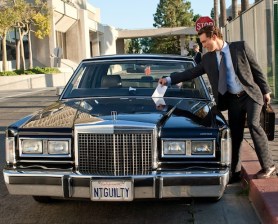 after languishing in development hell for 20 years, he recently paid Paramount $3 million for the rights to his most prolific character. With said character being the half-brother of Haller, and that Lincoln Laywer sequel in development, maybe Connelly’s work is destined to become the Marvel Cinematic Universe of crime/legal film adaptations. This could be the time to get in on the ground floor.
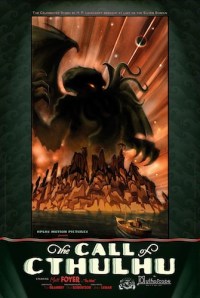 I must admit to not being at all familiar with the work of H.P. Lovecraft. I know the name, of course, and the titles of some of his stories, not to mention being aware of the array of well-known fans. Aside from that, I’ve only encountered his work through its influence — there’s some stuff in the
 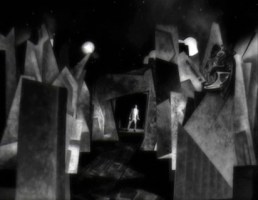 The marriage of low-budget and silent film style is one made in heaven, particularly when you add in the dedication of the makers. They built impressive props, ingenious sets, and employed model work in various inventive ways, all to execute a story that includes a cultist swamp orgy, a mysterious island, a sea battle, and a skyscraper-sized monster. Some online reviews have criticised the effects, but those people are quite frankly idiots. This isn’t meant to be slick CGI — it’s re-creating lo-fi early film techniques, and (aside from one or two rough-round-the-edges spots of greenscreen) it all looks fabulous.
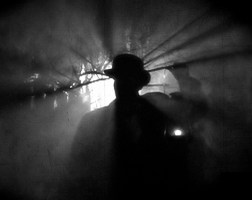 I have no idea how closely it hews to Lovecraft’s original, but there’s a layered stories-within-stories approach (I think it gets four deep at one point) that is difficult to pull off with clarity, but never falters here. Christopher Nolan would be proud. It also effectively builds a sense of uncanny mystery; not outright scares, but a kind of disquieting unease. It’s my impression that was absolutely Lovecraft’s aim too, so another job well done.
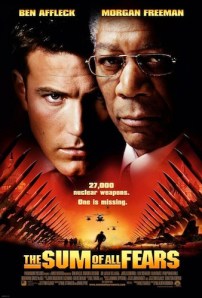 Paramount had a burgeoning franchise on their hands in the early ’90s with adaptations of Tom Clancy’s Jack Ryan novels. He first appears in
 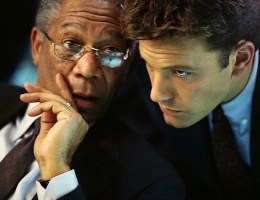 Ben Affleck is Ben Affleck, which means a lot of people won’t like him but he’s OK. Morgan Freeman brings instant gravitas to his role, though it’s not his most likeable or memorable part.
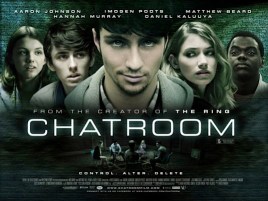 Chatroom is born of — or, at least, partly formed around — trying to find a viable way of depicting the world of online chatrooms on film. Putting on film this world it As It Really Is — people sat at a computer typing at each other — might work well enough for a single scene in
  in this environment is also truthful. There have been many reviews that are completely dismissive of this facet of the film, leaving me to wonder if they were written by people who haven’t used or experienced such things. It’s a shame, then, that the film’s degeneration into a thriller hides the arguably-worthwhile potential to explain to such people what that online world can be like for people/kids using it.
 Despite a strong-ish start, perhaps the whole second half of the film is a wobbly mess; not directionless exactly, because by then it does know broadly where it’s going, but it doesn’t do much to suggest to the viewer that it has a real goal in mind. Character motivations and relationships feel as if they’ve not been fully thought out, or at least not fully brought together on screen. Some threads take inexplicable jumps; others aren’t adequately explained or justified. Occasionally it’s Nakata’s direction that overdoes things, for instance laying the soppy “this bit is emotional” music on thick when Matthew Beard’s performance could easily carry a particular sequence.
 The aforementioned Matthew Beard, perhaps the least recognisable cast member (his
 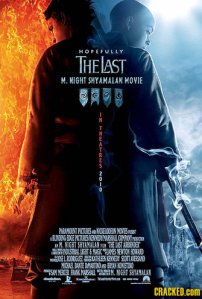 Consensus holds that the work of once-acclaimed director M. Night Shyamalan has managed a near-perfect trajectory of decreasing returns. I’m not talking about box office — I have no idea (or much interest) in how that’s gone for him — but quality, starting with supernatural chiller
 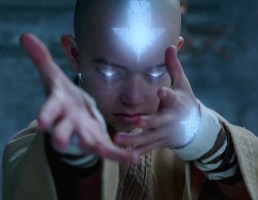 Chunks of it seem to be missing, conveyed through clunky voiceover rather than on-screen action. The first rule of screenwriting — literally, the first — is Show Don’t Tell, but Shyamalan does exactly the opposite.
 I wouldn’t call myself a Shyamalan apologist, but I think he has at times suffered harshly at the hands of critics and audiences disappointed that he’s never re-reached the heights of The Sixth Sense (though, personally, I prefer
 Michael Mann is arguably best known for his modern, urban, slick, intricate crime thrillers — films like
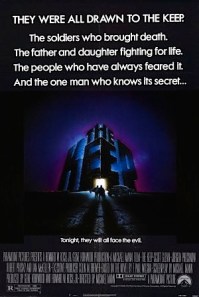
 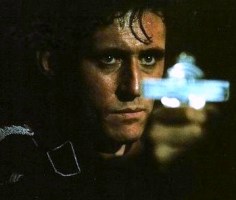 Should we long for a Director’s Cut, then? Maybe that would be an improvement, but I’m not convinced it would be good per se. You see, the film doesn’t just stick to giving us Nazis vs Whatever The Keep Contains, oh no. First the SS turn up, led by a Properly Evil Nazi, played straight by Gabriel Byrne. Escalation, great. Then there’s Ian McKellen as a professor drafted in to make sense of the keep’s mysteries. Also great — even the Good Nazi is going to have to die, right? Who better to root for than a saved-from-a-concentration-camp Jewish professor.
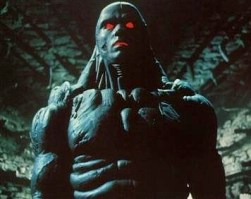 There are plus points, but they all come with a commensurate downside. The creature is well-realised at first, with some nice animated effects that are more effective than much of the over-cooked CGI spectacle we’d get today. The more we see of him, however, the less power he holds — he ends up essentially a very tall man. OK, it’s a bit better than that makes it sound, but the mysterious billowing smoke was spookier. The film on the whole is nicely shot, with some real standout moments of cinematography. But slow-mo and a smoke machine both get overused by the end, lending many of the visuals a tacky ’80s edge.
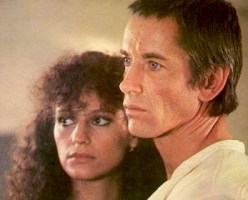 One thing the film never manages to be is remotely scary. It’s not aiming for cheap jump- or gore-based shocks (although there is a little goriness, it’s quite light; triply so by today’s standards), but it doesn’t manage any significant senses of dread or creepiness. As noted, early on it seems to be heading in the right direction — even the secluded mountain village, nestled in a harsh landscape but with greener-than-green grass and garishly painted houses, and towered over by the foreboding slab of stone that is the titular structure, is an uncanny start — but it never makes good on the promise.
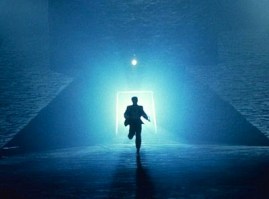 I would love to join their ranks, because there are numerous exciting ideas and moments of quality filmmaking to be found here; but I won’t be, because there’s too much muddled dross packed in around them. The result is that quite-rare thing: a decidedly mediocre film that I’m actually glad I’ve seen. But, unless someone wants to hire me for that remake, never again.
 Mainstream US superhero comics underwent something of a revolution — or an evolution, if you prefer — in the ’80s, moving from simplistic good vs evil tales-of-the-week to deeper, thematic- and character-driven stories that in some cases took months or even years to relate in full. It’s a change that’s still felt today (some would contend that they’ve been stuck for decades in a rut these developments ultimately led to). It’s generally considered that there were three works at the forefront of this wave of more adult-orientated comics, all of which still rotationally top Best Graphic Novel Ever polls today: Alan Moore and Dave Gibson’s
  Like Year One before it, the team behind these direct-to-DVD DC animated movies have taken a reverent route to bringing DKR to the screen. It’s in two parts because the original story is too long to faithfully adapt in their limited-length movies (it’ll work out at about two-and-a-half hours all told, which isn’t commercially viable for a direct-to-disc animation), but that also works out OK from a storytelling point of view: this first half ends with a major threat wrapped up and a great cliffhanger to kick off the second half. Those with less appreciation for the economics of film production have slated DC/Warner for splitting the film in two like this, but in some ways it works to its benefit artistically as well as commercially.
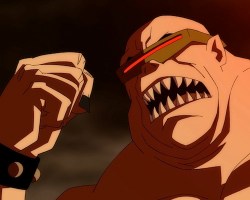 Stylistically, the film retains Miller’s designs, albeit a bit smartened up to work consistently as animation. Some will bemoan that homogenising but others may delight in it — Miller’s art is generally a bit on the scruffy side, I think. Is it an appropriate mark of respect that they’ve translated it so literally from page to screen, or would it have been more interesting for the filmmakers to have taken Miller’s plot and situated it in a world drawn from their own designs? I’m not going to argue that they could have improved on Miller’s work, but it might have been interesting to see the story given a spin in a different artistic style.
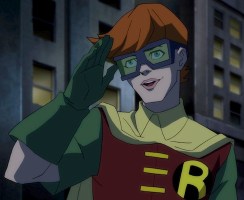 Voice work — the other major addition of an animated re-telling, of course — ranges from solid to very good. I wasn’t convinced by the casting of former RoboCop Peter Weller as Bruce Wayne/Batman, but he’s pretty darn good, carrying exactly the right kind of aged gruffness. It’s unique, I think, to see an active Batman this old on screen — sure, Nolan forwarded things eight years for Rises, but he’s still played by a relatively young and fit Christian Bale, whereas this Batman is grey, in his mid 50s and looking even older. I don’t recall a significant weak link in the rest of the cast, with
  100Films.co.uk