
Orson Welles | 103 mins | TV | 4:3 | USA / English | PG
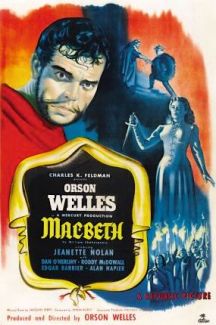 Twelve years on from his innovative, acclaimed, career-bolstering ‘Voodoo Macbeth’, and with the infamous War of the Worlds radio broadcast and films like Citizen Kane, The Magnificent Ambersons and The Lady from Shanghai now under his belt, Orson Welles tried to interest Hollywood in something they’d only attempted a handful of times since the advent of talkies: a Shakespeare adaptation.
“Tried to interest” and “attempted” are not inapt phrases here. After failing to elicit interest in an adaptation of Othello, Welles switched to pitching the ever-popular Macbeth as “a perfect cross between Wuthering Heights and Bride of Frankenstein,” interesting Republic Pictures because of their desire to move from producing low-budget Westerns to being a prestige studio. The end result was Welles had to shoot his film in just 23 days for only $700,000. The end result was a movie that struggled against Laurence Olivier’s Hamlet, released the same year, and for which poor critical reception led to nearly 20 minutes of cuts and the remainder being dubbed to change the actors’ accents.
Restored in 1980, the original version is a compromised but interesting adaptation. Welles has chopped and changed the play, cutting scenes, transposing others, assigning speeches to different characters, even creating new ones. This array of modifications scandalised critics at the time, though nowadays it’s much more common for film (and stage) versions of Shakespeare to mess around with the text as needed, usually to make the works a manageable length. Macbeth is one of the more sensibly-sized plays, however, though I suppose this is the legacy of Welles’ 23-day schedule.
 The low budget and quick schedule affect the film across the board, for good and ill. There’s much dramatic staging, with grand sets and doom-laden lighting. The shadow-drenched cinematography may well be a result of the cheap production, but the resulting effect is marvellous. Indeed, all the camerawork is great. There are some striking long takes, including the majority of the night of the murder occurring in one long unbroken shot. The costumes, on the other hand, look like a ragtag bunch of Past Clothing from the studio’s store… which is because they essentially were.
Welles chose to have the cast speak with Scottish accents, which unfortunately end up a bit squiffy. I suppose it’s an attempt at authenticity at least, and if you don’t allow them to bother you then they won’t bother you. I certainly wound up not noticing them after only a few minutes. In spite of that, many of the performances are quite strong. Of their era — they can be a little stagey and histrionic, lacking the subtlety we might expect today — but good. The dialogue was pre-recorded for the sake of the schedule, with the actors miming their lines on set. Seems like a ridiculous idea, and no doubt had an effect on performances, but I only noticed it once in the entire production.
Much of the score (by Jacques Ibert, after Welles failed to secure Bernard Herrmann for contractual reasons) is appropriately atmospheric, but at one point it goes all Comedy. 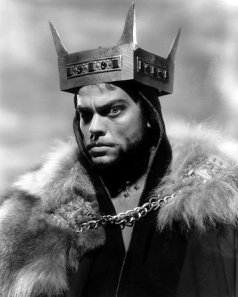 Macbeth himself is hardly in possession of all his faculties at that point, acting like a drunkard; but rather than make the sequence appropriately sinister (it’s in this state that he orders the execution of Banquo and Fleance, for example), it plays up the silliness, which is a shame.
For a variety of reasons, stemming from both the production situation and Welles’ creative choices, this is a flawed film. That said, its successes outweigh its problems to create a memorable adaptation that is justly regarded as one of the more significant films in Welles’ oeuvre.

 When
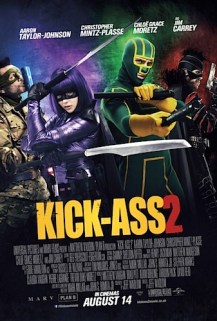
When  hiding that fact from her disapproving guardian (Morris Chestnut). Meanwhile, Chris D’Amico (Christopher Mintz-Plasse) wants revenge on Kick-Ass for murdering his father, but is being kept out of the way by his mother and the remains of his father’s mob organisation… until she dies in a freak accident, when Chris dubs himself “the Motherfucker” and sets about forming a gang of supervillains…
 the sequel doesn’t feel as focussed. The themes are somewhat familiar — superheroes leading to supervillains, as seen in
 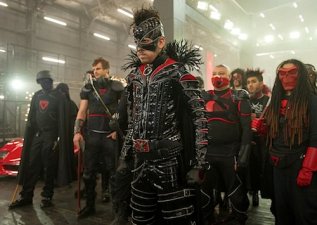 Wadlow does make welcome changes to Millar’s notoriously nihilistic comic, however: instead of gang-raping Kick-Ass’ girlfriend, the Motherfucker can’t get it up (I guess because Kick-Ass isn’t dating his mother (ho ho!)); instead of murdering Colonel Stars & Stripes’ dog, he remarks that “I’m not that evil!”; and so on. The film version still has its points of offensiveness and some outré ideas, certainly, but the needlessly-harsh edge has been taken off, especially when it comes to punishing characters who are innocent. With the exception of Kick-Ass’ dad, but then that’s a superhero staple… just one that’s more violently executed here than normal.
 So is Kick-Ass 3 a good idea? Kick-Ass 2 does provide a kind of conclusion to the story… but it also leaves it wide open for more, not to mention that Millar & Romita’s third comic book miniseries (currently running) is supposed to be the definitive final act for the characters. It would be a shame not to see that completed on screen, but perhaps with more care in how it’s executed.
 If you were looking for the archetype of an epic movie, Lawrence of Arabia would be a strong contender. It has a wide scope in just about every regard, from the desert locations that stretch as far as the eye can see, to the thousands of extras that fill them, to the glorious 70mm camerawork that captures it all, to the sweeping story that also contains a more personal throughline, to the 3½-hour running time.
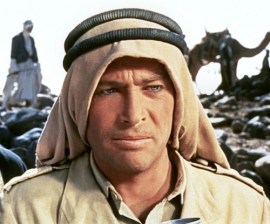 As such, the film hangs on the performance of O’Toole. We’re told Lawrence is an enigmatic figure and his depiction arguably supports that — we never fully get inside his head; we’re always observing him. And yet that’s no bad thing, because even as Lawrence’s confidence waxes and wains, as his allegiances shift and alter, we can feel what he wants to achieve, why he thinks he can. He attempts the impossible and succeeds, which is why he later attempts a bigger impossibility, and must leave the pieces to the more level-headed men, who didn’t have his genius but can therefore play the political game better than he.
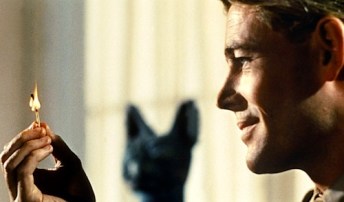 A similar legacy is left by those behind the scenes. Maurice Jarre’s score is the reference point for many a period desert epic — indeed, his music is so synonymous with such settings that it has arguably transcended its source to simply be what music for those locations and times is. It graces a film edited with class by Anne V. Coates, where scenes are allowed to play in luxuriantly long takes at times, while at others smash edits throw us from one location to another. This is undoubtedly supported by F.A. Young’s cinematography, where the wide frame can encompass so much action that there’s no need to cut amongst close-ups; and which can show the world in such majesty that you want it to hold for long, lingering takes. Even viewed on the small screen, the 70mm photography shines, especially on Blu-ray.
 As with any great film, Lawrence of Arabia is at least the sum of its parts. Replace any of the artists I’ve mentioned, or surely many more, and it would not be the film it is. In fact, when working on such a scale, this is more than a film — it’s an experience. And if that sounds pretentious, well, tough. If you haven’t experienced it yet, try not to leave it as long as I did.
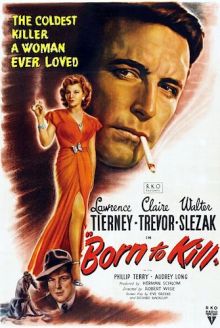 Director Robert Wise certainly had an eclectic career. Depending on your genre predilections, you may feel he’s best known for
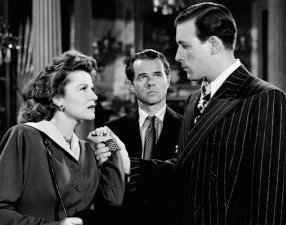
 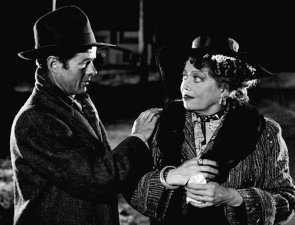 Even today, it’s quite a nasty little work, although tastes have evolved to the point where “discriminating people” are likely to be attracted to it — though not purely for the violence. You’d imagine that would pale by today’s standards, but even now the opening double homicide — presented pretty much in full on screen — is quite shocking, especially because it seems so horrendously plausible. Much movie violence is heightened, involving gangsters or spies or whatever, but here it’s a lover in a jealous rage killing two people in the kitchen of a regular house. Grim.
 sometimes develop a cult following.
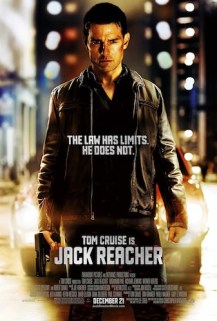 I don’t like Lee Child. I’ve never read one of his novels, but I’ve read and seen interviews with him, and always felt he comes across as intensely pompous and irritating. I disclose this up front because it leaves me predisposed to dislike Jack Reacher, the first (they hope) movie adaptation from Child’s series of novels starring ex-military policeman and now all-purpose vigilante Jack (you guessed it) Reacher.
 How much you consider the twists to be twisty will depend on which suspects your guesswork picks out, but in that regard it’s as strong as other similar genre examples.
 Once upon a time, Real Steel would have been rated PG, been aimed at 7- to 10-year-old boys, and would probably have been quite the success. In the current Hollywood moviemaking climate, however, it’s rated PG-13, consequently aimed at teenage boys and grown men who still have the tastes of teenage boys, and seems to be regularly slated in online comment sections.
 Some things are also distinctly unresolved: just why was Evil Lady prepared to pay $200,000 for a no-hope junkyard robot? I figured there was going to be some Nasty Secret to come out, especially as there’d been hints of the robot having extra abilities… but no. And what was up with the kid being 11 but Jackman always thinking he was 9? Figured that was going somewhere too. There’s talk now of a sequel — I hope such random bits weren’t intended as elaborate seeding for a follow-up, because that’s just irritating. That said, it would be nice if whoever’s in charge spotted those things and built on them in the sequel’s story.
 Real Steel is a good family movie, masquerading as a teenage-focused robot action blockbuster thanks to its 12 and PG-13 certificates. The true best audience for it will be those around the same age as the central kid: they won’t find him as annoying as older viewers will, and the whole robot fighting thing will just seem exciting.
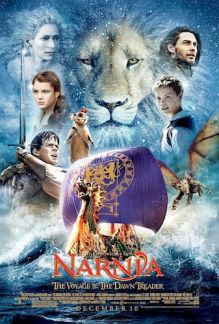 I’ve never actually read the Narnia novels, but I did have them read to me when I was very young and, for some reason, I remember Voyage of the Dawn Treader being my favourite. Sadly, this doesn’t quite translate to the big screen.
 but as a grown adult it is painful. The level of subtlety here is so low a participant in
 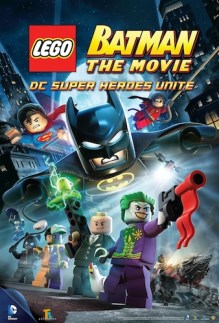 Well. What can I say? Curiosity got the better of me.
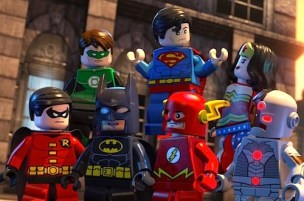 This wouldn’t matter so much if what was left was entertaining, but it’s a little weak. I’ve seen a couple of the LEGO Star Wars TV specials and found them to be quite fun, but LEGO Batman can’t reach their level. It’s not just that it’s almost four times as long as one of those, it’s that the humour it does contain doesn’t hit home in the same way. It’s often too juvenile, too “that’ll do”, too “I can tell this is supposed to be humorous but it’s just not funny”. I know I started by saying that I just watched this through curiosity, but partly it was that I’d found those Star Wars specials enjoyable enough and thought this would be more of the same with superheroes. It wants to be, but it isn’t.
 Dogged by comparisons to
 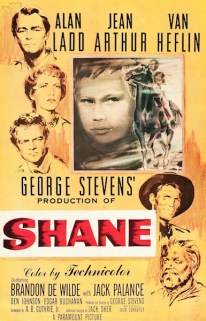 Though not part of my
  The thing with the wife, for instance, is mainly down to a few looks, or the way a line of dialogue is played. I was once taught that if a writer doesn’t put any subtext into a scene the actors will add it themselves — perhaps that’s even what happened here. I was wondering if it was going somewhere, if we were going to learn that Shane and wifey actually knew each other, or if they were going to have A Thing now (this being a ’50s American movie, “almost have a thing but then not quite” is probably nearer the mark). But, without meaning to spoil things, it doesn’t play out like that. At all.
 100Films.co.uk