
You may think that Wallander is a TV thing, and you may be right; but some of them may count as movies, so maybe it’s OK for me to cover them, if I may.
Also, it’s May.
Well, I mean, it was May.
This is about May.
Oh, you know.
What Do You Mean You Haven’t Seen…?
This month’s WDYMYHS conquest is the film that IMDb says is the 8th greatest ever, but TSPDT ranks as the 551st! I’d say it’s closer to the former than the latter. Either way, it’s Sidney Lumet’s 1957 post-courtroom drama 12 Angry Men.
Incidentally, watching that also means I’ve finally seen every film in the IMDb Top 250’s top ten, which I guess is some kind of achievement.
 May’s films in full
#36 The World’s End (2013)
#37 Idiocracy (2006)
#38 Darkman (1990)
 #39 A Beautiful Mind (2001)
#40 Punisher: War Zone (2008)
#41 Wallander: The Troubled Man (2013), aka Mankell’s Wallander: Den orolige mannen
#42 In Your Eyes (2014)
#43 Backfire (1950)
#44 12 Angry Men (1957)
Bit of a mixed bag, this month. Fundamentally, I’m three films ahead of pace, so that’s a Good Thing.
Elsewise, I’ve watched fewer (or is it “less”? I can never remember) new films than the last two months (though more than the two months before that), and two fewer (less?) than May last year. Overall, I’m ten behind where I was this time last year, too. I could also note that I’m two behind where I was in 2012, when I ultimately didn’t make it to 100, but I don’t think that’s going to help anyone.
So let’s stick with “three ahead of pace”. Keep on like that and I’m golden.
While my viewing has gone adequately, my reviewing of late is less than ideal — just look at that backlog! There’s a clear, if perhaps unlikely, reason for this: at the end of February we got a second dog. Now, our first dog is getting on a bit, with arthritis and a slipped disc; and while he loves his walks, they were a bit of a toddle around before coming home for a nice sleep. The new’un is two-and-a-half and, I swear, has enough energy that, if you could harness it, would put a couple of the major power companies out of business. Some of her walks have taken over the time that I formerly used to write reviews. That’s an issue I have yet to completely reconcile, hence the recent shortfall in postings.
Before The Bridge, before Borgen, and even before The Killing, there was Wallander. When BBC One started their series of high-profile Kenneth Branagh-starring adaptations of Swedish author Henning Mankell’s Kurt Wallander novels, BBC Four acquired some of the original Swedish TV movies starring the character. They were a (relative) hit, in the process kickstarting the Scandi crime / Nordic Noir craze (cult?) that reached mainstream-crossover level when The Killing aired as a kind of Wallander substitute a year or two later — and you probably don’t need me to tell you how it’s exploded since then.
But it’s not just Branagh and some Swedish chap who’ve played the character, oh no. In fact, five actors have embodied the titular ‘tec on screen to date. Yep, really. So with the third and final series of the Swedish Wallander series on BBC Four at the moment — including a theatrically-released first episode that is this year’s #41 — let’s have a looksee at them…
- Rolf Lassgård
 The original screen incarnation of the detective, Lassgård starred in a run of TV movies and miniseries made between 1994 and 2007 that directly adapted all of Mankell’s novels up to that point, ending with a version of short story collection The Pyramid. Only some of these have made it to British TV, and not in the right sequence, so I think it’s a little hard for British fans to get an accurate handle on his portrayal. On the evidence available, it seems to be a more hulking, womanising take than other versions.
 - Krister Henriksson
 The connoisseur’s Kurt, at least as far as British fans are concerned, Henriksson has filled the role from 2005 to 2013 across three series totalling 32 feature-length mostly-original tales. Despite a diversity of release styles (some in cinemas (hence my four–so–far reviews), some direct-to-DVD, some premiering on TV), there’s a consistency to these: this Wallander is quiet, methodical, no rogue genius, unlike so many TV detectives, but a dogged copper who can be relied on to root out the truth in the end.
 - Kenneth Branagh
 Filmed in Sweden but made specifically for British TV (well, and those American outlets that actually co-produce most British drama), this 2008-initiated BBC series also adapts Mankell’s novels. Branagh’s Wallander is a little hazier than the others, prone to staring into space or having a little cry. The series as a whole seems based in a very British concept of Scandinavia — desaturated close-ups of wheat gently swaying in the breeze, that kind of thing. It has its own charms. A final run adapting the last two novels is due whenever Branagh gets round to it.
 - Gustaf Skarsgård
 The final Lassgård film, The Pyramid, features flashbacks to a case Kurt was involved with when he was a young uniformed policeman. His 24-year-old self (“Wallander 24” in the credits, as if there’d been a lot more than five of the guys) is played by Mr Skarsgård. Surname seem familiar? He’s the son of actor Stellan, brother to fellow actors Alexander, Bill and Valter. He’s currently starring in History / Amazon Prime Instant Video’s Vikings.
 - Lennart Jähkel
 Here’s where we get really obscure, then. In 2003 Wallander’s creator, Henning Mankell, co-wrote a crime miniseries called Talismanen. Info is short on it on the interweb, but one of the supporting characters is (you guessed it) Kurt Wallander, played by Jähkel. A couple of years later he appeared in the 13th episode of the Henriksson series, which I hope provoked some kind of in-joke (but not one I noticed at the time).
And lest we forget…
- Tom Hiddleston
 OK, he didn’t play Wallander — but he probably has a lot to thank it for. The first two series of the British version feature Hiddleston as a member of Kurt’s team, a stroppy little whatsit called Martinsson. It was after this that Branagh cast him as Loki in Thor, which as we know has brought the guy all kinds of success and adoration. Seems kinda unlikely Branagh didn’t remember him from their Wallander days when he was casting his Marvel movie…
So many Wallanders in such a short space of time… but that’s probably the end of them: Mankell seems to have retired him from novels (or killed him? I don’t know, I’ve not read them); all the existing novels have been adapted in Swedish; Branagh will soon have finished them in English, and then call it a day; and Henriksson’s already had to be lured back twice — the first time to try to better the previous films, the second to provide a definitive screen end for the character. Here, Branagh would probably whip out some Shakespearean quote to say farewell to the character. I’ll just say, tack.
Next month on 100 Films in a Year…
30 days until the halfway point. 6 films until the halfway point. I want to say something like “easy peasy”, but that’s just tempting fate.
…or did that tempt it? What are the rules here? It’s like being in a half-arsed ill-considered horror movie…
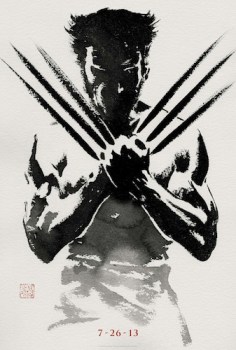 Rather than a sequel to the poorly-received
 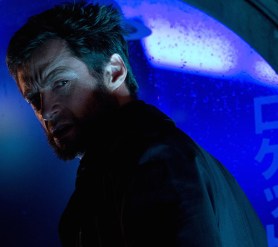 and the end result is a moderately unique movie. OK, it doesn’t ooze originality, but nor does it feel quite like your run-of-the-mill powered-people-punch-each-other comic book yarn.
 Talking of women, you can’t overlook Logan’s lost love, Famke Janssen’s Jean Grey. Considering the build-up pitched The Wolverine as a standalone film, with perhaps the occasional nod to the wider X-universe, including rumours of a Jean cameo, the final film is surprisingly tied-in to previous events: there’s actually loads of Jean (how? Well…), and Wolverine’s personal journey is very much grounded in the events of The Last Stand. I’m sure you could watch this without having seen or remembered a previous X-movie, because the bulk of the plot is indeed standalone, but the emotional journey is invested in what came before.
 Without seeing all the behind-the-scenes goings-on it’s difficult to know whose fault this was, but it’s equally difficult to imagine the screenplay that Darren Aronofsky (far from your regular blockbuster director) described as “a terrific script” could have concluded this way; and knowing that his replacement, James Mangold, fiddled with the script before shooting commenced… well, draw your own conclusions.
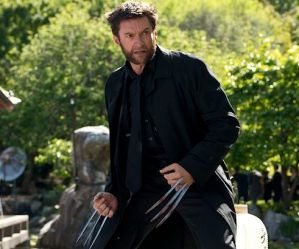 The Wolverine isn’t quite the movie it could have been; nor, I think, quite the one the makers hoped they were producing. Jackman has intimated since that it’s studio interference that pushes for silly-big action sequences and the like, but that fan feedback might slowly be winning them around to the things viewers actually care about. Whether that’s true or not, I guess we’ll see in the next instalment…
 The year 1600: British ship’s captain Solomon Kane is not a nice man, a mite too fond of pillagin’ and killin’ and quite possibly other not-nice things ending in —in’. That is until he has a run in with the Devil’s Reaper. Hell has claimed his soul, and its time to collect. Solomon does not plan on being collected, renouncing his former life and trying to hide at a monastery in England. But as a gang of possessed men lay waste to the countryside, burning its towns and enslaving its people, will Solomon be able to stick to his newfound pacifism? Yeah, we all know the answer to that…
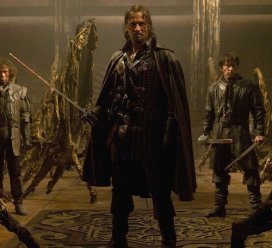 but also a more-than-requisite amount of swordfighting and the like — all told, Kane is more period action-adventure (with demons) than period horror.
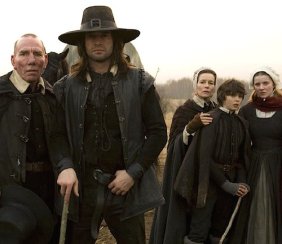 In support there’s the likes of Pete Postlethwaite, Alice Krige and Max von Sydow, all of whom bring instant heft to roles that need it. I don’t mean to say the screenplay doesn’t contain it, but the shorthand the actors bring with them certainly does favours. Cameo-sized appearances by Mackenzie Crook and Jason Flemyng are also effective, and watch out for a pre-
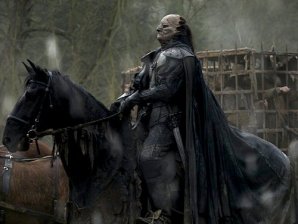 My praise also extends to those responsible for the film’s location shooting. Shot in the Czech Republic, for once that genuinely looks like Britain. OK, the style of some buildings give the game away occasionally (in particular the monastery), but until I read different, I just assumed the fields, forest and coastline had been found in our real South West, on the moors or what have you.
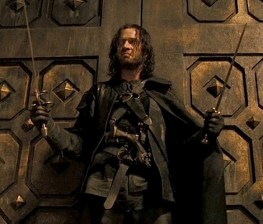 At the end of the day, Solomon Kane is a period fantasy action-adventure, something which doesn’t seem to be everyone’s taste — it has relatively weak scores on the likes of IMDb and Rotten Tomatoes (though, in the context of how this kind of movie often performs in those arenas, they’re far from awful). For my money, however, it’s a great little film. It looks beautiful, it renders the tone of pulp fantasy brilliantly, its action sequences are exciting (so many swordfights! Heaven!) and its creepy bits unnerving. It may not be ‘trash’ elevated to art — it’s not a Tarantino movie — but it is pulp fiction treated with due reverence.
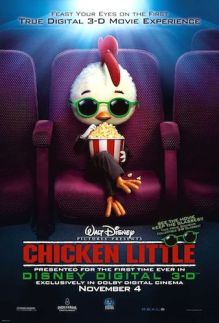 The director of Disney’s woeful
 The writer-director of
 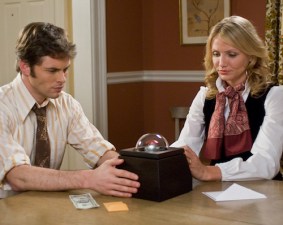 What a nice tribute to his supportive parents and their devotion to one another, eh? At the start, perhaps, but by the end of the film you may be wondering what the writer-director’s subconscious wants to do to his ma and pa…
 What could function well as an indie-level thriller is further undermined by abundant, therefore costly, CGI. Whether that’s Langella’s facial disfigurement (what could’ve been make-up is actually a complex array of tracking dots, green face-paint, motion-control cameras, and so on; all used merely to place him in simple dialogue scenes), or wide shots of ’70s Virginia, with a computer-adjusted skyline, computer-animated cars, and computer-painted snow. It’s not that the effects work is poor (though don’t look too closely at those cars), but that it screams “this must be special effects!” when you don’t want such distractions.
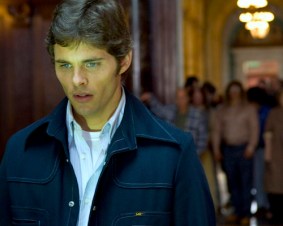 The Box should have been a film we all discussed for years to come, its “what would you do”-ness providing an
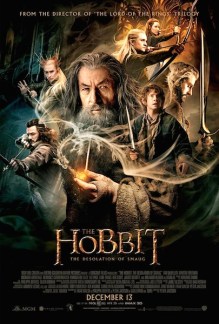 The Desolation of Smowg-not-Smorg begins in the same way
 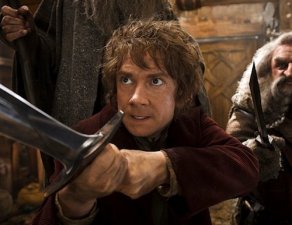 It’s my understanding that the originally-planned (and shot) two-part version of Jackson’s Hobbit adaptation was transformed into a trilogy by, essentially, taking what was to be film #2 and splitting it in half. That might explain why individual sections are allowed to go on so long here: to bulk up the running time to the kind of epic proportions audiences expect from a Middle-earth movie. Anything less than two-and-a-half hours isn’t going to cut it. But when your climax is a battle between a giant dragon (cool!) and a small army of dwarves (kick ass!) around a deserted underground city (hell yeah!), but my main thought afterwards is, “God that went on a bit”, then you’ve failed at something.
 Meanwhile, Luke Evans’ Bard is as Welsh as the actor’s name suggests, which is a little bit of a surprise. But then the dwarves’ accents have all the rest of the UK covered, so why not. Benedict Cumberbatch sounds like Benedict Cumberbatch playing ‘big’ as Smowg-not-Smorg. It feels like this should be an iconic villain performance but, while good, I found it somehow lacking. Expectation may be scuppering him; maybe I’ll warm to it on future viewings.
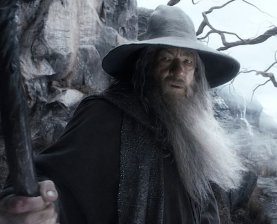 I haven’t picked apart everything that’s wrong with the film (what purpose is there switching from one made-up-for-the-film orc general to another?!), but then nor have I praised everything that works (there are some quality actors in amongst all that crashing and banging). It seems a fair few people liked this Hobbit instalment more than the first; the best explanation I can find is, “because it’s got more action”. Far be it from me to accuse other film viewers of being shallow, but… really? I genuinely enjoyed An Unexpected Journey as a return to the beloved realms and peoples of Middle-earth. The Desolation of Smowg-not-Smaug has some of that, and the charm of introducing us to new parts of the world too, but it’s drowned out by so much aimless noise. Here’s hoping it improves with repeat viewings and/or the inevitable extended edition, because this time I nearly slipped down to a lowly 3 stars.
 Few would deny that Peter Jackson’s extended versions of
 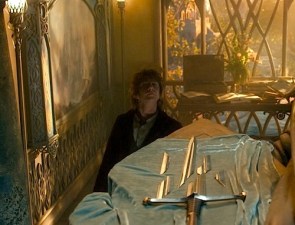 There’s not as much extra time with the dwarves as I expected, though, with most of the character time still going to Bilbo.
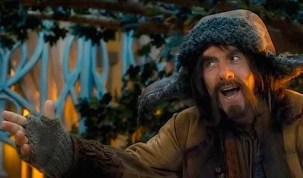 having to work alone on a green screen for many of his scenes with the smaller characters), but newcomers Martin Freeman, Richard Armitage and James Nesbitt shine too. This is Freeman’s film to be the centre of attention, but Armitage and Nesbitt will have much more to do in the follow-ups, and the groundwork is nicely laid here.
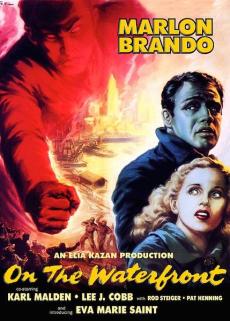 So much more than one famous scene, On the Waterfront is a movie about a magic jacket, which causes anyone who owns it to stand up for what’s morally right even in the face of oppression, but also to suffer badly when they do.
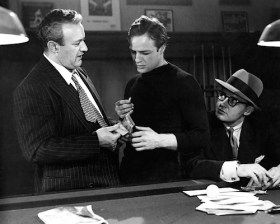 The only potential downside to this comes if you dig behind the scenes. Kazan was one of those who testified before the House Committee on Un-American Activities during its 1940s and ’50s witchhunt for Communists in Hollywood, naming eight men who were later blacklisted. If you consider the film to be Kazan’s answer to critics of his actions (as it “widely” is, according to Wikipedia), then presumably Brando is meant to be Kazan, calling out those who are doing ill to good hardworking Americans. But many a great film has been made with poor motive — just because Kazan thinks what Brando’s character does and what he did are the same thing doesn’t mean we have to. Even then, the issue of Kazan’s testimony is not so straightforward: a former Communist himself, he faced the end of his career if he didn’t testify, and the names he gave up were already known to the committee. The controversy dogged him for the rest of his career, though: when he received an honorary Oscar in 1999, several notable audience members refused to applaud.
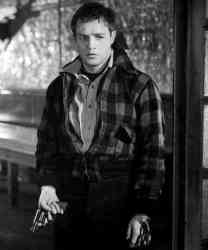 While subtext is undoubtedly a meaningful thing, and using one situation to comment on another is a tried and true way of presenting an argument or criticism, I’m not a proponent of offhandedly dismissing work(s) just because we don’t agree with the actions or beliefs of the person who made it. On the Waterfront is a powerful film, exemplarily made by skilled craftsmen. Whatever Kazan was trying to atone for with its message about standing up to bullies in defence of what’s right, the sentiment is true. And you don’t need a magic coat to do it either.
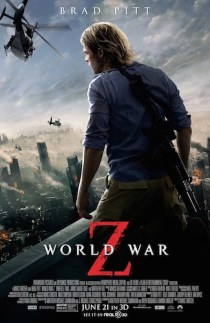 In the weeks leading up to its theatrical release, it was already known that World War Z was going to be an almighty flop. An unscrupulous movie studio had taken a cult novel and thrown away everything but the title, alienating its existing fanbase. They’d spent a fortune making a movie in a traditionally R-rated genre that, if released at R, could never make its money back, and if released at PG-13 would never attract an audience. Then they reshot the entire third act, pushing the budget through the roof and ensuring the resultant film would get critically mauled. A fanbase snubbed, an impossibly huge budget, a genre/rating disconnect, and unavoidably poor reviews to come — World War Z was going to flop, and it was going to flop hard.
 That, at least, is something different. The first half-hour races through stuff we’ve seen time and again: zombie attacks, humans turning on humans as they loot supermarkets, etc. Here the zombies are of the
  It’s a Wales populated by a Londoner, a Scotsman and a Spaniard, but still. I say “more tense” because this is far from the most nail-biting zombie film you could see. The finale is a nice change of pace, and does work as a climax in spite of the bombast that precedes it, but these are zombies as teen-friendly action movie menace, not adult scare-inducers, so don’t except to feel much fear or surprise.
 but I don’t think it was the filmmakers’ aim to make us feel the characters’ plight, but instead to show the scope of a worldwide disaster. It does that pretty well, even if the occasionally-CGI zombies prove to be an
 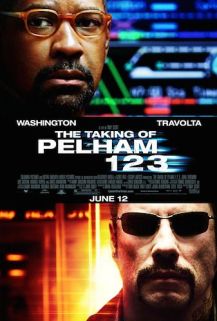 Based on a novel by Morton Freedgood (writing as John Godey), previously adapted into
 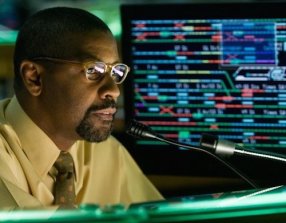 None of that here, where the captives are either even more unnoticeable, or heroic off-duty military types. So far so standard.
 Applied here to such a meat-and-potatoes tale, it feels like they’re trying to jazz it up because it can’t sustain itself otherwise.
 100Films.co.uk