2015 #135
Stephen La Rivière | 119 mins | Blu-ray | 1.78:1 | UK / English | PG
 For generations of people, the work of Gerry Anderson and AP Films / Century 21 are an irrevocable part of their childhood. For my part, I grew up during their big ’90s revival — the era of Anthea Turner’s make of Tracy Island on Blue Peter (though as no one in my family is particularly crafty (as it were) I had a Proper One), etc — so memories of Stingray, Captain Scarlet, Joe 90, and, most of all (of course), Thunderbirds are (more or less) as much a defining part of my childhood as they are for kids who grew up during their original airings in the ’60s. This documentary about the behind-the-scenes story of those iconic shows is an absolute nostalgia-fest, then; but it’s also more than that: a story of British endeavour, ambition and inventiveness, which perfected an art form and, in the process, revolutionised television and film. And all by a bunch of young Brits working out of a poky little industrial unit in Slough to make children’s TV programmes using puppets.
You may balk at such a claim, understandably, which is partly why this documentary’s very existence is a delight. However implausible it may sound, this gaggle of puppeteers were TV- and movie-making pioneers. For one thing, they were the first in Britain to spot the inevitable rise of colour TV, insisting Stingray be shot in colour (a full five years before ITV actually offered a colour service) to futureproof it, sales-wise. For another, their desire for realism and authenticity helped push forward the development of special effects. For various reasons they ended up making mostly sci-fi shows, laden with high-tech vehicles that were inevitably involved in exciting action sequences, requiring plenty of things like explosions and water — tricky to realise with models, but they did it anyway, and made it work too, and became experts in the field.
 And finally (for this summary, at least), Anderson’s ever-present desire for realism led him to invent an aid system to aid his puppeteers. In order to control the puppets, the operators were positioned above the sets, afforded only a bird’s eye view — a hard position from which to make them perform well, considering they couldn’t see what they were actually doing as it appeared on camera. So Anderson devised a way for a video feed to be run from the film camera up to a TV monitor for the puppeteers. The process also meant the director and cinematographer could see exactly what the camera saw, including the ability to rewind and review footage, meaning that, if there was a worry about a mistake, it was no longer necessary to either wait for the film to be developed or shoot another take just in case. This system, if you aren’t familiar with it, is known as video assist and is an industry standard on film shoots (digital filming removes the need for it, of course, but that’s a very recent development).
Director Stephen La Rivière, from whose book this film is ‘adapted’, conveys these facts (and more) in amongst the narrative of the making of the programmes themselves. It’s a very well constructed documentary: smoothly told, never flagging, integrating what could be total asides as if they were a natural part of the story. Many key players are interviewed afresh, with archive interviews fill in for others (including Anderson, who passed away in 2012), meaning we’re getting the story firsthand. The result is full of admiration and respect for what was achieved by these iconic series, but isn’t adverse to revealing some of the truth behind their making.
 For instance: for all his achievements in the field, Anderson never actually wanted to work with puppets — as a burgeoning TV production company desperate for work in the ’50s, AP Films were approached by a writer to produce a puppet series, so they did; that led to her commissioning another; they thought they could do better work by themselves, so they did; and it continued to spiral from there. Anderson constantly pushed for the puppets to be better — for their movements to be more realistic, for their lip-sync to be genuinely synced (again, innovating new technology to achieve this), for their proportions to be like humans rather than caricatures. But these advances eventually went too far, at times angering the puppeteers. They didn’t approve of the realistically-scaled puppet heads featured from Captain Scarlet onwards — they were harder to puppeteer convincingly, divorced of the margin of error that bigger heads allowed (and, arguably, needed); and they removed the puppet-ness of the puppets.
This culminated in Century 21’s final puppet series, The Secret Service, where all the scenes of people walking, driving, and so on, were performed by real humans in real locations with real props, while all the close-ups remained puppets. Many considered it ridiculous. Subsequently, Anderson was distracted into the world of moviemaking (with the flop Doppelgänger (now commonly known as Journey to the Far Side of the Sun)) and live-action TV (with UFO, for starters), and the puppet side of the business was violently shut down — an era-defining magic factory, dismantled with sledgehammers and thrown in a skip. Oh for hindsight, eh?
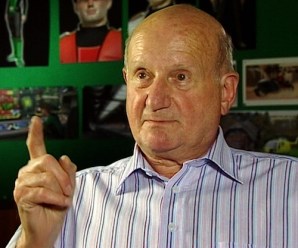 I’ve wound up telling interesting stories of Anderson & co rather than really reviewing Filmed in Supermarionation per se, but that’s because it’s an interesting story and the film tells it so very well (better than me. Oops.) For anyone who grew up with these programmes, this is an insightful, informative tribute to their ingenuity and quality. If you’re not familiar with them — if you don’t feel that ineffable childhood affection — I guess it doesn’t offer quite as much. Nonetheless, it remains the story of an incredible, pioneering endeavour that helped put the quality of British filmmaking on the map. It’s fun to think that, at a time when British culture was conquering the world and breaking new ground, through the likes of the grand extravagance of the James Bond movies and the subversive brilliance of the Beatles, standing toe to toe with them were a bunch of people in a tin shed with some puppets.
The UK TV premiere of Filmed in Supermarionation is on Sky Arts tonight at 9pm.

 After watching Inherent Vice back in August, I was inspired to re-read the only Thomas Pynchon novel I’d ever read, which I’d liked very much and been meaning to take another run at for years. That was, as you might guess, The Crying of Lot 49, a ’60s tale of possible conspiracy and definite paranoia. Reading about it afterwards, I came upon thomaspynchon.com — not an official site, despite the straightforward name — which linked to their series of Wikis on each of his novels; and right at the top of the Crying of Lot 49 one was a subsection entitled “And now… The Movie…”, complete with a YouTube link. So I watched that and now I’m reviewing it because, you know, that’s what I do.
 It’s probably not fair to judge The Crying of Lot 49 by normal moviemaking standards. As a high school project to summarise a novel in a few minutes of video (which it may or may not be), it’s probably alright. Otherwise, though, it’s not worth the seven minutes; not even for die-hard fans of the author and/or novel. It is, you might say, a W.A.S.T.E. of time. #injoke

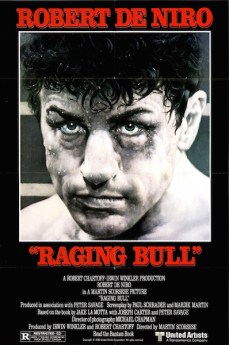 It would be boring if we all liked the same stuff, wouldn’t it? I’m sure there’s at least one ‘universally’-loved classic that we each dislike. Heck, tends to be every ‘universally’-loved classic has at least one Proper Critic that dislikes it. The flip side of this is that, in my opinion, if you don’t like something that everyone else does, there’s a fair chance it’s you who’s missing something. That’s a rule I apply to others, naturally, but I also try to bear it in mind myself (and, at the risk of sounding terribly arrogant, I think a few more people could do with thinking the same).
 The aforementioned fights, on the other hand, are full-on Cinema, and glorious for it. The make-up is also very good. Relatedly, De Niro’s physical transformation, from lithe boxer to washed-up fatso, is remarkable. Decades before the likes of Christian Bale and his
 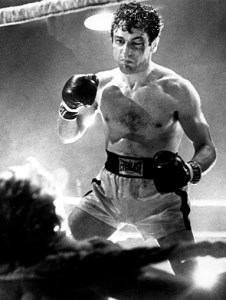 Based on where we find him at the end, I guess LaMotta would appreciate a Shakespeare quotation. For all the film’s “greatest of all time” acclaimedness, this is the one that came to my mind:
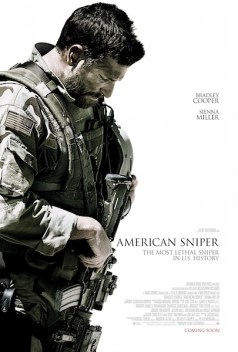 Politics aside, American Sniper is an adequately-made film. Eastwood’s direction is at best workmanlike, at worst laughably clichéd. Jason Hall’s screenplay rehashes better movies’ insights into the mental effects of war on combatants. Neither elicit much excitement from a half-arsed sniper-vs-sniper storyline. The film belongs to a bulked-up Bradley Cooper, who
  On the day marshal Will Kane (Gary Cooper) marries his young bride Amy (Grace Kelly), hands in his badge and plans to leave town, word reaches Hadleyville that a criminal he arrested, Frank Miller (presumably Will read
 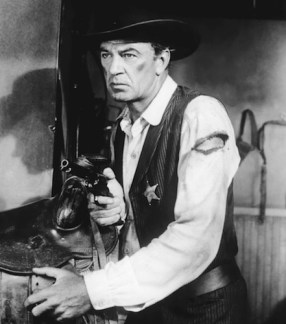 Some would contend it’s impossible to engage with High Noon and ignore that political allegory; others, like Mike at
 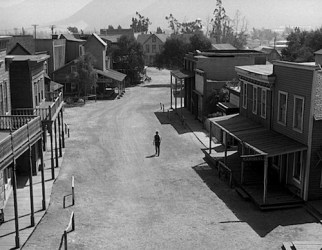 To top it all off, the film takes place in near-as-damn-it real time. Regular readers will know this is a plus for me, for reasons I still can’t quite fathom. In a narrative such as this, however, it only adds to the tension: you know it isn’t going to jump from 11:30 to the titular time, for instance — you’re going to live every one of those minutes with the characters; that’s exactly how much, or little, time Will has left to get ready.
 If you’re not au fait with the
  as both sides attempt to rally ordinary people to their cause through the power of the media. It’s a tale that’s as timely as ever, surely.
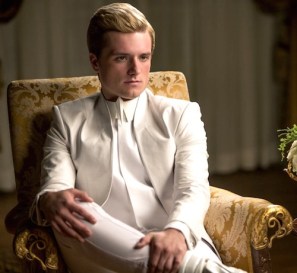 I must say that (as someone who hasn’t read the book) it didn’t feel overly like the first half of something longer to me. Of course there’s a cliffhanger and stuff, but there was at the end of the last film as well. This is no worse than that. If anything, I felt Mockingjay Part 1 built to its ending more successfully — I was quite surprised when
 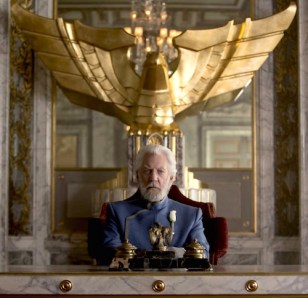 it may be your favourite instalment so far (and you wouldn’t be alone in that view). For me, Catching Fire is the best of the three because it crystallises both of those constituent elements; and if the first film was purely the action side (with a bit of the politics), then here we find its mirror image: purely politics (with a bit of action). Either way, perhaps the ultimate fate of all these films rests on how well
 Four years ago, DreamWorks’
  Tonally, DeBlois has been productively inspired by
  If there’s a flaw, it’s in some of the new characters. The primary villain is underused, introduced too late in the game to become a palpable threat. More time spent building him up, seeing his evil on screen rather than just being told about it, would’ve been appreciated. So too for the mysterious vigilante dragon-rider, who turns out to have a very significant role. The deleted scenes include a prologue that would have introduced the character at the start, which would have better established the mystery and import of their role. It’s clear why it was deleted (to focus on Berk and keep the initial tone light), but I still think it would’ve worked better in the film. In the final cut, the vigilante is mentioned all of once, then turns up and is unmasked about two minutes later. Really, though, these are niggles — even for them, the cumulative consistency is certainly better than, say, its Oscar conquerer
 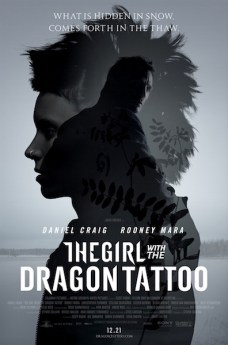 Stieg Larsson’s much-hyped novel comes to the screen for the second time in David Fincher’s much-hyped English-language re-adaptation. Somewhere between the pre-release build-up (do you remember the fuss over the trailer’s release? And all those magazine covers and articles?) and now, something clearly went awry: its UK TV premiere back in March was buried mid-week on ITV2.
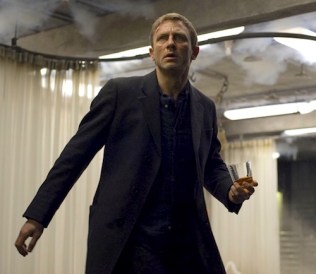 There are certainly changes, but nothing especially major. For example, the ending has been tweaked — not “completely changed”, as some reports had it, but just streamlined slightly. Some will struggle to even remember the difference if their experience of a previous version was long enough ago. Die hard fans, however, seem to regard it as a massive re-visioning of events. It isn’t.
 in particular, it’s beautifully shot, and there’s a vein of interest to be mined in discussing the fact it was consciously made using a five-act (as opposed to the usual three-act) structure (but not here today, sorry) — it feels unable to innovate or hone the genre in quite the way Se7en or
 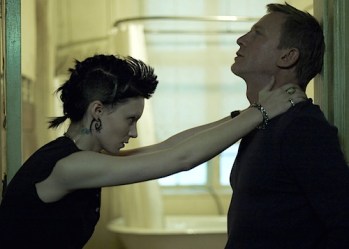 So my rating may come as a bit of a surprise given the focus of this review, which is primarily my fault for finding it so tough to shrug off all those contexts and comparisons. But hey, that’s something the film itself struggles with in many people’s eyes, too. If the viewer can divorce it from those ties, however, I think it’s still an exceptionally good thriller.
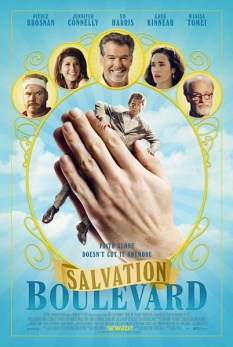 Reuniting Pierce Brosnan and Greg Kinnear, stars of comedy-thriller
  This is not the Salvation Boulevard that has ended up on film. I tried to hunt down an explanation for why co-writer/director George Ratliff had deviated so, but the best I could unearth was
  I shouldn’t have expected much given the poor reviews, but I like the cast (which also includes Ciarán Hinds and Marisa Tomei), I really enjoyed The Matador, and the trailer was suitably promising, all of which encouraged me to seek it out. I wouldn’t say Salvation Boulevard was an entire waste of time, but I couldn’t help but feel there was potential for a funnier, more cutting movie hidden in the material. Shame.
 Paul Thomas Anderson — the fêted writer-director of
 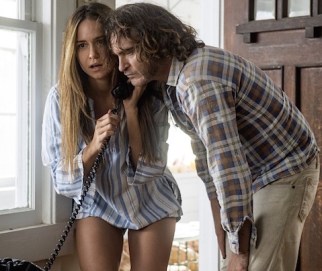 Anderson chooses to realise the movie mostly in long, unbroken takes, which not only lets the photography shine, but also allows his cast free rein to construct their own performances. I’m not sure how much that pays off, but it’s certainly not a hindrance. Turns from the likes of Josh Brolin and Martin Short border on the memorable, though your mileage will vary on if anyone truly achieves it, with the possible exception of Katherine Waterston, who surely deserves more — and more prominent — roles. Other recognisable faces (Jena Malone, Eric Roberts, Reese Witherspoon) are wasted in one- or two-scene appearances, which I suppose we could kindly call cameos.
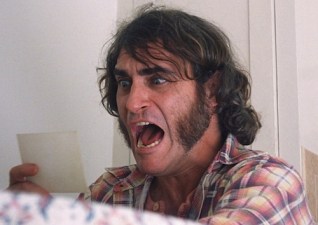 I am in neither of those groups, however. The aforementioned fleeting aspects of quality weren’t enough to swing it for me either. Sadly, I’ll be chalking this up alongside
  100Films.co.uk