
Alfred Hitchcock | 125 mins | download | PG
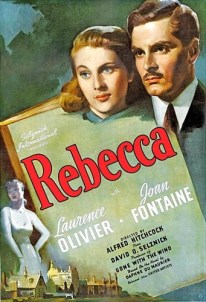 I must confess that I don’t think I’ve come to Rebecca under the best circumstances for judging it as a film in its own right. As with last week’s Great Expectations, Rebecca is on my current University module, which means I arrive at it having just read both Daphne du Maurier’s original novel and, the afternoon before viewing, a detailed and very interesting account of the film’s genesis and production from Hitchcock and Selznick: The Rich and Strange Collaboration of Alfred Hitchcock and David O. Selznick in Hollywood (nothing like a snappy title, eh?) by Leonard J. Leff. Such reading conspires to lead me into direct comparisons with the novel (which, as with most adaptations, are ultimately unfavourable due to things having to be cut), as well as a preoccupation with what was going on during production.
But, trying to put such distracting things aside, Rebecca has a great many good points. The cast, for one thing, are perfect. There were serious doubts about Joan Fontaine as the lead, but she is spot-on as the shy, almost childish, Mrs de Winter. Laurence Olivier is equally effective as Maxim, and Judith Anderson’s Mrs Danvers is suitably scary, if significantly younger than I imagined. The production’s technical aspects are also highly admirable: while the early Monte Carlo scenes may be nothing especially exciting, the plot whizzes past and we soon find ourselves at the infamous Manderley, all large halls, fog-filled grounds, dramatic lighting and big camera moves. Especially of note is Maxim’s confession — a long chunk of dialogue in the novel, it would have been all too easy to just use a flashback, but Hitchcock instead employs a camera move across the empty room to suggest the narrated action.
Further comparisons with the novel are inevitable, of course. The film skips nothing of importance, condensing events effectively so that the plot moves at a decent pace. Some events, such as the fancy dress ball and following ship wreck, are even made more dramatic by combining them. Some choices are thoroughly bizarre though: the novel is well known for its first person narrative, something the film attempts to retain by featuring Mrs de Winter in every scene… until the end when, in a deviation from the novel, she remains at Manderley while we follow Maxim and co. to London for some final twists. This does lead to a dramatic reunion upon Maxim’s return to Manderley, but I’m not convinced such a brief moment was worth the modifications.
As expected, viewing in such close proximity to the novel also forces comparisons that aren’t especially warranted — for example, the film loses much of the characterisation of Mrs de Winter by unsurprisingly finding no way to adapt her frequent flights of fancy and imagination. But then, one can always read the novel for those things (and I’d recommend it — get past the famous but dull opening and it often rattles along), and so, judged purely on its own merits, there is a considerable amount to recommend in Rebecca.

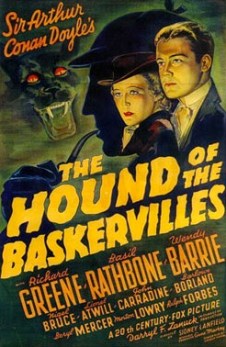 Arguably the definitive screen interpretation of Sherlock Holmes and Dr Watson, played by Basil Rathbone and Nigel Bruce, appear for the very first time here, in what would become the first in a series of 14 pictures starring the pair. (Incidentally, this will be the first in an irregular set of reviews of that series. I have the rather lovely Optimum box set, you see, and so shall slowly work my way through it. Though as I’ve already owned it for several years and only just started watching it (as with so many DVDs), I have no idea how long it will be before I finish.)
 A
A 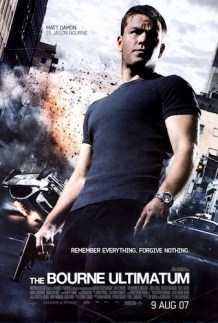 This final instalment in the action-thriller trilogy was recently announced as Empire magazine’s film of the year, following wide praise on release that dubbed it the best action movie in a long time. Unfortunately, I fear it may’ve become a victim of its own hype.
 Woody Allen mixes a bit of the thriller into his usual relationship-based comedy/drama style, with effective results. The combination produces an engaging thriller with the usual character-focused drama woven around it, and a decent dash of comedy too. The first half hour or so is a tad slow, but the pace picks up as the story rattles into the second half.
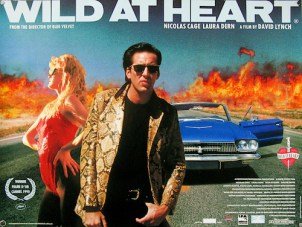 My experience of David Lynch’s work has so far been limited to
 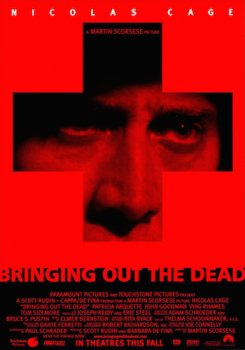 It’s hard to know what to make of this, because by the end it all seems a little pointless. The storyline, which follows Nicolas Cage’s paramedic across three nights in New York, is a mixture of short episodic medical incidents with longer threads that continue throughout. These connect and fall apart, feeling as episodic as the rest, and most of them don’t really lead anywhere.
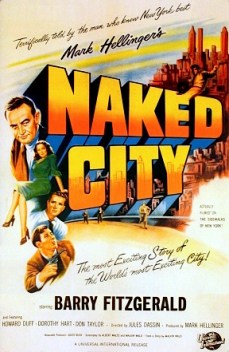 Police procedural film noir, shot entirely on location in New York (unusual at the time).
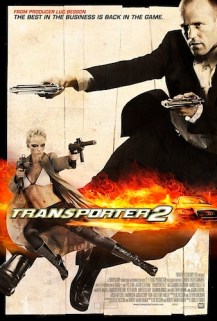 Sequel to
 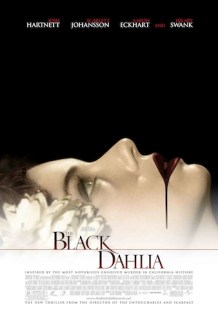 Noir-wannabe, adapted from the James Ellroy novel based on a real, unsolved case. That case is far from the focus here: from the start the apparently-central crime is anything but, meaning the biggest let-down is that events barely follow the eponymous story.

