
John Cassavetes | 108 mins | Blu-ray | 1.85:1 | USA / English | 15 / R
 Ever since I read the blurb for Masters of Cinema’s DVD of Maurice Pialat’s Police, I’ve been casually enticed by The Killing of a Chinese Bookie. Said blurb asserts that “Police is a genre-defying excursion rivaled only by John Cassavetes’ The Killing of a Chinese Bookie in the pantheon of cinema’s most idiosyncratic thrillers”, which is both a nice turn of phrase and an intriguing one. The thriller is very much a Genre — that is to say, it’s a label loaded with rules and expectations, and to be idiosyncratic within such a form is an interesting notion. Both “thriller” and “idiosyncratic” are pretty accurate labels for Chinese Bookie, though, even in its re-cut (by the director) ‘short version’.
The plot sees strip club owner Cosmo Vittelli (Ben Gazzara) lured in to killing the titular bookie as payment for his gambling debts to some gangsters. The title kind of gives away whether he does it or not (though an ever-doubtful Cassavetes reportedly considered having him not go through with it), but nonetheless the film doesn’t lack the genre’s requisite tension and suspense. However, it’s more of a character study. How aware is Cosmo of the mess he’s getting himself in to, and how far is he prepared to go? What drives the man? There are no easy answers, unsurprisingly, but that doesn’t make the questions unworthy of consideration.
According to the notes accompanying the BFI’s Blu-ray release, the ‘short version’ — which Cassavetes created after his original cut was “almost universally panned [and] yanked from the theatres within days” — not only makes the film shorter, but also more focused, clarifying various plot points. The style of much independent ’70s cinema —  naturalistic to the point of being almost documentarian, with half-caught snatches of dialogue and sequences that seem trimmed to (almost) the relevant moments from much longer filming — still begs that you pay attention, but it seems this cut gives you more of a hand: it gets to the killing quicker (“63 vs 82 minutes”), a meeting with gangsters is “longer, more coherent and explicit”, and so on.
Perhaps the biggest change is early on: the short version implies Cosmo takes his girls out to celebrate (then gets into debt); the original cut implies he’s been invited to the gambling den so he can be set up. That’s quite a shift in emphasis, turning the lead character from a picked-on ‘mark’ in the long version to a sort-of-coincidental brought-about-his-own-downfall type in the re-edit. In his 1980 review (included in the BFI booklet), John Pym asserts that Cosmo is “clearly” a patsy, a fact obscured in the short cut by the removal of that scene where he’s invited to gamble. Is he an easily-lulled patsy, then, as the gangsters think? Or is it more as I interpreted: here’s a man who acts the fool, who pretends to be easily tricked, in order to keep people happy; but who is actually much more competent and aware of what’s going on? Look at his speech near the end about being what others want. This is a man determined to keep others happy and thinking well of him; not in a superficial way, but as some fundamental character trait. Is that how he gets lured into the killing, then — purely because they asked nicely? But then later, when he escapes and gets some kind of revenge or freedom… well, that’s not so friendly. Is he finally doing something for himself? Or was he selfish all along — not much of a leap, especially considering the world he operates in.
 The Killing of a Chinese Bookie is not a neat little thriller in any respect. As Tom Charity puts it (in the BFI booklet again), “if the scenario sounds generic, the film is something else”. It reminded me of Martin Scorsese’s Mean Streets, a film I didn’t particularly like (but which did inspire Cassavetes), but I had more time for this. Perhaps that’s just me ageing (it’s the best part of seven years since I saw Mean Streets) and becoming more attuned to this kind of movie; the kind that uses “hesitations, repetitions, and longueurs as tools of disruption and misdirection”, by a director so “mistrustful of anything that smacked of tidy resolution, he regularly turned his movies around in the editing to more ambiguous and purposefully aggravating effect.”
That’s the kind of movie Chinese Bookie is: ambiguous, purposefully aggravating, without a tidy resolution. It requires the audience to work a bit. Is it worth the effort? You know, I’m never quite sure (see Bicycle Thieves for another example), and whether I appreciate it or not probably depends as much on the mood a particular film catches me in as much as its inherent quality (see also Rage). This one, while as awkward as any, engaged me just enough.

 Krister Henriksson returns as the Swedish detective for a third and final series of mysteries, starting with this final theatrically-released episode, based on the final Wallander novel. Yes, there is a sense of finality here — albeit one not reached just yet.
 It’s here that Henriksson gets to show off his acting chops the most. At a dinner party with his family, Wallander largely sits quietly with a drink rather than interact with others, occasionally staring aimlessly into the distance, or only remotely engaging with what the others are doing. He witters about a painting of a goat. Later, he has a disproportionately angry response when his friend brings news that he’s been suspended. He dotes on his granddaughter, but one day loses her and her buggy when he pops into a shop — but finds her quickly enough that no one will be any the wiser. Little signs like this are scattered around, clueing us in to where Wallander will presumably end up: retired from the force, and possibly retired from his life. Whether Mankell brought the issues to a head in his novel or not, I don’t know, but here I can only imagine it will build throughout the series.
 The one thing that really cuts through Kurt’s newfound confusedness is when he gets a nose for a case. Quietly, by himself, he sets about digging in to what’s going on, unearthing evidence that’s been missed by others, piecing it together to complete a picture of long-kept secrets and new crimes committed in the name of keeping them. It resolves into a complex conspiracy, one that touches the lives of altogether innocent people. Is there justice at the end of it? Of a sort, but how satisfying that justice is… well…
 The year is 2154 (the same year as
  Unfortunately, it seems writer-director Neill Blomkamp (of the acclaimed
  It sounds and looks like she’s struggling with a bizarre accent, while always being American. A similar problem seems to afflict William Fichtner to a lesser extent, so perhaps it’s some incomprehensible deliberate decision to differentiate the wealthy from the normal folk? I’ve read one report that Foster’s entire performance had to be dubbed, which might be a better explanation.
 There’s also something viscerally pleasurable about seeing a decently-budgeted R-rated effects movie these days. You’d think that classification would keep the budget down, but it reportedly cost over $100 million — and it looks it, with epic must-be-CGI situations that are faultlessly rendered. I suppose when the biggest PG-13 blockbusters are seeing their costs spiral towards triple that, a budget that only nudges into nine figures doesn’t look so bad. Hopefully that’s good news for those of us who would like to see more grown-up (whether that be intellectually or violently) effects-requiring movies.
 Blomkamp is a writer-director clearly committed to doing bold work in a film genre that is increasingly about spectacle over story, action over allegory, popcorn-selling over point. Elysium may not be the fully-realised vision he was likely hoping for, and more work on the screenplay would clearly have been a benefit, but top marks to the man for trying to do something worthwhile. Surely he remains one to watch.
 Adapted from a Marvel comic, though you can’t really call this a superhero movie: undercover cop Frank Castle’s family are murdered, so he goes after the crime organisation responsible. This is action-thriller territory, not guys in tights fighting.
 The man who would go on to helm
 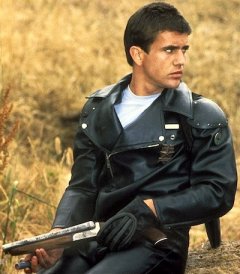 In reading up on the film, a few pieces analyse the ending as Max going to the dark side — becoming as bad as those he was fighting against; or, at the very least, becoming an anti-hero. I didn’t see it that way at first, which I think is the difference between 1979 and what’s happened in movies since. Now we routinely have heroes who do bad things: look at Jack Bauer’s love of torture in
 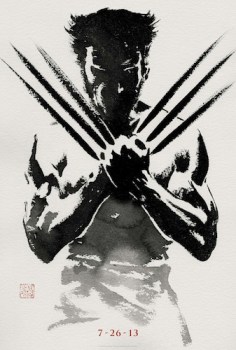 Rather than a sequel to the poorly-received
 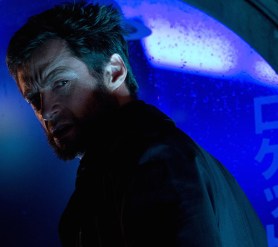 and the end result is a moderately unique movie. OK, it doesn’t ooze originality, but nor does it feel quite like your run-of-the-mill powered-people-punch-each-other comic book yarn.
 Talking of women, you can’t overlook Logan’s lost love, Famke Janssen’s Jean Grey. Considering the build-up pitched The Wolverine as a standalone film, with perhaps the occasional nod to the wider X-universe, including rumours of a Jean cameo, the final film is surprisingly tied-in to previous events: there’s actually loads of Jean (how? Well…), and Wolverine’s personal journey is very much grounded in the events of The Last Stand. I’m sure you could watch this without having seen or remembered a previous X-movie, because the bulk of the plot is indeed standalone, but the emotional journey is invested in what came before.
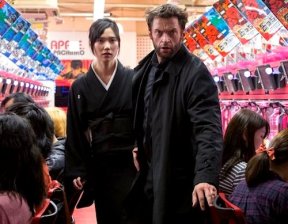 Without seeing all the behind-the-scenes goings-on it’s difficult to know whose fault this was, but it’s equally difficult to imagine the screenplay that Darren Aronofsky (far from your regular blockbuster director) described as “a terrific script” could have concluded this way; and knowing that his replacement, James Mangold, fiddled with the script before shooting commenced… well, draw your own conclusions.
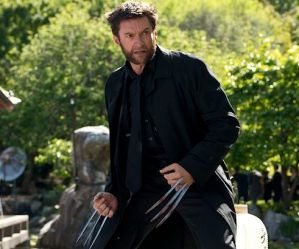 The Wolverine isn’t quite the movie it could have been; nor, I think, quite the one the makers hoped they were producing. Jackman has intimated since that it’s studio interference that pushes for silly-big action sequences and the like, but that fan feedback might slowly be winning them around to the things viewers actually care about. Whether that’s true or not, I guess we’ll see in the next instalment…
 The writer-director of
 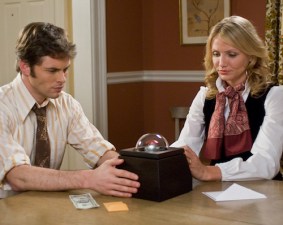 What a nice tribute to his supportive parents and their devotion to one another, eh? At the start, perhaps, but by the end of the film you may be wondering what the writer-director’s subconscious wants to do to his ma and pa…
 What could function well as an indie-level thriller is further undermined by abundant, therefore costly, CGI. Whether that’s Langella’s facial disfigurement (what could’ve been make-up is actually a complex array of tracking dots, green face-paint, motion-control cameras, and so on; all used merely to place him in simple dialogue scenes), or wide shots of ’70s Virginia, with a computer-adjusted skyline, computer-animated cars, and computer-painted snow. It’s not that the effects work is poor (though don’t look too closely at those cars), but that it screams “this must be special effects!” when you don’t want such distractions.
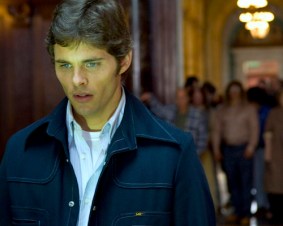 The Box should have been a film we all discussed for years to come, its “what would you do”-ness providing an
 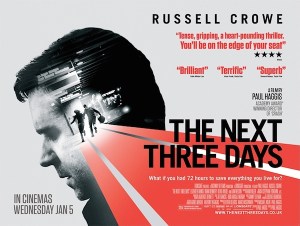 If someone you loved was locked up for decades for a crime you were sure they didn’t commit, how far would you go to get them out? That’s the premise of this methodical thriller from writer-director Paul Haggis (of
 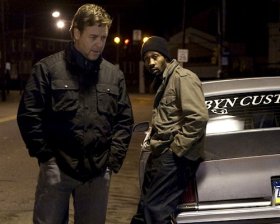 with a protagonist who either already has a “particular set of skills” or implausibly learns them (maybe over a longer period of time) before putting in motion their crazy scheme.
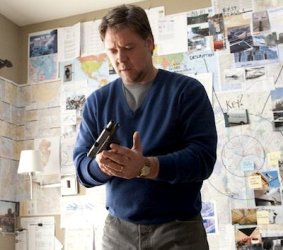 Running him a close second is the all-action final half hour or so, when Crowe (spoilers! but not really!) finally stages the actual escape. It’s a long time coming, but we’re paid off with a pretty fantastic long-form action sequence. There’s genuine tension about whether they’ll pull it off or not, and along the way we’re treated to a few nice flourishes in his plan. There’s a fair degree of silliness still, though, so at least that’s in-keeping with the rest of the movie.
 Finally, there’s an attempt to keep uncertain the truth about Banks’ culpability. Haggis never wanted that question to be answered — Crowe believes she’s innocent, even when she confesses to his face, and that’s what matters. I don’t think Haggis is a filmmaker who can resist answers, however, and for all his assertions that her innocence/guilt is left ambiguous, by the end I think you can be pretty darned certain which it is… which kinda makes all the previous attempts to leave it open feel hollow, especially the ones that side with the untrue.
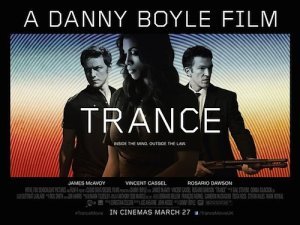 Ambiguous endings used to be anathema to film audiences. They wanted things tied up in a pretty little bow, thank you very much; all the conflicts resolved and all their questions answered. Then the likes of
  In the Blu-ray’s special features, Boyle comments that “it’s more classical than you might expect.” He’s talking specifically about the cinematography (and he’s right, but more on that later), but he could equally be talking about the entire movie. Though it has a storyline that blurs the line between what’s actually happening and what’s happening inside a character’s head (or is that characters’ heads?), the overall tone and style — particularly of the climax — is actually quite Hollywood. It’s Hollywood jazzed up with storytelling trickery, a quirky score, dashes of extreme gore and surprising nudity (that it’s not an 18 is somewhat surprising); but underneath all that it’s not a million miles away from your run-of-the-mill thriller.
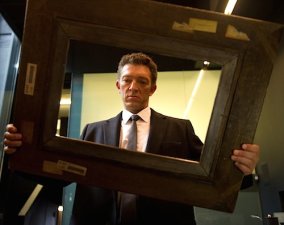 there’s no switching to black and white for dreams, for instance; nothing to definitively tell you which state you’re in. And this is a good thing, because when you need to know you can tell, and the rest of the time… well, the film’s playing with you. That’s the point. What is real and what is a scenario McAvoy’s being talked through? Are these memories what happened or the product of an addled mind?
 Dod Mantle’s cinematography is also strikingly handsome. As noted, the film’s buzz had me expecting something akin to late-career Tony Scott, all jumpy and weirdly saturated and fragmented. Instead, as Boyle said, it’s actually very classical, but with a great eye. There are a number of shots which would look fabulous framed and hung on the wall, not least of the street outside Dawson’s flat at night, a restaurant next to intersecting train lines, and aerial photography of red-lit nighttime motorway junctions, looking like some kind of Rorschach test-esque psychiatrist’s tool.
 Like a
 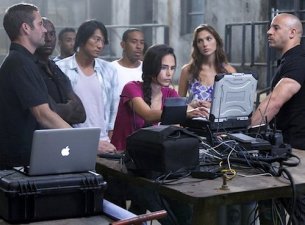 The plot is essentially “
 with both this and last year’s sequel proving huge hits, and a
  100Films.co.uk