1998 Reconstructed Version
2013 #58
Orson Welles | 111 mins | Blu-ray | 1.37:1 | USA / English | 12 / PG-13
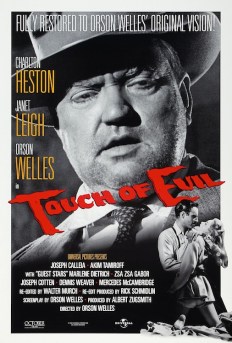 A bomb is stuck to the underside of a car. As the vehicle pulls away, the camera drifts up into the sky, and proceeds to follow the automobile through the streets of a small Mexican border town, until it crosses the border into the US… and explodes. It’s probably the most famous long take in film history, and probably the thing Touch of Evil is most widely known for; that, and it being one of the most commonly-cited points at which the classic film noir era comes to an end.
So who planted the bomb? Who was their target? And why? None of those questions matter. I’m sure they’re answered, but I don’t recall what those answers were, because they’re not what the film is about. What it’s about is Charlton Heston vs Orson Welles. The former is Vargas, a righteous Mexican drugs enforcement officer who witnesses the bombing while out walking with his new American wife. The latter is Quinlan, the policeman charged with finding the culprit — and he isn’t an honest copper. When Quinlan works out who he thinks is guilty, he makes sure there’s the evidence to back that up. And I don’t mean by doing thorough police work. Vargas catches him more-or-less in the act; Quinlan won’t allow himself to be exposed. It’s a game of cat and mouse; at stake, not just two men’s reputations, but justice and the law (not the same thing); and just waiting to get tangled in the middle, Vargas’ new wife — sweet, innocent Janet Leigh.
This is not film noir as many think they know it. Instead of a doggedly determined wisecracking PI solving a slightly seedy case, Touch of Evil is suffused with a sweaty and disquieting atmosphere. 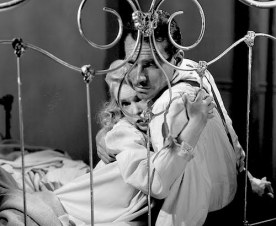 It’s like a terrible fever dream, with events and characters that sometimes seem disconnected, but nonetheless interweave through a dense plot. In this sense Welles puts us quite effectively in the shoes of Vargas and his wife — out of our depth, out of our comfort zone, out of control, struggling to keep up and keep afloat. It might be unpleasant if it wasn’t so engrossing.
Similarly uncomfortable are the film’s moral implications. Well, possibly. In the booklet accompanying Masters of Cinema’s Blu-ray release, French critics François Truffaut and André Bazin both assert that Welles’ Quinlan, while ostensibly the villain, is really a hero; that though he technically breaks the law, he’s morally right to do so. Essentially — or in Truffaut’s case, explicitly — they are defending policemen who fabricate evidence to ensure a conviction. Unfortunately for all their so-called intellectualising, Welles completely disagrees: “The personal element in the film is the hatred I feel for the way the police abuse their power… The things said by Vargas are what I would say myself… that’s the angle the film should be seen from; everything Vargas says, I say.”
Amusingly, Bazin is indeed forced to admit that “in the interviews which he gave me… Welles challenged this interpretation. He maintains that his moral position is unequivocal and he condemns [Quinlan] absolutely”. Meanwhile, Truffaut’s praise-filled essay asserts that, in the film’s ending, “[Vargas’] sneakiness and mediocrity have triumphed over [Quinlan’s] intuition and absolute justice.” Elsewhere, Welles summarises that “it’s a mistake to think I approve of  Quinlan at all… there is not the least spark of genius in him; if there does seem to be one, I’ve made a mistake.” You can get pretentious about it all you want, and bring to bear political views that the film doesn’t support (after all, within the film Quinlan is punished for his crimes and the “mediocre” (Truffaut’s word) moral hero triumphs), but sometimes a spade is a spade; sometimes a villain is a villain; sometimes your disgusting moral perspective isn’t being covertly supported by a film that seems to condemn it.
Welles:
What I want to say in the film is this: that in the modern world we have to choose between the law’s morality, and the morality of simple justice, that is to say between lynching someone and letting him go free. I prefer a murderer to go free, than to have the police arrest him by mistake. Quinlan doesn’t so much want to bring the guilty to justice, as to murder them in the name of the law, and that’s a fascist argument, a totalitarian argument contrary to the tradition of human law and justice such as I understand it.
So that’s the end of that.
Welles’ beliefs about filmmaking were similarly forthright, stating that “all of the eloquence of film is created in the editing room” — the images were important, but the real art was in how they were placed together in the edit. It must have been especially hard for him, then, that so many of his films were “violently torn from [his] hands”: as of 1965, he says only Citizen Kane, Othello and Don Quixote were movies he’d been allowed to edit to his own specification (and that last one barely counts).
 Notably and obviously absent from that list is Touch of Evil. It was taken away from Welles during the editing process, and though he submitted an infamous 58-page memo of suggestions after seeing a later rough cut, only some were followed in the version ultimately released. Time has brought change, however, and there are now multiple versions of Touch of Evil for the viewer to choose from; but whereas history often resolves one version of a film to be the definitive article, it’s hard to know which that is in this case. Indeed, it’s so contentious that Masters of Cinema went so far as to include five versions on their 2011 Blu-ray (it would’ve been six, but Universal couldn’t/wouldn’t supply the final one in HD.) The version I chose to watch, dubbed the “Reconstructed Version”, tries to recreate Welles’ vision, using footage from the theatrical cut and a preview version discovered in the ’70s to follow his notes. Despite the best intentions of its creators, this can only ever be an attempt at restoring what Welles wanted. Equally, although it was the version originally released, the theatrical cut ignores many of the director’s wishes — so as neither version was finished by Welles, surely the one created by people trying to enact his wishes is preferable to the one assembled by people who only took his ideas on advisement?
But that’s not all, poor viewer! There’s also the issue of the film’s aspect ratio: Welles was forced to shoot the film for projection at 1.85:1, but he did so on the understanding that an open matte 1.37:1 version would be shown on TV. He penned an article the same year as Touch of Evil’s release, called “Ribbon of Dreams”, in which he firmly advocates the Academy ratio and shows a strong distaste for widescreen (reading it today, it’s reminiscent of and comparable to Christopher Nolan’s comments on the film vs digital debate). With that considered, the full screen version would seem the preferable choice. 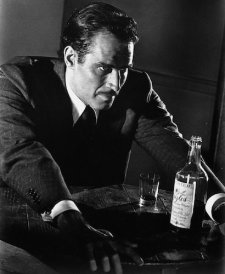 To quote from Master of Cinema’s booklet, “the familiar Wellesian framing appears in 1.37:1: indeed, the “world” of the film setting emerges with little or no empty space at the top and bottom of the frame, almost certainly beyond mere coincidence.” There are things to recommend the widescreen experience (“a more tightly-wound, claustrophobic atmosphere”), and undoubtedly the debate will continue… and such is the wonders of the modern film fan that, rather than having to make do with someone else’s decision on what to put out, all the alternatives are at our fingertips.
Obviously I can’t speak for all the different cuts of Touch of Evil, but considering its constituent elements, it’s hard to imagine a version that isn’t complex, thought-provoking, perhaps a bit uncomfortable, and all-round an impressive work of cinema.
Touch of Evil was viewed as part of my What Do You Mean You Haven’t Seen…? 12 for 2013 project, which you can read more about here.

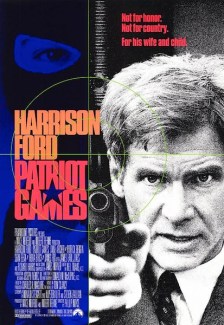 A sequel to The Hunt for Red October in technicalities only (it’s another Jack Ryan adaptation, but he’s been recast; only one actor returns, in fact), Patriot Games is another political/espionage thriller from the pen of Tom Clancy.
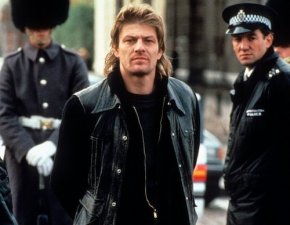 There’s a nasty synth score, just to make things drag more. There are some moments of brilliance though, not least the beautifully-shot boat chase climax. There’s also the dubious joy of seeing Sheffield’s most famous son, Sean Bean, doing an Irish accent. Co-terrorist Polly Walker is English though — twist! Not that her subplot really goes anywhere. Possibly she just couldn’t do the accent.

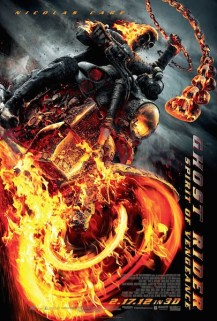 Best known for the trailer that showed its hero pissing fire, Ghost Rider: Spirit of Vengeance is a semi-reboot of the Marvel comics franchise about a demon-possessed vengeance-seeking motorbike rider.
 where adults have east European accents but kids sound American, and Idris Elba pretends to be French.
 It would seem there’s a market in Sweden for series of feature-length crime dramas that begin with a first episode released in cinemas before continuing in regular direct-to-DVD/TV instalments. It’s what happened with the Krister Henriksson
  The specifics of the plot see young university lecturer Puck (Tuva Novotny) invited to spend midsummer on the island home of her supervisor, who’s really asking on behalf of attractive history lecturer Eje (Linus Wahlgren), who Puck has been to a café with three times. A whole gaggle of old chums of Rutger and Eje are also there, including a couple of uninvited guests who arrive out of the blue — and before you know it, Puck finds one of them dead. Eje calls in his chum, detective Christer Wijk (Ola Rapace), and, after the island is cut off from the mainland in a more permanent fashion, the three set about getting to the bottom of things. Cue suspicious actions spied through trees, suspicious conversations partially overheard, suspicious evasion of perfectly reasonable questions, and all the usual suspiciousness you’d expect from a Christie narrative — only subtitled.
 Novotny makes for a likeable lead, though the attempted love triangle between her, Wahlgren and Rapace feels like a non-starter. The biggest surprise is Rapace: previously seen as troubled young copper Stefan Lindman in Wallander and, most famously, as shaven-headed silent assassin Patrice in
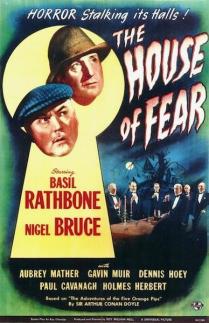 Adapted very loosely from the early Conan Doyle story The Five Orange Pips, this outing for Basil Rathbone’s Sherlock Holmes and Nigel Bruce’s Dr Watson sees them summoned to Scotland to investigate the suspicious deaths of the members of a club, where each killing is preceded by an ominous postal warning.
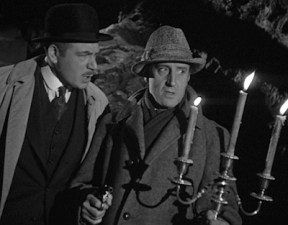 While the club having seven members does mean there’s a fair few suspects, it also means it takes a long time to get through them all being bumped off! It doesn’t sink so low as to be deemed repetitive, but does border it.
 2014 Academy Awards
 On its theatrical release, a commonly-cited recommendation was to see Gravity in 3D on the biggest screen possible. Obviously, I didn’t bother. Some say it isn’t as effective on a small screen in 2D. Maybe it isn’t as effective, but it’s still a damn fine film.
 quick editing has always been a way of creating excitement in that arena), the never-ending shots serve to make you feel closer to events, right alongside Bullock, almost wishing it would stop. Plus there’s skill in being able to show us what we need to see from a single vantage point, without the easy option of being able to cut to a different angle to clarify a detail.
 The most high-profile jobs — the actors, the studio — may be American, but everything else is pretty darn British. Rather than cry “that’s ridiculous! Give it to a proper British film!”, we should be keen to point out that, actually, this surprise global mega-hit wasn’t made in America, but in Britain, by all the talented filmmakers we have here. Rule Britannia, etc etc!
 While I sympathise with the idea that it’s not A Science Fiction Movie, but instead A Thriller (That Happens To Be Set In Space), you can’t really deny its SF-ness. OK, if we’re classing this as SF then so too should be films like
  The follow-up to 2009’s
  indeed, a band of outré ninjas are introduced almost as soon as our heroes, and they set off on an OTT plotline simultaneously. As the film wears on, it disappears further and further into fantasy; and not “version of our world” fantasy, but “kids’ Saturday morning cartoon” fantasy. The plot suggests the violence etc should be slightly toned down and the whole affair should have a PG, or even a U. Much like the first film, then.
 Elsewhere in that making-of, the guys from Hasbro talk about how they wanted to ensure the characters were distinct, not just Generic Soldiers. Failed that, then. It’s fortunate that most of the Joes are massacred because the only stand-outs are The Rock (because he’s The Rock), Channing Tatum (because he was in the first one), and Adrianne Palicki (because she’s the only girl). Even once D.J. Cotrona’s Flint (and I had to IMDb both of those names) is one of just three Joes left, his only distinguishing features are that he’s Not The Rock and Not The Girl. He is, to use a phrase borrowed from the Hasbro guys, a Generic Soldier. “Oops.”
 Residents of a condemned high-rise witness a gang-related murder, but don’t intervene and deny all to the police. Months later, a sniper begins to pick them off. Can they band together and survive?
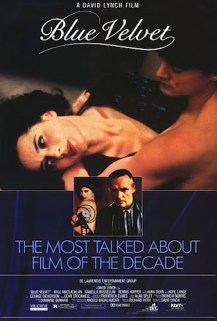 Before he brought the disquieting underbelly of small-town America to television audiences with
 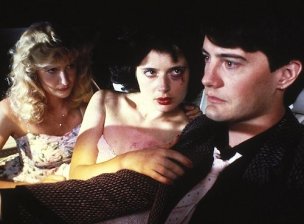 But… is it, really? The white-picket-fence-dwellers are pretty clean; it’s the people inhabiting the scuzzy apartment blocks and industrial estates nearby who are the problem. Those characters are as corrupt and degenerate as their abodes might lead those with regular prejudices to suspect. It’s a less subversive point of view, and I don’t think it’s what Lynch was actually going for. Anyway, the entirety of his moviemaking technique is so outré that you can’t help but find the whole twisted nonetheless.
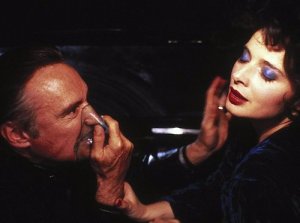 “It’s not a movie for everybody,” Lynch himself said (to Chris Rodley for the book
  Remembered largely thanks to the involvement of Orson Welles (he has a supporting role, produced it, co-wrote it, and reportedly directed a fair bit too, though he denied that), Journey into Fear is an adequate if unsuspenseful World War 2 espionage thriller, redeemed by a strikingly-shot climax. The latter — a rain-drenched shoot-out between opponents edging their way around the outside of a hotel’s upper storey — was surely conducted by Welles; so too several striking compositions earlier in the movie.
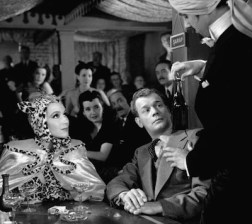 all added by Welles after the studio had their way, which seems to be the one US viewers know. The version without those seems to be the only one shown on UK TV, however.)
 100Films.co.uk