
Justin Lin | 125 mins | streaming (HD) | 2.35:1 | USA / English | 12 / PG-13
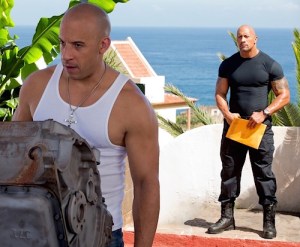
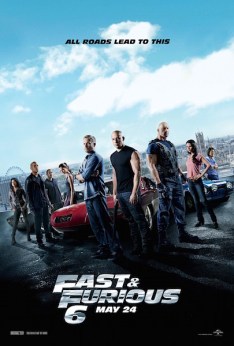 Fast Five’s kinda-villain, supercop Hobbs (Dwayne Johnson), tracks down our band of car-driving criminal-heroes to inform Dom (Vin Diesel) that former girlfriend Letty (Michelle Rodriguez), who apparently died in the fourth film, is actually alive and working with a gang of super-criminals in London — which is Hobbs’ leverage to get Dom, Brian (Paul Walker) and the rest of the gang to come out of retirement to help catch said crims.
Cue two hours in which cars drive fast, people punch each other, and things blow up. Furious 6 (as it’s called on screen, to forcefully indicate a barely-existent “Part Two”-ness with the previous film) doesn’t ask much of you as a viewer, and doesn’t give you much back either — which is fair enough, in its own way. In other ways, it’s a disappointment.
The last film broke the diminishing-returns curve the franchise was on, but Furious 6 slots right back into it. It’s kinda tricky to pinpoint why Fast Five was so entertaining and this one isn’t. I think it just takes things too far. Firstly, the team-up novelty of the fifth film is now the series’ modus operandi, which makes it less special. Worse, there’s a muddled plot (Brian goes back to LA to meet someone in prison for no particularly good reason) and OTT action sequences. Five had the latter too — dragging a safe round the streets of Rio! — but 6 goes too far beyond. In transitioning from “street racing franchise” to “heist franchise (with cars)”, Fast & Furious has lost sight of its roots and become just another overblown action series.
 For all the intent of this being “Part 2 of 2”, there’s a post-credits tease which sets up the next film’s villain: the brother of this film’s villain! So, what, this is “Part 2 of 3” now? Or, more likely, they’ve adopted the modern movie franchise format of a never-ending series of closely-connected narratives; essentially, a TV series, only with bigger budgets and just one instalment every other year. I suppose it doesn’t matter, but go too far down this route and you end up with films so engrossed in their own years-long mythology that your viewers forget why everything’s happening. Just look at the Saw movies, which had to start building “previously on”-style flashbacks into their editing. Let’s hope Fast & Furious doesn’t start requiring the same — to this point, at least, the primary story of each film has thankfully been established and resolved between the Universal logo and the credits scroll.
Also on the bright side, the action sequences aren’t over-CGI’d. There’s definitely some of that in play, most obviously during the climax (with its never-ending runway), but a lot of the car stunts throughout the film look to have been done for real. Always preferable. As for the Old Blighty setting, although the film does indulge in some tourists-will-recognise-this views of London, it’s not as bad as most Hollywood versions of the city — or British versions, if you look at the work of Richard Curtis & co. 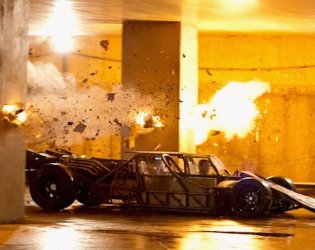 There’s plenty of backstreet, underground, grim-and-gritty bits on display here — entirely appropriate given the characters’ street-racing roots and criminal know-how. Still, these are little more than cosmetic bonuses.
Not the worst of the franchise, though certainly not the best, Furious 6 is an overcooked extravaganza that goes on at least one action sequence too long.

This review is part of the 100 Films Advent Calendar 2014. Read more here.
 Box office gross is one of the methods most often used to summarise a film’s success and standing, and yet it’s one of the most useless markers of quality — and quotes like the above, from Terrence Rafferty in his article “Holy Terror” for Criterion’s Blu-ray release of Night of the Hunter (and available online
  In another piece in Criterion’s booklet, “Downriver and Heavenward with James Agee” (online
  And yet, as Rafferty explains, “the most radical aspect of The Night of the Hunter… is its sense of humor. More conventional horror movies overdo the solemnity of evil. The monster in The Night of the Hunter is so bad he’s funny. Laughton and Mitchum treat evil with the indignity it deserves.” I wouldn’t say that humour is one of the film’s defining characteristics, to be honest, but it does undercut its villain. He’s not some unstoppable supernatural creature, but a man who can trip over while chasing you up the stairs, and so on. In some respects it’s this very ordinariness that makes him so scary: however much they creep you out during the film itself, you know there’s no such thing as vampires or werewolves or ghosts. There are Powells in the world, though; an everyday evil that you might not see coming, but can still get you. Brr.
 In
In 
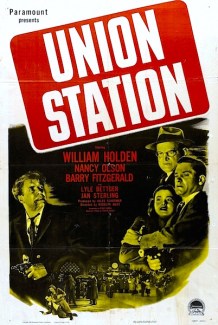 Often noted merely for being filmed in Los Angeles’ busy train station, there are some spirited defences of Union Station to be
 Disgraced national TV journo Dustin Hoffman is slumming it on a local network, covering dull stories like something-or-other going on at the local museum… until a recently-fired security guard from said museum (John Travolta) turns up with a shotgun, accidentally shoots the other security guard, and takes a party of schoolchildren hostage. Suddenly Hoffman finds himself with the inside scoop — literally — as the eyes of the national news turn on the unfolding situation.
 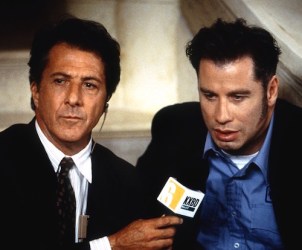 He plays against type as Sam, the nervous, naïve, childlike, and easily-manipulated hostage taker. It’s Travolta’s performance that makes Sam someone you care about, even if you don’t exactly root for him, so that the outcome — which, unusually for this kind of film, remains completely uncertain right until it’s happened — is something you’re fully invested in. There are many better-regarded films than this that don’t achieve that.
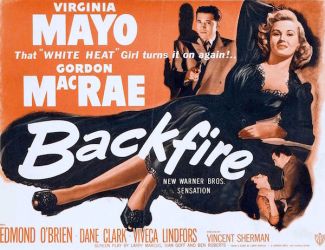 Before he was the romantic male lead in musicals like
  Besides, even if the film seems to forgo the usual gritty noir trappings for a pleasant “English murder mystery”-type tale at first, it actually has its fair share of dark elements and noir-ish features, which only increase as it goes on: secretive gangsters, nightclub singers, revenge shootings… Then there’s the photography which, again, transitions from a fairly ‘regular’ (for want of a better word) style early on, to a world of rain-slicked streets and high-contrast lighting.
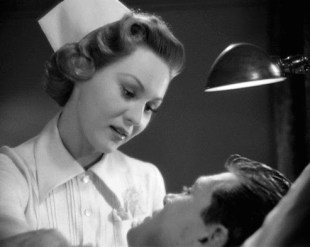 It’s in the latter’s case that the writing gets a chance to shine, too: the chief’s flashback is littered with snappy dialogue that feels kinda like he’s telling you the story himself, not just a matter-of-fact “here’s what happened earlier” objective account. Other flashbacks retain a degree of subjectivity — we only see events the characters could have witnessed, and in some cases the way they witnessed them (like the cleaning lady who only sees customers’ feet, before spying through a keyhole in a shot complete with keyhole matte) — but there’s an idea there, briefly glimpsed in that detective’s flashback, that would’ve made for an even more interesting film.
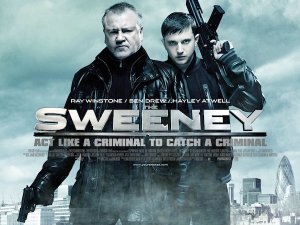 Despite a mediocre pedigree and TV-scale budget, this re-imagining of the iconic ’70s cop show is a solid thriller.
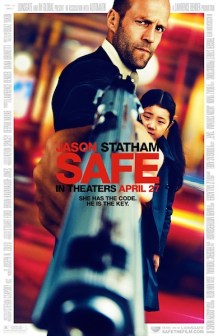 Jason Statham plays a cop turned cage-fighter turned vagrant, who rescues a young girl and finds himself amidst a three-way brawl between the Triad, the Russians, and corrupt cops. They want the child for a number she’s memorised, but what is its significance?
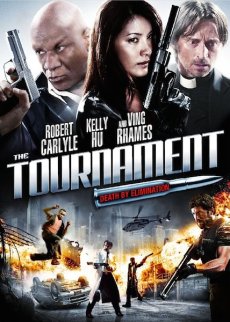 The Tournament is the kind of film where its relative quality is entirely dependent on what you want from a movie. Is it original? Not terribly. Is it clever? Not really. Is it action-packed and kinda fun? Yessir. If you just want to shift your brain into neutral and watch people punch, kick, shoot, stab, chase, and generally fight each other in a slickly-produced fashion, with a solid enough plot that (depending how brain-neutral you’ve gone) might offer an occasional twist… well, you’ve come to the right place.
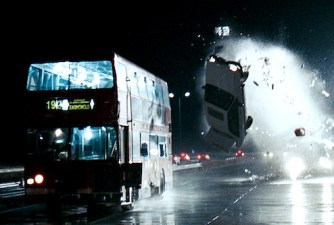 The action is the draw, of course, and fortunately the film delivers in spades. The best stuff involves Sebastien Foucan, who you may remember as Bond’s bomb-maker target in
 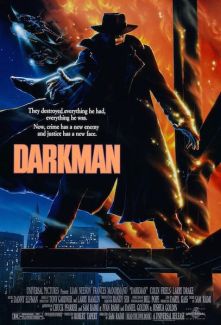 Before he made the insanely successful
  I don’t know if it says more about me or the two Harrison Ford-starring Jack Ryan movies that I wrote 250 words of this review before I realised I was actually talking about
 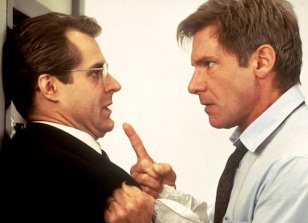 It’ll come as no surprise that Ryan ends up exposing the nasty conspiracy — which goes as high as the President! But what does a good American patriot do when he finds out the practically-holy President has committed such a sin?! The novel ends with Ryan confronting him… and then deciding not to expose his secret war. Presumably this is thanks to Clancy’s obviously-Conservative political views. “Liberal” Hollywood, on the other hand, has given us a more just — and more satisfying — conclusion. Thank goodness for that.
 100Films.co.uk