2014 #113
Bryan Singer | 132 mins | Blu-ray | 2.40:1 | USA & UK / English | 12 / PG-13
 I think I’ve previously discussed my life-long love of the X-Men franchise, so I shan’t go into detail again, but suffice to say Days of Future Past has been one of my most-anticipated movies ever since the title (which is that of a classic and influential story from the comics) was announced. Thank goodness, then, that the final result doesn’t disappoint.
After two Wolverine-focused spin-offs and a ’60s-set prequel, Days of Future Past returns us to the world of the original X-Men movie cast — Sirs Patrick Stewart and Ian McKellen and all the rest. Only now it’s a future dystopia, where mutants are killed or imprisoned by giant robots called Sentinels. A gang of former X-Men led by Kitty Pryde (Ellen Page) think they’ve worked out a way to send someone back in time to before the incident that incited this terrible future, so that they can stop it. The man chosen is — of course — Wolverine (Hugh Jackman). Transported back into his 1970s body, Wolverine must find the younger Professor Xavier (James McAvoy), reunite him with an imprisoned younger Magneto (Michael Fassbender), and stop younger Mystique (Jennifer Lawrence) from assassinating the inventor of the Sentinels, Bolivar Trask (Peter Dinklage). Throw in almost every other mutant who’s ever appeared in the extensive ensemble casts of the four previous X-Men movies, and you’ve got yourself an epic — reportedly the second-most-expensive film ever made by 20th Century Fox (after Avatar).
There’s an awful lot going on in Days of Future Past, which, if you want to dig into it, makes for quite a rich film. There’s the obvious need to balance major storylines taking place in both the past and the future, though the latter has been sacrificed to focus on the former — quite literally, in the sense that a subplot centred around Anna Paquin’s Rogue was famously deleted (leaving Paquin with high billing for a three-second cameo). There’s also the inevitable complexity of time travel stories — how do changes in the past impact on the future, etc.  Beyond that, there’s the characters: the younger versions are having to deal with the fall-out from First Class, which tore apart friendships and families; meanwhile, Wolverine is having to deal with a new level of responsibility and maturity — he is, almost literally, having to do for Charles what the professor did for him back in the first X-Men movie.
You wouldn’t think of an X-Men feature being an actors’ movie, and at the end of the day it’s not really, but there’s enough material for a quality actor like McAvoy to sink his teeth into. When we meet him Charles is a disillusioned drug addict, entirely different to the man we know from First Class and his future as Patrick Stewart. He’s forced to face his demons in every way possible: stopping his drugs, accepting his mutant superpowers, facing up to the man who did this to him, and the woman he raised as a sister but who turned on him… None of this is necessary to serve the blockbuster spectacle that the film also excels in, but it makes for deeper viewing than your average 2010s tentpole.
If McAvoy is the star, many of the rest of the cast do alright. As mentioned, Jackman has a bit on his plate as a one-time loner trying to become a teacher. Jennifer Lawrence is best served, the depth of her role no doubt bolstered by her Oscar-winning success elsewhere in the acting world. Although the original story also features Mystique as the antagonist, she’s far less conflicted: it’s a straight-up assassination attempt. The dilemmas that leave her torn between Xavier and Magneto are entirely an invention of the film franchise, but they make for a much more interesting story — it’s genuinely unpredictable what she’ll do and who she’ll side with.
 Not everyone gets to shine in a cast this big, although pretty much everyone gets a moment. The future-set cast have the least to do, people like Halle Berry turning up to do little more than show their face, though Stewart and McKellen get a moment or two worthy of their talents. After he was the focus of the last film, Fassbender is slightly shortchanged here; but after McAvoy gave him essential support in First Class, Fassbender plays the same service here, informing Charles’ journey. Of the new additions, Evan Peters as Quicksilver (that’s the one who’ll also be played by Aaron Taylor-Johnson in Avengers: Age of Ultron) gets both laughs and the film’s stand-out action sequence, as he races around a room, literally faster than a speeding bullet, to save our heroes. Dinklage, on the other hand, is underused. As with Stewart and McKellen, the fact he’s an excellent actor brings extra layers to the little he does have to do, but if you want to see what he can really do you’ll need to get your Game of Thrones box sets back out.
For those that like their blockbusters explosive and adrenaline-pumping rather than character-driven, Days of Future Past doesn’t drop the ball. It kicks off with a mutant vs. Sentinel sequence that innovates with an X-Woman who can create portals. I’m sure this looked grand in 3D, with all that depth disappearing through the other side of the aforementioned gateways. The side effect for us 2D viewers is that Singer is a skilled filmmaker: he does the sensible thing and holds his shots longer, reigning in the fast cutting style of most modern action sequences. That’s essential in 3D, for viewers’ brains to get their bearings, but is a nice change of pace in 2D too.
 Later, there’s the aforementioned ‘slow-mo’ sequence, and the grand climax, which offers more “fly something big around” antics a la First Class’ submarine, only considerably grander. Yet for all the spectacle, the final moments once again come down to character: what is Magneto prepared to do? What is Mystique prepared to do? Will anyone listen to Charles? And so on. Even the much-vaunted Marvel Studios movies tend to base their climaxes in slabs of ‘epic’ CGI crashing into each other; Days of Future Past does that for a bit, then brings the characters back into focus for the real final beats.
By all rights, Days of Future Past should be a mess. There’s too many characters, too many storylines, too many time periods, too much inconsistency in the continuity of the previous films to allow for a time travel-focused story. Actually, in the case of the latter, it’s used to straighten things out a bit: events we saw in The Last Stand are barely acknowledged and, by the end, are completely eradicated. As for the rest, well, turns out everyone involved actually knew what they were doing, in spite of the fears of some fanboys. Those who number certain characters among their favourites may feel ill-served by some cameo-level appearances, but for less wedded viewers, all the roles are well balanced.
Despite the all-franchise team-up, this is First Class 2 as much as it’s X-Men 5, and that’s only right — although it leaves the door open for more adventures featuring the future X-Men, their stories are probably all told. It’s already been confirmed that the next film, X-Men: Apocalypse, will be First Class 3, taking the younger cast into the ’80s and centred on Mystique (Jennifer Lawrence being the third pillar of the past triumvirate, as they’ve already focused on Xavier and Magneto). While Days of Future Past does wrap up the majority of its threads (the open-ended ones are answered by previous films, if you want them to be), there’s plenty there to play with in the next film (and, perhaps, ones beyond that) if they want to… which they do.
But that’s for the future. For now, debate can rage over which is the best X-Men film. Personally, I’m just glad that we’re in a situation where there are three or four X-Men movies that are contenders for the crown of, not only the best in the series, but to be among the best comic book movies ever made. And as that’s the genre du jour, it’s an important title to hold. Whether Days of Future Past’s all-eras team-up can best X2 or First Class, I don’t know, but it stands alongside them.
X-Men: Days of Future Past placed 9th on my list of The Ten Best Films I Saw For the First Time in 2014, which can be read in full here.
This review is part of the 100 Films Advent Calendar 2014. Read more here.

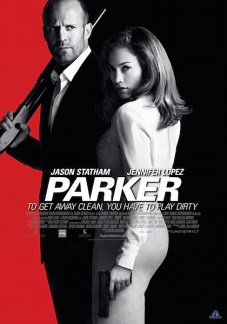 Parker trailed well — funny lines, promising action, solid setup — but doesn’t deliver.
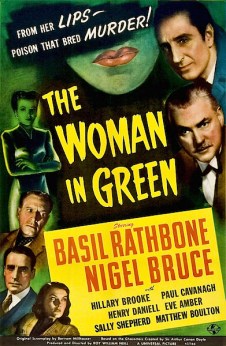 Basil Rathbone’s Sherlock Holmes starred in films which, although they typically involve murder, are best described as “adventures”. The series’ 11th film, The Woman in Green, is one of the few — perhaps the only one — that could genuinely be described as dark and grim.
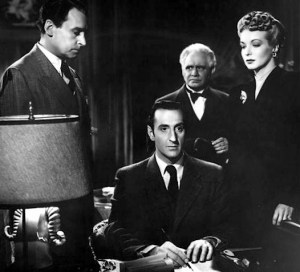 The evil is carried off with aplomb by Daniell. Reportedly a cold actor to work with, he chills on the screen too. This is a man you can believe would carry out such a scheme without a single twang to his conscience. His comeuppance, even with its surprising finality, is welcomed. The titular woman, played by Hillary Brooke, is one of Moriarty’s cohorts, posing as the ‘girlfriend’ of the aforementioned widower in order to set him up. The film is of course in black & white, so we can’t see what colour she’s wearing, and no one ever refers to it — even when they’re hunting for her based on looks alone. I guess someone thought it was an evocative title nonetheless.
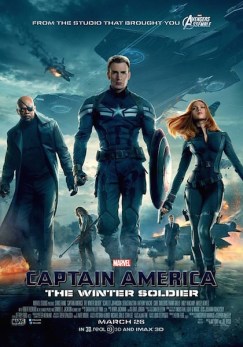 After the
 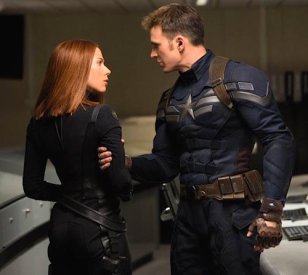 everybody moved on to being more excited about Marvel’s end-of-summer new-franchise-launcher,
 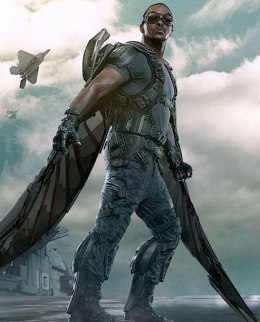 Also introduced is sidekick hero the Falcon (Anthony Mackie), who I have little to say about directly. He’s a sidekick who’s introduced fully-formed — he’s been using his ‘superpower’ for years as just part of the military; it’s not new or exciting to him, which lessens some of its power for the viewer too. “Origin story” may be the most over-used of all the superhero stock stories, but there’s a reason for that. If you skip it then you cut to the chase, that’s true, but does it also lessen the impact of characters to not see how they started? Maybe storytellers just need to come up with fresh ways of giving origins, rather than skipping them altogether.
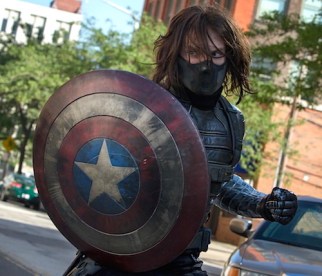 and then it refuses to wrap everything up, putting certain things in place ready for
 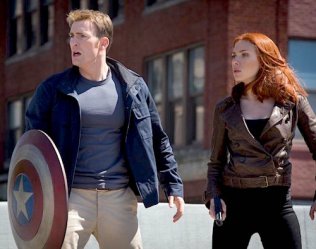 what’s left? There is strong action, albeit undermined by muddled character investment; and there is an interesting thriller/conspiracy story, albeit undermined by a feeling of “once you know it, you know it” — it’s not all that complicated or all that surprising, including the revelation that the one character significant enough to be behind it all is behind it all (gasp!)
 Belated sequels can be a
 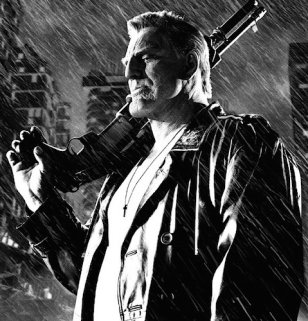 But the comic-book-ness of the first film — moments of almost metaphorical visual representation rather than literal reality, including physically-impossible action beats — has been ramped up. The value of the first film was never in its action, so the sequel’s lengthy punch-ups, crossbow-based guard-slaying, and all the rest, get boring fast. When it slips into this needless excess, A Dame to Kill For loses its way. When it sticks to what it does best — hard-boiled fatalistic crime tales with striking comic book-inspired cinematography — it does as well as the concept ever did.
 The intervening decade has lessened the impact of the first film’s sick ultra-violence, but there’s nothing even that extreme here, aside perhaps from one eyeball-related moment. On the other hand, nearly a decade of tech development means it looks better than the last one, both in terms of the CGI’s quality and the camerawork more generally — it’s less flatly shot; more filmic than the first one’s sometimes-webseries-y composition.
 its predecessor, and that’s exactly what it delivers. I suspect the first benefits from nostalgia because, watching them virtually back to back, I found I liked Sin City less than I remembered, but enjoyed A Dame to Kill For just as much. It’s flawed in several aspects, but for honest-to-themselves fans of the first movie, I think it’s a “more of what you liked”-style success.
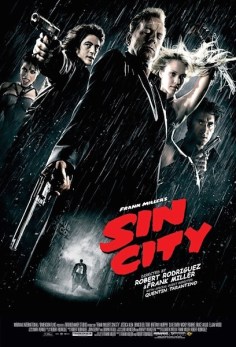 Adapted from a series of graphic novels by Frank Miller, Sin City is a noir homage, replete with high-contrast black-and-white cinematography, dialogue so hard boiled you couldn’t crack it with a sledgehammer, and all the requisite downtrodden heroes, corrupt authority figures, dangerous dames, etc. There’s also the very modern inclusion of shocking ultra-violence and nudity, but I guess a fair degree of that would’ve crept into classic noir if the mores of the time allowed — pretty much the point of the genre is the dark grubbiness of the world, after all.
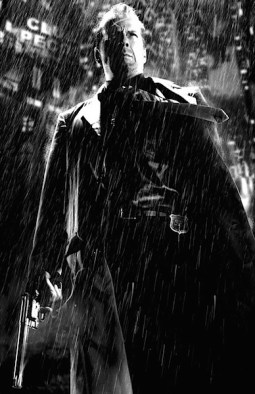 The DVD-premiering extended version, dubbed Recut & Extended (or, in the US, “Recut, Extended, Unrated”) is even more faithful to the comics than the theatrical version. Some of the books’ scenes that were excised are now included, and the structure has been rejigged to present each of the four stories one by one in their entirety (whereas the original version had a small amount of intercutting). The total running time is 17 minutes and 40 seconds longer, an increase of some 14.2%… which is a thoroughly misleading figure. As a presentational choice, each of the four stories is offered for individual viewing, plus option to “play all”. However, rather than that showing them as a single film, they play as four shorts back to back, with a full set of section-specific end credits rolling each time. The actual amount of new material in the film itself is
  For one, the second scene belongs more truly to The Big Fat Kill (the final story, starring Clive Owen’s Dwight and the whores of Old Town led by Rosaria Dawson). For another, because this recut purports to be in chronological order, The Customer is Always Right plays second. So we get 47 minutes of Bruce Willis protecting Jessica Alba from a paedophile in That Yellow Bastard, then we get a one-scene story that rightly belongs at the beginning (complete with title card, now 50 minutes into the ‘film’), then we get a scene that, actually, belongs in a completely different place. The next full story is The Hard Goodbye (the one with Mickey Rourke under a slab of prosthetics as Marv), followed by The Big Fat Kill — and it’s after this that the second scene with The Man belongs. Divorced of that context, the scene is robbed of almost all its meaning.
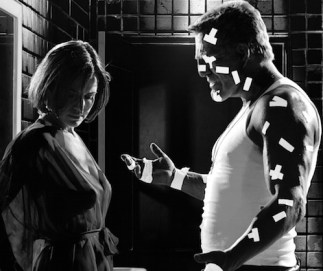 In the end, I enjoyed Sin City considerably less than I did nine years ago in the cinema. This is partly down to the restructure, but I’m not sure wholly so. I don’t think it’s aged particularly well, as things produced at the forefront of emerging technology are wont to do: some of the CGI looks dirt cheap, the shot compositions are often unimaginatively flat, and there’s an occasional internet-video style to the picture quality. It’s not just the visuals, sadly, with amateurish performances from reliable actors, possibly a result of the hurried filming schedule. Just because you can capture an entire part in a single day doesn’t mean you should. Then there’s Jessica Alba, who’s just awful here.
 None of the present additions are game-changing, and though some are good in their own way, there’s nothing noteworthy enough to compensate for the destruction of the original cut’s well-balanced structure. For the average punter — and certainly for the first-time viewer — the theatrical cut is unquestionably the way to go.

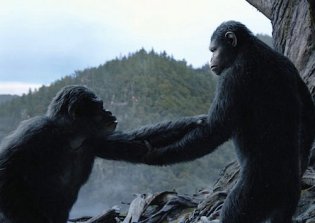 A heady mix of solid writing from Mark Bomback, Rick Jaffa and Amanda Silver, peerless motion-captured performances from the likes of Serkis and Toby Kebbell, and first-rate CG magic from Weta, brings us a set of characters who are compelling and believable. Here is a society trying to define what it wants to be, battling old prejudices in the hope of a peaceful, secure, happy future. If you want to draw analogies to almost any real-world political situation, I’m sure you could.
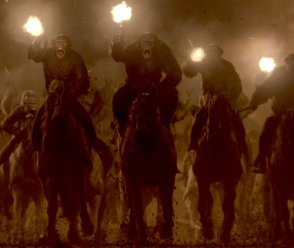 Lest you get the wrong impression, the film isn’t all talk. For various spoiler-y reasons, the fragile relationship between Man and Ape breaks down, and the apes stage an attack on humanity. Here we get perhaps one of the best siege action sequences I can think of, with mankind holed up in a half-constructed skyscraper that sits conveniently at the end of a long street for the apes to charge down. Reeves’ direction is virtuosic here, crafting an epic and exciting sequence even when most of the film’s major players are busy elsewhere. And it’s not even the climax.
 thanks to some surprisingly small-scale narrative choices (the whole thing with the dam doesn’t feel nearly as vital as it should) and Reeves’ direction sometimes being a little straightforward and almost TV-ish. I know I’ve said I hate when people use that as a derogatory comment nowadays, but some repeated locations and shot choices make the film feel cheaper than it was.
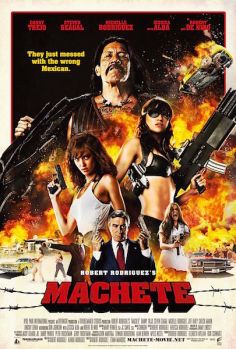 Multi-hyphenate Robert Rodriguez takes his
  to fleetingly include something that ‘needs’ to be there purely because it was in that trailer.
 Comic book creator Frank Miller brings what he learnt co-directing
  1988: due to international pressure, Chile’s dictator, General Pinochet, has acquiesced to a vote on whether he should continue ruling the country. Despite the violent takeover he orchestrated, and subsequent murders and ‘disappearances’, the country has prospered under his rule, and many — especially influential affluent people — are keen for him to stay. The anti-Pinochet “no” campaign are allowed a daily slot on state-controlled television in the run up to the election, and they hire advertising exec René Saavedra (Gael García Bernal) to mastermind the campaign. Cue internal conflict — the politicos want dour films highlighting Pinochet’s evil; René wants to use the language of advertising to sell the promise of a happy future — before the campaign itself finally gets underway, and the “no” campaigners become targets of the ruling regime’s evil tactics…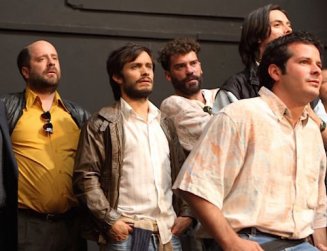
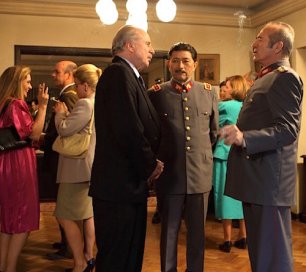 But seriously, there’s not really a comparison between the brutal military regime that ruled Chile — which nonetheless many were happy with because it had brought modernisation and prosperousness for some — and the voluntary union between the rest of the UK and Scotland. I’m sure some of “the 45”, as they now call themselves, would identify with those battling for freedom in this film, but I think that might be taking it a bit far.
 100Films.co.uk