
Park Chan-wook | 99 mins | streaming (HD) | 2.35:1 | UK & USA / English | 18 / R
 Director Chan-wook “Oldboy” Park makes his English-language debut with this modern-Gothic thriller from the pen of Wentworth “yes, the guy from Prison Break” Miller.
When well-to-do architect Richard Stoker dies on his daughter’s 18th birthday, he leaves said insular daughter India (Mia “Tim Burton’s Alice in Wonderland” Wasikowska) stuck in their Tennessee mansion with her unbeloved mother (Nicole “the face behind the nose” Kidman). At the wake, both are surprised by the arrival of Charlie (Matthew “Ozymandias” Goode), Richard’s brother who Evelyn has never met and India has never even heard of. Nonetheless, he’s all charm and good manners, though when he moves into their home he begins to build up a slightly creepy relationship with Evelyn, and essentially stalks India. The Stokers’ housekeeper clearly knowns something about him, but then she disappears; and Richard and Charles’ Aunt Gwendolyn turns up wanting a word with Evelyn. Just what is going on with Uncle Charlie that everyone apart from India seems to know about?
And I’ve already said too much, maybe. Stoker isn’t all about its mystery and its twists — it’s at least as much about its carefully constructed Gothic mood; but part of that is the mystery, so, y’know. Indeed, it’s so moody and atmospheric that it seems to turn some viewers off. It’s certainly not thrill-a-minute, and it has a very particular pace and tone. I’m going to keep coming back to the word Gothic, because that really is the best word for it; whether that should be “modern Gothic” or “neo-Gothic” or “Southern Gothic” or what, I don’t know, but it’s definitely Gothic — with little more than cosmetic changes,  I’m sure the story could be shunted back to a crumbling pile in 19th Century England. So precise is the mood of this secluded household, it’s kind of weird when, a little while in, we get to see India’s place of education: a typical US high school. In another film I might call this sudden change of locale a misstep, a breaker of tone, but in the world Park has created it just feels like a point of contrast.
Visually, Stoker is peerless. It doesn’t scream “beauty” at you, but the shot composition, Chung-hoon Chung’s photography, and Nicolas De Toth’s editing are all exceptional. The sound design is incredible too, with judicious use of ultra-heightened effects to imitate India’s skill for hearing small things others maybe miss. Finally, the music is perfection. A piano duet composed by Philip Glass is one of the film’s most memorable sequences, but Clint Mansell offers a doom-laden score, of a piece with his work on Requiem for a Dream and The Fountain (both of which I think I’ve written of my admiration for sometime previously), and there are some choice songs too: I’d never heard Summer Wine by Nancy Sinatra & Lee Hazlewood before, but it fits the film like a glove, as well as being fantastic in its own right; and Emily Wells’ Becomes the Color slugs in with a kind of perfect dissonance to the musical style to that point. A comment on iCheckMovies used the word “sumptuous” for all of this, and that seems apt.
I have a feeling “not for everyone” may be one of the most overused phrases on this blog, but, if so, I think that’s for good reason: some of the best movies are “not for everyone”. We may not agree on what those movies are, but that’s kind of the point: they fit our own individual tastes, not “everyone’s”. Stoker undoubtedly doesn’t have easy mass appeal — it’s got a 6.9 on IMDb — and even some people open to its charms deem it to only be style over substance. I don’t think it’s wholly lacking in the latter, though if you’re looking for some Significance then I don’t know if you’ll find it — it’s an artistically-made Gothic thriller,  not a soul-bearing artistic portrait of humanity. And as for the style… well, I’ve already talked about that. Whether you can have “style” for style’s sake, or whether it needs to be in aid of something, is a debate for another day. Here, it is in aid of something: amping up the Gothicism of the inherently Gothic story, which in other hands could have just became any-old present-day-set family thriller.
Describing something as “an acquired taste” might well be another phase I’ve used often, especially as it’s essentially a synonym for “not for everyone”. Nonetheless, that’s what I’ll go for here. Stoker will most decidedly not appeal to all palates, but for the right viewer, it’s a dark, moody, sensuous, Gothic delight.

The UK TV premiere of Stoker is on Film4 tomorrow, Friday 30th, at 9pm.
It placed 7th on my list of The Ten Best Films I Saw For the First Time in 2015, which can be read in full here.
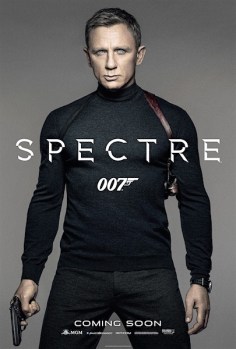 It’s been quite the year for spies on the big screen: mega-success for
 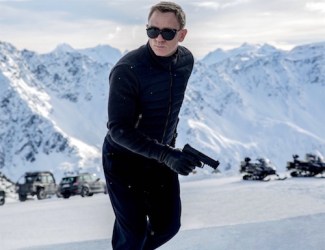 or, “they’ve merely brought back the classic Bond formula, albeit in the Craig-era style — what a regression”. You only have to look at the
  Craig’s films have stuck to the older formula of casting a respected/famous European: Dane Mads Mikkelsen, Frenchman Mathieu Amalric, Spaniard Javier Bardem, and now German “European actor du jour” Christoph Waltz. The double Oscar winner is on fine form at times, but there aren’t quite enough of those times. Again, without aiming to spoil anything, I’d say he’s not so much underused as misused.
 Well, I did too. Now I want a cake. And if you’d like to watch someone eat a Madeleine, check out
  On the day marshal Will Kane (Gary Cooper) marries his young bride Amy (Grace Kelly), hands in his badge and plans to leave town, word reaches Hadleyville that a criminal he arrested, Frank Miller (presumably Will read
 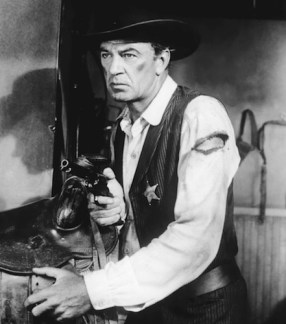 Some would contend it’s impossible to engage with High Noon and ignore that political allegory; others, like Mike at
 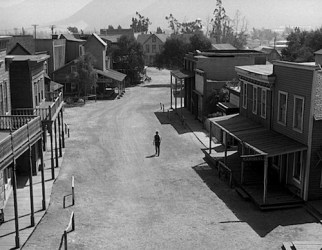 To top it all off, the film takes place in near-as-damn-it real time. Regular readers will know this is a plus for me, for reasons I still can’t quite fathom. In a narrative such as this, however, it only adds to the tension: you know it isn’t going to jump from 11:30 to the titular time, for instance — you’re going to live every one of those minutes with the characters; that’s exactly how much, or little, time Will has left to get ready.
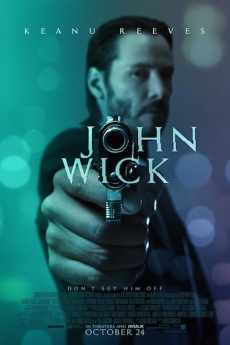 Keanu Reeves is John Wick, a nice guy whose wife sadly died. Now he lives alone with a puppy. Then he accidentally annoys a thug (
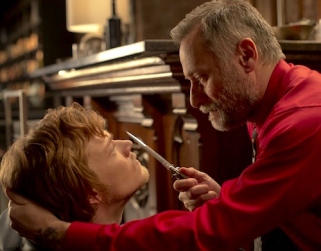 A decade and a half on from
 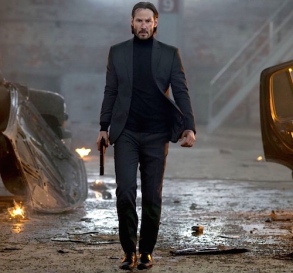 Combine that with the exciting, innovative, technically faultless action sequences and you have a distinctive, memorable movie. It seems to have gone down a storm with action movie fans, anyhow, and so those hoped-for sequels and/or spin-offs are most definitely in development. It’ll be interesting to see if it does what-I-call “a Bourne”, spiralling from a well-liked almost-sleeper-hit first film into an everyone-knows-it major franchise, or, well, not.
 If you’re not au fait with the
  as both sides attempt to rally ordinary people to their cause through the power of the media. It’s a tale that’s as timely as ever, surely.
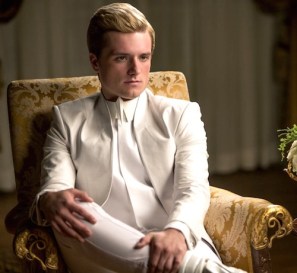 I must say that (as someone who hasn’t read the book) it didn’t feel overly like the first half of something longer to me. Of course there’s a cliffhanger and stuff, but there was at the end of the last film as well. This is no worse than that. If anything, I felt Mockingjay Part 1 built to its ending more successfully — I was quite surprised when
 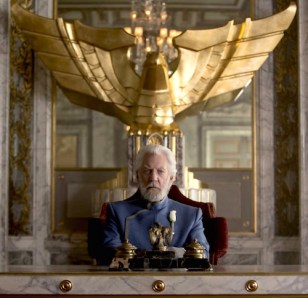 it may be your favourite instalment so far (and you wouldn’t be alone in that view). For me, Catching Fire is the best of the three because it crystallises both of those constituent elements; and if the first film was purely the action side (with a bit of the politics), then here we find its mirror image: purely politics (with a bit of action). Either way, perhaps the ultimate fate of all these films rests on how well
  Stieg Larsson’s much-hyped novel comes to the screen for the second time in David Fincher’s much-hyped English-language re-adaptation. Somewhere between the pre-release build-up (do you remember the fuss over the trailer’s release? And all those magazine covers and articles?) and now, something clearly went awry: its UK TV premiere back in March was buried mid-week on ITV2.
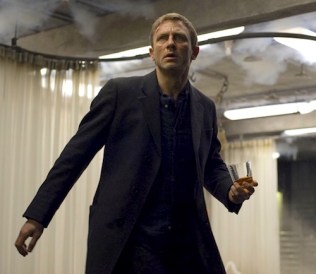 There are certainly changes, but nothing especially major. For example, the ending has been tweaked — not “completely changed”, as some reports had it, but just streamlined slightly. Some will struggle to even remember the difference if their experience of a previous version was long enough ago. Die hard fans, however, seem to regard it as a massive re-visioning of events. It isn’t.
 in particular, it’s beautifully shot, and there’s a vein of interest to be mined in discussing the fact it was consciously made using a five-act (as opposed to the usual three-act) structure (but not here today, sorry) — it feels unable to innovate or hone the genre in quite the way Se7en or
  So my rating may come as a bit of a surprise given the focus of this review, which is primarily my fault for finding it so tough to shrug off all those contexts and comparisons. But hey, that’s something the film itself struggles with in many people’s eyes, too. If the viewer can divorce it from those ties, however, I think it’s still an exceptionally good thriller.
 Director Steven Soderbergh takes the methodology he used to depict the drug trade in
 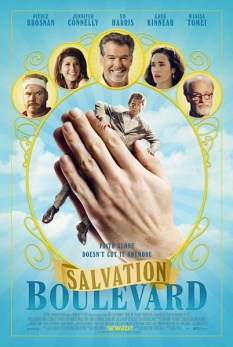 Reuniting Pierce Brosnan and Greg Kinnear, stars of comedy-thriller
  This is not the Salvation Boulevard that has ended up on film. I tried to hunt down an explanation for why co-writer/director George Ratliff had deviated so, but the best I could unearth was
  I shouldn’t have expected much given the poor reviews, but I like the cast (which also includes Ciarán Hinds and Marisa Tomei), I really enjoyed The Matador, and the trailer was suitably promising, all of which encouraged me to seek it out. I wouldn’t say Salvation Boulevard was an entire waste of time, but I couldn’t help but feel there was potential for a funnier, more cutting movie hidden in the material. Shame.
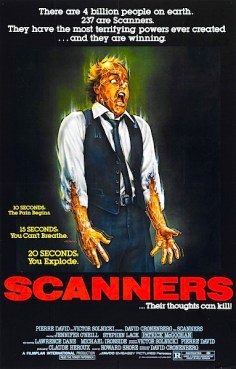 If you’re versed in sci-fi/fantasy cinema, you’ve heard of Scanners even if you haven’t seen it: it’s the one with the (in)famous exploding head. That moment is distinctly less shocking for those of us coming to the film as a new viewer at this point: gore perpetuates genre cinema nowadays, so it’s less striking,
 emotional journey or something is the core of the film. As if to make up for it, McGoohan is of course excellent, acting everyone else off the screen, while Ironside makes for an excellent villain, naturally. Some say that the final psychic battle, between Lack and Ironside, is underwhelming, but I thought it was excellently realised, a tense and effective struggle. Such brilliant effects and sequences are scattered throughout the film.
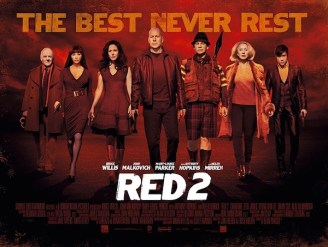 The “retired, extremely dangerous” agents return for more of the same.
 100Films.co.uk