The East (2013)

2016 #30
Zal Batmanglij | 111 mins | TV (HD) | 2.35:1 | USA & UK / English & American Sign Language | 15 / PG-13

In this atypical espionage thriller, Brit Marling is a private security employee sent to infiltrate an underground activist group who are exposing the illegal activities of mega-corporations. Faced with the group’s honourable intentions vs. her employers’ indifference, will she go native?

Moral messages about capitalist evils sneak in none-too-subtly under the aegis of a spy drama, meaning your political leanings may affect how you feel about the film: dedicated right-wingers will grumble; lefties will nod in sage agreement. That aside, it’s a down-to-earth thriller, surely closer to what real-life secret agents do than any Bond or Bourne ever has been.

4 out of 5

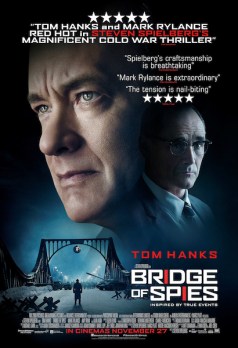
Bridge of Spies (2015)

2016 #60
Steven Spielberg | 141 mins | Blu-ray | 2.40:1 | USA, Germany & India / English, German & Russian | 12 / PG-13

Oscar statue
2016 Academy Awards
6 nominations — 1 win

Winner: Best Supporting Actor.
Nominated: Best Picture, Best Original Screenplay, Best Score, Best Sound Mixing, Best Production Design.


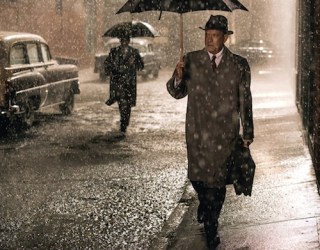
Steven Spielberg’s true-story Cold War drama stars Tom Hanks as insurance lawyer James B. Donovan, who is tapped to defend captured Soviet spy Rudolf Abel (Mark Rylance). After Donovan insists on doing his job properly, he manages to spare Abel the death penalty — which comes in handy when the Soviets capture spy-plane pilot Francis Gary Powers (Austin Stowell) and a prisoner exchange is suggested, which the Russians want Donovan to negotiate.

The most striking aspect of Bridge of Spies is how much it’s a mature, equanimous work. It would be easy to take a tale like this, fraught with issues of patriotism and the threat of foreign agents operating on domestic soil (which therefore screams “topical relevance!”), and give in to the same histrionics that some of the supporting characters demonstrate. Indeed, a director like Spielberg — oft criticised for the vein of sentimentality that is ever-present, and sometimes dominating, in his movies — might be expected to err in that direction, even if it was only slightly. The film itself manages to maintain the same calm demeanour as its two headline performances, however.

Don’t misconstrue that as meaning it’s a boring watch, however. Far from it. Despite its fairly lengthy running time, Bridge of Spies actually rattles through events, at times to a surprising degree: Abel’s trial is practically glossed over. In some respects this is an intelligent decision — the verdict is a foregone conclusion, and there’s far more going on than the trial of one spy — but it is a little jarring to have it so abruptly skipped past. The same effect occurs when Donovan appeals to the Supreme Court, a process so rushed its inclusion feels merited only by it being an event that happened so has to be there, rather than because it was a part of the story that interested Spielberg or screenwriters Matt Charman and Ethan & Joel Coen.

If we’re talking storytelling oddities, another is the manner in which Powers’ backstory is integrated. As Donovan continues to defend Abel, the film suddenly becomes subjected to scattered interjections, in which we see pilots being selected and then trained to fly secret reconnaissance missions in a new kind of plane. Any viewer who has read the blurb will know where this is going, but it’s so disconnected to the rest of the narrative that it felt misplaced, at least to me. The same is true when we suddenly meet Frederic Pryor (Will Rogers), an American student in Berlin who’s mistaken for a spy and arrested by the East. It turns out we need to know about him because Donovan attempts to use his negotiations to get a two-for-one deal, exchanging Abel for both Powers and Pryor. Knowing the stories of the men Donovan will be negotiating for is not a bad point, but I can’t help but feel there was a smoother way to integrate them into the film’s overall narrative.

These clunks aside, Bridge of Spies is certainly a quality film. Spielberg’s direction is restrained, with familiar directorial flourishes severely limited (one very Spielbergian moment in the film’s coda sticks out precisely because of its Spielbergianness after 130 minutes of that not happening). That’s not to say his work is characterless, merely unobtrusive. The same is certainly true of Rylance’s Oscar-winning performance as the Soviet spy, so much so that some have asserted he was doing nothing at all and didn’t deserve any awards for it. Well, anyone at all familiar with Rylance’s oeuvre knows that can’t be true. His Abel is unquestionably understated, a calm and quiet man who only hints at emotions under the surface rather than declaiming them. A lesser film would’ve made a point of this — would’ve had Hanks’ lawyer struggling to understand and relate to his client’s low-key nature — but, instead, Donovan is a man who can identify with this mode of being, at least to an extent. There’s a reason they talk a couple of times about the ‘stoikiy muzhik’.

If the first part of the narrative belongs to Rylance, Hanks is in charge for the second, when Donovan finds himself in a wintery Berlin as the wall is being constructed, flitting between East and West as the go-between for a Russian spy posing as a diplomat, a German lawyer, and the CIA, who could care less about retrieving a lowly student when a pilot who might spill secrets is at stake. Also without being showy, Hanks is able to navigate a story that may be about secret international diplomacy, but which requires comedy without blatant mugging, and clever legal negotiation without grandstanding. Throughout the film, he creates in Donovan an upstanding, honourable, kind-hearted, and admirable human being, without the movie needing to make a song and dance about showing us how wonderful he is.

I may, on reflection, or re-watching, consider Bridge of Spies an even better film than I do now. Hanks and Rylance both offer nuanced performances, while Spielberg’s mastery of technique allows the whole film to be equally as subtle, even as it remains gripping and entertaining. However, the storytelling quirks are a mixed success, the pace they sometimes lend offset by the almost non sequitur style of the captured Americans’ backstories. Nonetheless, this is a classy but still enjoyable dramatic thriller, which takes a seat among Spielberg’s better works.

4 out of 5

Bridge of Spies is released on DVD, Blu-ray, and the rest, in the UK today.

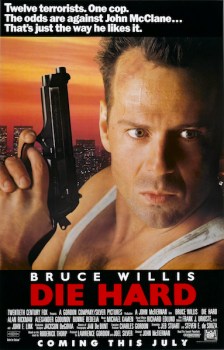
Die Hard (1988)

100 Films’ 100 Favourites #23

Twelve terrorists. One cop.
The odds are against John McClane…
That’s just the way he likes it.

Country: USA
Language: English
Runtime: 132 minutes
BBFC: 18 (1988) | 15 (2007)
MPAA: R

Original Release: 15th July 1988
UK Release: 3rd February 1989
First Seen: DVD, 2003

Stars
Bruce Willis (Twelve Monkeys, The Sixth Sense)
Alan Rickman (Robin Hood: Prince of Thieves, Sense and Sensibility)
Reginald VelJohnson (Turner & Hooch, Die Hard 2)
Bonnie Bedelia (Die Hard 2, Presumed Innocent)

Director
John McTiernan (Predator, The Hunt for Red October)

Screenwriters
Jeb Stuart (Another 48 Hrs., The Fugitive)
Steven E. de Souza (The Running Man, Beverly Hills Cop III)

Based on
Nothing Lasts Forever, a novel by Roderick Thorp.

The Story
While off-duty cop John McClane is visiting his estranged wife at her office Christmas party, a gang of terrorists enter the building and take the guests hostage. McClane avoids capture, making him their only hope of rescue…

Our Hero
One of New York’s finest unfortunately caught in the wrong place at the wrong time… or, as it turns out, the right place at the right time. They’re currently working on an “origin story” movie for cop John McClane, which is daft because Die Hard is his origin story — he may’ve become an action hero in later movies (I wouldn’t know, I still haven’t got beyond the second), but here McClane is just an ordinary cop. Well, a very committed ordinary cop, anyway.

Our Villain
Smart, witty, and thoroughly ruthless, Alan Rickman’s big-screen debut is a flawless turn that defined thriller villains (British-accented terrorists with a secret plan) for at least the next half-decade. No one does it better, though.

Best Supporting Character
McClane’s only real friend, Sgt. Al Powell is a beat cop on the outside who just happens to pick up his signal. Fortunately, he’s much smarter and more helpful than a team of FBI agents. Well, aren’t we all?

Memorable Quote
Hans Gruber: “Do you really think you have a chance against us, Mr. Cowboy?”
John McClane: “Yippee-ki-yay, motherfucker.”

Quote Most Likely To Be Used in Everyday Conversation
See above.

Memorable Scene
As Gruber lectures the collected hostages on how the terrorists have planned for every eventuality, a nearby elevator door pings open. One of the hostages screams, Gruber and co rush over, to find one of their compatriots dead with a message scrawled on his sweatshirt: “Now I have a machine gun, ho-ho-ho.”

Truly Special Effect
When the bomb in the elevator shaft blows out the side of the building, the effect was accomplished by collecting virtually every camera flashbulb of a particularly powerful type and wiring them to the outside of the actual building to simulate the flash, then superimposing a shot of an actual explosive blowing a hole in an all-black miniature of the building.

Making of
The filmmakers struggled to find a way for McClane and Gruber to meet prior to the movie’s climax. The scene in which they do, where Gruber pretends to be one of the hostages, was dreamt up after it was discovered Alan Rickman could do a good American accent.

Previously on…
Die Hard is adapted from a novel, which is a sequel to one called The Detective, which was filmed in 1968 starring Frank Sinatra as the lead cop (called Joe Leland rather than John McClane). When production began on Die Hard, Fox were obligated to offer the lead to Sinatra. Fortunately for them, he turned it down.

Next time…
Lightning struck twice for unlucky John McClane when he got embroiled in another Christmastime terrorist incident in Die Hard 2, aka Die Harder; then Gruber’s brother sought revenge in trilogy-forming Die Hard with a Vengeance. Years later, someone realised there was money to be made, leading to poorly-received cash-in sequels Live Free or Die Hard, aka Die Hard 4.0, and A Good Day to Die Hard. A sixth is in development.

Awards
4 Oscar nominations (Editing, Sound, Sound Effects Editing, Visual Effects — or, to put it another way: Sound, Effects, Editing, Sound Effects Editing)

What the Critics Said
“From its trailer, Die Hard looks like a typical action movie of the ’80s: a sweaty, bare-chested, all-American hero battles swarthy, heavily accented terrorist villains, accompanied by lots of high-tech explosions, vast sheets of breaking glass and enough sophisticated weaponry to account for the Pentagon’s budget overrun. As directed by John McTiernan, it turns out to be something more — the archetypical action movie of the ’80s, the perfection of the form. Sleekly engineered, impeccably staged and shrewdly dosed with humor and sentiment, Die Hard has everything but a personality.” — Dave Kehr, Chicago Tribune

Score: 92%

What the Public Say
“Vulnerable but witty, McClane is a very well realised action hero who has set precedence as far as similar roles are concerned. […] Unlike Schwarzenegger and Stallone, Willis’ McClane is not the archetypal heroic figure that is invincible and untouchable. He gets his butt handed to him regularly and often finds himself panicking with frequent looks of nervousness and even fear.” — Billy’s Film Reviews

Verdict

The action movie to end all action movies… or, y’know, spawn endless sequels and rip-offs. But Die Hard really did perfect the mix: a capable but not superhuman hero, a genuinely threatening but enjoyable-to-watch villain, plenty of thrills and tension, but also humour and eminently quotable dialogue. And it’s set at Christmas (though originally released in July — what?!), which makes it ideal for seasonal counter-programming. What more could you ask for?

Prepare thyself… for #24.

Cube (1997)

100 Films’ 100 Favourites #21

Don’t look for a reason.
Look for a way out.

Country: Canada
Language: English
Runtime: 90 minutes
BBFC: 15
MPAA: R

Original Release: 11th July 1998 (Netherlands)
UK Release: 25th September 1998
First Seen: TV, c.2000

Stars
Maurice Dean Wint (Rude, Nothing)
David Hewlett (Scanners II: The New Order, Cypher)
Nicole de Boer (Star Trek: Deep Space Nine, Corrupt)
Nicky Guadagni (Crash, Lars and the Real Girl)
Wayne Robson (Interstate 60: Episodes of the Road, Survival of the Dead)

Director
Vincenzo Natali (Cypher, Splice)

Screenwriters
Andre Bijelic
Vincenzo Natali (Splice, In the Tall Grass)
Graeme Manson (Rupert’s Land, Orphan Black)

The Story
Six strangers wake up inside a mysterious 14-foot cube, its walls covered with circuit-like designs and each wall containing a door… which leads to another cube, identical but for the colour scheme. They soon realise that some of these rooms are boobytrapped with death-dealing devices. If they combine their different backgrounds and strengths, perhaps they can find a way out…

Our Heroes
The six individuals we follow are a fractious bunch. You may side with one or two, but at any given moment something might happen to make you rethink who should or should not be trusted.

Our Villain
The Cube itself is the enemy here… although with the amount our group fight amongst themselves, maybe it’s not the only problem…

Best Supporting Character
Part way through the film, our gang come across Kazan, who clearly has some kind of mental problem. I thought Andrew Miller’s performance was decent, but pretty much every other review of the film criticises all of the acting, and I’ve never seen Rain Man (a regular point of comparison), so who knows?

Memorable Quote
Holloway: “What does it want? What is it thinking?”
Worth: “‘One down, four to go.'”

Memorable Scene
The opening scene, which quickly establishes the danger of the environment so succinctly and memorably that Resident Evil ripped it off a few years later.

Technical Wizardry
The characters move through many rooms in the cube, a challenge for a low-budget production… unless, of course, all the rooms are nearly identical: there was only one cube set, with coloured panels changed to suggest the different spaces.

Making of
All of the characters are named after famous prisons around the world. Not only that, but their personalities reflect the characteristics of those prisons. To say too much might spoil parts of the film for those who’ve not seen it, but the curious can find a fuller explanation here.

Next time…
There are two sequels to Cube, Hypercube and Cube Zero, each worse than the last. Don’t waste your time.

Awards
1 Saturn nomination (Home Video Release)
Toronto International Film Festival — Best Canadian First Feature Film

What the Critics Said
“They don’t agree on the best course of action, and might one of them be a spy for whomever is in charge? The grating mechanical noises that echo through the Cube all around them seem to be the manifestation of the stress they’re under, stress they act out on one another. Holloway estimates they have only a few days without food and water before they’re too weak to continue, and yet they slow themselves down with their virulent bickering. […] As Rennes says, “Ya gotta save yourselves from yourselves,” and they’re not doing a terribly good job of that.” — MaryAnn Johanson, flickfilosopher

Score: 62%

What the Public Say
“you can’t make [the plot] sound interesting — “for 90 minutes, people move through largely identical cubic rooms that want to kill them”. But it is interesting, mainly, and here’s where the Twilight Zone comparison is useful. […] the cast ends up filling somewhat allegorical roles: the Teacher, the Authoritarian, the Intellect, the Survivalist. And Cube, in finest Rod Serling fashion, plays out as a series of conundrums in which the audience is invited to think about how these different types, that is to say, these different worldviews and moral codes, interact with each other in a patently allegorical environment” — Tim Brayton, Antagony & Ecstasy

Elsewhere on 100 Films
I offered some thoughts on Cube when I watched the two sequels back in 2008: “In its series of careful, measured, necessary reveals, the film strikes a perfect balance between what it lets the viewer know — and the revelations are expertly paced throughout — and what it keeps hidden, either for the viewer to deduce or interpret for themselves, or simply because one doesn’t need to know. […] everyone interested in the more intelligent end of the sci-fi spectrum should see Cube.”

Verdict

Regular readers will know of my fondness for the single-location thriller. A lot of that likely stems back to Cube, which I think pioneered the form as a popular one for new filmmakers making low-budget genre pictures, and is the yardstick all others must measure up to, at least for me. Throw a mismatched group of characters into a confined, mysterious setting and, hey presto, instant drama. Cube remains one of the best because of both the mysteries of its location, and the pure tension director Vincenzo Natali creates as the cast try to avoid or evade the deadly traps.

Next… yippee-ki-yay, #23 !

Daredevil (2003)

100 Films’ 100 Favourites #22

Take the dare

Country: USA
Language: English
Runtime: 103 minutes | 133 minutes (director’s cut)
BBFC: 15
MPAA: PG-13 (theatrical cut) | R (director’s cut)

Original Release: 14th February 2003 (USA, UK & others)
First Seen: cinema, February 2003

Stars
Ben Affleck (Pearl Harbor, Batman v Superman: Dawn of Justice)
Jennifer Garner (13 Going on 30, The Invention of Lying)
Michael Clarke Duncan (The Green Mile, Sin City)
Colin Farrell (Minority Report, Alexander)

Director
Mark Steven Johnson (Ghost Rider, When in Rome)

Screenwriter
Mark Steven Johnson (Grumpy Old Men, Ghost Rider)

Based on
Daredevil, a Marvel Comics superhero created by Stan Lee and Bill Everett.

The Story
Blind New York lawyer Matt Murdock defends the innocent by day, and by night uses his special abilities to bring the guilty to justice as costumed vigilante Daredevil. When crime boss Wilson Fisk, aka Kingpin, hires Bullseye to take out a business associate, the assassin frames Daredevil for the crime, which brings him into conflict with the businessman’s combat-trained daughter, Elektra.

Our Hero
Blinded as a child, Matt Murdock found his other senses heightened. Following the murder of his father, he trained in the law. Now by day he’s a defender of the innocent, and by night hunts the guilty as superhero Daredevil. Even though the film mixes in his origin story, it doesn’t take a “Year One” approach to his crimefighting, which makes a change of pace even now. (In recent years a lot of the blame for the film’s failure has been laid at Ben Affleck’s door, because it’s popular to bash ’00s-era Affleck. Rotten Tomatoes’ short summary of contemporary reviews tells a different story, stating “Ben Affleck fits the role” as one of the film’s key qualities.)

Our Villains
Coming off the back of The Green Mile, Michael Clarke Duncan was the obvious chap to step into the giant shoes of Hell’s Kitchen’s crime lord, Wilson Fisk, aka Kingpin. The real fun comes courtesy of Colin Farrell’s crazy, campy killer, Bullseye, who enlivens the film any time he’s on screen.

Best Supporting Character
Jennifer Garner is terribly miscast as Elektra, really, but she makes a fair fist of it nonetheless, and the film doesn’t shy away from the outcome of that storyline.

Memorable Quote
“Hey, that light, at the end of the tunnel? Guess what? That’s not heaven… that’s the C train.” — Daredevil

Memorable Scene
Matt and Elektra spar in a children’s playground. It’s a scene some people despise, probably because of what it thinks passes for dialogue, but you can’t say it doesn’t stick in the mind.

Memorable Music
If you were of the right age and disposition back in the early ’00s, the Daredevil soundtrack was more influential than the film itself. It was partly responsible for launching gothy rock group Evanescence, who you may remember for Bring Me to Life, which was on the film’s soundtrack and was their biggest hit (it was #1 here for four weeks). I think they’re still going, despite numerous changes of line-up, though they release albums once in a blue moon.

Letting the Side Down
“All of it!” Oh, hush, you.

Making of
Originally greenlit as a relatively low-budget film, at roughly $50 million, during shooting Sam Raimi’s Spider-Man was released and became a huge hit (it was the first film to gross over $100 million in one weekend). Consequently, Fox upped Daredevil’s budget to $80 million, specifically to “enhance the film’s visuals”. I guess that’s where all the Spider-Man-esque CGI tumbling came from, then.

Previously on…
Although this is the first full-blown adaptation of Daredevil to actually make it to the screen, he’s turned up in other characters’ series down the years, including both live-acton (1989 TV movie The Trial of the Incredible Hulk, which starred John Rhys-Davies as Kingpin) and animation (episodes of the ’90s Spider-Man and Fantastic Four series).

Next time…
Although no sequel was forthcoming, Jennifer Garner starred in spin-off Elektra. Whatever you think of the 2003 Daredevil, Elektra is much, much worse. Numerous attempts at a reboot movie faltered, until the rights reverted to Marvel Studios, who used the property to kick off the Netflix arm of the MCU. As much as I like the movie, the TV series is much better. Season two is released this Friday, so if you’ve not seen any then you’ll soon have 26 episodes to catch up on, you lucky thing you.

Awards
1 Razzie (Worst Actor (Ben Affleck, also for Gigli and Paycheck))
1 Razzie nomination (Worst Actor of the Decade (Ben Affleck, also for everything else he did in the ’00s))
1 Kids’ Choice Award nomination (Best Female Butt Kicker)
2 MTV Movie Awards Mexico nominations (including Best Colin Farrell in a Movie (it lost to S.W.A.T.))

What the Critics Said
“This is the Unforgiven of superhero films. Conventions are turned on their head, twisted, questioned. […] In almost every superhero film, there’s another conventional scene where the villain has the hero cornered and helpless. Yet the villain never unmasks the hero. That scene drove me nuts in Spider-Man. […] In Daredevil, no one ever hesitates to unmask DD. That’s what I mean by this being a film grounded in reality. People act real, do real things. Even if they are wearing silly costumes.” — “Dr. Michael Hfuhruhurr”, Ain’t It Cool News

Score: 44%

What the Public Say
“Colin Farrell is deliciously hammy and steals every scene he’s in, showing he’s having a total blast (and to be honest, the hamminess suits Bullseye). Michael Clarke Duncan is PERFECT casting for Kingpin, for his size, stature, overall menacing feel. And honestly, I like Ben Affleck in this, too. He makes me believe he’s blind. He makes me believe that he’s a broken, tortured character who tries to put on a brave face in front of his friends.” — Nick Piers

Verdict

The runt of the litter when it comes to the (first) modern explosion of superhero movies, Daredevil has, believe it or not, always had its fans. The darker tone than contemporary X-Men or Spider-Man films works in its favour in that respect, though I know not everyone feels that way. Ben Affleck actually does a solid job as the titular hero, while Michael Clarke Duncan was perfectly cast as hulking villain Kingpin. Most enjoyable, though, is Colin Farrell’s finely-judged camp craziness as henchman Bullseye. Okay, the Netflix series has now easily surpassed it, but the Daredevil movie is still a moderately underrated film for its era. (The Director’s Cut is apparently much better, too, though I’ve still not made the time for it.)

Season two of Marvel’s Daredevil is available on Netflix from Friday.

#20 will be next… with character actors planning genocide.

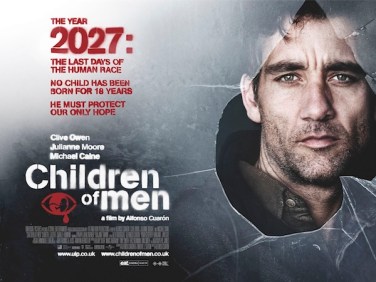
Children of Men (2006)

100 Films’ 100 Favourites #19

The year 2027:
The last days of the human race.
No child has been born for 18 years.
He must protect our only hope.

Country: USA & UK
Language: English… and German, Italian, Romanian, Spanish, Arabic, Georgian & Russian, apparently.
Runtime: 109 minutes
BBFC: 15
MPAA: R

Original Release: 22nd September 2006 (UK)
First Seen: cinema, October 2006

Stars
Clive Owen (Inside Man, Shoot ‘Em Up)
Julianne Moore (The Hours, Still Alice)
Michael Caine (The Italian Job, Batman Begins)
Chiwetel Ejiofor (Serenity, 12 Years a Slave)
Danny Huston (The Proposition, X-Men Origins: Wolverine)

Director
Alfonso Cuarón (Harry Potter and the Prisoner of Azkaban, Gravity)

Screenwriters
Alfonso Cuarón (Y Tu Mamá También, Gravity)
Timothy J. Sexton (Live from Baghdad, The Liberator)
David Arata (Brokedown Palace, Spy Game)
Mark Fergus (First Snow, Iron Man)
Hawk Ostby (First Snow, Cowboys & Aliens)

Based on
The Children of Men, a novel by P.D. James.

The Story
In the near future, mankind has become infertile, and no child has been born for 18 years. The world has gone to hell, with Britain one of the few countries that still has a functioning government, albeit a controlling, totalitarian one. In this world, government drone Theo is persuaded by his ex-wife, now head of an activist group, to escort a friend out of the country. Turns out that friend is a young woman… who’s pregnant — a situation that interests a lot of dangerous people…

Our Hero
Theo, disillusioned former activist, who’s roped back in, initially by kidnap, later with the promise of a hefty payday. Before long it turns out he’s actually a good guy at heart, of course.

Our Villains
“The rest of humanity” wouldn’t be a wholly bad answer here, as Theo and co keep bumping up against people violently concerned with their own interests. Within that, there’s the issue of if the activist group’s motives can be trusted…

Best Supporting Character
Theo’s friend Jasper, a former political cartoonist turned pot dealer, played by Michael Caine as a John Lennon-inspired old hippy.

Memorable Quote
“As the sound of the playgrounds faded, the despair set in. Very odd, what happens in a world without children’s voices.” — Miriam

Memorable Scene
Any of the (faked-)single-take action sequences is a worthy pick here. Alternatively, fans of a certain rock group will appreciate the inflatable pig floating over Battersea Power Station.

Technical Wizardry
As our heroes escape in a little Fiat, they’re attacked on a country road, the camera moving around the small person-filled vehicle in a single take. They used a special camera rig, along with a car modified to allow the windscreen to tilt out of the camera’s path, and seats that tilted to lower the actors out of the way too. The “single” shot took six takes in four locations, transition effects to seamlessly join shots, and CGI to create the motorbike, windscreen, blood, roof, and more.

Making of
The other most memorable single take is near the end, a running street battle during which Clive Owen’s layperson does his best to not get killed. It took 14 days to prepare the shot, with a delay of five hours every time it had to be reset. It was filmed over the course of two days, but only one complete take was actually captured. In the middle of one take, some blood spattered on the camera lens; Cuarón shouted “cut”, but was drowned out by the sound of tank and gunfire. Cinematographer Emmanuel Lubezki persuaded the director to leave it in, and that’s the shot in the final film. Pay attention during the sequence and you can see the liquid and dirt that gets splattered on the lens disappear during one of the ‘seamless’ cuts.

Awards
3 Oscar nominations (Adapted Screenplay, Cinematography, Editing)
2 BAFTAs (Cinematography, Production Design)
1 BAFTA nomination (Visual Effects)
1 Saturn Award (Science Fiction Film)
2 Saturn nominations (Actor (Clive Owen), Director)
Nominated for the Hugo for Best Dramatic Presentation, Long Form.

What the Critics Said
“[Cuarón] increasingly shoots the film’s set pieces in virtuoso long takes — gliding tracking shots that evoke Tarkovsky and handheld work that suggests Kathryn Bigelow. What makes these scenes stunning is not only mind-boggling choreography and timing, with Emmanuel Lubezki’s camera somehow capturing multiple planes of action even while continuously changing position, but also their ability to realistically evoke the frightening chaos and simultaneous madness of war. […] Such overwhelming studio work might be too arty for those who like their genre served sans showiness. But Cuarón is implementing a verisimilitude that both matches the film’s edge-of-your-seat escalations and demonstrates a new understanding of blockbuster realism.” — Michael Joshua Rowin, Stop Smiling

Score: 92%

What the Public Say
“Cuarón uses sequences evocative of Holocaust imagery and detention camps to implicitly communicate a world rife with injustice and pain. In designing the look of the film, Cuarón told his art department that he did not want inventiveness, but reference, so that an audience would be able to adequately recognize a distorted form of their own reality. For the reader and viewer who encounter this uncanny world, it feels all the more real because of its familiar elements.” — Mariel Calloway

Verdict

I saw Children of Men on a whim back in 2006. I can’t even remember why — I don’t think I’d seen any trailers or reviews, and it had been open for a good few weeks already. It was a time when I went to see loads at the cinema, though (in those days I paid good money to see Fun with Dick and Jane — does anyone even remember that?), and I think it may’ve been the only thing still on. Anyway, it meant I actually got in a little ahead of the hype that has gradually (and justifiably) grown around the film since, and still loved it. Cuarón mixes intelligent near-future sci-fi with exciting, and excitingly-realised, action sequences to create an action-thriller of a movie that stimulates both the mind and the adrenal glands. A fantastic film in every respect.

#22 will be next… to give the Devil his due.

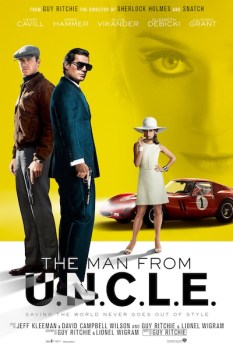
The Man from U.N.C.L.E. (2015)

2016 #8
Guy Ritchie | 116 mins | streaming (HD) | 2.35:1 | USA & UK / English, Russian, German & Italian | 12 / PG-13

Guy Ritchie is a self-confessed non-fan of the classic ’60s spy-fi series The Man from U.N.C.L.E., so he seems a somewhat odd choice to helm this long-gestating big-screen reboot of the franchise.

Unsurprisingly, he gives it a bit of the Sherlock Holmeses (namely, a semi-comedic tone and appropriately swish, ’60s-ish direction), but loses some facets of the original (Russian agent Kuryakin is basically a completely different character). It’s entertaining nonetheless, if a little long.

The biggest let down is that it all feels like a fun preamble to a better sequel that, after its box office failure, will never happen.

4 out of 5

Trivia time: in the 12 months ending January 1st 2016, seven films were released in the UK starring The Man from U.N.C.L.E.’s female lead, Alicia Vikander. Seven. She deserved that Oscar for sheer employability if nothing else.

Kill List (2011)

2016 #51
Ben Wheatley | 92 mins | streaming (HD) | 2.35:1 | UK / English | 18

I appear to be coming at director Ben Wheatley’s films in reverse order (having covered A Field in England in 2013 and Sightseers in 2014), and now I reach, not his feature debut (that’ll be ‘next time’, I guess), but certainly the film that brought him wider attention.

To describe too much of the plot of Kill List, or to even name its genres, is to give away some of its mystery. It’s a problem for reviewers, and has been since it came out — I read an interview with Wheatley where he said he didn’t envy their job, trying to accurately assess and ‘sell’ the film without actually telling people why they should watch it! The marketing people go a little way towards that for us, though, billing it as a horror movie when it seems to be nothing of the sort for a very long time.

It begins in that classic British tradition, the “kitchen sink” drama. Jay (Neil Maskell) and his wife (MyAnna Buring) argue about the fact he’s not got a job and the money’s run out. It becomes clear something happened in Jay’s recent past to spook him out of work. Then his mate Gal (Michael Smiley) comes round with a new girlfriend, Fiona (Emma Fryer), for one of moviedom’s more uncomfortable dinner parties. Gal talks Jay into joining him on a new job (there’s some criticism of the film for being a “one last job” movie, but I don’t recall it being presented as that — Gal talks him back into work, not for a definitively final go-round. Maybe I missed something); elsewhere, Fiona’s actions hint at something more… unusual going on.

Kill List mixes in its genre elements — and they’re elements from a couple of different genres at that — so gradually that, as I said, it’s hard to discuss them without spoiling the film. (Much like the film itself, this review is getting progressively more revealing, so jump off when you’ve had enough.) It’s kind of a compilation of traditional British movie genres: we begin with kitchen sink, then discover we’re actually watching a crime film, before the final act swerves (though not without foreshadowing) into folk horror. The skill of Wheatley, and his co-writer Amy Jump, is in not making these transitions too implausible. That’s not to say they’re not surprising, but the doom-laden music, inexplicable proclamations by some characters, and a couple of very strange events should all clue the viewer in to the film not being a common-or-garden hitman flick.

Even as the latter, it is, again, very “low-key British”. It follows through on its domestic setup, presenting the mundanities of the profession — it’s the kind of film where the dealmaking and mission-giving are dealt with in a dialogue-free montage, but we do see characters discussing how they’ll get out of the hotel lobby without an injury being noticed, who’s going to clean up the blood in the sink, and the quality of the hotel’s free toiletries. The biggest threat the characters initially face is their credit card being declined, which might, potentially, later, draw attention to them.

The final act is naturally where the film reveals its overarching purpose… or rather doesn’t reveal, because there are a shortage of answers here. It’s a lot more straightforward than A Field in England, but it still offers few (or, some would say, no) explanations for what’s occurred. According to Wheatley, the screenplay was more explicit about what was happening and why, and so was some of what they shot, but he cut back on the exposition to leave it up to audience interpretation. This isn’t a film to passively watch and have everything explained, but even viewers prepared to do a little work for themselves may find it frustrating.

Nonetheless, there is striking, unnerving imagery to be found during the movie’s climax, Wheatley and regular DP Laurie Rose using the pitch-black nighttime setting to create dread rather than merely accidentally hide things, as so many under-lit movies seem to nowadays. The handheld camerawork and jumpy cutting that earlier in the film was just a little New Wave-y comes into its own here, aligning us with Jay’s disorientation and confusion. While the ultimate result is arguably predictable, to get too caught up in the minutiae of whether it’s a twist or not is to miss the point. What the point is… well, that’s debatable, but I don’t think it’s meant to be a twist for the sake of a twist. (Others disagree.)

The odd mash-up of domestic drama, mundane crime, and folk horror by all rights shouldn’t work, so credit is definitely due for the movie’s flow. Memorable sequences keep it ticking over throughout — and so they should: taking inspiration from the likes of Kubrick and Stephen King, Wheatley started from specific images and worked backwards to a plot. Here, I think that method has been effective. The abstruse ending won’t be to everyone’s taste, but the journey there is worth experiencing.

4 out of 5

It’s Ben Wheatley Night on Film4 this evening, beginning with Kill List at 10:45pm, followed by Sightseers at 12:35am and A Field in England at 2:15am.

Wheatley’s new movie, High-Rise, is currently showing in scattered preview screenings around the UK (mainly in London, because of course), and is on general release from next Friday, March 18th.

Daybreakers (2009)

2016 #24
The Spierig Brothers | 89 mins | streaming | 2.35:1 | Australia & USA / English | 15* / R

Most of mankind have become vampires, but the blood supply is running out and without it people mutate into monsters. Ethan Hawke’s scientist is developing a substitute, but when he encounters human resistance fighters he learns there may actually be a cure…

Made by the guys behind Predestination, Daybreakers offers an original and imaginative world (how would mankind cope if we couldn’t go out in daylight? Maybe like this). It’s somewhat let down by a few campy performances and a sensibility that reverts to action sequences, but originality counts for a lot, especially for genre fans looking for something different.

3 out of 5

* The distributor chose to make six seconds of cuts to get a 15 in cinemas. The uncut 18-rated version was released on DVD and Blu-ray. No idea which version is available through Channel 5, where I watched it. ^

Casino Royale (2006)

100 Films’ 100 Favourites #18
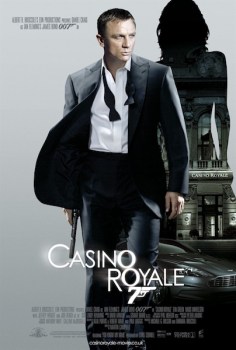
Everyone has a past.
Every legend has its beginning.

Country: UK, USA, Czech Republic & Germany
Language: English
Runtime: 144 minutes
BBFC: 12A (cut, 2006) | 15 (uncut, 2012)
MPAA: PG-13 (cut)

Original Release: 14th November 2006 (Kuwait)
UK Release: 16th November 2006
US Release: 17th November 2006
First Seen: cinema, 16th November 2006

Stars
Daniel Craig (Layer Cake, The Girl with the Dragon Tattoo)
Eva Green (The Dreamers, Sin City: A Dame to Kill For)
Mads Mikkelsen (Valhalla Rising, The Hunt)
Judi Dench (Iris, Philomena)
Jeffrey Wright (Shaft, The Hunger Games: Catching Fire)

Director
Martin Campbell (GoldenEye, Green Lantern)

Screenwriters
Paul Haggis (Crash, The Next Three Days)
Neal Purvis (Die Another Day, Johnny English)
Robert Wade (Stoned, Skyfall)

Based on
Casino Royale, the first James Bond novel by Ian Fleming.

The Story
British agent James Bond, newly promoted to exclusive double-oh status, investigates a terrorist plot that leads him to Le Chiffre. Banker to the world’s terrorists, Le Chiffre has managed to lose a lot of his clients’ money, and intends to win it back in a high-stakes poker game at the eponymous establishment. Bond is charged with joining the game and bankrupting the banker, with treasury employee Vesper Lynd along to keep an eye on the money and off Bond’s perfectly-formed arse.

Our Hero
“James before he was Bond,” as the awful US tagline went. Daniel Craig instantly disproved the not-that-numerous-but-certainly-vocal critics (remember all the “Bond isn’t blond” rubbish?) by being perhaps the most convincing actually-is-a-highly-trained-agent Bond since Connery.

Our Villain
Le Chiffre, a total banker. Fond of poker, bleeds from his eye, brilliantly played by Mads Mikkelsen, who has deservedly gone on to many other things, no doubt some wholly due to this.

Best Supporting Character
Eva Green is Vesper Lynd, a woman so remarkable that Bond names his personal Martini recipe after her. He also falls in love with her. Considering the rest of the Bond canon, that’s not likely to end well.

Memorable Quote
“I’m afraid your friend Mathis is really… my friend Mathis.” — Le Chiffre

Memorable Scene
At dinner on the train to Montenegro, Bond meets Vesper for the first time. They verbally size each other up. She wins. “How was your lamb?” “Skewered. One sympathises.”

Write the Theme Tune…
Easily the best Bond theme of the Craig era (though I like the QoS one more than most, and my main objection to Adele’s is that it’s about a flying baby horse and its receptacle for bread waste), You Know My Name was co-written by the series’ regular composer since the mid ’90s, David Arnold. That meant he could integrate the tune into his score, which was a Good Thing.

Sing the Theme Tune…
Far removed from Bond’s Bassey-imitating default style, the slightly gravelly sound of Soundgarden’s Chris Cornell (the first male vocalist on a Bond theme for nearly 20 years) helped indicate the series’ harder, manlier new direction.

Technical Wizardry
After four films of honing the Maurice Binder “naked silhouettes” style, title designer Daniel Kleinman cuts loose with an array of inventive playing card-based imagery. The most original Bond title sequence since at least Thunderball and, by being so atypical, the most unique of them all.

Truly Special Effect
Chasing after a kidnapped Vesper in the middle of the night, Bond suddenly sees her in his headlights, tied up in the middle of the road. He swerves, his Aston Martin crashes, and barrel rolls… seven times. The stunt team set a world record with that, which (despite Fury Road’s best efforts) is still unbeaten a decade later.

Making of
James Ferguson, a doctor from Aberdeen, came up with the idea for the scene in which Bond is poisoned and then remotely diagnosed by experts at MI6 HQ in London. Ferguson, a Bond fan, was retained as medical adviser for future Bond films.

Previously on…
Casino Royale was adapted for TV in 1954, starring the great Peter Lorre as Le Chiffre, and its title (and little else) was used for the awful 1967 Bond spoof. This version is the 21st in the canonical James Bond film series, and the first time that series has performed a reboot: the film opens with Bond attaining his famed double-oh status, something we’ve never seen before.

Next time…
Daniel Craig’s second outing, the somewhat misunderstood and underrated Quantum of Solace, was the first direct sequel in the Bond canon, picking up on various plot threads from Casino Royale and even resolving a few of them. After Craig’s third, Skyfall, went off on its own, last year’s Spectre tried to tie together the entirety of Craig’s era, with mixed success. Beyond that, James Bond will return indefinitely, though Craig may not.

Awards
1 BAFTA (Sound)
8 BAFTA nominations (British Film, Actor (Daniel Craig), Adapted Screenplay, Music, Cinematography, Editing, Production Design, Visual Effects)
1 Saturn Award (Action/Adventure/Thriller Film)
4 Saturn nominations (Actor (Daniel Craig), Supporting Actress (Eva Green), Writing, Music)
2 World Stunt Awards (Best High Work, Best Stunt Coordination and/or 2nd Unit Director)
1 World Stunt Awards nomination (Best Fight)

What the Critics Said
“I never thought I would see a Bond movie where I cared, actually cared, about the people. But I care about Bond, and about Vesper Lynd, even though I know that (here it comes) a Martini Vesper is shaken, not stirred. Vesper Lynd, however, is definitely stirring, as she was in Bertolucci’s wonderful The Dreamers. Sometimes shaken, too. Vesper and James have a shower scene that answers, at last, why nobody in a Bond movie ever seems to have any real emotions.” — Roger Ebert

Score: 95%

What the Public Say
“While there is very much a dramatic and sensitive undercurrent to this Bond film, Casino Royale doesn’t shortchange the audience on action. From Bond chasing a skilled free runner enemy to a brutal staircase battle, Casino Royale delivers a harsher and bleaker sense of violence that had been missing from some of the predecessors and not seen since Timothy Dalton’s dark turn in Licence to Kill.” — vinnieh

Elsewhere on 100 Films
Just before Quantum of Solace was released in 2008, I wrote that Casino Royale was “a damn fine Bond film, returning to Fleming and resetting the character without losing anything truly essential about the franchise. […] this one’s up there with the very best, not just of Bond but of action-spy-thrillers in general.”

Verdict

In the early ’00s, it didn’t feel like the Bond series was in need of a reboot. Die Another Day had been a huge hit at the box office and gone down pretty well with critics (no, really, it did), and Brosnan was all set to do a fifth (though, considering his age, likely final) film as Britain’s top secret agent. Then Bourne happened, shifting the playing field of the spy-action genre, at the same time as Bond’s producers finally regained the rights to Fleming’s very first Bond novel. For the first time in the series’ 40-year history, they decided to reboot.

What Casino Royale does skilfully is acknowledge the changes brought by Bourne, but adapt them to Bond’s slightly more classical style (something Quantum of Solace fumbled). At the same time, it acknowledges and frequently subverts that Bond formula (“Shaken or stirred?” “Do I look like I give a damn.”), the antithesis of DAD’s uber-referentiality. In itself, it took Fleming’s relatively slight novel, with its lack of action by modern blockbuster standards, and expanded and modernised it effectively to fit current tastes. The result is arguably the best Bond movie ever made.

#19 will be… the last days of the human race.